Sarah's Beauty Filled Egypt's Palace With Light
At the border he paid every tax they named. When they forced the lid, the officers forgot the ledgers in their hands.
Table of Contents
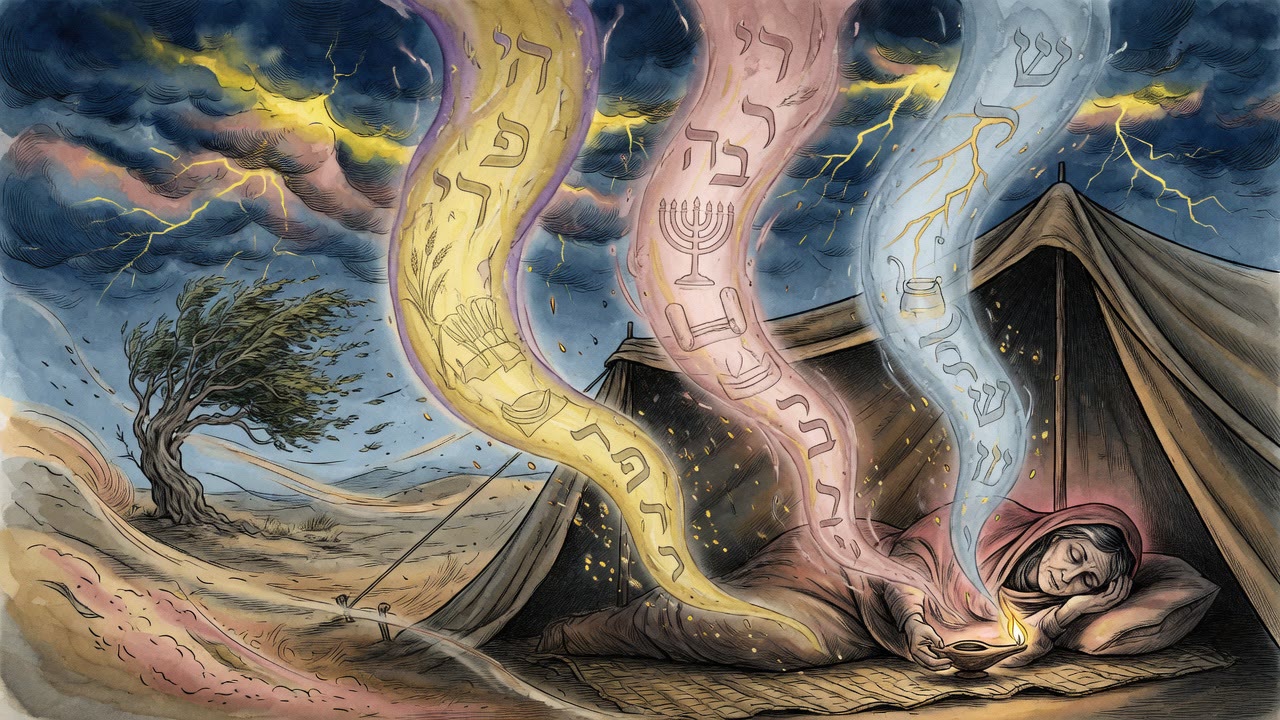
There was famine in Canaan, and the road to Egypt had become the road of hunger. Dust clung to the camels. The grain sacks sank. At every halt Abraham looked south and measured the danger. Egypt had bread. Egypt also had a king with no shame in his hands.
 Click for full size
Beside him walked Sarah. Age had not emptied her face. Time had not dimmed her. A leftover of the first world's brightness still sat in her skin, more than later faces could bear, and Abraham knew what men did when beauty entered a palace before protection did.
Her Face in the Water
Before the border they crossed a stream. Sarah stepped in, and the surface took her reflection. Abraham had lived with her for decades. He had left home with her and built altars while she pitched tents. The current made him look again. Not with habit. With alarm.
The sun seemed to have bent down and settled on the water. Compared with the first faces of Adam and Eve, even the loveliest later faces were a remnant. Sarah carried more of that remnant than a hungry road could hide.
Men would kill for this, he thought. Not because she asked for a crown. Because rulers saw and took. Because a foreign woman could become treasure, and a husband could become an obstacle.
So he spoke the sentence that would follow them into danger. "Say that you are my sister. Let my life be spared because of you."
The words did not make the road safer. They only changed the shape of the risk.
They Opened the Chest
Abraham hid Sarah in a chest. Bind the danger under a lid. Pay the toll. Let Egypt see sacks and animals and anything but her.
The customs officers stopped him at the line. Their hands went to the wood. "What is inside?"
"Barley," Abraham said.
"Then pay the barley tax."
He agreed too quickly. Their eyes narrowed. "Wheat, then."
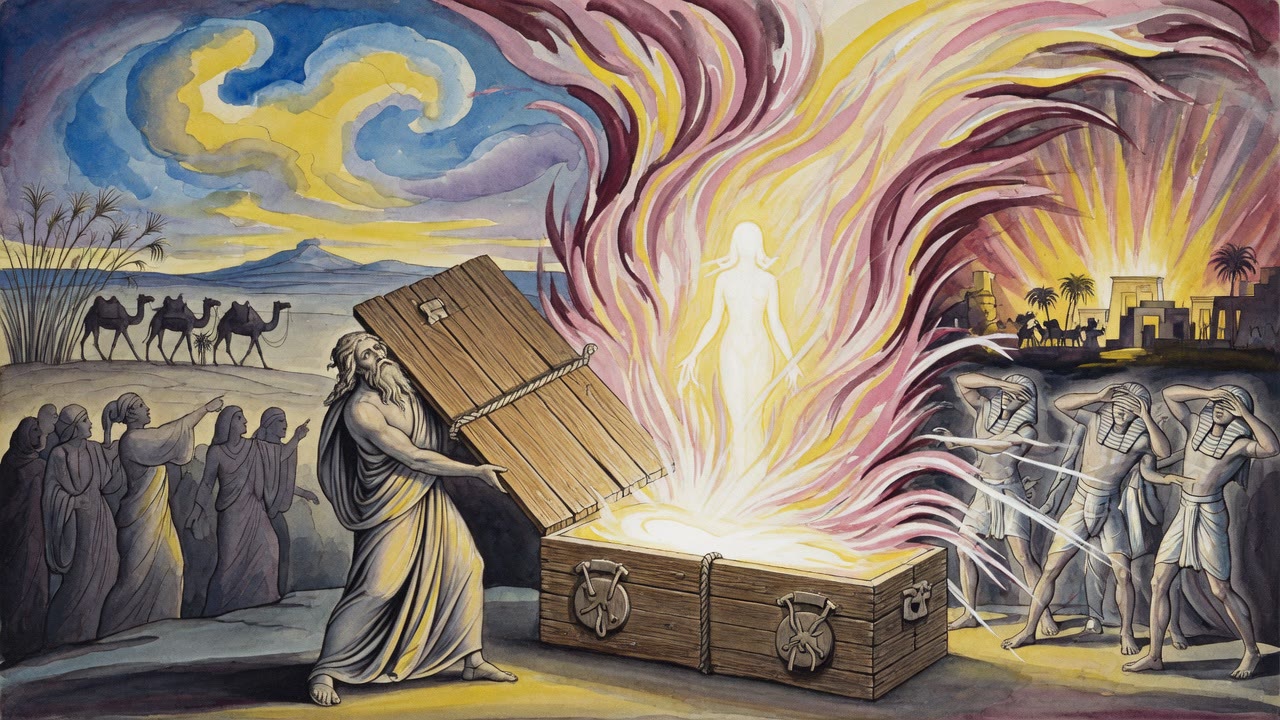
He agreed again. Spices. Gold. Whatever price they named, he accepted it. The more he yielded, the more certain they became that no cargo in Egypt was worth such silence. At last they pulled at the lid. Wood groaned.
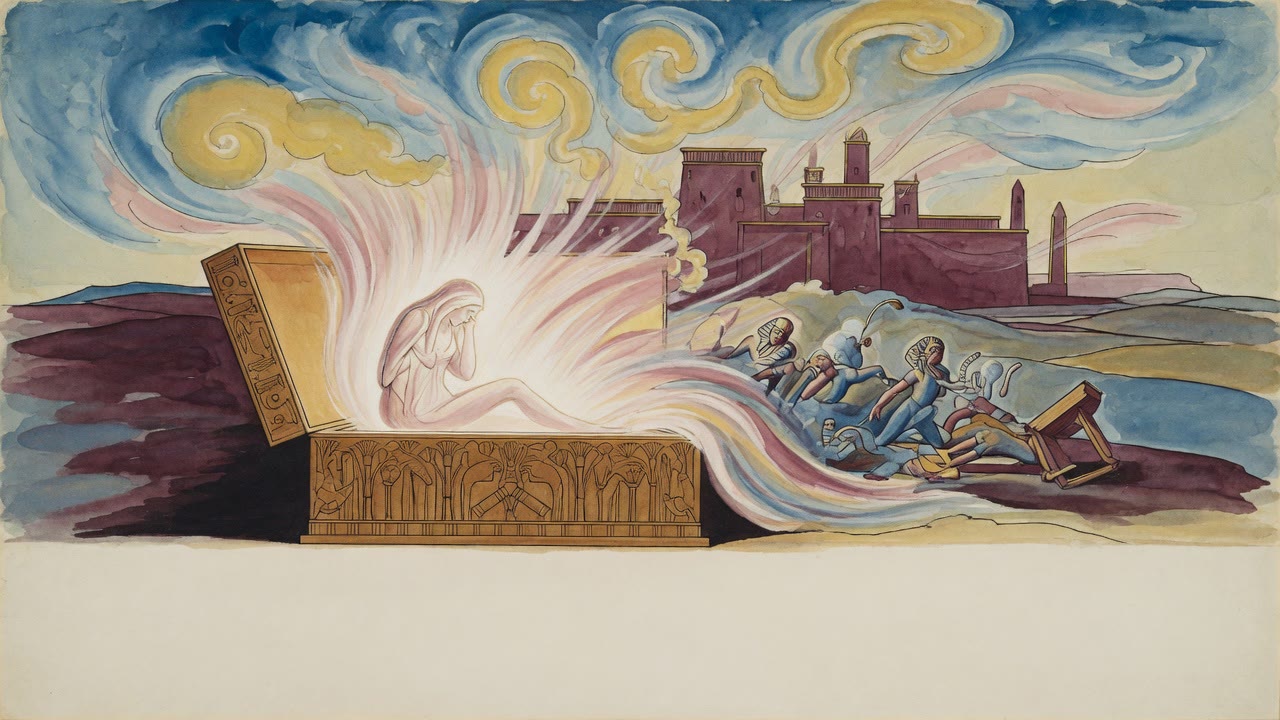
Light spilled out. Not a lamp. Not polished metal. Sarah herself. Her beauty burst through the border station and ran ahead of the officers into Egypt like a messenger no one could catch. Men who had come to assess duties forgot the ledgers in their hands. News traveled faster than caravans. A woman had crossed into the land whose face made the air feel newly made. It filled the road, then the city, then the palace.
Pharaoh Paid in Advance
The officers praised her before Pharaoh, and the palace did what palaces do. It converted wonder into possession.
Sarah was taken through doors carved for royal triumphs. Servants brought fabrics, oils, vessels. Abraham received gifts because the king believed he was the brother of the woman he wanted. Sheep, oxen, donkeys, servants, and camels gathered around him like a price paid early.
One gift carried a future inside it. Pharaoh gave Sarah a handmaid from his own house, Hagar, a daughter of Egypt placed into the tent of the woman Egypt had tried to claim. He wrote her the land of Goshen as well, a strange inheritance waiting generations before her descendants would dwell there.
Inside the palace Sarah stood alone. No army. No father's house nearby. No husband publicly able to defend her. Only the unseen God of Abraham stood between her and the king's bedchamber.
Then the blows began to fall on Pharaoh's house. Bodies failed. Desire turned into fear. The king who could summon any servant now found himself summoned by pain.
The House Went Dark
Pharaoh called Abraham. The accusation came hot. "What have you done to me? Why did you say she was your sister? Why did you let me take her?"
For a moment Egypt stood upside down. The king had the palace, the guards, the land. Abraham had the truth he had hidden. Sarah had the innocence no royal command could erase. God had made all of it visible.
Pharaoh returned her. He did not become righteous. He became afraid. Fear can still open a locked door. Fear can still send a stolen woman back to her tent.
They left Egypt richer than they entered, and not cleanly. Hagar walked with them. Goshen's name lingered behind them. Egypt had touched the family, and the touch would return in later generations as both refuge and bondage.
Gerar Reached for Her Anyway
Years passed. Sarah's hair silvered. Angels came to the tent with a promise of a child, and she laughed inside herself, because the body knows its own calendar. Heaven had not mistaken anything. Vigor returned to Abraham and Sarah. The wrinkles did not get the last word. The old brightness came back into her face as if the stream had been shown to the world a second time.
Then came Gerar, and another king looked at her. Abimelech took her into his house at an age when no one expects kings to desire a matriarch. God came to him in a dream with a sentence sharper than a sword. "You are a dead man because of the woman you took."
Abimelech protested his innocence. God acknowledged it and still closed the house. No birth. No opening. No future, until Sarah was returned. The woman whom kings desired became the line between life and barrenness for an entire court.
The chest had opened, and Egypt had seen light. Then the palace darkened until it let her go. Gerar reached anyway, and the dream named the cost before a hand could close.
← All myths