The Angels Who Watched Abraham Raise the Knife Over Isaac
Prince Mastema asked if Abraham would still obey. God said yes. Three days later the ram was already waiting in a thicket on the mountain.
Table of Contents
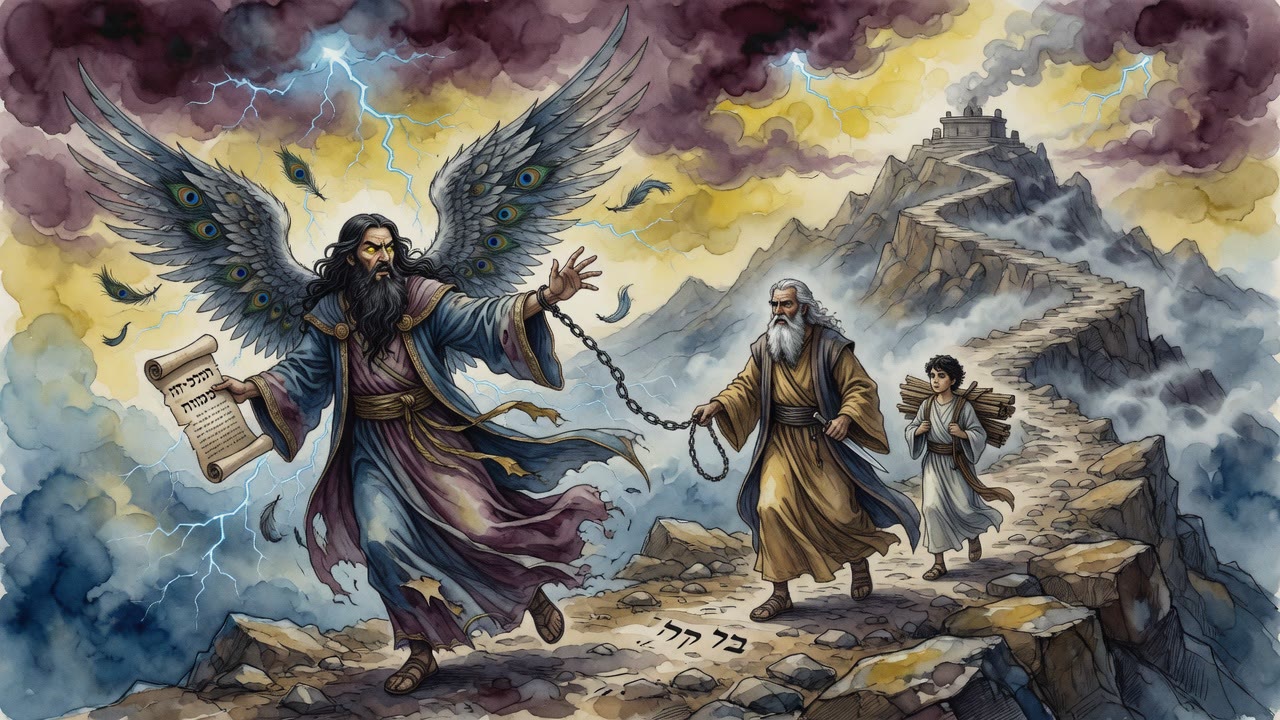
Prince Mastema stood in the heavenly court and asked for a knife. Would Abraham still obey if the command cost him the son of the promise?
 Click for full size
God accepted. Every being in the heavens would watch. The ram was already waiting in a thicket on a mountain Abraham had not yet seen.
Three Days With the Command Unspoken
Abraham saddled the donkey before dawn. He woke two servants. He woke Isaac. He split wood for a burnt offering and did not say to Sarah where the road went, because the true answer would have stopped them at the door.
They walked three days. No talk of the mountain. No talk of the knife. Isaac carried a question he had not yet found words for. Abraham carried a command he could not put into any words a father should say.
At night they lay down on open ground. Isaac watched his father's face in the firelight and did not ask the question yet. Abraham did not sleep much. The wood sat in a bundle by his hand, already cut to the size of a boy.
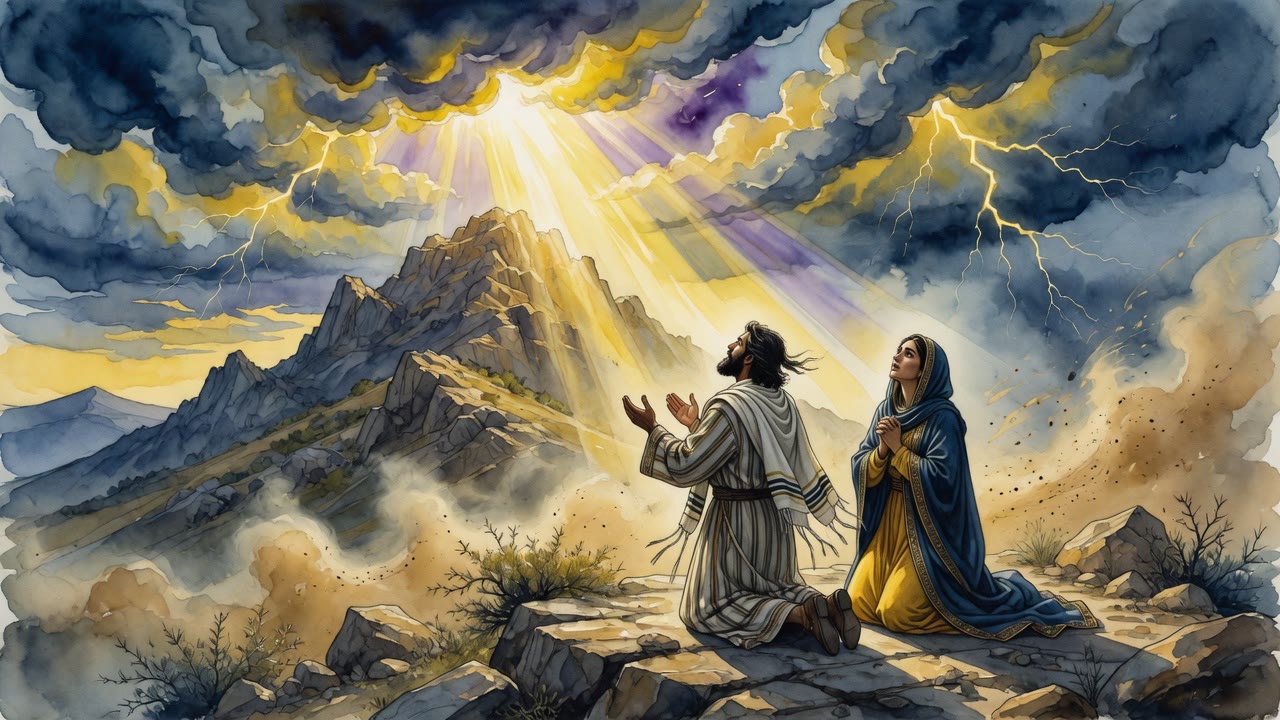
On the third day he lifted his eyes and saw the place from afar. Not an hour off. A mountain that had been growing in front of him while he kept walking toward it.
He told the servants to wait with the donkey. He laid the wood on Isaac. He took the fire and the knife in his own hand, and the two of them went on together (Genesis 22:6).
Isaac Asked About the Lamb
"My father," Isaac said.
"Here I am, my son."
"Here is the fire and the wood. Where is the lamb for the burnt offering?"
"God will see to the lamb, my son."
They went on. Isaac did not turn back. Abraham did not drop the knife. Above them the angels of the court leaned in, and not all of them were sure of the man on the road. They had watched the garden fail. They had watched the flood. A human given a command this hard had a history of breaking.
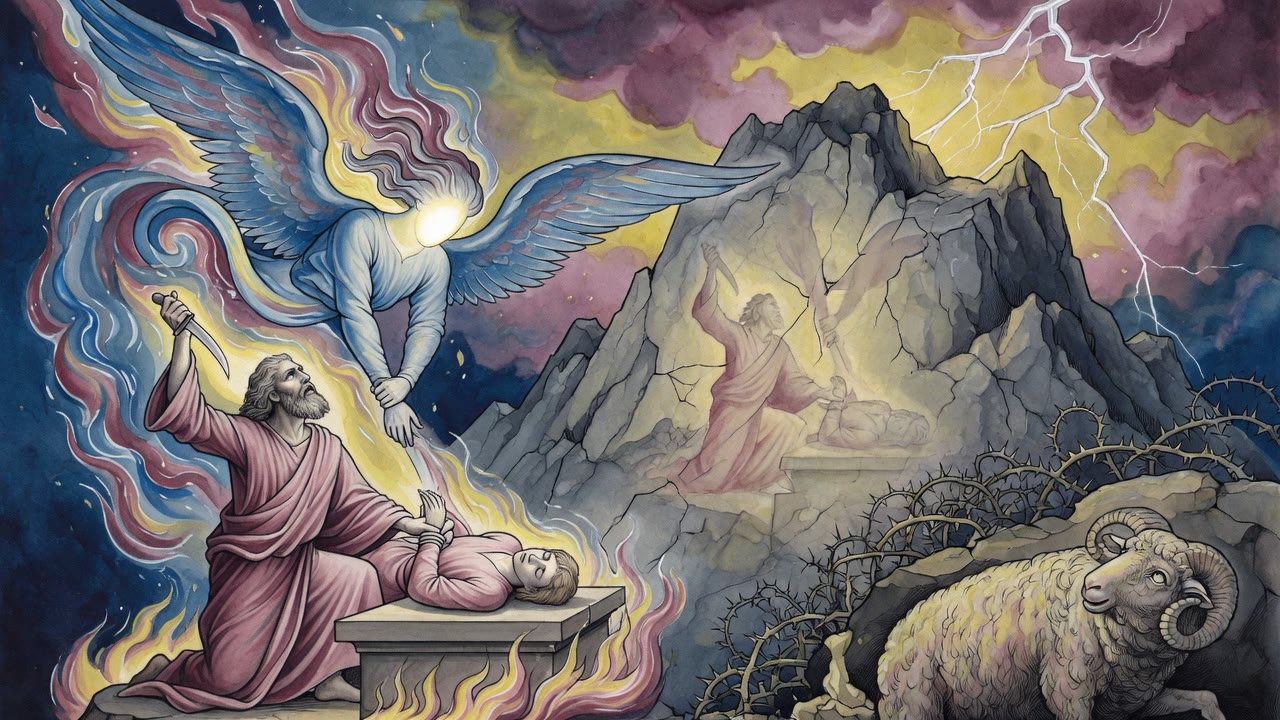
The first of the patriarchs walked those last yards with a knife and a silence. The angel assigned to stop the hand was already in place. The voice was ready. The ram stood in the thicket behind the mountain, horns caught, waiting for a moment set before Abraham left Beer-sheba.
The Boy Born on First Fruits
Isaac had entered the world on the festival of first fruits, the day later called Shavuot, the same festival that would carry the giving of the Torah at Sinai. He had arrived on a day of offering. Now he climbed a mountain as the offering.
Abraham built the altar from stones he found there. He arranged the wood Isaac had carried. He bound his son and laid him on the wood. Isaac did not run. The rope went around his wrists. The sky over Moriah was empty of any lamb a boy could see.
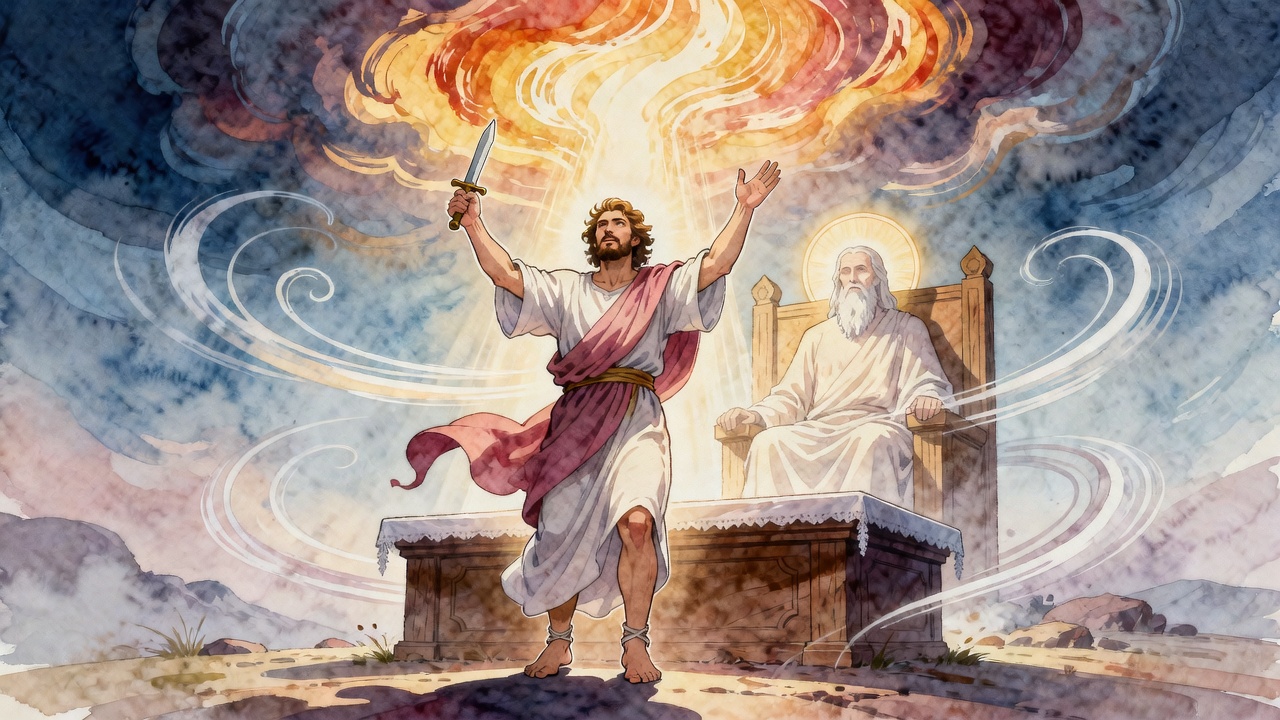
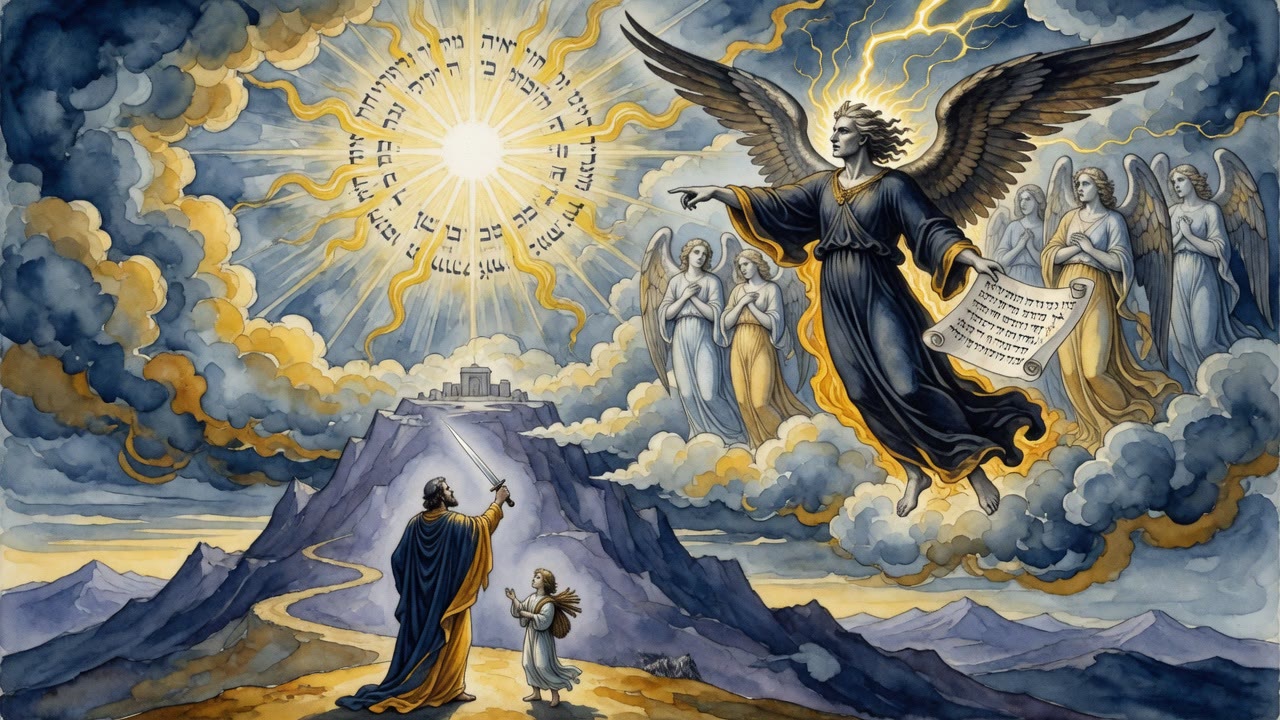
Abraham put out his hand and took the knife. The blade caught light. Isaac's throat was bare. The arm went up. The court above held still, the way a court holds still when a verdict is about to be spoken.
Two Calls, One Hand
The angel of the Lord called from heaven.
"Abraham, Abraham."
"Here I am."
The same mouth that had answered the first call, the command to take the boy, now answered the second, the command to stop. "Do not put your hand on the lad. Do not do anything to him. For now I know that you fear God, seeing you have not withheld your son, your only son, from Me."
Abraham lifted his eyes. A ram, caught in a thicket by its horns. He took the ram and offered it instead of his son. Mastema's challenge had an answer a court could see. The man had gone all the way to the edge and had still heard the second voice.
The covenant came back larger than the first promise. Seed like the stars. Seed like the sand on the shore. This was the seventh trial, the last and the hardest. It had begun when a voice told Abraham to leave his father's house. It ended when a knife stopped over a boy born on first fruits.
Isaac walked down the mountain alive. The ram's blood was on the stones. The angels who had not been sure had their answer. The Accuser who had asked for the test had watched it fail in the only way a test of this kind can fail. The man obeyed, and the boy lived.
← All myths