The Angel Stopped Abraham and the Mountain Remembered
Abraham told his servants that he and the boy would both come back down. Mastema watched to see if the father would break. The ram was already in the thicket.
Table of Contents
 Click for full size
The Knife Already Raised
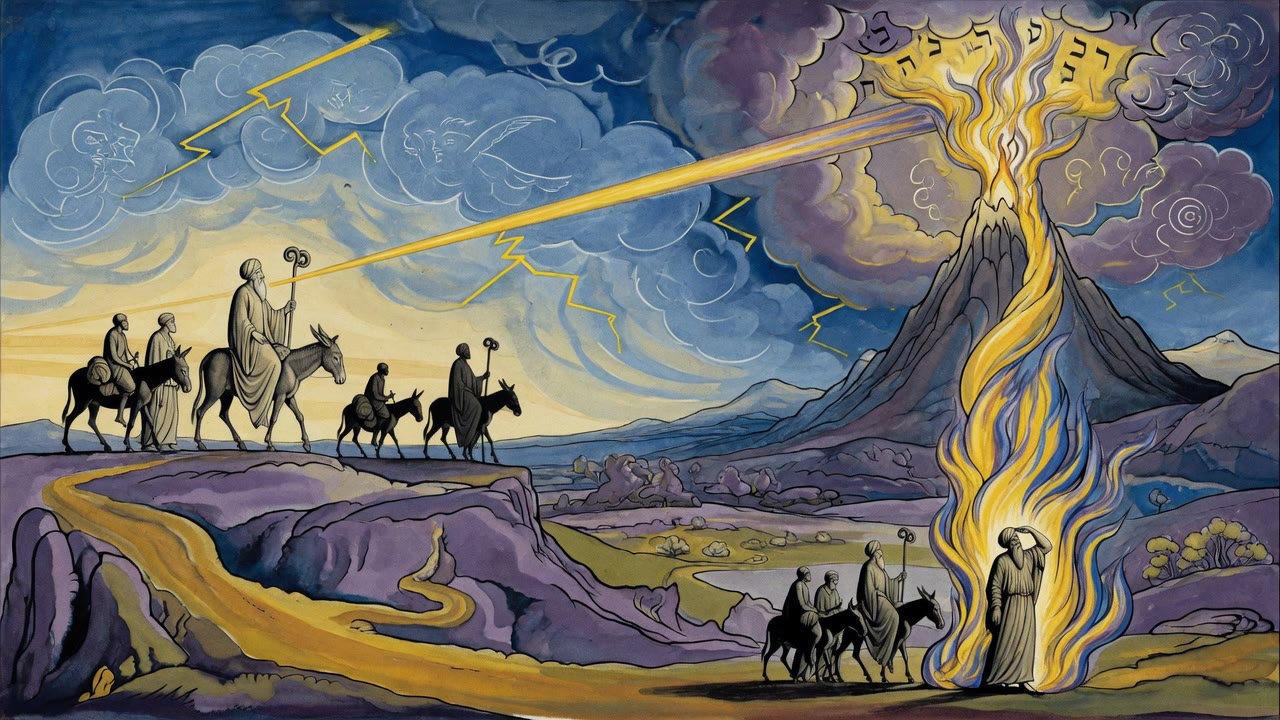
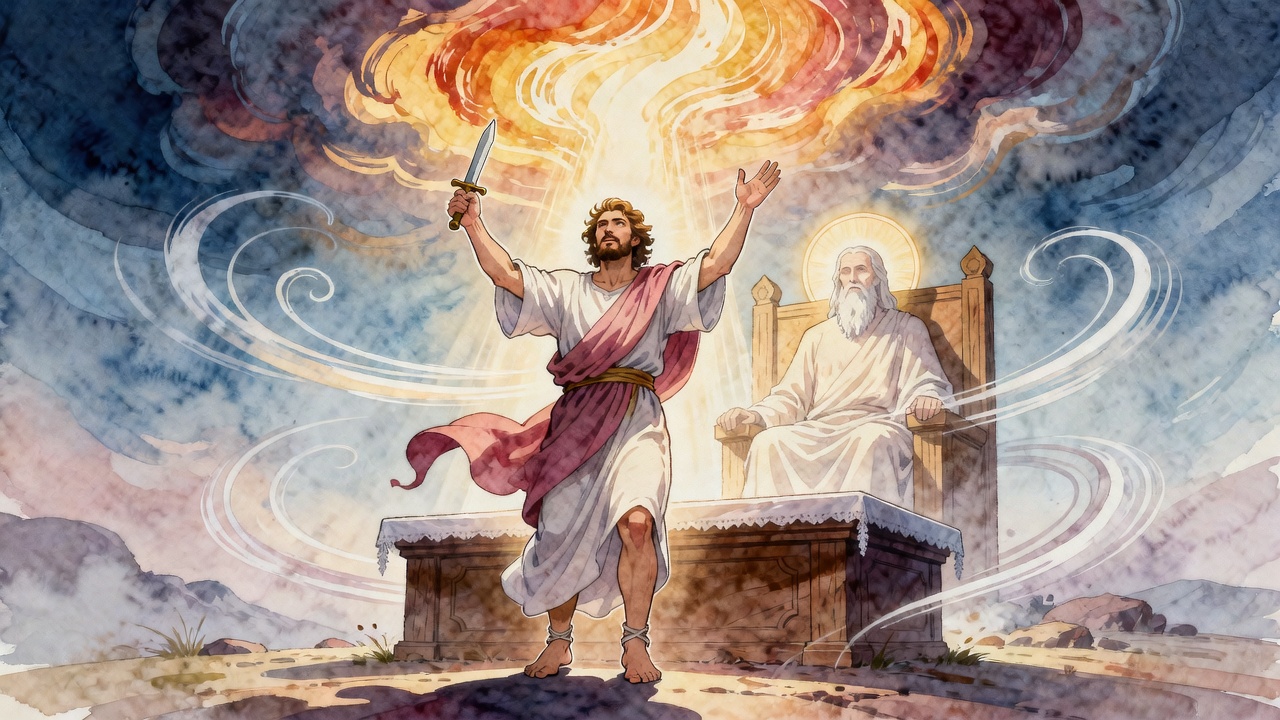
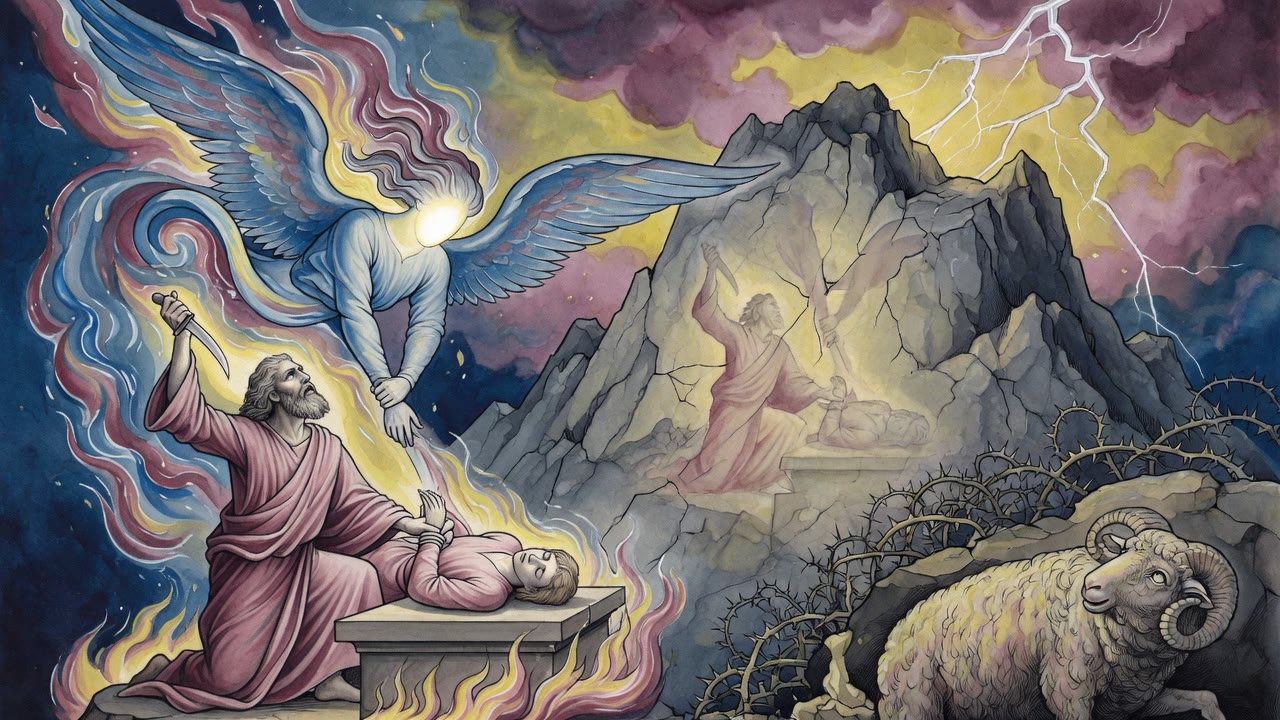
Abraham had been walking toward this moment for three days. He had seen the mountain from a distance on the third day and told his servants to stay with the donkey while he and the boy went up to worship and came back. Both of them. He had said both of them would come back, and he believed it, because he could not hold together in his mind what God had asked him to do and what God had promised him about this same son, and the only way through the contradiction was to trust that God would somehow resolve it at the top of the mountain. He had climbed. He had built the altar and arranged the wood. He had bound Isaac and placed him on the altar and raised the knife.
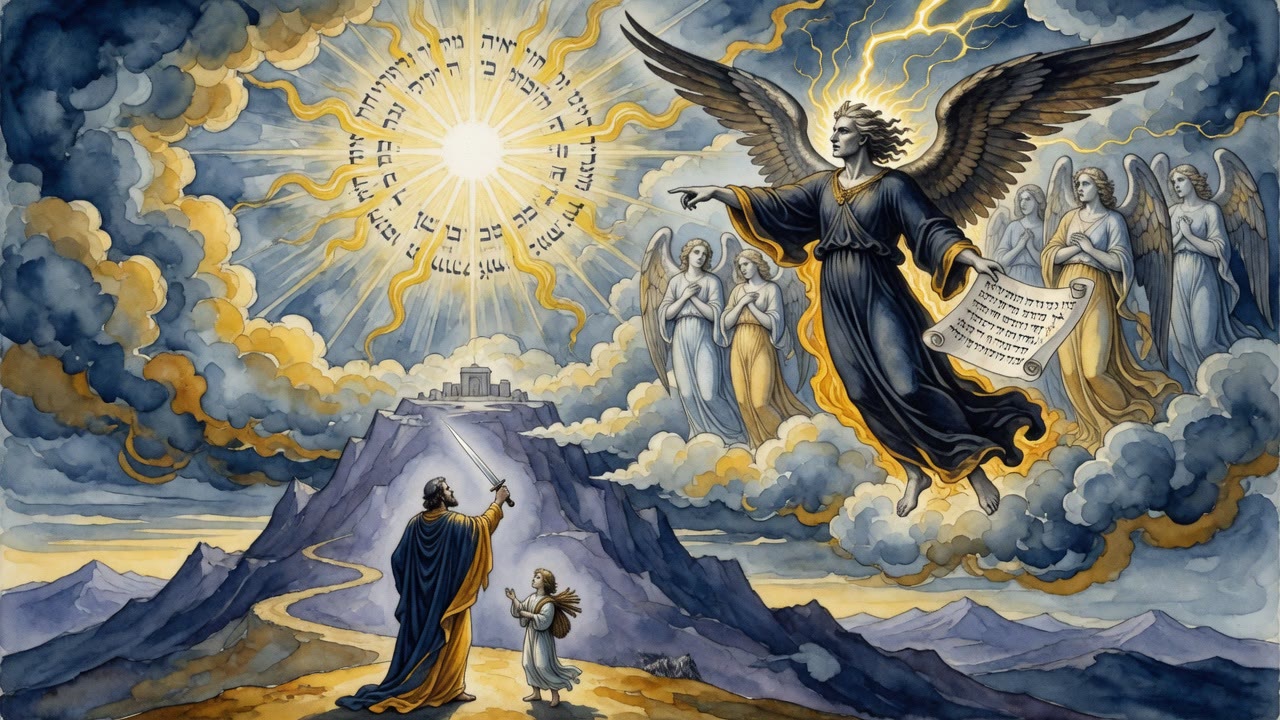
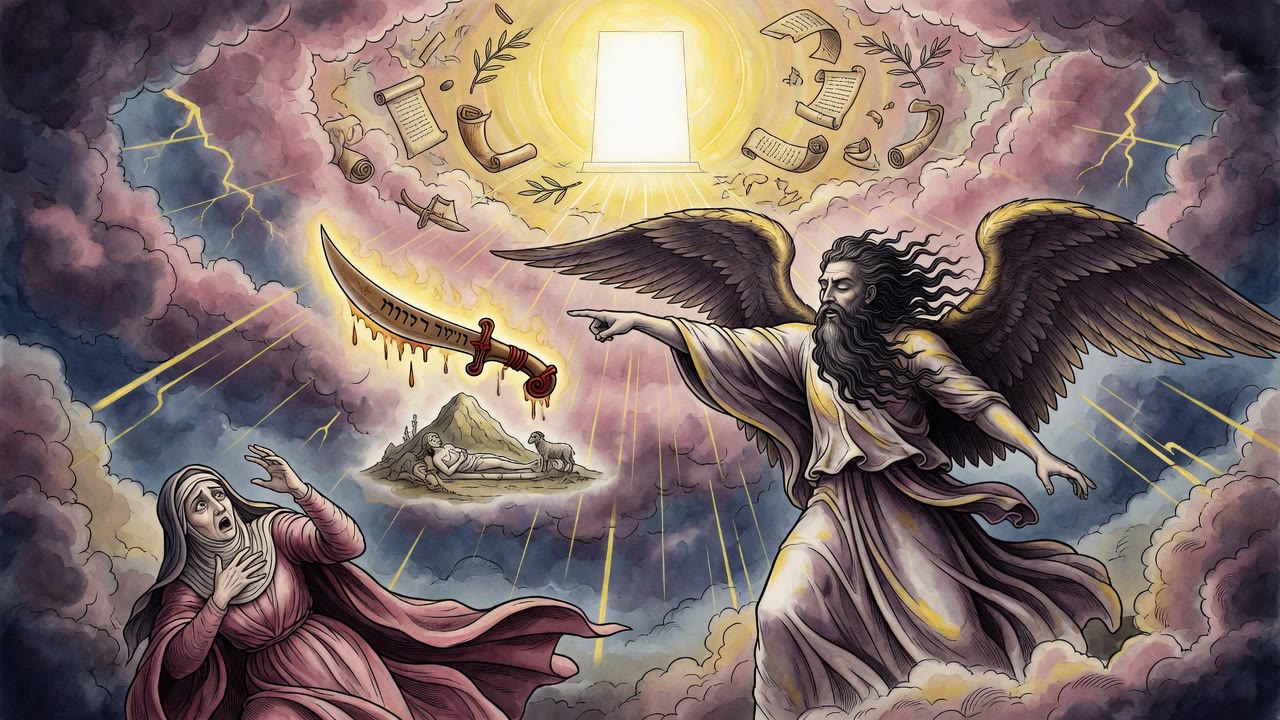
At that moment, the Book of Jubilees reports, the angel of the presence was watching from somewhere above the mountain, and he moved to intervene. The arm was already up. The knife was already in the hand. The angel descended and called out the father's name twice, Abraham, Abraham, the doubled name that signals urgency throughout the Torah's tradition of divine address. The knife stopped.
What Jubilees Saw That Genesis Left Out
Jubilees, composed in Hebrew during the Second Temple period around 150 BCE, retells the Binding from the perspective of the heavenly watchers. It makes explicit what Genesis leaves to implication: there were celestial beings observing the test, the same Mastema who had pressed God to test Abraham in the first place was watching to see if the father would break. The angel who intervened came from the highest rank of the divine presence, not one of the lower orders but an angel of the presence, a designation that places the intervenor as close to God as an angel can be.
The ram caught in the thicket by its horns was not an accident. Jubilees understands it as prepared, placed there, ready. The test was designed with an exit built into it, but Abraham did not know where the exit was until he had already raised the knife. God had to see the knife moving before the ram appeared. The intervention was timed precisely to that movement. Any earlier and it would not have been a test of anything.
The Prayer That Sanctified a Mountain
Targum Onkelos, the standard Aramaic translation of the Torah produced in the tannaitic period (1st-2nd centuries CE), stays close to the Hebrew text everywhere except at the moment Abraham names the site. The Hebrew says God will see, Adonai Yireh, a name Abraham gives to the mountain that points toward divine providence and future significance. Onkelos expands the naming into a full act of worship and prophecy.
According to Onkelos, Abraham worshiped and prayed at the place, and while he was praying he spoke aloud what he saw: here, generations will worship. God had brought him to this mountain to test him. What Abraham did at the top was transform the site. His prayer and his act of radical obedience had sanctified the ground. The mountain where he had been willing to give everything would be the mountain where all of Israel would come to give everything, where the Temple would stand, where the altar fires would burn for centuries.
Onkelos translates with restraint elsewhere in the chapter: the test remains a test, the voice from heaven remains a voice. But at the naming, the translator pauses and gives the full consequence of what Abraham had just done. The site was no longer a place on a mountain in Canaan. It was a permanent address for divine encounter, sealed by the act that had happened there.
What the Mountain Carries
The two traditions, Jubilees watching from heaven and Onkelos recording the prayer, address different dimensions of the same event. Jubilees is concerned with what it cost, with the weight of the test and the precision of the intervention and the fact that Abraham passed the thing Mastema had set in motion against him. Onkelos is concerned with what it built, with the permanent spiritual reality that an act of obedience created on a particular piece of ground.
Together they answer a question the Torah raises but does not resolve: why does this mountain matter above all other mountains? The Binding of Isaac did not just test Abraham. It created something. It deposited a sanctity into the rock and the soil that the Temple would later draw on, that every sacrifice offered on that mountain would inherit. The angel stopped the knife before it fell, but the moment of the knife raised was already doing its work in the fabric of the place, writing something into the ground that would take centuries to read.
← All myths