How Abraham Turned the Angel of Death Into a Guest
The Angel of Death arrived at Abraham's tent in his most beautiful form on God's orders. What happened next neither heaven nor the angel had anticipated.
Table of Contents
 Click for full size
The Stranger Who Came in the Afternoon
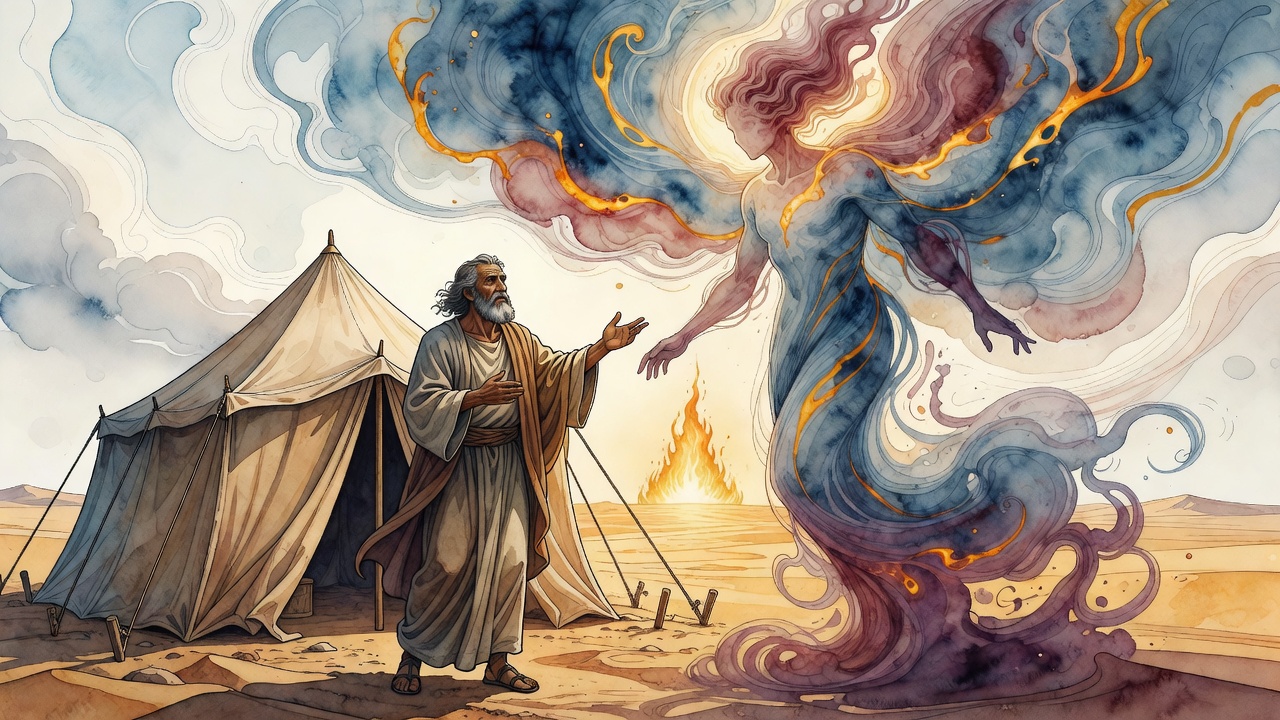
Abraham was sitting at the entrance to his tent in the heat of the day when the smell reached him first. Not the smell of an ordinary traveler, not the dust and sweat of the road. Something sweeter, stranger, the kind of scent that does not belong to midday in the desert. He looked up and saw a man approaching across the plain of Mamre, radiant with a beauty that was almost painful to look at directly.
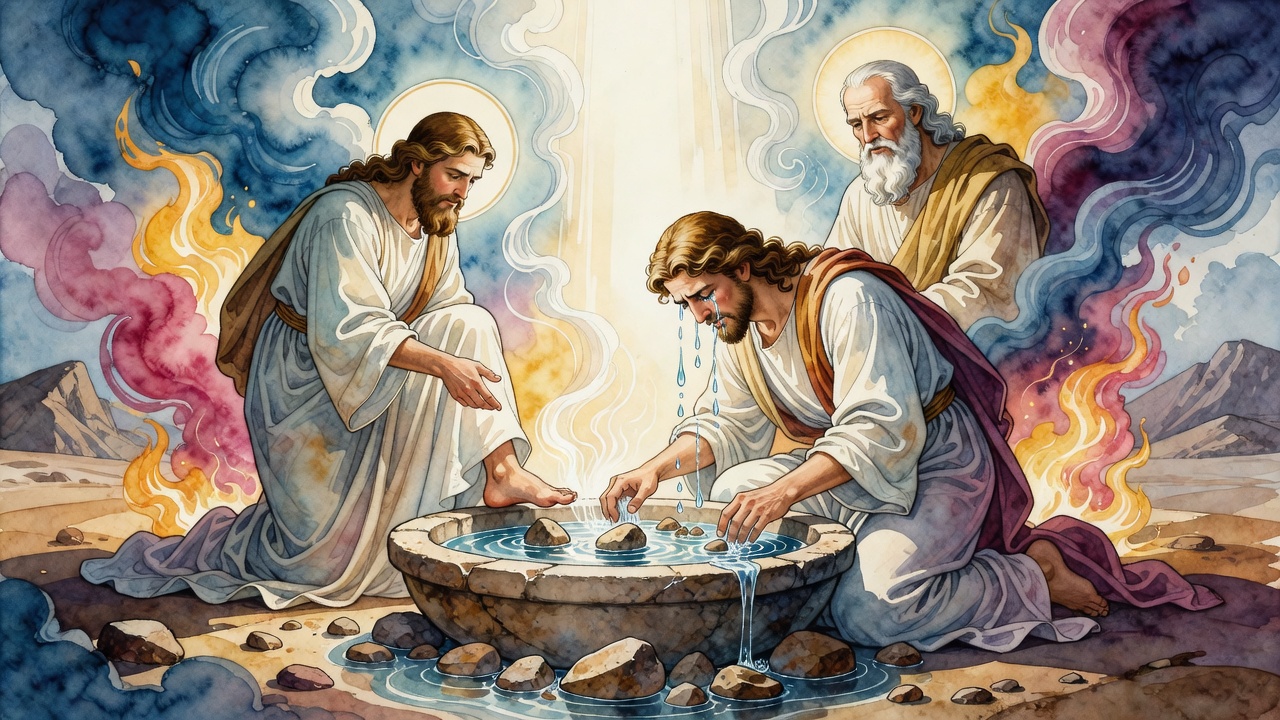
Abraham rose. He bowed to the earth. He said: let a little water be brought, and wash your feet, and rest yourself under the tree. And I will fetch a morsel of bread, and you may refresh your heart. After that you shall go on your way, since you have come to your servant.
He did not know who had come to call. He knew what to do for a stranger, and he did it.
What God Had Commanded the Angel
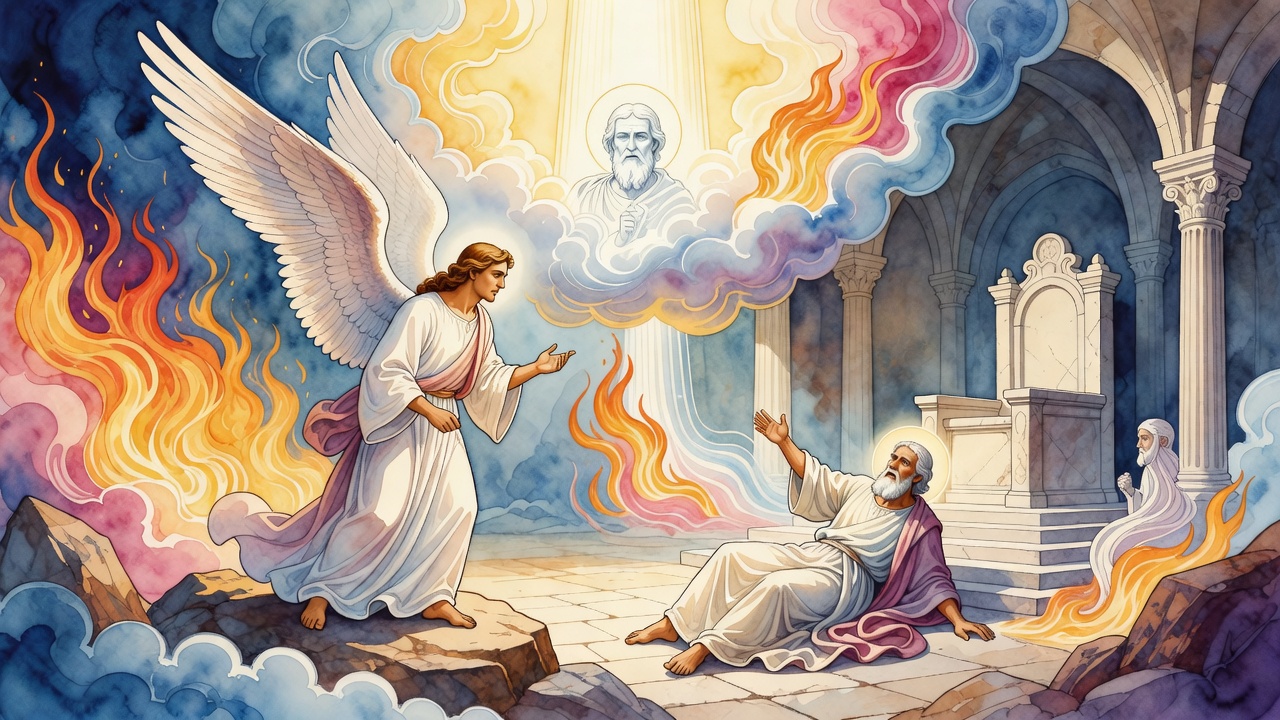
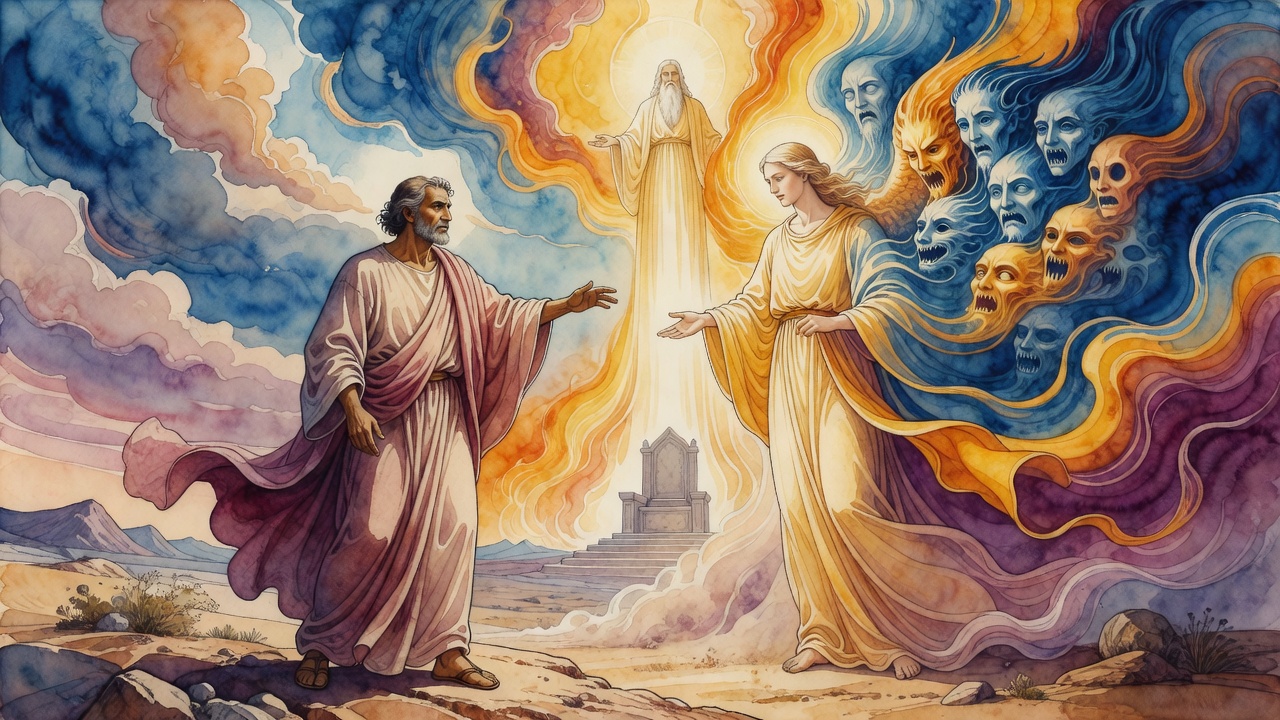
The Angel of Death had been given specific instructions for this visit. God, knowing what Abraham deserved, had told the angel: hide your ferocity. Cover your decay. Put on your youthful beauty. Take him with soft speech. For anyone else, Death arrives differently: with the sword drawn, with the face that strips hope from the room, with the presence that turns the air cold. For Abraham, God had commanded a different approach entirely.
When the angel revealed himself, he said something the tradition preserved with particular care: think not, Abraham, that this beauty is mine, or that I come thus to every man. He was explaining himself. He was telling Abraham that the beauty Abraham was seeing was not the angel's real form but a form assumed specifically for this occasion, out of respect for the man and on divine orders. He had dressed himself in radiance the way a mourner might dress for Shabbat: the external form in honor of something that mattered even at the worst moment.
The Meal That Changed the Plan
Abraham served him. Calf, curds, milk, bread. He set the food before his guest and stood nearby while the angel ate. The tradition notes that angels do not eat, that what happened in Abraham's tent was a performance of eating, the same performance that had occurred when three angels had come to him disguised as travelers and Abraham had fed them the same way. Abraham fed every stranger who came to his tent. He did not adjust his hospitality based on the guest's nature.
The Angel of Death, sitting in a human chair at a human table with food in front of him, found the situation unusual. He was used to being fled from. He was used to arriving and having the room change immediately, the air drain out, the face of whoever he had come for go white and still. He was not used to being given a seat and asked if he wanted more bread. Abraham's hospitality was so automatic, so complete, that it reached even the figure of death and found something to offer.
The tradition says Abraham never actually died. His body was taken, but the quality of his death was so elevated, the soul drawn out in such a manner, that calling it death seemed like an imprecision. The man who had fed every stranger who passed his tent had, at the end of his life, fed death itself and sent it away changed.
What Lot Learned From Watching
Lot had lived with Abraham for years before separating from him in Canaan. The one undeniable thing Lot took from those years was the hospitality. When two angels came to Sodom in the form of men, Lot recognized the form and acted exactly as Abraham had taught him: he ran to meet them, he bowed to the ground, he insisted they come to his house, he baked for them and fed them. In Sodom, that hospitality was radical. It marked him as someone who did not belong there. It saved his life.
The tradition traced Lot's survival directly to what he had absorbed from Abraham's table. Hospitality, practiced long enough and consistently enough, becomes the reflex that operates even in situations where every surrounding voice is saying do not open the door. Lot had opened enough doors beside Abraham that the reflex held even in Sodom.
← All myths