Esau Was Born First and Jacob Ended Up in Adam's Garments
Rebekah's twins fought inside her, and one threatened to kill her to get out first. Shem told her why: her body was holding two nations.
Table of Contents
 Click for full size
The War Inside Rebekah
Seven months in, Rebekah began wishing the barren years back.
The pain came in a pattern she could map against the road. Past a house where idols were kept, something inside her lunged toward the door. Past the study house on the far side of the same road, the lunge went the other way, hard enough that she had to stop and put a hand on the wall.
Two of them were in there. They were not turning over. They were fighting.
They argued, and their mother could not hear a word of it. Esau said there was one world and this was it, the world with meat and drink and marriage and children. Jacob said there were two, and in the second nobody ate, nobody married, nobody buried anyone. "If it pleases you, take this world. I will take the other."
Esau did not want half of anything.
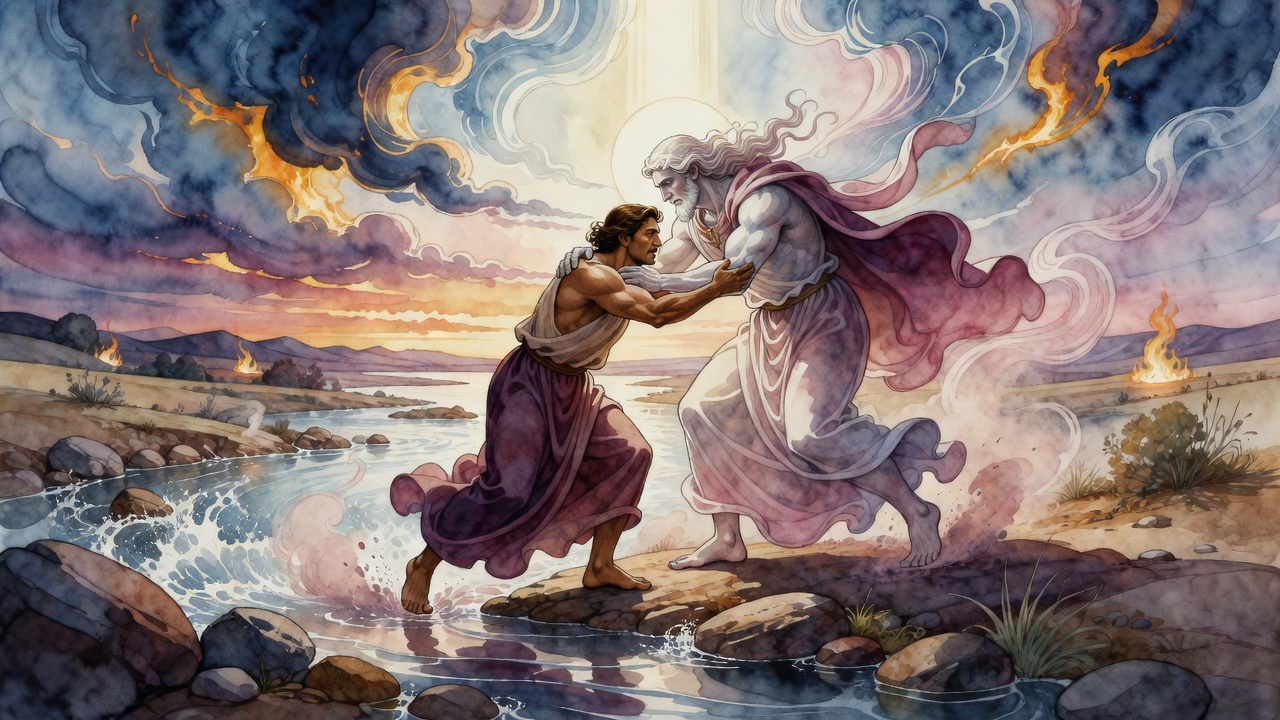
Then Samael came for the younger twin. He wanted Jacob dead before he could be born, and Esau was with him in it. Michael came down for Jacob and tried to set Samael on fire, and the two of them went at each other so hard that God had to open a court in heaven, because nothing else was going to stop it.
What Shem Told Her on the Mountain
Rebekah asked the other women whether their pregnancies had felt like this. None of them had. One remembered hearing of a pregnancy like it, long ago. Nimrod's mother.
So she climbed Moriah, where Shem and Eber kept a study house, and asked them to put the question to God. Shem came back with an answer and dropped his voice before he handed it over.
"My daughter, I am telling you a secret. See that nobody finds it out. Two nations are in your womb. How is your body supposed to hold them, when the whole world will not be big enough for the two of them to live in it peaceably?"
He kept going, and it got worse. Two nations, each with a world of its own, one of them Torah and one of them sin. Out of the first would come Solomon, who built the Temple. Out of the second, Vespasian, who burned it. Esau's line would raise lords and Jacob's would raise prophets, and both lines would be hated everywhere on earth. Esau would rule the world first. Jacob would rule it last, and only for as long as he kept his heart clean. Otherwise it ran the other way.
God had done this arithmetic once before. On the fifth day of creation he made leviathan male and female, and then he killed the female, because a breeding pair of them would have finished the earth between them. This time both of them were already alive, and both of them were hers.
The One Who Came Out Red
At the end, both of them wanted the door first. Esau said he would take it even if it cost their mother her life on the way out, and Jacob let him through.
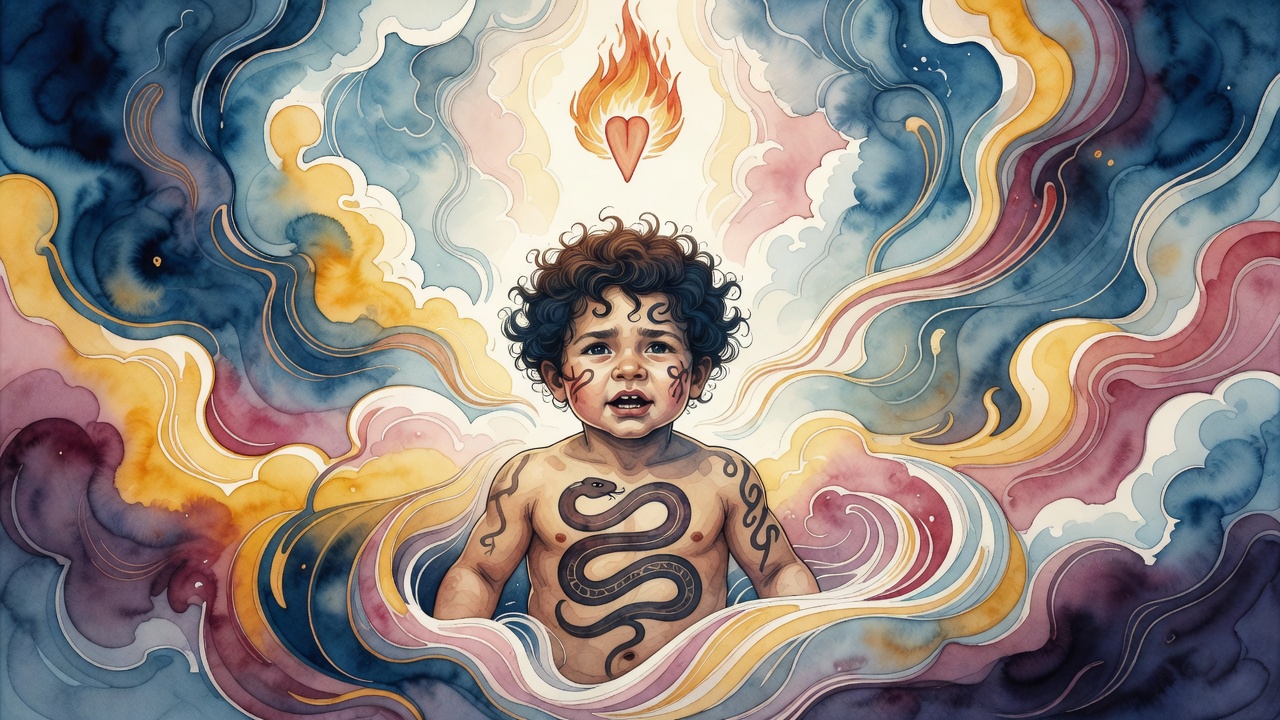
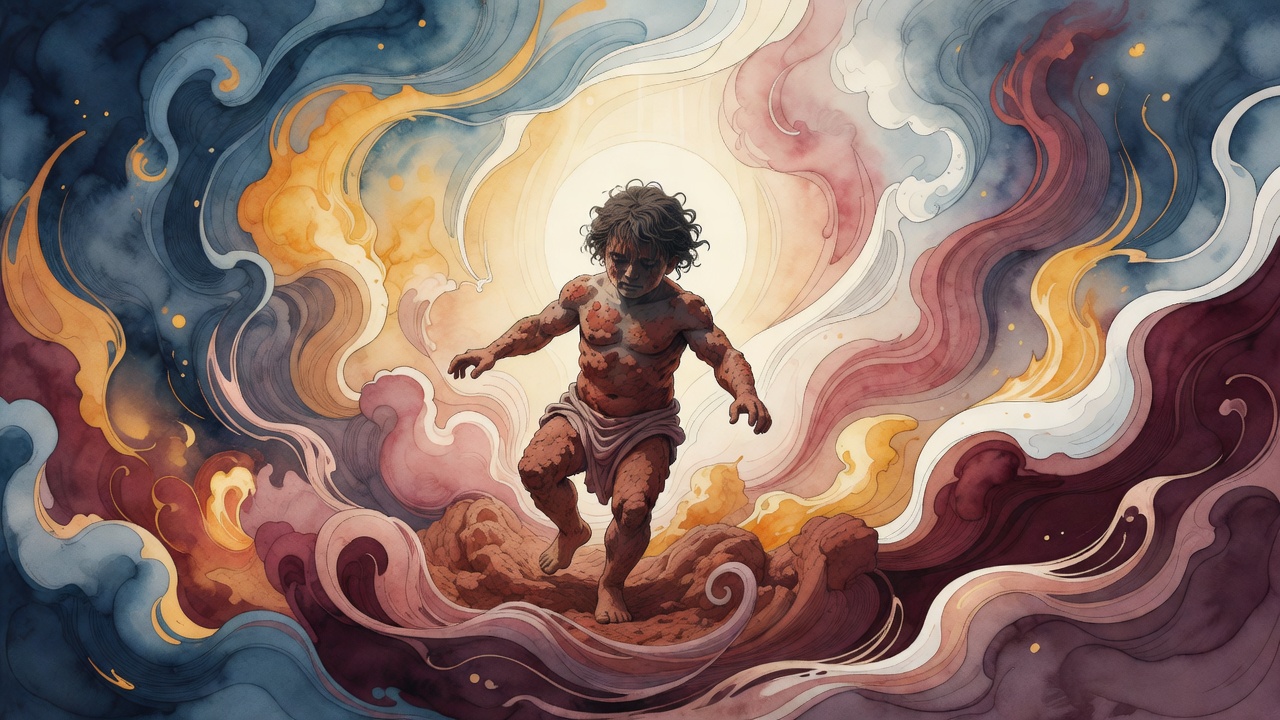
Esau arrived blood-red. Not the passing red of a newborn. He came out with hair on him, with a beard, with teeth already in, front and back, and somewhere on his skin was the figure of a serpent. Jacob came out behind him, clean, and already carrying the sign of the covenant on his body.
Isaac looked at his red first son and would not bring a knife near him. The color meant the blood was not moving properly, he decided, so the boy could wait until thirteen and choose the covenant the way Ishmael had. At thirteen Esau refused, and stayed uncircumcised the rest of his life. His name was already a verdict. 'Asui: made, finished, done at birth.
The Red Thing at the Well of the Vision
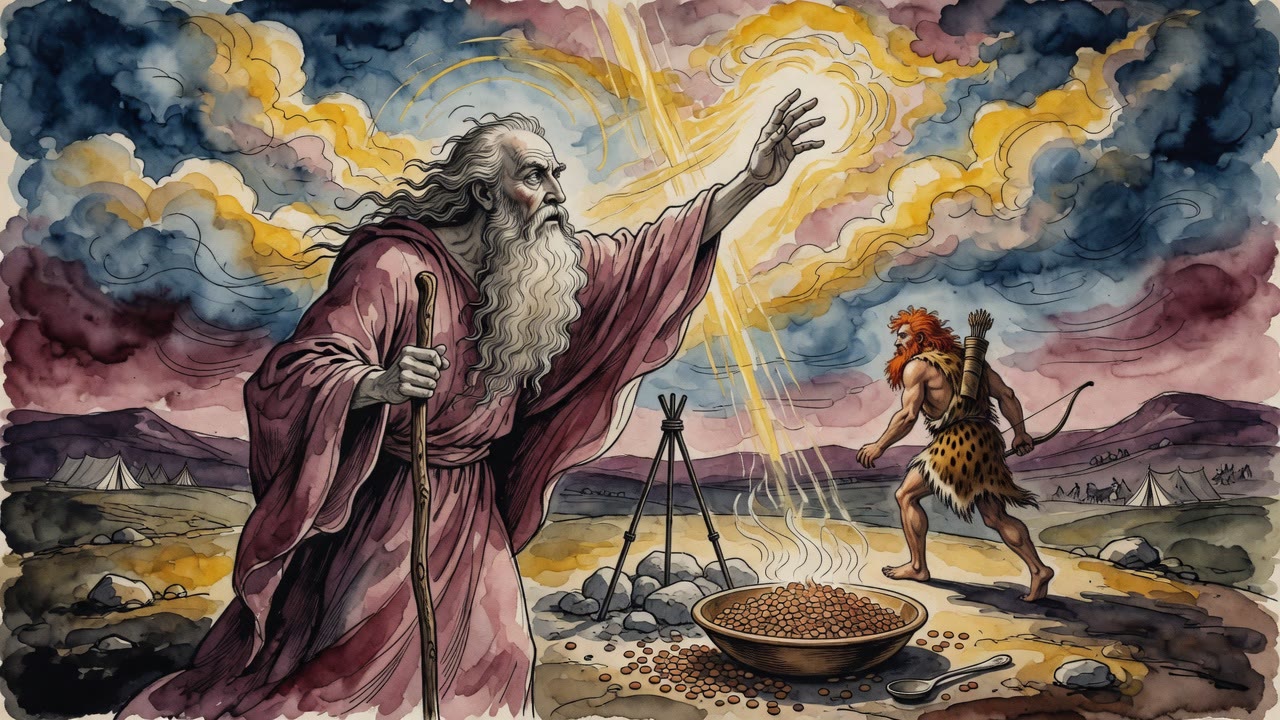
Years later the household was living at the Well of the Vision when a second famine came, the first having fallen in Abraham's day. Jacob had lentils on the fire. Esau came in off the field with nothing.
"Give me some of that red pottage."
He did not name the food. He named the color. Jacob heard the opening and stepped into it. "Sell me your birthright and I will give you bread, and some of this lentil pottage as well."
Esau sold. Esau ate. The whole transaction took less time than the cooking had.
The Night the Deer Kept Getting Loose
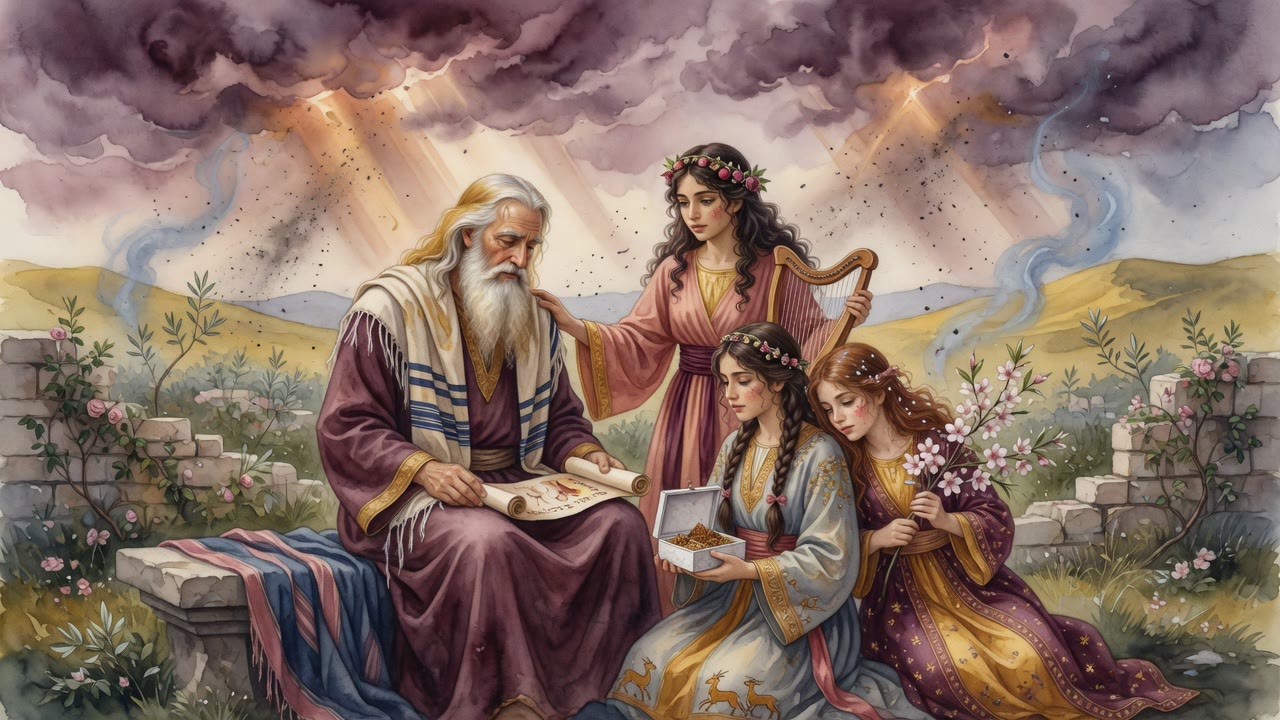
By a hundred and twenty three Isaac had lost his sight twice over. Once on Moriah, where he had lain bound under his father's hand while the angels wept above him and their tears fell into his open eyes and stayed. Once later, for taking a bribe, and the bribe was Esau's love.
He was close to the age his mother had died at, so he called Esau in, told him to sharpen his knives, and sent him out for game. Nothing that had died on its own, nothing torn by an animal, nothing stolen. It was Passover eve. The storehouses of dew were about to be unlocked and the whole world was about to sing.
God sent Ha-Satan (the Accuser) out onto the hunt to slow Esau down. Esau ran a deer to ground, bound it, and went after the next one. Behind him Ha-Satan cut it loose. Esau came back to an empty patch of grass, went out again, bound another, left it, came back to nothing. It happened over and over while the light drained out of the sky.
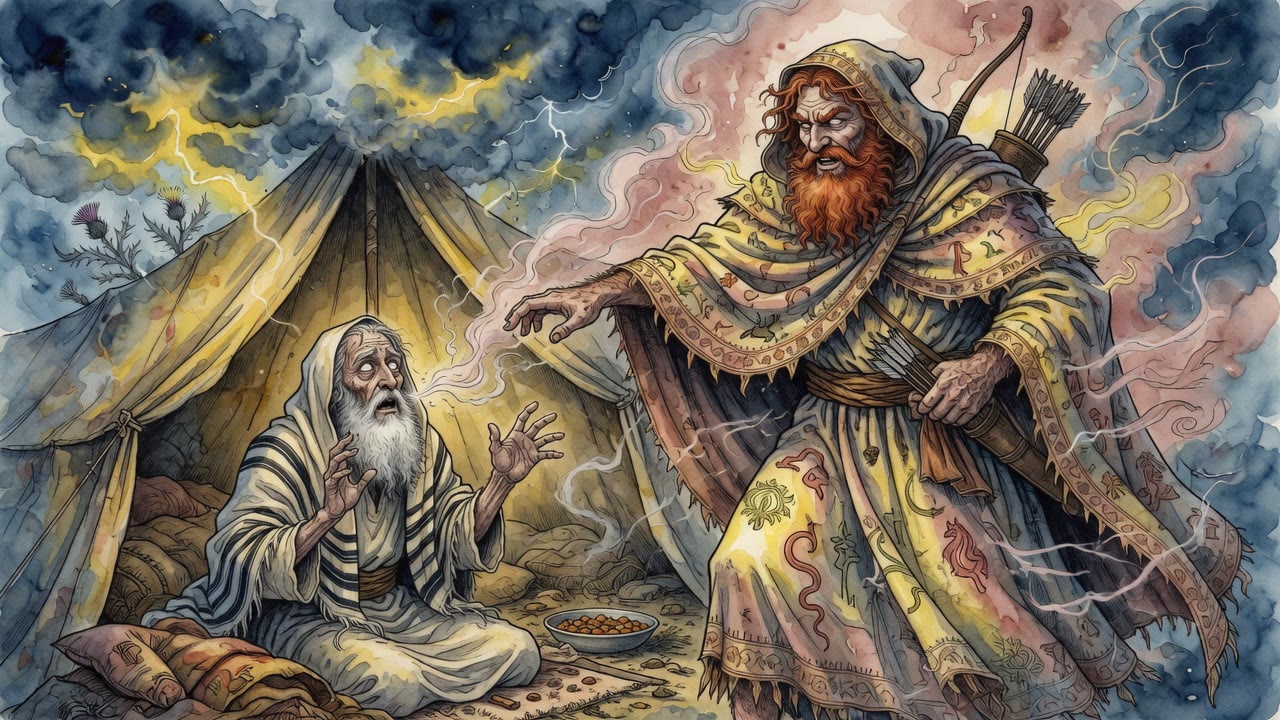
At the tents, Rebekah already knew what her husband had promised, though nobody had told her. She sent Jacob for two kids from the flock, one for the Passover offering and one for the festival, and Jacob refused. His father would touch him. His arms were smooth. He would be caught mid-lie by a blind man and cursed on the spot.
"When Adam was cursed, the curse fell on his mother, the earth," Rebekah said. "If your father curses you, I will carry it. And if it comes to that, I will stand in front of him and tell him Esau is a villain and you are a righteous man."
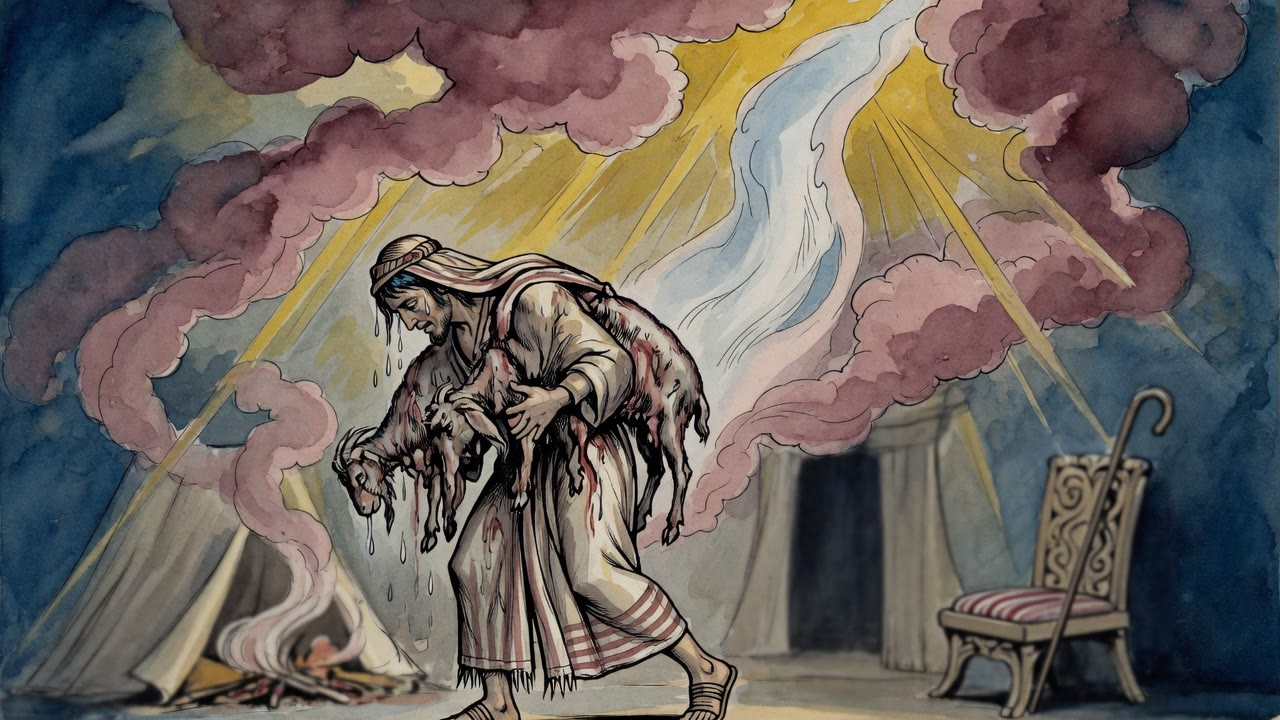
She skinned the kids and tore the hides into strips and sewed the strips together, because Jacob was so tall that two whole skins would not have covered his hands. Then she dressed him in Esau's garments, the priestly clothes God had made for Adam back when the firstborn of the world served at the altar, handed down from Adam to Noah to Shem to Abraham to Isaac and on to his older son. Esau did not keep them in his own house. He did not trust his wives with them. He kept them at his mother's.
Jacob went in weeping, with his back bent.
He came out blessed. Esau got home later with the meat in his hands, found out what the loose deer had bought his brother, and the cry he let out went through the whole camp.
← All myths