Esau's Son Eliphaz Accused Job of Sin, and God Rebuked Him for It
Job told Eliphaz to go look at his own father Esau. Eliphaz answered that a son does not carry his father's guilt, and heaven made him carry it anyway.
Table of Contents
 Click for full size
The Field, the Famine, and the Red Pottage
Before there was a prophet in the family there was a hungry man in a doorway.
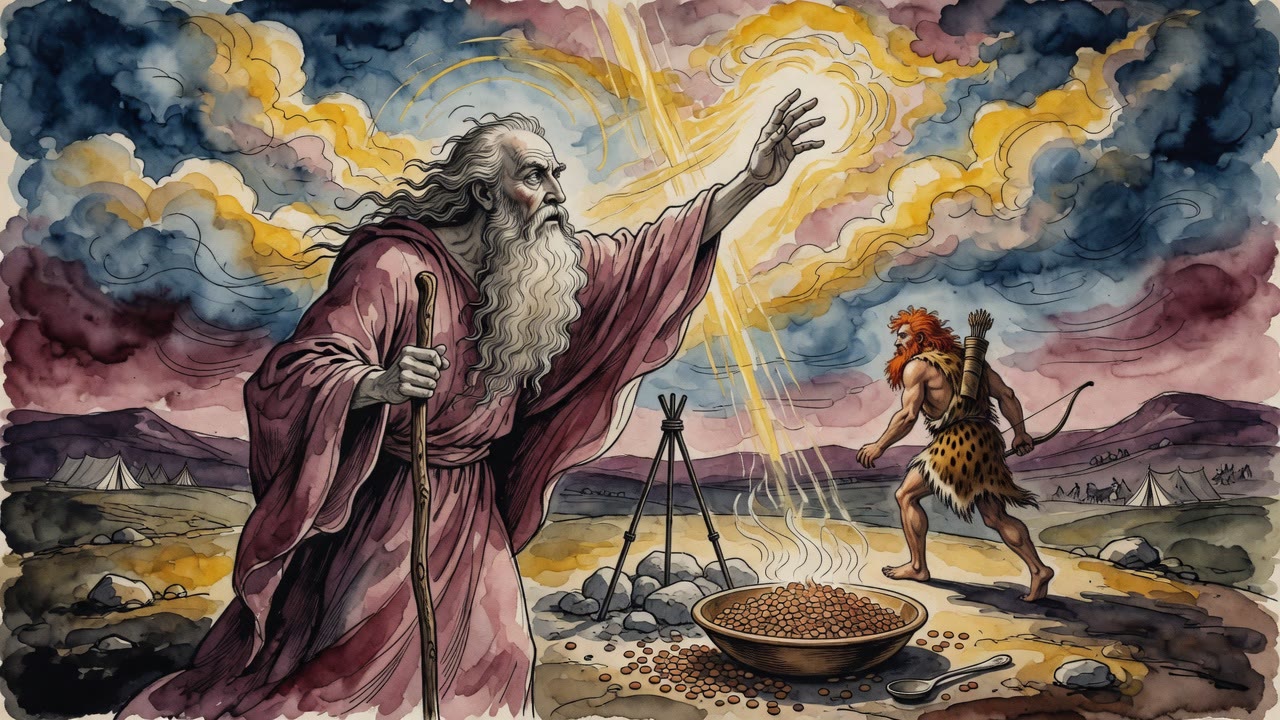
Jacob had been living at the Well of the Vision for seven years when the famine started, the second one, the one that came after the famine of Abraham's days. He had a pot of lentils on the fire. Esau came in from the open country with nothing in his hands and his stomach against his spine, and he saw the red stuff bubbling and asked for it.
Jacob named his price before he lifted the ladle. Sell me the birthright and you get bread, and you get some of this pottage as well.
Esau ate. Generations later his son would still be answering for that meal in a stranger's ash heap, three days' travel from home, to a man scraping his own skin with a shard.
The Friend in the Ash Heap
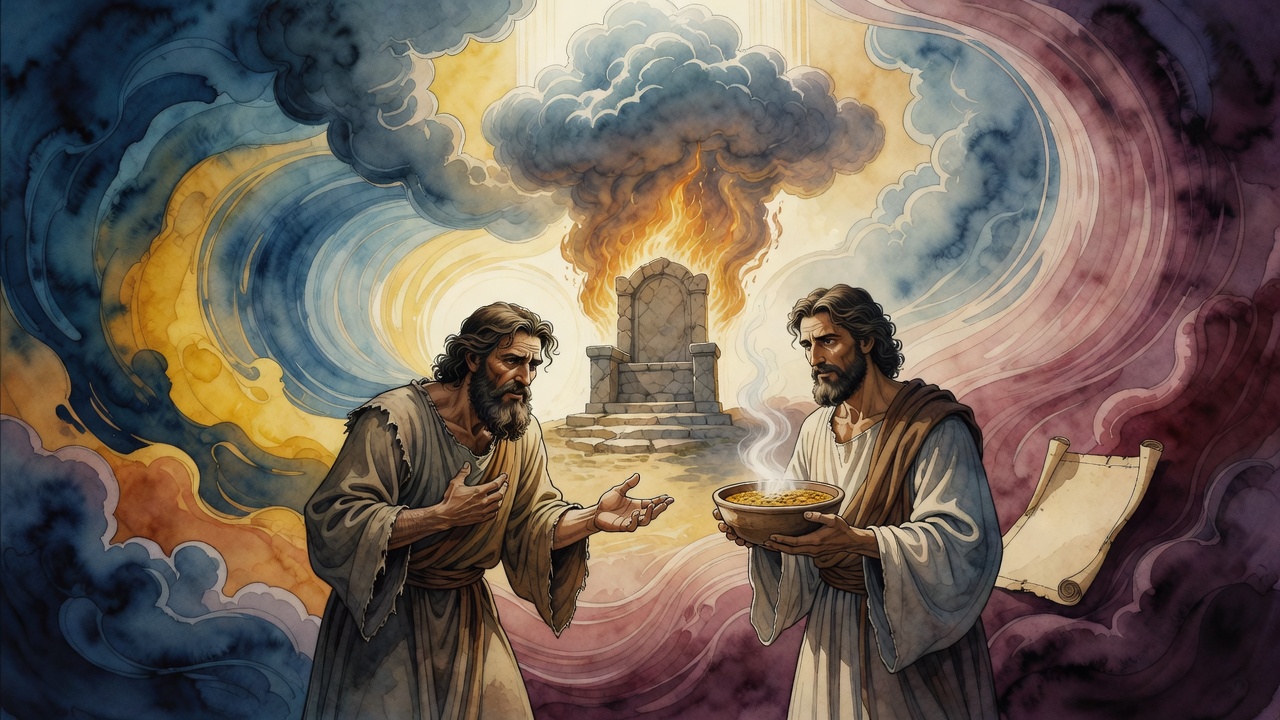
Eliphaz had come with the others to sit with Job, and he was the first of them to open his mouth, and he did not soften what he had come to say. Job was suffering, therefore Job had done something. That was the shape of the argument and Eliphaz pressed it hard, again and again, over a man who had buried ten children in a week.
Job took the accusation for as long as he could take it. Then he swung.
"Look at thy father Esau," he said.
It was the cheapest blow available and it was aimed exactly. Every man in the circle knew whose son was speaking. The birthright sold for soup, the field, the red pottage, the whole embarrassing inheritance was sitting there in the dust lecturing a blameless man about accounts.
I Have Nothing to Do With Him
Eliphaz did not flinch and he did not defend his father. He cut him loose.
"I have nothing to do with him," he said. "The son should not bear the iniquity of the father." And then, in case anyone thought this was only a legal distinction, he went further and buried the man. Esau would be destroyed, because he had done nothing good in his life, and his chieftains would go down with him.
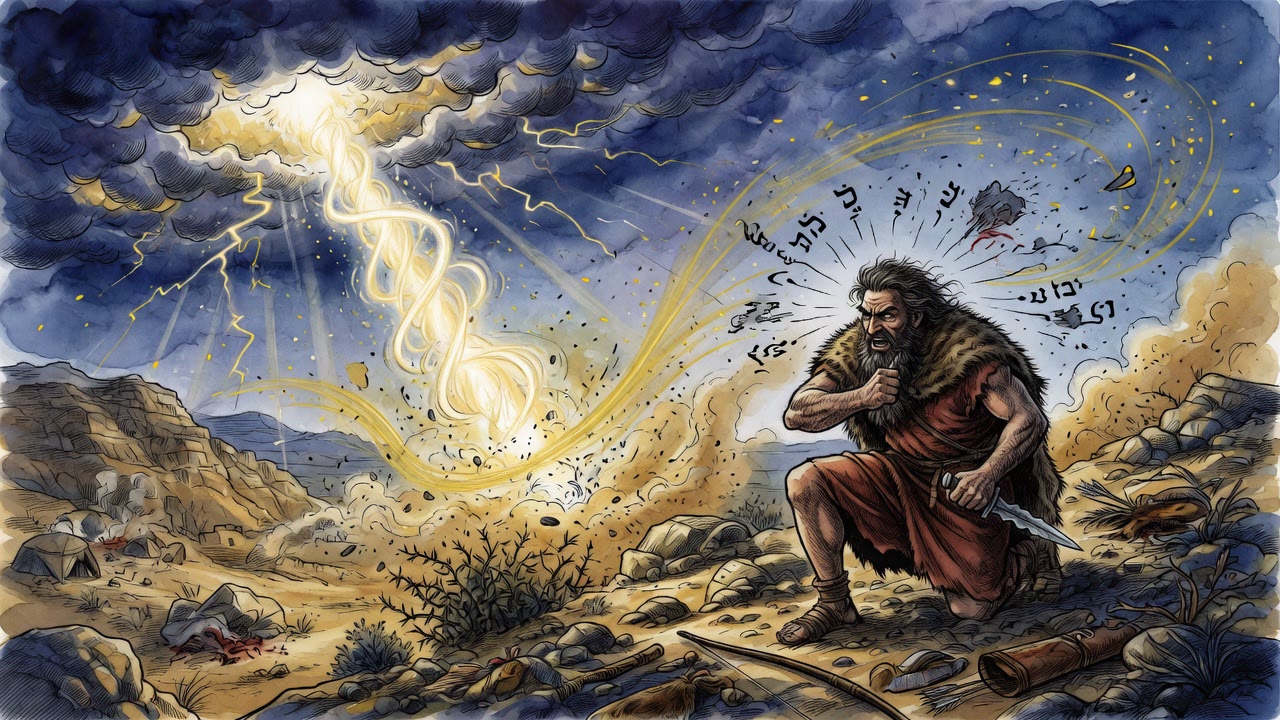
"But as for me, I am a prophet." He said it plainly, as a fact about himself he expected the ash heap to accept. "And my message is not unto Esau, but unto thee, to make thee render account of thyself."
He turned the conversation back onto Job in the same breath he used to bury his father. It was a clean piece of work. It kept the prophecy pointed where he wanted it pointed. It also meant that the last thing Eliphaz said about his own family, out loud, in front of witnesses, was a death sentence.
The Sentence Heaven Handed Down
Heaven had been listening to the wrong half of that speech.
God rebuked Eliphaz, and the rebuke had nothing to do with Esau at all. "Thou didst speak harsh words unto My servant Job." Not false words. Harsh ones. The theology had been correct in general and murderous in this particular ash heap, and the man delivering it had been given prophecy and had used it to press a broken man for a confession he did not owe.
Then came the sentence, and it was built out of the thing Eliphaz had just tried to disown. Therefore shall Obadiah, one of thy descendants, utter a prophecy of denunciation against thy father's house, the Edomites.
What the Sentence Cost Him
He had said he had nothing to do with Esau. Heaven answered by tying him to Esau permanently, and by making the rope his own bloodline.
The prophecy would not come for centuries. When it came, it would come out of the mouth of a man descended from Eliphaz, and it would announce that there would be no survivor left of the house of Esau. Every word of it would be true, which was the point. Eliphaz had built his whole position on the principle that a son is not liable for his father. His punishment was a son, far down the line, standing up to declare the father's house finished, exactly as Eliphaz had declared it in the ash heap, and carrying the declaration into scripture where it could never be walked back.
Job kept sitting in the ashes. Nobody had told him yet that he had won the argument.
← All myths