Levi Crossed a Line at Shechem and Became the Priestly Tribe
Levi and Simeon killed every man in Shechem and Jacob cursed them for it. Within a generation, God chose Levi for the priesthood. Jubilees explains why.
Table of Contents
 Click for full size
The Massacre at Shechem
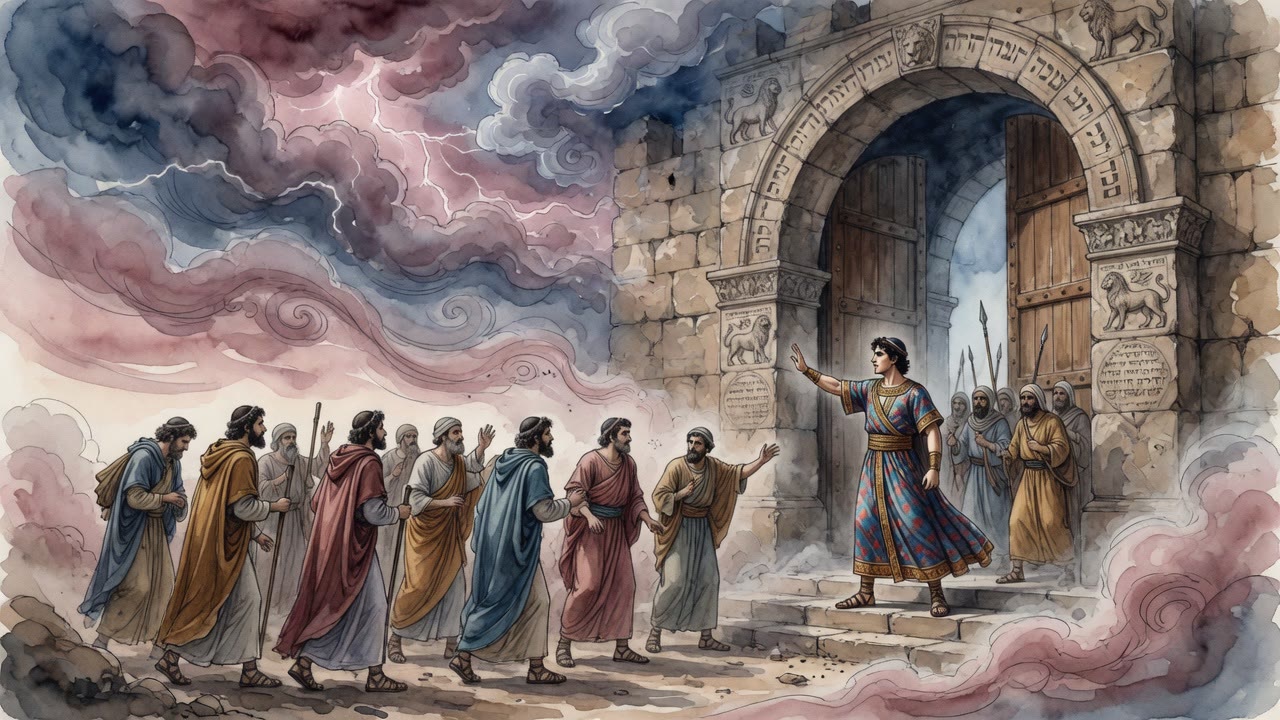
Shechem the man had seized Dinah and violated her. His father Hamor came to Jacob with a proposal: let the two peoples merge. All the men of Shechem would be circumcised. The families would intermarry. Their wealth would combine. Jacob's sons said yes.
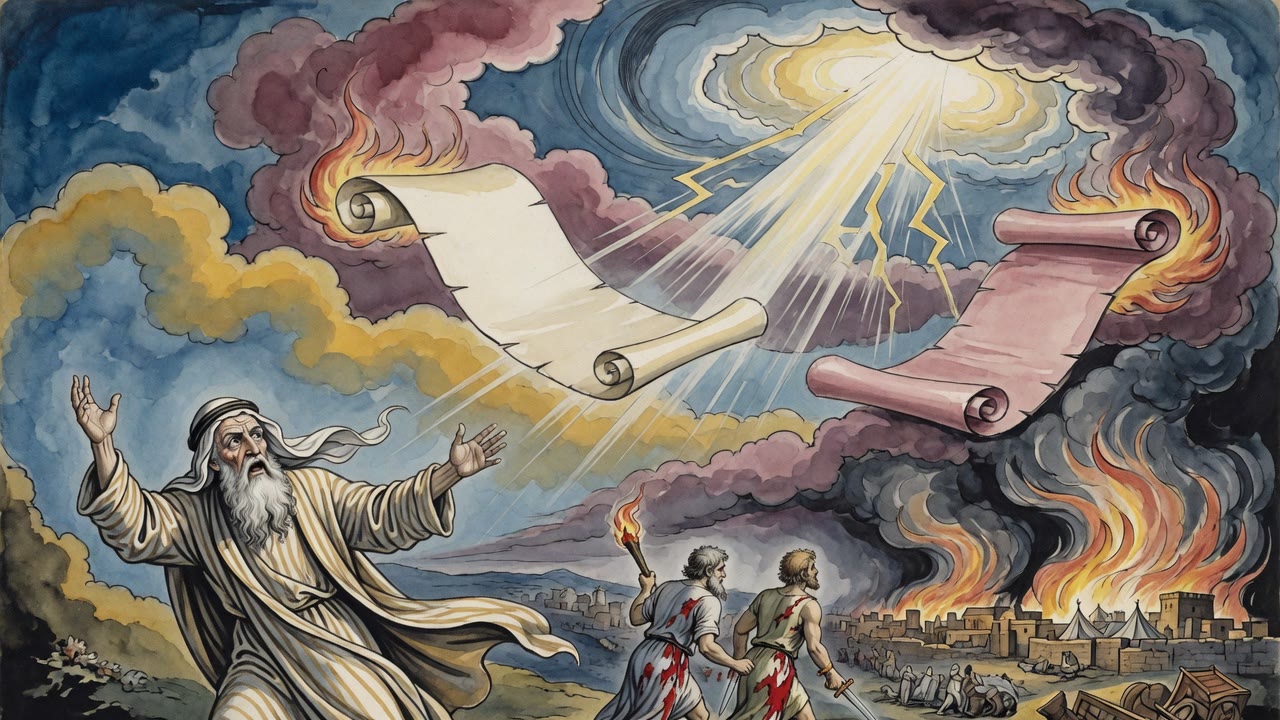
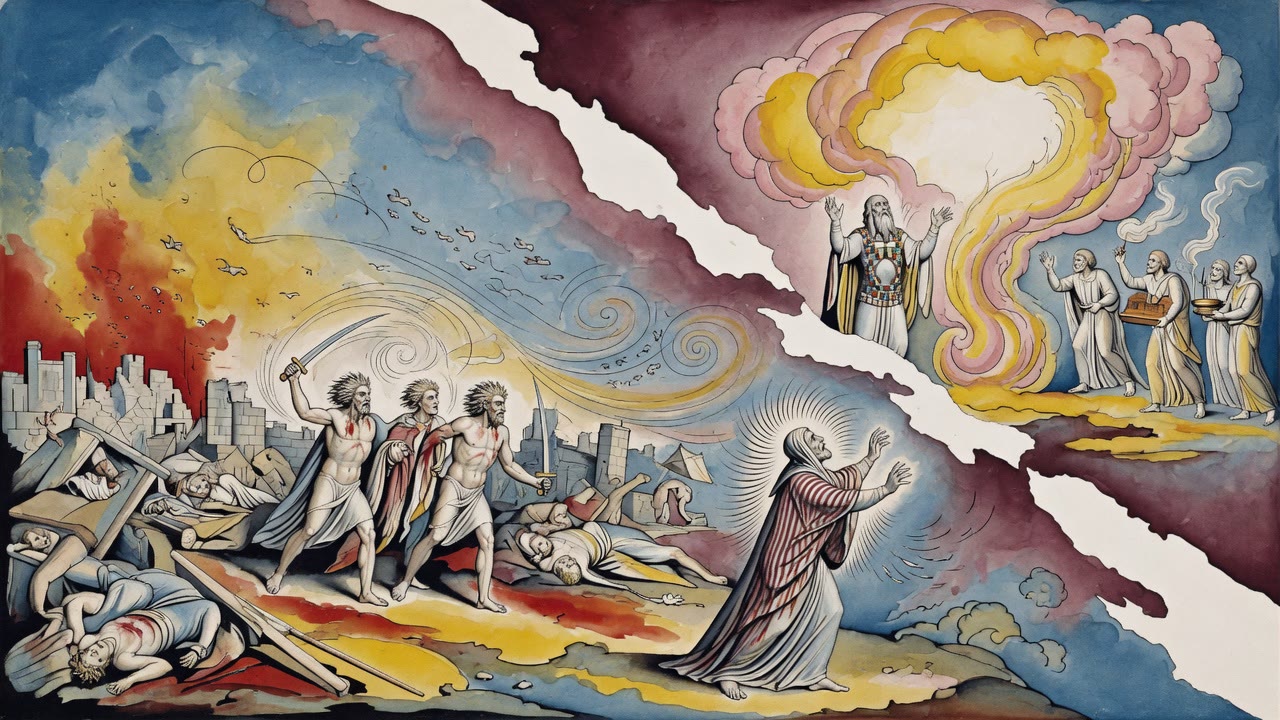
Three days later, while the men of Shechem were still in pain from the surgery, Levi and Simeon walked into the city with swords. They killed every man inside. They took Dinah. They took the flocks, the herds, the goods, the women, the children.
Jacob did not receive this as justice. He told his sons they had made him a stench to every people in Canaan. If the Canaanites and Perizzites gathered against him, his household would be destroyed. Simeon and Levi answered with a question: should he have dealt with our sister as a harlot? The Genesis account ends there, leaving both positions hanging in the air without resolution.
What Jacob Cursed and God Chose
Jacob's deathbed words to Levi left nothing ambiguous. Cursed be their anger, for it was fierce. Cursed be their wrath, for it was cruel. He scattered Levi's descendants throughout Israel, depriving them of a territorial inheritance among the tribes. In Jacob's reckoning, the massacre at Shechem was an act of catastrophic violence, and Levi would carry it as a mark.
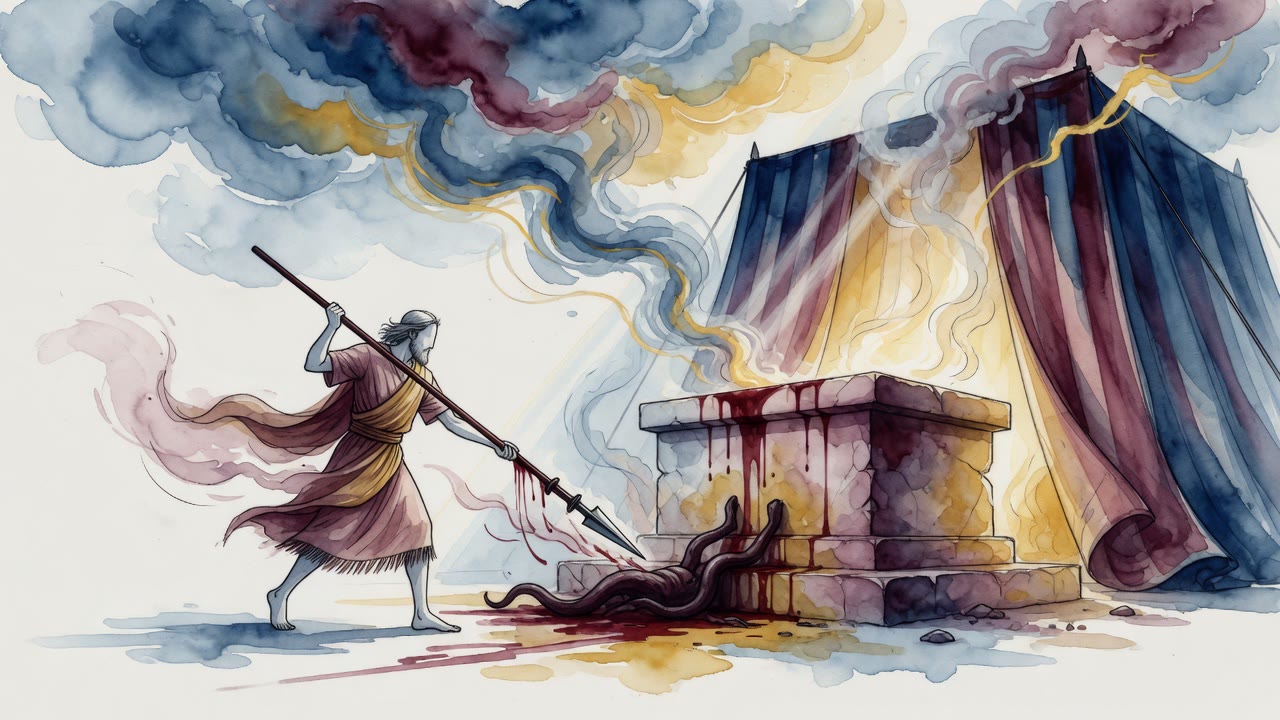
The Book of Jubilees reads the same event differently. It does not deny the violence. It frames the act as zeal, the same category of motivated ferocity that runs through the priestly tradition. A man who kills for the holiness of the people, who takes action against defilement when the community hesitates, earns something in the heavenly record that looks nothing like a curse. Jubilees chapter 30 states it directly: his name is recorded among the righteous, as a friend of God, because the act was in defense of the covenant.
The Tribe Without Land
Jacob scattered Levi's descendants, just as he promised. No tribal territory. No bounded inheritance of land. That would seem to confirm the curse. But the Levites did not receive emptiness in exchange. They received the Temple service, the cities of refuge, the tithes from every other tribe. What looked like punishment became the structure of the priesthood itself. The scattering that Jacob decreed became the geographical pattern of a tribe spread across all Israel to serve all Israel.
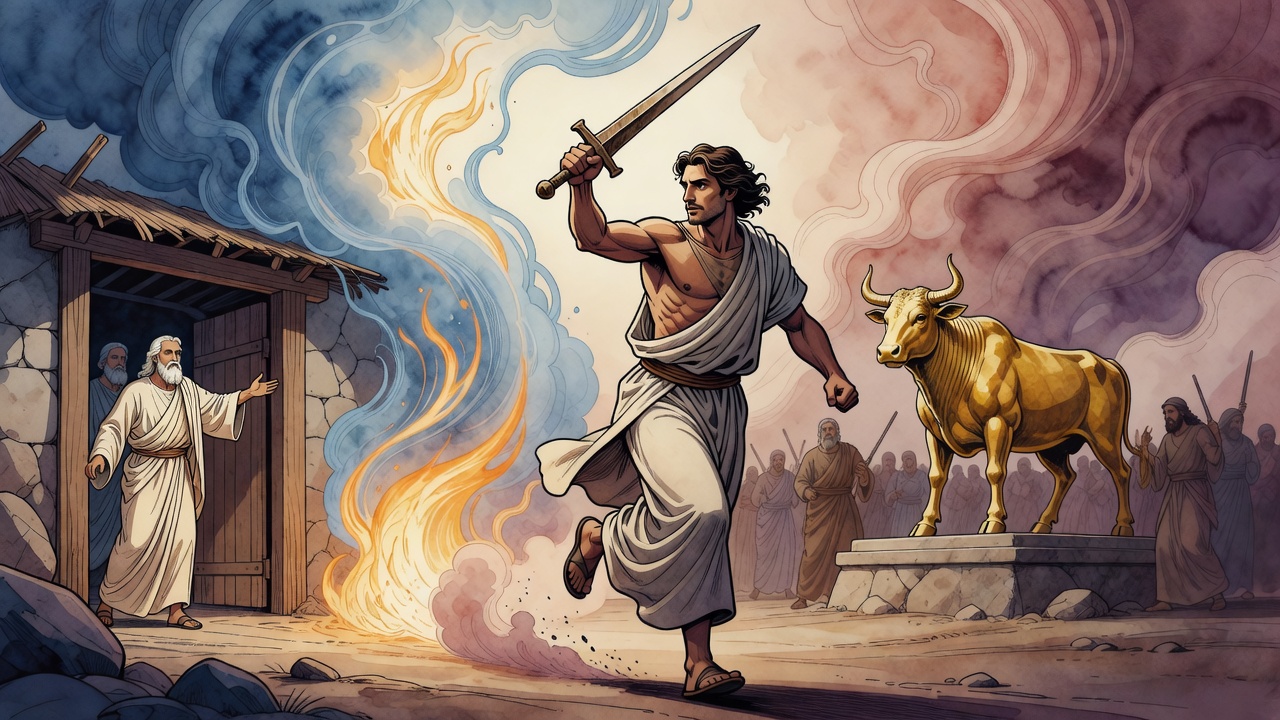
Bereshit Rabbah preserves a rabbinic reading that adds another dimension. The midrash connects Levi to the Golden Calf incident, where the Levites stood apart from the people's sin and rallied to Moses. That moment of collective faithfulness, centuries after Shechem, confirmed the tribe's priestly identity. The rabbis were drawing a line from Shechem to Sinai, suggesting that the same quality that made Levi dangerous in Canaan made Levi indispensable in the wilderness.
The Heavenly Record
Jubilees insists that what matters in the long term is not how Jacob read the massacre but how it was recorded above. The heavenly tablets have their own accounting. A man who acts to protect the covenant's boundary, who does not wait for institutional permission, who spills blood in defense of Israel's integrity, that man gets written in a different column than the one Jacob put him in.
Jacob cursed the anger. God chose the tribe. Both statements are true, and the tension between them is the story.
← All myths