The Foreign Gods That Jacob Buried Were Still Under the Mountain
They were still bloody from Shechem. Jacob stopped the whole camp on the road. No one would walk toward Beth-El with a god in a sleeve.
Table of Contents
They were leaving Shechem in a hurry. The town behind them was full of dead men his sons had killed, and every city within a day's walk was deciding what to do about it. Jacob stopped the whole household on the road anyway.
 Click for full size
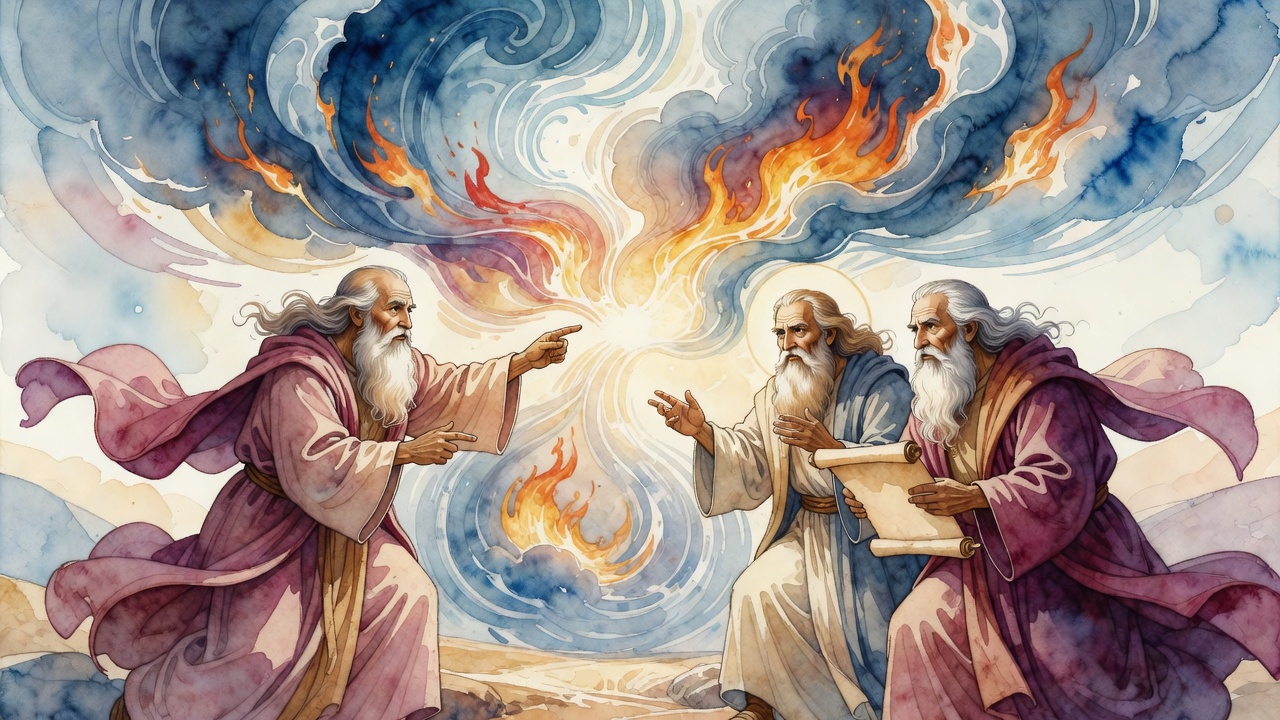
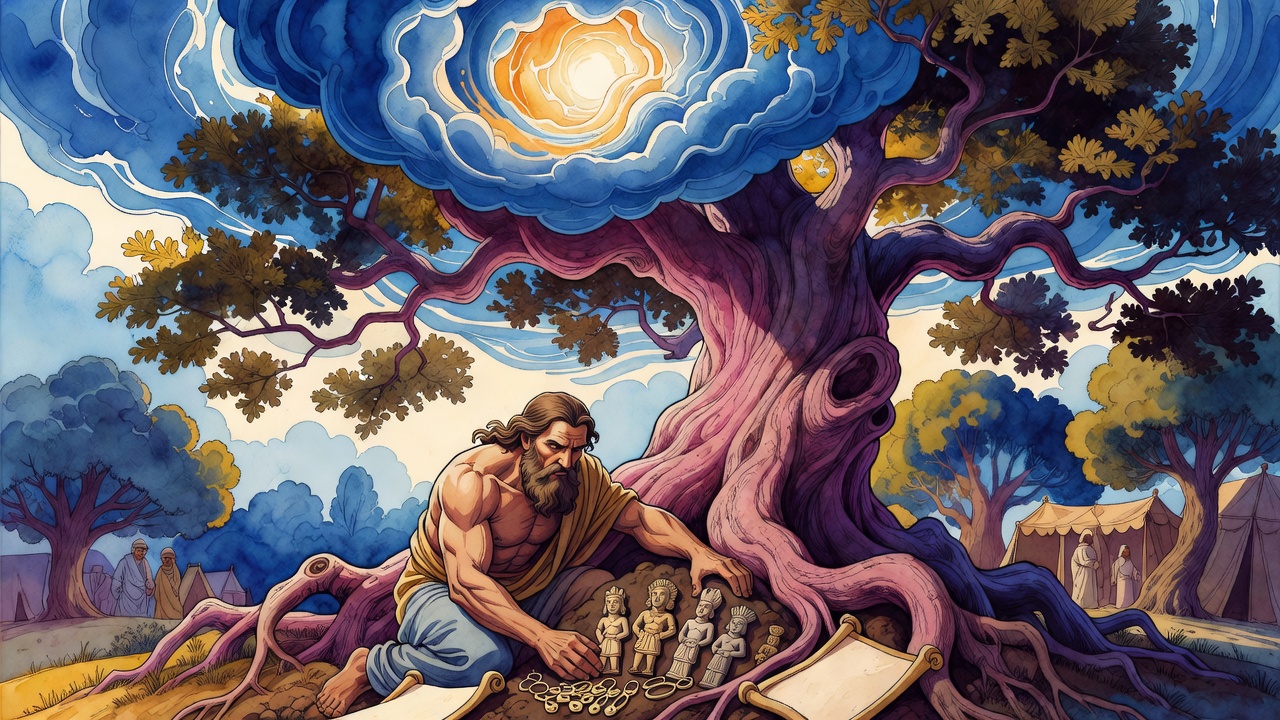
"Remove the foreign gods that are among you. Purify yourselves. Change your clothes."
They came forward with the gods first, the small household figures that had traveled with them out of Laban's country, and then with the rings out of their ears. Then Jacob started on the clothing.
Hand Over Anything With a Picture
Later law is careful and narrow. A vessel found with the sun cut into it, or the moon, or a dragon, goes into the Dead Sea. Sun, moon, dragon. A short list. Whatever is not on the list may be kept.
Jacob would not work from a list. He went through the garments themselves, every one of them, because a figure woven into a border might have been woven for a reason, and he could not tell which ones. A picture on a sleeve can be worship. He treated it that way.
Rabbi Yochanan looked at that thoroughness later and said the thing plainly. "We are not expert in the small print of idolatry the way our father Jacob was." The camp stood in the road and handed over what a more lenient age would have kept.
The Hole Under the Terebinth
He put all of it in the ground under the terebinth near Shechem. Twenty years of accumulation from a foreign household. Whatever the servants had picked up in Paddan-Aram. Whatever came out of Shechem with his sons. The earrings, which were worth something and could simply have been melted, went in with the rest.
He covered them over. The family walked on toward Beth-El.
Nobody dug them up. He interred them, and the next verse starts, and the hole stays exactly where he left it. Idols in the dark. Earrings in the dark. Sleeves with pictures in the dark. The road ahead had to be clean even if the ground behind him stayed poisoned.
Dread on the Cities
They traveled, and the dread of God was on the cities around them, and nobody came out after the sons of Jacob (Genesis 35:5).
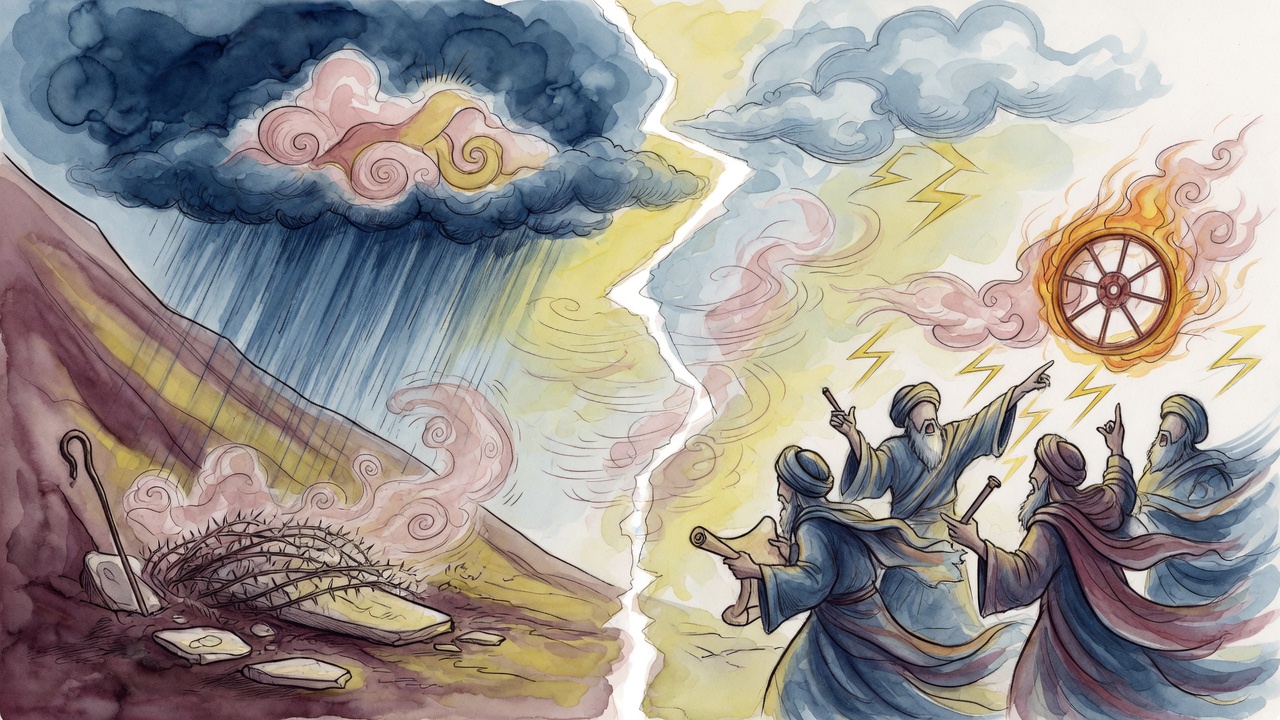
Three times, the tellings say, idol-worshippers gathered to make war on Jacob's children and were not permitted to. This was the first. The second came in the days of Yehonatan, when the ground itself shook under the Philistine camp and a terror out of heaven went through it (I Samuel 14:15). The third came in the days of Joshua, when the kings massed at Hatzor and never marched. Joshua burned Hatzor and left every other standing city alone, carrying a word God gave Moses and Moses gave Joshua into the north with him.
The road ended at Luz, which is Beth-El. The name is the word for an almond tree. A man who walks into that place comes out blossoming with commandments and good deeds the way the almond breaks into flower before anything else in the orchard. Jacob's household walked into it without the gods in their packs.
Nimrod's Fire Waited on a Grandson
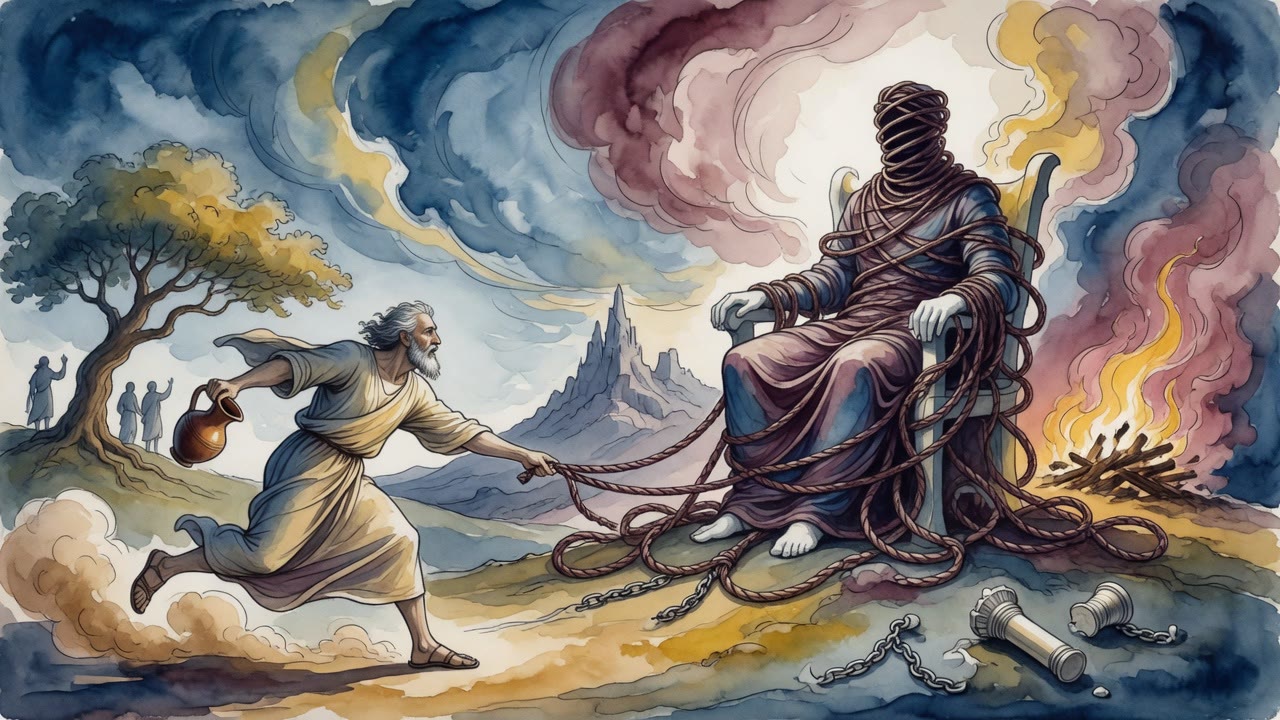
A man stands in front of a ruler who has just sentenced him to burn.
Before the sentence is carried out the ruler consults the stars, and the stars tell him that this condemned man is going to father a daughter, and that daughter is going to marry the king. The ruler changes his mind on the spot. Not for the man's sake. For the sake of a girl who does not exist yet.
That is the shape of it, and the man tied up in the story is Abraham, and the fire is Nimrod's furnace. Abraham did not come out of that fire on his own account. God looked forward through Isaac to Jacob and spared the grandfather for the sake of a grandson three generations down who had not been conceived. The Lord who redeemed Abraham speaks to the house of Jacob.
God spoke to the world as to a child. "My world, My world, I will tell you who created you and who fashioned you. Jacob created you. Jacob fashioned you." The behemoth, that enormous animal being fattened for the feast at the end of time, eats grass tonight because of him. Heaven and earth were run up on his account. The idols under the terebinth were a man cleaning a house the world itself had been built to hold.
What Still Lies Under Gerizim
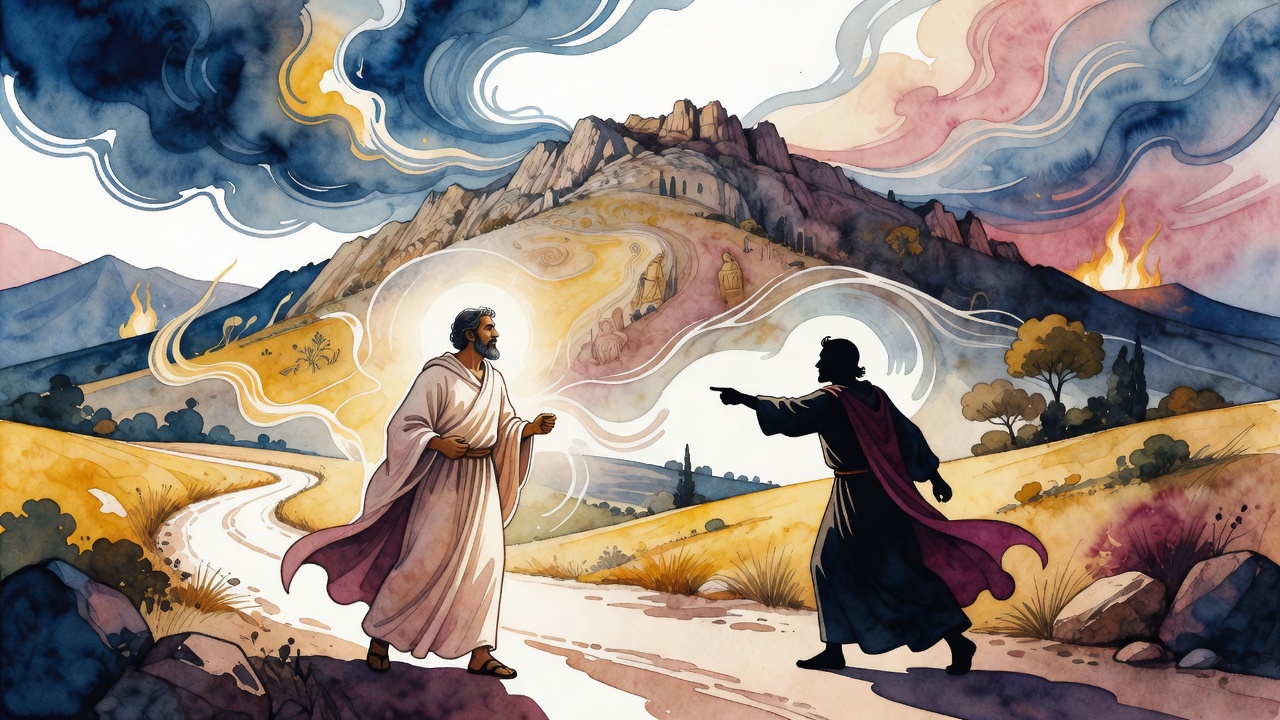
Almost two thousand years later a man named Rabbi Yishmael ben Rabbi Yosei was walking up to Jerusalem to pray, and his road took him past Mount Gerizim.
A man of that mountain fell into step with him and asked where he was going.
Up to Jerusalem, to pray.
"Wouldn't you rather pray on this blessed mountain here," the man said, "instead of on those ruins?"
Yishmael did not soften it. "I will tell you what you are like. You are like a dog that is desperate for a carcass. You are eager for that mountain because you know what is buried under it."
He meant Jacob's hole. The gods, the earrings, the garments with figures on them, still down there in the dark where a frightened man had put them on his way out of Shechem.
The men of Gerizim heard it and drew their own conclusion. This one wants to dig them up for himself. They agreed among themselves to kill him, and Rabbi Yishmael got up in the night and ran. The mountain kept its buried things. The idols stayed in the hole. The world that had been fashioned for Jacob held together without them, and the hole stayed closed.
← All myths