Parshat Toldot5 min read

Esau Lost Isaac's Blessing by Four Hours

Esau came back four hours too late, carrying false venison and finding that Jacob had already taken the blessing meant for him.

Curated by Arthur · Told by Maggid ·
Table of Contents
  1. Four Hours Outside the Tent
  2. Jacob's Voice Still Hung There
  3. The Command That Broke the Room
  4. The Cave Held Both Sons
  5. The Oath Turned to Dust

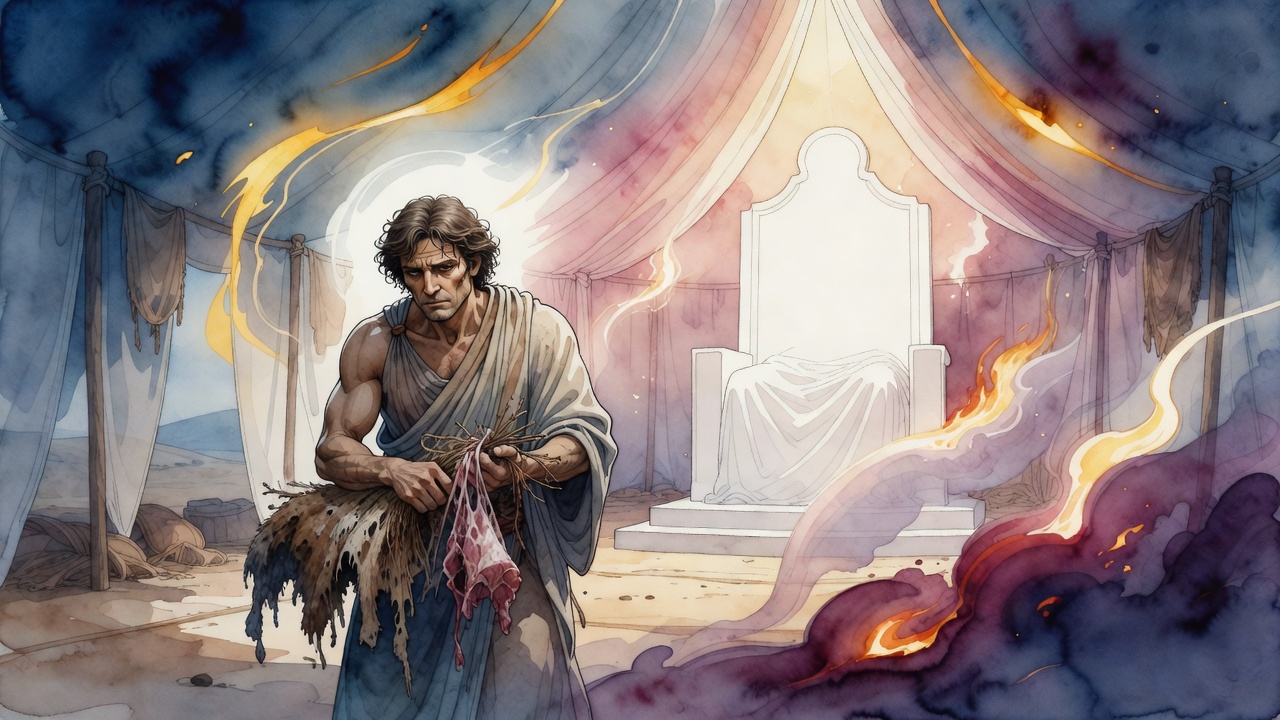
The meat in Esau's hand was already a confession.

Four Hours Outside the Tent

Isaac had asked for venison. Esau went out with the confidence of a hunter who knew the fields, the wind, the tracks, the silence before an animal breaks cover. This should have been his hour. His father was old. His eyes had failed. The blessing waited inside the tent, and Esau needed only to return with food.

The hunt betrayed him.

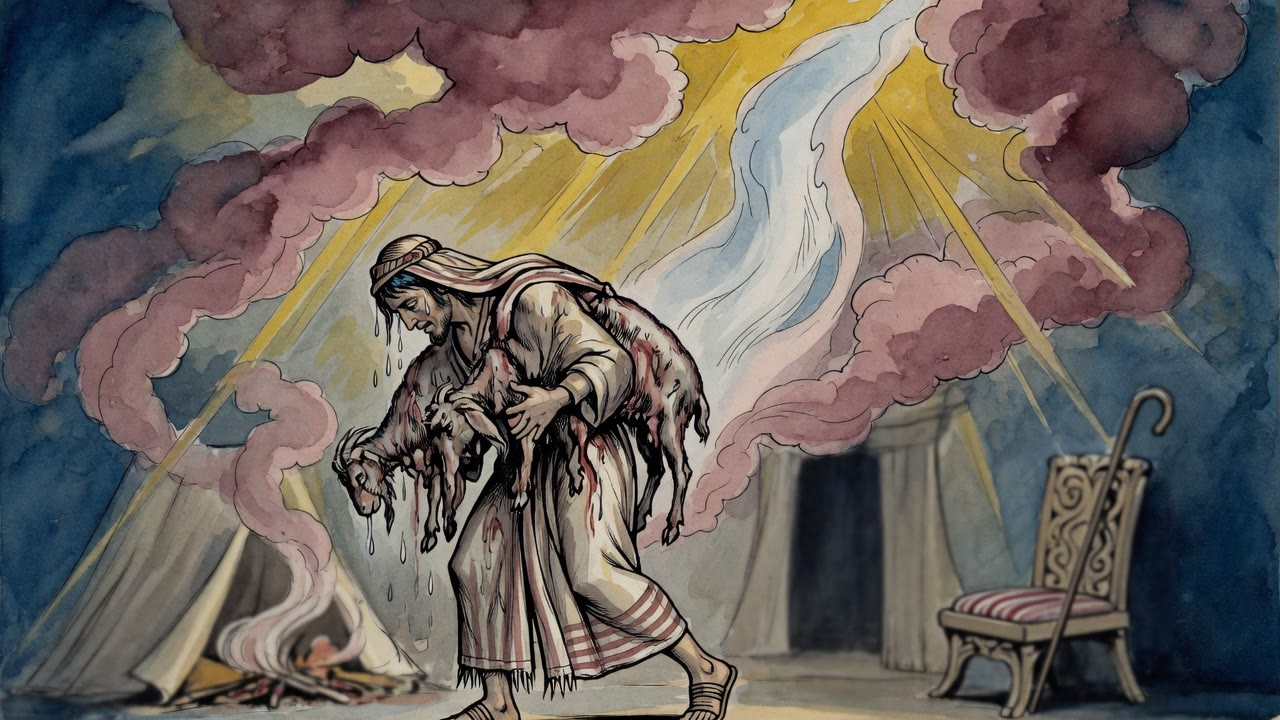
Animals slipped away. The field gave him nothing. Time drained out of the day while he searched, and the blessing did not wait with him. Four hours passed. A man can lose patience in four hours. He can lose a throne of words. Esau, pressed by failure and hunger for what his father had promised, did what a desperate man does when he cannot bear arriving empty.

He slaughtered a dog and dressed it as game.

By the time he turned back toward Isaac's tent, the wrong meat lay in his hands, and his mood had hardened around it.

Jacob's Voice Still Hung There

Jacob had already entered the tent.

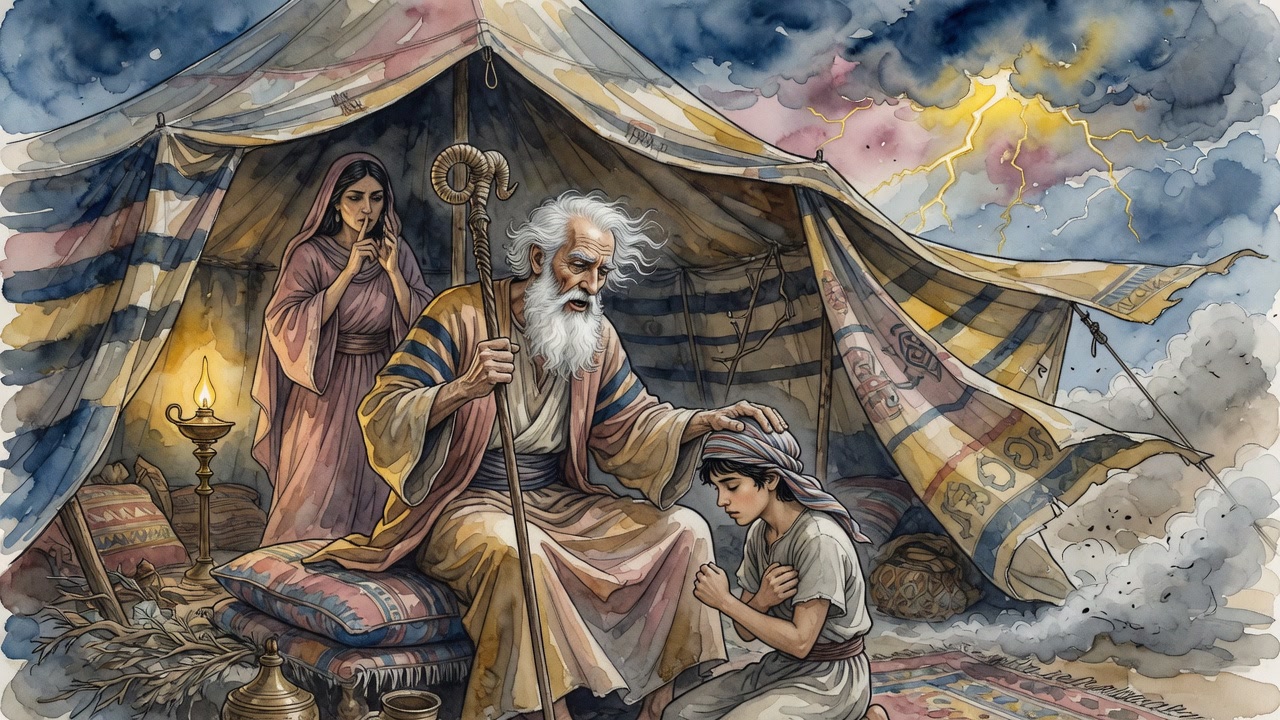
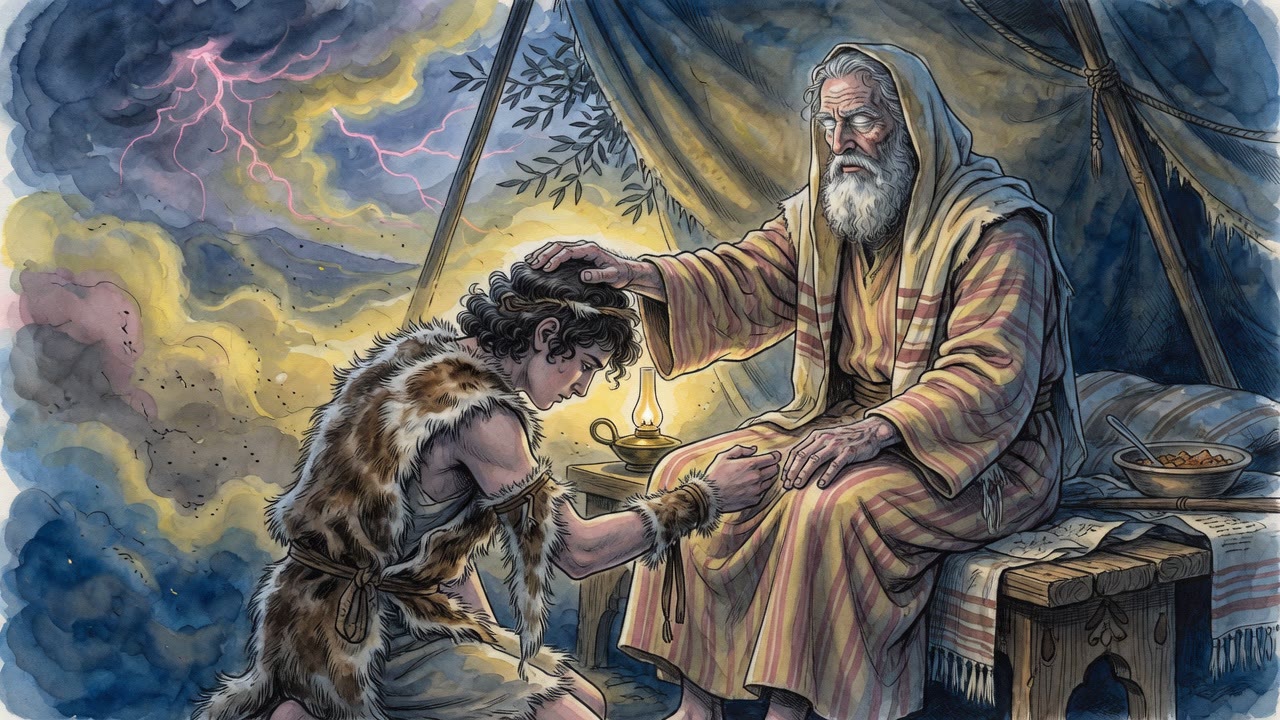
He came wearing Esau's clothes, carrying the smell of the field on borrowed garments, placing each word carefully before his blind father. His voice was wrong, but his hands had been made rough. His manner was gentle. He did not bark at Isaac. He coaxed him. "Rise, please, sit and eat of my venison," he said, and the softness of the request made room for the deception to breathe.

Isaac listened. He reached. He questioned. He touched the skin that had been arranged to feel like Esau's. He breathed in the garments and smelled the outdoors on them. The tent became a place where touch fought with hearing, where one sense accused and another excused.

The blessing went out.

Words, once spoken by a father in that hour, did not crawl back into the mouth. They crossed the space between Isaac and Jacob and settled where Esau expected to stand.

The Command That Broke the Room

Then Esau entered.

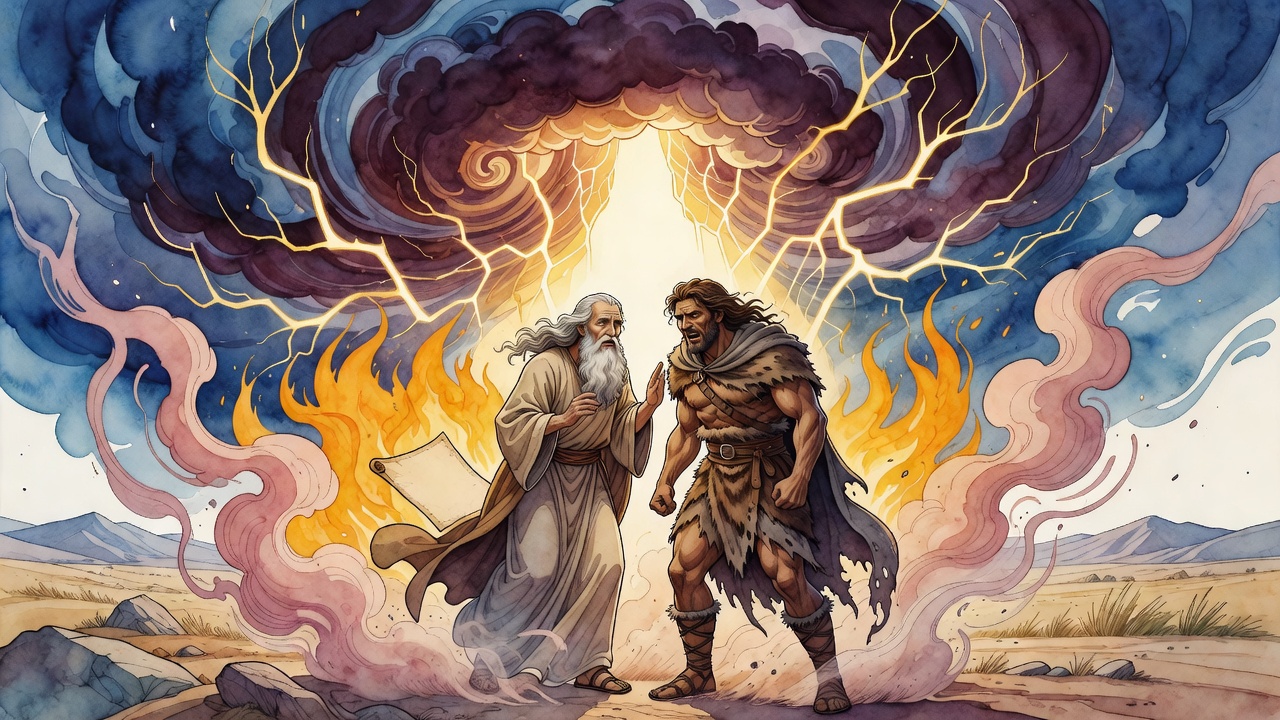
He did not speak like Jacob had spoken. No softness, no patient invitation, no careful honor laid before the old man. "Let my father arise and eat of his son's venison," he said. The command struck the tent with its boots still on. The false venison came with it. The four hours came with it. The whole field came in, sour with failure.

Isaac shook.

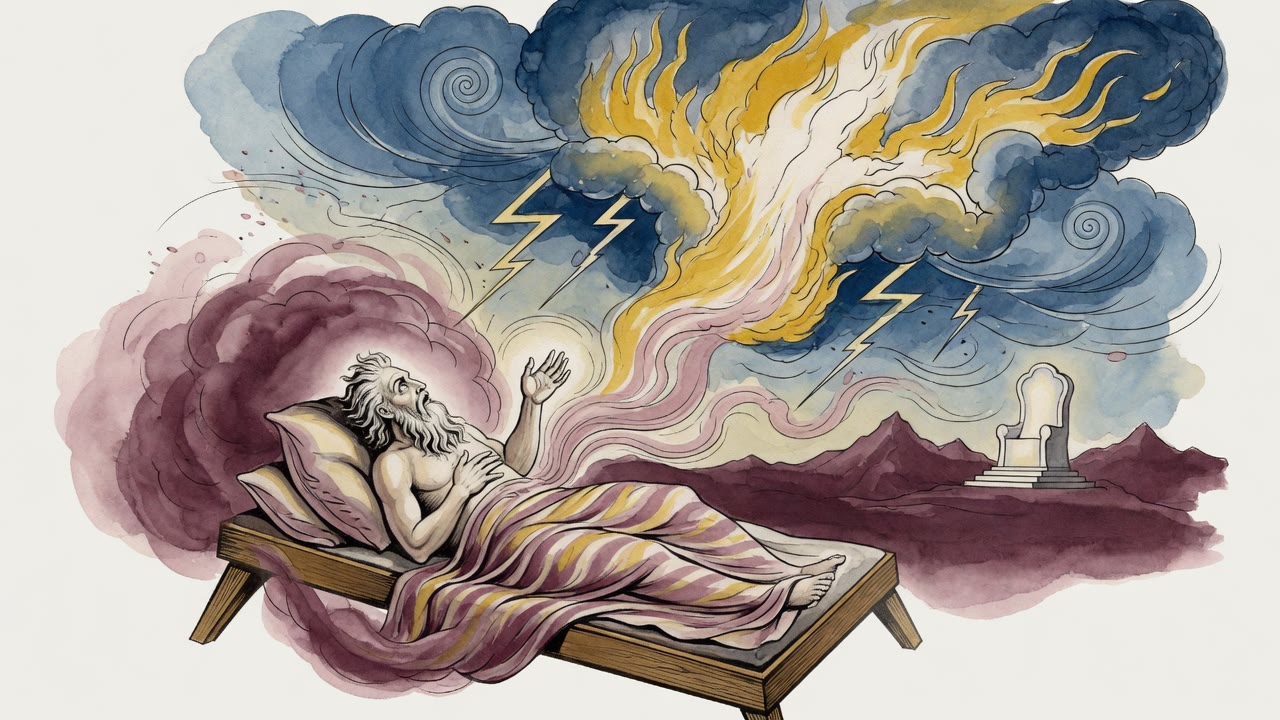
The terror that seized him was not ordinary surprise. The old fear of Mount Moriah rose inside him, the mountain where he had once lain beneath Abraham's knife and heard the silence above his own throat. This was worse. On Moriah, the danger had come from obedience. In the tent, danger came from the discovery that the blessing had found its way through blindness, disguise, and the hands of his own household.

"Who stood between me and the Lord," Isaac cried, "to make the blessing reach Jacob?"

The answer sat in the room without speaking. Jacob had left. Esau stood there with his meat. Isaac knew the blessing had landed where it had landed, and even his fear could not pull it back.

The Cave Held Both Sons

Long after the cries in the tent, the family gathered at the Cave of Machpelah. Rebekah was buried there by both sons, near Sarah, in the place remembered as an eternal house. The ground received the mother who had once moved behind the blessing, and for a moment the brothers stood within the same grief.

A burial can make enemies walk side by side. It cannot make them whole.

The cave held ancestors, promises, and the bodies of people who had made impossible decisions. It could receive Rebekah. It could receive tears. It could not swallow the words Isaac had spoken over Jacob. It could not turn dog meat into venison, or a command into honor, or lateness into readiness.

The brothers left the cave carrying the same family and not the same future.

The Oath Turned to Dust

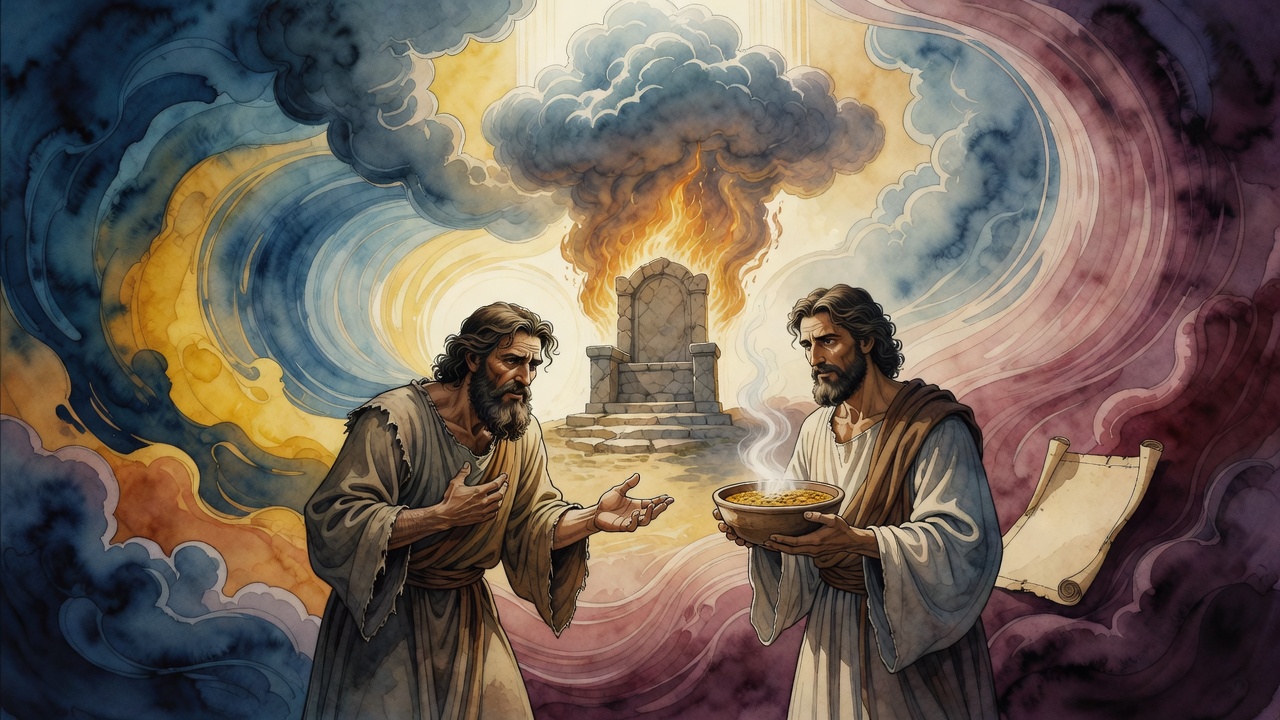
After the parents were gone, Jacob faced Esau again with an accusation sharper than any hunting blade. He called him back to the oath sworn before father and mother. "Was this the oath," Jacob demanded, "the oath spoken before the dead claimed them?"

Esau did not tremble before the word.

He answered as a man who had made peace with teeth and appetite. "Men do not keep righteous oaths," he said in the hard language of the quarrel. "Neither do the beasts of the earth." Power eats. Desire takes. The world, in Esau's mouth, had no sacred knot strong enough to bind a hand that wanted to strike.

Jacob heard the old tent in that answer. The late arrival had become a philosophy. The false meat had become a world. Esau had missed the blessing by four hours, but the greater loss kept widening: a father frightened, a mother buried, an oath emptied of fear, and two brothers standing where no blessing could make them brothers again.


← All myths

From the tradition

Sources

4 sources

The texts this telling draws on, in full. Open a card to read inline, or expand it for a wider, quieter read.

Legends of the Jews 6:70Legends of the Jews

Legends of the Jews turns to Esau Came Four Hours Late and Lost the Blessing.

The story tells us Esau was late. Really late. Four hours, to be exact! Imagine the tension hanging in the air. He’d been out hunting, trying to secure the game his father so desired. But, according to Legends of the Jews, as retold by Ginzberg, he failed. Miserably. So much so that he had to resort to killing a dog and passing it off as venison. Can you imagine?

This failure, this desperate act, soured his mood. Big time. And it showed when he finally addressed his father. Instead of a warm invitation, it was a curt command: "Let my father arise and eat of his son's venison." Not exactly the respectful tone you'd expect. Contrast this with Jacob’s earlier deception. He’d said, “Arise, I pray thee, sit and eat of my venison." A world of difference. A world of deception, yes, but also a world of carefully crafted words designed to soothe and persuade.

It worked.

But Esau’s harshness? It backfired. According to Ginzberg, Isaac was terrified! Even more frightened than he’d been as a child when his father, Abraham, was about to sacrifice him! That's a pretty high bar of fear, wouldn't you say?

His reaction is visceral. He cries out, "Who then is he that hath been the mediator between me and the Lord, to make the blessing reach Jacob?"

Who indeed?

This wasn't just about venison or a blessing. Isaac sensed something deeper, something divinely orchestrated. And he suspected Rebekah, his wife, of being the guiding hand behind it all. Of instigating Jacob's act. The weight of those words. The accusation leveled at his wife. The realization that he'd been played, not just by his son, but perhaps by forces beyond his comprehension. Was this divine intervention? Deception? Or both?

It's a powerful reminder that sometimes, the most familiar stories are the ones that still hold the greatest mysteries. And that the smallest details can unlock a whole new layer of understanding. What do you think? Was Isaac's fear justified? And what role did fate play in the drama unfolding in that tent?

Full source
Book of Jubilees 37:22Book of Jubilees

The Book of Jubilees, an ancient Jewish text expanding on Genesis, dives deep into such a betrayal, a family feud that echoes through generations. We find ourselves in the middle of a fiery confrontation between Jacob and Esau, brothers locked in a bitter struggle.

The tension crackles off the page. Jacob accuses Esau of breaking a sacred oath, a promise made to their parents on their deathbeds. "Is this the oath that thou didst swear to thy father and again to thy mother before they died?" Jacob demands. "Thou hast broken the oath, and on the moment that thou didst swear to thy father wast thou condemned."

Ouch.

Esau's response is chilling. He dismisses the very idea of sacred oaths. He argues that humanity is driven by self-interest and violence. "Neither the children of men nor the beasts of the earth have any oath of righteousness which in swearing they have sworn (an oath valid) for ever; but every day they devise evil one against another, and how each may slay his adversary and foe."

It’s a bleak worldview, isn’t it? A world devoid of honor, of commitment, of anything binding.

And then, Esau’s final words are laced with resentment, a deep-seated hatred that poisons the familial bond. "And thou dost hate me and my children for ever. And there is no observing the tie of brotherhood with thee."

This passage from Jubilees 37 isn't just a historical account; it's a reflection on the fragility of trust, the weight of promises, and the destructive power of hatred. It forces us to confront uncomfortable questions: What does it mean to keep our word? How do we heal from betrayal? And what are the long-term consequences when brotherhood dissolves into animosity?

The text leaves us pondering the nature of oaths, the character of men, and the enduring challenge of sibling rivalry. It is a potent reminder that broken promises can have consequences far beyond the immediate moment, rippling through families and history itself.

Full source
Book of Jubilees 36:1Book of Jubilees

Sometimes, the little snippets, the moments in between the big events, can be just as fascinating. Take the story of Isaac, Esau, and Jacob. We know the highlights. But what about the quieter moments?

The Book of Jubilees, an ancient Jewish text that expands on the stories we find in Genesis, gives us a glimpse into just that.

Specifically, Jubilees 36 offers us a brief look at a couple of key moments in the lives of Isaac's family.

First, it tells us that Rebekah, Isaac’s wife and mother to Esau and Jacob, was buried by her two sons in the Cave of Machpelah, also known as the double cave. This cave, near Sarah's burial site, is described as the "eternal house." (Jubilees 36:1). It's a powerful image, isn't it? The matriarch, laid to rest alongside her mother-in-law, in a place that signifies not just death, but also a connection to generations past. A place of eternal rest.

Then, the narrative jumps ahead a bit. We learn that in the sixth year of a certain "week" (Jubilees often uses a calendar system based on weeks of years), Isaac, feeling his own mortality, calls his sons, Esau and Jacob, to his side. "My sons," he says, "I am going the way of my fathers, to the eternal house where my fathers are." (Jubilees 36:2).

Short, simple, and yet so profound. Isaac acknowledges his own impending death, framing it as a continuation of a family tradition, a journey to join his ancestors. It's a reminder that even the great figures of the Bible were, at their core, human beings facing the universal experience of mortality.

What does it mean to "go the way of my fathers"? It's not just about physical death, is it? It’s also about inheriting a legacy, about carrying on the traditions and values of those who came before us. And in this moment, Isaac is passing that torch to his sons.

It makes you wonder, doesn't it? What conversations followed? What blessings were given? What fears and hopes were shared in that intimate moment between father and sons? These are the questions that these little glimpses into the past inspire. These little moments give us a glimpse into the bigger picture.

Full source
Midrash Aggadah, Genesis 27:31Midrash Aggadah

"Let my father arise," and so forth. Concerning Jacob it says, "Arise, please, sit" (verse 19), a language of entreaty; and likewise it stood [endured] for his descendants. "Arise," as it says, "Arise, O LORD," and so forth (Numbers 10:36). "Sit [Return]," as it says, "Return, O LORD, unto the myriads" (ibid.). But concerning Esau, who said with insolence, "Let my father arise," with this very language the Holy One, blessed be He, is destined to exact punishment from him, as it says, "Let God arise, let His enemies be scattered" (Psalms 68:2).

Full source