Jacob Asked for Illness and Became Its First Patient
Before Jacob, a man could still be talking when death took him. He asked for a warning. The first fever came to his own bed.
Table of Contents
A man could be speaking in a doorway, his hand still lifted, his children close enough to hear the next sentence, and then the place where he had been was empty.
 Click for full size
No fever. No night of thin breath. Death did not knock. It took.
Esau Walked Off the Oath
Jacob had already watched what a sudden close could do to a promise.
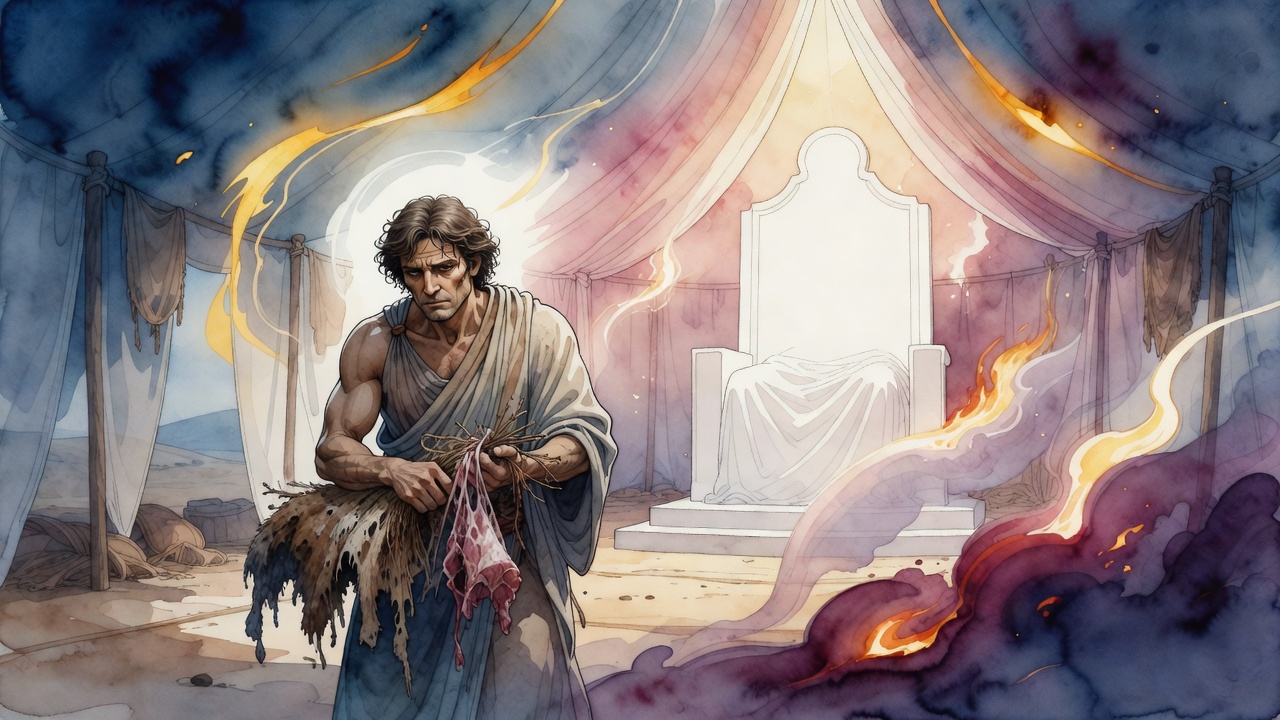
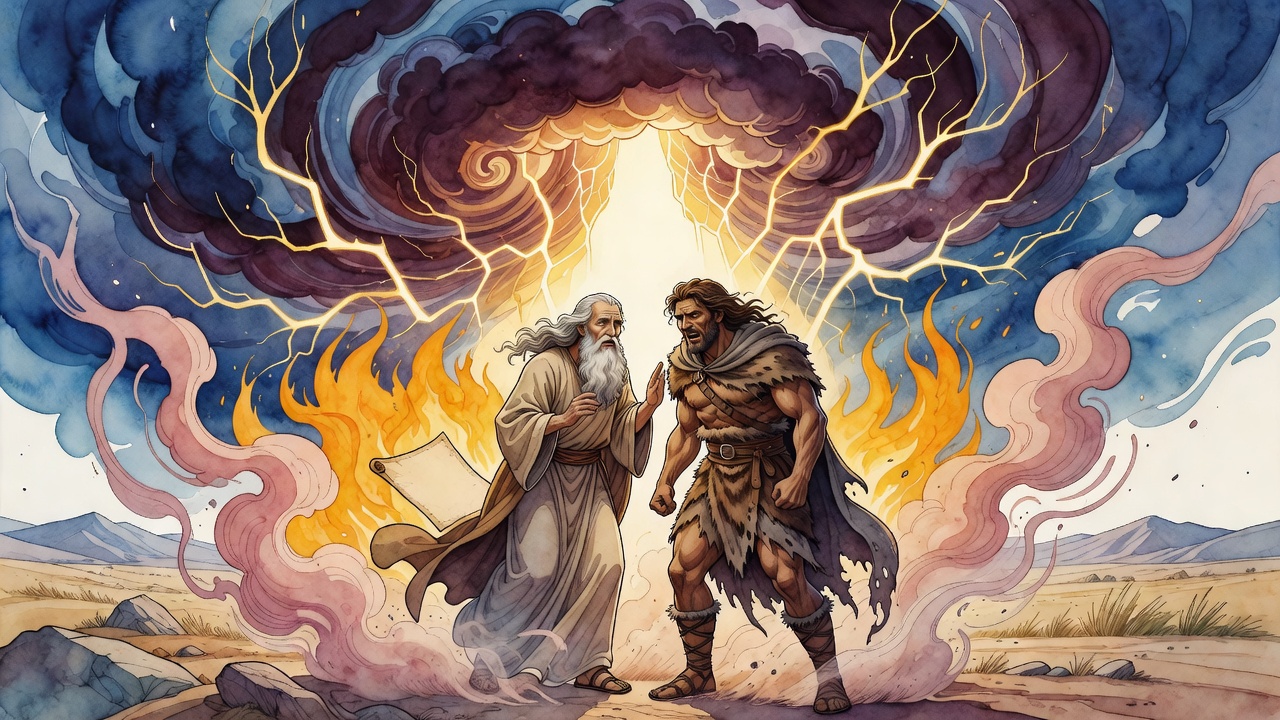
After Isaac and Rebekah were gone, Esau came against him with sons and servants at his back, ready for war. Jacob threw the old oath in his face. "Is this the oath you swore to them, the oath made while their deaths stood close enough to hear?"
Esau did not flinch. "Men do not keep righteous oaths," he said. "Neither do beasts." In his mouth a vow was only a sound the living made before they wanted something else. Strength and appetite ruled the field. Brotherhood was a word for other people.
Jacob stood there with a brother's army in front of him and a dead father's promise already treated as air. He could not accept a world that shut that fast. A life should not close before a person can call the children in and speak plainly.
He Asked Heaven for Time
He brought the complaint before God.
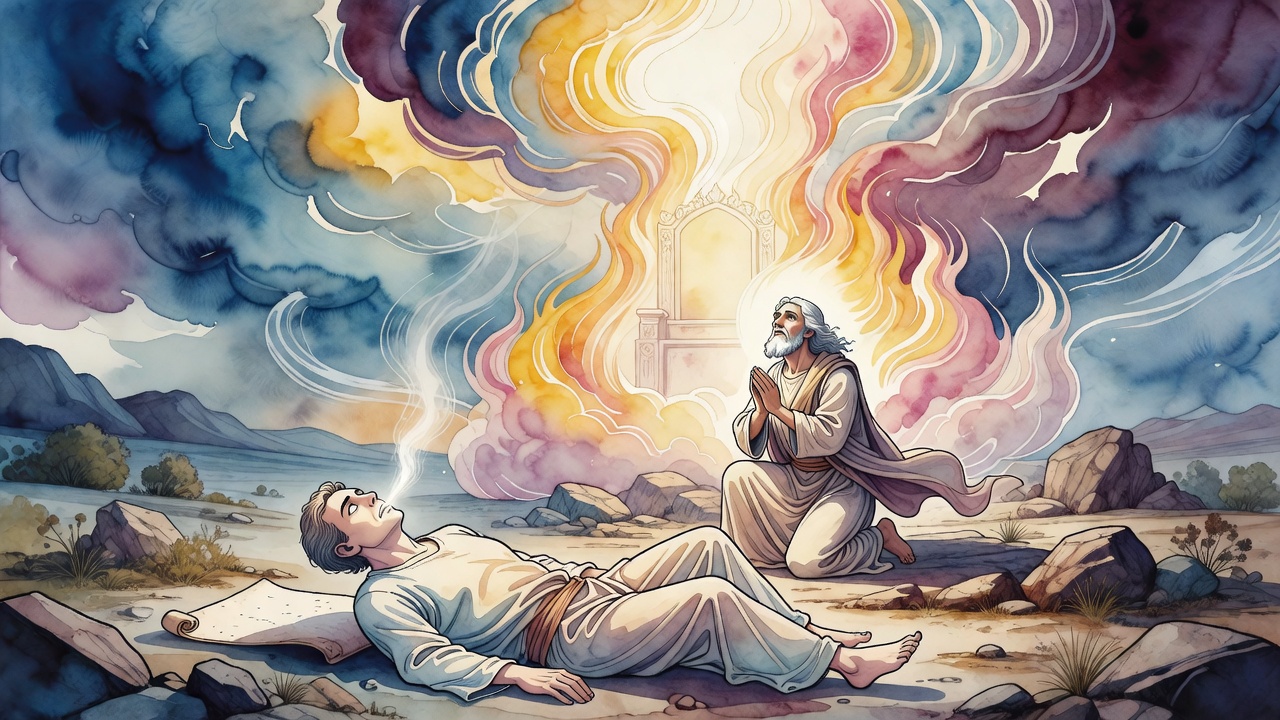
"Master of the world, sudden death leaves no room. Let there be a sign before the end. Let illness come first, not as cruelty, but as warning. Let a man know the door is near. Let him arrange the house, speak his wishes, bless the children, settle what can still be settled while breath remains."
He was asking heaven to change the texture of dying. Pain as a signal. Weakness as a narrow mercy. A bed instead of a vanishing.
God accepted the plea. Then came the clause Jacob had not written into it.
"You will be the first to benefit from this new order."
The First Fever Was His
The warning did not go to a stranger in a far city. It came into Jacob's own body.
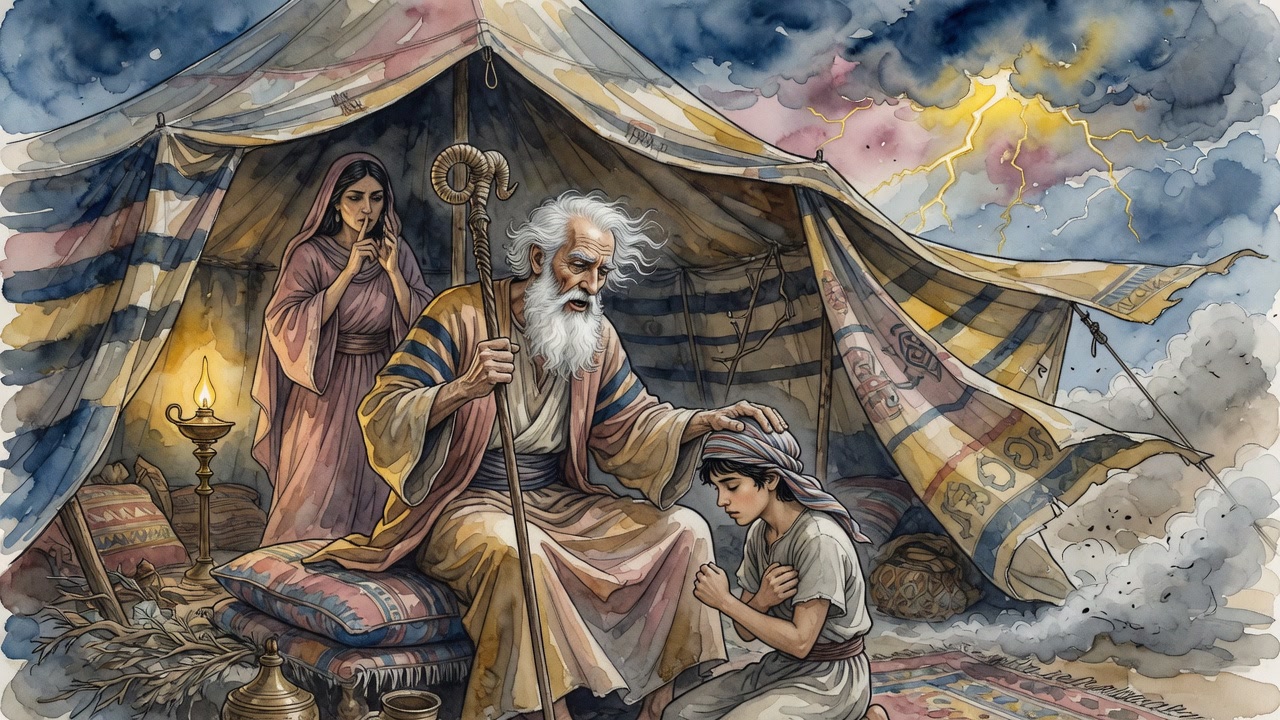
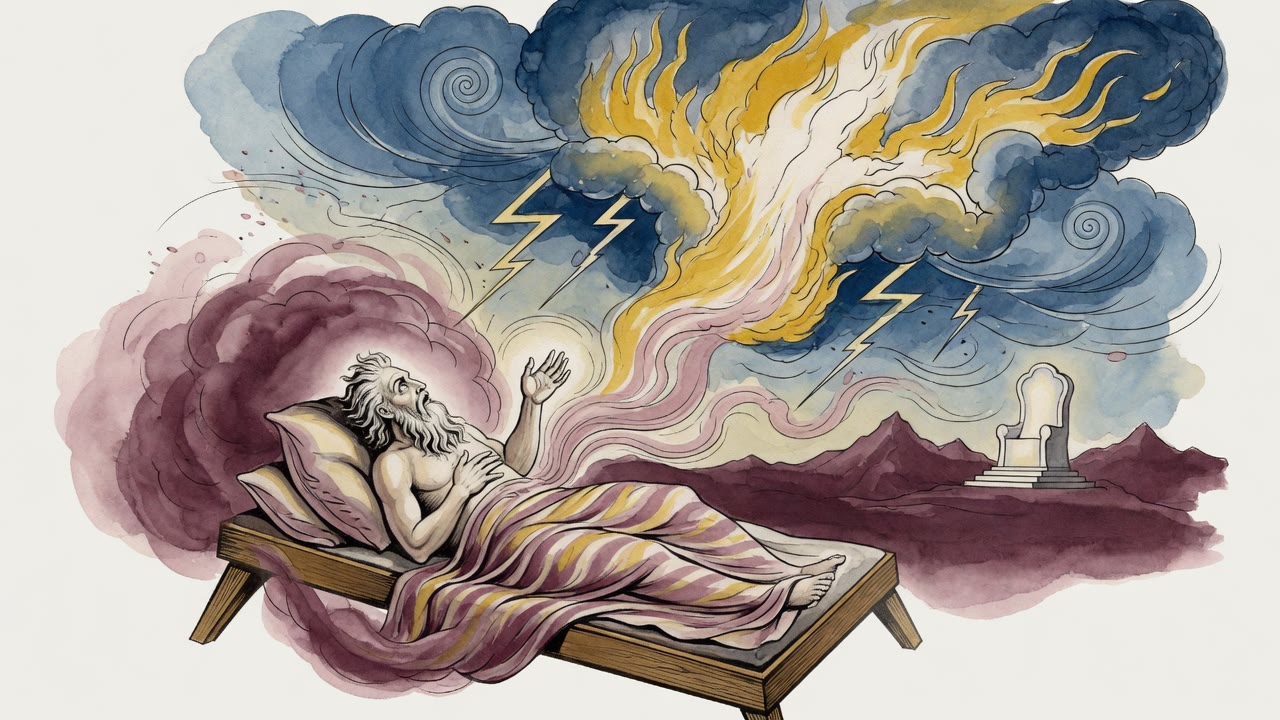
Heat first. Then a shaking he could not talk down. Strength began to leave his legs, then his hands. He lay down because standing was no longer a choice. The bed under him stopped being furniture. It became a border.
On one side lay the life of a man who had fled, served, married, fathered, wrestled, limped, and come home. On the other side waited the silence that used to swallow people without a knock. Between the two stood illness, unwelcome and useful, the messenger he had asked for, now sitting in his chest.
He understood the joke heaven had told. He had bargained for mercy. Mercy had a price, and the first bill had his name on it.
A Messenger Ran to Joseph
Someone had to carry a sentence no one in the world had ever had to carry.
A runner went to Joseph in Pharaoh's house. "Your father is sick."
Not dead. Sick. The word itself was new in a son's ear. Before Jacob, a son heard that his father was gone. Now a son could still come. Joseph put down the work of Egypt and went.
The room filled. Sons who would become tribes stood within reach of a voice that had not yet failed. A blessing could be shaped before the mouth closed. A rebuke could land where it needed to land. Love could become particular, name by name, not a cloud over the family but a hand placed where the future pressed hardest.
Sudden death had left survivors with guesses. Esau had used that speed. Illness gave Jacob time to turn breath into inheritance. Not only land and rank. Meaning. A last arrangement of memory, spoken while the children could still answer.
The body was failing. The household was no longer ambushed. Everyone in the room knew the end had entered. That knowledge hurt. It also made speech possible. Jacob asked for warning, and he got a bed, a breath, and children close enough to hear.
← All myths