Jacob Fell Asleep in Abraham's Arms and Found Him Dead
Abraham kissed him seven times and blessed the God who had brought him out of Ur. Then he stretched out his feet and died, without waking the boy.
Table of Contents
The old man and the boy slept in the same bed.
 Click for full size
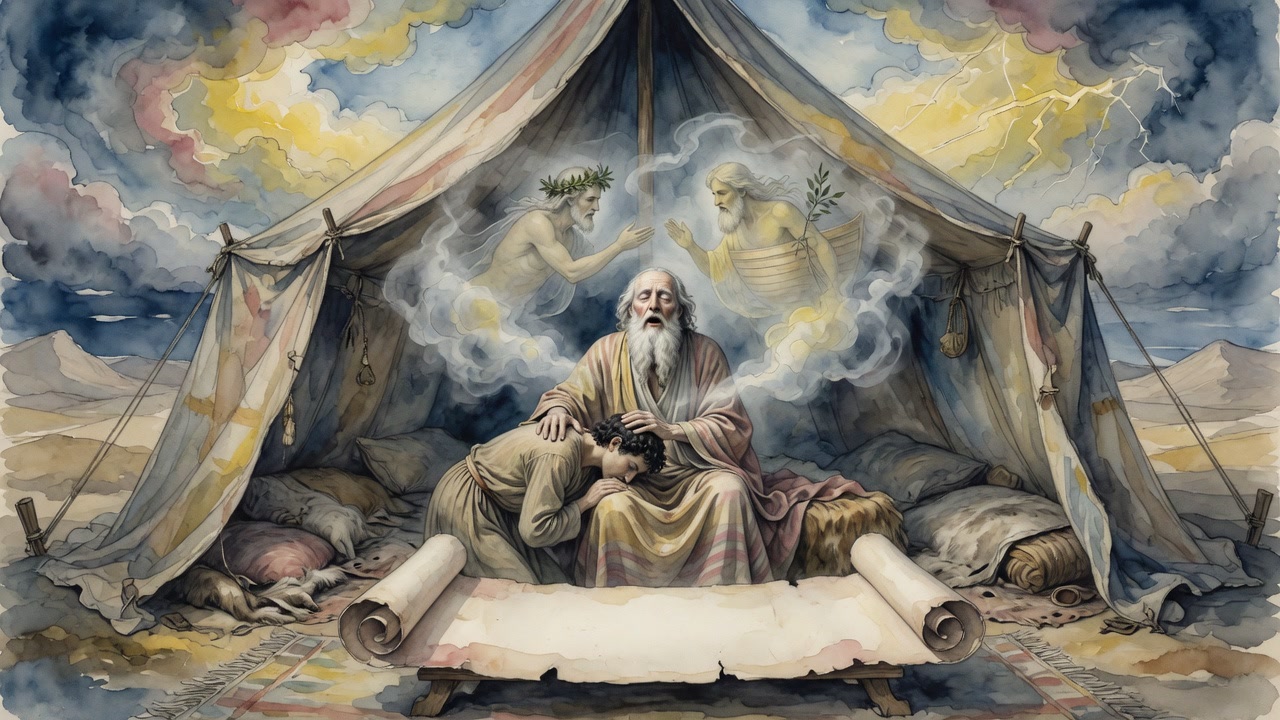
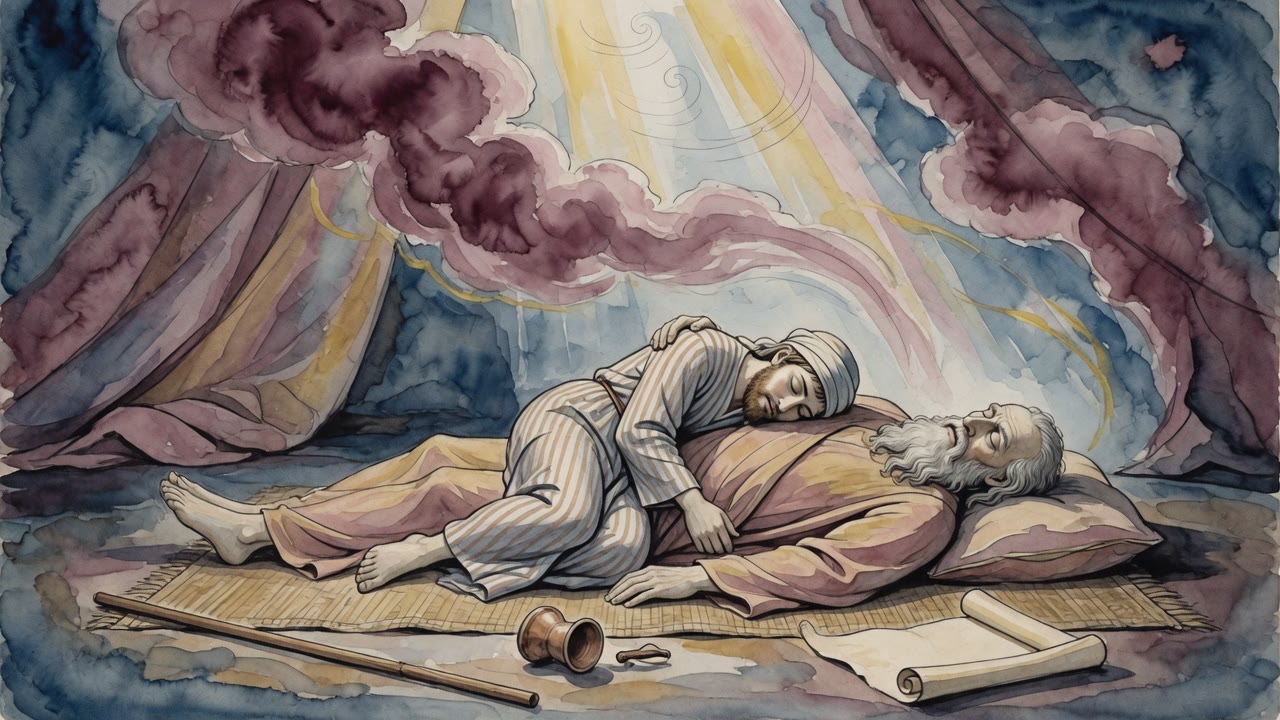
Abraham was a hundred and seventy-five years old and had run out of instructions. He had said everything he meant to say to his grandson, the commands and the warnings and the blessing, all of it, and when he was finished there was nothing left to do but lie down. Jacob lay against his chest. That was where he slept, in the hollow of the old man's arm, the way he had slept there a hundred nights before.
Seven Kisses and a Blessing
Before he slept, Abraham kissed him. Seven times.
Then he blessed him with his whole heart, and the blessing was not about the boy at all. It was about the God who had walked him out of Ur of the Chaldees so that this land would be his forever and a holy seed would come out of him. Blessed be the Most High forever. That was the last thing Abraham said in the world, and he said it with a fifteen-year-old asleep on his chest.
Then he stretched out his feet, and slept the sleep of eternity, and was gathered to his fathers.
Jacob did not wake up.
Cold as Ice
Sometime in the dark, the body he was lying on stopped being warm.
He came up out of sleep slowly, the way anyone does. The cold reached him before the understanding did. Cold as ice, under his cheek, and not moving.
"Father," he said. "Father."
Nobody answered him. He said it again into a room where the only breathing was his own, and then he knew.
The Lamp Went Back Into the Room
He got himself out of that bed and ran.
He went to Rebecca first, because a boy who has just found a dead man goes to his mother. Rebecca went to Isaac in the night and woke him. Then the three of them walked back together, and it was Jacob who carried the lamp.
He had to hold it up in the doorway so they could see. The light was in his hand, which meant the finding was his a second time in one night, and there was his grandfather lying exactly where he had left him.
Ishmael Came Home
Isaac fell on his father's face and kissed him and wept. The sound went through the house and out into the camp, and the camp woke.
Ishmael got up and came. He wept over his father with the whole household around him, a great weeping that did not stop when the sun came up. The two sons who had been split apart as boys, one of them sent off into the desert with a skin of water on his mother's shoulder, carried the body together to the double cave and laid it beside Sarah.
Then they wept for forty days. Isaac and Ishmael, all their sons, all the sons of Keturah out in their own places. Forty days, and then the days of weeping for Abraham were finished.
Esau Wanted the Lentils
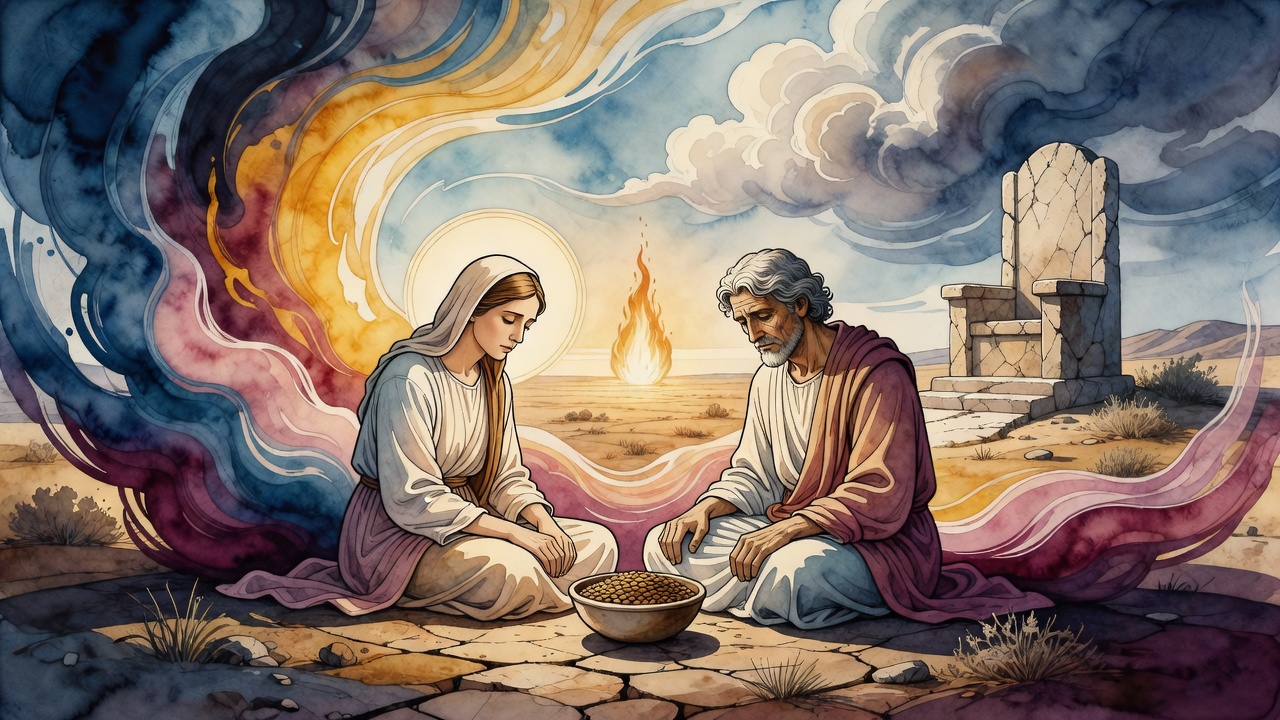
Jacob cooked lentils.
They are the mourner's dish, the thing you set in front of a man who has no words left in him, and Jacob had a fire going and a pot on it when his brother came in off the field.
"Why are you making lentils?" Esau said.
"Because our grandfather is dead. They are a sign of my grief and my mourning, so that he will love me in the days to come."
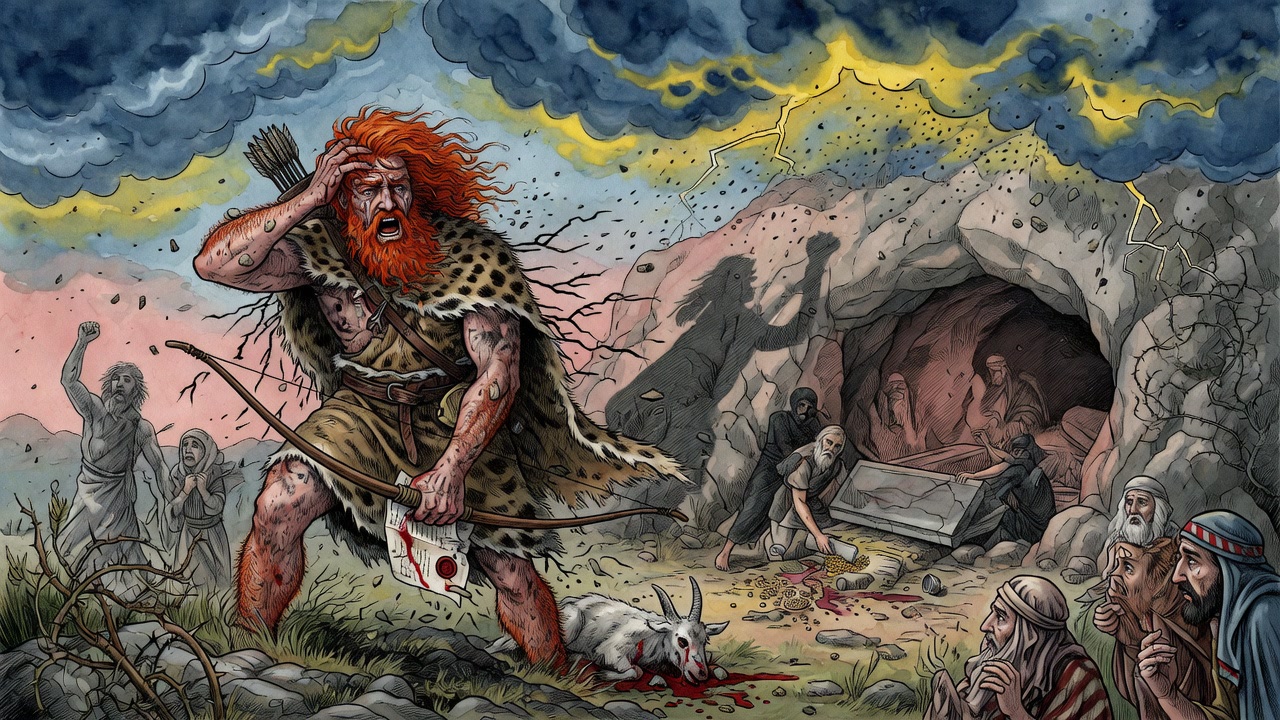
Esau laughed at him. "You fool. Do you honestly think a man comes back to life once he is dead and has rotted in the ground?" And then, warming to it: lift up your eyes and look at what everybody eats, fish and creeping things and swine's flesh, whatever comes to hand, and here you are wearing yourself out over a dish of lentils.
What Esau wanted was the food. He paid for it with his birthright, and the whole transaction took less time than the cooking.
What Abraham Walked and What Jacob Was Handed
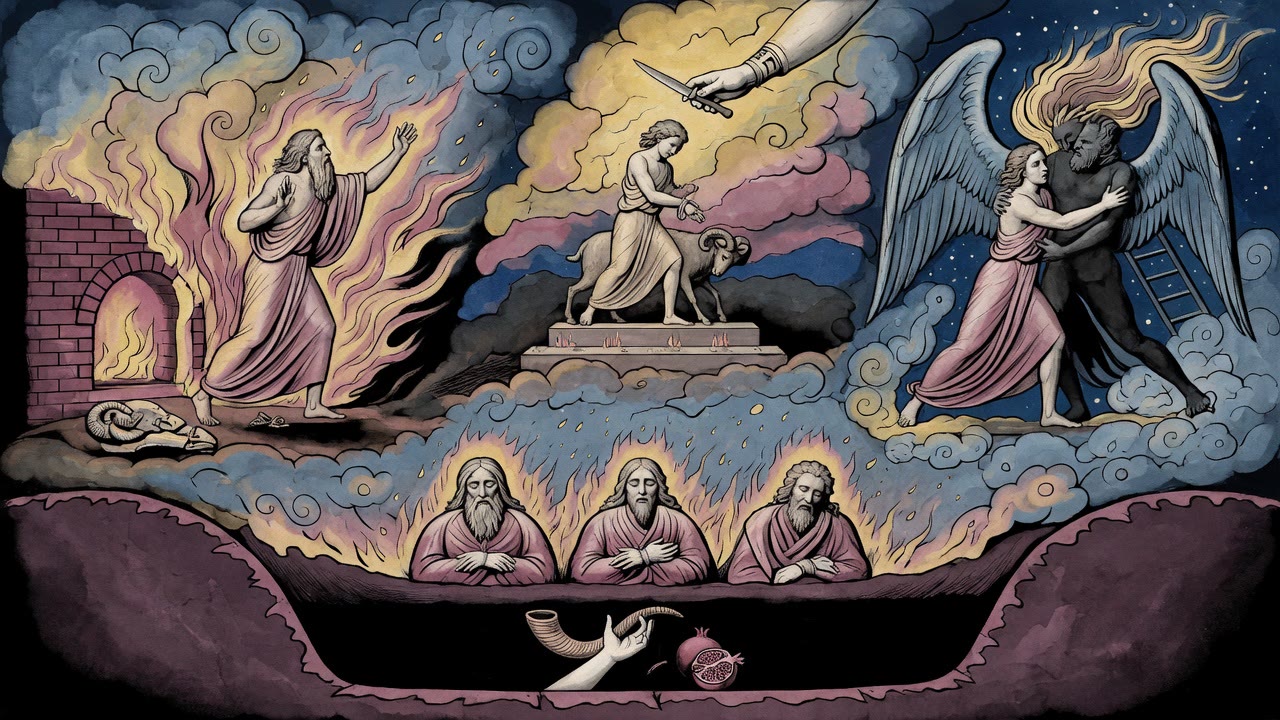
Abraham had been told to get up and walk the country, its length and its breadth, and that was the shape of what he was given. A land with edges, measured out by one man's feet.
Jacob got it without a measure. Long after that night, coming back into the country with a limp and a new name, he stopped outside the town of Shechem while the sun was still up and set the Sabbath boundaries around his camp before the light went. Because he kept the Sabbath, what came to him had no limit written on it: seed like the dust of the ground, spreading west and east and north and south, with nobody's feet marking where it ended.
The old man had walked the country to its edges. The boy who woke up cold against his chest was handed it with no edges at all.
← All myths