Why Lentils Became the Food of Jewish Mourning
The first mourners in human history were Adam and Eve. They ate lentils. The rabbis traced every Jewish shiva table back to that first meal.
Table of Contents
 Click for full size
The Day No One Knew What to Do
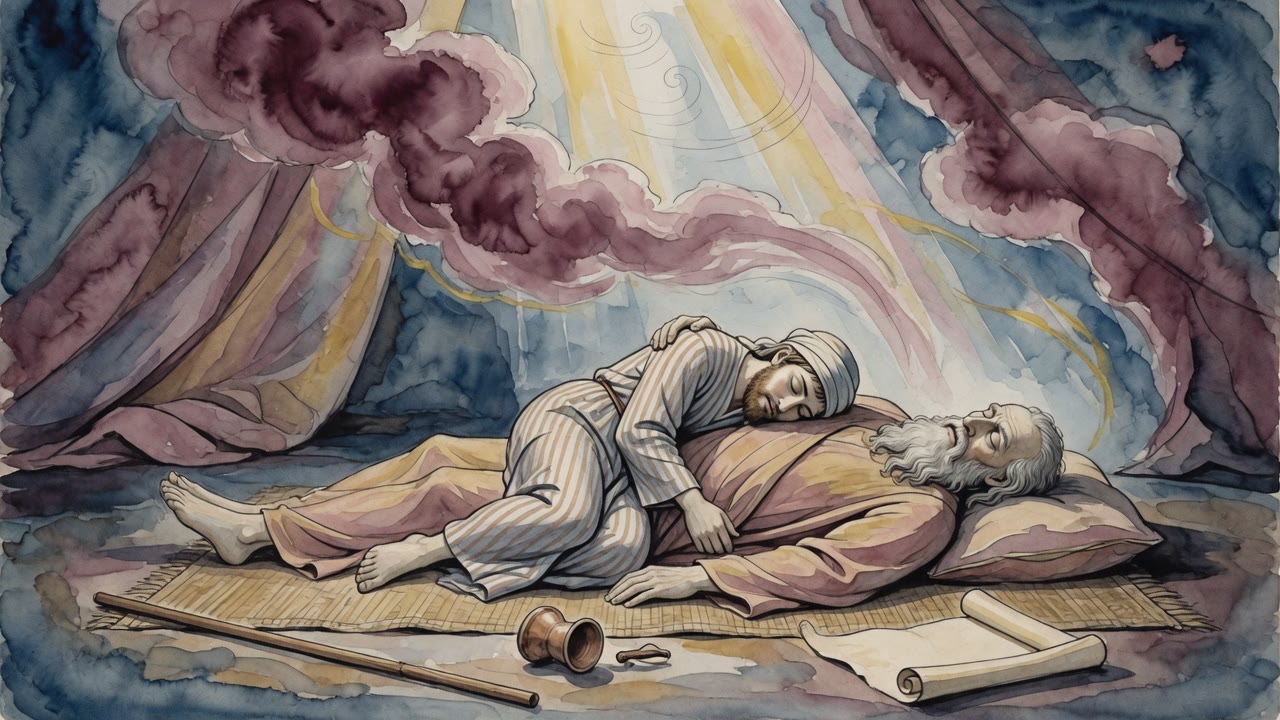
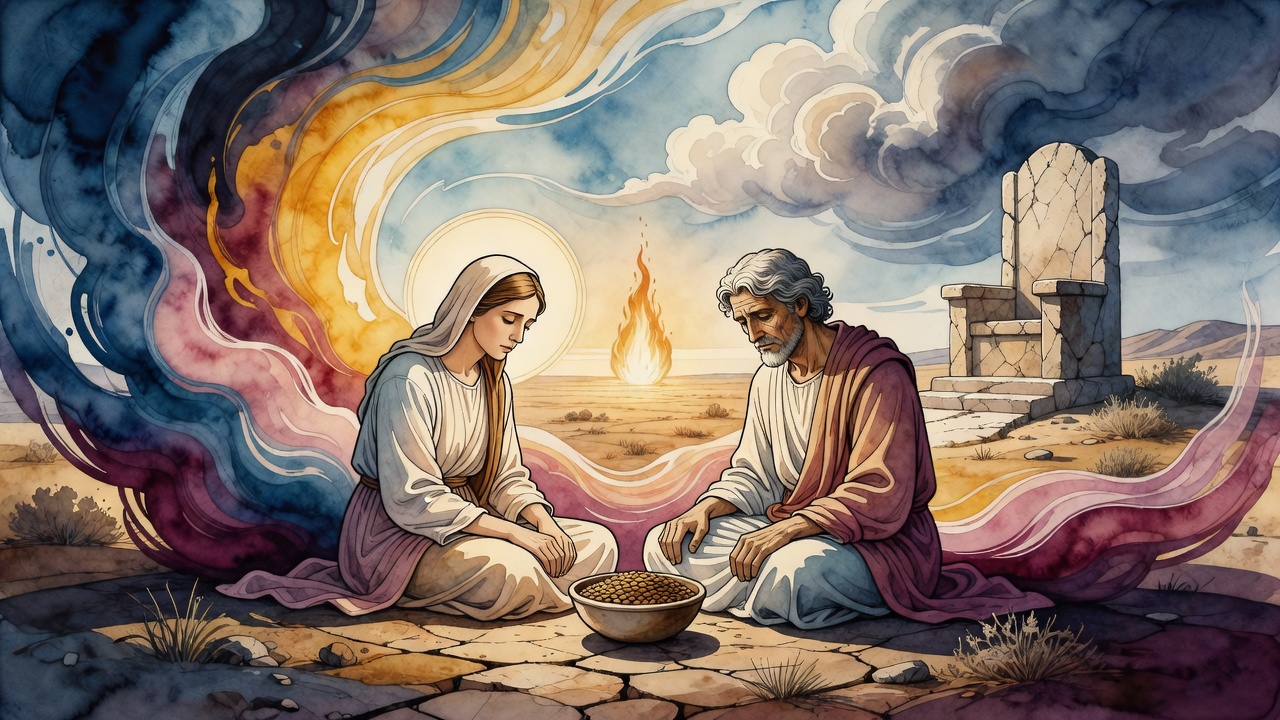
Cain killed Abel and walked away. Adam and Eve were left with the body of their son, a wound that had no name because it had never happened before, and no template for what came next. No one had ever buried a child. No one had ever sat in the aftermath of murder. The first family had been expelled from the garden; now they were expelled from innocence itself, and they had nothing to guide them except the grief that had no language for what it was.
They ate lentils.
This is the rabbinic account of where the Jewish mourning meal began: not in any later legislation, not in the customs of the land of Canaan, but in the first act of bereavement in human memory. Adam and Eve, sitting with what remained of Abel, reached for the round food with no mouth and no opening, and they ate.
The Shape of Grief
The rabbis did not choose the lentil arbitrarily. They followed the logic of the thing itself. A lentil is round. It has no split, no opening, no crack through which speech could enter or exit. It rolls. It does not hold a shape the way a sharper food does. And the mourner, the tradition said, is exactly like the lentil. Round with grief. Closed from speech. Unable to articulate what has been lost in any way that would make a listener understand.
You do not ask a mourner to explain their sorrow. You sit beside them. You bring the round food, the food that matches their silence, the food that says without words that you understand the shape they are in.
This was not sentimentality. It was a precise theological reading of what mourning does to a person. Speech requires an opening. The mourner has none. The lentil was the food that told the truth about the condition.
Esau at the Pot
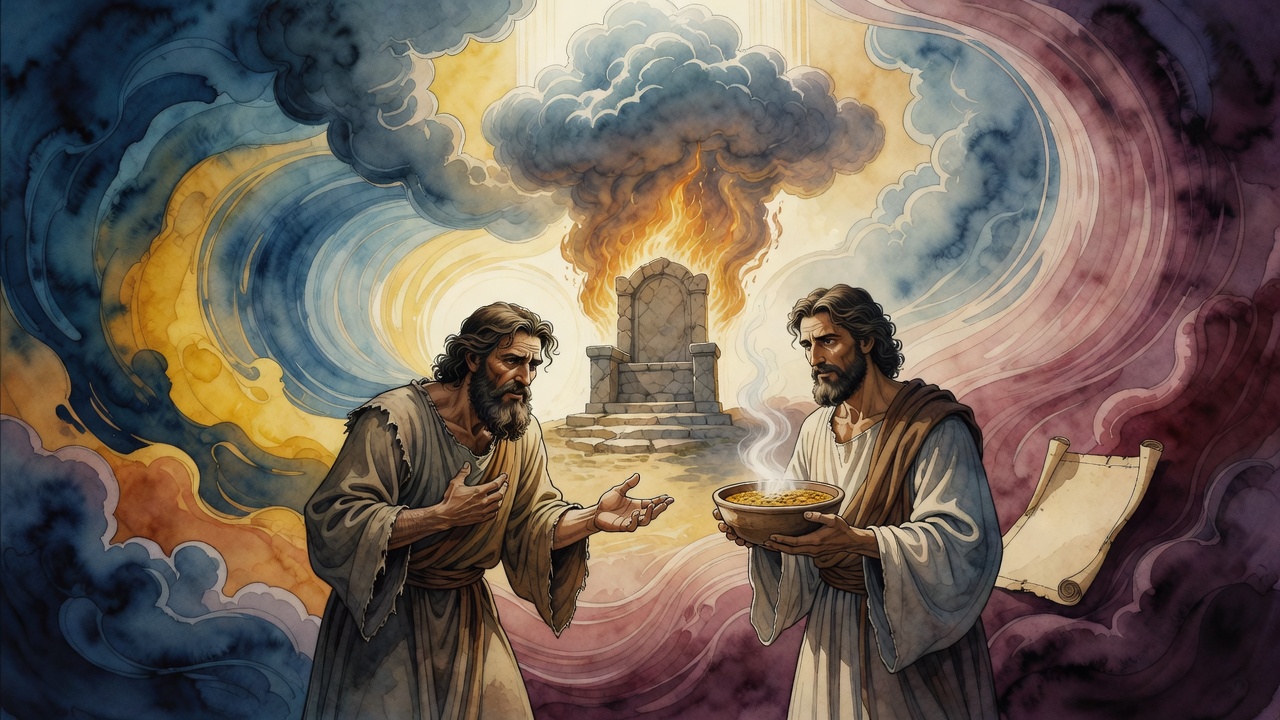
The second thread in the lentil's history ran through a different grief. When Abraham died, Jacob was cooking. The tradition is specific: he was cooking lentils, the mourning food, because the patriarch had died and the family was sitting shiva. This was not ordinary cooking. This was bereavement food prepared according to the custom that had existed since Abel.
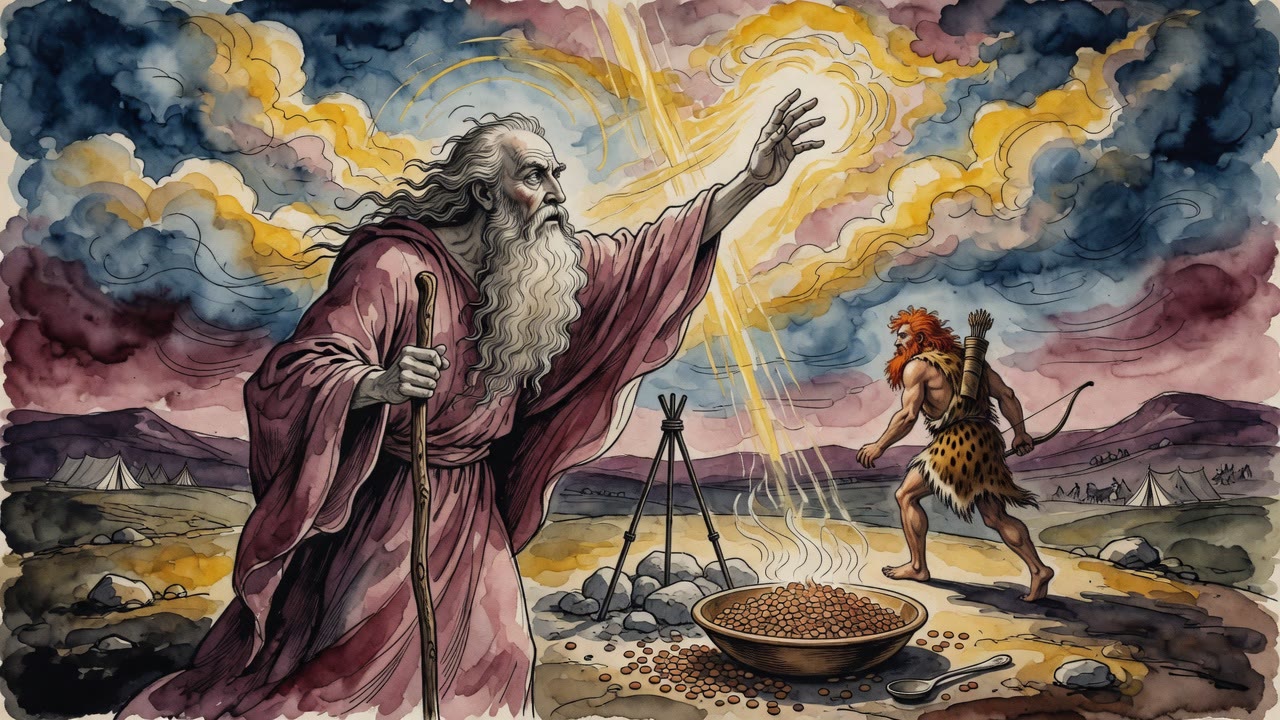
Esau came in from the field, exhausted and hollow, and saw the red stew. He asked for some. He was so depleted that he told Jacob to pour the red stuff into him because he was dying. He did not know or did not care what he was eating or what it meant. The birthright, the covenant standing of the firstborn son of Isaac, he sold for a bowl of mourning soup because at that moment he cared more about his stomach than about what he carried.
The lentils were there in the moment of the transaction, the ancient mourning food at the center of the exchange that shaped the rest of Genesis. Jacob had been cooking grief and Esau had been selling inheritance, and the lentils held the weight of both.
Three Deaths, One Food
The chain the rabbis wove ran across three deaths and tied them to a single theology. Abel was the first death, and lentils were the response. Abraham was the next death the tradition attached to the pot, and lentils marked that mourning too. Then the tradition went further, pointing to the lentil as the food brought to the first mourner of the entire people, the food carried into houses where loss has arrived.
Round means continuous. Round means the world does not stop for grief, that sorrow rolls forward, that the mourner will move again even if not yet. The lentil does not give false comfort. It does not promise that the loss will end. It says only that others have sat with this weight before you, going back to the very first family, and they found a way to eat, and you will too.
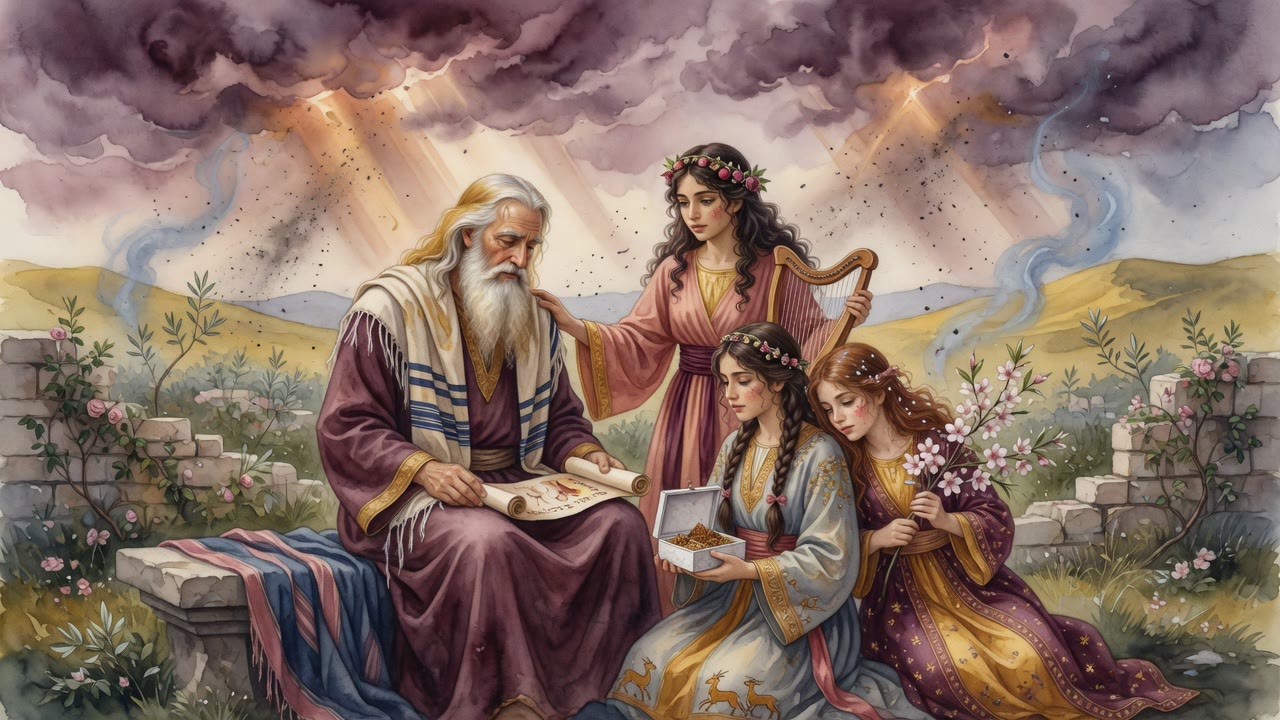
The custom of bringing lentils to a house of mourning was not legislated. It was remembered. Every shiva table reached back through the generations to a woman and a man sitting in a field with a dead son and no instruction except the shape of the food in their hands.
← All myths