42 myths · Page 1 of 2
Each story names the sources it was written from.
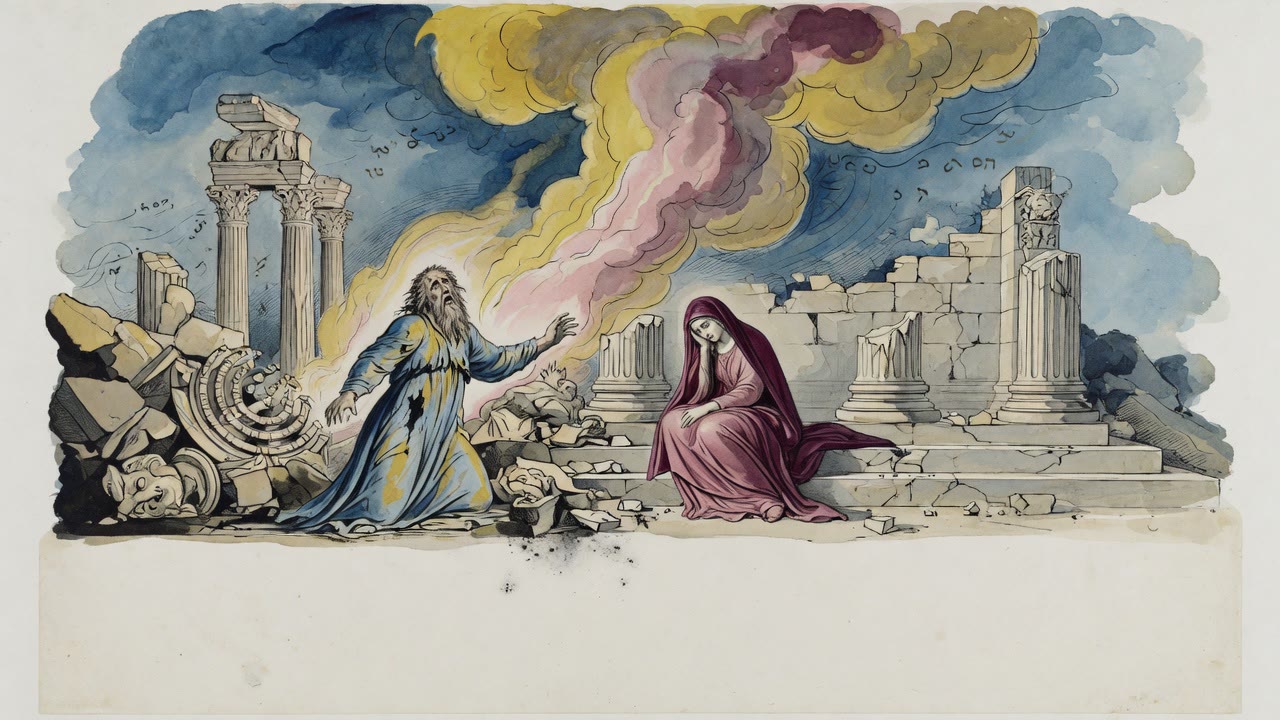
Jeremiah found the Temple daughters thrown from Chaldean chariots. God walked the burned house and asked where His priests had gone.
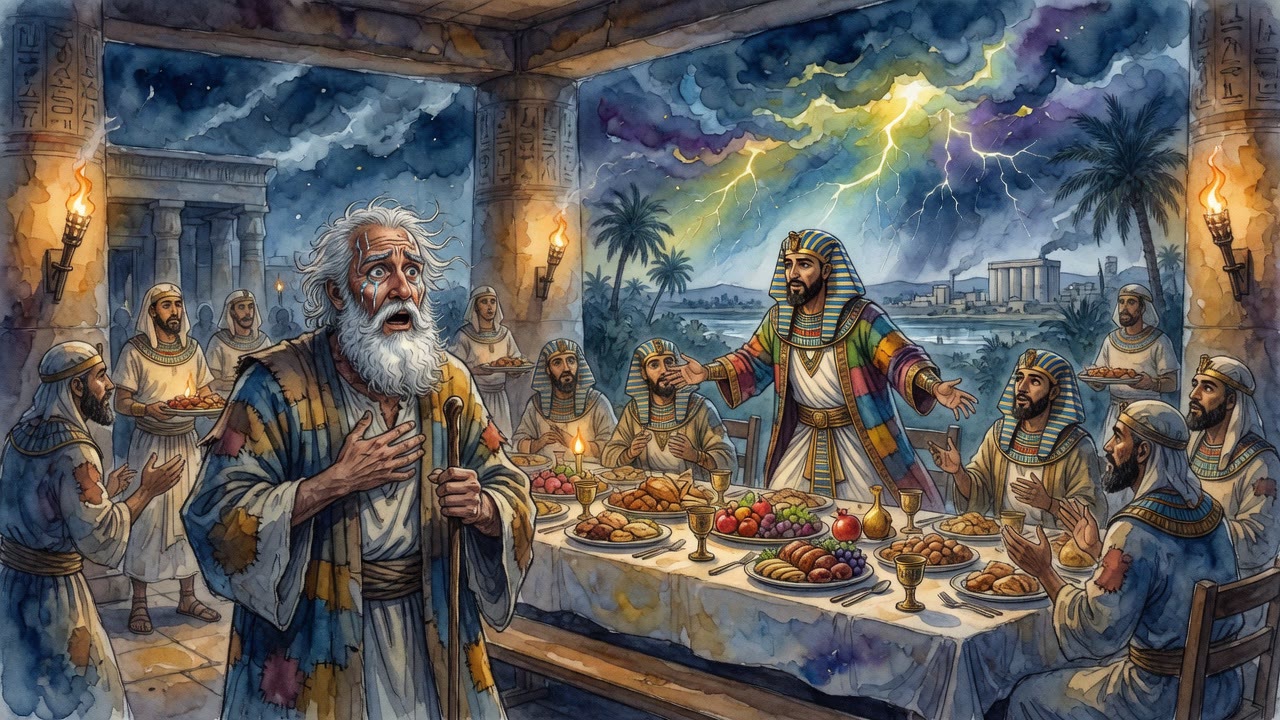
The coat had been enough to close the grave. In Goshen, Jacob sat at the table and watched Joseph eat bread like any living man.
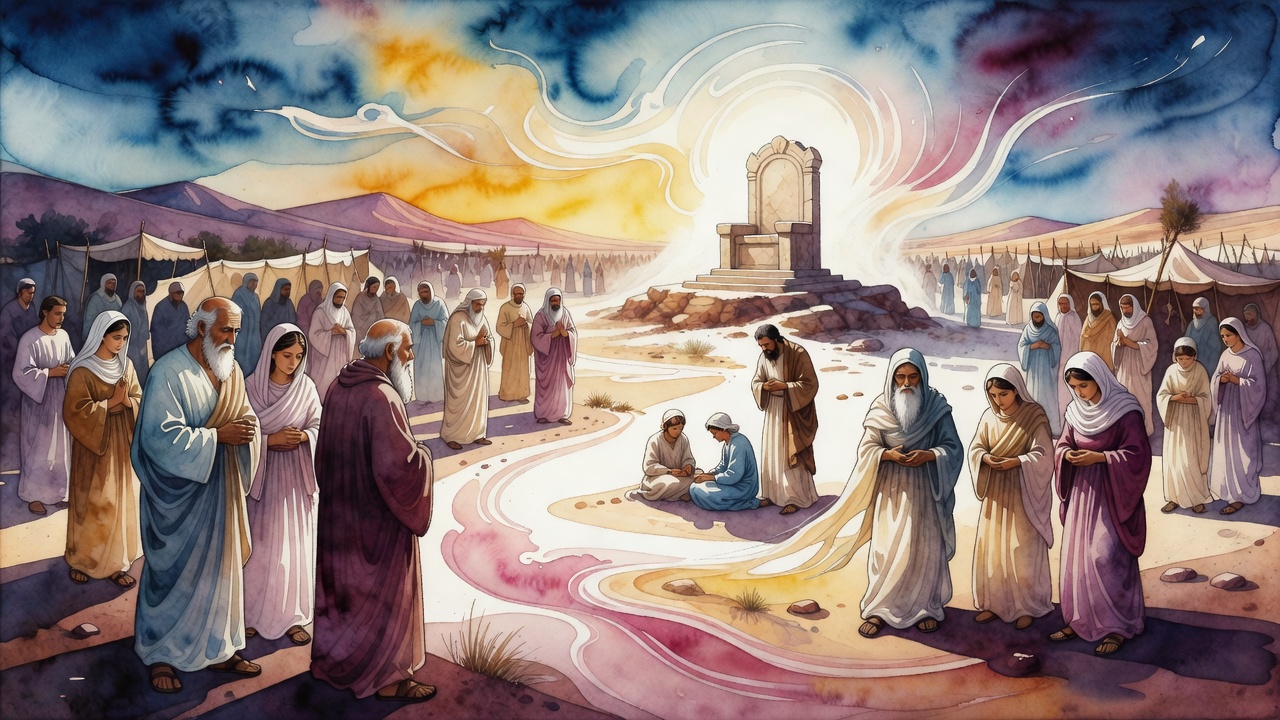
Israel began mourning Moses before he died because his absence had already entered the camp. Thirty days made the loss visible.
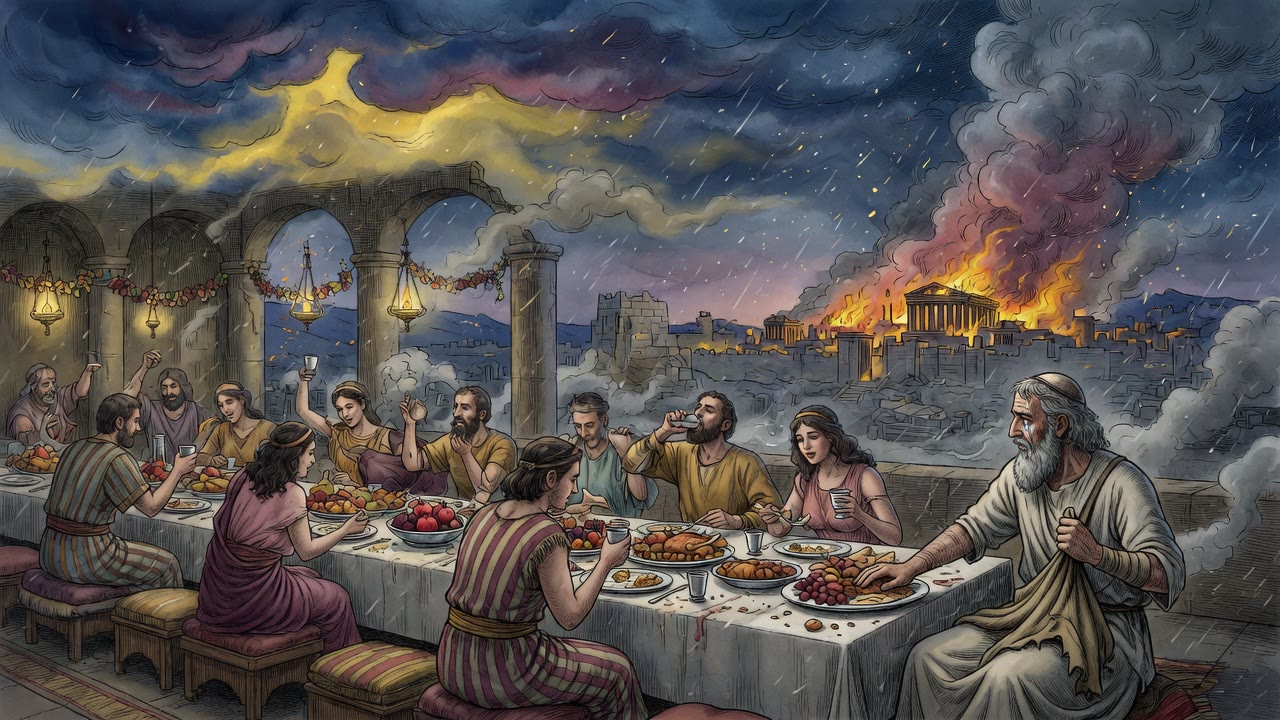
On Shavuot in Nineveh the harps were already going. Tobit stepped past a body in the street that the king had ordered left there.
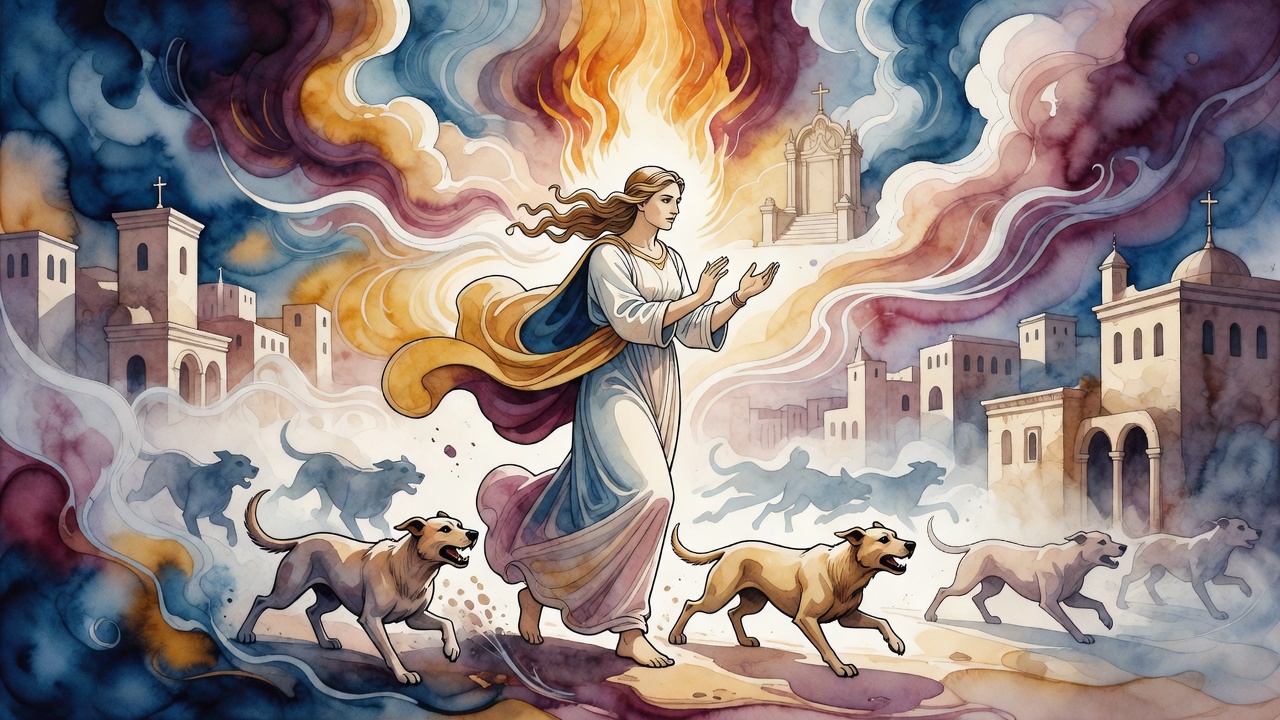
The servants went out to bury her and came back with less than a body. The dogs had stopped at the palms that had clapped for mourners.
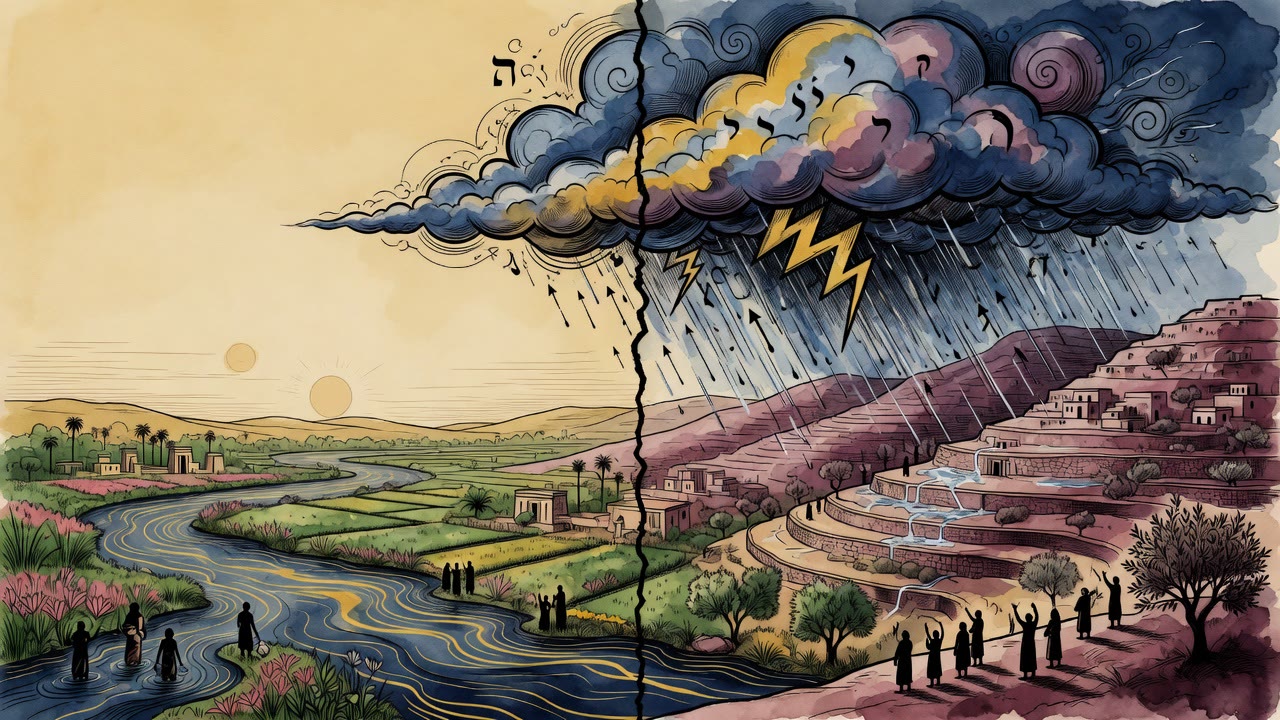
Searchers walked Israel for three dry years and brought David nothing. Then heaven named Saul, whose bones still lay outside the land.
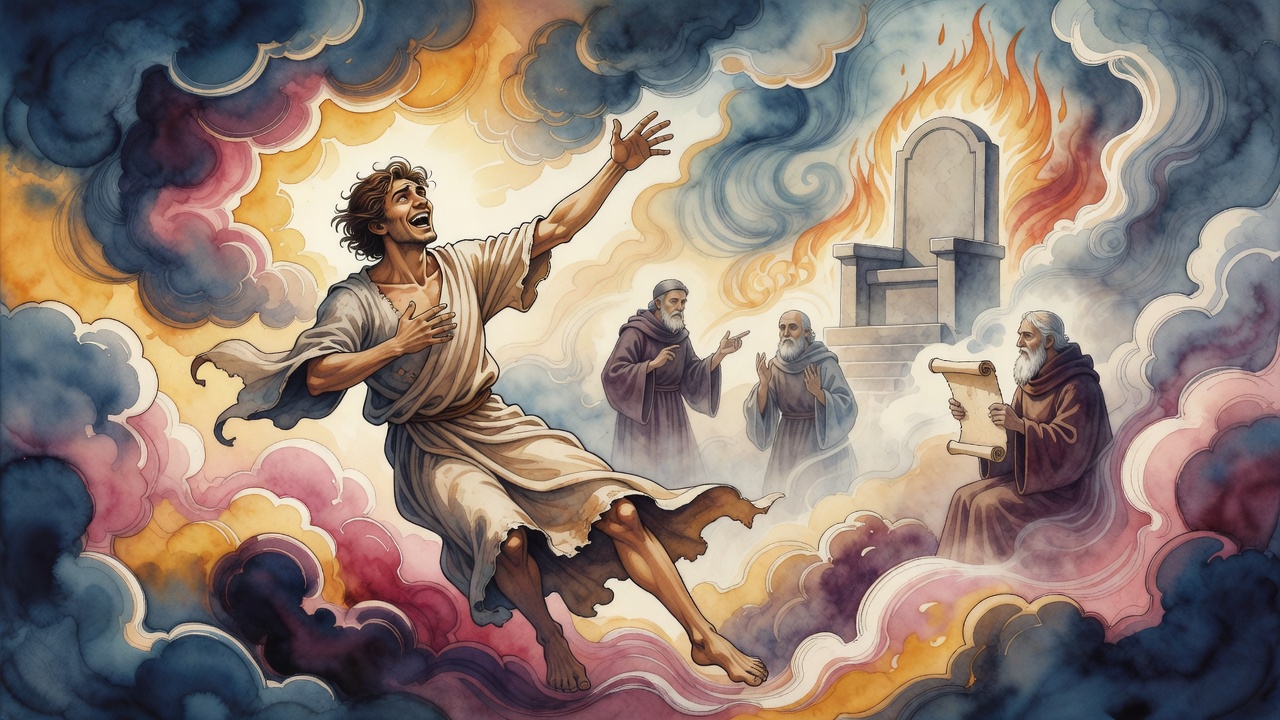
Sarah watched him in the yard with a bow. Then she told Abraham to send the boy and his mother out of the house for good.
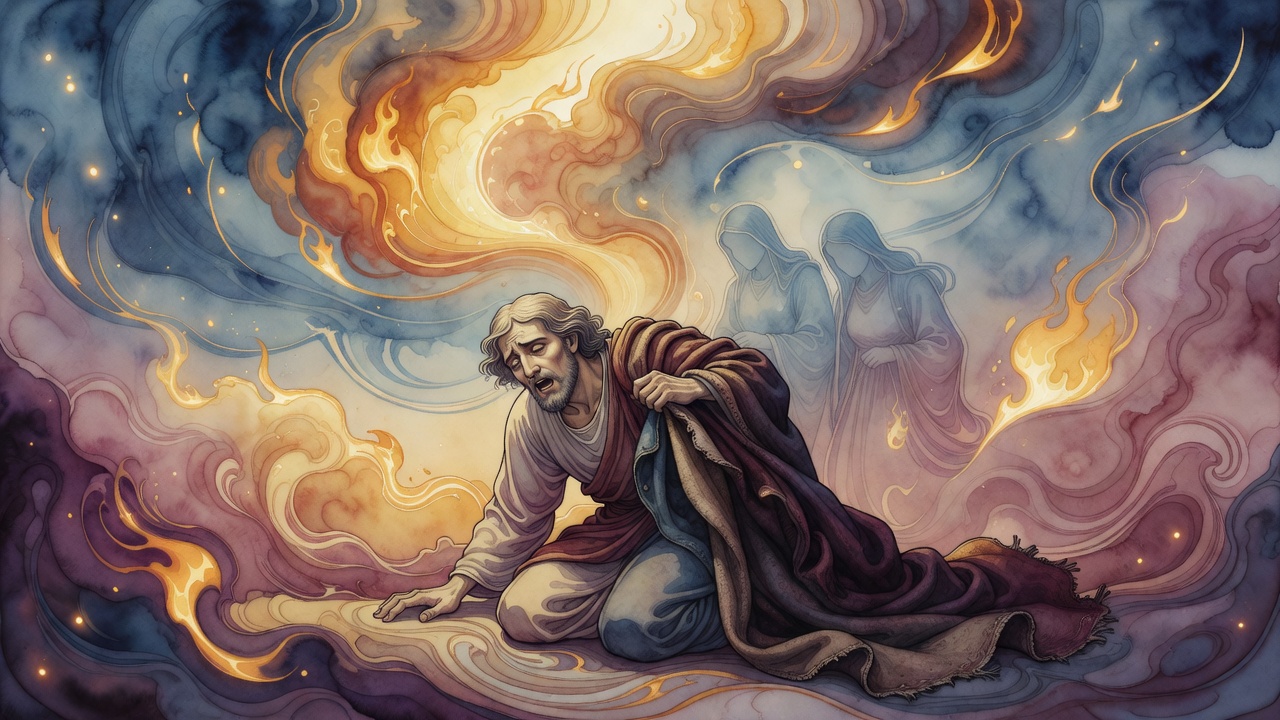
When the coat arrived, Jacob broke. Bilhah died the same day. Dinah followed. Jacob's grief outlasted all three because Joseph was still alive.
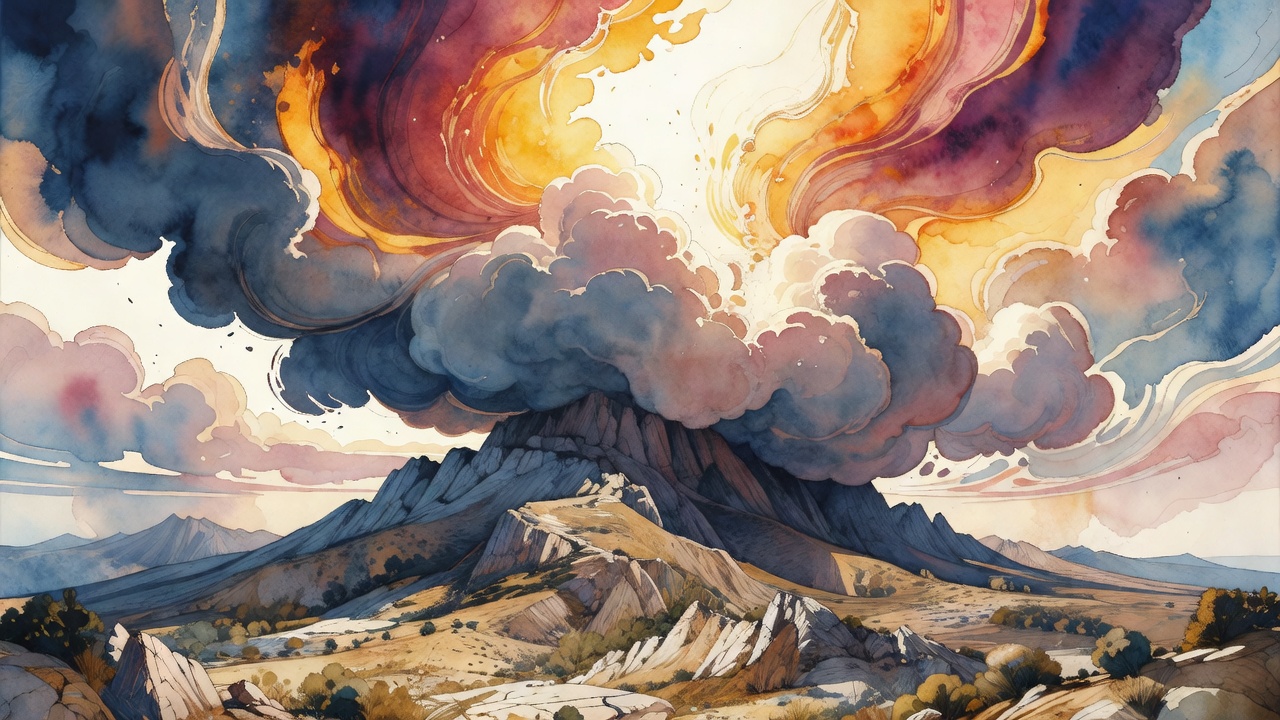
A generation raised under divine clouds had never seen direct sunlight. The day Aaron died on Mount Hor, every cloud dissolved at once.
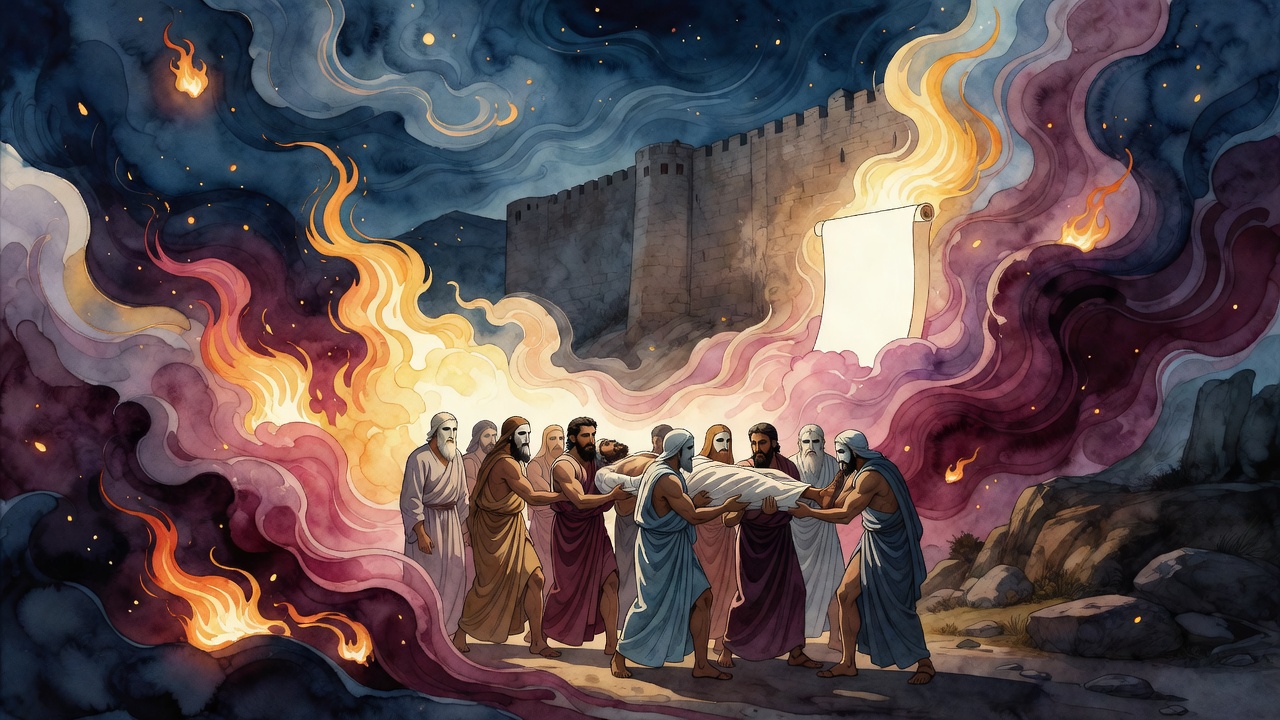
The men of Jabesh-Gilead still had their right eyes because of Saul. When his body went up on the wall at Beth-shan, they came for it.
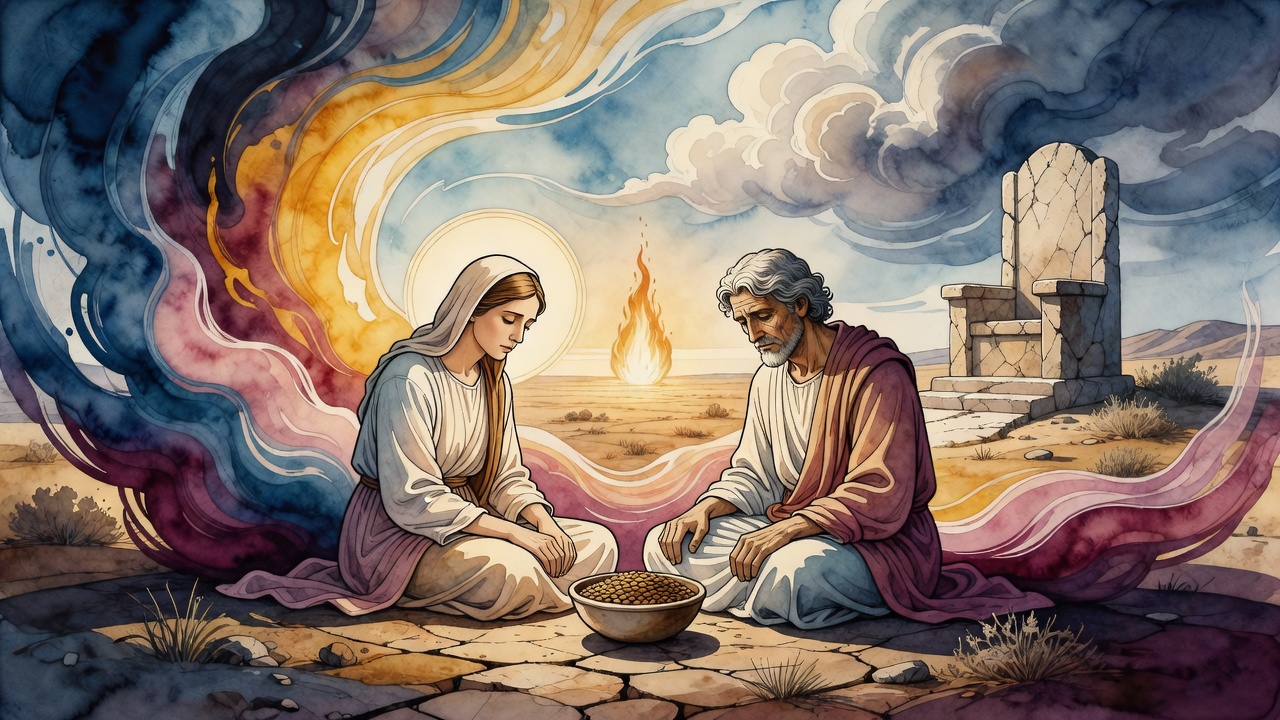
The first mourners in human history were Adam and Eve. They ate lentils. The rabbis traced every Jewish shiva table back to that first meal.
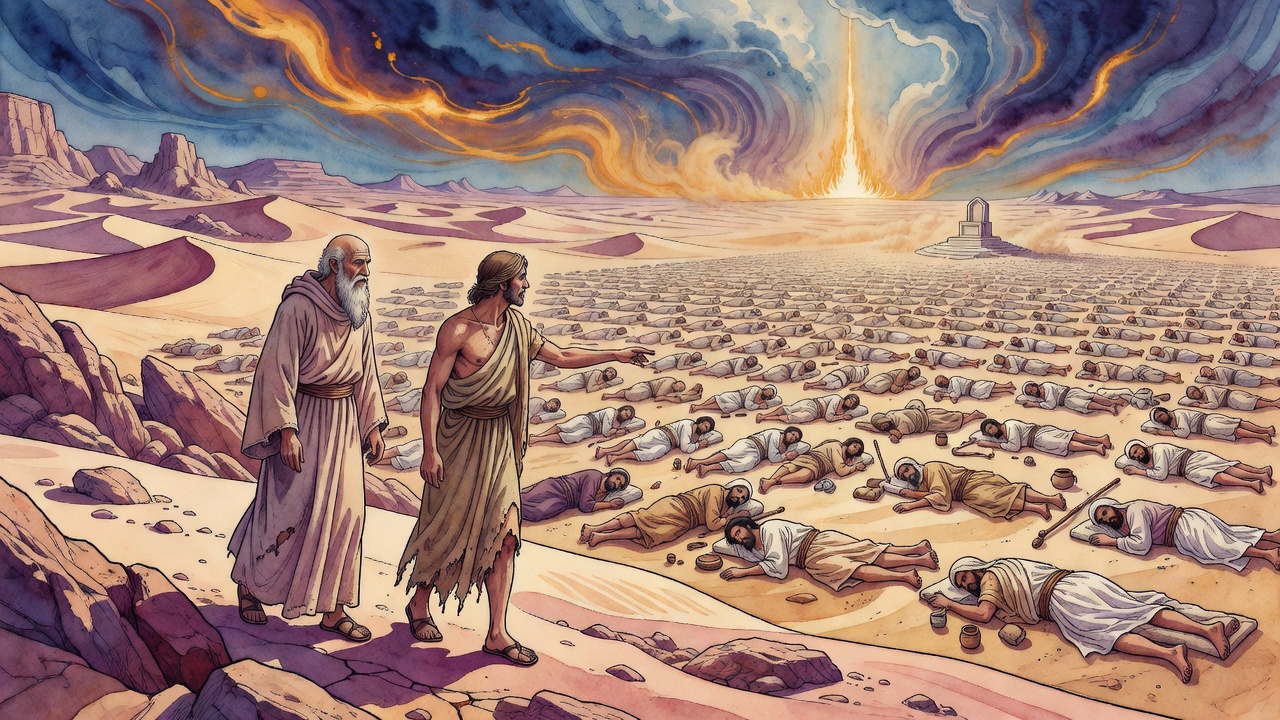
Rabbah cut a blue thread from a giant's fringe and the camel stopped. The guide said the dead keep what is theirs.
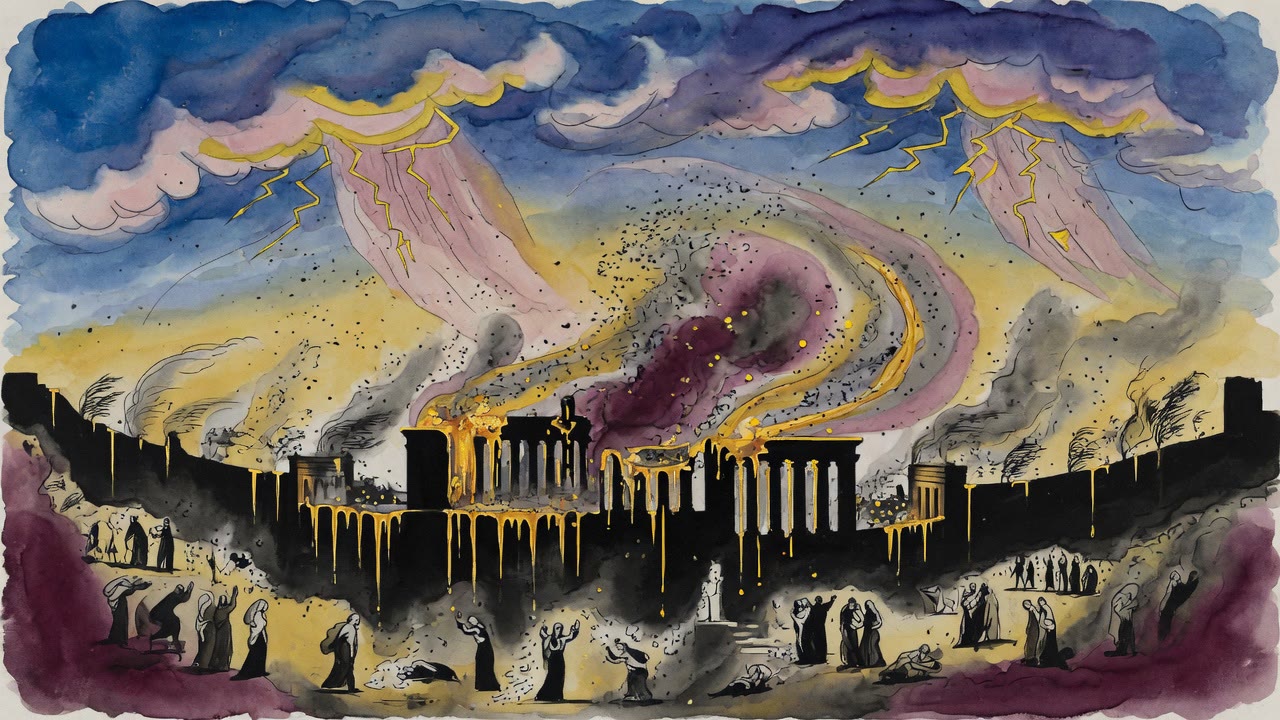
Three times a year the roads filled with dust and song. Then the feet stopped. Priests stood at empty gates with gifts no one came to take.
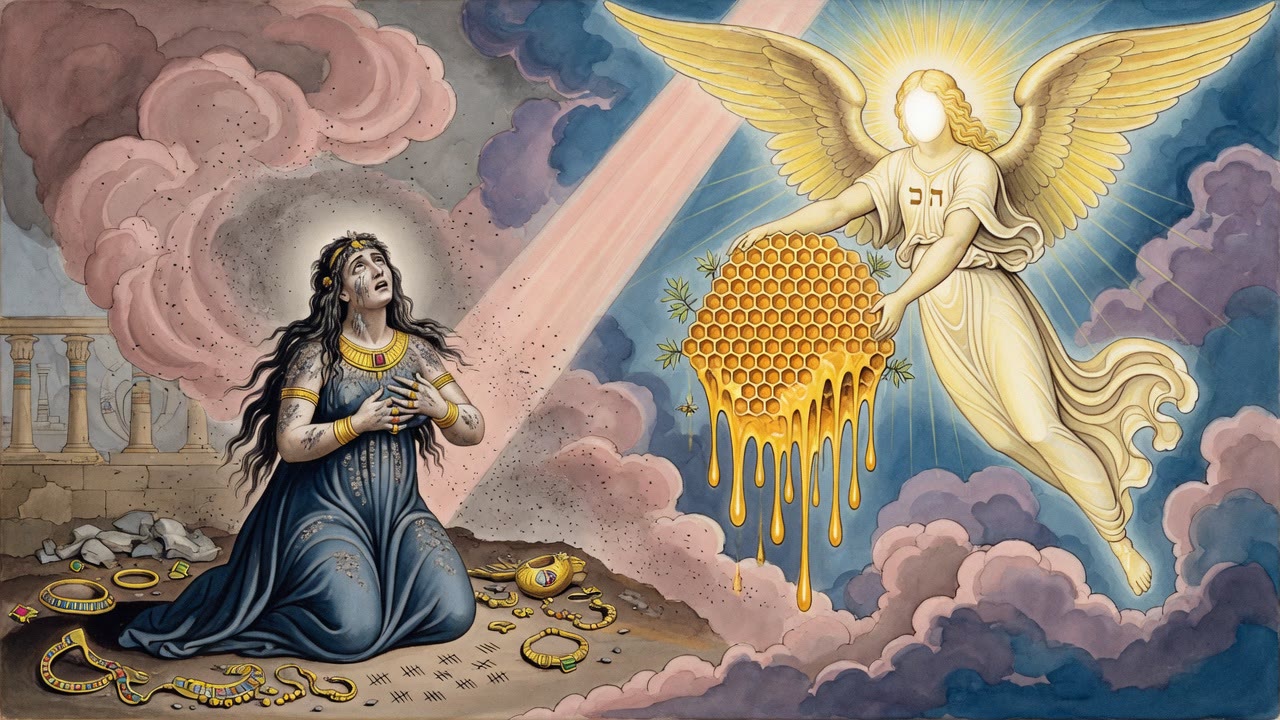
She threw her idols from the tower window. On the eighth morning a man like Joseph put honeycomb from Paradise on her tongue.
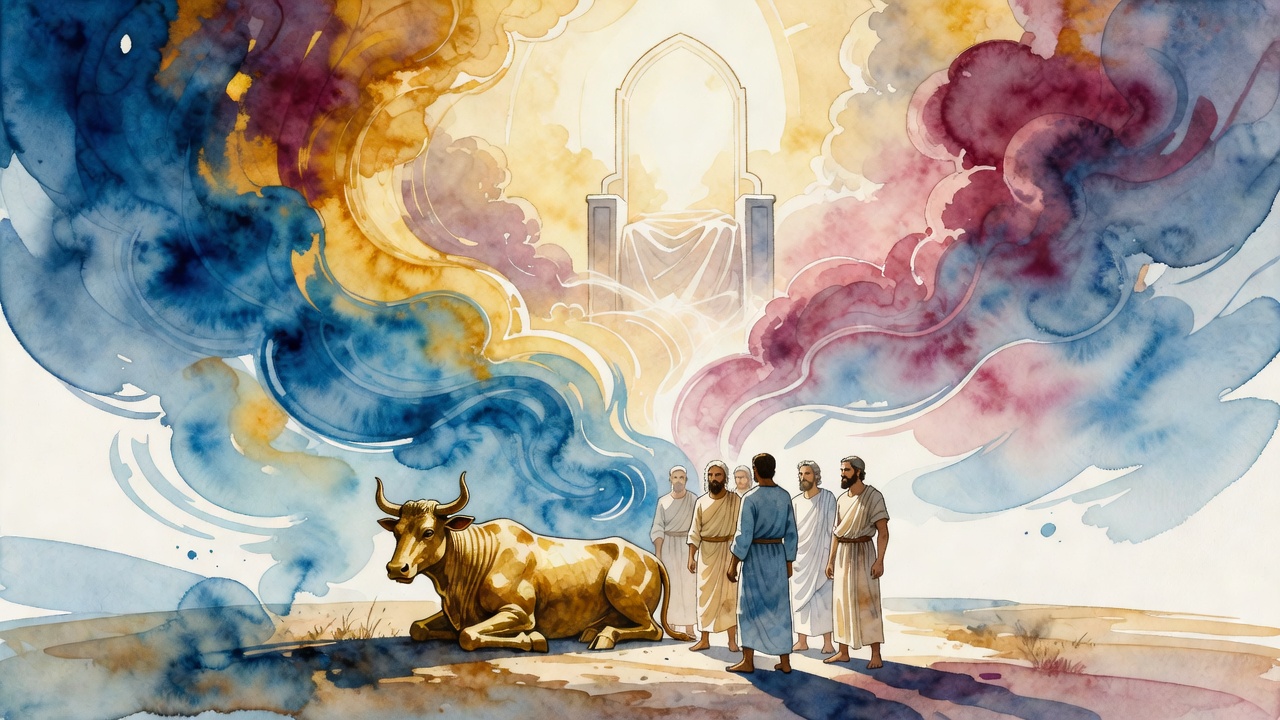
Everyone in the camp would have said they were loyal. Moses asked a narrower question, and only the men who had kept their gold could answer it.
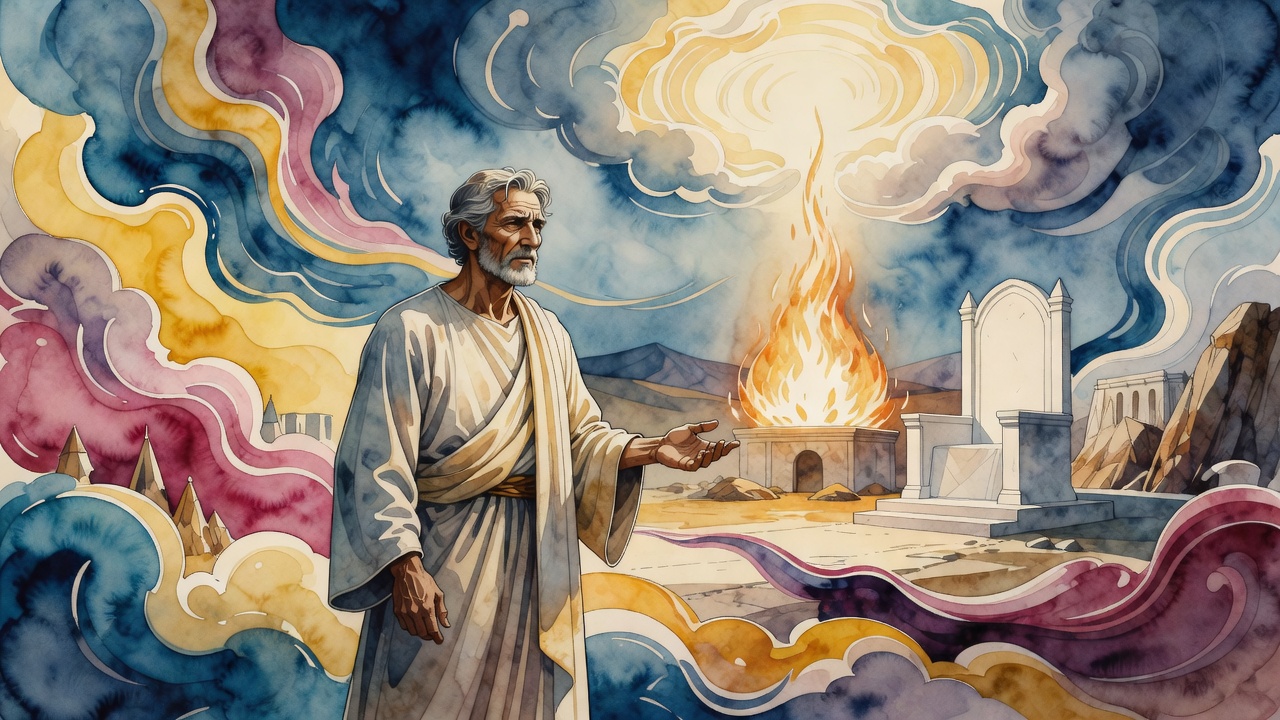
Tryphon asked for a hundred talents and Jonathan's two sons as hostages. Simon knew it was a lie. He paid, then buried his brother at Modi'in.
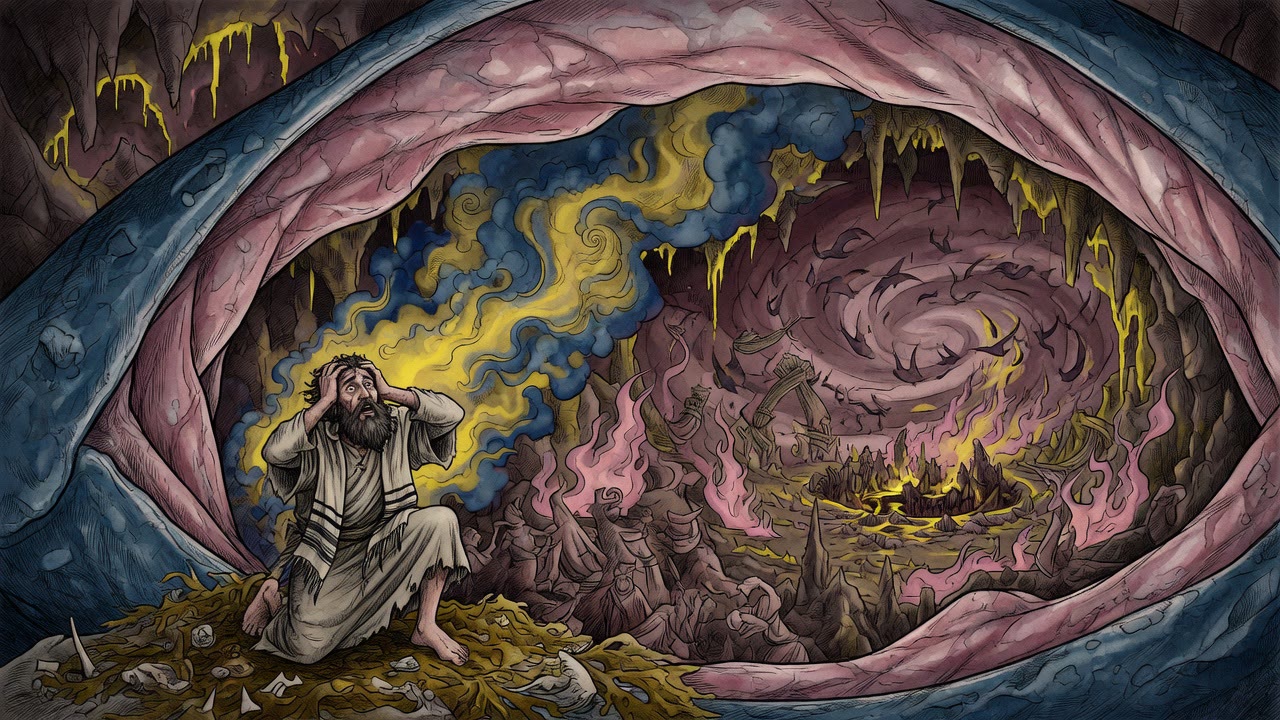
No fallen city could equal Jerusalem, so God sent no deputy into exile with Israel. Only the one who lit the fire could pay what was owed.
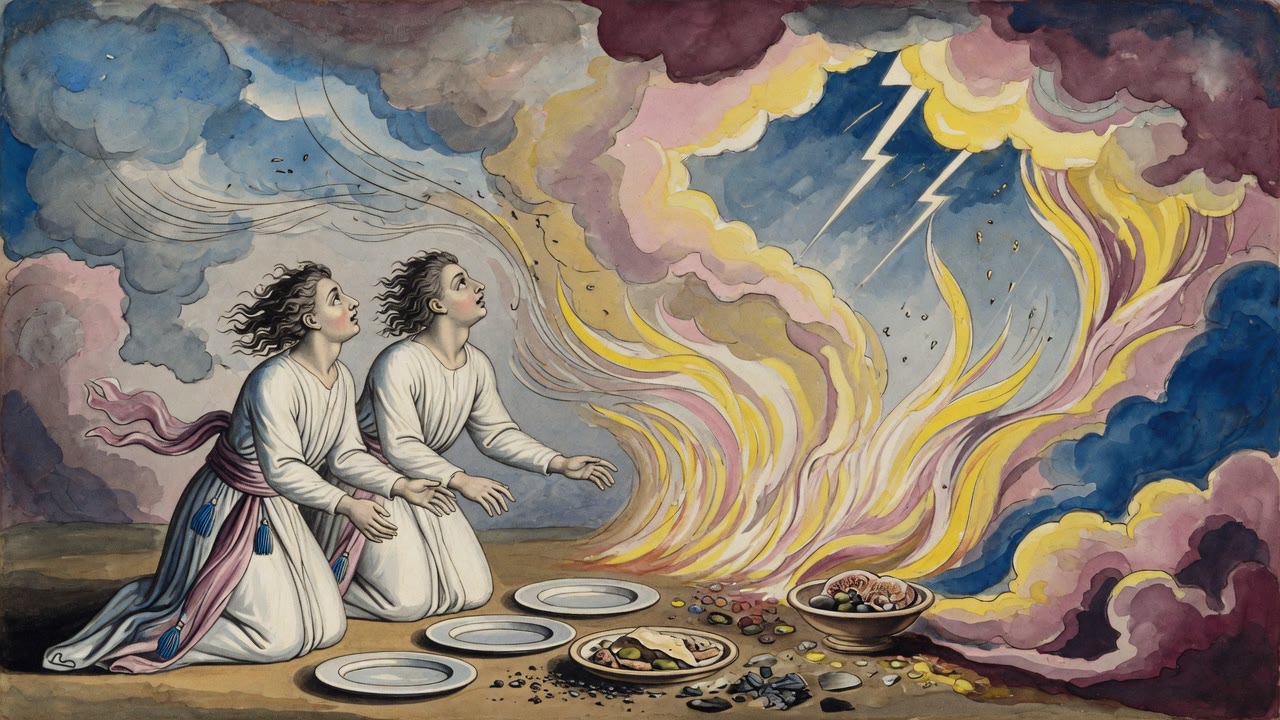
Aaron's two eldest sons reasoned that if Moses lived on the sight of God alone, they could feast their eyes and skip the body too.
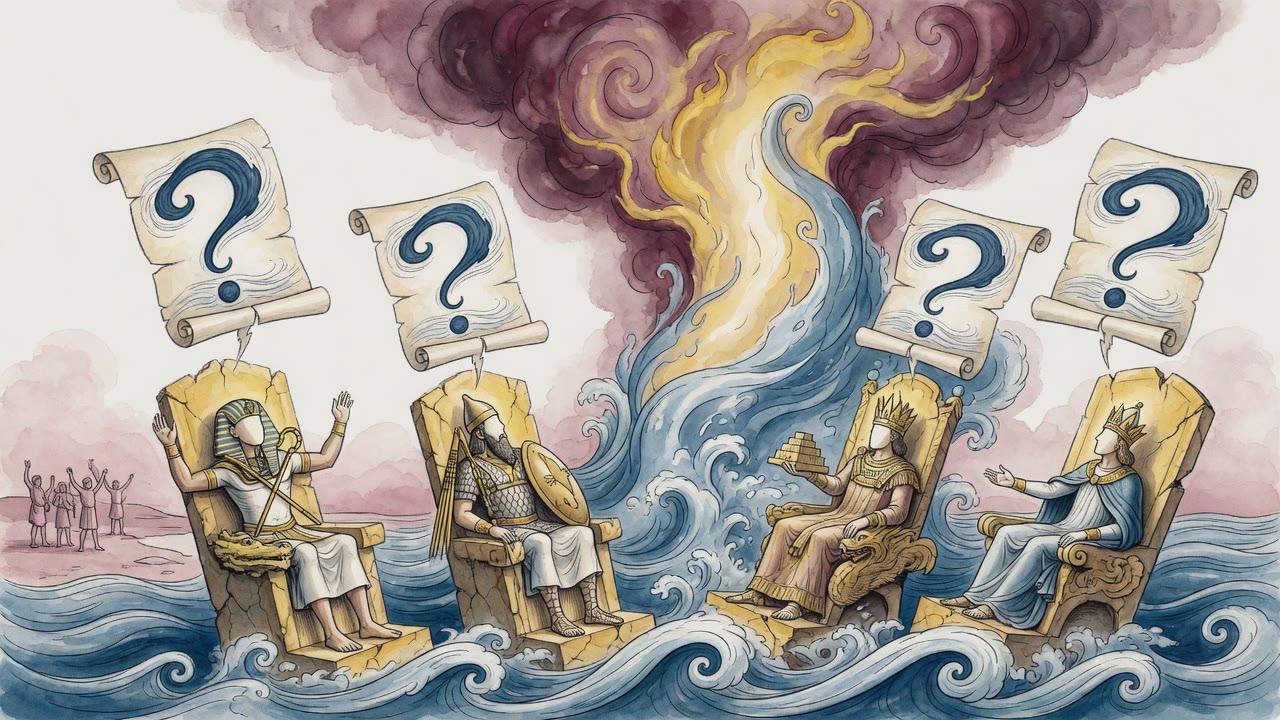
Jeremiah climbs the bloodied road and finds a woman weeping in black over empty cradles, and she is the burned land herself, the one God keeps His glory for.
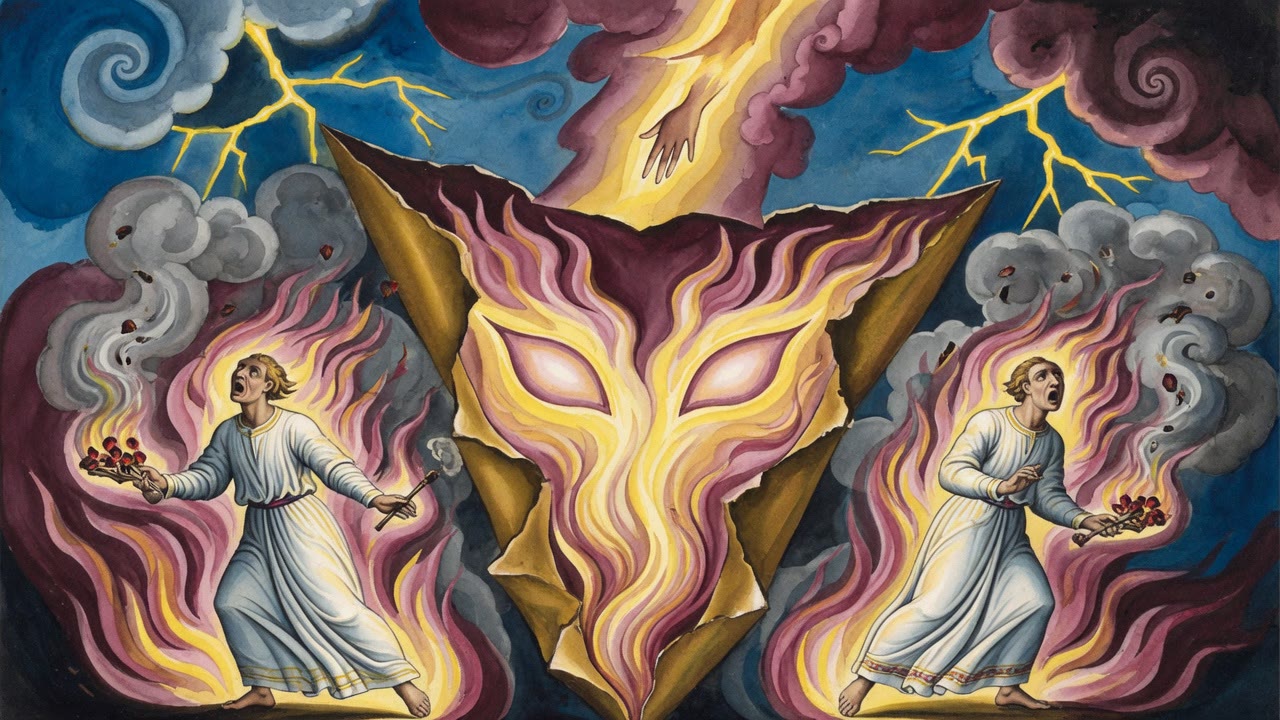
On the Mishkan's eighth day two priests carried their own fire into the Holy of Holies, and a purer flame answered by burning them alive.
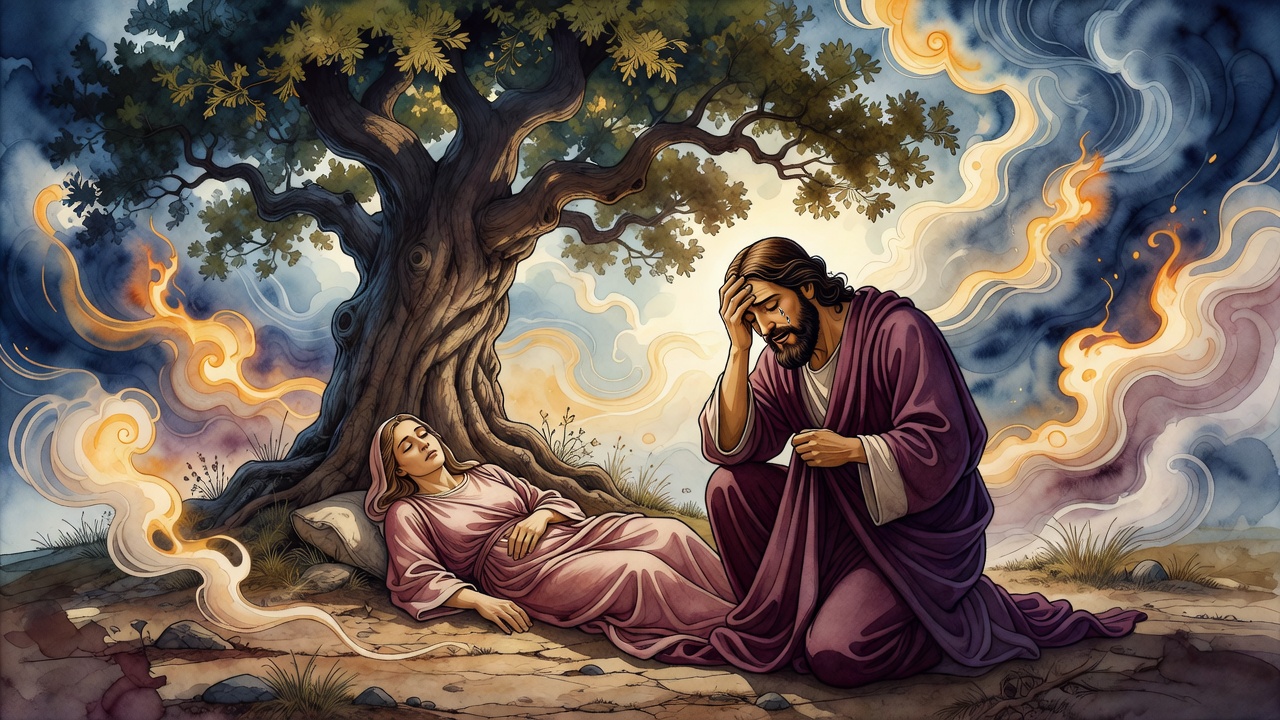
Jacob was still packing soil over Deborah when the messenger arrived. His mother Rebecca was already in the ground, and he had not been there.
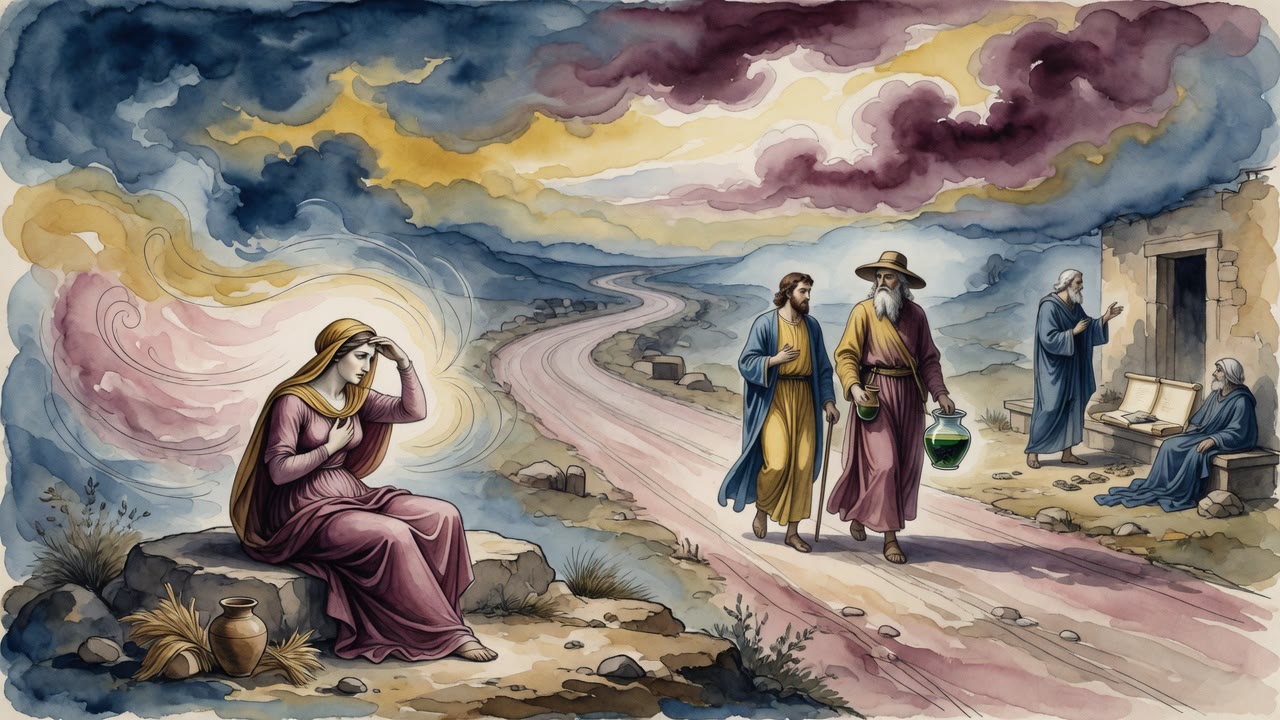
Tobiyyah reaches Ecbatana with Raphael hidden beside him. Raguel weeps for joy, then warns that seven grooms died before they could touch Sarah.
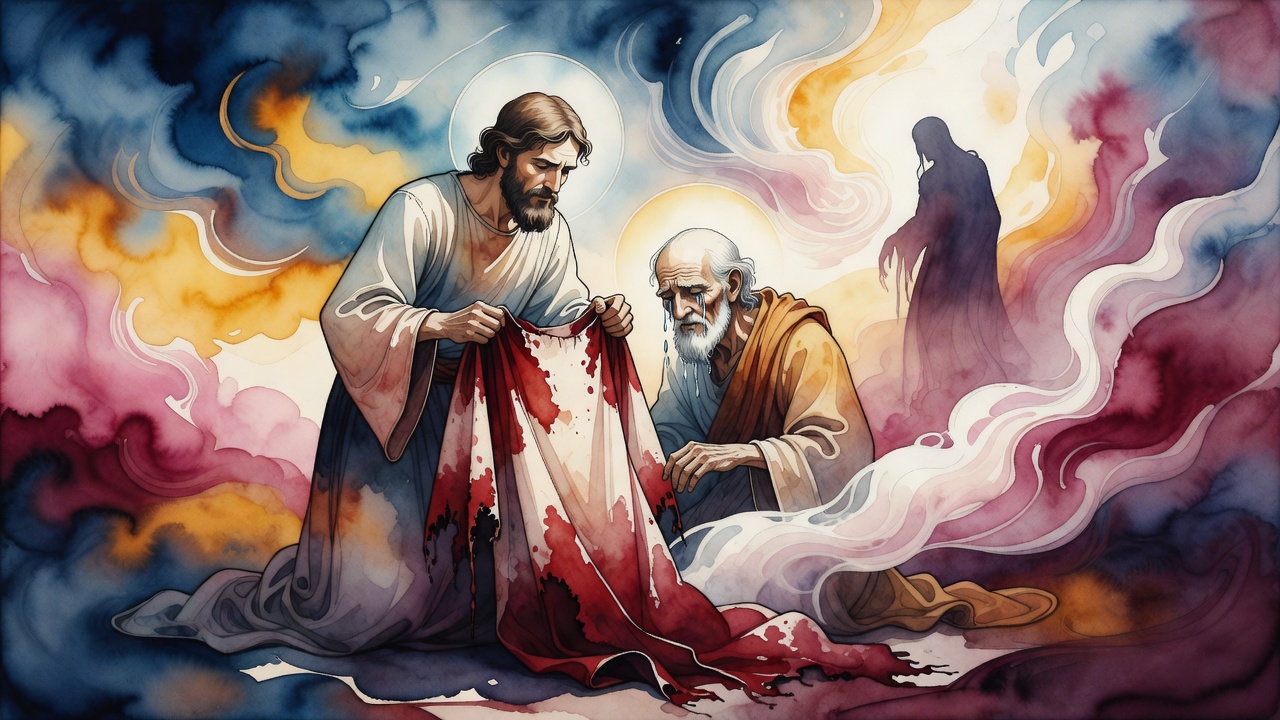
They laid the stiff coat in Jacob's hands. He named a woman standing against Joseph, and still went down to the grave in mourning.
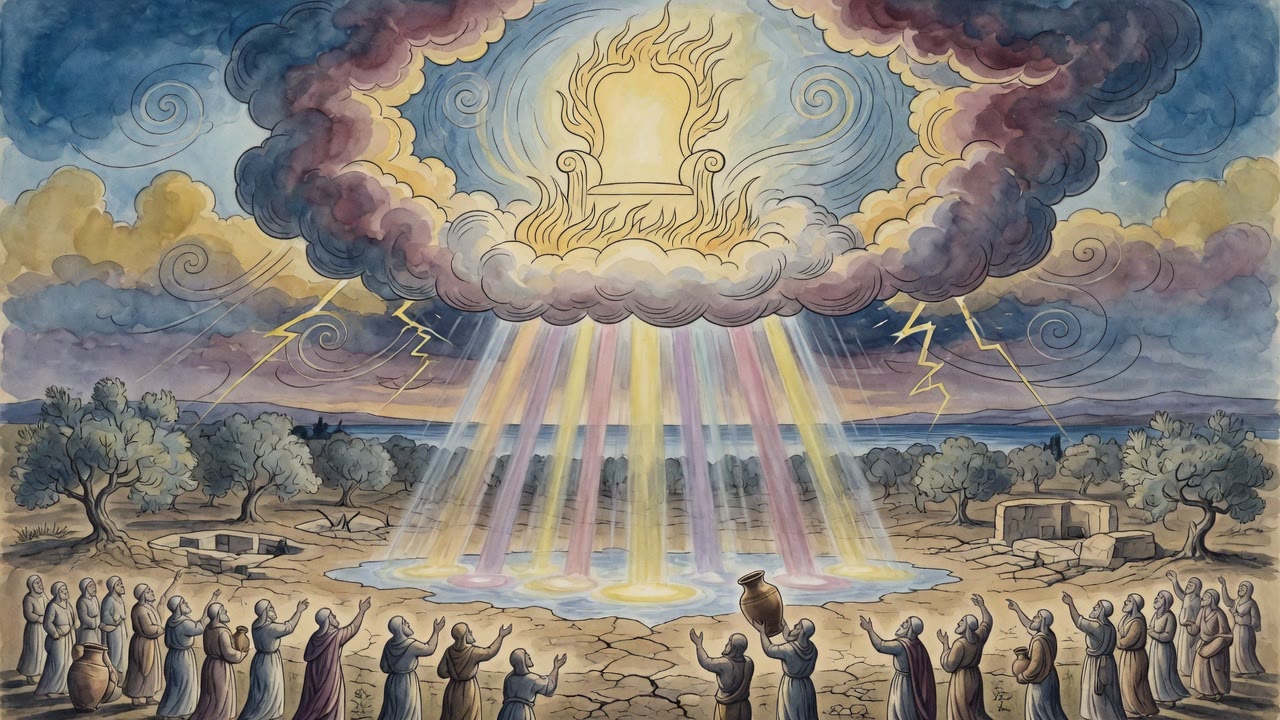
When Methuselah died, God sat shiva for His own world, reversed the sun, and let the doomed taste the World to Come before the rain fell.
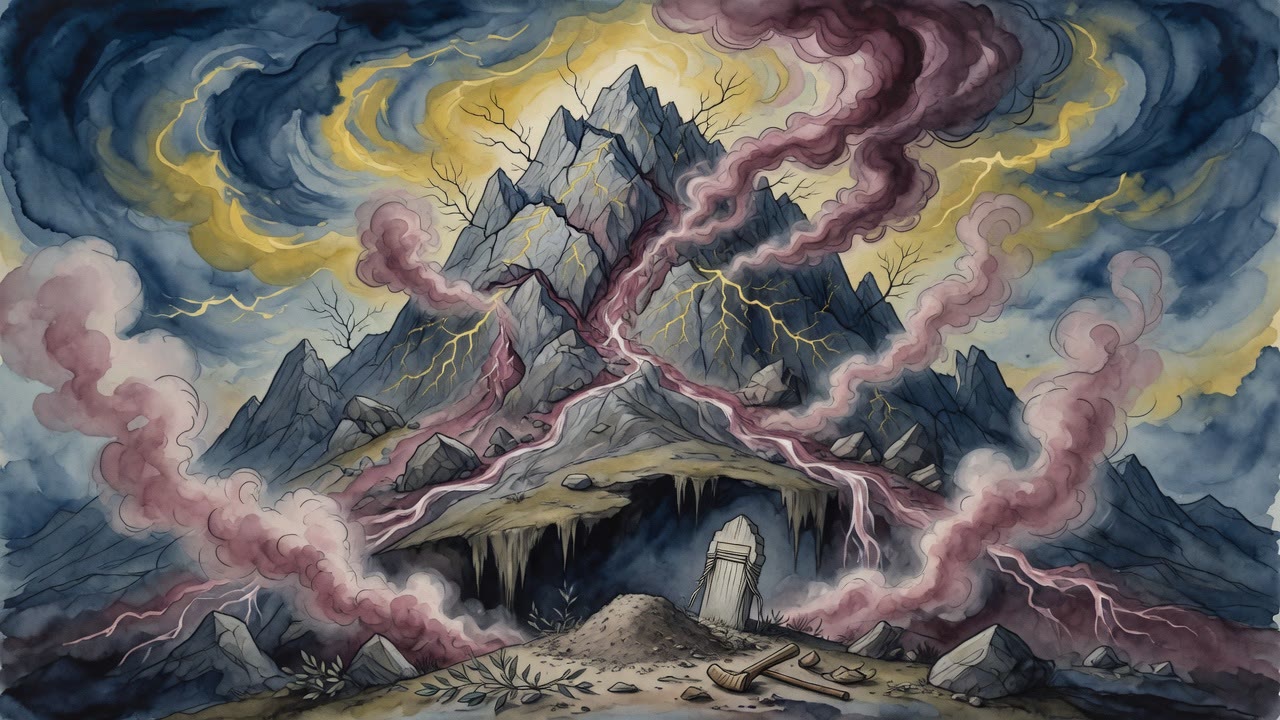
They buried Joshua at Timnath-serah and ran to their new fields. No one spoke over the grave. The hill above him began to move.
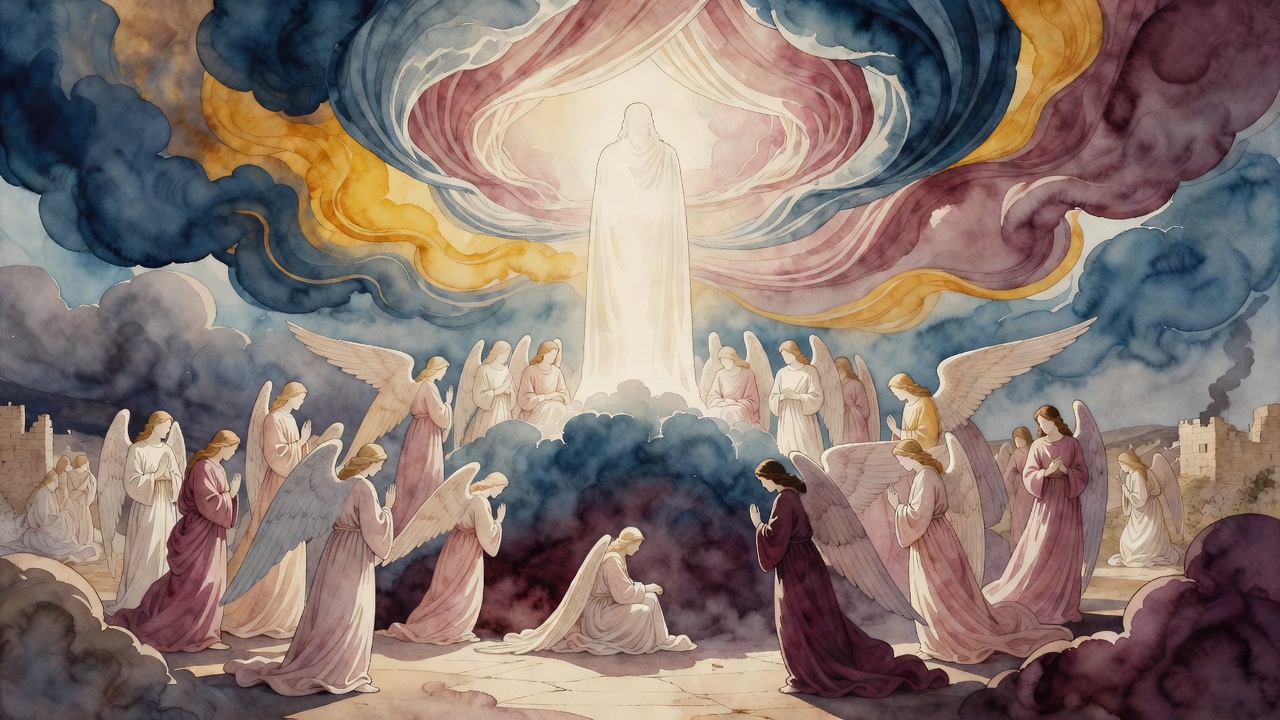
Jerusalem still smoked when the question went out. A king of flesh and blood, what does he do when he mourns? The angels answered. The sky changed clothes.
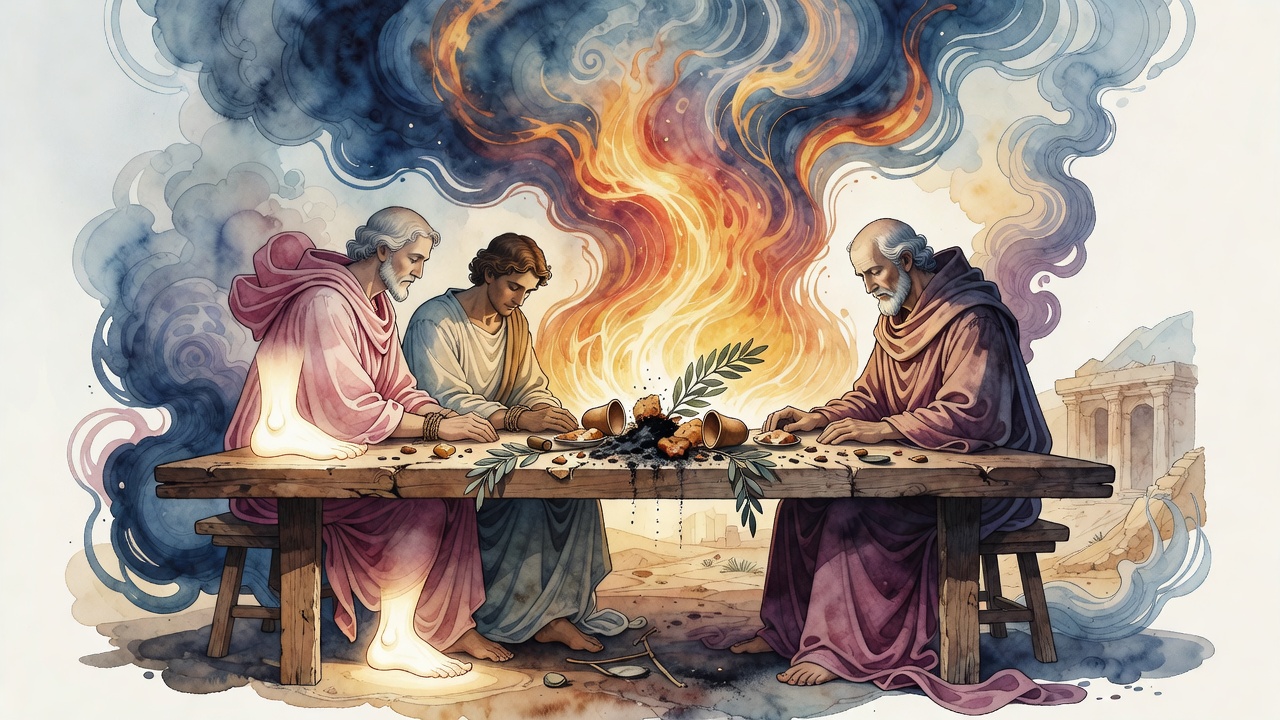
Fire killed two of his sons at the altar. The instructions that follow in the Torah tell their father how to walk into that same room once a year, alone.
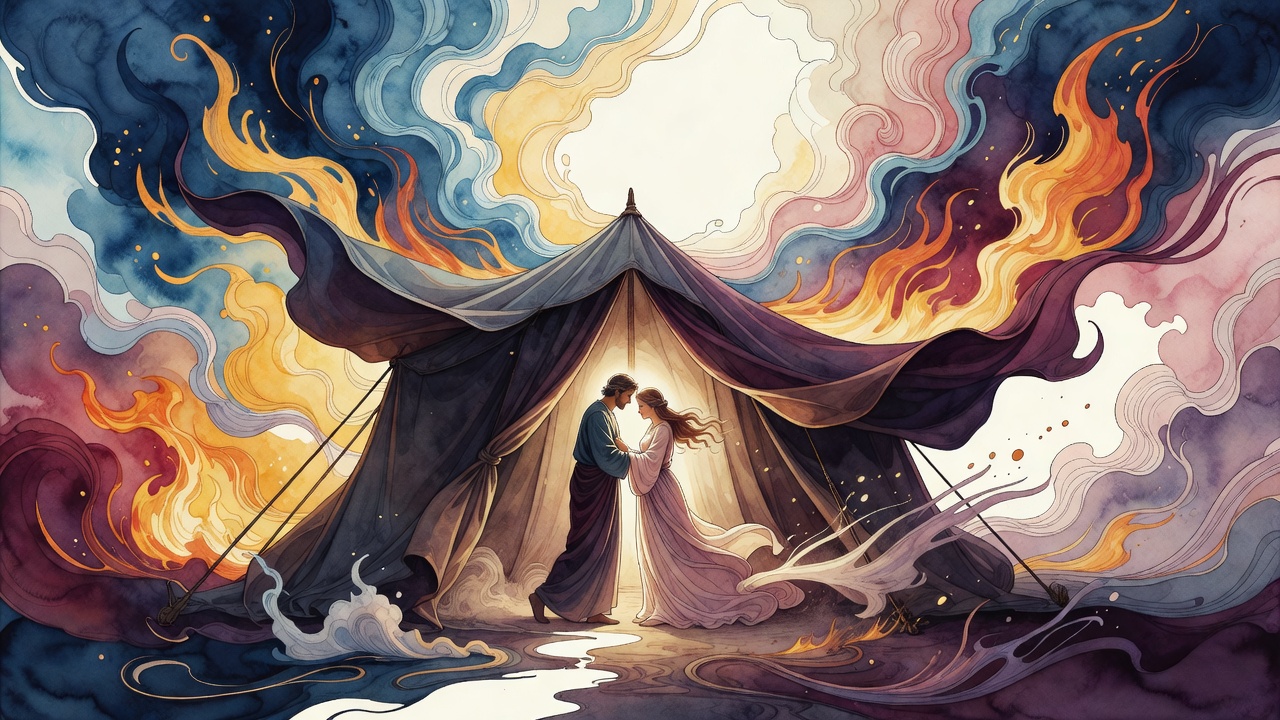
Three years after Sarah dies, Rebecca enters the tent and Isaac's mourning finally breaks. Love turns toward the wife while honor still climbs to the parents.
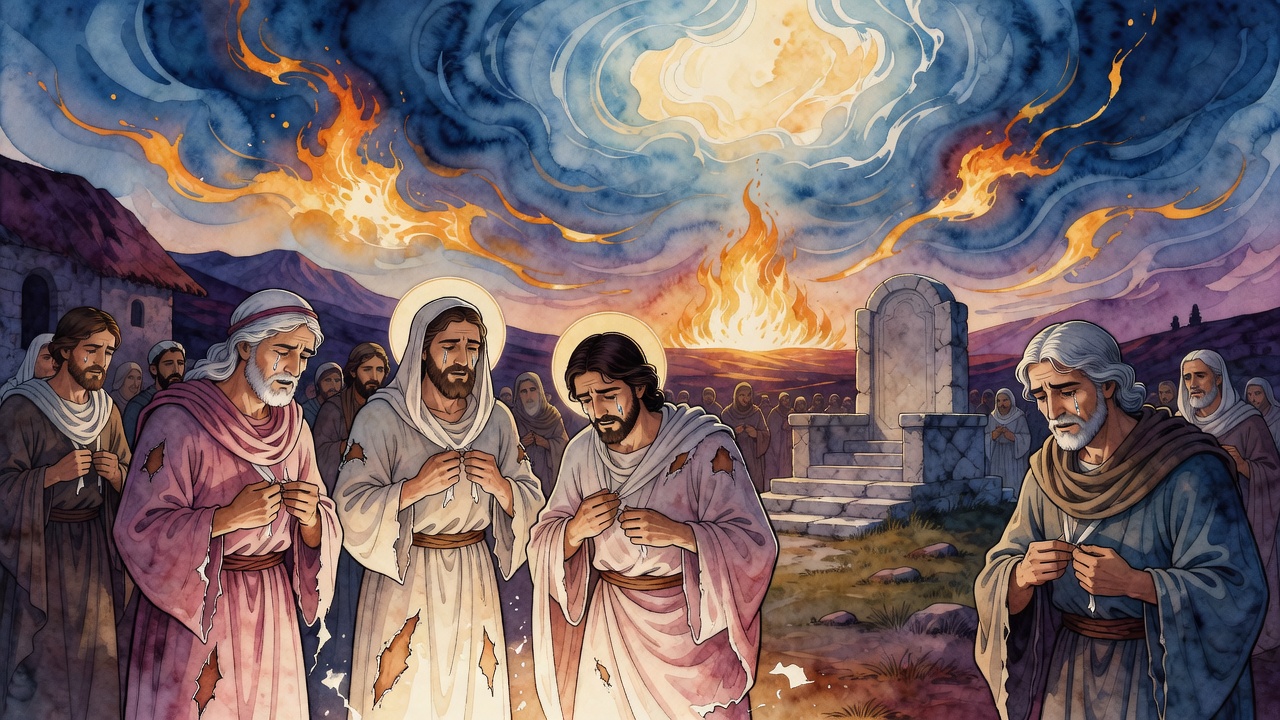
In every province the Jews tore clothes for a decree that only grew worse with time, because each sunrise stole one more day from the life still left.
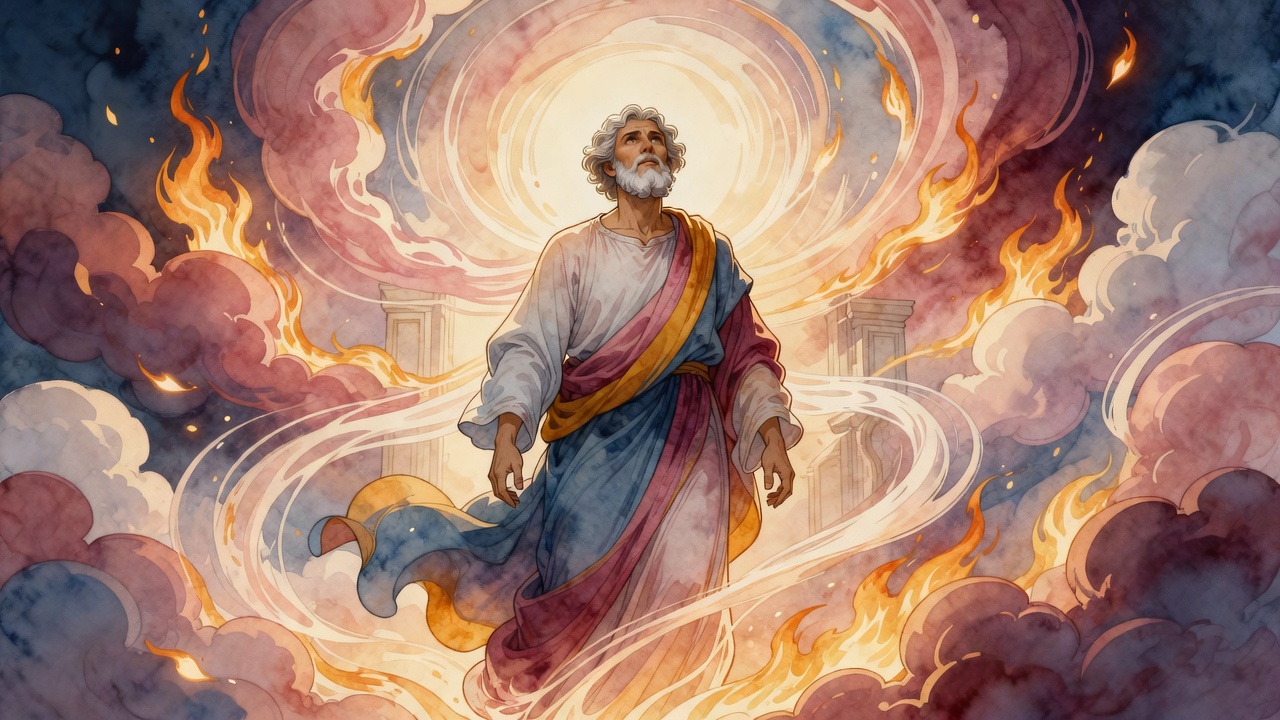
Aaron tore nothing and said nothing. His cousins carried his sons out of the camp by their tunics while he stood in the linen and kept still.
