5 min read

Israel Mourned Moses for Thirty Days Before Death

Israel began mourning Moses before he died because his absence had already entered the camp. Thirty days made the loss visible.

Curated by Arthur · Told by Maggid ·
Table of Contents
  1. The Month Before the End
  2. The Leader Who Asked for a Successor
  3. Caleb Showed What Loyalty Looked Like
  4. Aaron Had Already Gone Up the Mountain
  5. The Grave No One Could Find

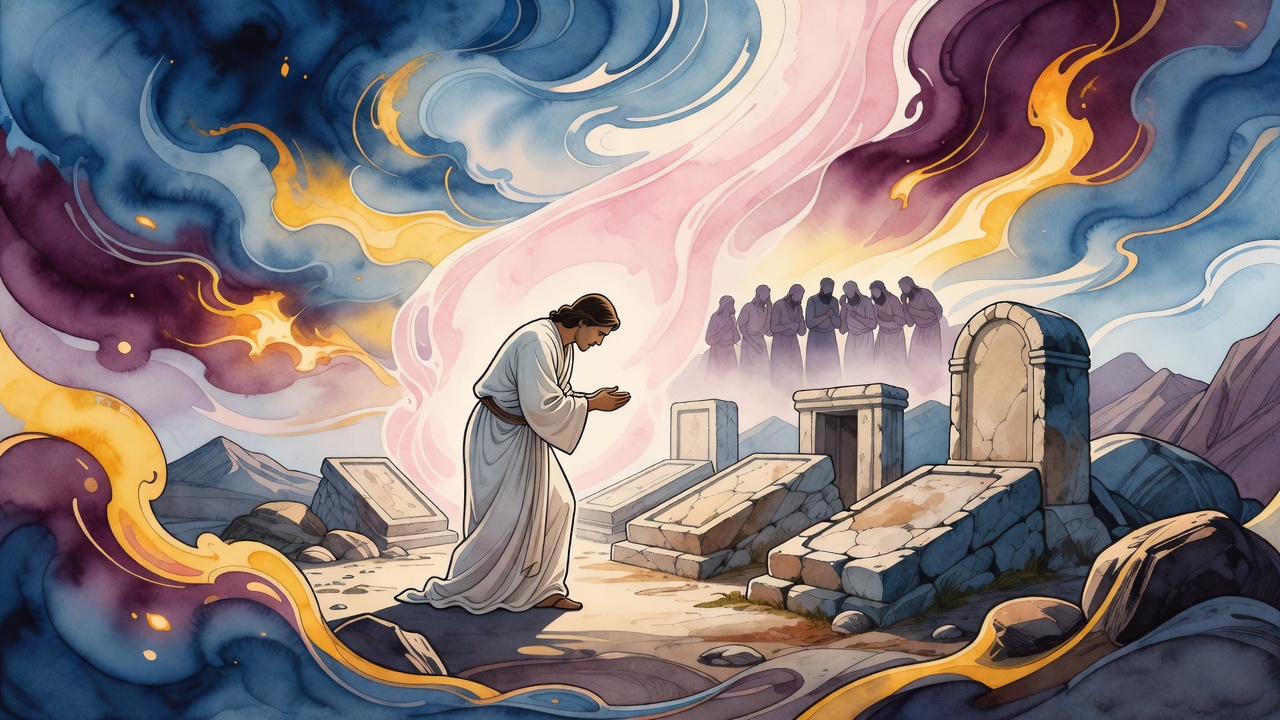
Moses was still alive when Israel began to mourn him.
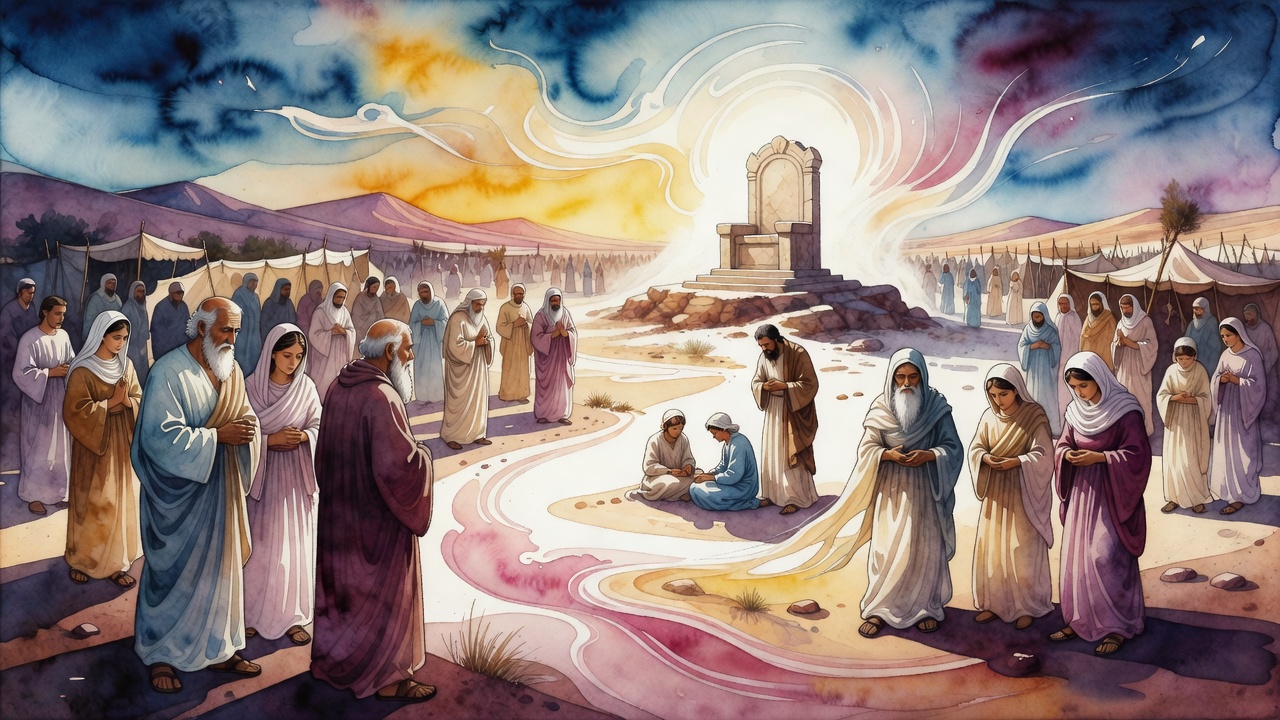
He still stood before them. His voice still carried. His hands, the hands that had lifted the staff over the sea and broken the tablets below the mountain, still moved as he spoke. Across the Jordan, the land waited. Behind them lay graves, manna, thirst, rebellions, fire, forgiveness, and forty years of being led by one man who would not cross with them.

The mourning came early because the absence had already entered the camp.

The Month Before the End

Thirty days is long enough for a fact to become real.

A single day can be shock. A week can still be denial. Thirty days changes the rhythm of meals, footsteps, conversation, and sleep. Israel needed that span before Moses died because his death was not only the loss of a leader. It was the removal of the voice that had interpreted reality for them since Egypt.

He had stood between them and Pharaoh. Between them and the sea. Between them and God after the calf. Between them and themselves when their fear became mutiny. Joshua would lead bravely. Joshua would cross the river. But Joshua had not been the one whose face shone when he came down from Sinai.

The camp had to learn how to breathe while Moses was still near enough to bless it.

The Leader Who Asked for a Successor

When Moses understood that he would not enter the land, he did not first ask for a monument.

He asked about leadership. The people would need someone who could go out before them and come in before them, someone who could bear insult without breaking, someone who could answer each soul according to its own trouble. Moses knew Israel too well to ask for a simple commander. They needed a shepherd with a soldier's courage and a teacher's patience.

He had sons. He could have wanted the office to pass through his own tent. Instead, heaven chose Joshua, the attendant who had not departed from the tent of meeting, the student who had watched long enough for service to become readiness.

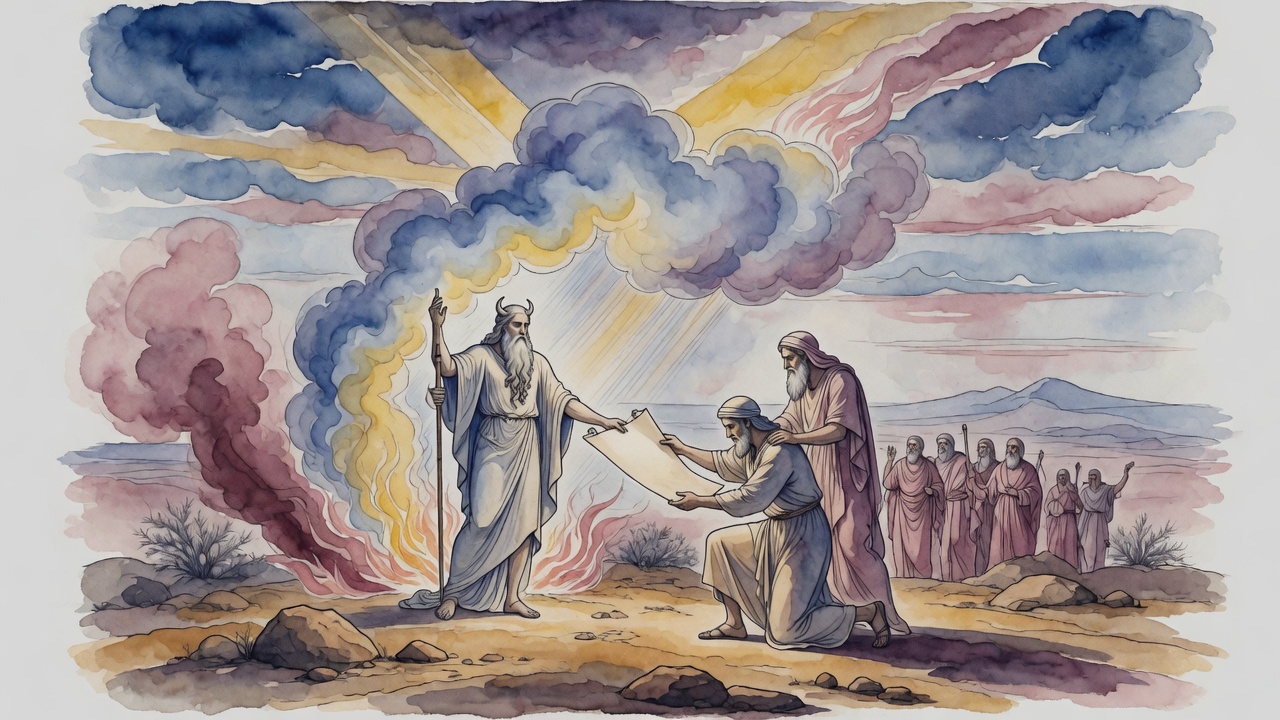
Moses accepted the answer and laid hands on him.

Caleb Showed What Loyalty Looked Like

The mourning for Moses also carried the memory of those who had remained faithful to his mission.

Caleb had stood against ten spies when panic flooded the camp. Giants, walls, fear, graves in the wilderness, the ten had turned a report into a national collapse. Caleb silenced the people and insisted the land could be taken. That courage did not come from optimism. It came from attachment to the purpose Moses had carried.

A leader's work can enter another person's soul. Caleb proved it. Joshua proved it differently. Israel was not losing only Moses' body. It was being forced to ask where his purpose had taken root and whether those roots could hold after his voice stopped.

Aaron Had Already Gone Up the Mountain

Moses had once delivered Aaron to his own death.

The brothers went up the mountain together. Aaron wore the priestly garments. Moses removed them and placed them on Eleazar. Piece by piece, the visible sign of Aaron's service passed to his son while Aaron watched. Then Aaron died there, above the camp, and Israel mourned him thirty days.

Moses knew what that number meant because he had lived through it beside his brother's absence. He knew the mercy of a death made visible before it finished its work. The righteous are allowed to pass on their crown. The living are allowed to see the transfer before grief blinds them.

Now Israel had to watch Moses' crown pass.

The Grave No One Could Find

At the end, Moses climbed Nebo alone.

He saw the land. Not as rumor, not as promise only, but spread before him by tribes and valleys. His feet did not cross. His eyes did. Then he died by the mouth of God, and his grave was hidden.

That hidden grave protected Israel from freezing its grief into stone. They could not build their future around the place where he lay. They had to carry his Torah instead. The thirty days had taught them to look at the loss directly. The hidden grave forced them to keep moving after they had looked.

Moses was still alive when they began to mourn him. By the time he was gone, the people had already started becoming the nation that would have to live without him.


← All myths
From the tradition

Sources

4 sources

The texts this telling draws on, in full. Open a card to read inline, or expand it for a wider, quieter read.

Legends of the Jews 6:83Legends of the Jews

The familiar picture has him receiving the Torah, parting the Red Sea.. but what about the everyday leadership challenges?

Well, one fascinating story in Legends of the Jews, drawn from various Midrashic (rabbinic interpretive commentary) sources, gives us a glimpse into his thoughts about succession. It all starts with a seemingly unrelated event: the case of the daughters of Zelophehad. Remember them? They argued that they should inherit their father's property, even though he had no sons. And guess what? God agreed!

This victory for the daughters sparked something in Moses. "Aha," he thought, according to the legend, "If daughters can inherit, shouldn't my sons inherit my position?" It's a very human moment, isn't it?

Instead of just assuming his sons were automatically entitled to the role, Moses does something remarkable: he prays. And it's not just any prayer. It’s a deeply thoughtful plea for the right kind of leader.

He prays to God, the one who knows the ruach, the spirit, of every single person. As we find in the text, he asks that God "set over Thy community a man who is gifted with strength, with wisdom, with beauty, and with decorum, so that his conduct may not give offense to the people." It's not enough to be powerful, or smart, or even good-looking! The leader must have dekorum – good manners, the ability to inspire confidence and respect. for a second. Moses, knowing his time is drawing to a close, isn't just focused on power. He's focused on the people.

His prayer continues, "O Lord of the world! Thou knowest each man's views, and knowest that each man has a view of his own...appoint a leader over them that will know how to deal with each man according to his views."

Wow. He understands that leadership isn't about imposing one's will. It's about understanding and respecting the diverse perspectives within the community. He wants someone who can navigate those differences, someone with the empathy to connect with each individual.

What a powerful lesson for us today. In a world often divided, Moses' prayer reminds us that true leadership is about understanding, respect, and a genuine concern for the well-being of all. It's a plea for a leader who embodies not just power, but also compassion. And isn't that the kind of leader we all yearn for?

Full source
Bamidbar Rabbah 16:19Bamidbar Rabbah

It’s a story found within Bamidbar Rabbah, a collection of rabbinic interpretations on the Book of Numbers.

The scene is set: Moses has sent out spies to scout the Land of Israel. They come back with… not great news. Ten of the twelve spies are terrified. They paint a picture of giants, impenetrable cities, and certain doom. The people are, understandably, freaked out. A wave of panic washes over the Israelite camp.

Then, a voice cuts through the fear. Caleb.

"Caleb silenced the people toward Moses, and said: We will ascend, and inherit it; for we can prevail over it" (Numbers 13:30).

But how did he manage to silence a crowd of terrified Israelites? Bamidbar Rabbah tells us that Caleb had been playing a clever game. At first, he'd agreed with the other spies, seeming to be "with them in counsel." But all along, he intended to speak the truth. As he later says in (Joshua 14:7-8), "I returned word to him as it was in my heart. My brethren who went up with me dissolved the heart of the people." He was biding his time, waiting for the opportune moment.

The spies thought Caleb was one of them, trustworthy. So, as Bamidbar Rabbah recounts, he "stood on the bench and silenced all of Israel, who were shouting at Moses." They were quiet because they believed he was going to echo the slanderous report of the majority. Imagine the suspense! The crowd, hushed, waiting for him to confirm their fears.

Then Caleb drops the bomb: "We will ascend, and inherit it; for we can prevail over it."

Can you feel the shock rippling through the crowd? He didn’t validate their fears. He challenged them. He dared to offer a different perspective.

Of course, it didn't go down without a fight. Immediately, "they disputed with him and said: 'We will be unable to ascend against the people…'" (Numbers 13:31). The seeds of doubt had already been sown, and it would take more than just Caleb's bravery to overcome them. But God Himself acknowledged Caleb's unique spirit, as it says in (Numbers 14:24): "But My servant Caleb, because another spirit was with him..."

What does this story tell us? Maybe it's about the power of perspective. Maybe it's about having the courage to speak truth, even when it's unpopular. Maybe it's about the importance of questioning the prevailing narrative. Or maybe, just maybe, it's a reminder that sometimes, all it takes is one voice to silence a sea of doubt, and remind us of what's truly possible. What "land" are we too afraid to enter, and how can we find that inner "Caleb" to encourage us forward?

Full source
Sifrei Devarim 357:38Sifrei Devarim

Our journey starts with the Sifrei Devarim, a collection of legal commentaries on the Book of Deuteronomy. It asks a simple question about a seemingly simple phrase: "thirty days." But what's so special about thirty days?

The Sifrei Devarim tells us that this refers to the period of mourning Moses received before his death. A whole month set aside to grieve the loss of a leader before he's even gone. That's a powerful evidence of his significance.

The connection doesn't stop there. The text then asks, "And whence is it derived that the days of Naziritism are thirty?" Naziritism, or being a Nazir, refers to a special vow someone could take to dedicate themselves to God for a specific period. This involved abstaining from certain things, like wine and haircuts. So, how long did this dedication last?

The answer lies in a clever textual comparison. The Sifrei Devarim points out that the word "days" is used both in the context of Moses' mourning period and in the laws concerning Naziritism (Numbers 6:4). Since the "days" of mourning are explicitly stated as thirty, the text concludes that the "days" of Naziritism must also be thirty. It's a beautiful example of how ancient Jewish scholars used textual connections to derive laws and understand deeper meanings.

It's important to remember that this isn't just about numbers. It's about establishing precedents and connecting different aspects of Jewish life. The 30-day period becomes a sort of template for significant periods of observance.

And speaking of significant figures, let's turn to Joshua, Moses' successor. The Sifrei Devarim highlights a crucial detail about him: "And Joshua the son of Nun was full of the spirit of wisdom." Why? Because "Moses had placed his hands upon him."

This act of laying hands upon Joshua wasn't just a symbolic gesture. It was a transfer of authority, of leadership, and of wisdom. The text emphasizes that "There is no obedience greater than this." Joshua's wisdom wasn't simply innate; it was a direct result of his obedience to Moses and Moses' blessing.

Think about the weight of that for a second. Imagine receiving not just a job title, but also the very spirit of wisdom from your predecessor!

What does this all mean for us today? Perhaps it’s a reminder of the importance of mourning and remembrance. The 30-day period, established so long ago, continues to shape Jewish mourning practices. It also emphasizes the importance of mentorship and succession, passing down wisdom and knowledge from one generation to the next. And maybe, just maybe, it encourages us to consider the power of obedience and the potential for growth that comes from honoring those who came before us.

Full source
The Midrash of Philo 4:2The Midrash of Philo

A fascinating corner of this exploration, guided by the writings of Philo of Alexandria, a Jewish philosopher who lived in the first century CE. He offers a unique perspective on the nature of the soul, drawing on both Jewish scripture and Greek philosophical thought.

Philo grapples with the question of where exactly the soul resides, and what it's made of. He suggests that God, in His commands, hints that blood is the substance of the soul – but only a certain kind of soul. Specifically, the soul connected to our senses and our vitality. What about the rational, intellectual soul? That, according to Philo, is something else entirely.

He posits that we humans actually have a tripartite soul – three parts! There's the nutritive part, concerned with basic survival; the part connected to our senses; and then, the highest part, the one that dwells in reason. It’s this rational part that, according to Philo, echoing the sacred writer Moses, is "the substance of the divine spirit." Remember the creation story? "God breathed into his face the breath of life" (Genesis 2:7). That breath, Philo suggests, is what constitutes our rational life.

What about the blood? Well, according to Philo, "The blood exists in every breath of flesh." (Deuteronomy 12:23). He emphasizes that blood is the "breath of all flesh" precisely because our flesh is where we experience senses and passions, but not intellect or higher thought.

And here's where it gets even more interesting. Philo distinguishes between the spirit and the blood, saying that "the spirit of blood" intimates that they are two distinct things. The essence of the soul, he argues, is truly spirit. However, this spirit isn't separate from the body. It's interwoven and mingled with the blood. It's all connected!

He uses the analogy of veins and "breathing channels" – perhaps he means arteries and veins – to illustrate this. These vessels carry both air and blood, each in different proportions, a carefully balanced mixture. Philo's description sounds remarkably like an ancient, philosophical take on the circulatory system!

But then, Philo takes a turn towards the metaphorical. He suggests that the "blood of the soul" can also be seen as that warm, fiery virtue we call courage. Someone filled with this courage, this wisdom, will despise fleeting pleasures, focusing instead on higher pursuits.

Conversely, someone who lives a profligate life, wandering aimlessly and indulging in laziness, is simply "fall[ing] upon his belly, as a reptile creeping upon the earth, and greedily licking up earthly things." Such a person, Philo argues, closes their life without ever tasting that "heavenly food" that souls desirous of wisdom receive.

So, what can we take away from Philo's musings? He paints a picture of humanity as complex beings, with different layers to our souls. He urges us to strive for the highest part, the rational part connected to the divine, rather than being consumed by earthly desires. It's a call to live a life of purpose, guided by reason and a thirst for wisdom. It's a reminder that we are more than just flesh and blood; we are also vessels of the divine breath.

Full source