Asenath Ate Paradise Honey Before Jacob Blessed Her
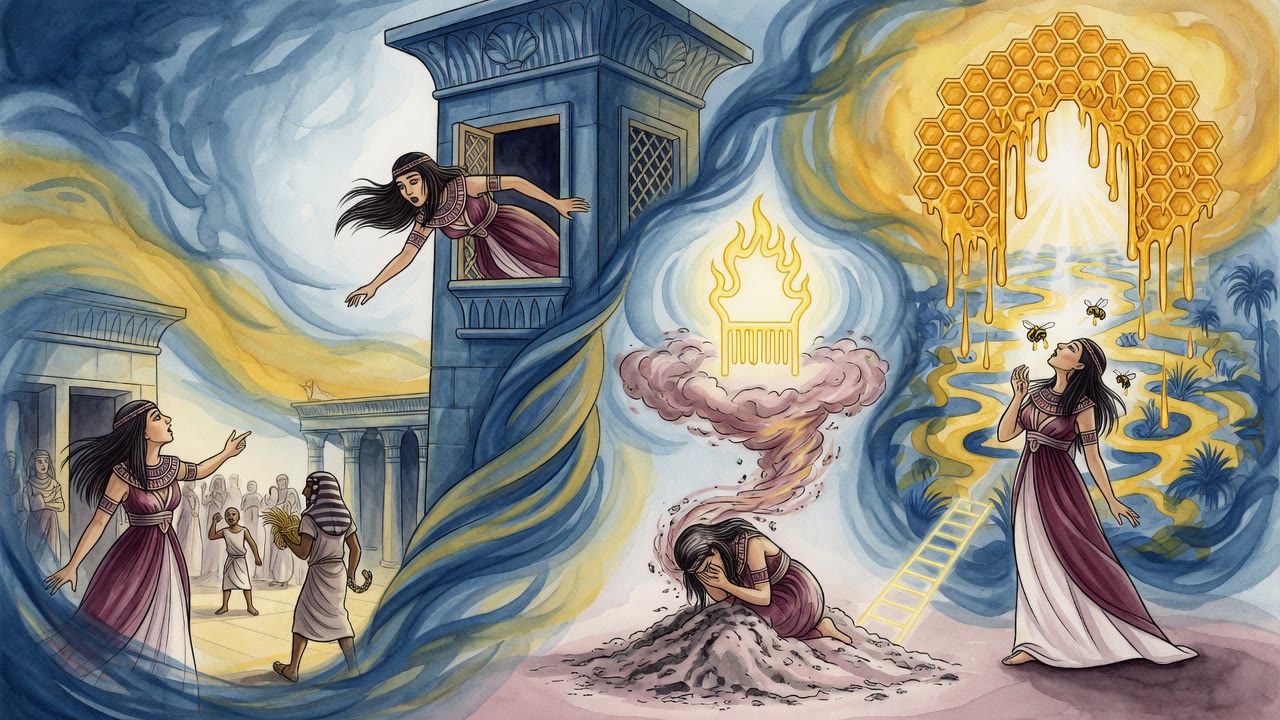
She threw her idols from the tower window. On the eighth morning a man like Joseph put honeycomb from Paradise on her tongue.
Table of Contents
Joseph would not kiss her. He had come to Potiphera's house in Pharaoh's second chariot, and Asenath had watched from the window and wanted him the way a person wants a door that has already closed. He looked at her mouth, which had blessed dead gods, and refused a strange woman who worshipped idols.
 Click for full size
The refusal sent her up the tower alone.
She Threw the Gods Out the Window
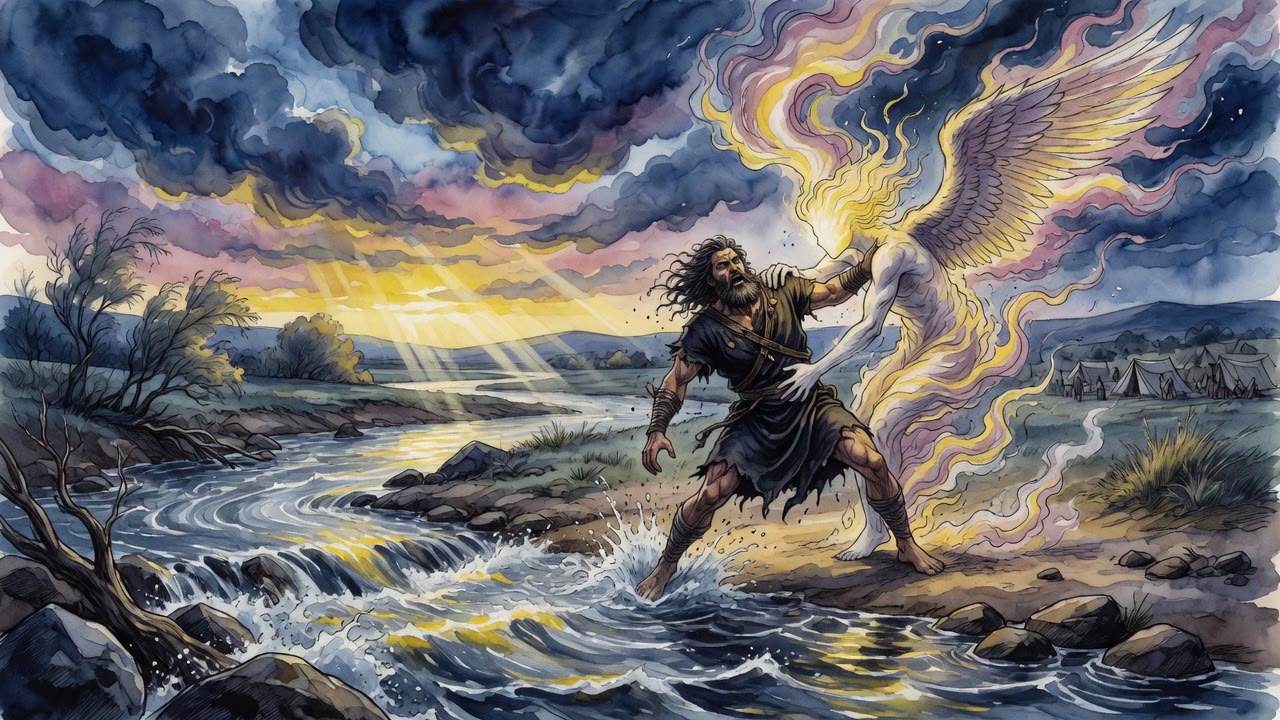
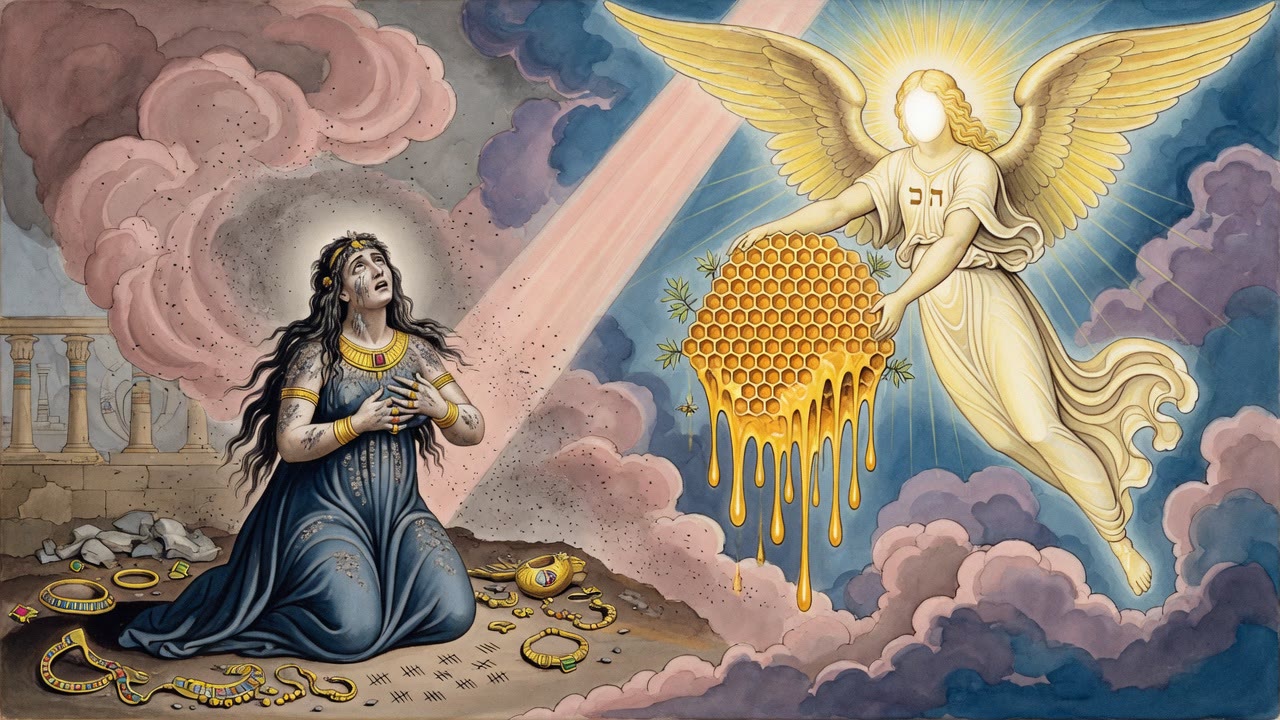
She tore off the royal robe, the gold dress, the ornaments, the bracelets, the shoes. She dragged out the idols she had fed with bread and wine, broke them, and threw the pieces from the window. She put on sackcloth. She scattered ashes on her head.
Seven days and seven nights she sat on the floor, eating nothing, drinking nothing, weeping without a stop. Her seven attendants were kept outside. The gods of Egypt had never answered. If Joseph's God was real, she wanted that God, and she did not know the words.
Joseph had already blessed her once, out of pity, asking God to pour spirit over her and give her a share among His people. She was trying to spend that blessing before it cooled.
Honeycomb in a Locked Room
On the eighth morning the light in the room changed. A man stood there who looked like Joseph, only brighter than the sun. He told her to rise, wash her face, put on a white robe, and come back. She was called. Her name was written in the book of the living. This day she had been born anew, to eat the bread of life, drink the cup of immortality, and be anointed with the oil that does not spoil.
She washed. She changed. She came back. He told her to sit. He called for honeycomb. It appeared though the door was locked, white as snow, smelling of life. He said the bees of Paradise had made it from the dew of the roses in Eden. Angels eat it. Whoever eats it will not die.
He broke a piece, ate some himself, and put the rest in her mouth.
"From this day thy body shall bloom like the flowers in Paradise," he said. "Thy bones shall wax fat like the cedars. Thy youth shall not fade. Thy name shall be City of Refuge, whither the nations shall flee."
He blessed her seven attendants as seven pillars in that city. Then he left in a chariot of fire drawn by four fire horses. She knew then she had not been feeding a man.
Joseph Did Not Know Her Face
A visit from Joseph was announced before the air in the room had settled. She washed her face and saw it in the water: a beauty that had not been there the week before. She ran to meet him.
He did not recognize her. He asked who she was.
"I am thy maid-servant Asenath," she said. "I have cast away my idols. This day a visitant came from heaven. He gave me the bread of life and the cup, and he said he was going to you to speak for me. Tell me whether the man was with you."
Joseph took her face in his hands and kissed her. She wept against him. The woman he had refused at the door was gone.
Jacob Put His Hands on Her Head
On the twenty-first day of the second month, in the second of the famine years, Jacob came down to Egypt. Asenath went to him. She stared at his shoulders, which were like an angel's, and at the strength in him, like a giant's. He blessed her. He put his hands on her head and called her daughter, and asked God to keep her and multiply her.
She already had Manasseh and Ephraim in her. The sons of Leah walked her home. The sons of the handmaids kept back, remembering what they had done to Joseph. Levi stayed close. His eyes were open. He read the books written by the finger of God, and he told her he had seen her resting-place in heaven, built on a rock, walled in diamond.
The woman who had thrown her gods from a tower window now stood inside Abraham's grandson's hands.
Uzza Asked for Egypt Anyway
Egypt did not get the same mercy. When the sea closed on Pharaoh's army, Uzza, the guardian of that nation, stood beyond the firmament and asked God to judge the Egyptians by mercy, not by what they had earned. Heaven had already shouted that drowning was just. Uzza still asked for pity on the work of God's hands.
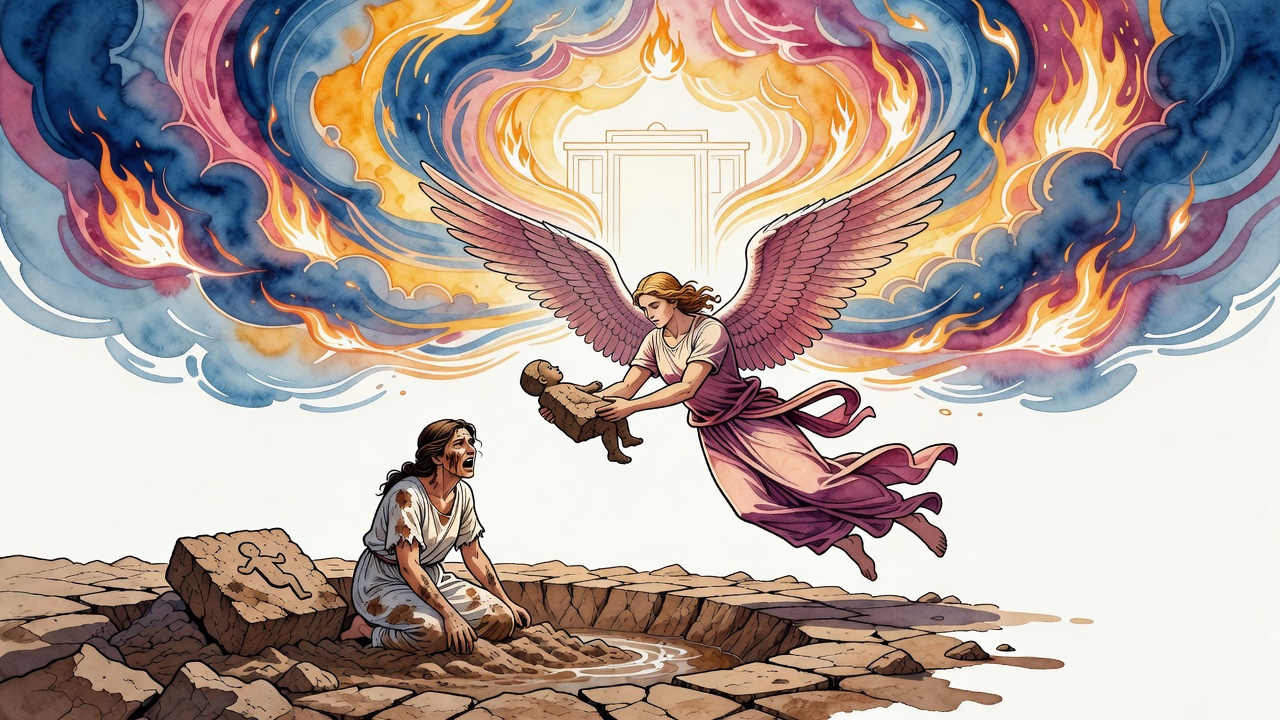
Almost God yielded. Then Michael signed to Gabriel. Gabriel flew to Egypt and brought back a brick. A Hebrew child had been used as the mortar in it. He held it up.
"Wilt Thou have compassion on the nation that slaughtered Thy children this way?"
God turned from mercy, sat on the throne of justice, and let the sea keep them.
Asenath had left that land by honeycomb and a new name. Uzza could not take the land with him. Later, in the wilderness, Israel named Dathan and Abiram and tried to walk back to Egypt, and even to set up an idol for the road. Joshua and Caleb tore their clothes. Moses brought them a message from God not to fear the Canaanites. They answered that they would have doubted strangers, but these spies were family, and they moved to seize Moses and Aaron. The cloud covered the two of them. The door Asenath had shut, they wanted open. It did not open.
Levi had already seen her house in heaven. Years before she arrived, Gabriel had stood in Pharaoh's court and poured seventy languages into Joseph's mouth so a Hebrew could rule Egypt. Angels spoke a blessing over that gift, the line the Great Assembly would one day set among the Eighteen Benedictions: Blessed art Thou, who graciously bestowest knowledge. She had eaten her way into a house heaven had already been blessing out loud.
← All myths