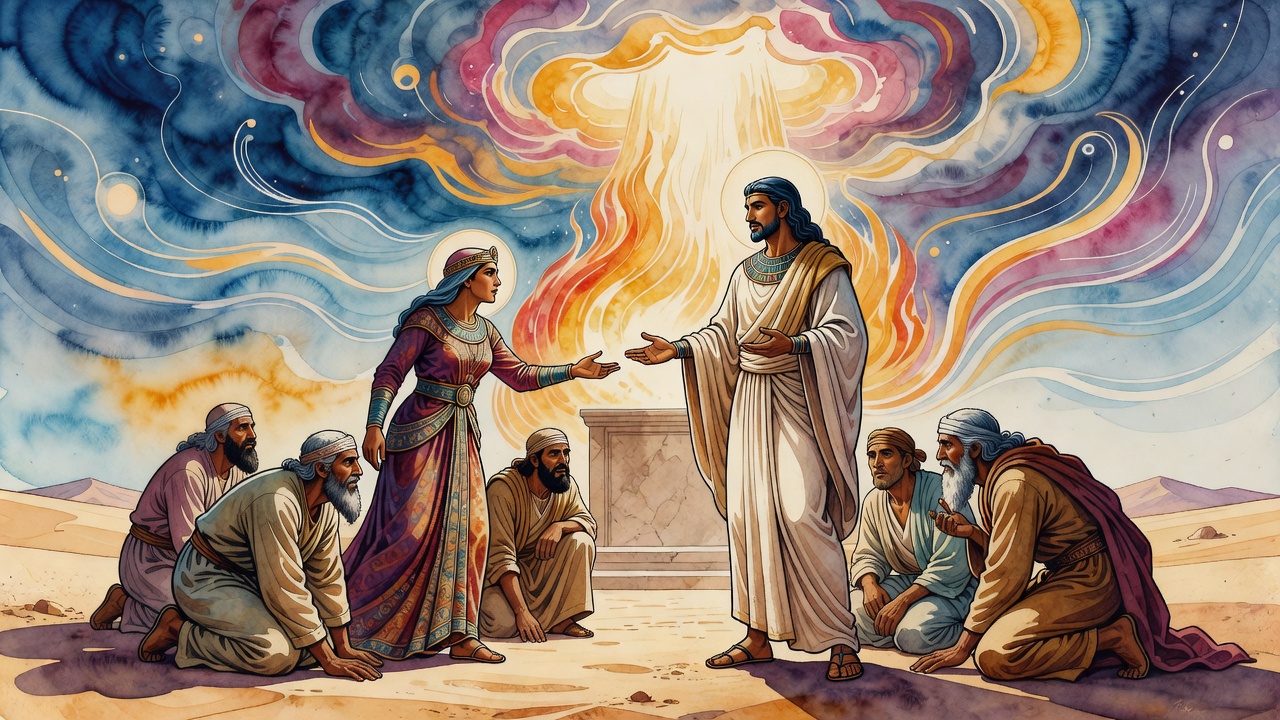
Joseph, the Man Who Refused to Become Egypt
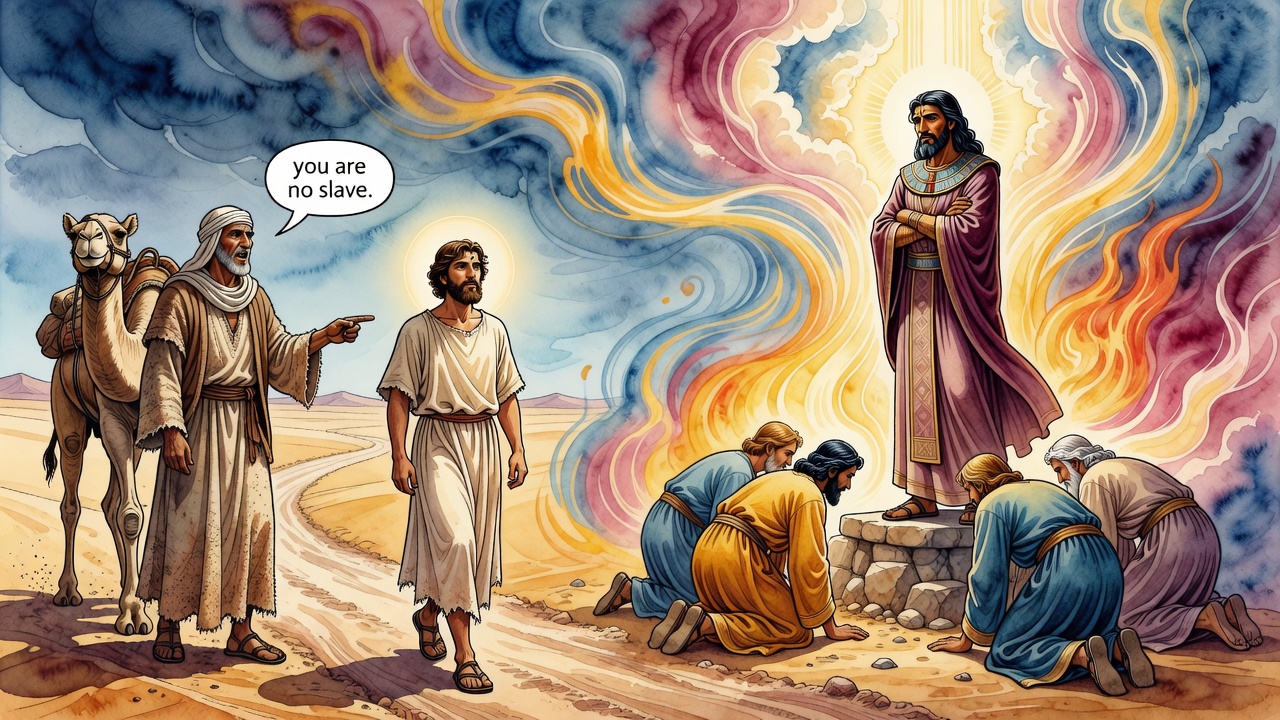
A Midianite trader spotted Joseph on the road and said: you are no slave. Years later, standing over his bowing brothers, he proved it.
Table of Contents
On the road to Egypt, one of the Midianite traders stopped and studied Joseph. The boy stood too straight for a slave. His hands were wrong. His eyes were wrong. The trader looked at him a long time and said: you are no slave. Your face gives you away.
 Click for full size
Joseph said nothing that would betray his father. He did not say he was the son of Jacob, a man of standing in Canaan, a man whose name could be ruined in a single afternoon of Egyptian market gossip. He kept Jacob's name out of the transaction. He let himself be sold as an ordinary piece of property, which was the only mercy left in his power to give.
The House That Prospered Around Him
Potiphar, the Egyptian captain who bought him, was not a sentimental man. He watched the numbers. Grain stores, livestock counts, servants, debts. Everything Joseph touched began to multiply. The grain came in faster. The accounts balanced. Potiphar noticed and moved Joseph closer to the center, then closer again, until Joseph was running the entire estate while Potiphar concerned himself only with what he wanted to eat (Genesis 39:5-6).
A Hebrew slave whose name the Egyptian markets did not know had become the most important man in a powerful Egyptian household. God's presence had followed him from Canaan to the pit to the caravan to the house on the Nile. Potiphar could see the results even if he could not name the cause.
The Vision at the Window
Then Potiphar's wife decided she wanted Joseph. She was not subtle. Day after day she placed herself in his path. He refused, citing loyalty to Potiphar, citing God, citing every reason a man names when he is trying to believe his own refusal.
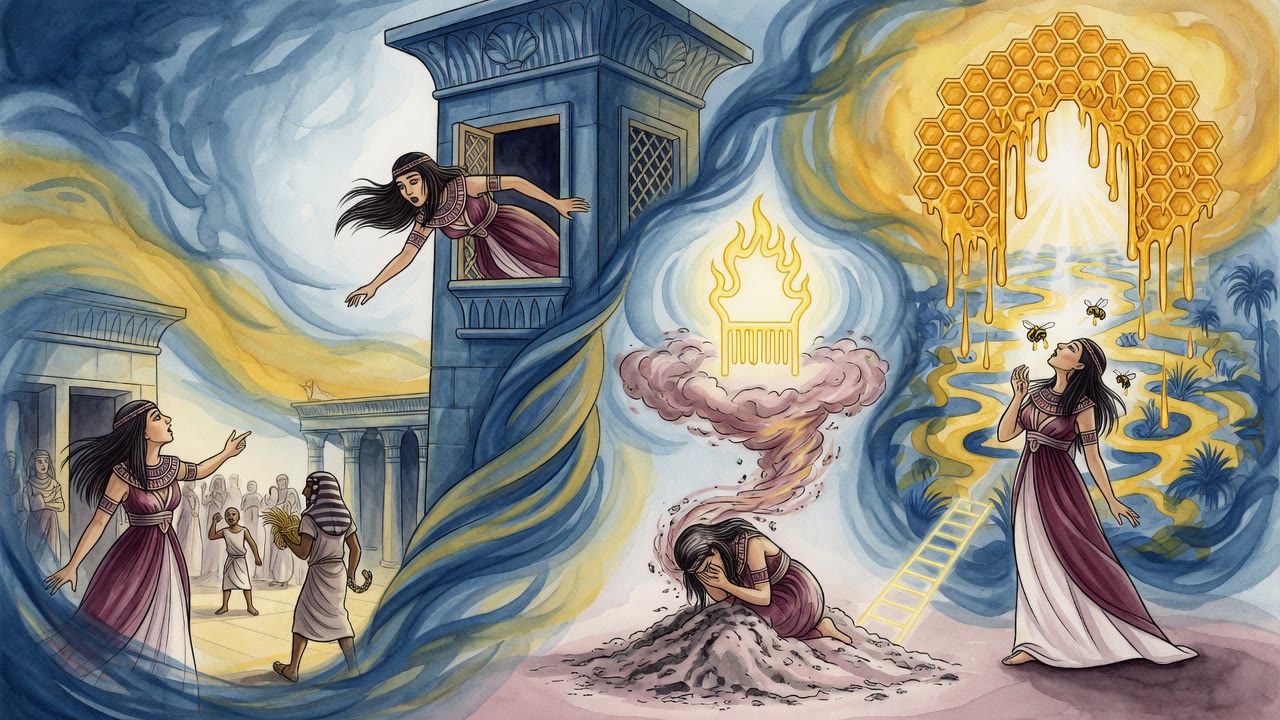
One afternoon, alone in the house, the pressure was almost too much. He stood at the edge of giving in. At that moment he saw, through the window or inside his own mind, the face of his father. Jacob looked at him. Not with anger. Not with words. Only looked, the way a father looks when he has not yet given up on a son. Joseph turned and ran (Genesis 39:12). She grabbed his cloak as he went. He left it and kept running, and arrived in an Egyptian prison with no cloak and no case to make in his defense.
From the Prison Floor to Pharaoh's Ring
He stayed in that prison until Pharaoh dreamed two dreams no one could parse. Seven fat cows eaten by seven starving ones. Seven full ears of grain swallowed by seven scorched and shriveled stalks. The court magicians turned the images over and found nothing. Then a cupbearer remembered the Hebrew interpreter he had met in prison.
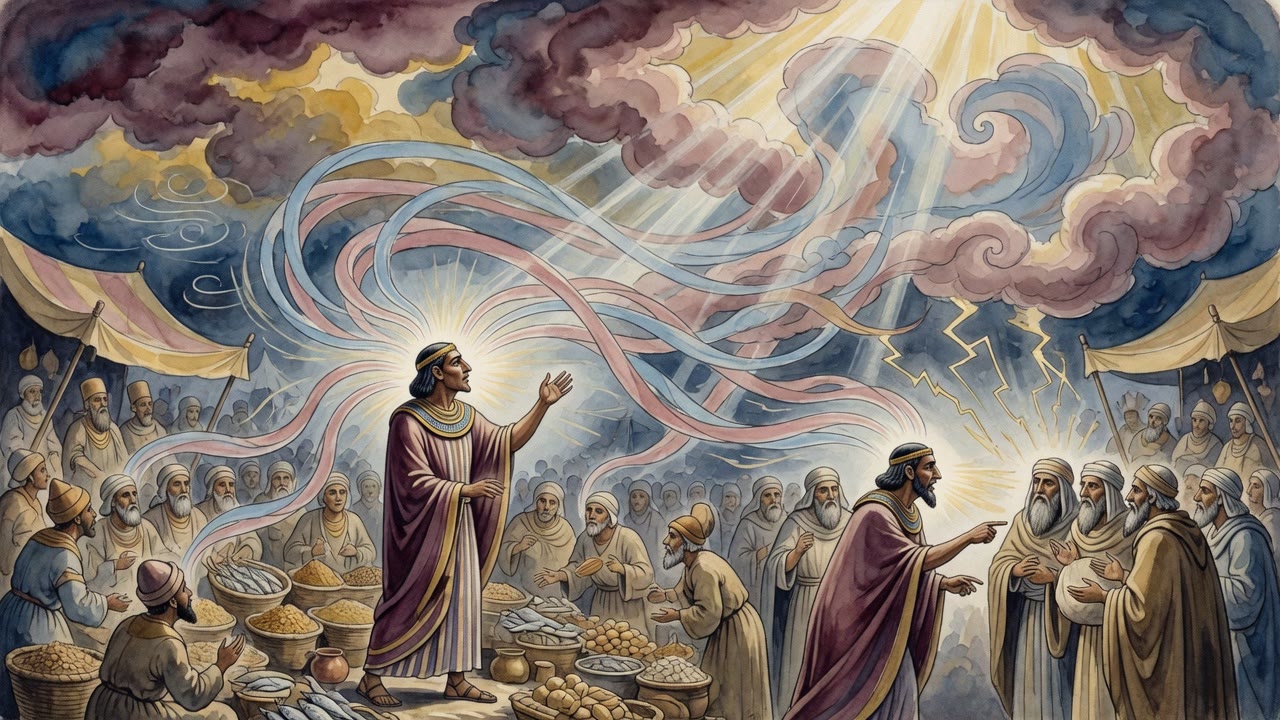
Joseph came before Pharaoh not with a prepared answer but with an acknowledgment: the interpretation belonged to God, not to him (Genesis 41:16). He told Pharaoh what the dreams meant. Seven years of plenty followed by seven years of famine that would swallow the plenty whole. He told Pharaoh what to do. Pharaoh looked at this man who had spent years on a prison floor and put his ring on Joseph's finger. Joseph left the audience chamber as the second-highest official in Egypt.
The Brothers Who Did Not Recognize Him
The famine reached Canaan. Joseph's brothers arrived in Egypt bone-thin and desperate, carrying silver to buy grain. They bowed before the governor. Joseph recognized them without a pause. They did not recognize him. The beardless teenager they had sold into the caravan was gone. In his place stood a man who commanded the food supply of the ancient world.
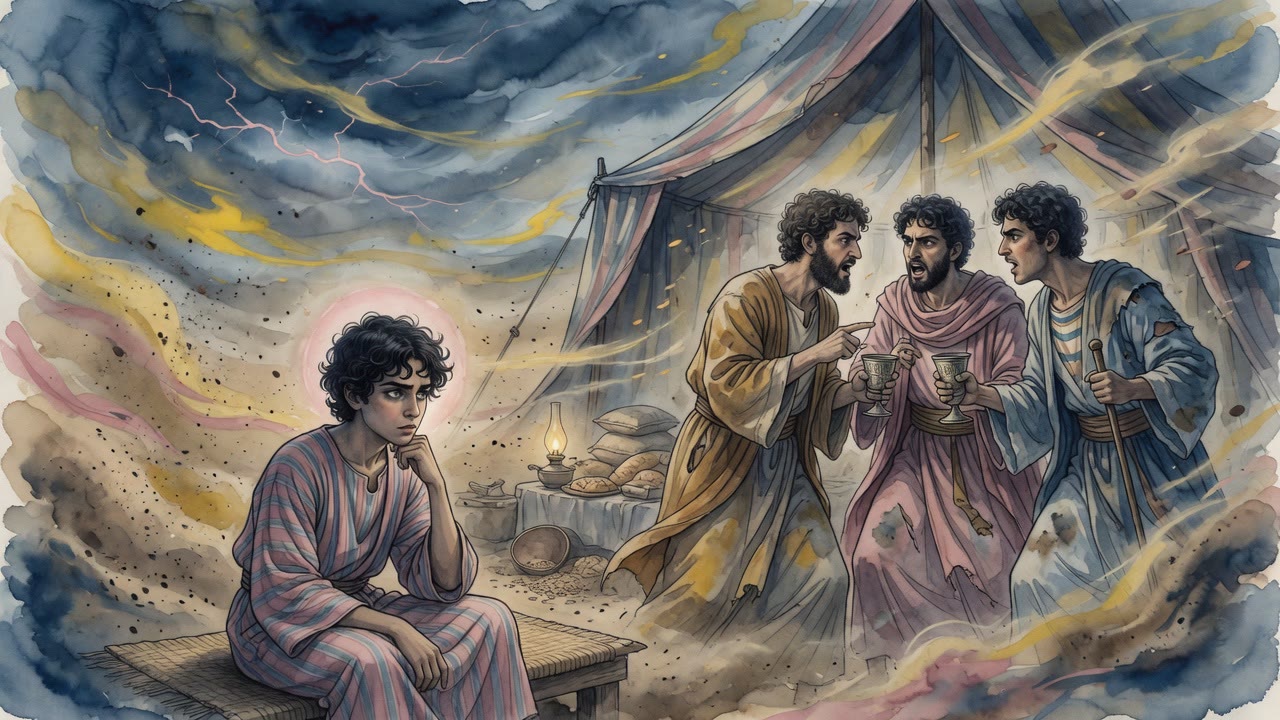
He wanted to reveal himself at once. An angel stopped him, the same one who had guided him toward Dothan on the day his brothers seized him, and reminded him that they had once discussed killing him before settling on sale. Joseph needed to know what they were made of now. He accused them of spying. He demanded they bring their youngest brother, Benjamin. He held one of them as hostage while the others went back to Canaan. He watched them speak among themselves and listened while they named their guilt aloud for the first time (Genesis 42:21-22).
They returned with Benjamin. Joseph planted his silver divining cup in Benjamin's grain sack and had them chased down on the road. He offered to let the others go free if they surrendered Benjamin as his slave.
Judah stepped forward. Judah, who had proposed the sale to the Ishmaelites in place of killing Joseph, stood before the governor of Egypt and spoke. He explained what losing Benjamin would do to their father. He said he had guaranteed Benjamin's life with his own. He asked to serve as a slave in Benjamin's place.
Joseph sent every Egyptian out of the room. He stood alone with his brothers and wept, loudly enough that the Egyptians in the adjacent halls heard it through the walls (Genesis 45:2). The man who had managed a nation's grain supply through seven years of disaster and seven years of ruin broke open in a moment. He said: I am Joseph. Is my father still alive.
The Woman Who Shed Her Finery in Ashes
The marriage that settled Joseph's place in Egypt carried its own strange weight. Asenath, daughter of an Egyptian priest, heard Joseph speak and was so struck that she retreated to her rooms. She stripped off her jewelry and fine clothing. She put on sackcloth and scattered ashes over herself and spent seven days fasting, asking God to forgive the life she had lived until that hour. On the eighth day an angel appeared to her and told her she had been set aside for Joseph. He declared her born again. Pharaoh crowned them both at the wedding and threw a feast that lasted seven days.
Egypt celebrated the man it had once imprisoned. The country that had bought Joseph for silver made him its viceroy. God had drawn a line from the pit in Canaan to the palace on the Nile, and not one step along it had been wasted.
← All myths