Moses Spent His Life Arguing With the Angels
Moses asked the Angel of the Face to pray that he not die. The angel had been standing behind the curtain. He already knew the answer.
Table of Contents
 Click for full size
Take Off Your Shoes
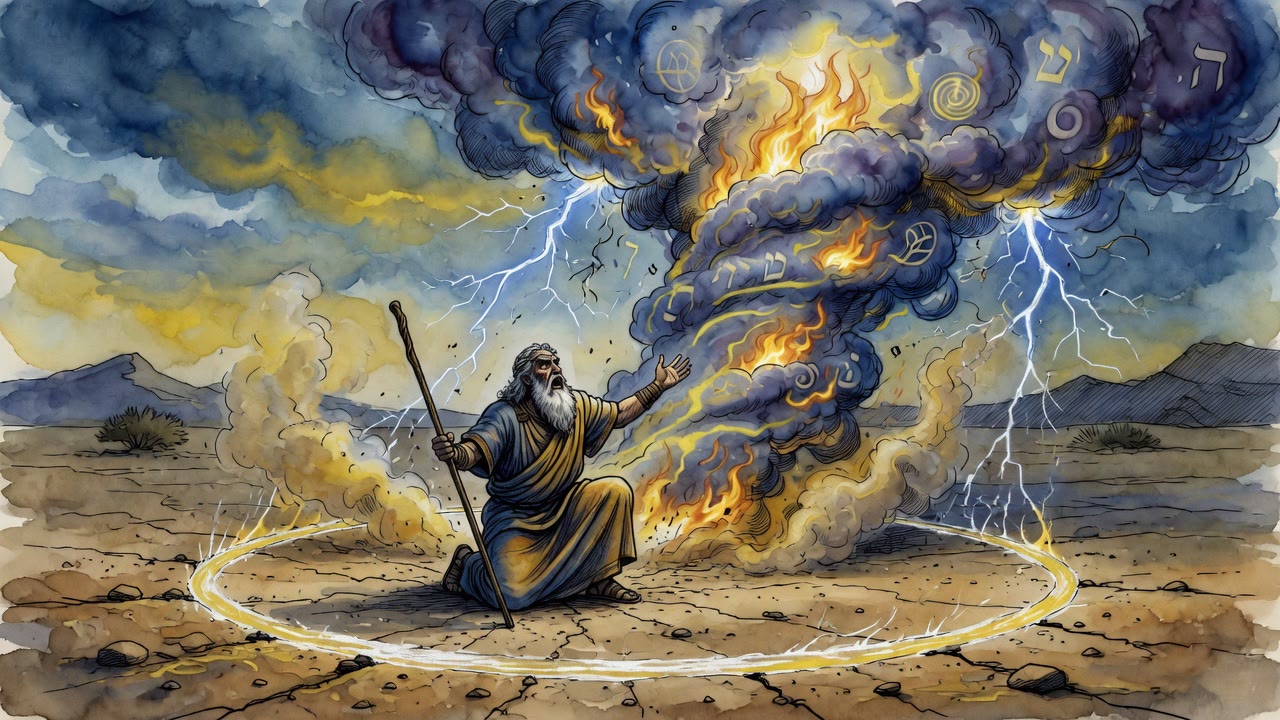
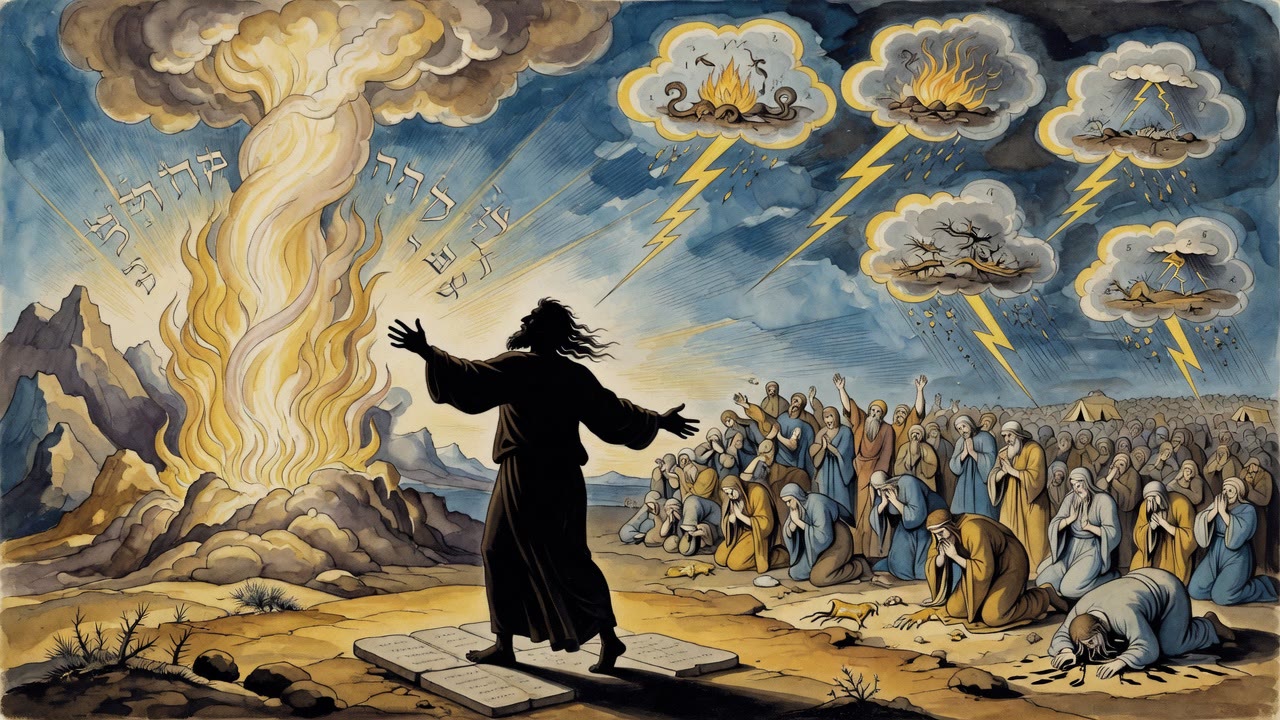
The bush burned and did not burn up. God spoke from it. "Put off thy shoes from off thy feet, for the place whereon thou standest is holy ground" (Exodus 3:5).
Moses heard more than leather. The command cut every cord that bound him to ordinary ground: work, sleep, the tent, the wife. He was to give up his conjugal life. Down in Midian, Zipporah was still in a tent with two boys who had a living father.
He reached for a sandal. Heat from the bush sat on the back of his hands. The fire did not wait for him to finish understanding.
Michael Spoke for the Marriage
The angel Michael would not let it pass. "O Lord of the world, can it be Thy purpose to destroy mankind? Blessing can prevail only if male and female are united, and yet Thou biddest Moses separate from his wife."
An angel calling the plan into question. God answered. "Moses has begot children. He has done his duty toward the world. I desire him to unite himself now with the Shechinah (שכינה), God's dwelling presence, that she may descend upon earth for his sake."
Michael stepped back. Moses took off the other sandal. The marriage that had given him sons was not punished. It was set down so a different closeness could begin. He would speak with God face to face, and that required empty hands. He wept. He stayed in the fire's range. When he went down the mountain, the flock was still there, and the life with Zipporah was already behind him, a closed tent he was not permitted to open again.
The Angel Behind the Curtain
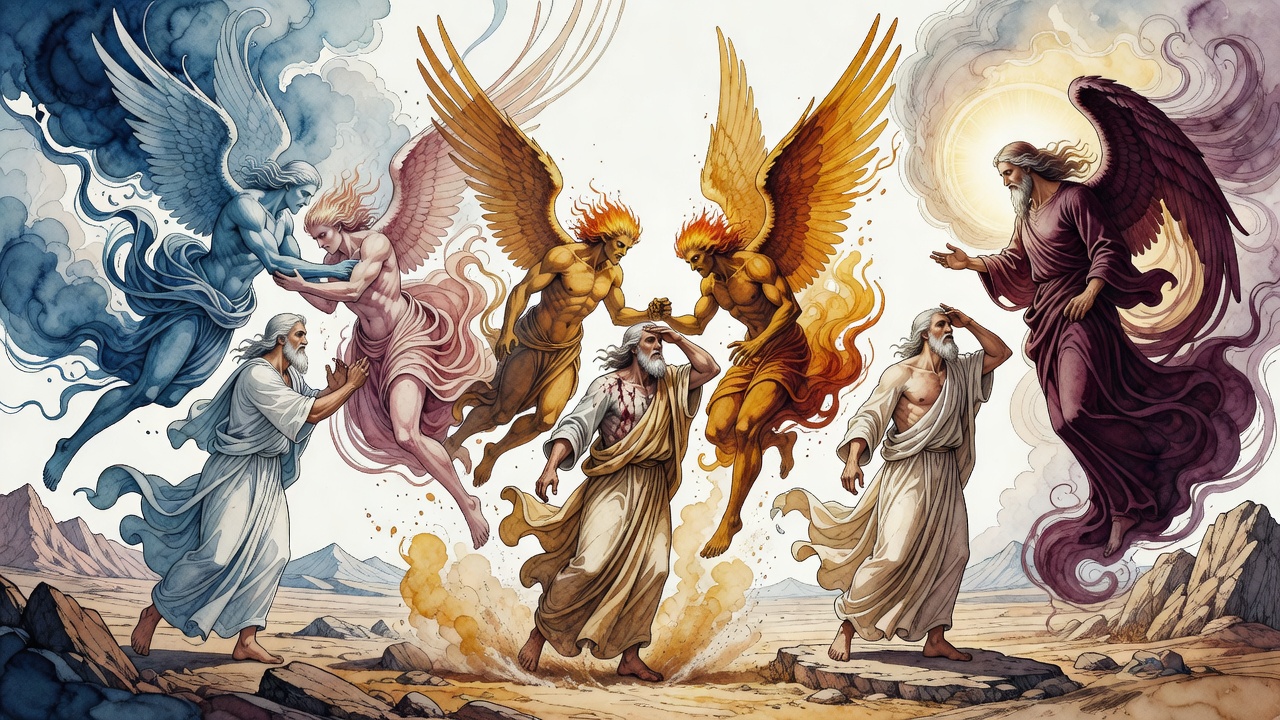
Years later, at the edge of the land, Moses saw that neither the world nor mankind could aid him. He had asked earth. He had asked men. He went to the Angel of the Face, one of the highest, who stands where the curtain is drawn before the Lord. "Pray for me, that God may take pity upon me, and that I may not die."
The angel did not take a step toward the curtain. He had already been standing behind it. He had already heard the ruling. "Why, Moses, dost thou exert thyself in vain? I heard that thy prayer in this instance is not to be answered."
Moses laid his hand upon his head and wept. "To whom shall I now go, that he might implore God's mercy for me?" The highest angel would not carry the petition. The curtain had already spoken. The man who had argued for Israel at Sinai had no advocate left but the One who had decided. He walked back among the people with that knowledge on him, and they could see it in his face before he said a word.
He Put Death Under His Feet
The people came to him. "The hour of thy death is at hand." He did not bless them yet. He said, "Wait until I have blessed Israel. All my life they had no pleasant experiences with me, for I constantly rebuked them and admonished them to fear God. I will not depart before I have blessed them."
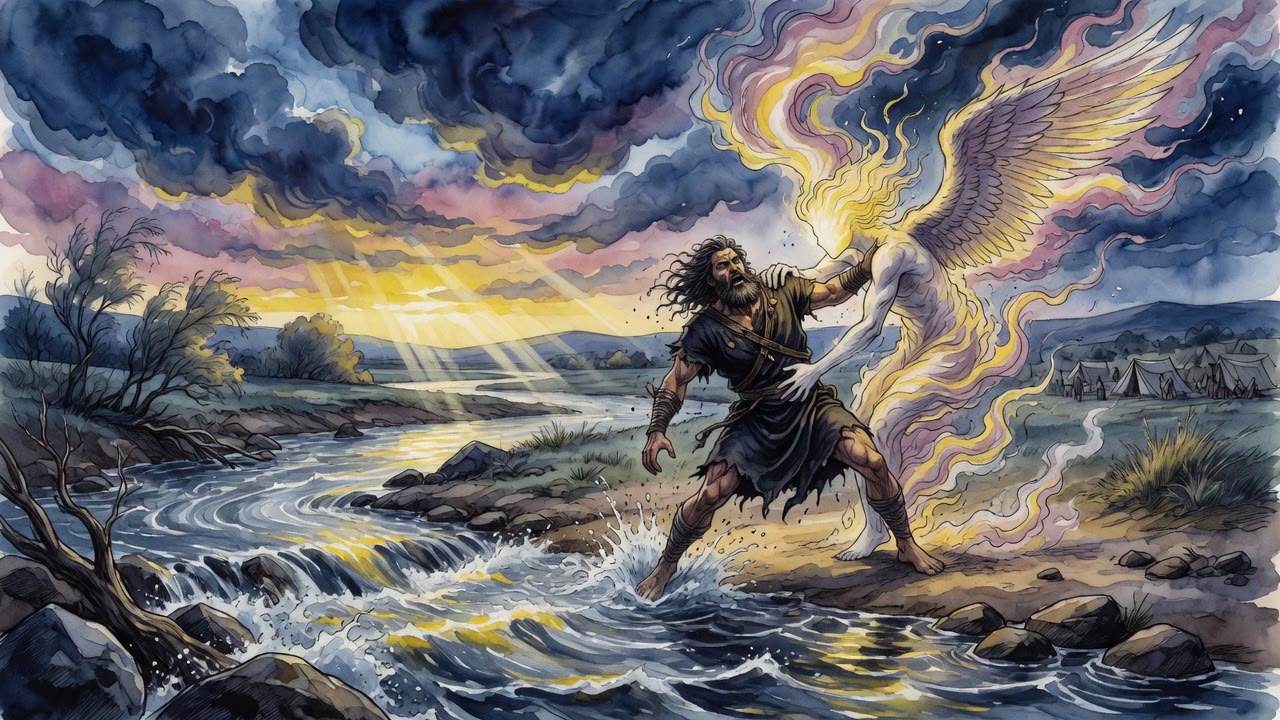
The Angel of Death had blocked that wish for years. Every time Moses opened his mouth to bless, the angel stood in the way. Shortly before dying, Moses seized him, enchained him, and cast him beneath his feet. The angel lay there while the words went out. "Save Thy people, and bless Thine inheritance. Feed them also, and bear them up for ever."
He had spent his life arguing with angels: Michael at the bush, the Angel of the Face behind the curtain, the Angel of Death under his heel. He had lost the argument about crossing. He had lost the argument about remaining alive. No one had told him he could not bless. Tribe by tribe the words left him, names he had carried forty years, names he would not see planted in their lots. The angel under his heel did not get a turn until the last name was spoken. Then Moses climbed toward Nebo with the blessing already behind him, and death, finally, was allowed to stand up.
← All myths