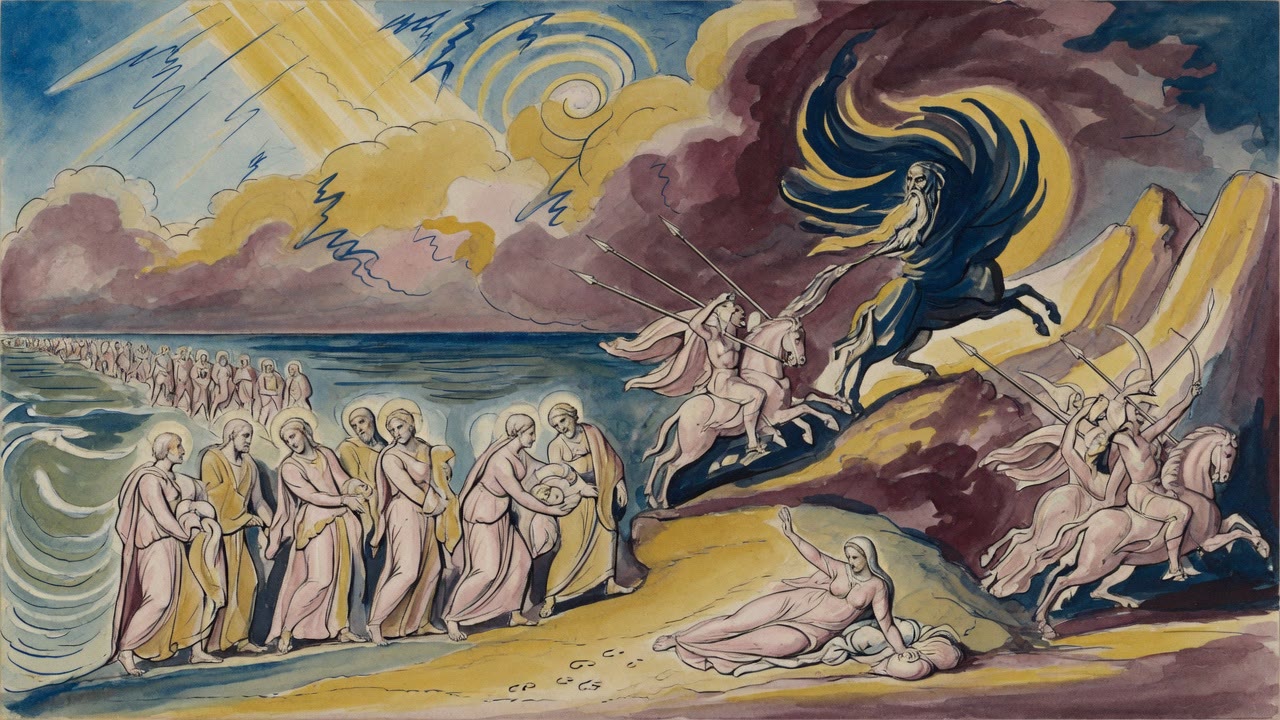
Moses and the Argument God Could Not Dismiss
When God offered to destroy Israel and start fresh with Moses alone, Moses turned the offer into the most dangerous argument in scripture.
Table of Contents
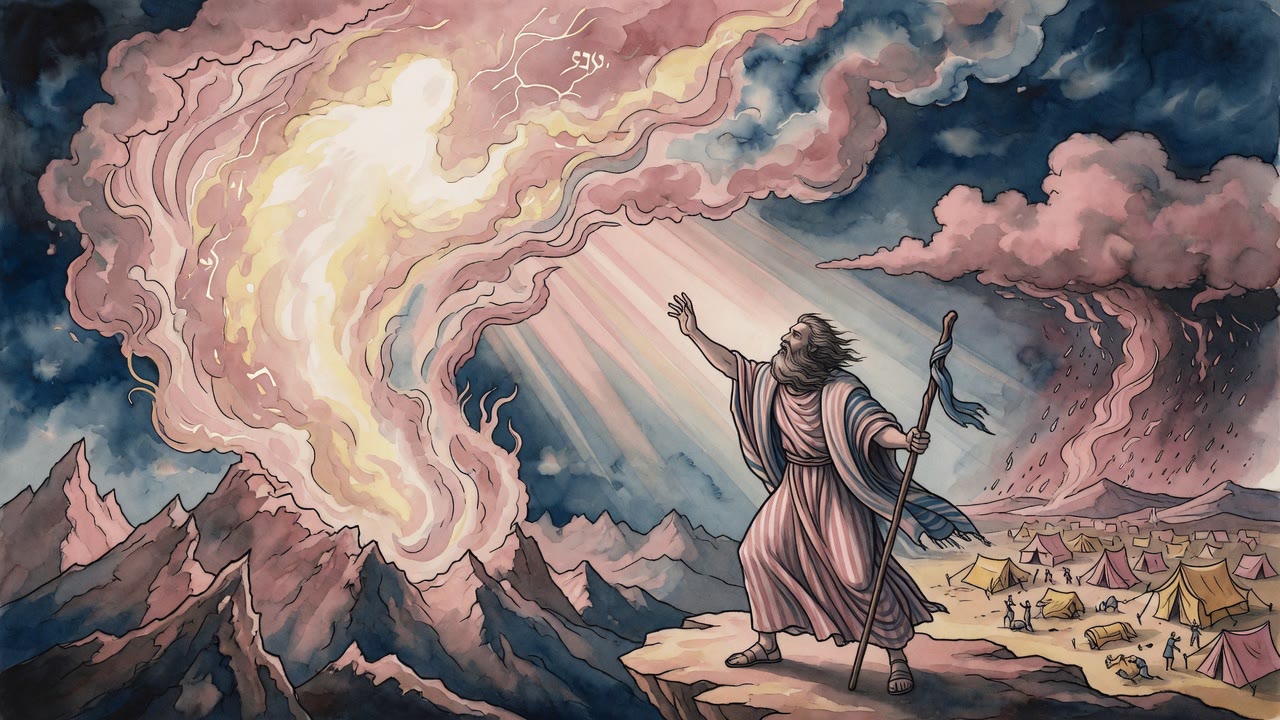
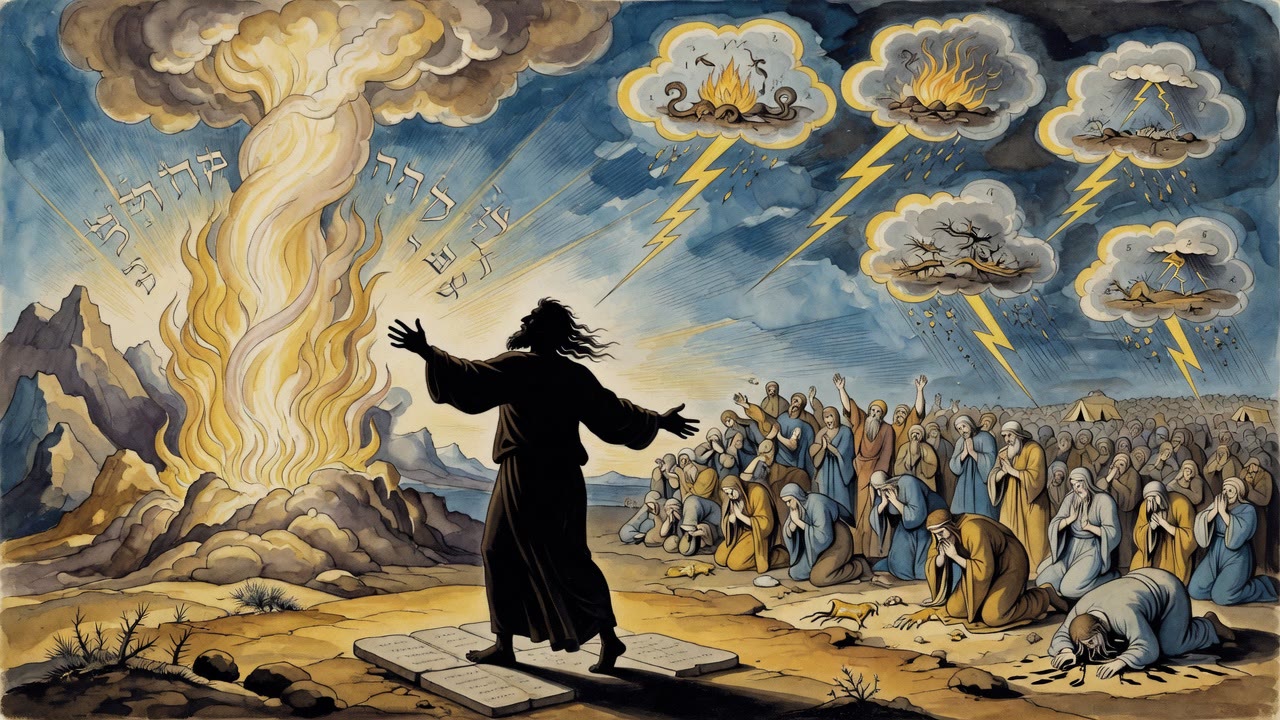
The offer was extraordinary. God made it plainly, with no softening: Israel had heard the spies' report, believed the worst, and begun crying out to return to Egypt. The people were ready to stone their own leaders. God had watched enough. He told Moses that he would strike them with plague, disinherit the whole nation, and start over. Moses would be the seed of something better. A great nation would come from him instead (Numbers 14:12).
 Click for full size
Another man might have said yes.
The offer was real. Moses had been a fugitive, a shepherd, a reluctant prophet dragged out of Midian by a burning bush. He had stood before Pharaoh nine times and watched nothing happen, then a tenth time and watched everything break. He had carried this people through the sea, absorbed their complaints about water, about bread, about Egypt being better than this. The offer to be done with them, to begin fresh with a nation that might actually behave, was not nothing.
Moses refused it in four sentences.
The Argument No One Else Could Have Made
The refusal was not sentimental. Moses did not say he loved Israel too much or that he could not bear their suffering. He did not invoke the merit of the patriarchs or the sanctity of the covenant, though those arguments existed and he had used them before. He found something sharper.
The Egyptians, Moses said, had already heard about this. All the surrounding nations had heard that God led Israel out with his own presence (Numbers 14:14). If he destroyed them now in the wilderness, those nations would draw one conclusion: he had brought them out because he could not bring them in. The God of Israel, they would say, had promised what he could not deliver and so had destroyed the evidence in the desert.
Moses was not appealing to God's mercy. He was appealing to God's standing before the nations. Destroying Israel will cost you more than keeping them costs. He had found the one pressure point that could not be dismissed as sentiment or favoritism. He had turned the case around and was arguing on God's behalf.
God heard it. The decree of annihilation lifted. But the consequence did not disappear. The generation that had wept and threatened to stone their leaders would not cross into Canaan. They would die in the wilderness over forty years of wandering. Only their children would enter. Only Caleb and Joshua, the two spies who had refused the counsel of despair, would survive (Numbers 14:28-30). The nation would be preserved. The generation would pay the price.
Twenty-Two Thousand Angels in Formation
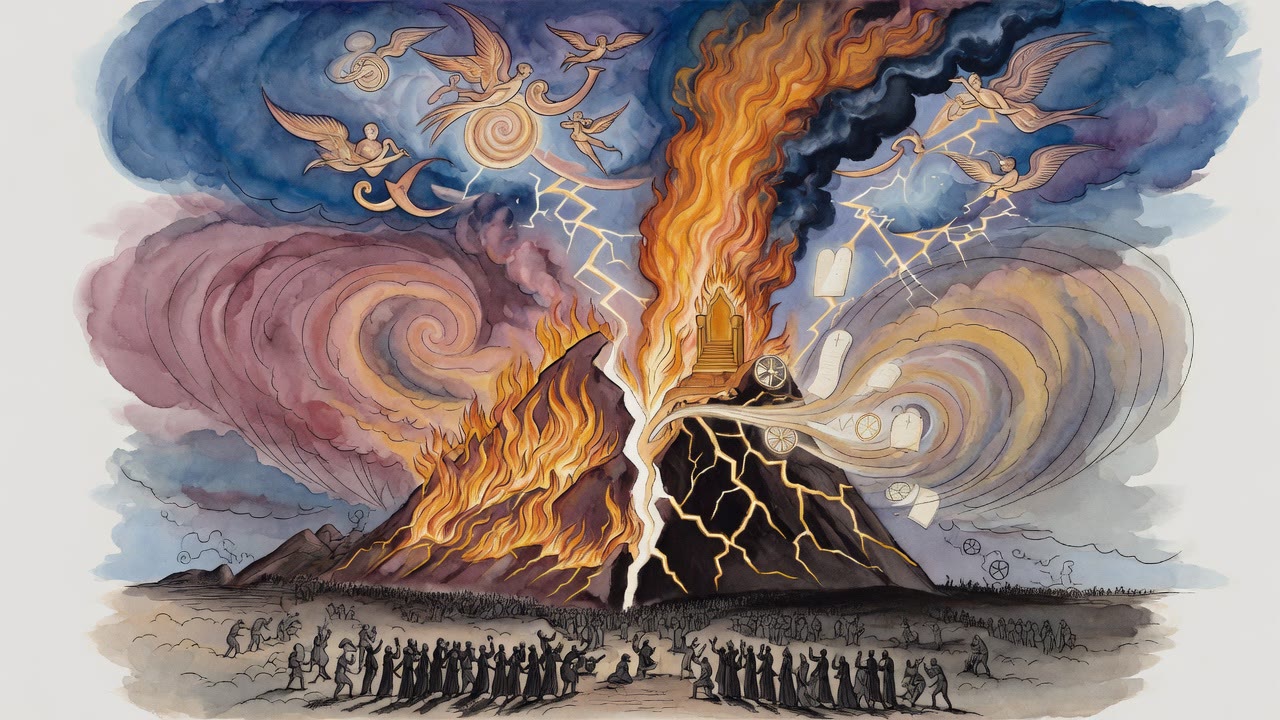
The traditions surrounding Sinai preserve a different scene, quieter and harder to shake. When God revealed himself at the mountain, twenty-two thousand angels descended in formation, each company arrayed under its own degel (דֶּגֶל), its banner. The sight stopped the Israelites. They had come out of Egypt where armies marched in order, regiment by regiment, each unit under its sign. Now they saw the same thing in the sky, and they wanted it for themselves.
God agreed. Moses received the instruction: every man under his own standard, each tribe in its appointed camp, the whole assembly arranged around the Tabernacle in four groups facing the four directions (Numbers 2:2). The wilderness encampment became a mirror of the heavenly host. The degel was a form of dignity. It said: you are counted, you have a position, you belong to something that has a shape.
The Argument Moses Chose Not to Make
Forty years passed between Sinai and the eastern border of Canaan. Moses had argued with God over the golden calf, over Miriam's punishment, over water and bread. He had built a record: when the stakes were high enough and the argument strong enough, he pressed. When the matter was his own comfort or status, he did not press.
Reaching Edom, Moses needed passage north. He had a divine mandate, an enormous host, and a God who had parted seas. He sent ambassadors instead, with a careful message acknowledging kinship between the two peoples (Numbers 20:14), then requesting only the king's road, no straying, payment for anything used.
Their ancestor Jacob, traveling with only a small household, had sent messengers ahead when approaching Esau's territory. If Jacob had done so with a single family, Moses reasoned, how much more should he do so with an entire nation crossing a king's land. Some arguments are made by restraint. Edom refused anyway. But Moses had chosen correctly, and the tradition remembers the choice.
What the Angels Had Learned
The angels who descended at Sinai had watched Moses all his life, from the burning bush through Pharaoh's court, through the golden calf and the spy crisis and the four-sentence refusal. By midway through the wilderness years, they had a working theory: he argued from the inside.
He did not advocate for Israel as an outsider hired to represent an unfamiliar client. He had absorbed Israel's problems so completely that the division between his interests and theirs had collapsed. God had offered him a way out. He declined without hesitating, not out of sentiment but because he had already chosen what he was.
The wilderness camp, arranged under its banners in the shape of the heavenly host, was his creation as much as anyone's. He had looked at the angels descending under their standards and decided that the people he was not going to abandon deserved the same order, the same machane (מַחֲנֶה), the same named position for every tribe and every man.
The Border He Did Not Cross
Moses did not enter Canaan. He had argued God back from the edge of annihilation. He had found the one pressure point that cooled a divine decree. He had built a nation out of freed slaves and organized it under the same banners the angels fly. He had read forty years of pressure correctly, knowing when to press and when to send diplomats and when to say nothing.
At the border, he asked (Numbers 27:12-14). He was told no. He asked again. He was told no again. The man who had convinced God to spare an entire nation could not convince God to let him take three steps across a river.
He buried the request and climbed the mountain to look.
← All myths