Moses Stood Between God and a Weeping Nation
God offered to start the people over from Moses alone. The camp was still crying from the spy report. Moses would not take the offer.
Table of Contents
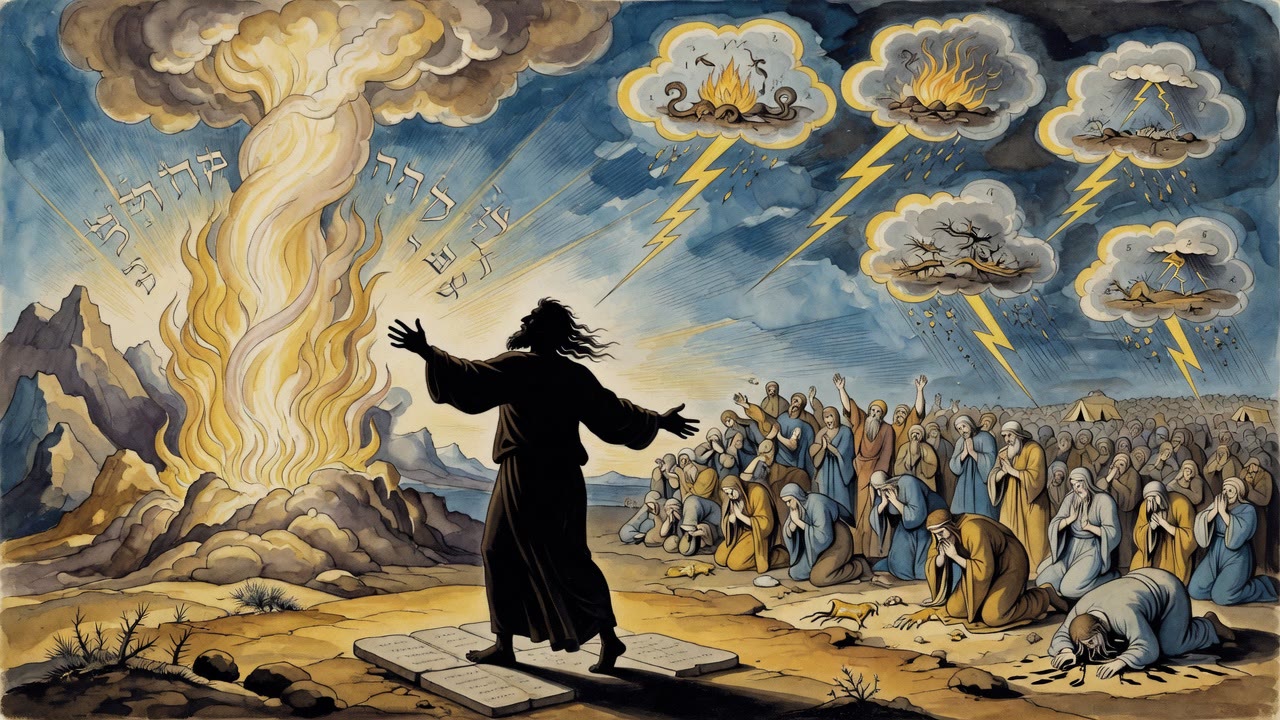
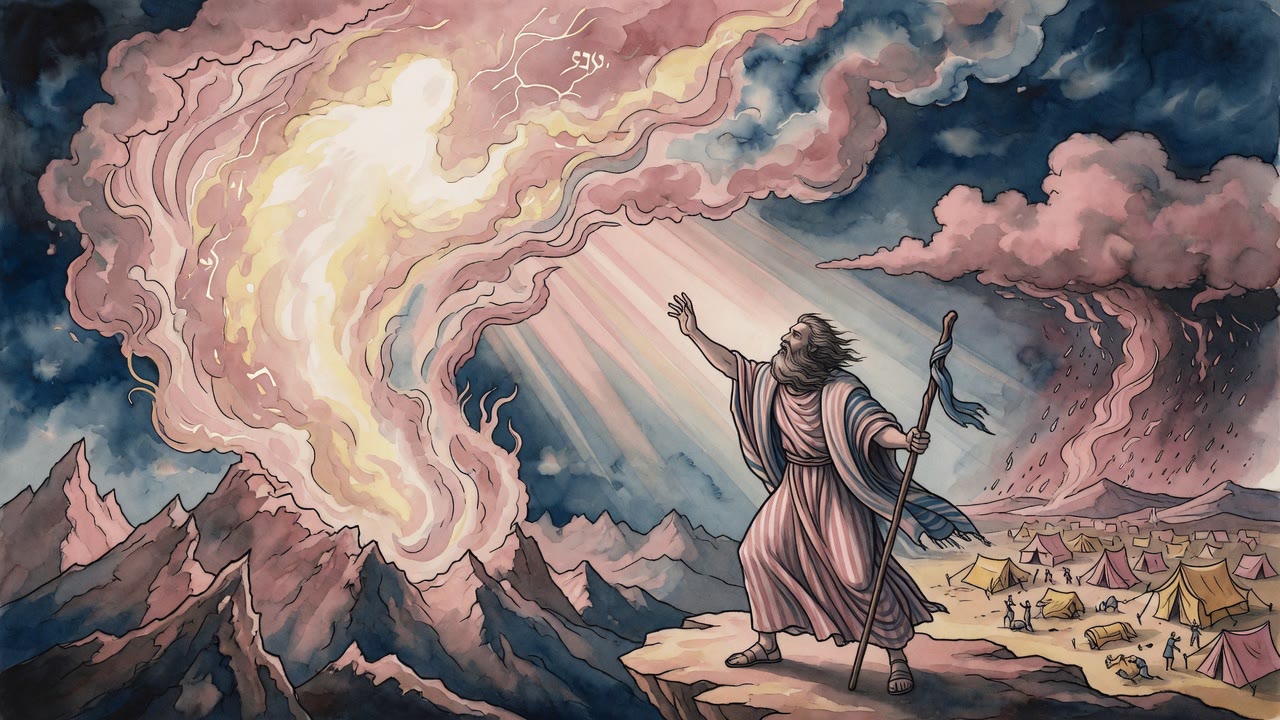
The crying started at sundown and did not stop. The whole camp, hundreds of thousands of people, wept through the night (Numbers 14:1). Ten men had come back from Canaan with reports of cities like fortresses, people like giants, and the scouts themselves diminished to grasshoppers in their own eyes (Numbers 13:33). The two who disagreed, Caleb and Joshua, were nearly stoned. By morning, the people had decided to elect a new leader and walk back to Egypt.
 Click for full size
Then God spoke.
The decree was total. God would strike the entire nation with plague, annihilate them, and begin again with Moses alone, building a greater people from a single man. Moses had been offered this before, at the calf. He had refused it before.
What Egypt Would Say
Moses did not begin with the Patriarchs. He did not begin with pity. He began with the audience already listening.
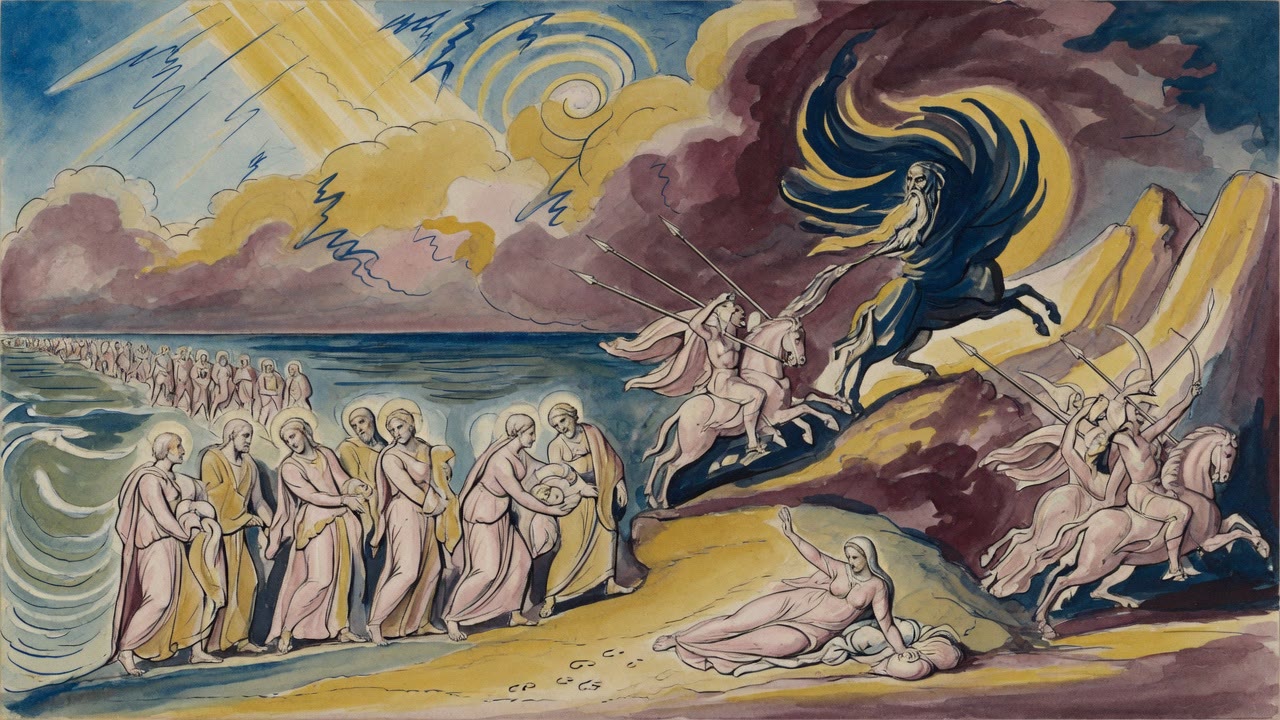
Egypt knew. Every nation bordering Canaan knew. God had split a sea, drowned an army, fed a million people with bread from the air for years. That was the testimony circulating through every court and city from the Nile to the Euphrates. If Israel died in the desert now, what would the testimony become? Not that God is holy and judges unfaithfulness. The report that reached Egypt would say: God brought them out and could not bring them in (Numbers 14:16). God promised land He was unable to deliver. The gods of Canaan, they would say, proved stronger than the God of the Exodus.
Moses had located the problem in its sharpest form. Destroying Israel would not look like justice. It would look like failure.
He went further. The nations would call God cruel. The generation of the Flood came, and He eradicated them. The Dispersion. Sodom. Egypt. And now these, whom He had called "My son, My firstborn" (Exodus 4:22), wiped out like a mother who turns on her own children. Moses would not let that report leave the camp.
The Words God Had Already Spoken
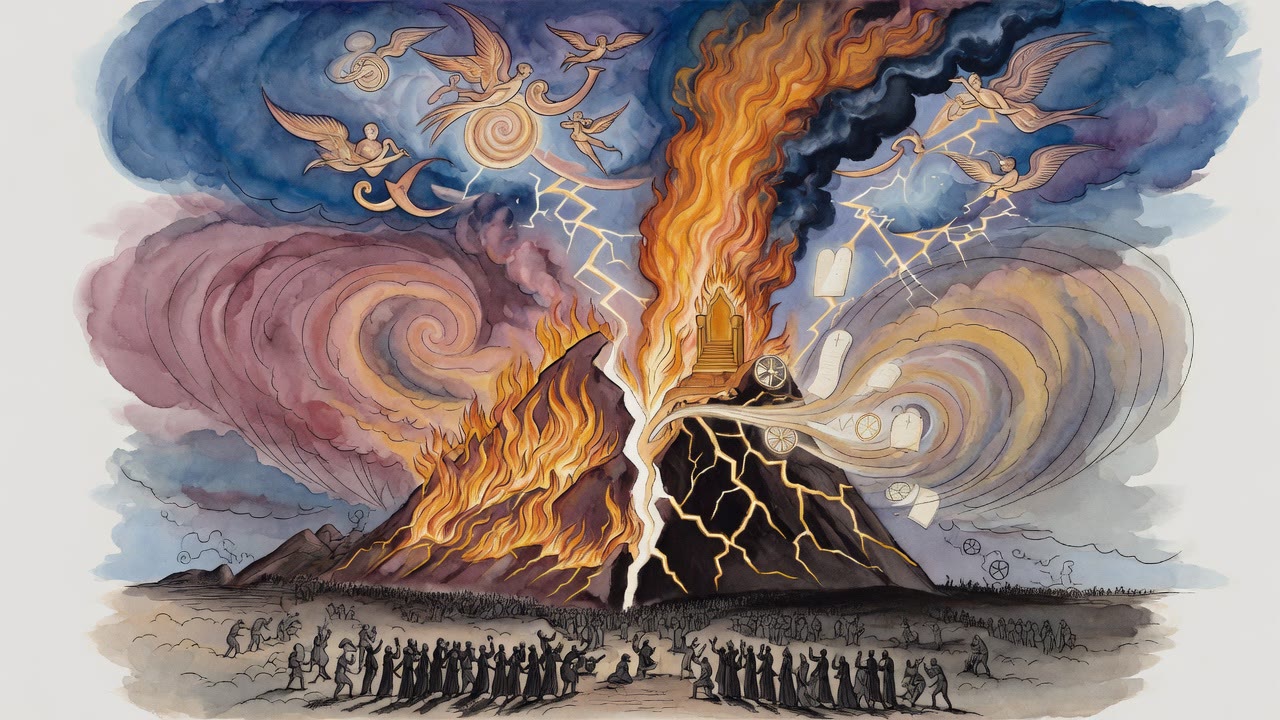
Then Moses quoted God back to God, the words first spoken on Sinai after the calf: "The Lord is slow to anger, abounding in kindness, forgiving iniquity and transgression" (Numbers 14:18; Exodus 34:6-7). He had been given those words on the mountain. Now he used them in the gap between the anger and the people.
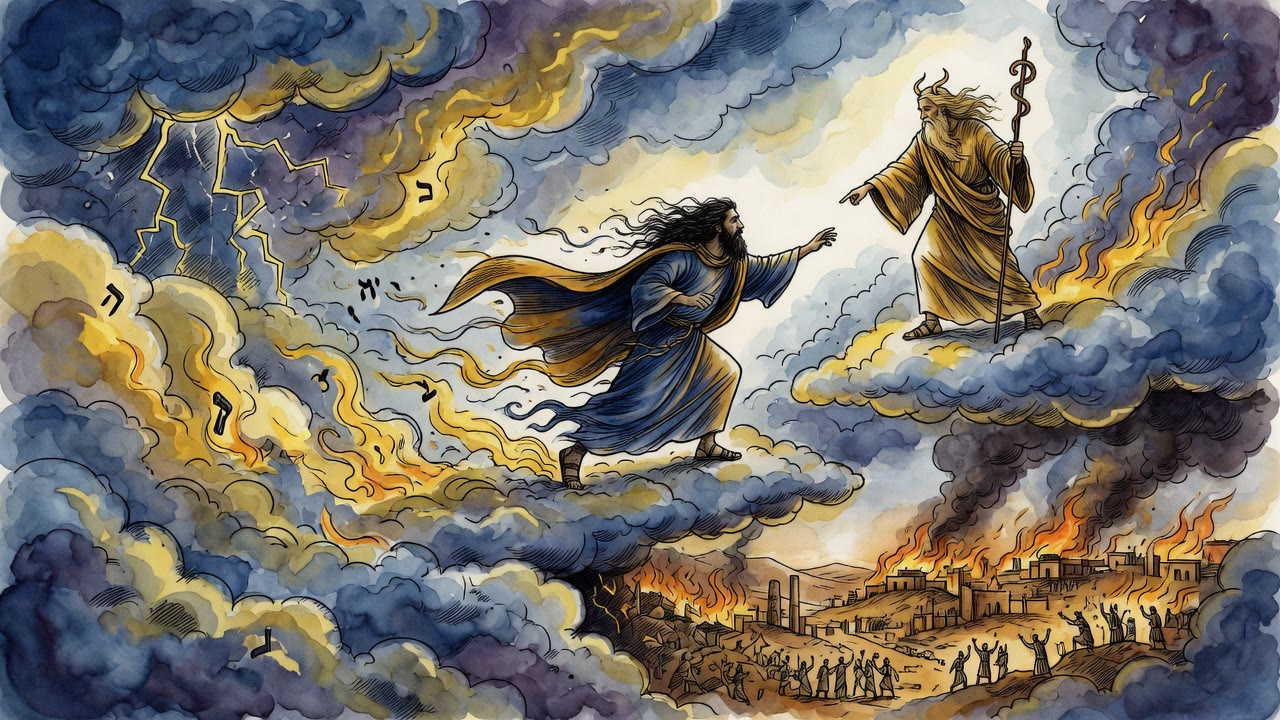
God had said, "I will smite them with pestilence" (Numbers 14:12). Moses said, "Please pardon" (Numbers 14:19). Let us see whose word prevails. God answered, "I have pardoned in accordance with your word" (Numbers 14:20).
The decree of total destruction was lifted. The nation would live. The generation that had wept through the night would die in the wilderness over forty years, but their children would cross the Jordan.
Moses held one more fact in his mouth while he argued. Until they entered Canaan, the blessing after meals was only "Who feeds all." The blessing for the land, for the food of that land, waited on the other side of the river. God had said the Land of Israel was more beloved to Him than everything, because He had scouted it Himself. If the people died now, that blessing would never be spoken over a table in the land God had chosen.
Four More Times in the Same Gap
It happened again. At the golden calf it had already happened. At the rebellion of Korah it happened. At the waters of Meribah. At Baal-Peor. Each time, Moses stood in the same position: between the anger above and the faithlessness below, looking for the argument that would hold.
The argument was never hard to find, because the covenant gave him the material. God had made promises to Abraham, to Isaac, to Jacob. God had staked His name before the nations on the Exodus. God had publicly committed to a people and a land. Every time Israel broke faith, Moses could point to the same structural fact: destroying them would not just end them. It would undo the meaning of everything God had done before.
He never pleaded as a man asking for a favor. He showed God what God's own intentions required. A plea can be refused. A case built from the other party's prior commitments is harder to set down.
He Blessed the Brother He Could Not Save
In his final blessings to the tribes, Moses singled out his brother Aaron. Well may Your Urim and Tummim, the sacred lots on the high priest's breastplate, belong to Aaron, who ministered services of love, who stood every test, and who at the waters of rebellion became the victim of a wrong accusation. God had decreed that Aaron would die in the desert, though it was Moses who had said, "Hear now, ye rebels."
Moses blessed him anyway, publicly, in words the whole nation could hear. Aaron had served truly. The judgment was not the measure of the man. The Levites had stood by God's standard when Israel worshipped the calf. They had remained true in Egypt and in the sand. Moses put that on the record before he went up the mountain.
The One Verdict He Did Not Fight
Moses argued five times and saved a nation each time. What he received in return was this: he would die on the eastern side of the Jordan.
He had never argued for himself. Every intercession he made was on behalf of a people who were frequently faithless, frequently ungrateful, and given to mutiny. At the spy crisis alone, they had discussed stoning him. Moses stood between God and the nation not because the nation had earned the protection, but because that was the function he occupied.
He would see the land. From the summit of Pisgah, God would show him the whole of it, from the northern forests to the southern desert. He would see the territory he had argued for across forty years of wilderness, the land he had invoked in every intercession as the thing God had promised. He would see it once, from a distance, and then he would die.
He had found an argument to reverse God's sentence against an entire nation five times. He had the materials. He knew the covenant language. His own sentence he never tried to argue. Not because the argument was unavailable. Because the function of the advocate is to stand between God and the people, not between God and himself.
He had blessed Aaron. He had blessed all twelve tribes. He had gone up the mountain knowing what was at the top.
← All myths