5 min read

Elijah Ran to Moses When Israel Faced Destruction

When Ahab mocked the prophets and the decree against Israel was sealed, Elijah did not pray alone. He ran to the fathers of the world for help.

Curated by Arthur · Told by Maggid ·
Table of Contents
  1. The Taunt on Mount Carmel
  2. When the Decree Was Already Signed
  3. What Moses Did With the Accusation
  4. The Defense in Heaven and the Defense at Shushan

The Taunt on Mount Carmel

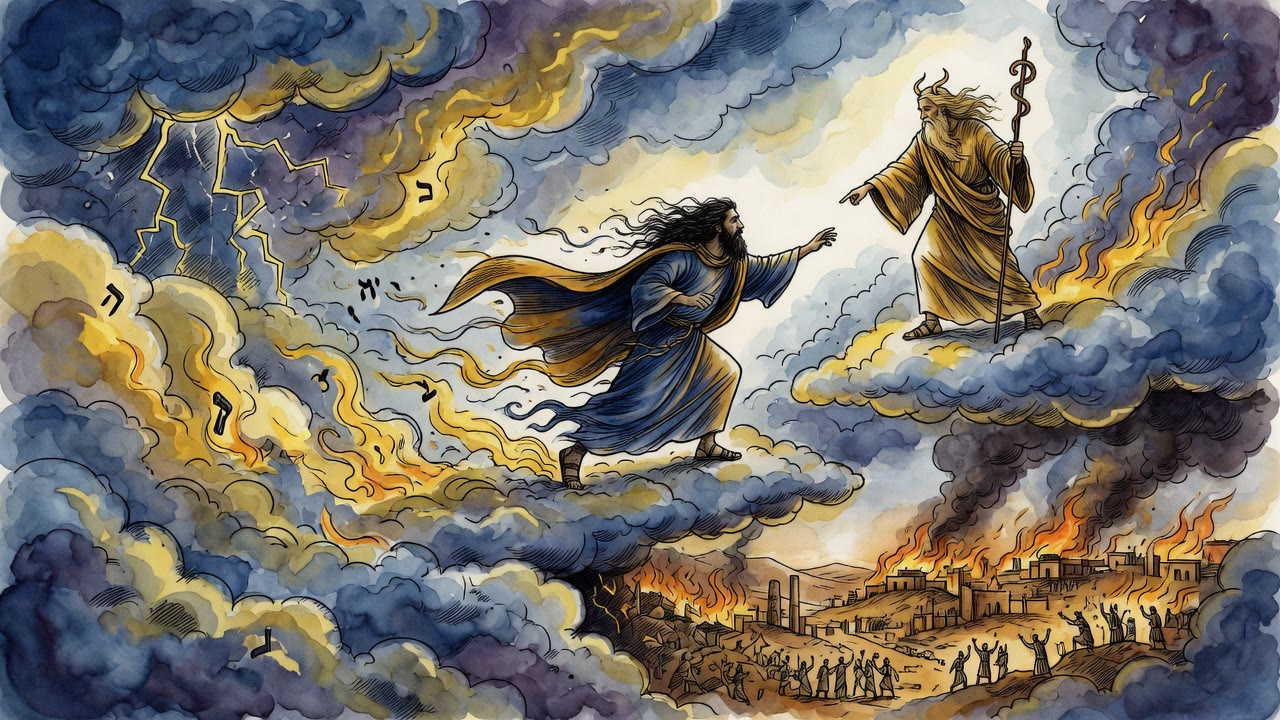
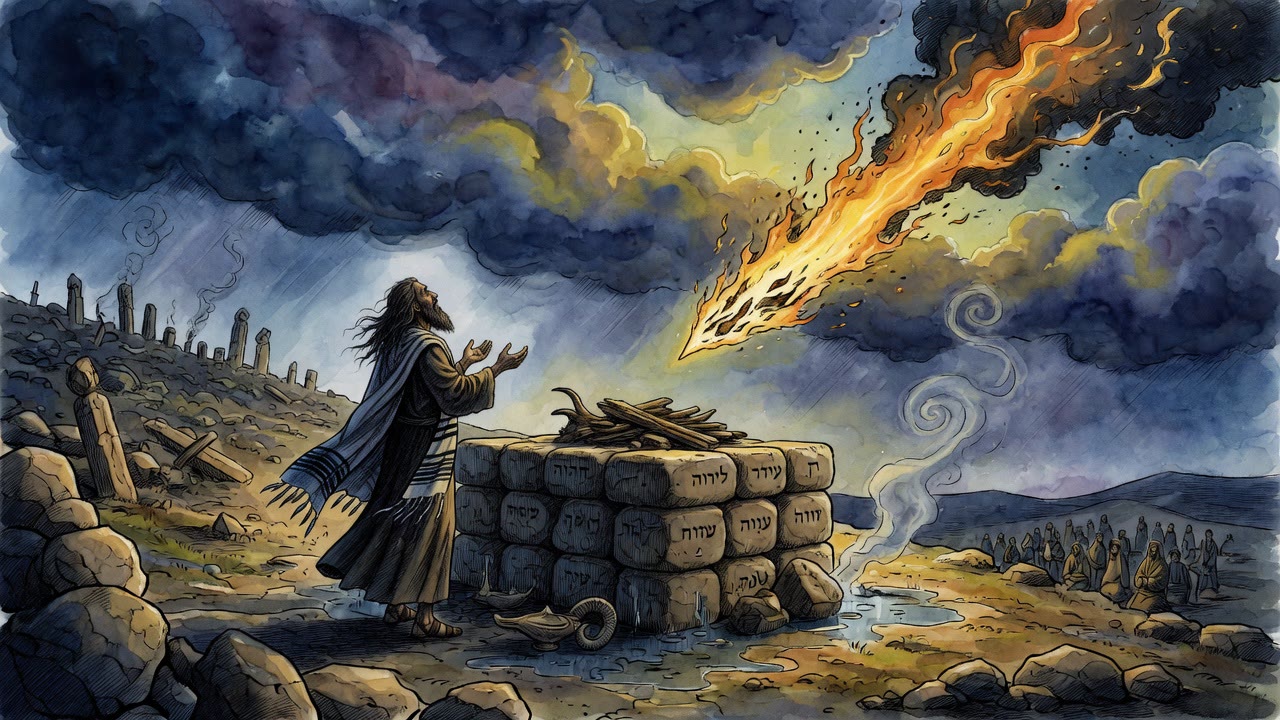
Ahab was precise about where he aimed the knife. Standing before Elijah, with the altar on Carmel still warm and the four hundred and fifty prophets of Ba'al dead in the valley, the king did not deny what had happened. He simply pointed backward through history and said: "Was not Moses the greatest prophet who ever lived? Did Moses not warn that if Israel worshipped idols, God would withhold the rain? Look at me," Ahab said. "Look at my altars and my wives and my court full of everything Moses forbade. And the rain still falls."

It was not a theological argument. It was a knife aimed at the foundation. If Moses's words had not held, what did Elijah have left to stand on? The taunt was asking a single question dressed as contempt: does the word of God actually do anything, or is it only historical?

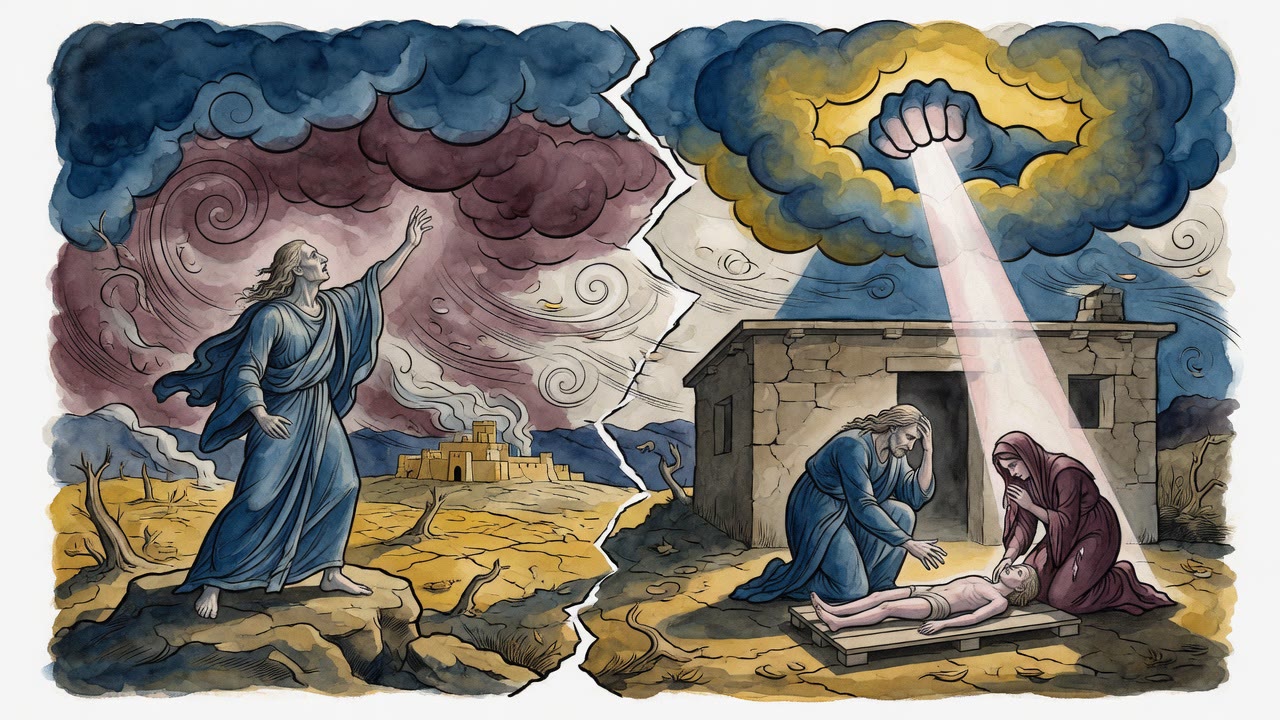
Elijah did not hesitate. He doubled down and announced a drought. The rain that Ahab had cited as proof of God's indifference would stop. And it did, for three years and six months, until the land was so desperate that even the king's horses were dying and Ahab himself was scouring the wadis for grass.

When the Decree Was Already Signed

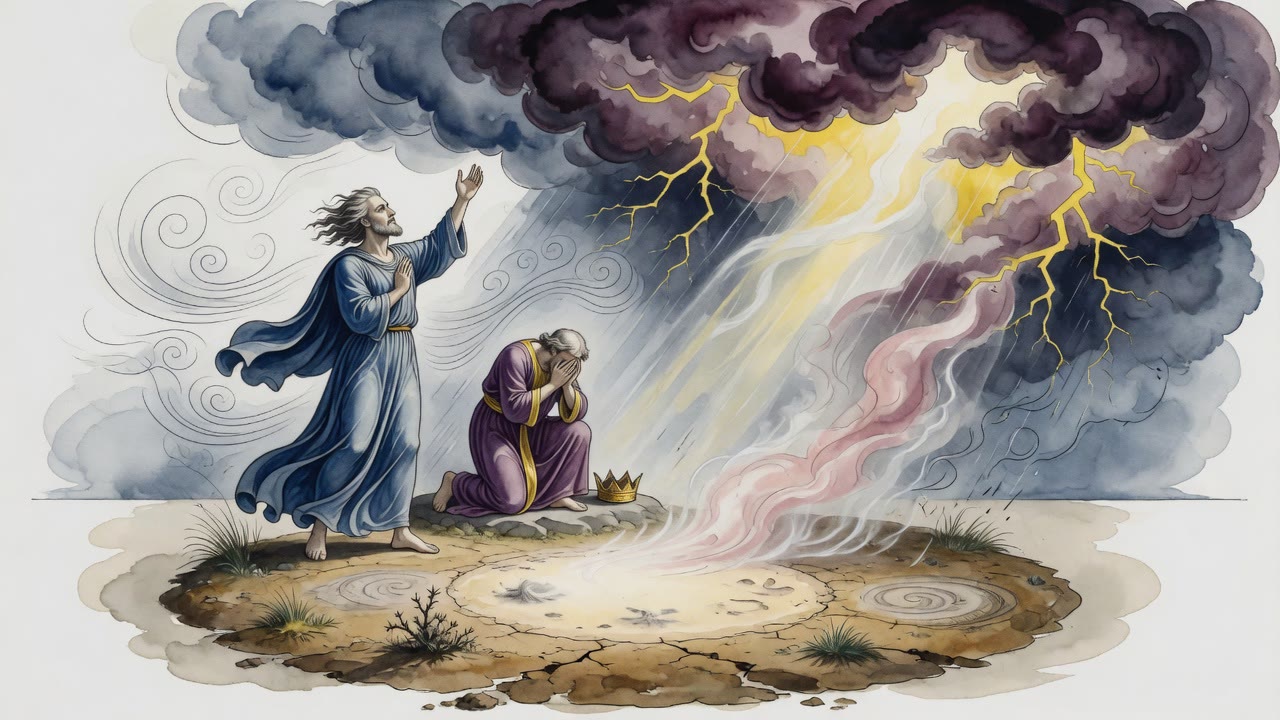
But then came the moment the tradition dwells on most: when Elijah despaired. Not publicly, not in front of Ahab. Alone, under a broom tree in the wilderness, having run from Jezebel's death warrant, the prophet who had called down fire from heaven told God he had had enough and lay down to die.

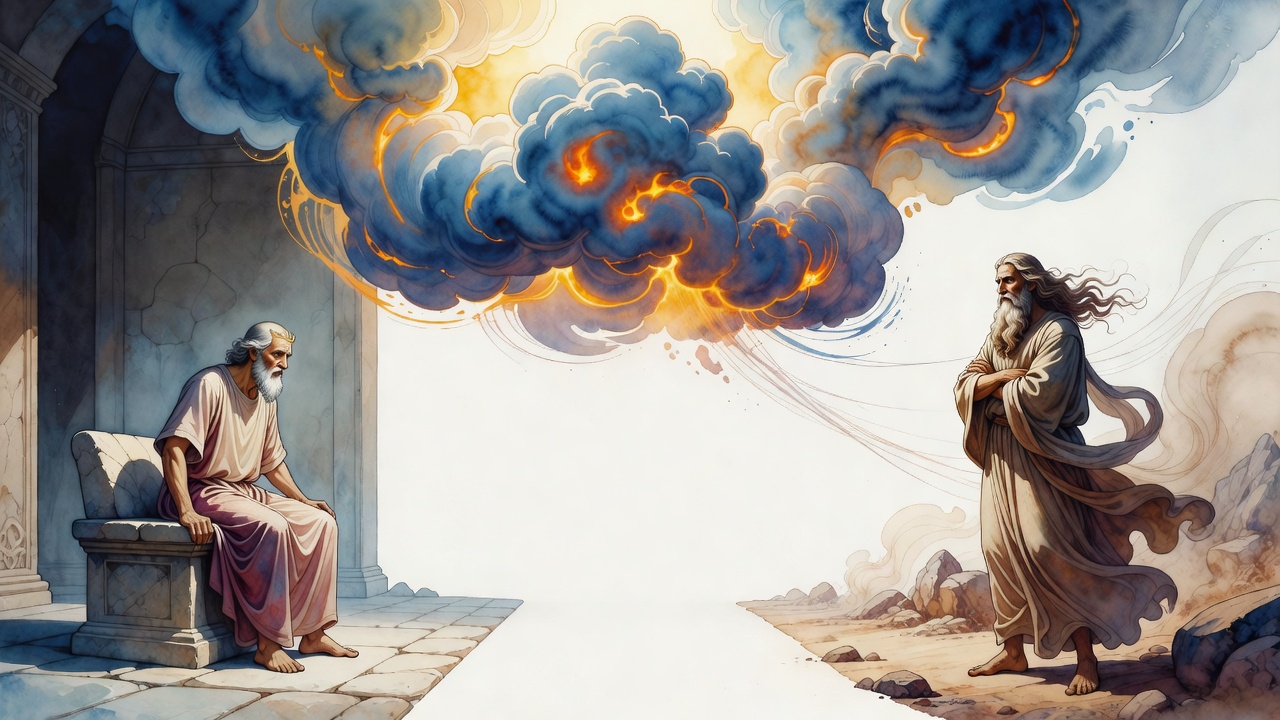
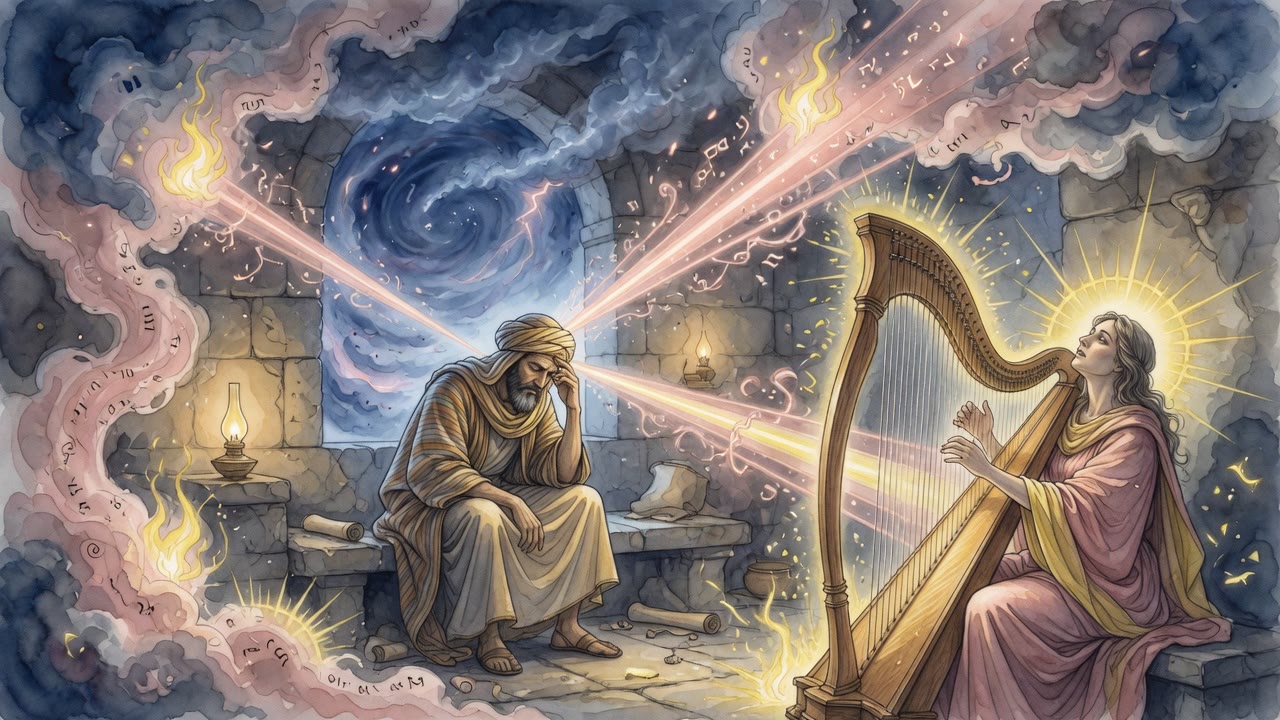
What the plain text of Kings records as a prophet's exhaustion, the rabbinic sources transform into something larger. In the account preserved in Legends of the Jews, Elijah ran. Not to the wilderness only, but in great haste to the patriarchs, to Abraham, Isaac, and Jacob, to all the prophets and righteous ones who had gone before him. He was frantic. He delivered a devastating message: the entire celestial order was weeping. Heaven, earth, the sun, the moon, the angels, all of them were in grief. Israel was facing death for its sins. And the fathers of the world were sitting there in tranquility as if it were nothing.

Then Moses stepped forward.

What Moses Did With the Accusation

Moses was the lawgiver. He was the one who had delivered the warnings Ahab mocked. He took Elijah's report and did what Elijah could not do from his position in history: he carried the accusation directly to the divine throne, not as a complaint but as intercession.

The pattern the tradition traces goes back further still. Kohelet Rabbah sees in the phrase what has been, already is a theological principle about prophetic continuity. What Moses did, Elijah was doing. What Elijah did, every prophet in turn was doing. The mission did not belong to one man in one century. It passed from hand to hand, generation to generation, the same task of standing between Israel and destruction, carrying the same burden of a covenant that Israel kept breaking and God kept honoring.

The two prophets were not separated by centuries. In the logic of the tradition, they were partners in a single unfinished work.

The Defense in Heaven and the Defense at Shushan

The arc of Michael's role as Israel's defender runs through the same tradition. When Haman stood before Ahasuerus and listed every Jewish practice as evidence of disloyalty, cataloguing the holidays and the dietary laws and the Sabbath, God listened and then pointed out what Haman had forgotten: he had listed all the days Israel sanctified but had not listed the days when his own demise would be commemorated. Purim was already written into the future. The defense of Israel had been prepared before the accusation was finished.

This is what Elijah found when he ran to Moses: not dormant figures incapable of acting, but a structure of intercession already in place, already operating, a heavenly court where the defense of Israel was perennial business. He had not been running toward the dead. He had been running toward the only jurisdiction where the decree could be answered.


← All myths
From the tradition

Sources

3 sources

The texts this telling draws on, in full. Open a card to read inline, or expand it for a wider, quieter read.

Legends of the Jews 7:6Legends of the Jews

He was, let's just say, very enthusiastic about idol worship. And he wasn't shy about flaunting it. As Ginzberg retells it in Legends of the Jews, Ahab taunted Elijah, basically saying, "Hey, wasn't Moses supposed to be the greatest prophet? And didn't he say that if Israel worshiped idols, God would withhold the rain? Well, look around, Elijah! I'm bowing down to every idol I can find, and we're living the good life!"

Ouch.

Being Elijah in that moment. Doubt, perhaps? Frustration, definitely. Ahab was throwing the very foundation of his belief system back in his face. It's a question many of us confront: if we stray from the path, why don't we always see immediate consequences? Why does it sometimes seem like the wicked prosper?

Elijah didn't back down. Instead, he doubled down. In a moment that surely echoed through the heavens, he declared, "As the Lord, the God of Israel liveth, before whom I stand, there shall not be dew nor rain these years, but according to my word."

Talk about a mic drop.

Elijah essentially called God's bluff… or rather, he called on God to uphold His word. He put his own reputation, his own life, on the line.

And God, according to the tale, honored Elijah's bold pronouncement. The heavens closed. The land withered. Neither dew nor rain blessed the earth. It was a drought of epic proportions, a direct consequence of the King's actions and a powerful demonstration of faith, as recounted in Legends of the Jews.

But what does this story really tell us? Is it just about a prophet winning an argument? Or is it about the courage to stand up for what you believe in, even when the world seems to be telling you you're wrong? Is it a reminder that sometimes, the consequences of our actions, both good and bad, aren't immediately apparent, but they are always there? Maybe it is a little bit of all of those things.

Full source
Legends of the Jews 12:156Legends of the Jews

The prophet Elijah, a figure practically synonymous with divine intervention, is running. Not just running, but running in "great haste" to the PatriarchsAbraham, Isaac, and Jacob – and all the other prophets and righteous ones of Israel. He’s frantic. He delivers a devastating message: "O ye fathers of the world! Angels, and the sun and the moon, and heaven and earth, and all the celestial hosts are weeping bitterly." It’s a cosmic tragedy! Elijah tells them that the world is in agony, like a woman in labor, because the children of Israel are in dire straits, facing death because of their sins. And Elijah can't believe that the Patriarchs are just sitting there, "quiet and tranquil."

Can you picture that scene? The urgency, the despair?

Then Moses, the ultimate lawgiver, steps in. Ever the leader, even from beyond the grave, he asks Elijah a crucial question: "Knowest thou any righteous ones in the present generation of Israel?" He’s looking for someone righteous, someone who can make a difference in the here and now. Elijah points to Mordecai, the hero of the Purim story. Moses then sends Elijah to Mordecai, calling him the "righteous one of the living generation," tasking him with uniting his prayers with those of the righteous ones who have already passed on. The hope? That together, their combined devotion might avert the impending disaster.

Elijah hesitates. This is where the story gets really interesting. "O faithful shepherd," he says to Moses, "the edict of annihilation issued by God is written and sealed." In other words, the decree is final. Sealed. Done. Why bother?

It’s a powerful moment. It speaks to the seemingly insurmountable obstacles we sometimes face, the feeling that fate is sealed and nothing can be done. But Moses, unwavering in his faith and determination, refuses to give up. He urges the Patriarchs to act, adding a chillingly precise detail: "If the edict is sealed with wax, your prayers will be heard; if with blood, then all is vain."

What does that mean, sealed with wax versus sealed with blood? It gets to the heart of Jewish thought on repentance and divine judgment. Wax is malleable, changeable. An edict sealed with wax suggests there’s still room for divine mercy, for the power of prayer to soften the blow. Blood, on the other hand, is permanent, irreversible. An edict sealed with blood implies a judgment so final that even the combined prayers of the Patriarchs and the living righteous one might not be enough to change it.

This story, retold in Ginzberg's Legends of the Jews (drawing on earlier Midrashic (rabbinic interpretive commentary) sources), isn’t just a historical account. It’s a profound exploration of intercession, divine judgment, and the enduring power of prayer. It reminds us that even when faced with seemingly insurmountable odds, faith and righteous action can still make a difference. It raises the question: what kind of "seal" are we creating with our actions in the world today?

Full source
Kohelet Rabbah 15:1Kohelet Rabbah

Kohelet Rabbah turns to Elijah, Moses at the Dawn of Creation.

The first part, "What has been, already is," gets a fascinating unpacking. Imagine someone questioning if the entire world could have once been water, all gathered into one place. It sounds impossible. But Rabbi Yehuda, in conversation with Rabbi Nehemya, says to tell that person, "It 'already is!'" Think of the ocean – water within water. Rivers flow into it, yet it never overflows. It’s a constant state of watery being. The Rabbis are pointing to the cyclical nature of existence.

What about the future? "And what will be has already been…" If someone asks if God could turn the sea into dry land, the answer is the same: "It 'has already been!'" Remember Moses? The parting of the Red Sea? "The children of Israel went on dry land" (Exodus 14:29). These stories aren't just ancient history; they're blueprints, prototypes of what’s possible.

The commentary doesn't stop there. What if Adam hadn't sinned? Would he have lived forever? "It 'already is!'" says the text. Consider Elijah, who, according to tradition, never sinned and lives eternally. And the revival of the dead? Elijah, Elisha, and Ezekiel all performed such miracles. These moments aren’t isolated incidents but glimpses into the divine potential woven into the fabric of reality.

Rabbi Aḥa, quoting Rabbi Ḥalafta, sums it up beautifully: Everything God will do in the future, He's already done partially through a prophet in this world. Think of God saying, "I am destined to turn the sea into dry land; I have already done so..." It's a powerful statement of God’s consistent presence and pattern throughout history. God remembers the barren, as with Sarah (Genesis 21:1). God revives the dead, as with Elijah, Elisha, and Ezekiel. God causes kings to prostrate themselves, as with Daniel and Nebuchadnezzar (Daniel 2:46). And God opens the eyes of the blind, as with Elisha (II (Kings 6:1)7).

But there's more to this verse than just repeating patterns. The last part, "and God seeks the pursued," adds another layer of meaning. Rabbi Huna, quoting Rabbi Yosei, says God always seeks to save the pursued. Whether it's a righteous person pursued by another righteous person, a wicked person pursuing a righteous one, or even a wicked person pursuing another wicked person, God is on the side of the underdog, the one being chased.

Rabbi Yehuda ben Rabbi Simon, citing Rabbi Yosei ben Rabbi Nehorai, emphasizes that God seeks the blood of the pursued from the pursuers. There's accountability, a divine justice at play. The text then gives a powerful list of examples: Abel pursued by Cain, Noah pursued by his generation, Abraham pursued by Nimrod, Isaac pursued by the Philistines, Jacob pursued by Esau, Joseph pursued by his brothers, Moses pursued by Pharaoh, David pursued by Saul, Saul pursued by the Philistines, and Israel pursued by the nations. In each case, God chooses the pursued.

And Rabbi Elazar ben Rabbi Yosei ben Zimra even brings it down to the level of offerings! A bull is pursued by a lion, a goat by a leopard, a sheep by a wolf. Don't sacrifice the pursuers, he says, but rather the pursued (Leviticus 22:27). It's a powerful image of divine preference for the vulnerable.

So, what's the takeaway? This passage from Kohelet Rabbah isn't just about repetition; it's about hope. It's about knowing that even in the darkest times, even when it feels like history is just repeating itself, God is there, seeking out the pursued, offering a path to redemption, a promise of a future that, in some ways, has already begun. And isn't that a comforting thought?

Full source