5 min read

Elijah Waited for Mincha Before Calling Fire

The altar was ready, the false prophets were exhausted, and Elijah still waited. Fire came only at the beloved hour of Mincha.

Curated by Arthur · Told by Maggid ·
Table of Contents
  1. The Hidden Man Never Lit the Fire
  2. The Whole World Went Silent
  3. Mincha Came in the Middle of Not Knowing
  4. The Water Made the Altar Impossible
  5. The Fire Chose Everything

Elijah let them shout until their voices turned useless.
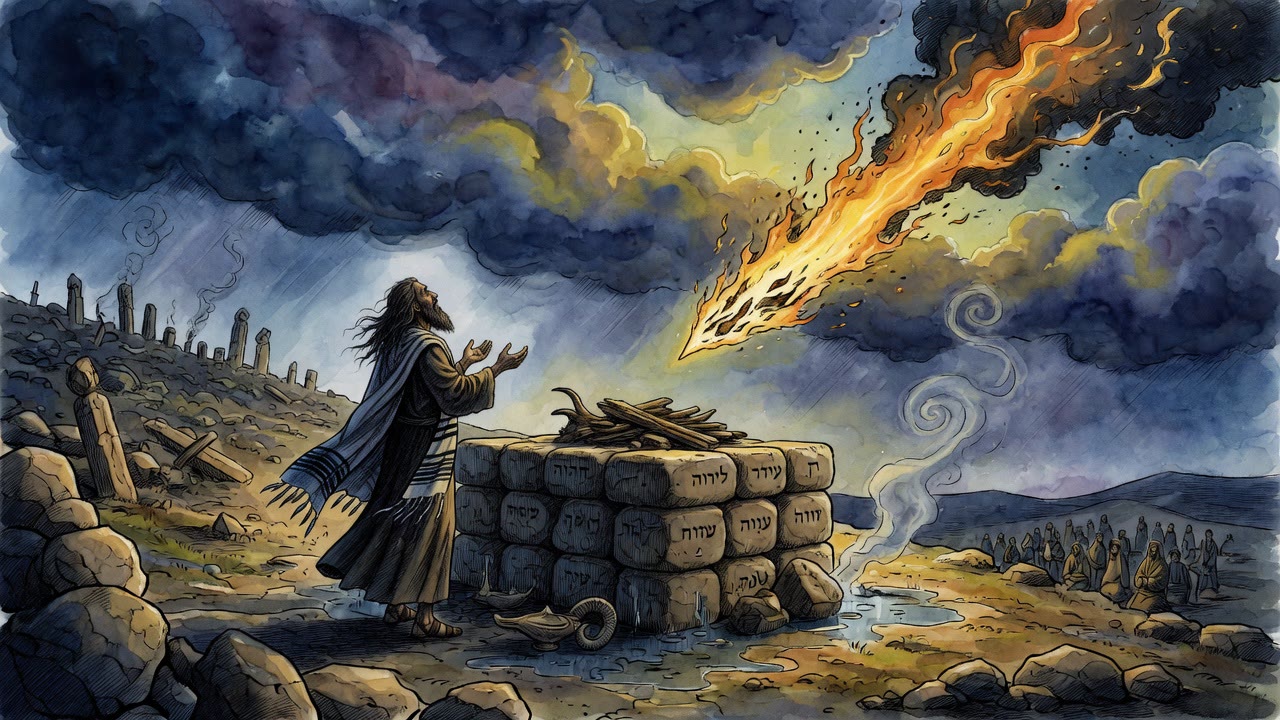
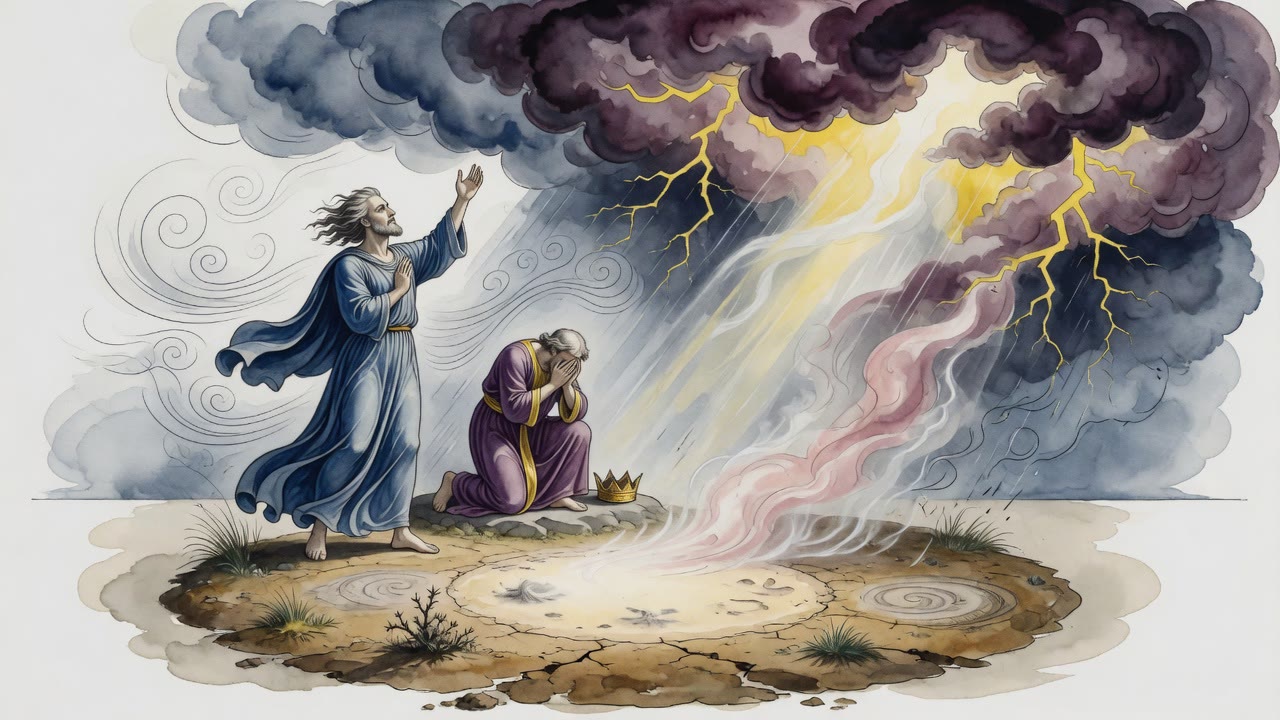
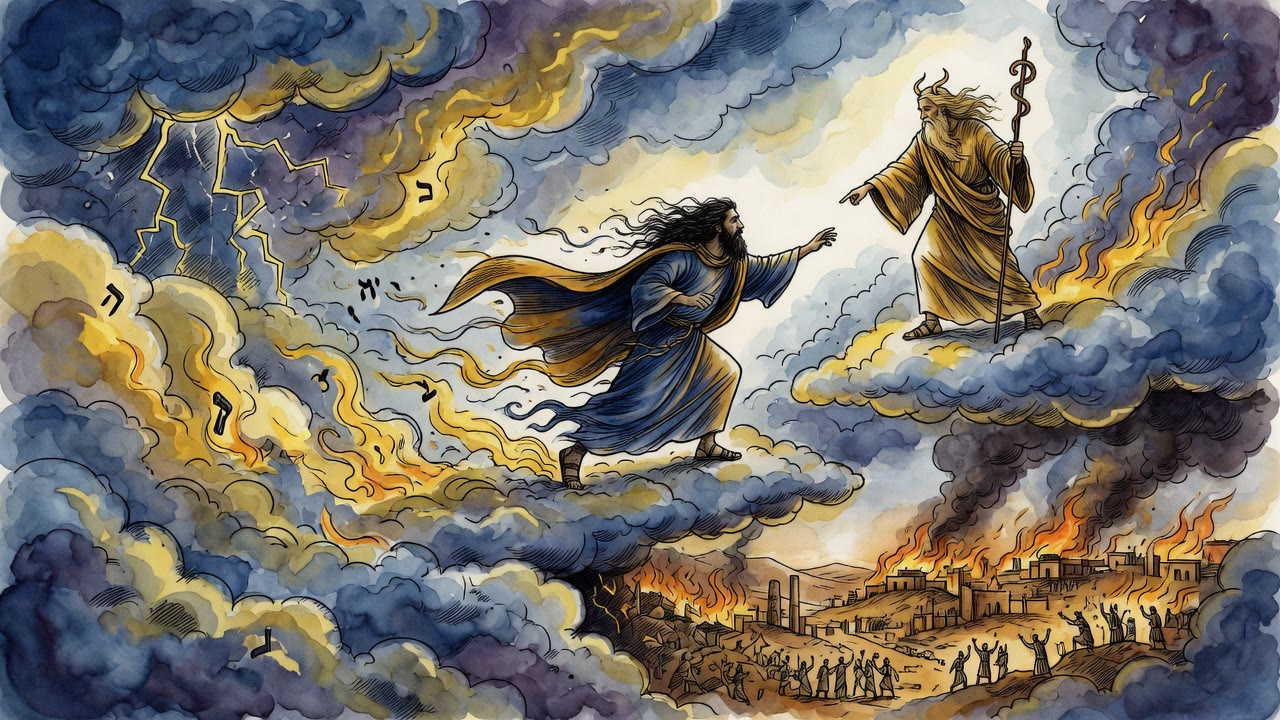
Morning burned into noon on Mount Carmel. The prophets of Baal leaped, cried, and cut themselves until blood ran. Their altar waited. Their god did not answer. The people watched the hours stretch thin, and Elijah did not hurry to rescue the day from silence.

He mocked them, but he still waited.

The Hidden Man Never Lit the Fire

The false prophets had prepared a trick.

They dug beneath the altar and hid Hiel there, ready to set flame from below when the name of Baal was called from above. It would look like a miracle if the crowd wanted it badly enough. A hand in the earth. A flash at the right time. A lie dressed as fire.

God sent a serpent into the tunnel.

Hiel died before he could strike the flame, and the altar stayed cold.

The Whole World Went Silent

Then silence spread past the mountain.

The upper regions and the lower regions were hushed. No bird, no wind, no stray cry, no sound that could be stolen and named as an answer. The false prophets had been left with nothing to misinterpret. Their voices rose into a world that refused to give them even an accidental echo.

Elijah let the silence finish its work.

Mincha Came in the Middle of Not Knowing

He stepped forward at the hour of Mincha.

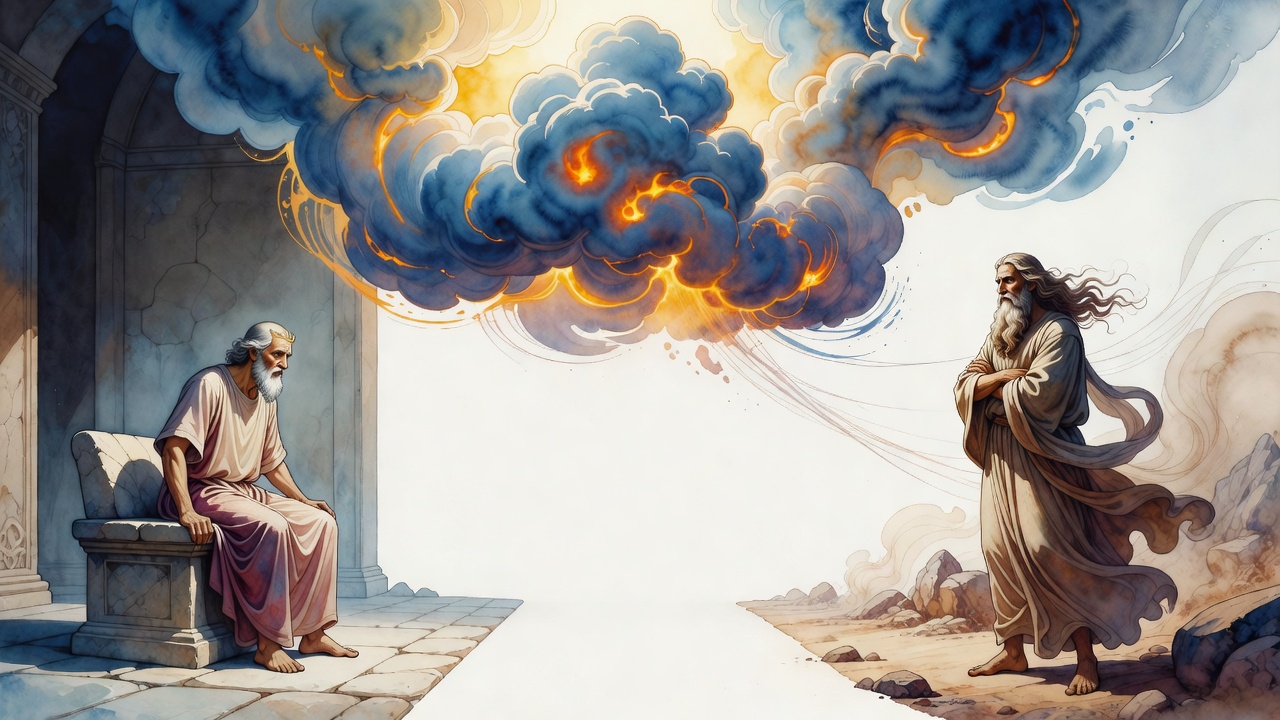
The afternoon offering belongs to the middle of the day, when morning certainty is gone and evening rest has not arrived. It is prayer while business is still unfinished, while the outcome still hangs in the air. Daniel had prayed through twenty-one days and received his answer at that hour. Isaac had gone out toward evening to pray in the field. David likened lifted hands to the evening offering.

Elijah waited for that hour because the mountain needed more than fire. It needed timing.

The Water Made the Altar Impossible

He repaired the altar and made the miracle harder.

Stones. Wood. Offering. Then water. Again water. A third time water, until the trench filled and everything that should burn was soaked. The false prophets had tried to hide fire under dryness. Elijah buried the altar under impossibility. No one would be able to say a coal had survived beneath it.

The prayer was short.

Answer me, so this people will know.

The Fire Chose Everything

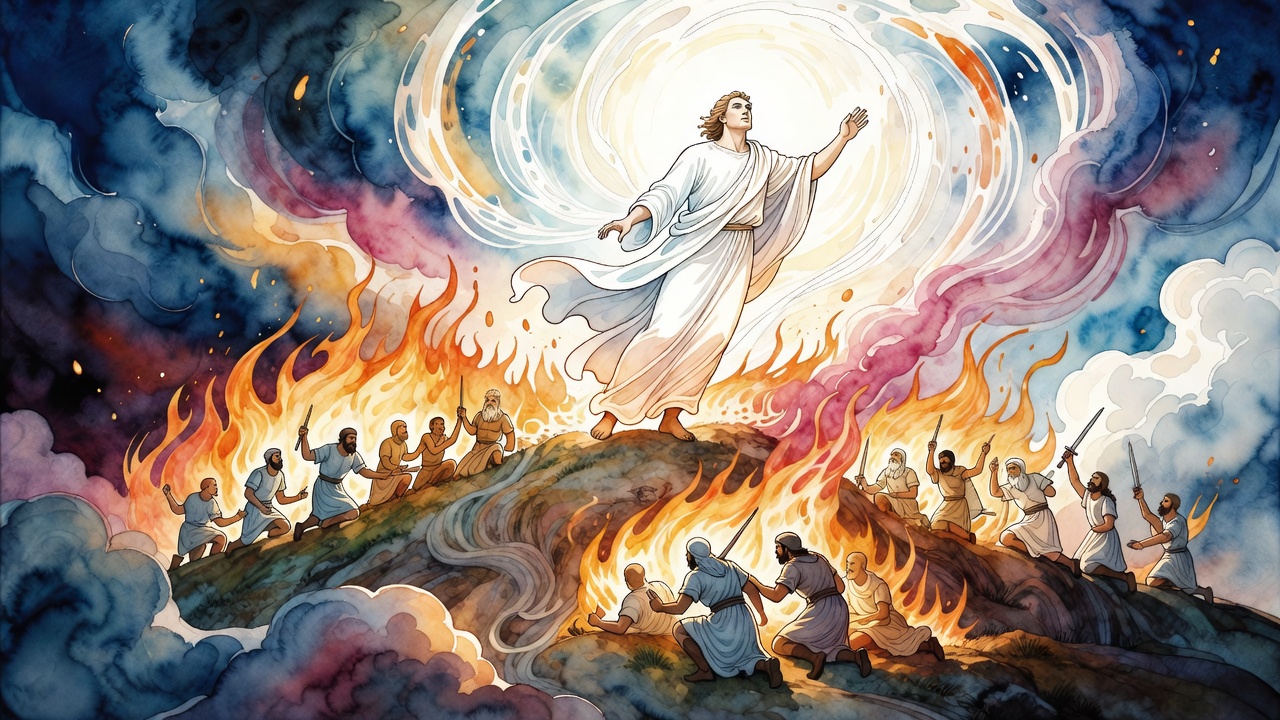
The fire fell at Mincha.

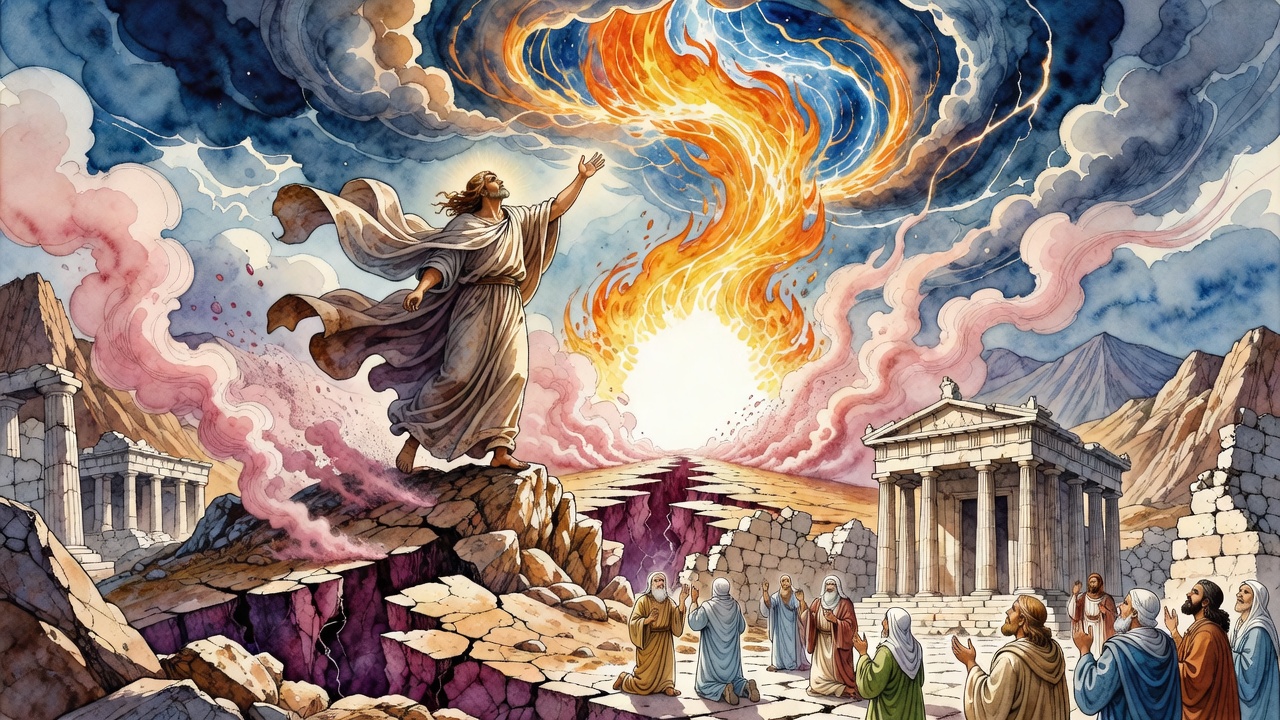
It consumed the offering, the wood, the stones, the dust, and the water in the trench. It did not merely light what was flammable. It chose the whole scene and left no room for a smaller explanation. The people fell on their faces. The Lord is God. The Lord is God.

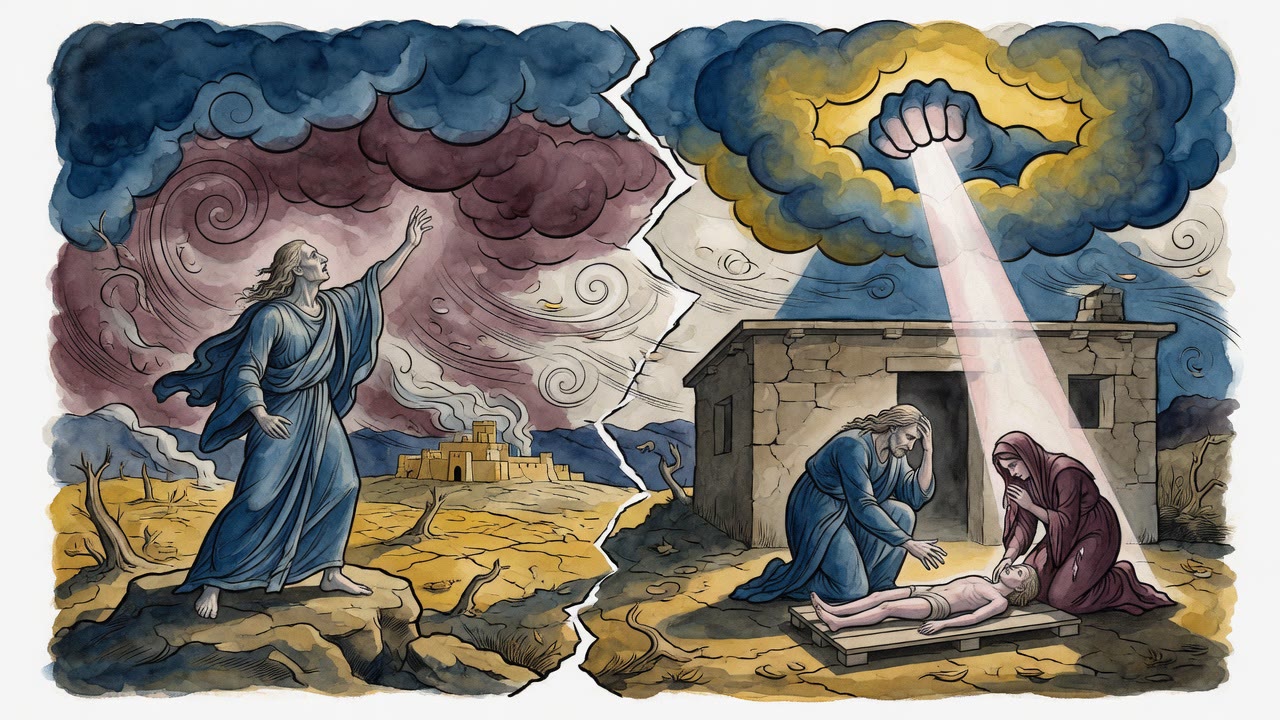
Other prayers take longer. Moses waited forty days. Daniel waited three weeks. Jonah prayed from inside the fish after three days. Elijah's answer came in one day, but not one moment too soon. The waiting had stripped the mountain of fraud. The silence had stripped the prophets of excuses. The water had stripped the altar of natural fire.

Only then did Elijah lift the prayer.

Mincha is beloved because it stands inside incompletion. It does not wait for life to settle before speaking to heaven. It turns toward God while the day is still contested and lets the offering rise from the middle.

On Carmel, that middle became the hour when fire told the truth.

The day had been emptied so the answer could arrive full.

No lesser sound remained.

The crowd also had to be tired enough to stop performing certainty. Morning arguments are loud. By late afternoon, bodies know what the mouth has been pretending not to know. The prophets of Baal had spent themselves. The hidden man was dead. The world had gone quiet. Israel stood between shame and return with no spectacle left except Elijah's soaked altar.

That is the hour Mincha knows best. Not the fresh beginning, not the completed end, but the strained middle where a person has done all the waiting they can bear and still has to lift empty hands.


← All myths

From the tradition

Sources

3 sources

The texts this telling draws on, in full. Open a card to read inline, or expand it for a wider, quieter read.

Aggadat Bereshit 76Aggadat Bereshit

There is nothing more beloved than the Mincha prayer. The afternoon offering, the one between the morning and the evening, is the prayer that comes at the moment when the day is still in motion, when the world's business has not yet resolved itself. Daniel prayed for twenty-one days without answer and was finally heard at the time of the Mincha offering (Daniel 9:21). Elijah at Mount Carmel waited all day while the prophets of Baal danced and bled, and then at the time of the Mincha offering he stepped forward and called down fire (1 Kings 18:36).

Psalm 141 frames it: "Let my prayer be set forth as incense before You, the lifting up of my hands as the evening sacrifice" (Psalm 141:2). Prayer as incense, something that rises, that fills the space between the human and the divine, that has scent and substance and lingers. The lifting of the hands as sacrifice, the gesture of offering something without knowing exactly what it will accomplish, trusting that the act of giving is itself received.

The midrash about Elijah at Carmel is specifically about timing. He did not pray early. He did not pray when he was strongest. He prayed at the turn of the day, at the moment of maximum suspense, when the crowd had been watching for hours and the showdown between the God of Israel and the gods of Baal was still undecided. The Mincha prayer is the prayer of the middle, the prayer that comes when you are neither at the beginning of hope nor at the end of it, but right in the middle of not knowing.

Full source
Legends of the Jews 7:10Legends of the Jews

It was a showdown of epic proportions, a challenge to prove who the real God was.

As we know from the biblical narrative, Elijah proposed a simple yet profound test: build two altars, one for God and one for Baal, and see which one was consumed by fire. The priests of Baal went first, and they called out to their god from morning until noon. But, as the Tanakh tells us, there was no response. No fire, no divine intervention.

Even after God’s undeniable miracle, some people just wouldn't believe it. As Ginzberg retells it in Legends of the Jews, the priests, desperate to maintain their influence, tried to deceive the people.

Their plan? They undermined the altar and hid a man named Hiel beneath it. The idea was that Hiel would ignite a fire at the precise moment they invoked the name of Baal. A cheap trick, and a pretty risky one, wouldn't you say?

But God, being God, wasn't about to let this deception succeed. According to Legends of the Jews, God sent a serpent to kill Hiel, foiling their plan before it could even begin. Can you imagine the chaos that ensued?

The false priests cried and called, "Baal! Baal!" But the expected flame never appeared. Their voices echoed into the void, unanswered and unheeded.

And here's where the story takes an even stranger turn. The Legends continue, telling us that God imposed silence upon the entire world. Total, absolute silence. The powers of the upper and nether regions were dumb. The universe seemed deserted, desolate, as if devoid of any living creature.

Why the silence? Because, as Legends of the Jews suggests, any sound at all would have given the priests an out. They could have claimed, "Aha! That's the voice of Baal!" But with absolute silence, their deception was laid bare. There was no room for doubt, no excuse for their failed attempt. The silence itself became a evidence of God's power and truth.

It makes you wonder, doesn't it? How often do we cling to our own deceptions, even when the truth is right in front of us? And what kind of "silence" does God sometimes impose on our lives to help us see clearly?

Full source
Devarim Rabbah 2:17Devarim Rabbah

While there’s no simple formula, our Sages offer some fascinating perspectives in Devarim Rabbah, a collection of rabbinic teachings on the Book of Deuteronomy.

The text asks, what does it mean when we say, "in all of our calling to Him"? It's not just about the act of prayer, but the when of it all, isn't it? Our Rabbis suggest a spectrum, a fascinating range of divine response times. Some prayers, they say, are answered after a significant period.

Take Moses, for example. We read in Deuteronomy (9:18) that he "fell before the Lord, as at the first, forty days…" He pleaded on behalf of the Israelites after the sin of the Golden Calf. And the very next verse concludes: "And the Lord heeded me that time as well" (Deuteronomy 9:19). Forty days of supplication! Imagine the intensity, the unwavering devotion. Forty days. That's a long time to wait, isn't it?

Then there’s Daniel. According to Devarim Rabbah, his prayers were answered after twenty days. We see in Daniel (10:3) that he abstained from pleasurable food “until the completion of three weeks of days,” and then cried out "Lord, hear; Lord, forgive…" (Daniel 9:19). A shorter wait, perhaps, but still requiring patience and persistent faith.

And what about Jonah? Remember the story of Jonah and the whale (or, more accurately, the giant fish)? Devarim Rabbah points out that Jonah was “in the innards of the fish [for three days and three nights]” (Jonah 2:1). And after that intense period of reflection and repentance, “Jonah prayed to the Lord his God from the innards of the fish” (Jonah 2:2), and his prayer was answered. Three days. A trial by fire, or rather, by sea.

The pace quickens! We're told that Elijah’s prayer was answered after just one day. The text references the dramatic scene on Mount Carmel (I (Kings 18:3)6), "It was at the time of offering up the afternoon offering that Elijah the prophet approached, and he said…[Today it will be known that You are God in Israel]." A single day, a moment of profound clarity and divine intervention.

Devarim Rabbah doesn’t stop there. It describes a prayer answered within a single et, a time period – essentially, one twelve-hour stretch, be it day or night. The source? David. "But as for me," he says in Psalms (69:14), "let my prayer come to You, Lord, at a time of favor."

And finally, the most astonishing of all: a prayer answered even before it's uttered! The prophet Isaiah (65:24) proclaims, "It will be, before they call, I will answer." Before the words even form on our lips, God is already responding. What an incredible thought!

So, what does all this tell us? Perhaps that there's no fixed timetable for divine intervention. Maybe it's about the intensity of our plea, the sincerity of our hearts, or the specific needs of the moment. Or maybe, just maybe, it's a reminder that God is always listening, always present, even when we don't immediately see or feel the response we’re hoping for. What do you think? What does this teach you about prayer?

Full source