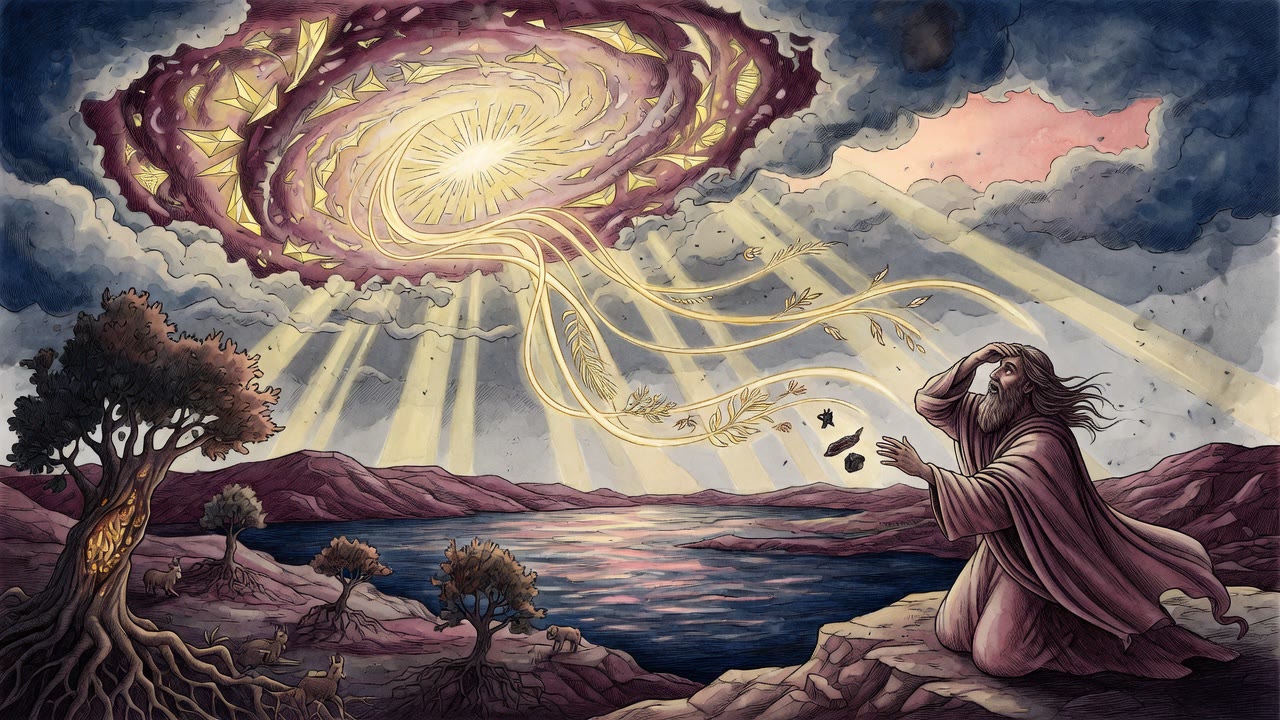
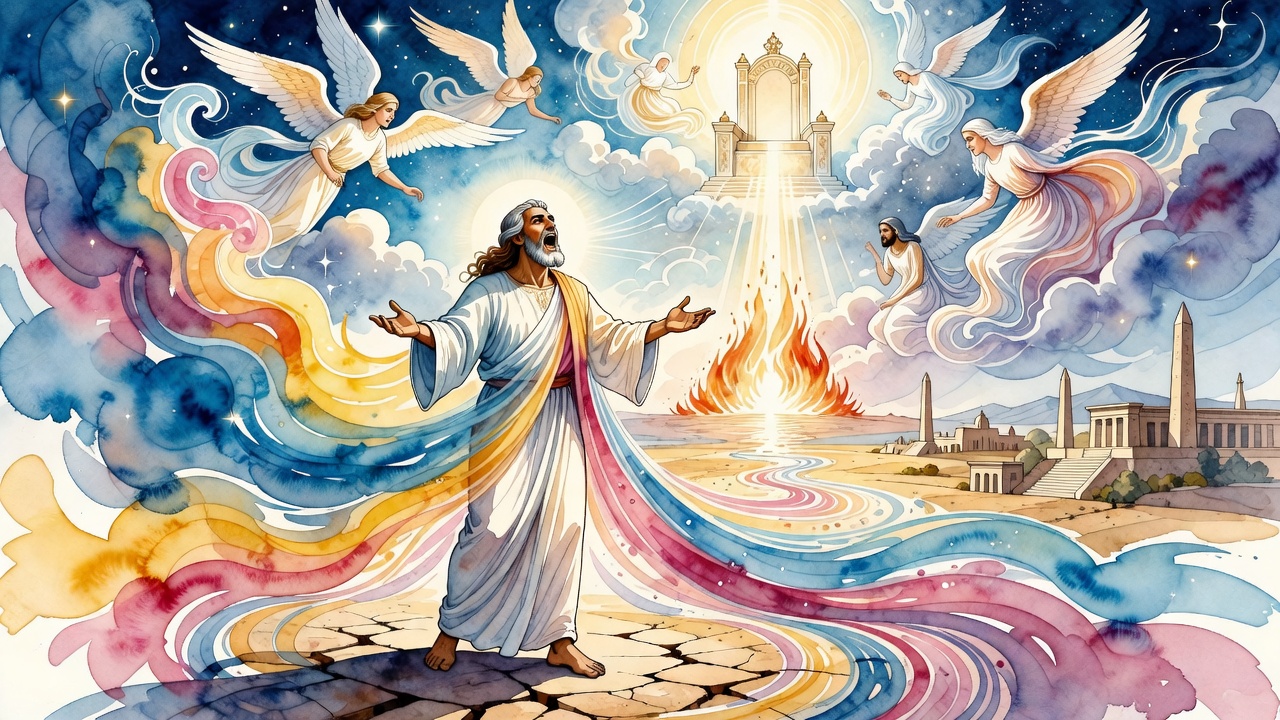
Before the World Began, God Told Death to Let Elijah Through
The Angel of Death met Elijah at the edge of heaven and refused to move. He had jurisdiction over every human being alive, and he said so.
Table of Contents
 Click for full size
The Sun Stopped Over Carmel
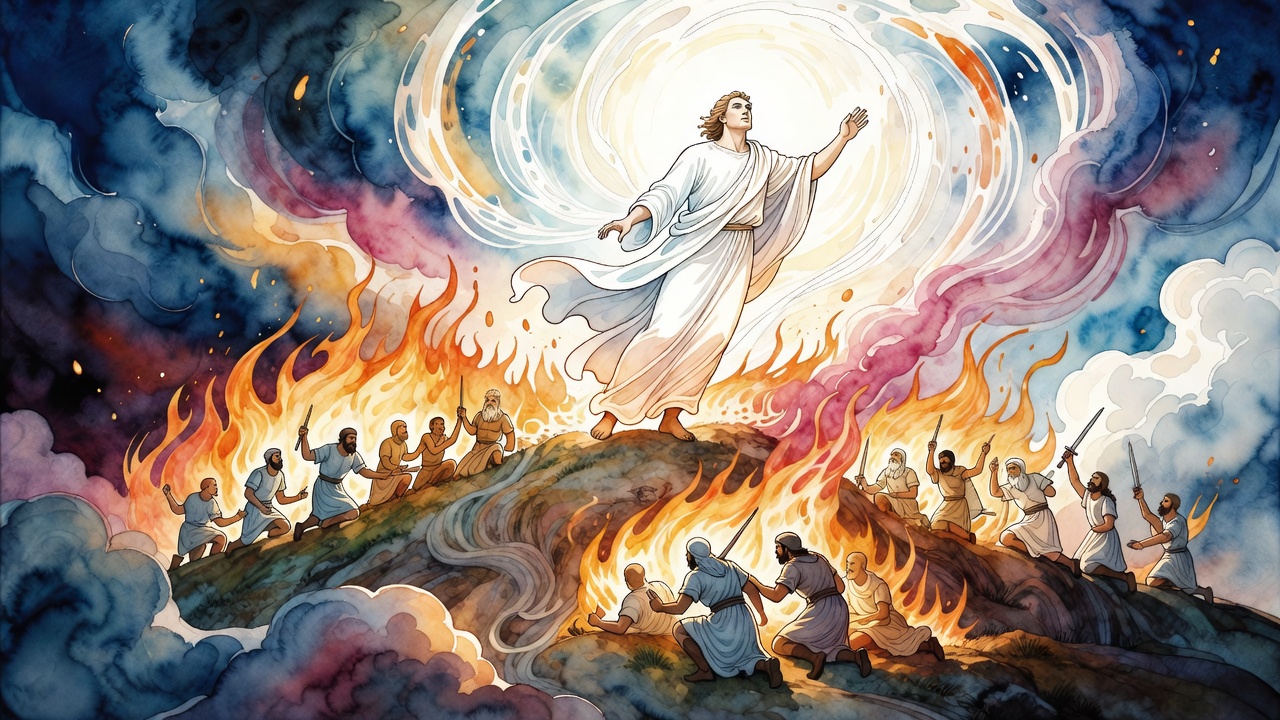
There was not enough daylight left to build an altar, dig a trench around it, stack the wood and lay out the carcass, so Elijah spoke to the sun.
"For Joshua you stood still, so that Israel could beat his enemies. Now stand still. Not for my sake, and not for Israel's. So that the Name of God is exalted."
The sun stopped where it was and waited.
He built. Toward evening he called his student Elisha over and told him to pour water on his hands, and the water kept coming out of Elijah's fingers until the whole trench around the altar was full of it. Then he prayed for fire, and he was careful about how he asked. He wanted fire that nobody in the crowd could write off as a trick. "You are going to send me as a messenger at the end of time," he said. "If my words are not made good now, why would the Jews believe me then?"
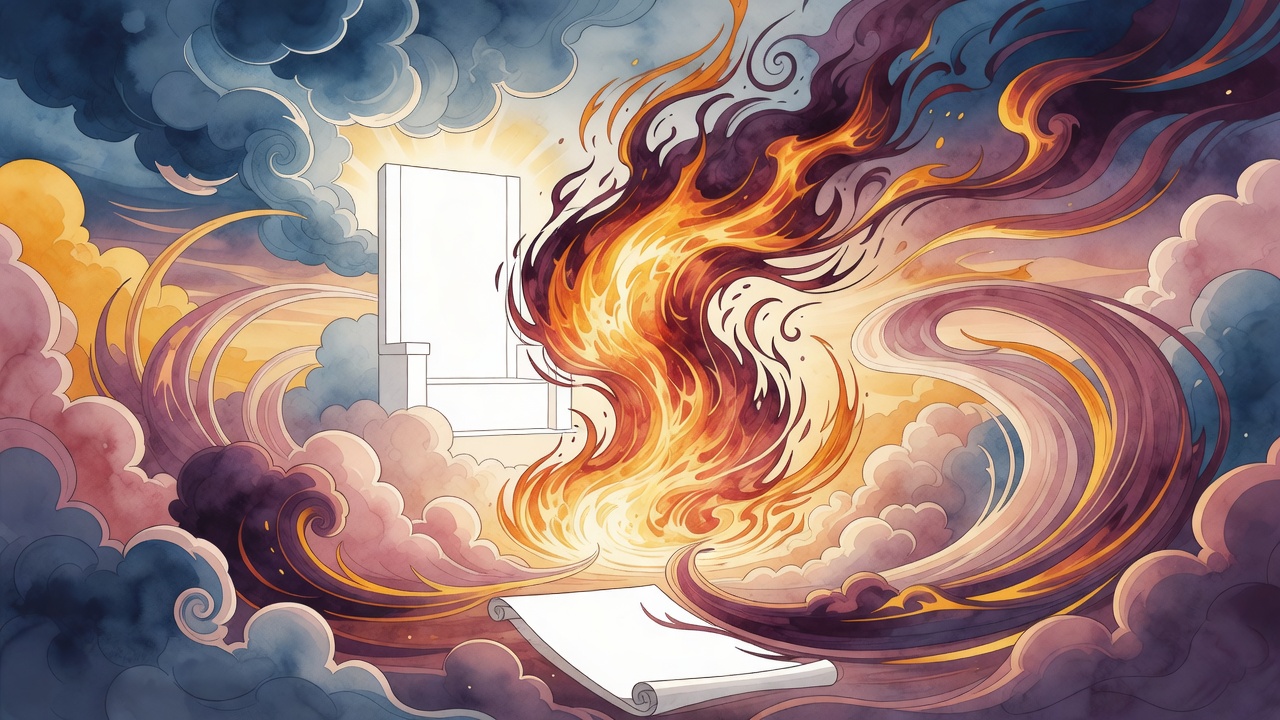
The fire came down and ate the offering and then drank the trench dry.
He had one more thing to ask for, and no merit left to ask it on. "Even if we have nothing else," he said, "remember the sign of the covenant that the Israelites carry on their bodies." The words were barely out when the rain hit the ground.
The Cave Was Made Before He Was
Between the end of the sixth day and the first Sabbath there is a gap, and God had used it. Ten things were made in that gap, all of them for emergencies that had not happened yet: the rainbow, kept out of sight until Noah needed it; the manna; the springs Israel would drink from in the desert; the writing on the two tablets, and the pen that wrote it, and the tablets themselves; the mouth of Balaam's donkey; the grave of Moses; the rod of Aaron with its blossoms and its ripe almonds.
And the cave. One cave, dug into the last minutes of creation, for two men who would not exist for centuries. Moses would live in it. So would Elijah.
By then his reputation ran ahead of him like weather. He had broken the staff of bread and left a whole kingdom hungry. At a word from God the sky had shut and then rained three fires. He had pulled a dead body back out of Sheol (the underworld of the dead). He had put kings into the pit and lifted noblemen off their sickbeds. He had anointed the man who carried out the punishment and the prophet who would take his own place.
Four Answers at Horeb
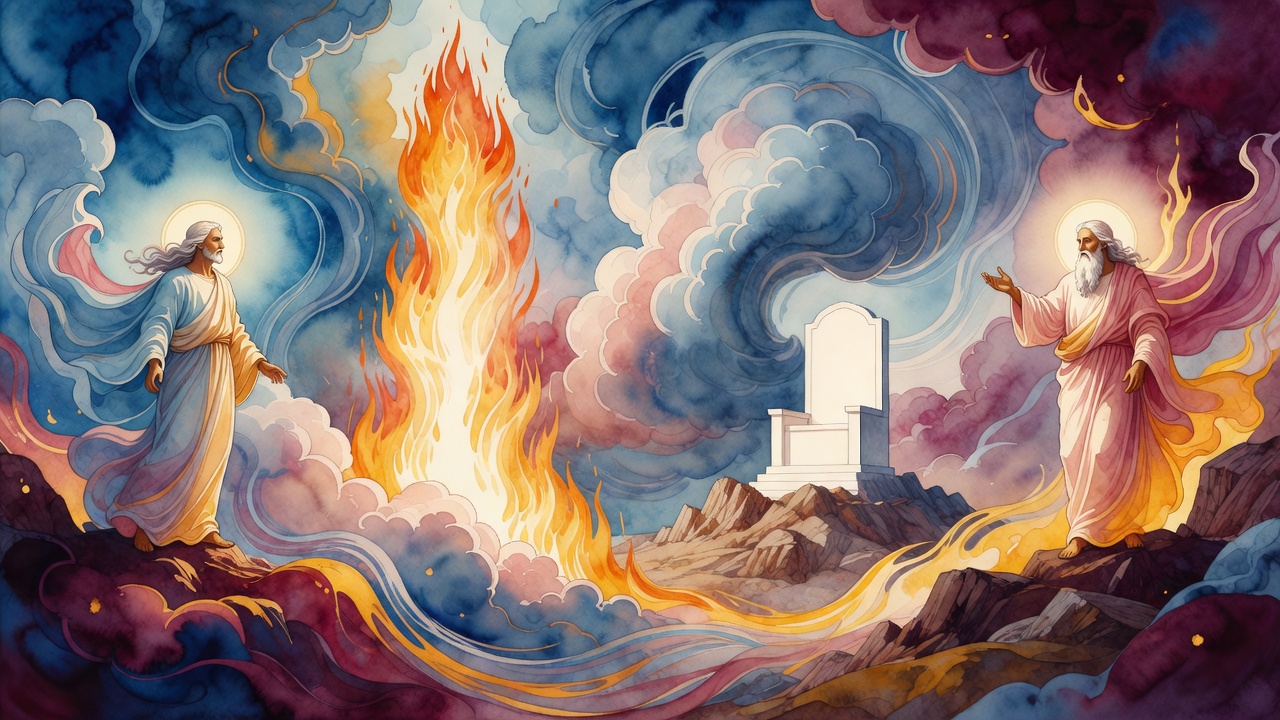
At the mountain, four things went past him in order. A wind that tore at the rock. An earthquake. A fire. Then a small still voice.
God told him what he had just been shown. The wind is this world, which goes by that fast. The earthquake is the day of death, when the body shakes. The fire is the tribunal in Gehenna (the realm of judgment after death). And the voice with nothing behind it is the Last Judgment, when there is no one left but God.
Four worlds a man walks through, laid out in order for a man who was about to be excused from the second one.
The Angel of Death Would Not Step Aside
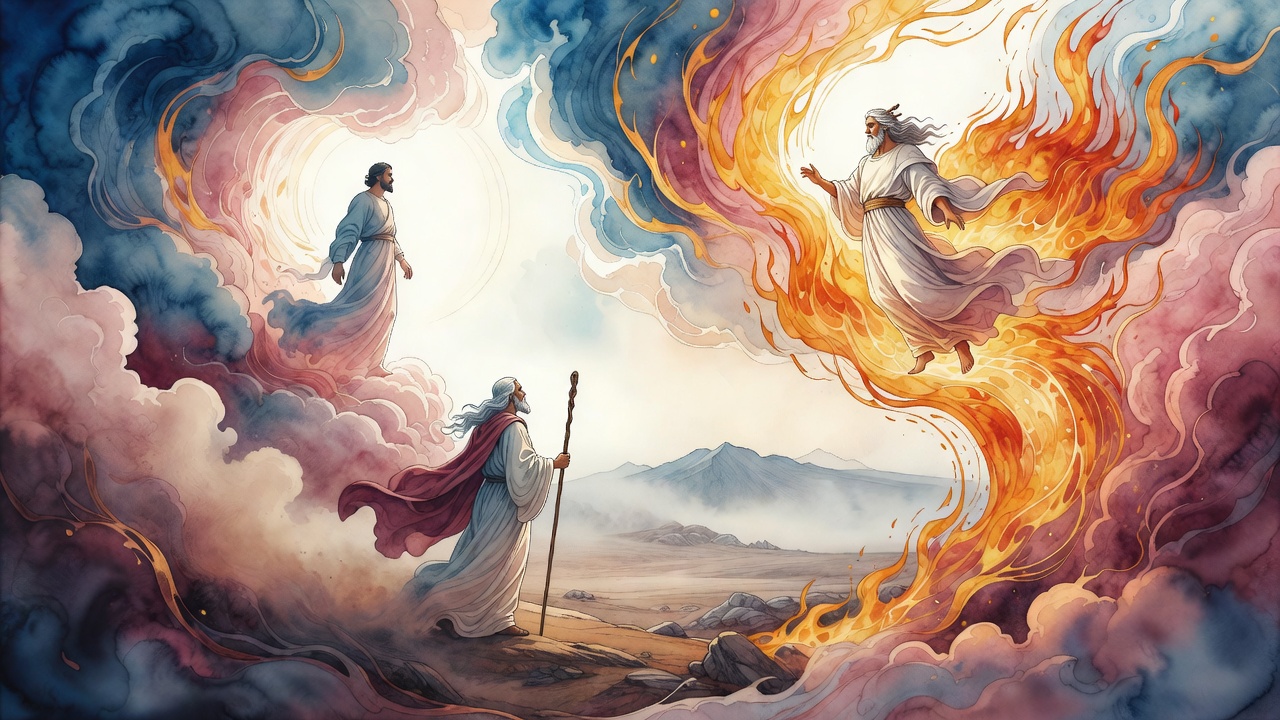
About three years later the chariot came for him, and the Angel of Death was standing in the way.
His argument was jurisdictional and he made it plainly. Every human being alive belongs to him. There are no exceptions written anywhere he can see, and Elijah is a human being.
God said the exception had been written a long time ago. When heaven and earth were created he had given this angel a standing order about this one man, and the order was to let him through alive.
The Angel of Death pushed back. Grant that, and every other person who ever died has a legitimate complaint against heaven. Why him. Why not them.
"Elijah is not like other men," God said. "He can throw you out of the world. You simply have not noticed how strong he is."
So it was allowed, and the two of them fought.
The prophet won. He would have gone further, would have finished the Angel of Death off entirely and left the world without one, and God had to hold him back from doing it. He put his foot on the neck of the thing that had come to stop him, and stood on it, and went up.
The Whirlwind
What the people below saw was a whirlwind and a regiment of fire, going up and taking a living man with it, and no body left behind to bury.
The cave that had been cut for him at the end of the sixth day was still there. He had already used it once.
← All myths