Elijah Broke His Own Drought to Raise the Widow's Dead Son
A dead child can only be raised by dew, and Elijah had sworn the dew away himself. God let the boy die in the one house where the prophet was sleeping.
Table of Contents
 Click for full size
Ahab Asked Where the Rain Was
Ahab put the question to Elijah with a straight face, standing in a kingdom that was doing extremely well.
"Was Moses not greater than Joshua? And did Moses not say that God would let no rain fall on the earth if Israel served idols? There is not an idol in existence I have not bowed to, and look at us. We have everything a man could want. If the words of Moses came to nothing, do you expect the words of Joshua to stand?"
Elijah did not argue the point. He swore instead.
"As the Lord lives, the God of Israel, before whom I stand, there will be no dew and no rain in these years except by my word."
God had promised long before to back the words of the righteous. So the sky shut, on Elijah's authority, and would not open on anyone else's.
Ravens From Another King's Larder
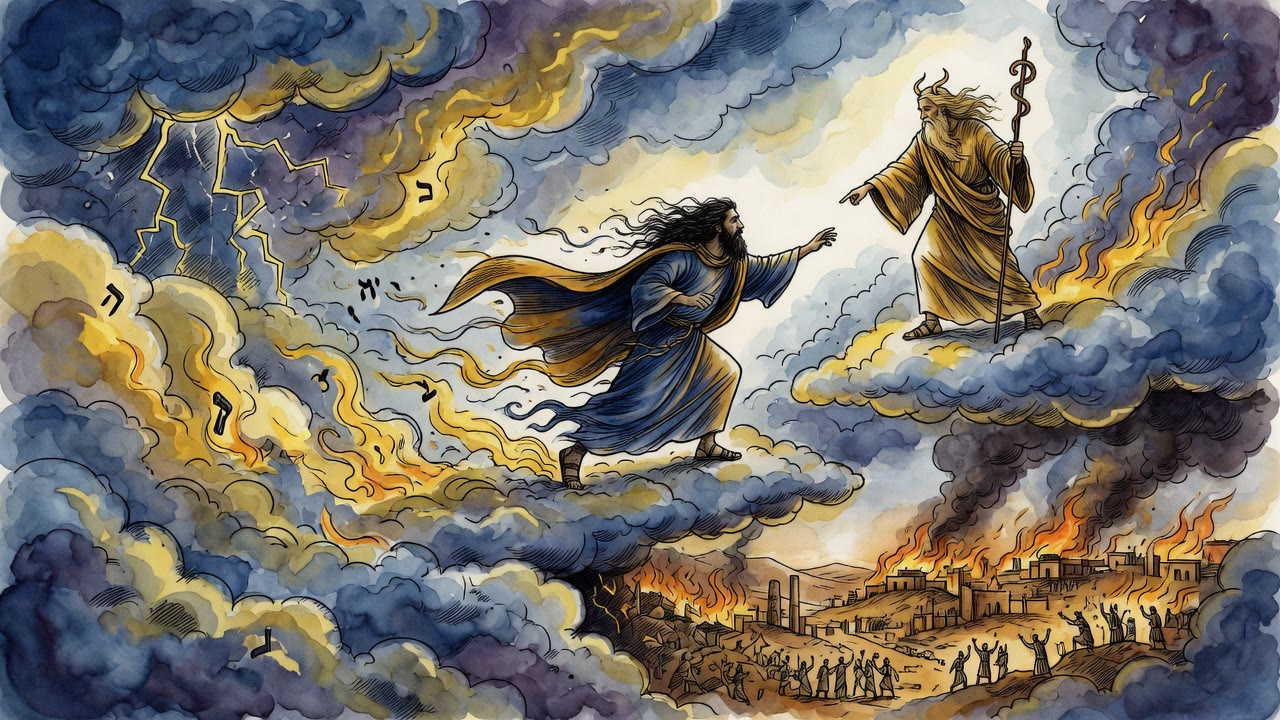
The famine came, and Ahab went looking for the prophet with soldiers. Elijah hid himself in Gilead by a brook and drank out of it, and ravens came to him every morning and evening carrying meat and bread. The food was lifted out of the storerooms of Jehoshaphat, who was a decent king. The same birds would not go near Ahab's house.
Then the pressure started coming from the other direction.
God wanted His promise back. He had never wanted the drought, and He began working on the prophet to release Him from it. First He dried up the brook, so that the one man exempt from the sentence would stand in a dry channel with a raven's bread in his hand and no water. Elijah did not bend. He got up and walked north out of the country entirely, to Zarephath, which belongs to Sidon.
One Handful of Meal and a Little Oil
A woman was outside the town picking up sticks. He asked her for water, and while she was going to get it he called after her and asked for bread as well.
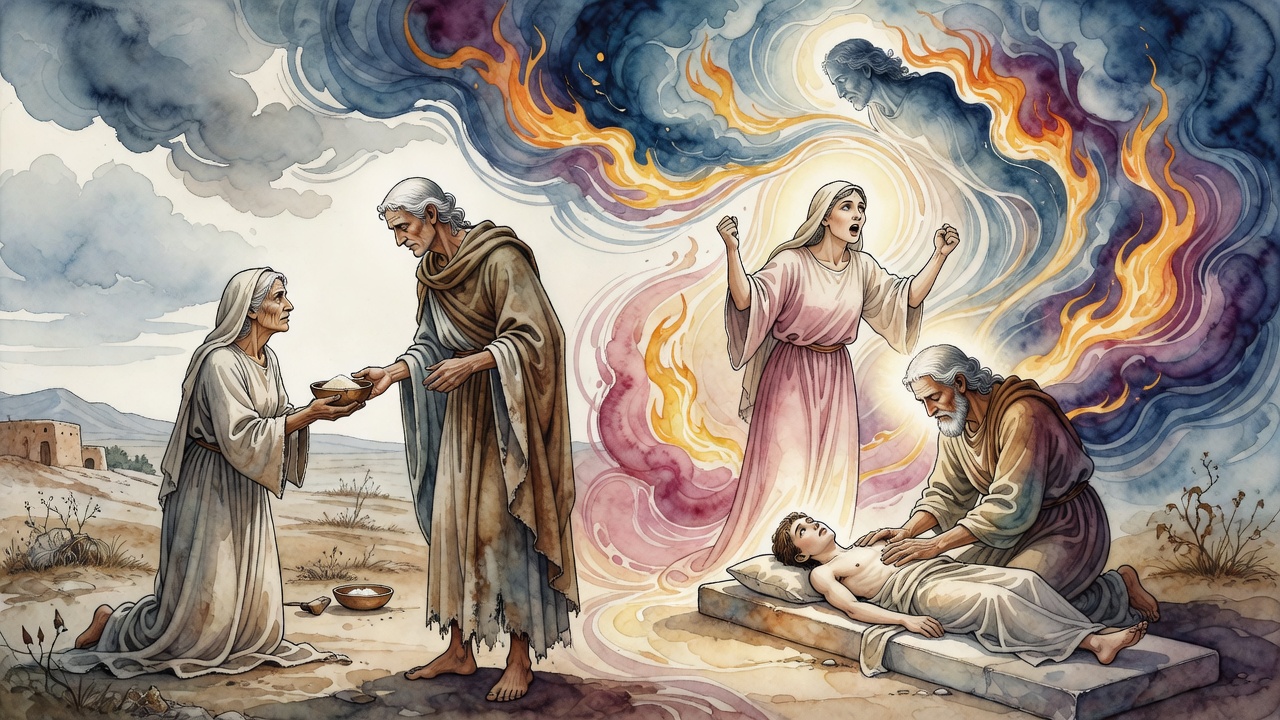
She swore to him that there was no bread. "I have a handful of meal in the house and a little oil in a jug. I am gathering these two sticks to bake it for myself and my son. We will eat that, and then we are finished."
"Take heart," he said. "Make me a small cake first and bring it out to me. That jar of meal and that jug of oil will not give out until God sends rain."
She went in and baked it and brought it to him, and then fed her son, and then herself. Nothing in that house ran out for as long as the sky stayed shut. She kept the prophet with great honor. The boy carrying the water to him grew up to be Jonah.
Give Me My Son and Take Back the Rest
The child sickened. It went on until he died, and his mother came at Elijah beating her chest with both hands.
She accused him of everything at once. "You came to me for my body, and you have brought my sins up in front of God, and my son is dead. Take back everything you brought into this house and give me my son."
She had worked it out in her own way. God had been kind to her because she was better than her neighbors, and now that a great prophet was sleeping under her roof her small merits had gone to nothing beside his, and the accounting had turned against her.
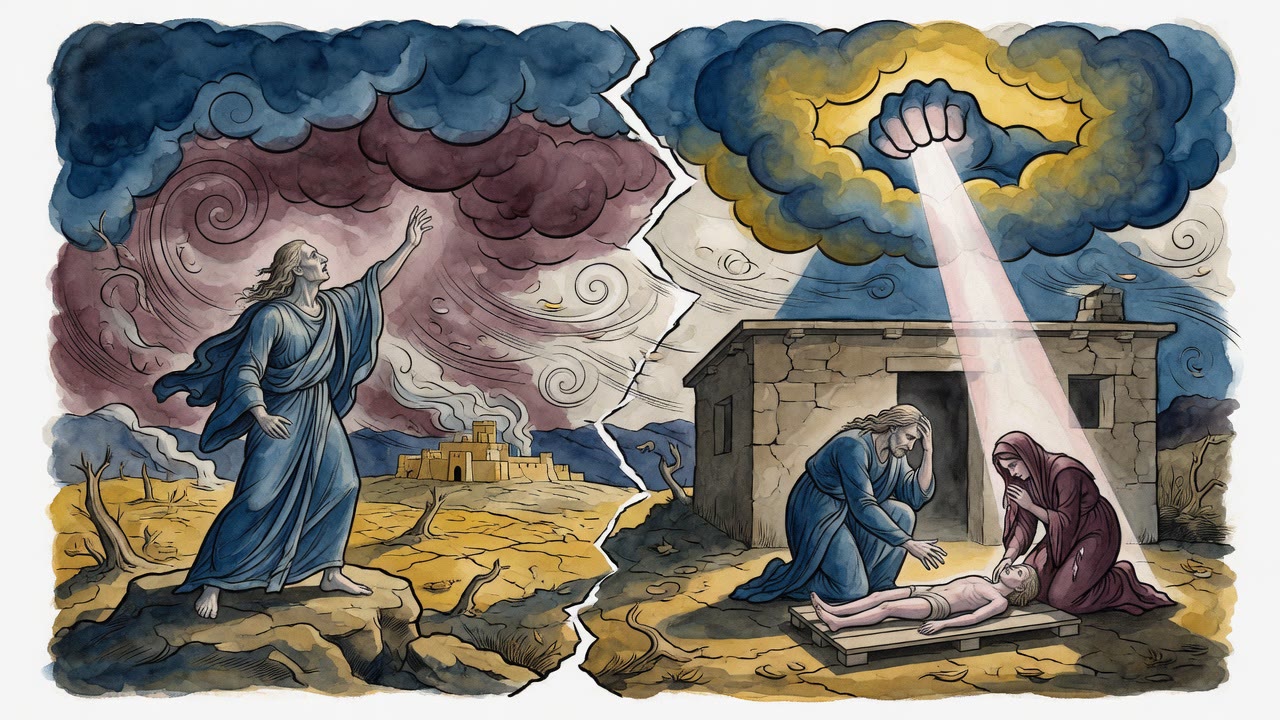
Elijah carried the boy upstairs to his own bed and laid him on it and shouted at God. "Master of all the worlds. Is everything that has happened to me not enough, without this woman too? I know she said a thing that never happened, and she said it out of grief for her son, to wound me. Raise him. Let every generation learn from this that the dead are raised. Put the soul back into this boy."
And there the trap closed on him, because the dead are brought back by dew, and dew was the exact thing he had sworn out of the world. God could not answer him while the oath stood. Elijah saw that there was nothing left to do. He broke his own oath and gave the promise back.
The boy breathed and stood up. The mother said she was now sure that God spoke with him.
The Man Under the Altar
He did not let the rain come yet. The famine had not moved the people at all, and he went to find Ahab first.
Ahab met him and asked whether he was the man afflicting the Hebrews. Elijah said the affliction was Ahab and Ahab's household, who had brought in foreign gods and dropped their own, and told him to bring everyone to Carmel, along with the four hundred prophets of the groves.
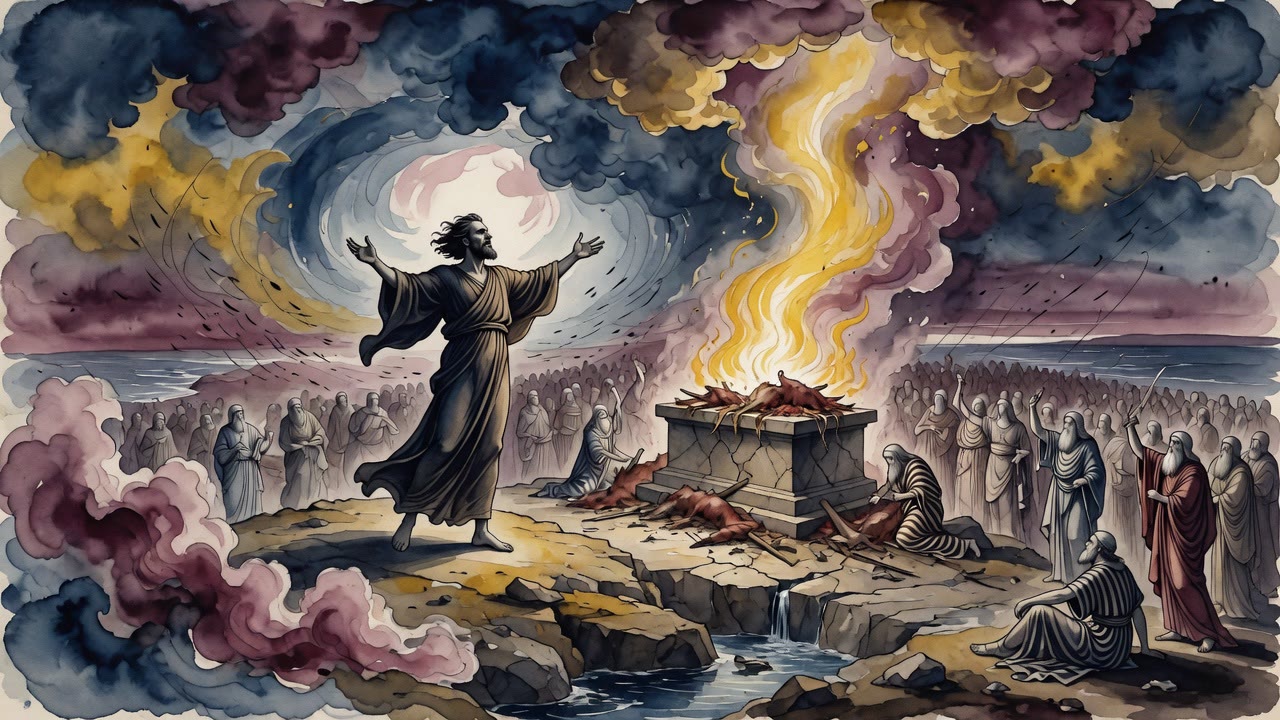
Two bulls, two piles of wood, no fire from any human hand. The four hundred called on Baal from morning to noon and cut themselves with swords and lances until the blood ran, and nothing happened. They had also gone under the altar beforehand and hollowed it out, and put a man named Hiel inside with a light, to come up at the word Baal. God sent a serpent in and killed him where he lay.
Then God stopped every sound in the world. Nothing spoke above or below. The whole creation held still, because if so much as a bird had called out somewhere the priests would have said, that is the voice of Baal.
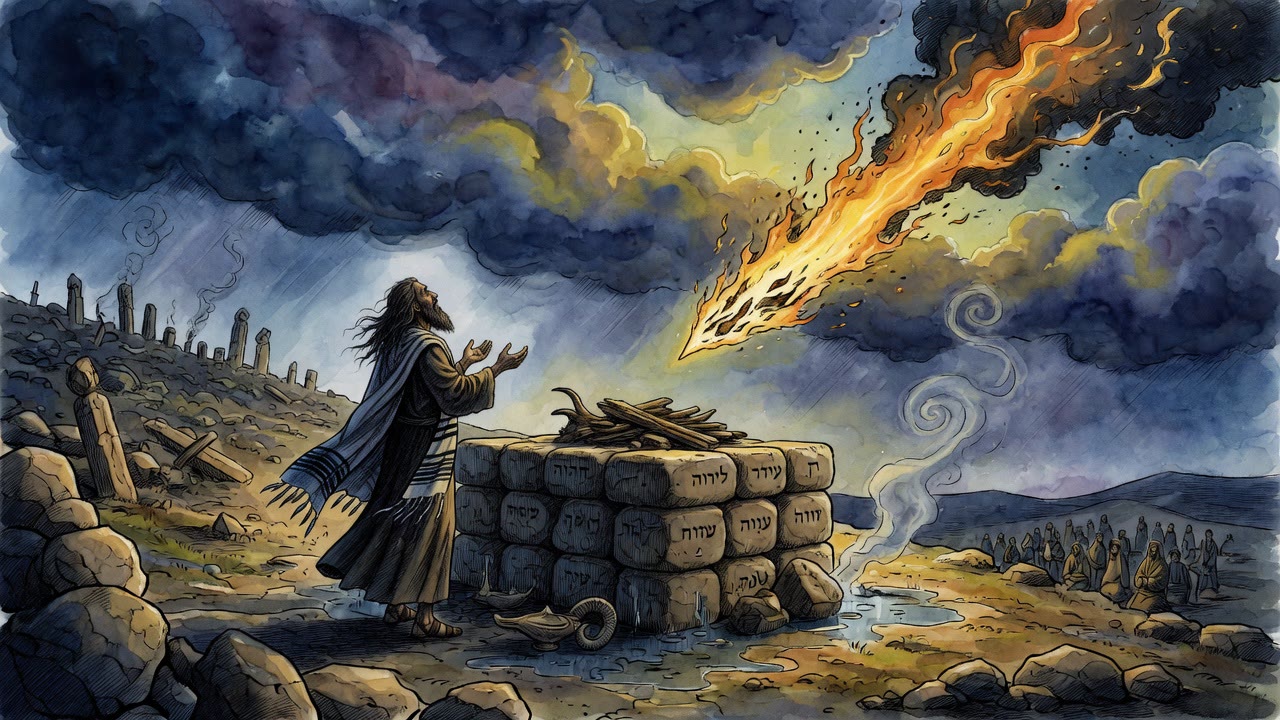
Elijah built with twelve stones, one for each tribe, cut a trench around it, and had four barrels of water poured over the wood until the trench was full. He prayed once. Fire came down and took the sacrifice, the wood and the water together, and left the ground dry. The people went on their faces. The prophets of Baal were taken and killed.
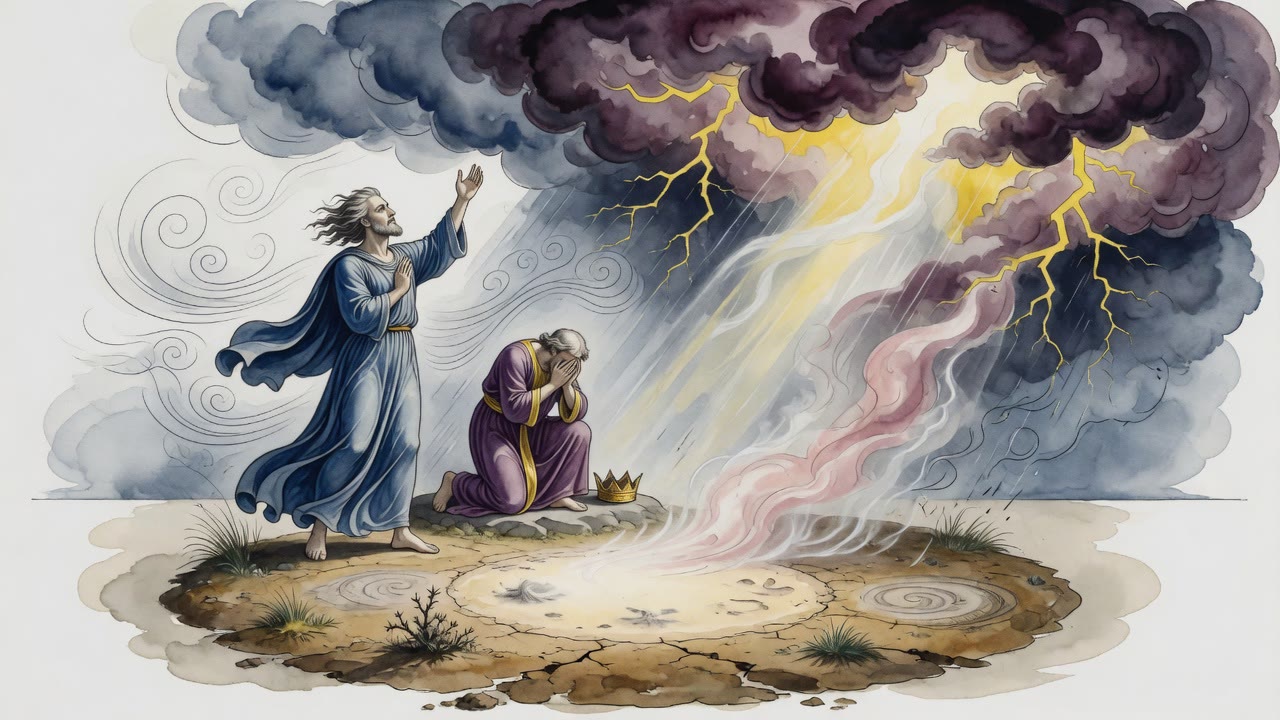
He climbed to the top of Carmel, sat down, and put his head between his knees, and sent his servant up to watch the sea. Six times the boy came back with nothing. The seventh time he said there was a small black thing over the water, no bigger than a man's foot. Elijah sent word to Ahab to get to the city before the roads went. The sky went black, the wind came, and the rain fell on Israel, and the prophet ran the whole way to Jezreel in front of the king's chariot.
← All myths