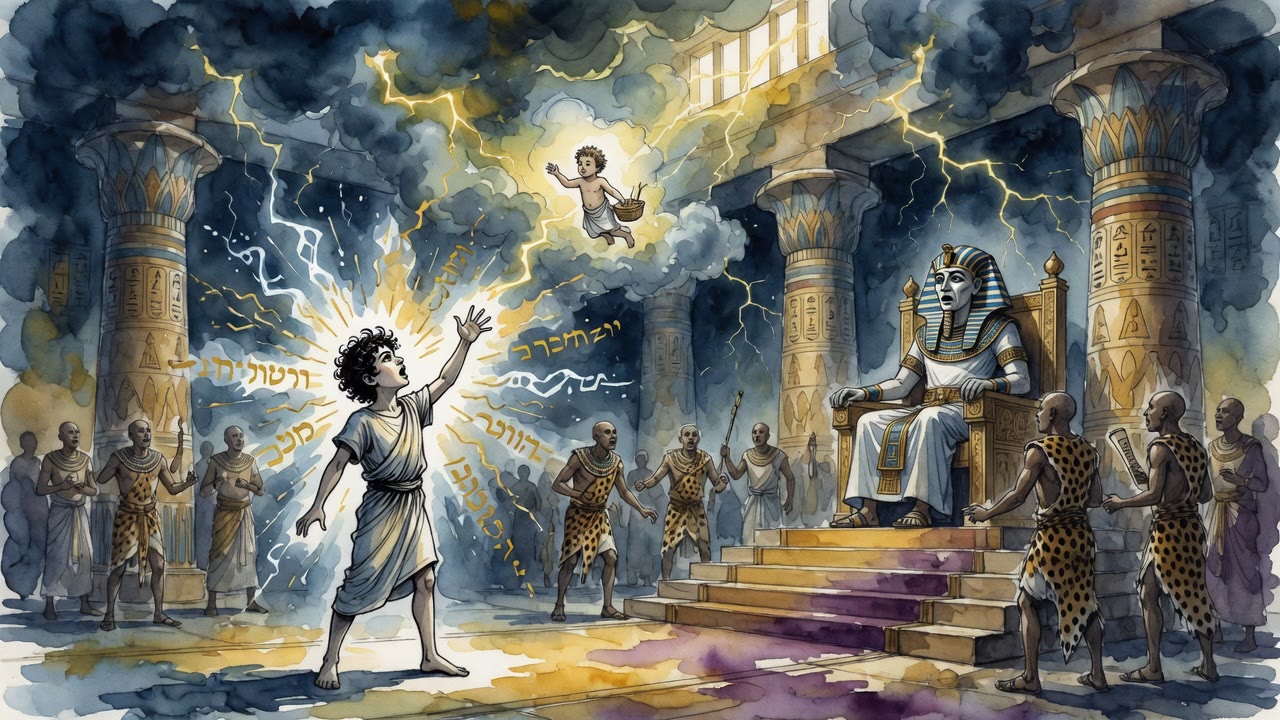
Elijah Called Fire From Heaven and Then Vanished
Ahaziah sent fifty men up a hill to drag the prophet down. Fire took them. The next fifty burned the same way, still on their feet.
Table of Contents
 Click for full size
The King Asked a Fly
Ahaziah fell through the lattice of his upper chamber in Samaria. The king of Israel hit the floor with a body that would not stand, and fear ran faster than prayer. He sent messengers west toward Ekron to ask Baal-Zebub, the Fly, whether he would live.
The road itself became the court. Elijah stepped into the messengers' path before they could finish the errand. God had already given him the question. "Is it not because there is not a God in Israel that you go to inquire of Baal-Zebub the god of Ekron?" He told them to turn around. Because the king had sought the Fly, he would not leave the bed he lay in. He would die there.
The messengers came back too soon. Ahaziah knew the errand had broken. They described the man who had stopped them: hairy, belted with leather. The king did not need a name. Only one man in Israel looked like that and spoke that way.
The Hill That Burned Twice
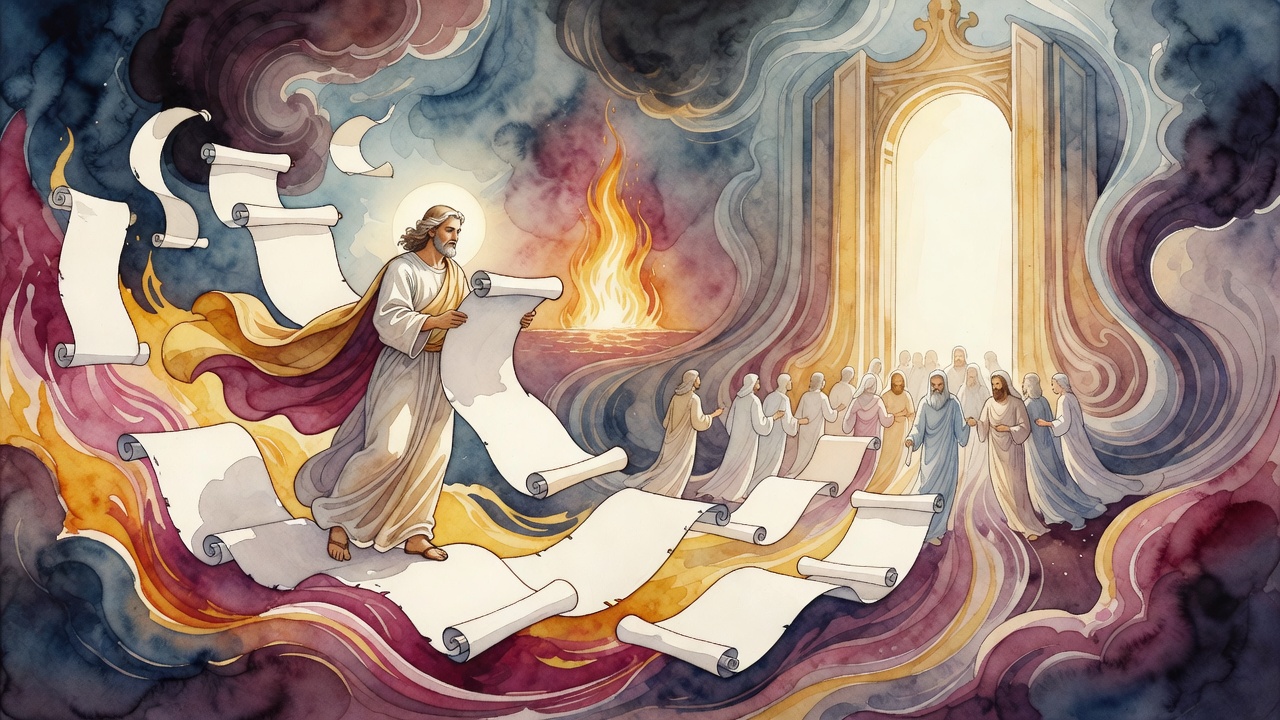
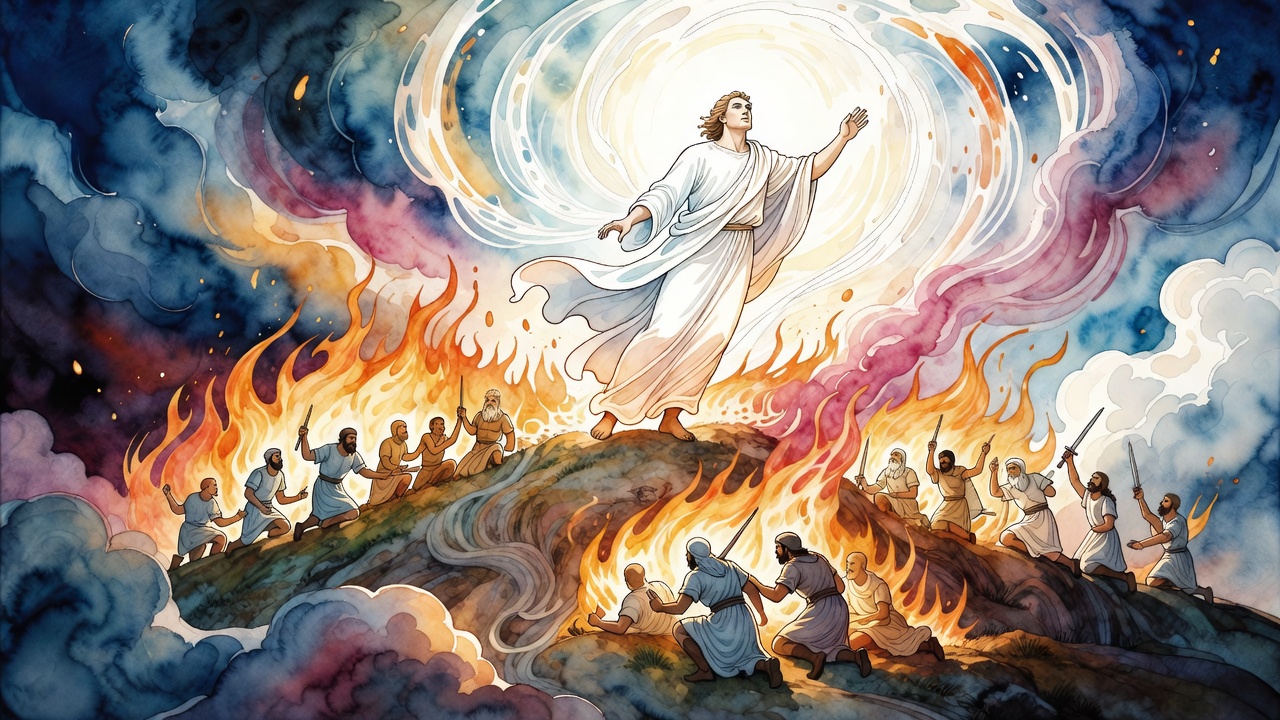
He sent a captain with fifty soldiers to bring Elijah in. Elijah was sitting on a hill. The king's men had to look up at the prophet they were ordered to drag down. The first captain commanded him to descend. Elijah answered like a man who knew the mountain did not belong to the man below it. "If I be a man of God, let fire come down from heaven, and consume you and your fifty."
The fire came. Fifty-one men dead.
A second captain came with another fifty. He gave the same command. Elijah gave the same answer. The fire came again. Another fifty-one gone. Ahaziah had now spent a hundred and two lives to move one prophet off a hill, and the hill had not moved.
The Third Captain Knelt
The third captain came differently. He climbed the hill himself, fell on his knees, and spoke as a man asking for his life, not as a soldier issuing an order. "Let my life, and the life of these fifty servants of yours, be precious in your eyes." He said the first two companies had perished. He said he and his men had not come willing. An angel stood beside Elijah and told him, "Go down with him. Do not be afraid of him."
Elijah rose and went down and stood before the king. He looked at Ahaziah on the sickbed and repeated the verdict he had sent through the messengers. Because the king had sent for Baal-Zebub of Ekron as if there were no God in Israel to inquire of, he would not leave that bed. He would surely die.
Ahaziah died according to the word. He had no son. His brother Jehoram took the throne. The two companies of fifty had come armed, with the authority of a king who had rejected God, to seize a prophet who had already spoken the judgment. The fire was not Elijah's private anger. It was the king's choice made visible in the bodies he had sent. The third captain's kneeling was the one correct motion: come without force, speak as a man to a man, let the prophet decide.
The Mantle Struck the Jordan
Some time after Ahaziah's death, Elijah and Elisha walked toward the Jordan. Elijah knew what was coming. He tried three times to send Elisha away, at Gilgal, at Bethel, at Jericho. "Stay here," he said. Elisha refused each time. "As the Lord lives, and as you live, I will not leave you."
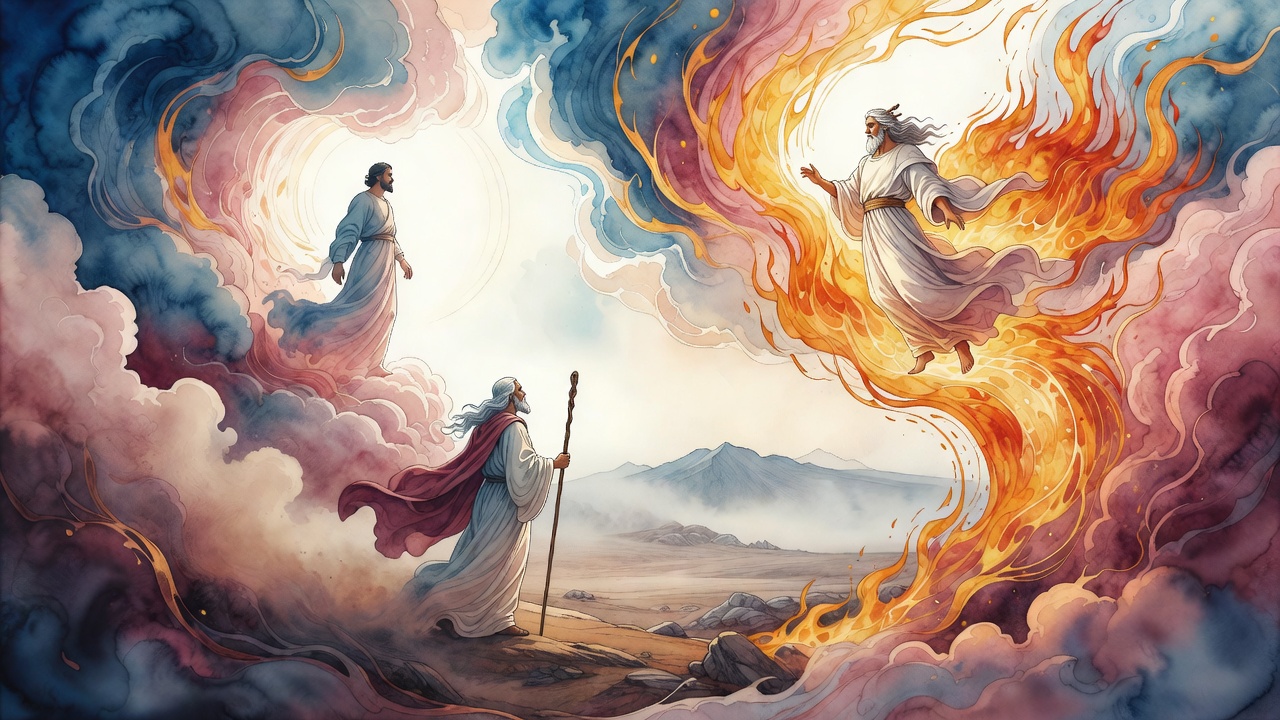
Fifty men of the sons of the prophets stood at a distance and watched. Elijah took his mantle, rolled it, and struck the water. The river split. They crossed on dry ground. On the other bank Elijah asked what Elisha wanted before he was taken. Elisha asked for a double portion of Elijah's spirit. Elijah said, "You have asked a hard thing. If you see me when I am taken, it will be yours."
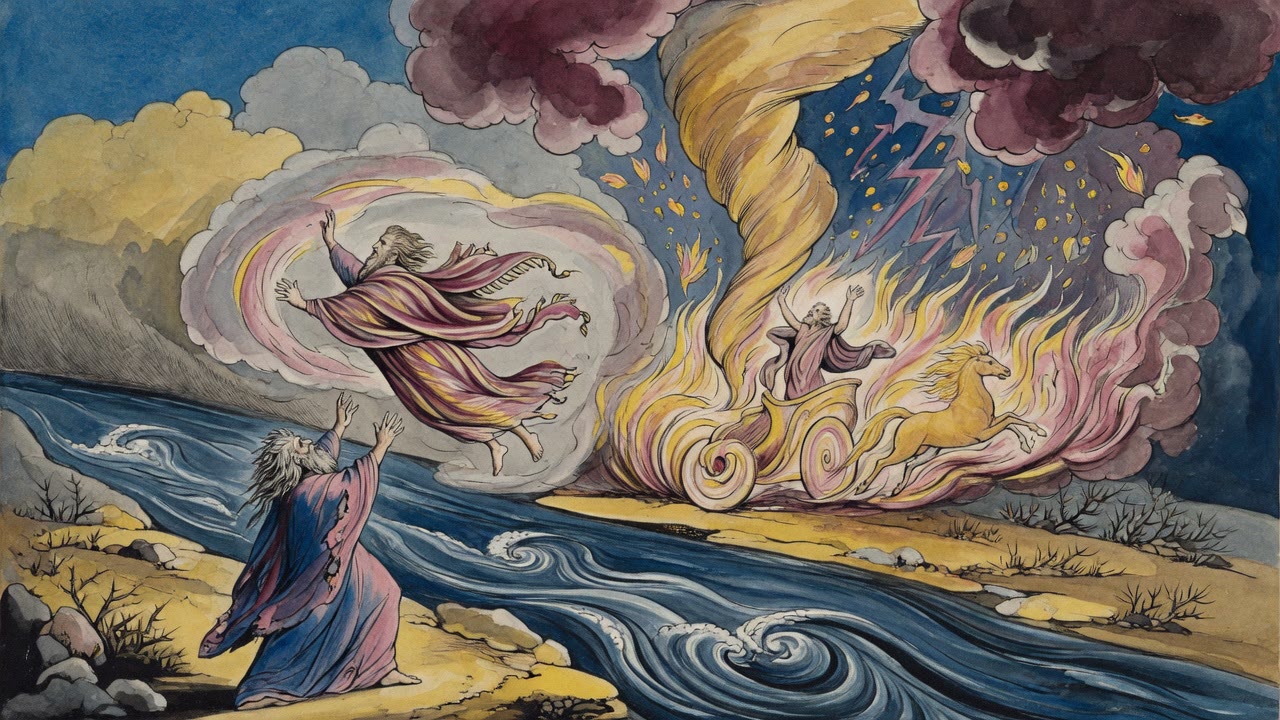
They kept walking and talking. Then fire and horses. A whirlwind. Elijah going up. Elisha watching him go, crying out, "My father, my father, the chariot of Israel and its horsemen." Then Elijah was gone, and Elisha stood alone with the mantle that had fallen from above.
No Grave to Search For
No one buried Elijah. The sons of the prophets stationed across the Jordan insisted on searching, certain that the spirit of God had set him down on a mountain or in a valley. Elisha told them not to bother. They searched three days and found nothing. There was no body to find. Elijah had not died in any way that left a grave behind.
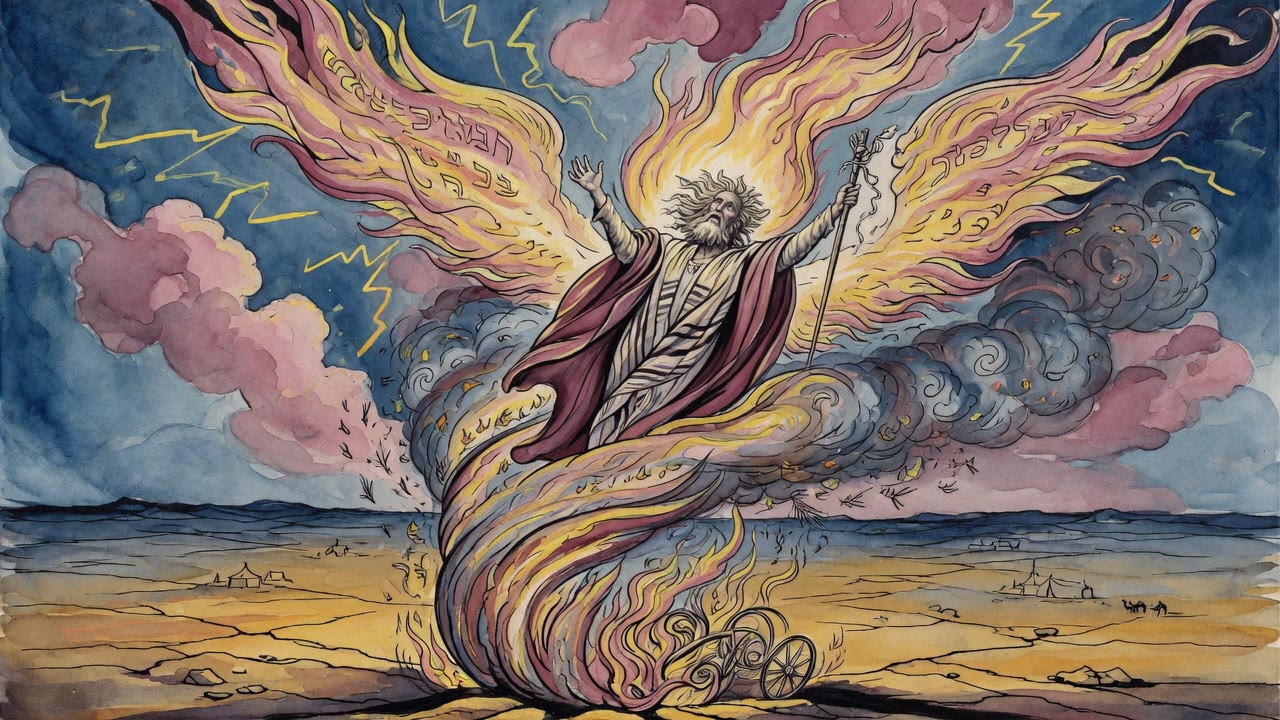
He had shattered the staff of bread in his zeal and shut the heavens with a word. He had rained three fires. He had brought kings down to the pit and raised a corpse from Sheol (שאול, the place of the dead) as God willed. He left the world the way he had lived in it, in fire, moving too fast for anyone to hold him. The cup set aside at the Passover table, the chair left empty at a circumcision, the place made ready at the end of Shabbat, all mark the same absence. The man who called fire from heaven and then vanished is still expected back.
← All myths