6 min read

Deborah's Song and the Tavern Where Teeth Were Broken

Deborah's song rose over Sisera's drowned chariots, and a tavern parable explained the music, the glutton's own appetite breaks his teeth.

Curated by Arthur · Told by Maggid ·
Table of Contents
  1. The Kishon Takes the Chariots
  2. Then Sang Deborah
  3. Two Travelers, One Tavern
  4. The Bill and the Broken Teeth
  5. What the Song Knew

The hill country was dark, and not only at night. In those years Israel had few scholars, few teachers, almost no one who could feed a lamp of learning, and the roads themselves had emptied for fear of Sisera and his nine hundred iron chariots (Judges 4:3). In a village in the hills of Ephraim, a woman sat by a low flame and worked flax between her fingers. Deborah made wicks. She twisted them for the lamps of the sanctuary, and she sent her husband to carry them there, candles and wicks in his arms, a simple man doing a simple errand at his wife's suggestion. The errand named him. They called him Lappidot, Flames, because he came bearing light, and the woman who spun that light judged Israel under a palm tree (Judges 4:5) while the rest of the land held its breath.
The Kishon Takes the Chariots

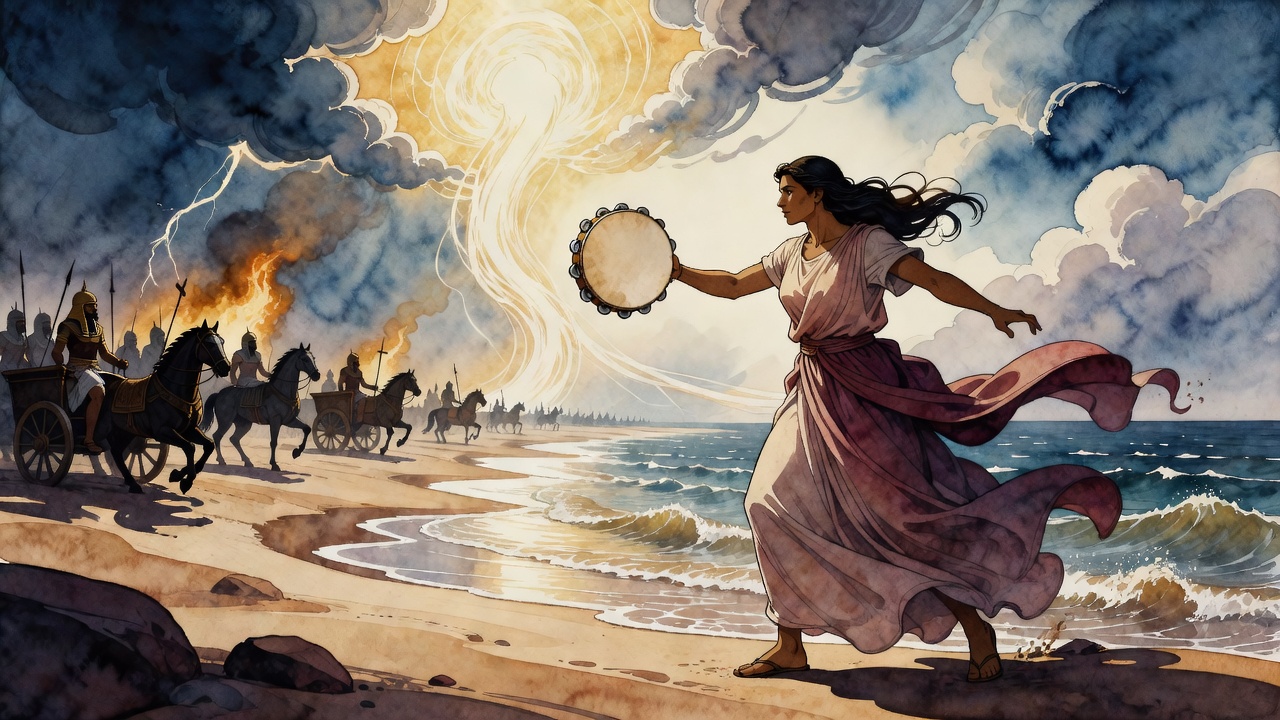
Then the word came down from under the palm. Deborah summoned Barak and sent him up Mount Tabor with ten thousand men, and Sisera answered with everything he had, iron rolling across the plain in a line that should have ended the matter in an hour. But the sky broke instead. The torrent Kishon rose and swept the army away (Judges 5:21), and the chariots that had strangled the roads for twenty years went down into mud, wheels first, horses screaming, the iron suddenly worth nothing at all. Sisera fled on foot. By nightfall he was dead in a stranger's tent, and the plain lay quiet except for the water.

Then Sang Deborah

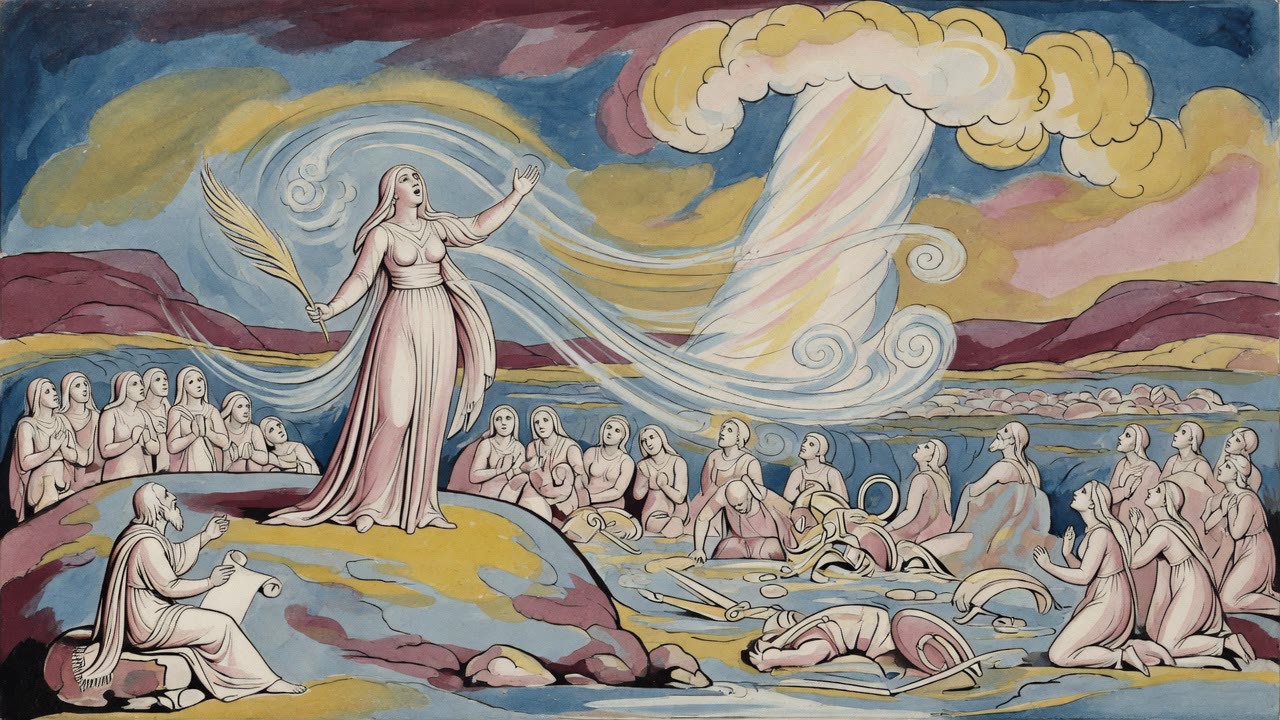
What rose out of that quiet was not a speech and not a prayer of thanksgiving in any ordinary key. It was music. "Then sang Deborah" (Judges 5:1), the same three words, the same grammar, that the sea had drawn out of Moses when Pharaoh's chariots went under the water generations before, "Then sang Moses" (Exodus 15:1). Two drownings of two chariot armies, and twice the survivors' first act was a song. The pattern holds because it must. "When the righteous thrive, the city rejoices" (Proverbs 11:10), and the fall of the wicked is its own kind of thriving, the moment a force that crushed people can no longer crush them. That moment has a sound, and the sound is song.

But a question hides inside the music. Why singing, over mud and dead men? The answer arrives the way such answers often do, as a mashal, a parable, and the parable begins on a road with two travelers walking toward the same tavern.

Two Travelers, One Tavern

One man is righteous and one is wicked, and they arrive at the door together. Inside, the tables are loaded. The wicked man's eyes move across the spread, the fish, the birds, the roasted meat, the pastries, and he orders all of it, plate after plate, until his table groans. The righteous man asks for a cup of beer and a bowl of lentils, and sits.

The wicked man watches him across the room and laughs to himself. A fool, he decides. All this abundance under one roof, and the man chooses lentils. The righteous man looks back at the heaped table and thinks his own quiet thought. Let him eat. He eats, and he breaks his teeth.

The Bill and the Broken Teeth

The righteous man finishes first. His bill is small. He counts out his coins, nods to the innkeeper, and walks out the door in peace, the road open before him.

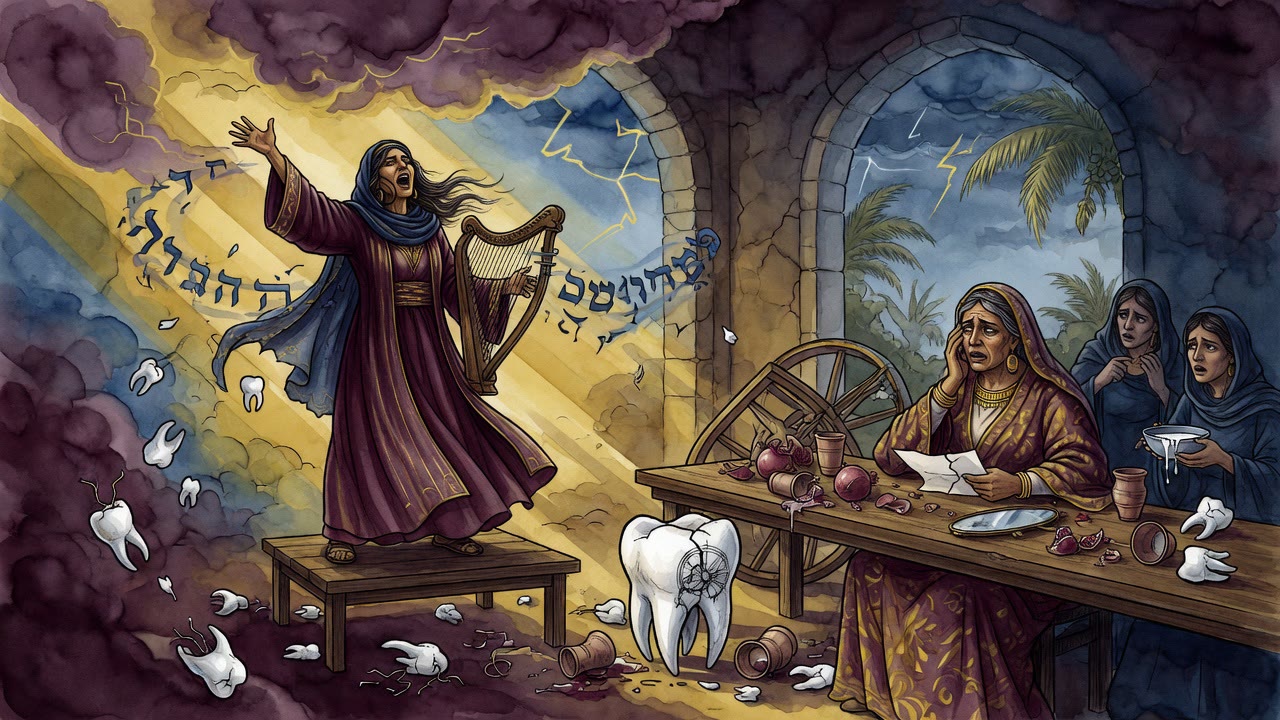
The wicked man calls for his account, and the account starts a war. One portion, says the innkeeper. It was two. Voices climb over each other. A hand slams the table. Then fists are up, and by the time the argument is beaten into silence, the wicked man has received in his own mouth exactly what the psalm promised him, "You have broken the teeth of the wicked" (Psalm 3:7). No judge sentenced him. No king sent soldiers. His appetite ordered the feast, the feast ran up the bill, the bill bred the quarrel, and the quarrel broke his teeth. The punishment grew out of him the way a stalk grows out of a seed, knowing from the first what shape it would take.

What the Song Knew

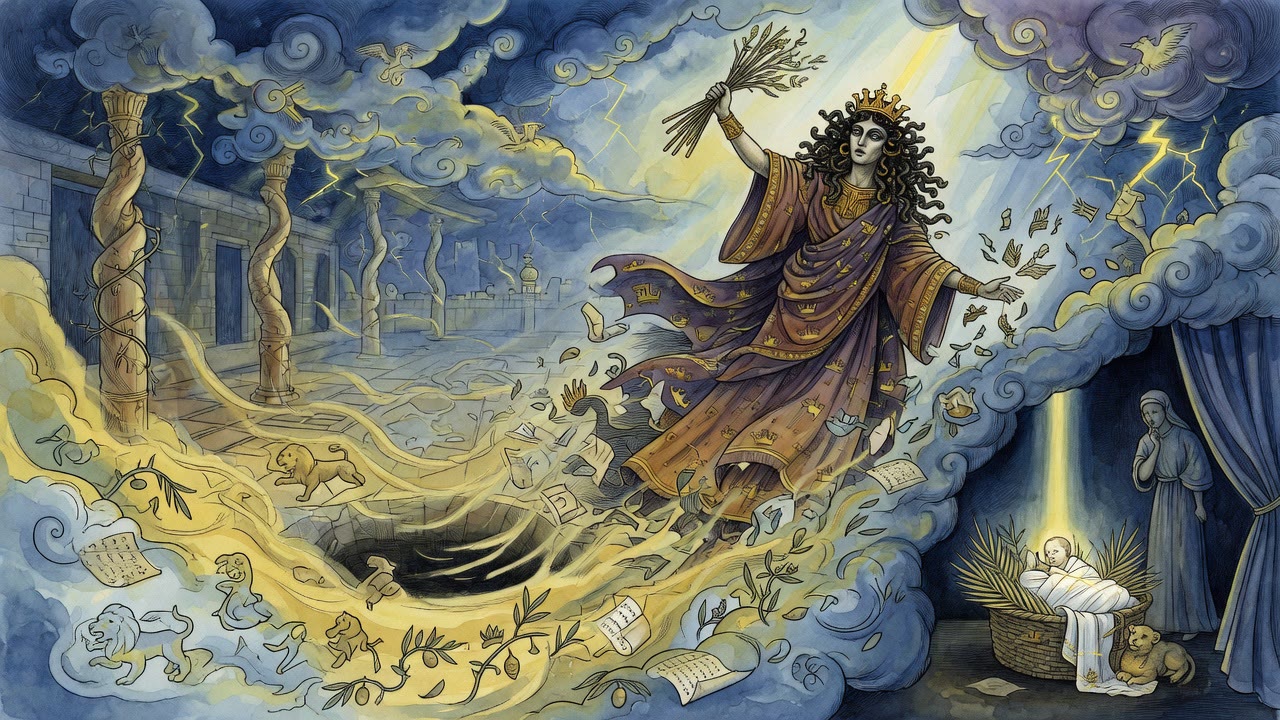
That is what Deborah's voice carried over the flooded plain. Sisera had ordered everything. Twenty years of villages, roads, harvests, all of it heaped on his table, and the Kishon was simply his bill arriving. The song was not a celebration of drowned men. It was the sound of a bill paid in full, of a world balanced for one visible moment, and the righteous sing at such moments because nothing smaller can hold the joy of deliverance, "Rise up, O Lord, deliver me" (Psalm 3:8) answered out loud.

The wicked never see the bill coming, and the parable says why. They tell themselves, "How can God know?" (Psalm 73:11), certain that the inner ledger of their appetites is invisible. The righteous live by the opposite sentence, "Before a word is on my tongue, O Lord, You know it all" (Psalm 139:4). Deborah belonged to the second company. She had spent the dark years twisting wicks by hand, sure that light mattered even when no one was watching, sure that nothing done in the dark stays hidden. So when the chariots went under and the account came due at last, the wick-maker of Israel did the one thing the moment demanded. She opened her mouth, in the tavern of the world where every table is seen, and sang.


← All myths

From the tradition

Sources

3 sources

The texts this telling draws on, in full. Open a card to read inline, or expand it for a wider, quieter read.

Legends of the Jews 2:39Legends of the Jews

A story about Deborah, a woman who literally, and figuratively, brought light to a dark time in Israel's history.

The familiar telling remembers the big names, the mighty warriors, but what about the everyday acts of devotion that can change the course of history?

In Legends of the Jews, the land was suffering under a tyrant. To free Israel, God chose Deborah and Barak. And Barak? Well, he's described as being, shall we say, not the sharpest tool in the shed. Ginzberg paints a picture of a time that was "singularly deficient" in scholars. Ouch.

So, what was Barak good at? According to the story, he carried candles to the sanctuary at Deborah's suggestion. A simple act. But it's this act that earned him the name Lipidoth, meaning "Flames." It's a small detail, but it highlights the importance of even the most humble contributions.

But the real star here is Deborah. She wasn't just telling Barak what to do; she was actively involved in the service. We're told that she made the wicks of the candles thick so they would burn longer. Seems insignificant? Think again.

God noticed. And He said, "Thou takest pains to shed light in My house, and I will let thy light, thy flame, shine abroad in the whole land."

Talk about a reward for dedication! Because of her devotion, Deborah became a prophetess and a judge. She rose to a position of leadership and guided her people. She dispensed judgment in the open air, because it wasn't considered appropriate for men to visit a woman in her home for such matters.

What I love about this story is that it shows us that leadership doesn't always come from the most obvious places. It wasn't the strong warrior or the brilliant scholar who saved the day. It was a woman, dedicated to the service of God, who paid attention to the small details. It was Deborah, who made sure the light kept burning.

So, the next time you're feeling like your contributions are insignificant, remember Deborah. Remember that even the smallest act of devotion can have a profound impact. You never know, you might just be the one to bring light to a dark world.

Full source
Midrash Tehillim 4:16Midrash Tehillim

It turns out, that instinct might be deeply woven into the fabric of our tradition.

Because according to Midrash Tehillim, that feeling is intrinsically linked to music. Specifically, the kind of music that erupts when wickedness is defeated. It says, taking its cue from (Proverbs 11:10), “When the righteous thrive, the city rejoices.” But it doesn’t stop there. It connects this joy to a plea for deliverance, quoting (Psalm 3:8): “Rise up, O Lord; deliver me.”

The message? When the wicked are vanquished, it’s time to sing!: Immediately after the Israelites witnessed God's mighty power at the Red Sea (Exodus 14:31), what happened? "Then sang Moses" (Exodus 15:1). And when Deborah triumphed? "Then sang Deborah" (Judges 5:1). The pattern is clear: deliverance calls for a song!

Midrash Tehillim continues, linking this musical response to the image of God striking down the wicked, breaking their teeth. It's a powerful, visceral image, isn't it? The text references (Psalm 3:7-8), where we find both the plea for salvation and the declaration that God has "smitten all my enemies on the cheekbone" and "broken the teeth of the wicked."

But what does it mean, this business of broken teeth? To illustrate, the Midrash (rabbinic interpretive commentary) tells a parable.

Imagine two travelers, one righteous and one wicked, walking down the same road. They stumble upon a tavern and decide to go in for a bite. The wicked man is immediately impressed by the abundance of food, the fish, the cattle, the sheep, the birds. He wants to indulge, but the righteous man is cautious. "Is today the grand reopening?" he asks, implying a need for careful inspection.

Despite their differing approaches, they both enter. The wicked man orders lavishly, demanding portions of peas, cakes, whatever delicacies are on offer. The righteous man, on the other hand, keeps it simple: a glass of beer, a bowl of lentils.

The wicked man scoffs. "Look at this fool," he thinks. "So much abundance, and he chooses lentils!" But the righteous man sees the wicked man gorging himself and thinks, "He eats and breaks his teeth."

The righteous man, content with his simple meal, asks for two cups of wine to say a blessing, pays his small bill, and leaves in peace. The wicked man, finally ready to depart, calls for the bill. But when the righteous man inquires about the cost of the lentils, an argument erupts. "You ate one portion!" "No, two!"

And in the heat of the argument, the innkeeper begins breaking the wicked man's teeth.

The parable, of course, isn't about lentils. It's about the ultimate futility of wickedness. The wicked man, focused on immediate gratification, ends up suffering for it. As the Midrash points out, this is why it says, "The teeth of the wicked shall be broken" (Psalm 3:8).

The story concludes with a powerful contrast: "The wicked say, 'How can God know?'" (Psalm 73:11), while the righteous declare, "For there is no word on my tongue, but You, O Lord, know it all" (Psalm 139:4).

So, what’s the takeaway? Perhaps it's this: True joy, the kind that inspires music and celebration, comes not from selfish indulgence but from faith, humility, and the ultimate triumph of justice. And maybe, just maybe, a little bit of gratitude for the simple blessings in our lives.

Full source
Legends of the Jews 6:260Legends of the Jews

Back the curtain on one of them: Deborah, Rebekah’s nurse. it first appears, "A nurse? What's so special about that?" But in the ancient world, nurses were more than just caretakers. They were confidantes, advisors, and almost like family.

The story begins with Isaac, nearing the end of his days, telling his son Jacob to finally fulfill a vow he made to God in Beth-El. Isaac felt his age prevented him from making the journey himself, but he encouraged Jacob to take his mother, Rebekah. And so, Rebekah journeyed to Beth-El, accompanied by none other than her nurse, Deborah.

Deborah wasn't just any nurse. She had a history with Jacob, a connection that stretches back to his time with Laban. As Legends of the Jews recounts, Rebekah sent Deborah, along with some of Isaac’s servants, to Jacob while he was still working for Laban. The mission? To summon him home after his fourteen years of service were up.

Why didn't Jacob return immediately? The text doesn't explicitly say. Maybe he was hesitant to face Esau. Maybe he felt obligated to Laban. Whatever the reason, the other servants returned to Isaac, but Deborah… she stayed. She chose to remain with Jacob, becoming a constant presence in his life. Always. What loyalty!

And that's why, when Deborah finally died in Beth-El, Jacob mourned her deeply. The Torah tells us, in (Genesis 35:8), “But Deborah, Rebekah’s nurse, died, and she was buried below Beth-el under the oak; so it was named Allon-bacuth (אַלּוֹן בָּכוּת).” Allon-bacuth translates to "oak of weeping." Imagine the depth of feeling, the profound sense of loss, that led Jacob to name the place after his grief.

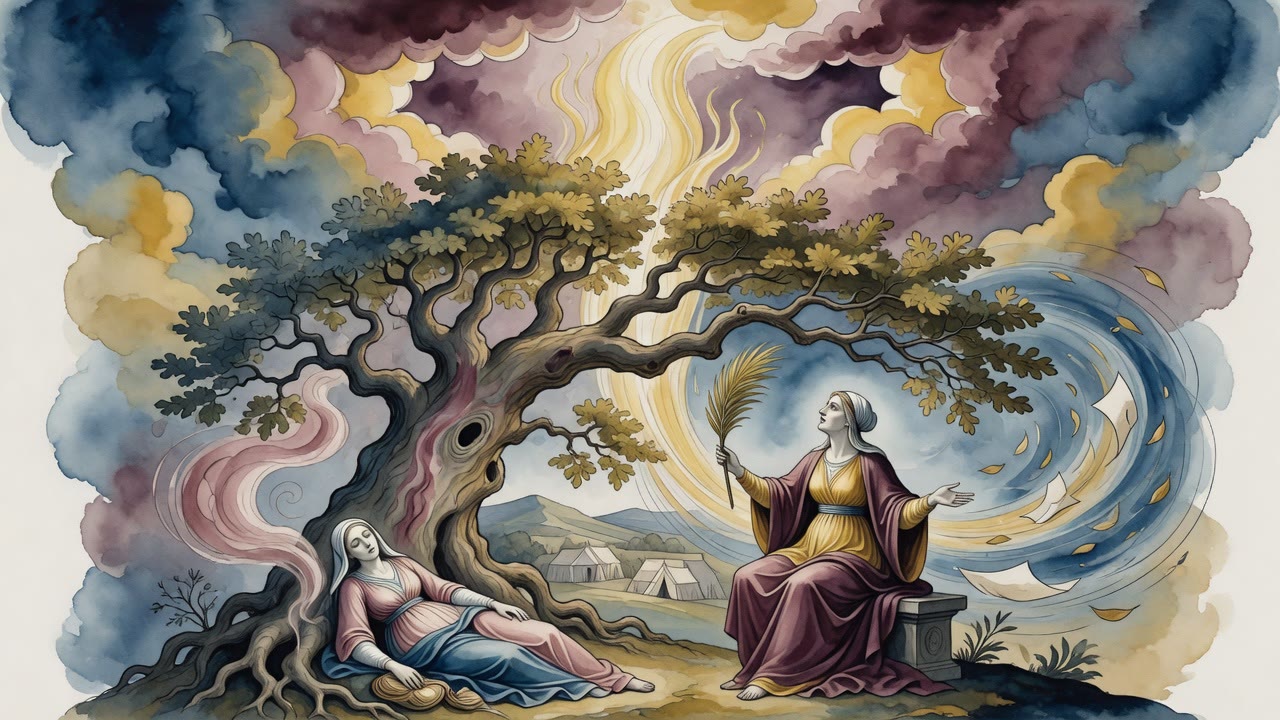
But there's a fascinating layer to this story, a subtle connection to another Deborah. The palm tree under which Rebekah's nurse was buried was the same palm tree where the later prophetess Deborah, the judge of Israel, would sit and render judgment to the people. Quite a legacy. We read in Judges 4-5 about this other Deborah’s pivotal role in leading Israel to victory.

Is this a coincidence? Or is it a deliberate echo, a subtle link between two remarkable women, both named Deborah, both figures of strength and guidance? The Legends of the Jews, drawing from various Midrashic (rabbinic interpretive commentary) traditions, seems to suggest a connection, placing them both under the same symbolic tree.

It makes you wonder about the lasting impact we have, even in seemingly small roles. Deborah, the nurse, may not have led armies or delivered prophecies in the way the other Deborah did. But her unwavering loyalty, her quiet presence in Jacob's life, earned her a place in the sacred narrative, a place marked by tears and remembrance. A reminder that even the most unassuming lives can leave an enduring mark on the world. What kind of mark will we leave?

Full source