Joshua Gave His Day to Deborah and She Passed It On
Psalm 19 says day pours speech to day, and the rabbis turned that into a chain: Joshua's miracles handed forward to Deborah, and Deborah's to Barak.
Table of Contents
 Click for full size
The Sun Crossing the Sky
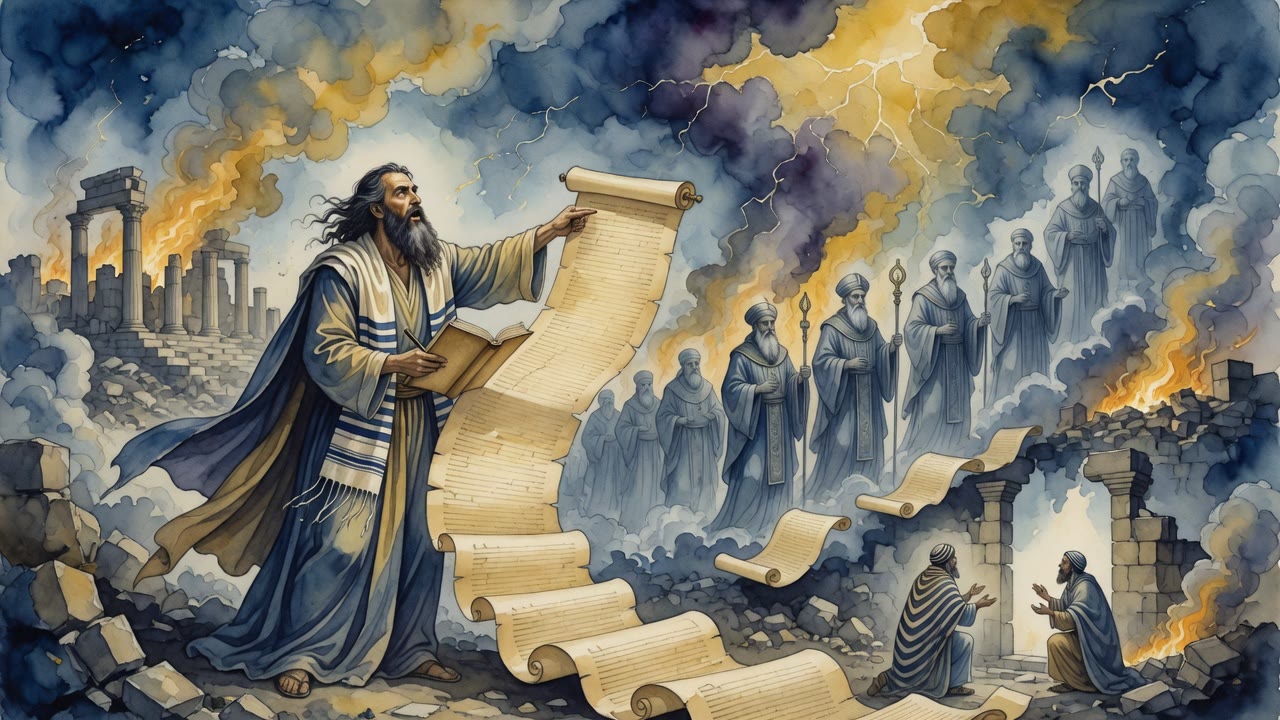
The psalmist watched the sun go out like a bridegroom from his chamber, running its course from one end of the sky to the other. Day pours speech to day, the psalm says, and night to night shows knowledge. The line sounds like poetry about light and time, until the rabbinic tradition asks what day says to day and refuses to let the question stay abstract.
The midrash found history inside the grammar. The days were not exchanging weather reports. They were handing something forward.
What Joshua Gave Away
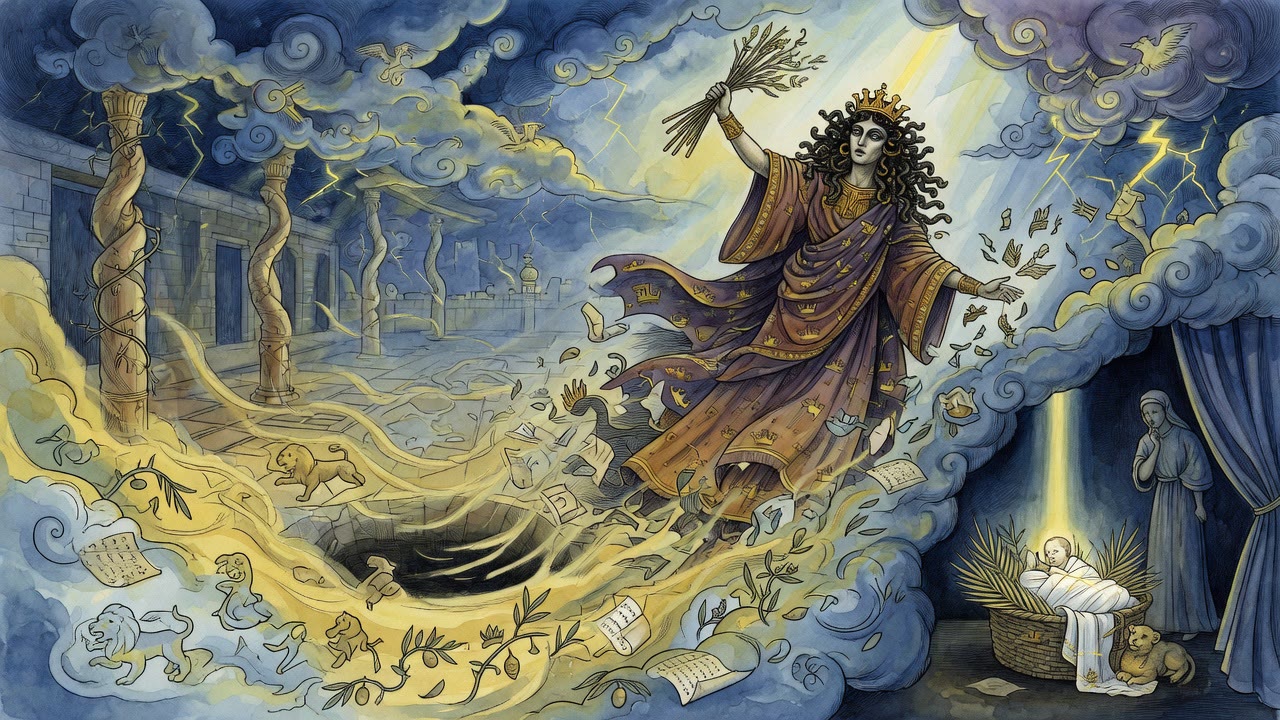
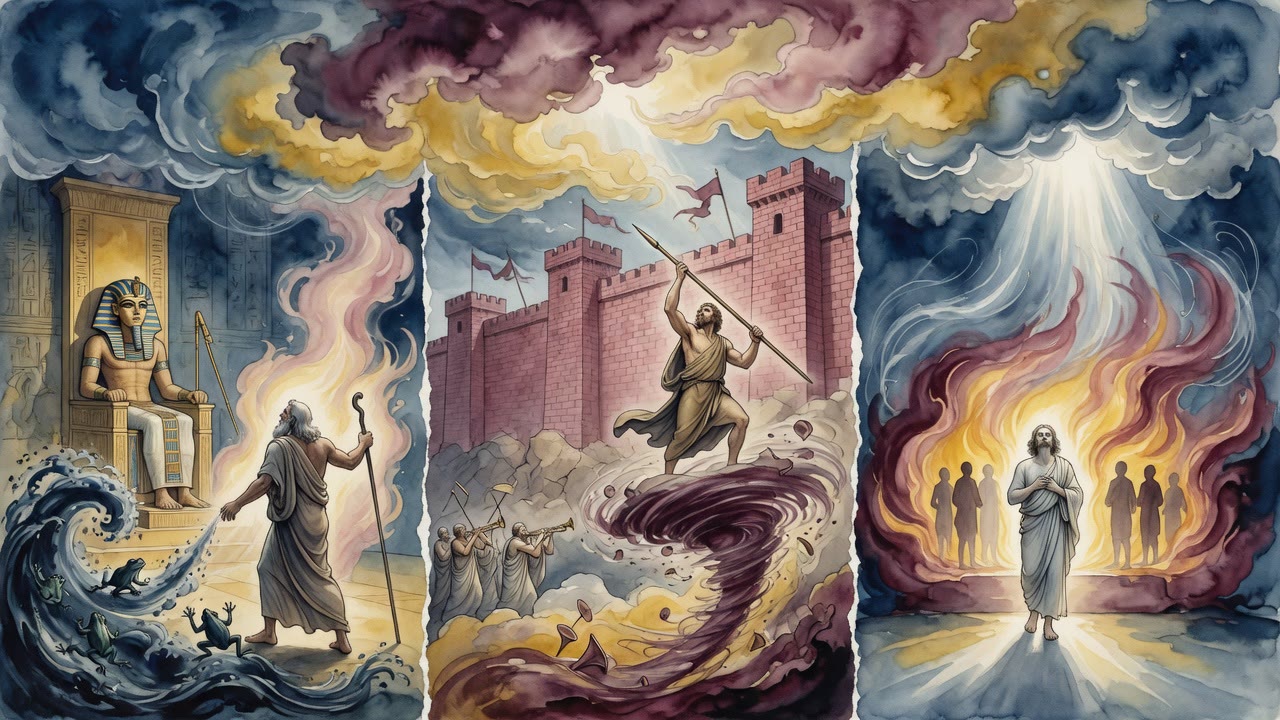
Joshua called the sun to stand still at Gibeon, and it held its place in the sky while his army finished the battle against the five kings of the Amorites. The account in the book of Joshua says there was no day like it before or after, when God heeded the voice of a human and stopped the sun in the middle of the sky for almost a full day. It was singular. Unrepeatable. A miracle calibrated to one battle at one moment in the campaign to take the land.
The midrash from Midrash Tehillim, the Palestinian Psalms commentary assembled across the rabbinic centuries, did not treat that singularity as a sealed event. It said Joshua's day was given. The sun that stood still did not simply set at evening and close its account. It poured its speech into the next era and handed the inheritance forward to Deborah.
The Dark Age That Needed Light
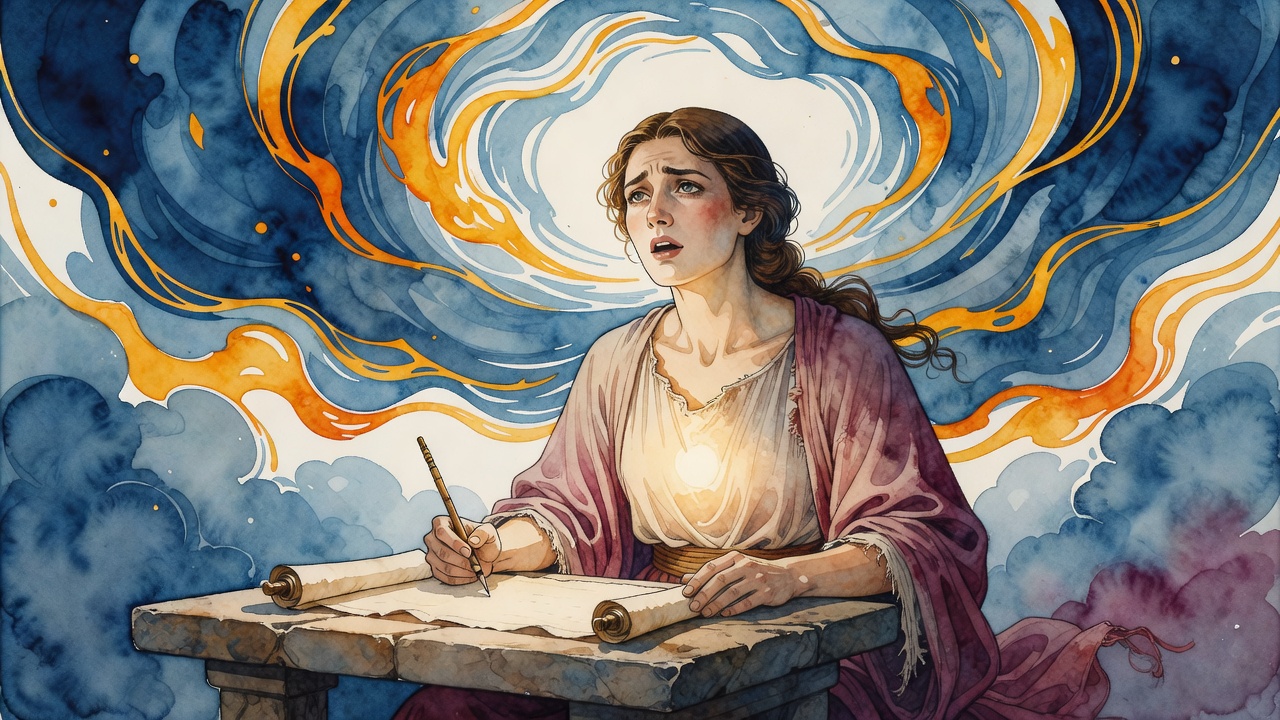
After Joshua died, Israel entered a period that the book of Judges describes with a single devastating line: every man did what was right in his own eyes. The covenant was ignored, the local shrines multiplied, the surrounding nations pressed in from every direction. Deborah inherited an age that had nearly forgotten what direction looked like. The aggadic tradition describes her as one who brought light to a generation that had lost the thread.
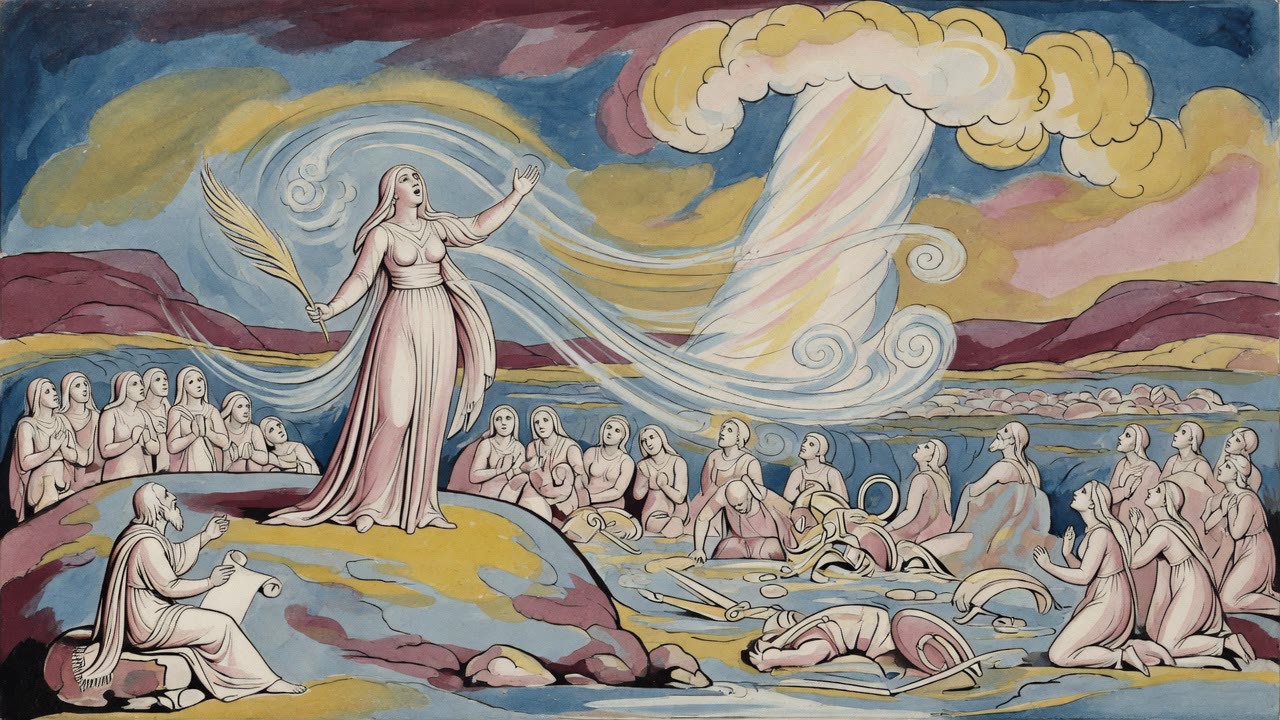
That is why Joshua's miracle traveled forward to her. The inheritance was not land or military technique. It was the accumulated weight of a day when the sun stopped because God heard a human ask. Deborah stood in that weight when she sat under her palm tree between Ramah and Bethel, hearing cases from every tribe that came to her, holding the whole nation in her judgment the way Joshua had once held the sky in his command.
Barak Received What Deborah Held
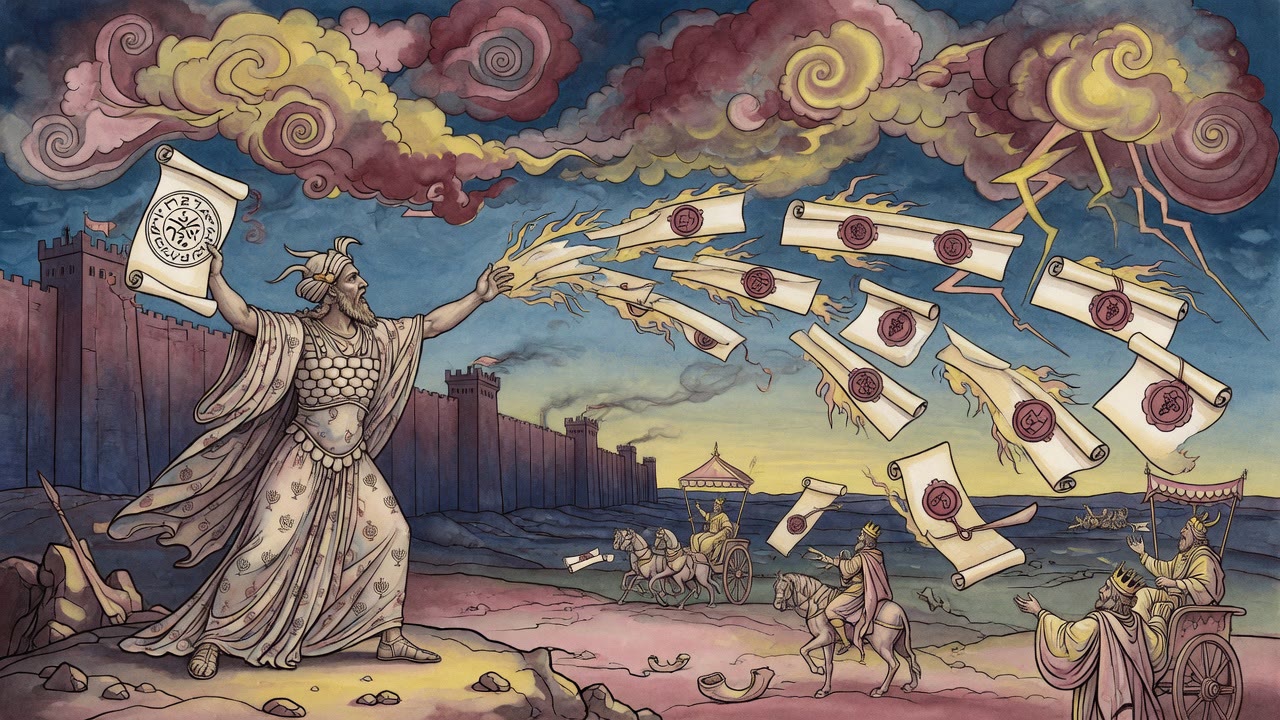
Barak would not march without Deborah. He told her directly: if you go with me, I will go; if you do not go with me, I will not go. That reluctance is not simply tactical caution. The tradition reads it as recognition. Deborah held something Barak needed on the battlefield, not just the authority of prophecy but the accumulated inheritance of day speaking to day across the generations. What Joshua's stopped sun poured into Deborah's day, Deborah's presence poured into Barak's battle.
The Psalms midrash does not treat the chain as automatic. True knowledge, the tradition says, is knowing where your strength actually comes from. Joshua knew he did not stop the sun by himself. Deborah knew she did not win the battle alone. Barak, to his credit, knew the same thing explicitly and said so before the march began.
← All myths