Deborah's Song Washed a Generation Clean
Rabbi Simon taught that singing after a miracle forgives the singer, and Deborah proved it when her voice rose over the battlefield.
Table of Contents
 Click for full size
The Song Before the Silence
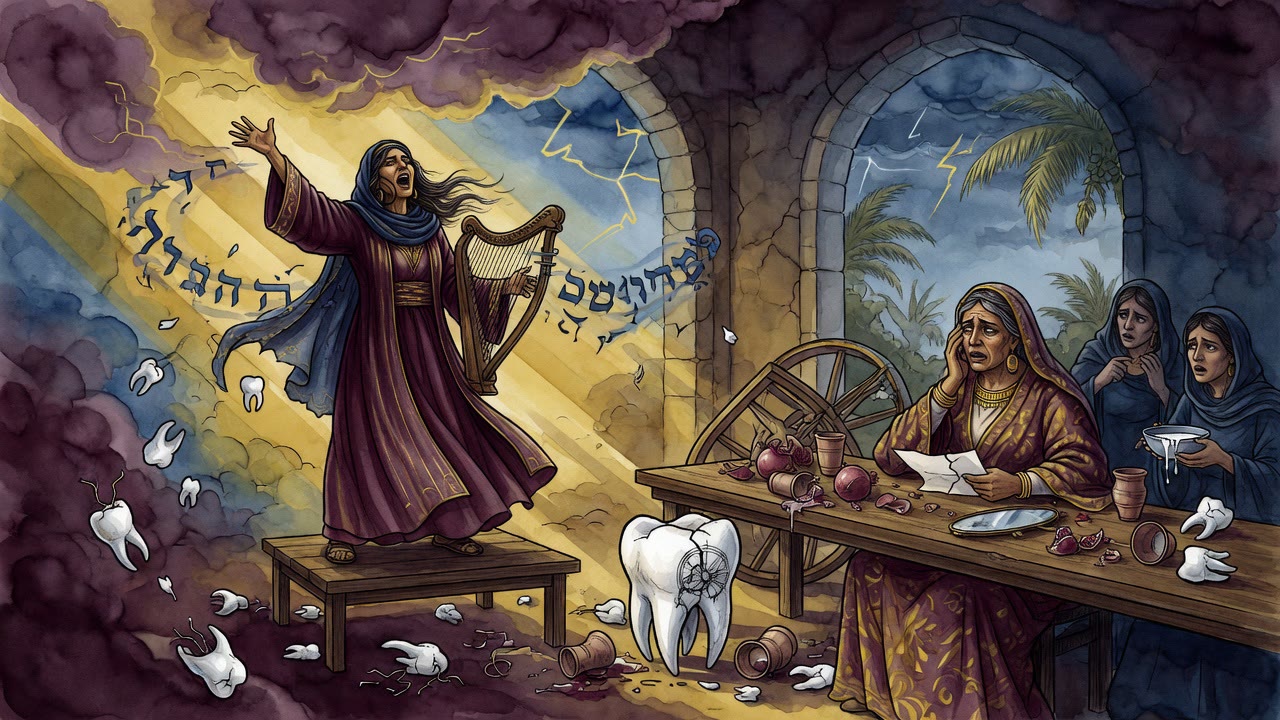
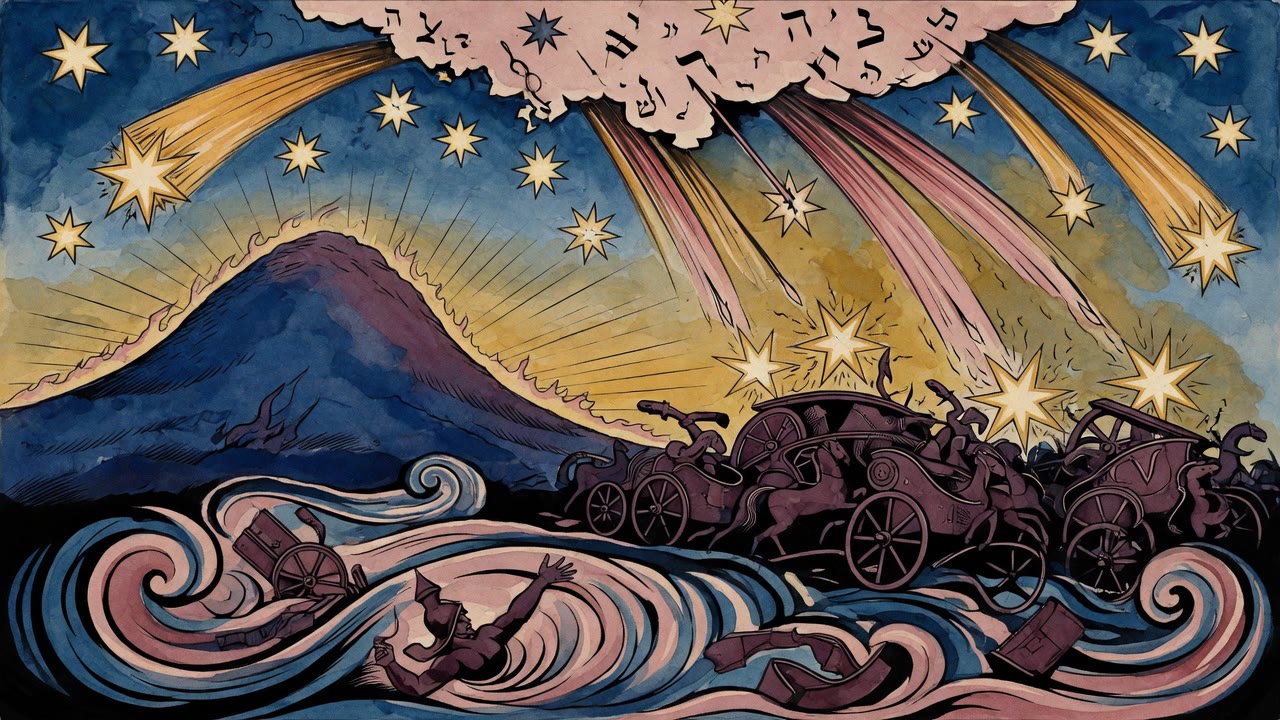
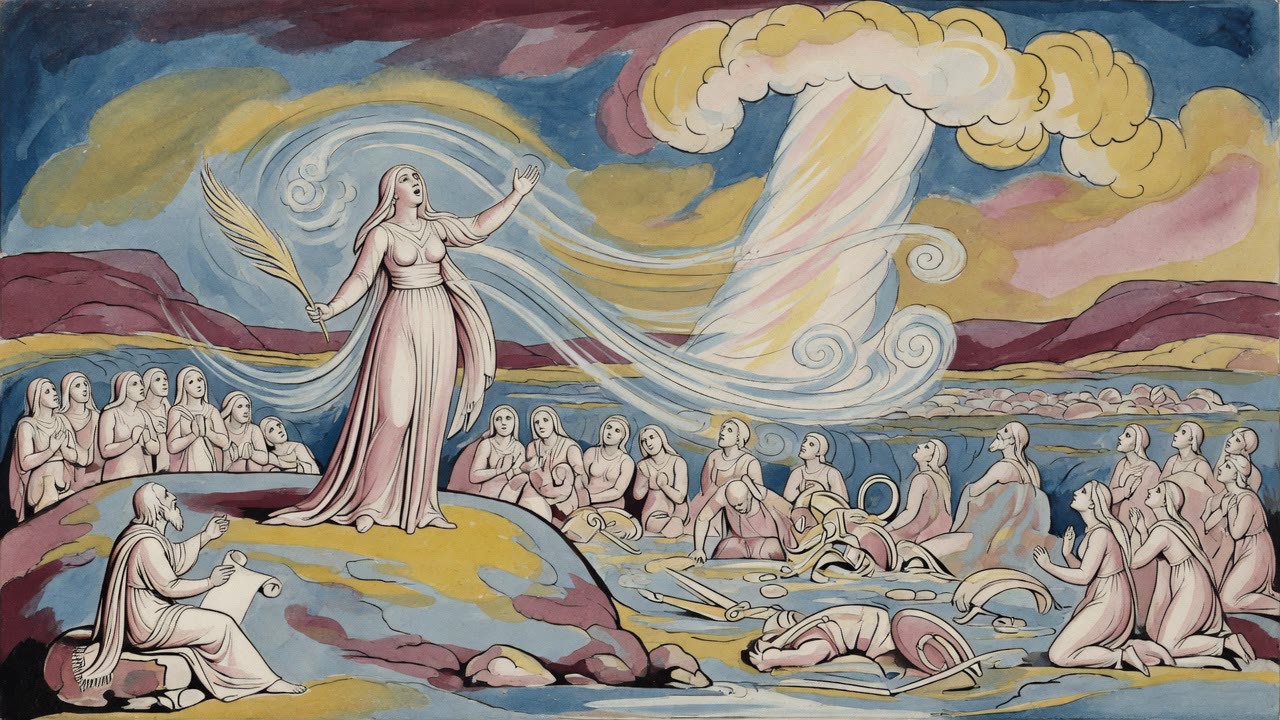
After the armies of Sisera scattered, after the iron chariots bogged in the mud of the Kishon and the soldiers fled on foot and were cut down, Deborah and Barak stood in the ruins of the battle and opened their mouths. The song that came out runs for thirty-one verses in the book of Judges. It names the tribes that came and the tribes that held back. It names Jael, who drove a tent peg through a general's skull while he slept. It names the stars that fought from their courses against Sisera's men.
But Rabbi Simon, whose teaching is preserved in Midrash Tehillim, was not interested in the content of the song. He was interested in what happened to the singers when they sang it.
The Rule That the Song Revealed
Rabbi Simon taught that when the Israelites sang at the Red Sea after crossing dry land while Pharaoh's army drowned behind them, all their sins were forgiven at that moment. Not because they had repented. Not because they had atoned. Because they sang.
The principle he extracted is startling: a community that opens its throat in genuine praise after witnessing a miracle is, at that moment, clean. The act of singing is itself a form of complete acknowledgment. To sing after a miracle is to stop treating what happened as ordinary, to stop pretending that survival was earned or accidental or unremarkable. It is the body's way of saying: I know what this was, and I know who did it.
That honest recognition, Rabbi Simon argued, is worth the same as formal atonement. The mouth that sings truthfully about God's power has given up the pretenses that sins require.
The Darkness Before Deborah
The generation that Deborah led was not an easy one to forgive. The Book of Judges records that after each period of peace the people returned to the worship of surrounding nations, abandoned the obligations of the covenant, and were given over to oppression until they cried out again. The cycle repeated itself with the regularity of seasons. Deborah was a judge, a prophet, and the one person whose authority was acknowledged across the tribes during the twenty years that Jabin of Canaan pressed Israel into servitude.
Her generation had been, in the language of the tradition, a generation in the dark. She was the light it was given. The aggadic tradition (the rabbis' lore and legend) in Midrash Aggadah describes her as one of the figures who brought illumination to an age that had nearly forgotten what light was for. Barak would not march without her. The tribes of Zebulun and Naphtali came willingly. Others stayed home and were named in the song as absent.
What the Hailstorm Left Behind
The battle itself carried supernatural weight in the tradition. Deborah's song describes the stars fighting from their courses. The aggadic tradition expanded that into hailstones falling on Sisera's army, fire consuming the men of Yair, the river Kishon sweeping the panicked soldiers into the sea. The natural world took sides. The hailstorm is not decoration. It is the mechanism by which the miracle was accomplished, and the witnesses to it were standing in the wreckage when Deborah began the song.
Rabbi Simon's principle applies most powerfully to that wreckage. The people who sang were standing in mud and blood and the aftermath of something they could not explain by ordinary military logic. The iron chariots were supposed to win. They had won before. Something else had happened, and the only honest response to something that cannot be explained was song.
← All myths