Rebekah's Nurse Deborah Was Buried Near a Later Prophetess
Deborah had carried Rebekah's last message. Jacob buried her under an oak, and that was when he understood his mother was gone too.
Table of Contents
 Click for full size
The Nurse Who Left Aram
When Rebekah left her father's house to marry Isaac, she did not travel alone. Among the women who went with her was Deborah, her nurse, the woman who had washed her, dressed her, and heard every private sentence of her girlhood in Aram. Deborah crossed into Canaan. She was there when Esau and Jacob were born. She stayed through the years of the household splitting down the middle. The Torah barely names her. She lived in the back of someone else's story.
Then Jacob ran from Esau, and she became the one Rebekah trusted with a promise.
The Message She Carried
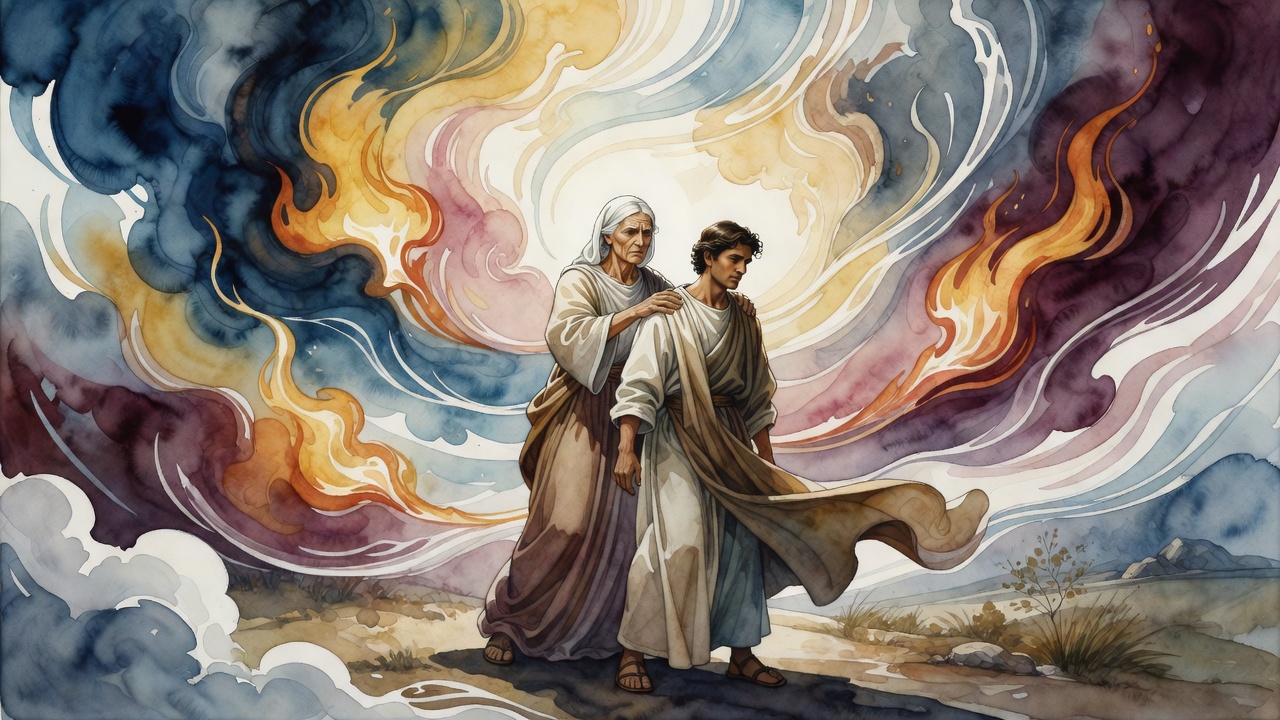
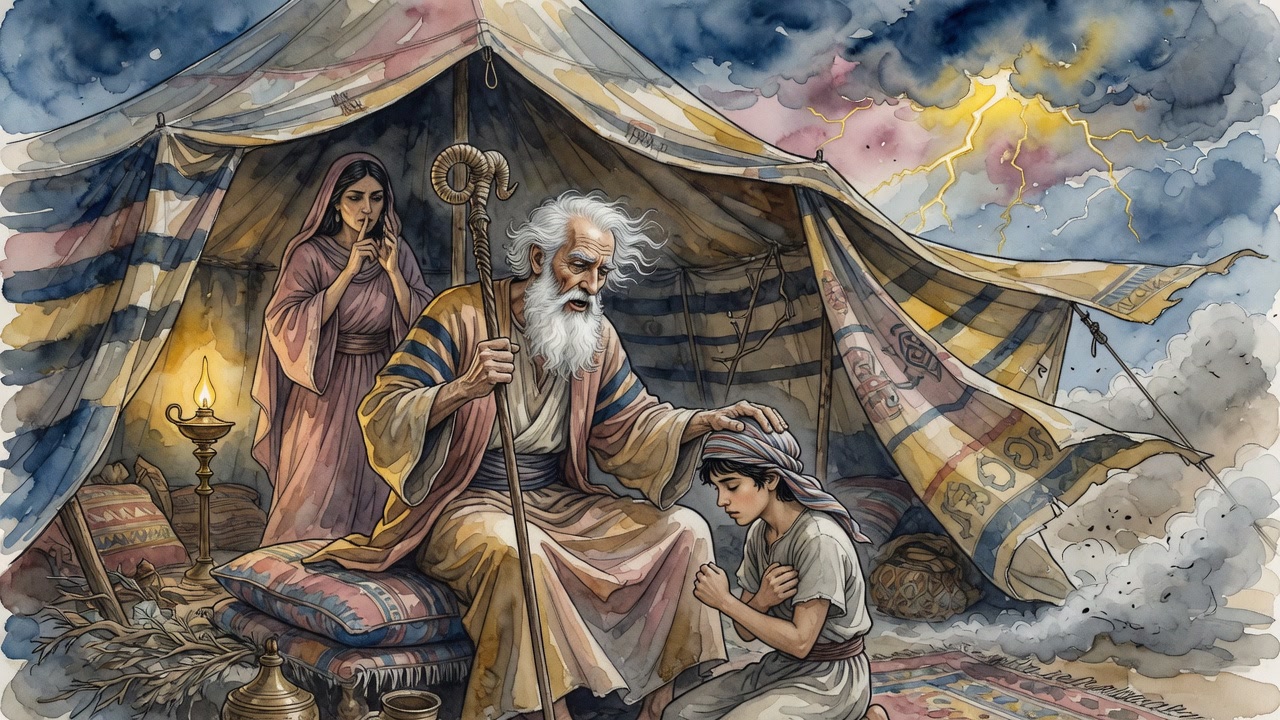
Rebekah had told Jacob, when she sent him away, that she would call him home when it was safe. After fourteen years of his service to Laban, she kept that word. She sent two servants. She sent Deborah with them, old now, the only messenger who could stand in front of Jacob as the body of his mother's promise and not as a hired mouth.
Jacob did not turn around at once. He finished terms. He waited. The other servants went back to Isaac. Deborah stayed. An old woman far from any house she had known sat in a camp that was not yet home and waited for a patriarch to be ready.
She had crossed one border with a girl. She sat now on the far side of another, holding a summons in her mouth that the man would not yet swallow.
The Oak of Weeping
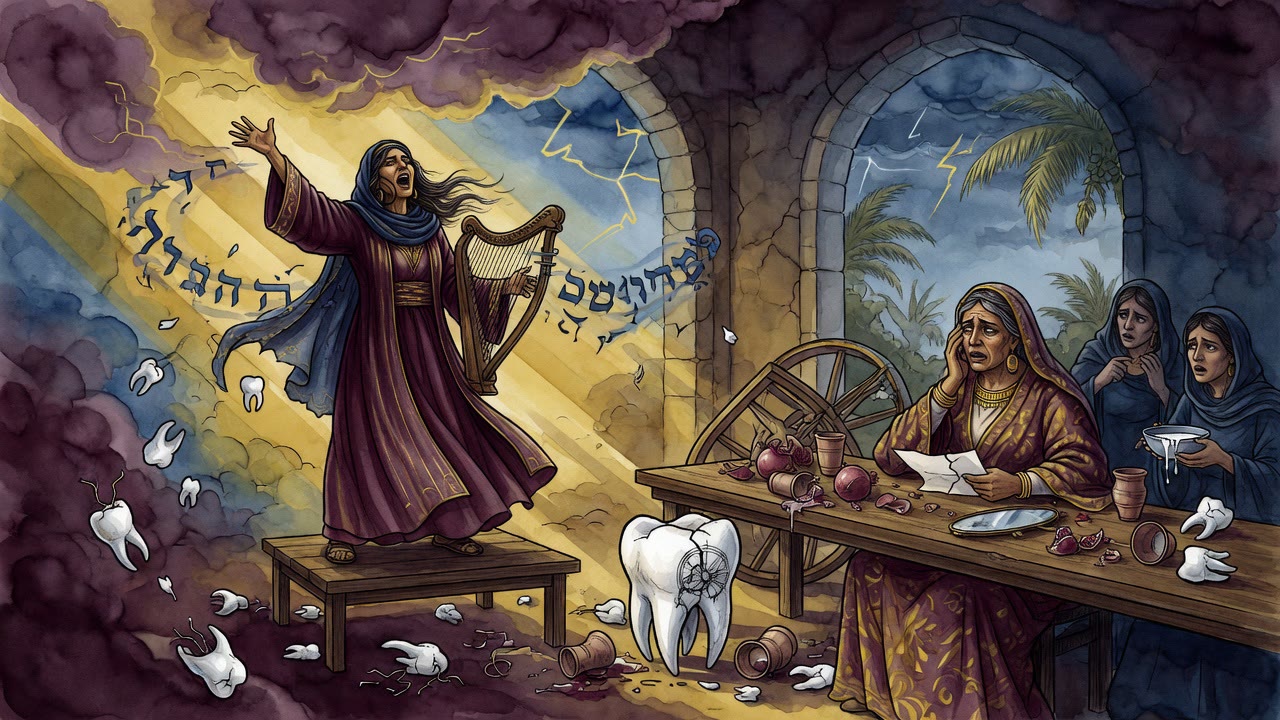
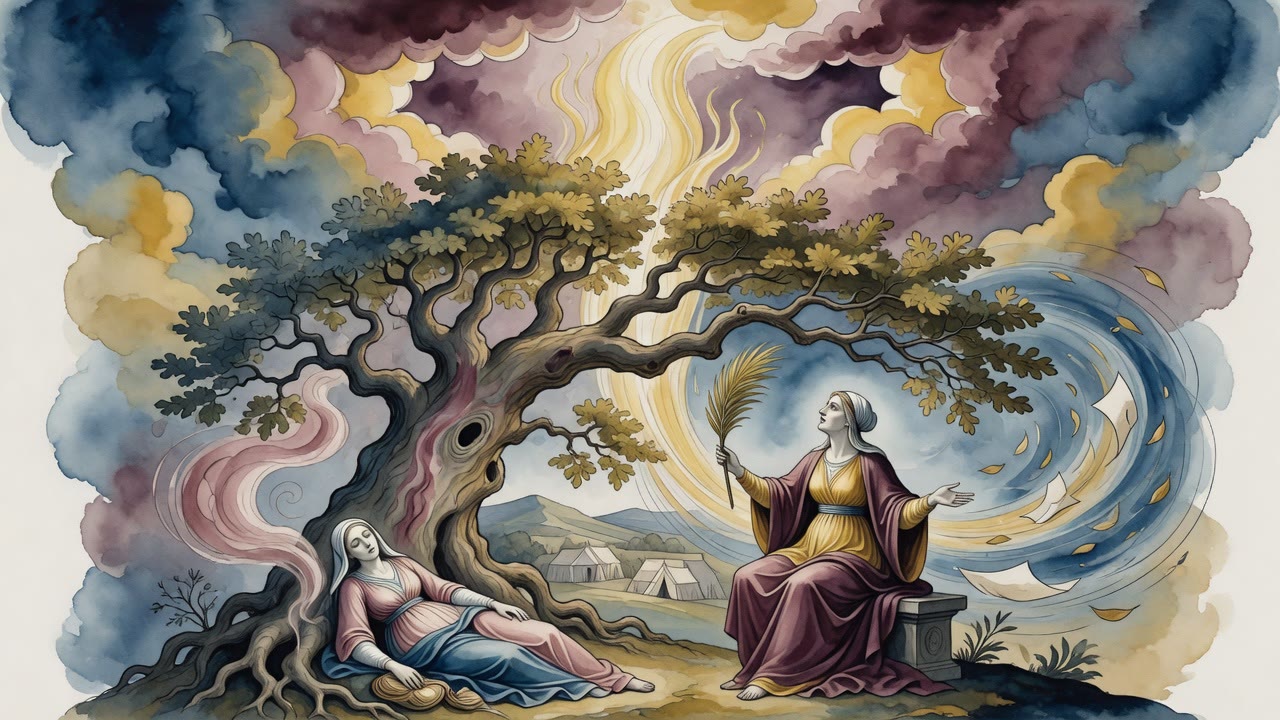
Deborah died near Beth-el, under an oak, and Jacob buried her there. He named the tree Allon-bacuth, the oak of weeping. The verse records the name as if the weeping were obvious. It was not obvious. Patriarchs do not name trees after nurses for nothing.
The grief had two faces. Deborah had come to fetch him. The fetching meant the road was open. The open road meant Rebekah had judged it safe. And Rebekah, while he was still in the field with the delay still on him, had died. He learned both deaths in the same hour: the nurse who carried the message, and the woman who had sent it.
He stood under the oak with dirt on his hands. There was no second grave for his mother within reach. The tree had to hold both.
What He Buried Next
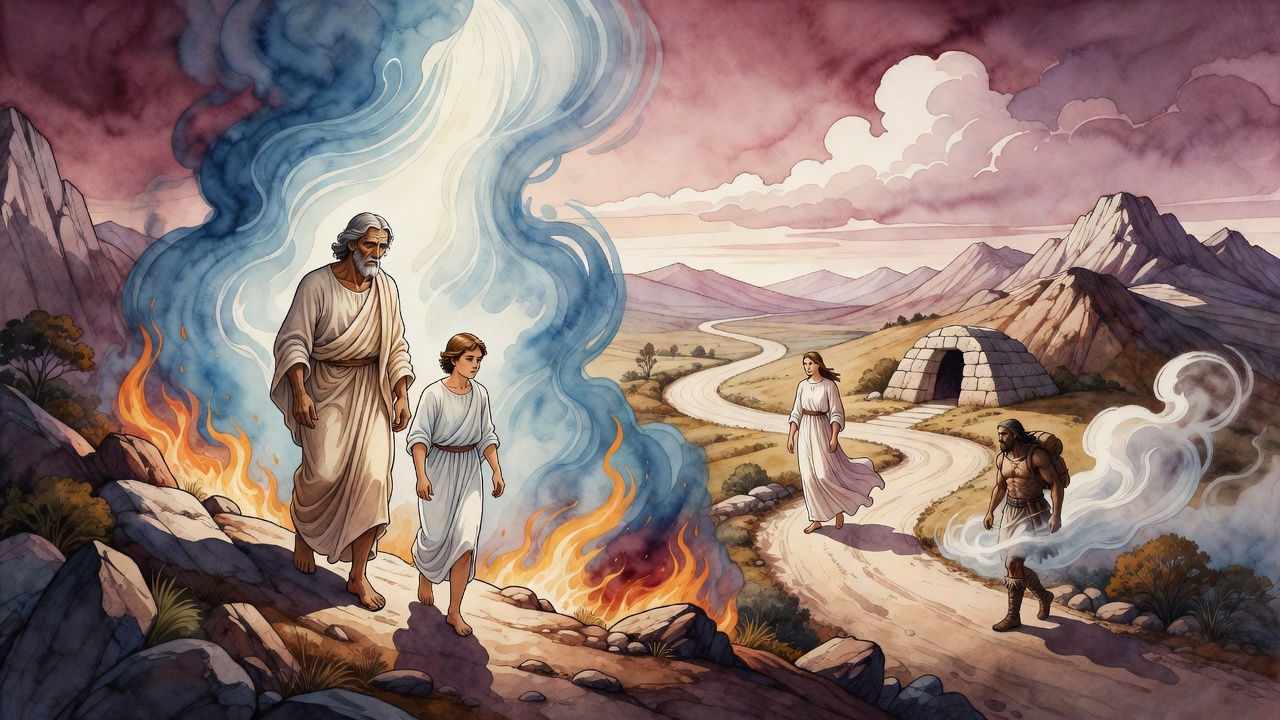
Beth-el was not finished with him. He had a vow to pay there, an altar to raise, and foreign gods still riding in the packs of his household. He took the idols, among them a dove-shaped image, and destroyed them. He took the stone he had once used as a pillow on the night he fled, and he stood it as a pillar and poured oil on it a second time.
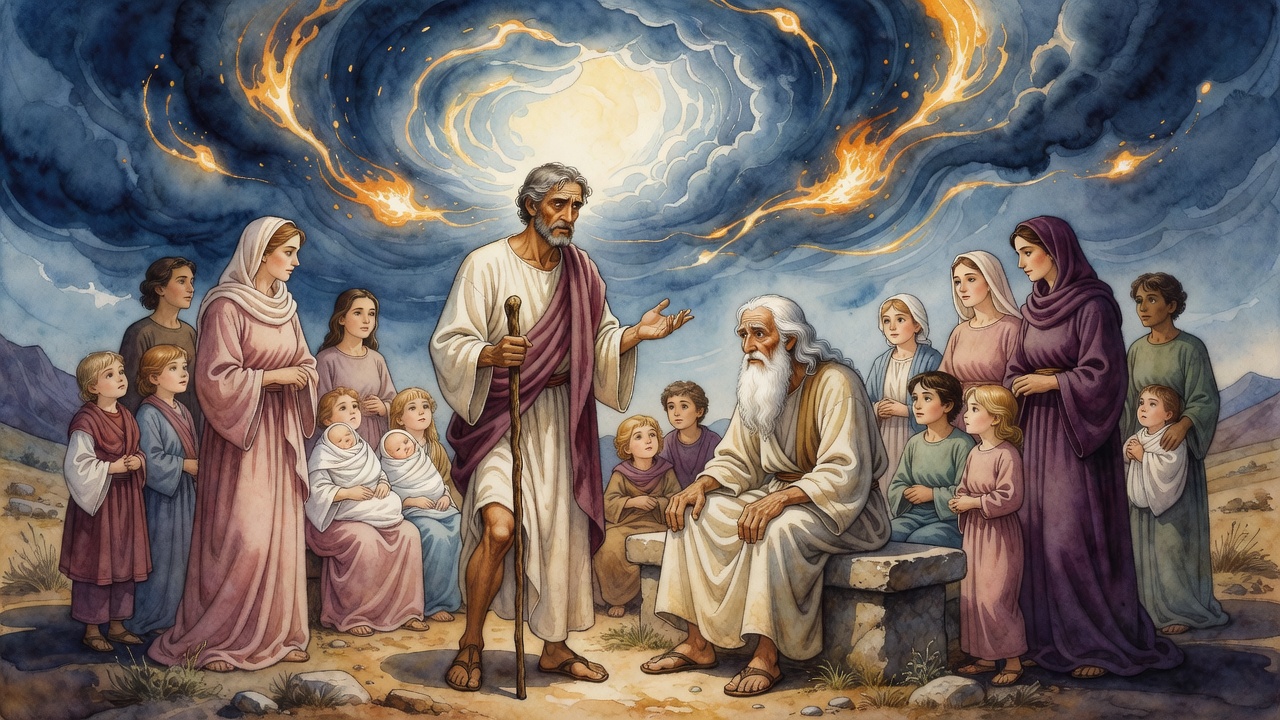
He wanted Isaac and Rebekah to come and offer with him. Isaac sent back a sentence instead. "O my son Jacob, that I might see thee before I die." Rebekah could not be sent for. Jacob went to them with Levi and Judah. When the boys stepped in front of Isaac, the dark over the old man's eyes lifted long enough for him to ask if these were Jacob's children.
The nurse was in the ground under the oak. The mother was gone. The father asked to see him. Jacob had come home into a house already emptied of the woman who had promised to call him.
The Palm Between Ramah and Beth-el
Centuries later another Deborah sat under a palm between Ramah and Beth-el in the hill country of Ephraim. Israel came to her for judgment. She was a prophetess, and she sent Barak to war, and she went with him when he would not go alone.
The palm stood in the same country as the oak. Two Deborahs. One nurse who had carried a matriarch's last word across a border and died waiting for a son to walk it. One prophetess who sat on that ground and told a nation when to move. The later woman did not inherit a title from the earlier one. She inherited a place that had already learned how to hold a woman's word.
Under the oak the dirt stayed packed. Under the palm the people kept coming. The two prophetesses of that hill, if the later age may borrow the name for the first, did not need to meet. The land remembered both.
← All myths