Elisha Could Not Prophesy Until the Harpist Played
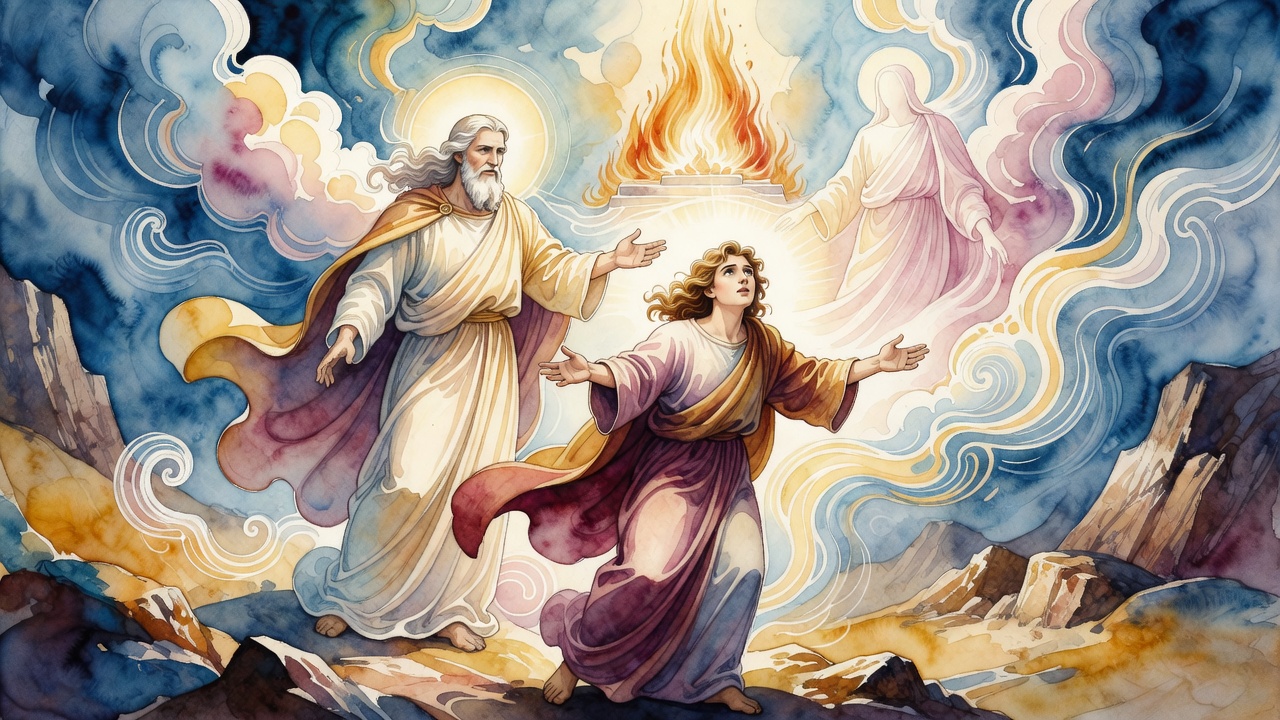
The word of God would not come to an angry prophet. Elisha called for a harpist, and when the strings played, heaven found a way in.
Table of Contents
 Click for full size
Three Kings and No Water
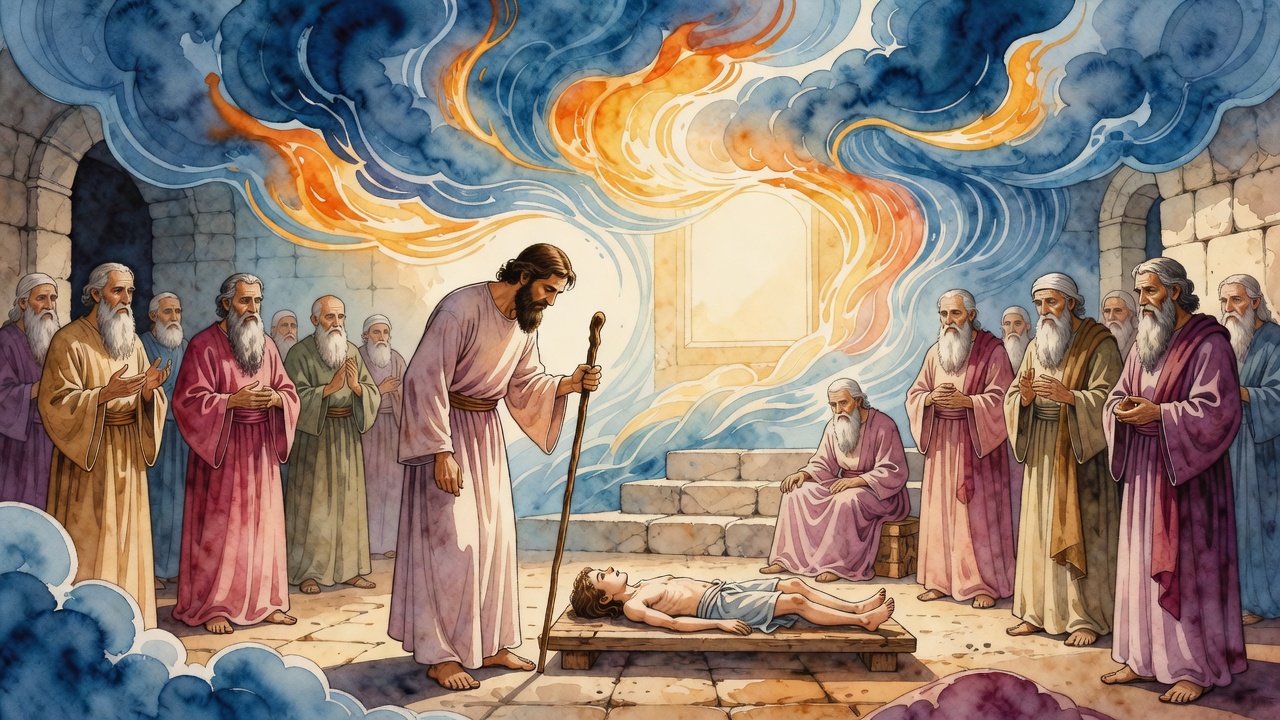
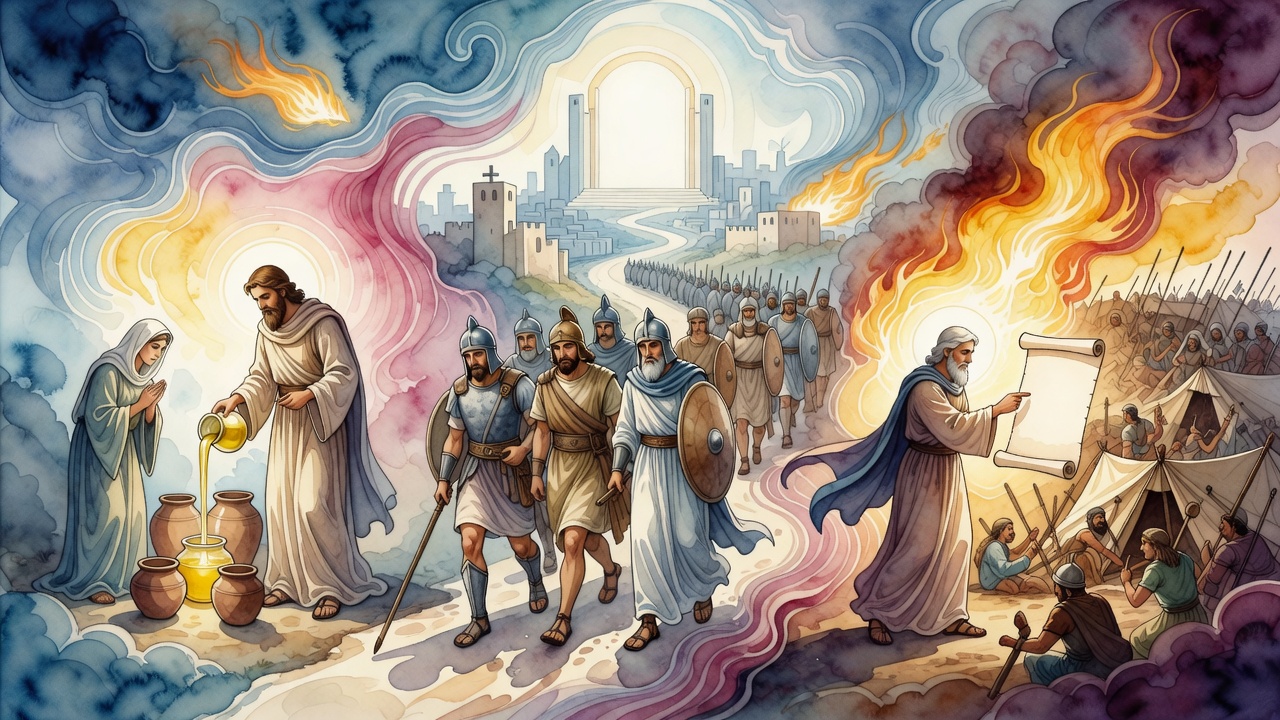
Seven days into the wilderness of Edom, the water ran out (2 Kings 3:9). Three armies stood in the heat, the cattle groaning, the soldiers' tongues thick in their mouths. The kings of Israel, Judah, and Edom had marched out together against Moab, and now the campaign was dying of thirst before a single sword was drawn. So the three kings climbed to the tent of the prophet.
Elisha looked at Jehoram, king of Israel, son of Ahab, and something hot rose in his chest. "What have I to do with you? Go to the prophets of your father and the prophets of your mother" (2 Kings 3:13). Only for the sake of Jehoshaphat, the king of Judah standing beside him, would Elisha so much as look at the man (2 Kings 3:14).
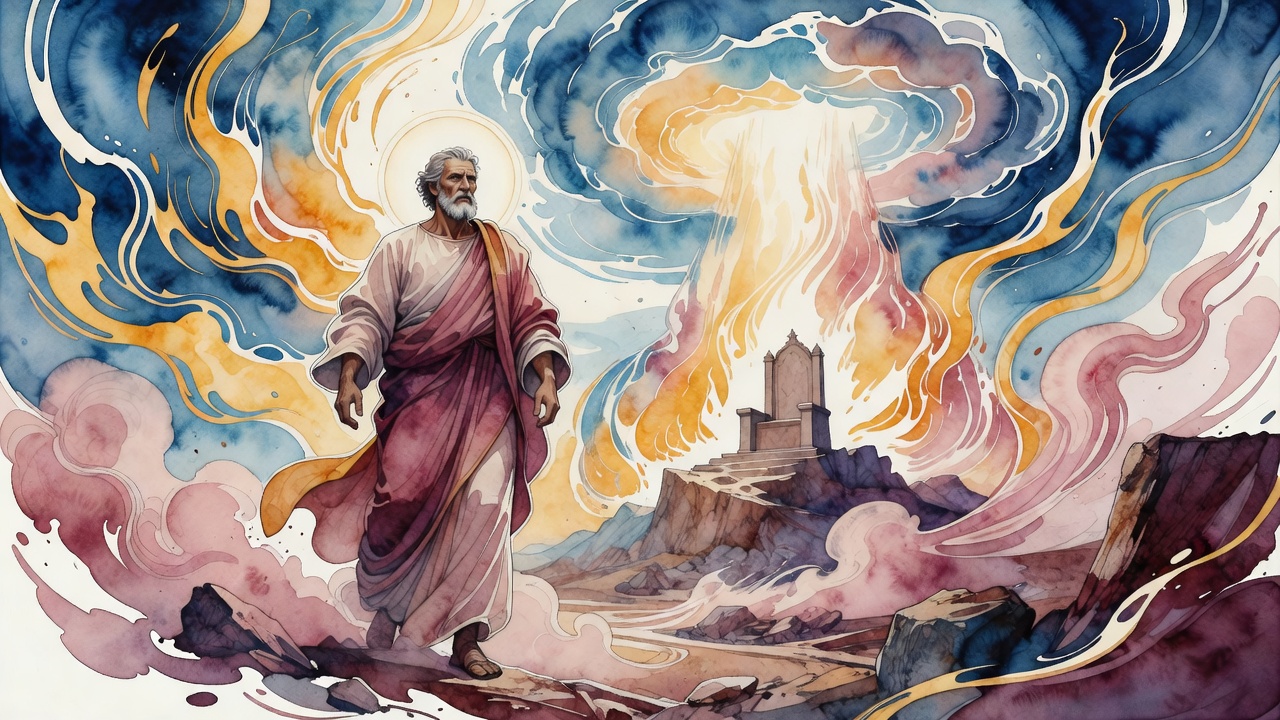
But anger is noise. Prophecy is not a skill a man performs. It is a reception, and the quarrels and calculations and disappointments that fill an inner life can block what would otherwise flow. Elisha stood in front of three desperate kings, willing to inquire of God, and found he could not prophesy. The door inside him had jammed shut.
Bring Me a Harpist
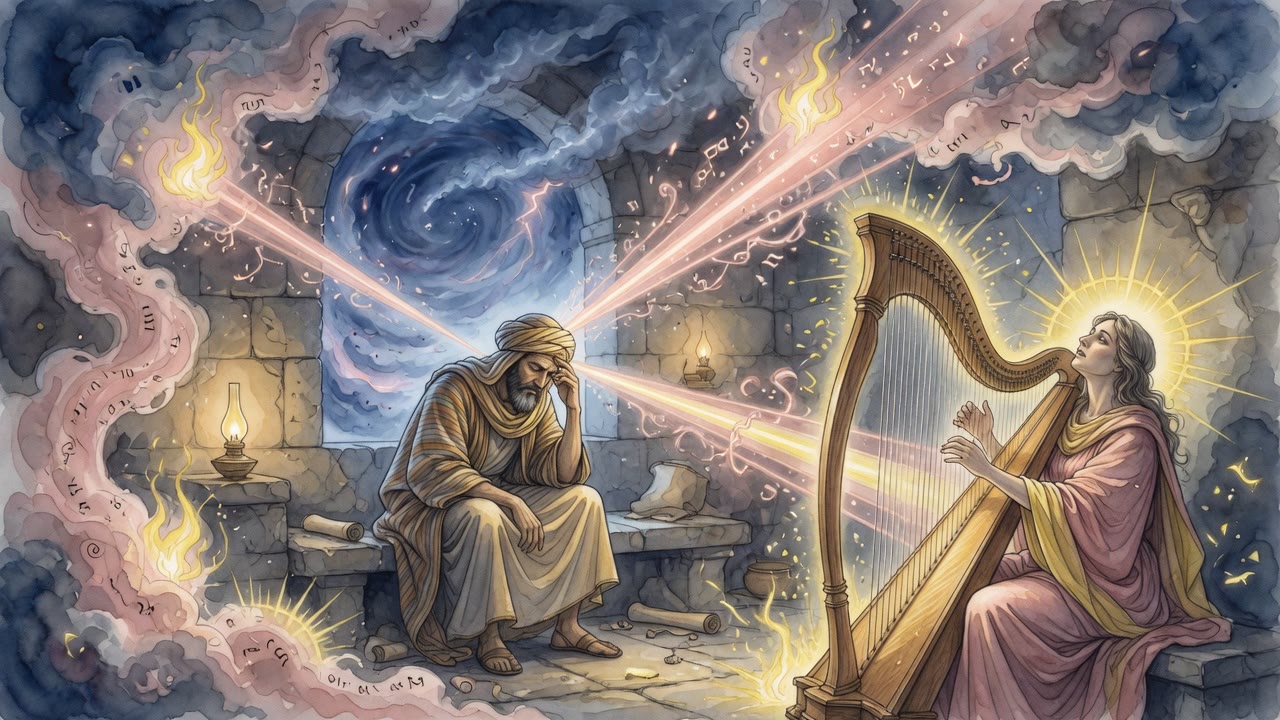
So the prophet gave a strange order for a war camp. "But now bring me a minstrel" (2 Kings 3:15). Somewhere among the tents a harpist was found and led in past the kings. He sat, set his fingers to the strings, and played. "And it came to pass, when the minstrel played, that the hand of the Lord came upon him."
The word descended at last. Dig ditches in this valley, Elisha said, for without wind and without rain the valley will fill with water (2 Kings 3:16-17). By morning the water came flowing from the direction of Edom, and the armies drank. The harpist's part was over in minutes. The question he left behind was not. The prophet had sent for a musician, the musician had played, and only then had heaven opened. The harp did something Elisha could not do alone.
Three Kinds of Music
An old psalm carries the answer in its first line, the dedication lamnatzeach binginot, "to the conductor with musical instruments" (Psalm 4:1). Not all music is the same music. There is melody, there is song, and there is a third thing, the music of prophecy. Melody soothes a body. Song expresses what a heart already holds. The music of prophecy does something structurally different. It opens.
That is what the strings did in the war camp. They did not give Elisha the word, the word was God's to give. They swept the inner room clean. The anger at the son of Ahab settled like dust after rain, the noise of the quarrel went quiet, and in the quiet a gap appeared, wide enough for the hand of the Lord to come through.
A Double Portion of Spirit
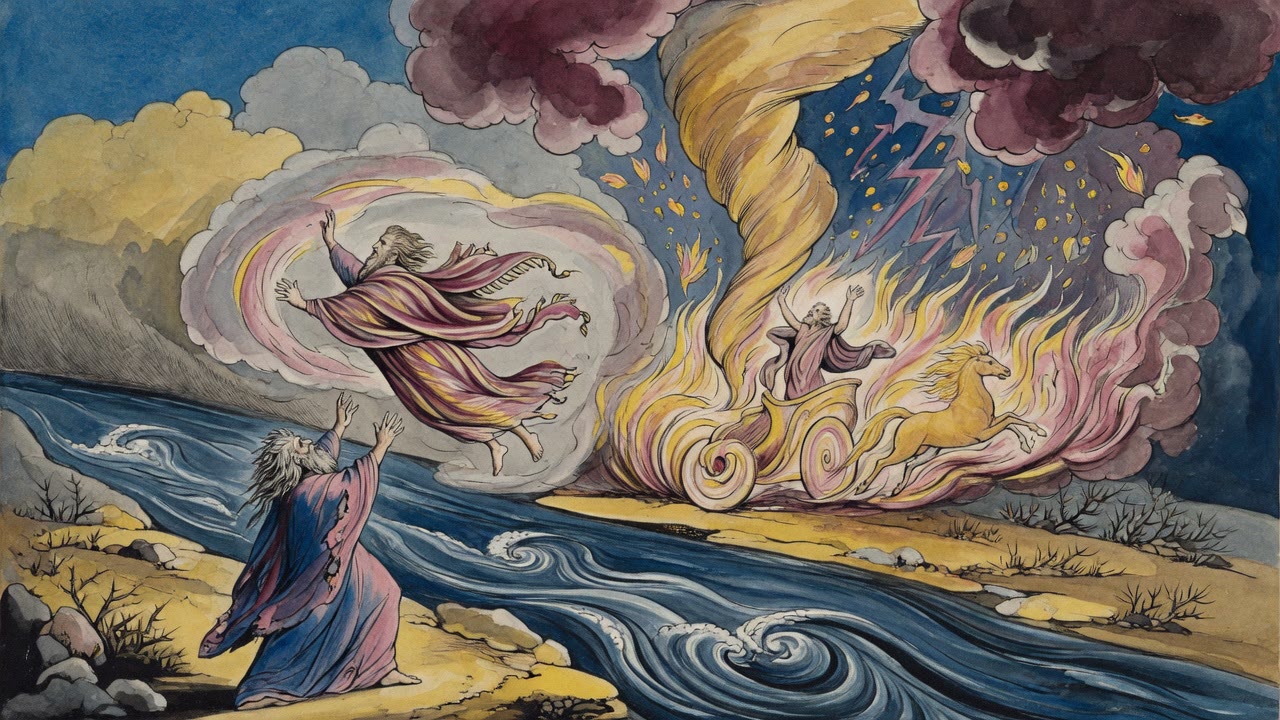
This was no novice who needed help. Before Elijah was taken up, Elisha had asked his master for a double portion of his spirit (2 Kings 2:9), and the promise was fulfilled at once. Elijah worked eight miracles in his lifetime. Elisha worked sixteen, doubling his master. Elijah had crossed the Jordan with Elisha at his side, but when Elisha returned to the river he struck the water and crossed it alone (2 Kings 2:14). At Jericho the spring was foul and the land barren, so he threw salt into the source and the water has been sweet ever since (2 Kings 2:21).
And still, with double his master's spirit in him, this man needed a harpist. The spirit was doubled but the vessel stayed human, and a human vessel can be shaken shut by a single surge of anger. The greater the prophet, the more clearly the rule shows. Reception has conditions, and no portion of spirit, however large, removes them.
Moses Stood in the Breach
The conductor of the psalm is also a leader, the one who is fitting to lead, the one whose leadership is victorious forever. That line points past Elisha to Moses. After the golden calf, when God announced that He would destroy the people, Moses "stood before Him in the breach, to turn back His wrath from destroying them" (Psalm 106:23).
The breach, perets, is a gap torn in a wall, the opening through which disaster pours into a city. Moses put his own body into that gap and would not move. It is the same architecture turned around. An opening had been made between heaven and earth, and where the harpist's music opened a way down for the word, Moses climbed up into the opening to push the wrath back. One man needed the gap opened. The other filled a gap with himself.
Seventy Slips in Bezalel's Hands
The difference between the two showed again at the Tabernacle. God told Moses to gather seventy elders so that the burden of the people would not rest on him alone (Numbers 11:16), and the prophetic spirit was set upon them there, in front of the camp, so that everyone would see these were worthy men. But only Moses heard God's word itself. The spirit touched seventy, the communication came to one.
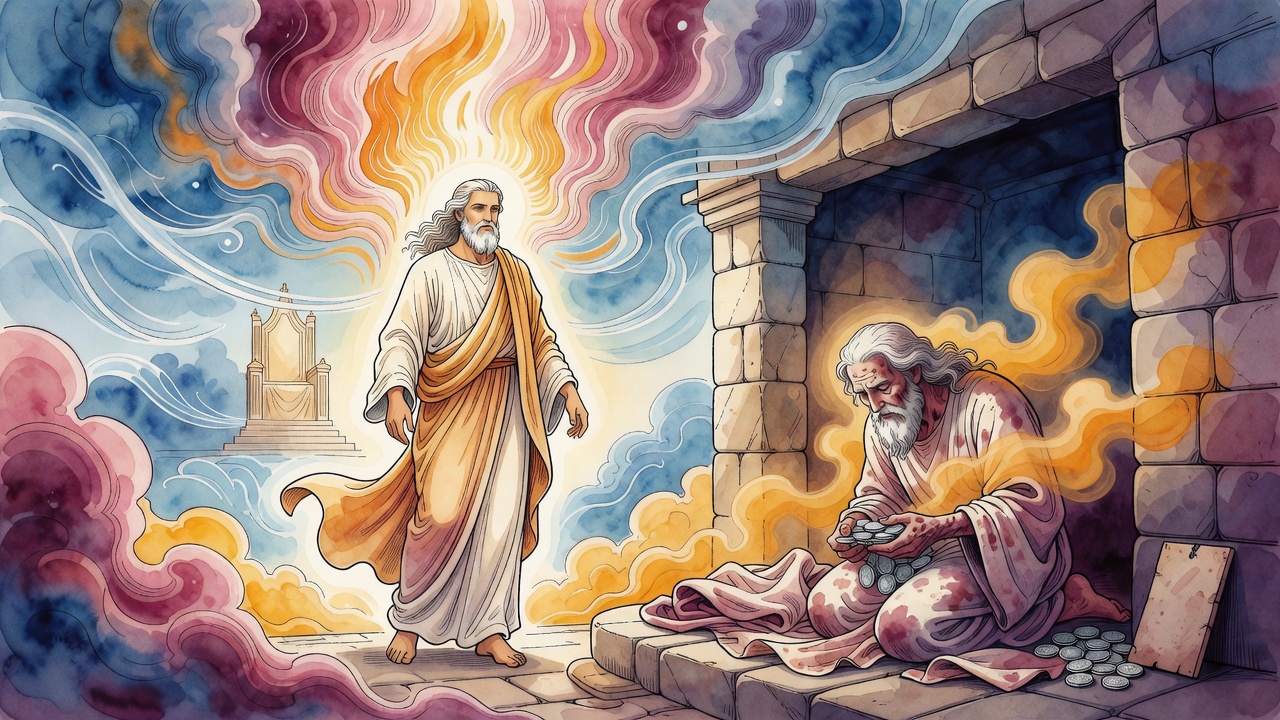
Then the arithmetic nearly wrecked the whole arrangement. Seventy elders from twelve tribes does not divide evenly, and any hint of favoritism would have set tribe against tribe. The solution came from Bezalel, the craftsman who had designed and built the Tabernacle itself. He prepared a lottery, seventy slips marked "elder," and let the drawing decide what no man could decree. So the spirit entered the camp that day through paper slips in a craftsman's hands, just as it had once entered a war camp through harp strings.
Every word that crosses from heaven to earth finds an opening. A string under a musician's fingers. A breach in a wall filled by one stubborn body. A slip of paper drawn from a craftsman's lot. The hand of the Lord is already extended. The door on the human side is the one that swings shut, and sometimes it takes music to open it.
← All myths