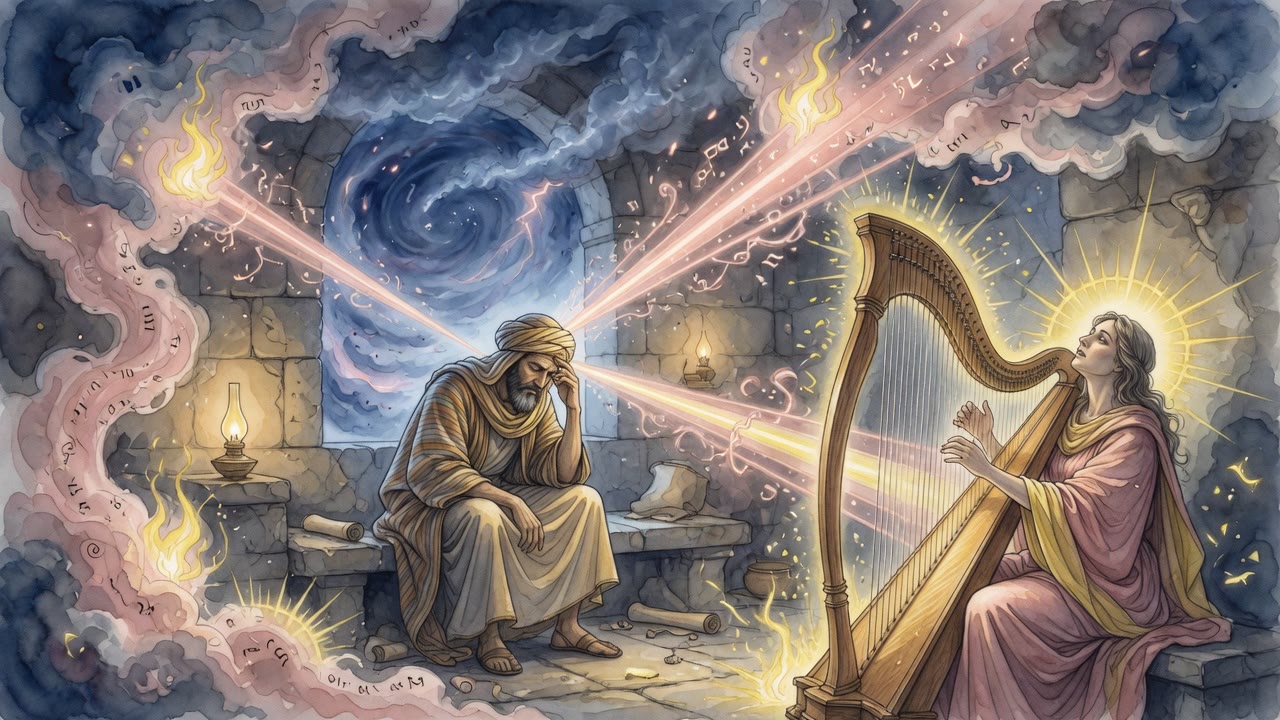
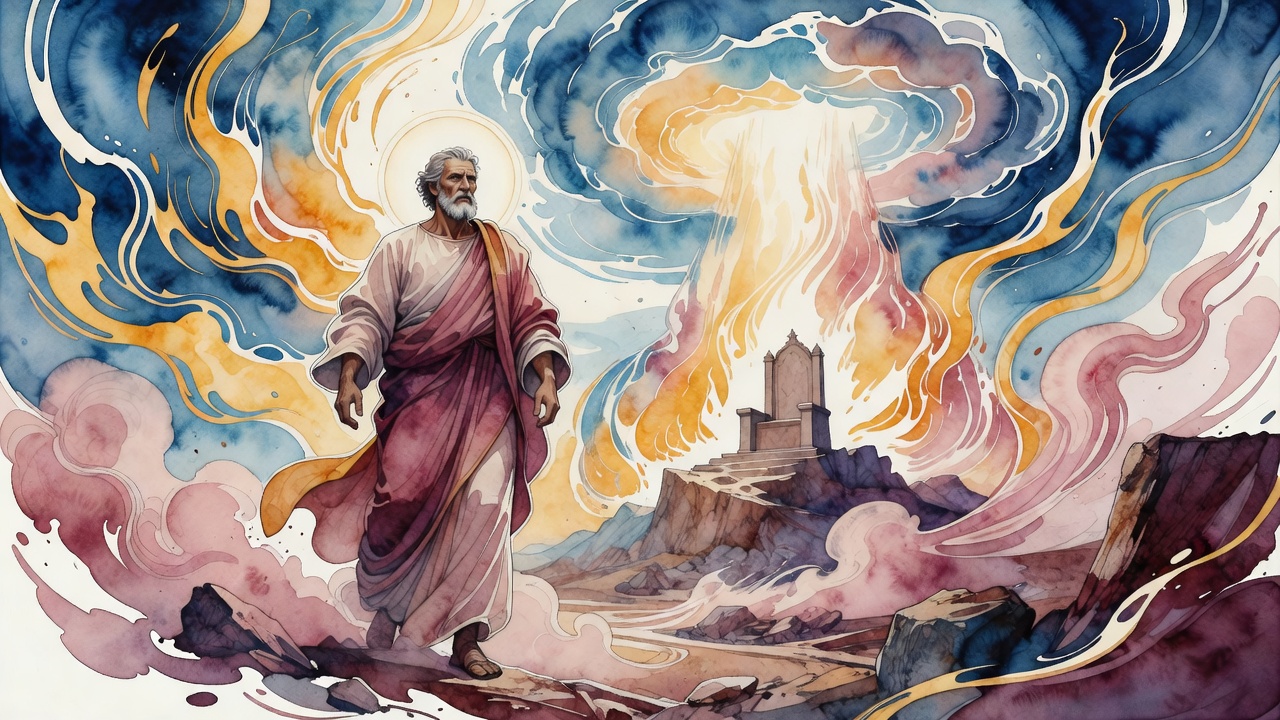
Gehazi Laid Elisha's Staff on the Dead Boy's Face
Gehazi asked the men in the street if a stick could raise a dead child. Then he laid Elisha's staff on the boy's face. Nothing moved.
Table of Contents
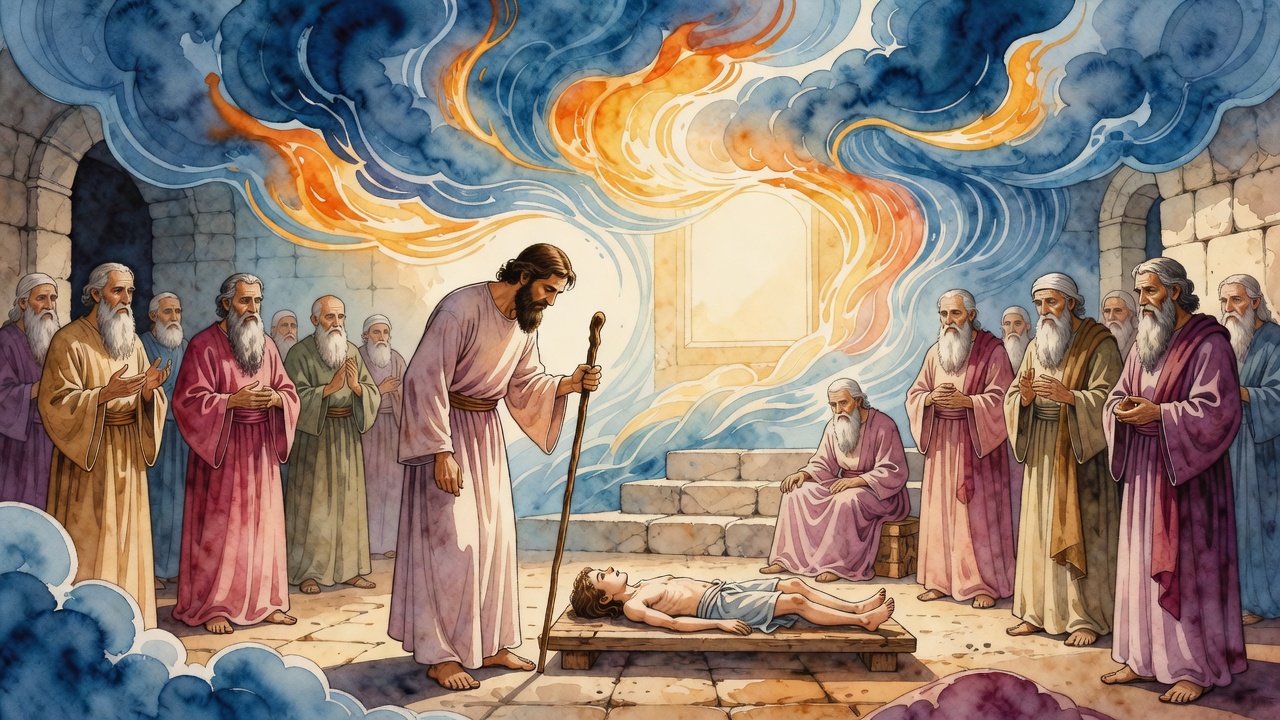
Gehazi walked through Shunem with the prophet's staff in his fist and a joke already in his mouth. "Dost thou believe that this staff will bring the dead to life?" he asked every man he met. They laughed. He laughed with them. Then he laid the wood on the boy's face, as he had been told.
 Click for full size
The chest did not move.
The Joke in the Street
The Shunammite woman had built Elisha a room on her roof. She had fed him when he passed. He had spoken a son over her that she had not asked for. The boy had grown, gone to the reapers, cried "My head, my head," and died in her lap. She had ridden for the prophet without stopping to speak to her husband, and Elisha had sent his servant ahead with the staff and a command: lay it on the child's face (2 Kings 4:29).
Gehazi treated the command as a performance. A stick. A dead boy. A street full of men who would remember if it failed. He made sure they were ready to remember. By the time he reached the roof room, the mission was already a story he could tell against itself.
The Staff on the Face
He set the staff on the boy's face and waited. No breath. No heat. The eyes stayed shut. He went back down the road to meet Elisha and said the words that cost him nothing: the child is not awaked (2 Kings 4:31).
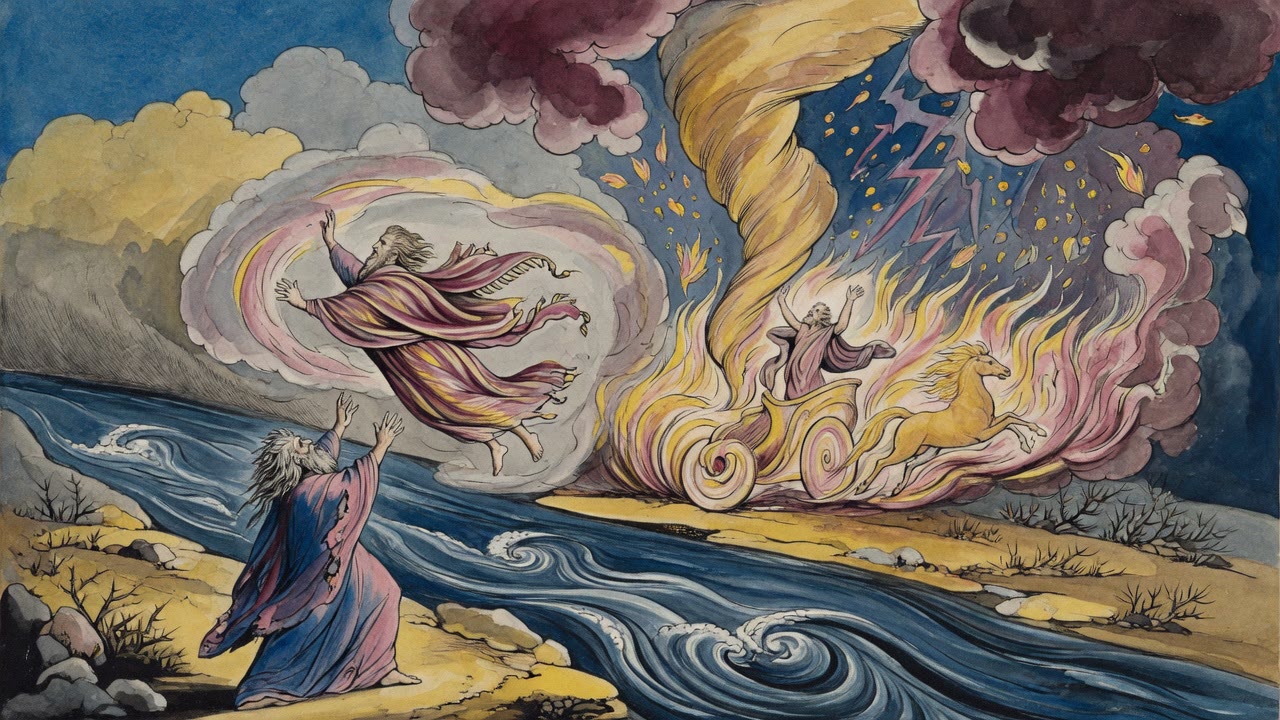
Moses had a staff. Elijah had a mantle. Those things did not work by themselves. They worked when the hand that held them belonged to the work. Gehazi had carried Elisha's wood the way a man carries a tool he does not trust. The current had nowhere to go.
Elisha did not send a second object. He went himself.
Mouth to Mouth
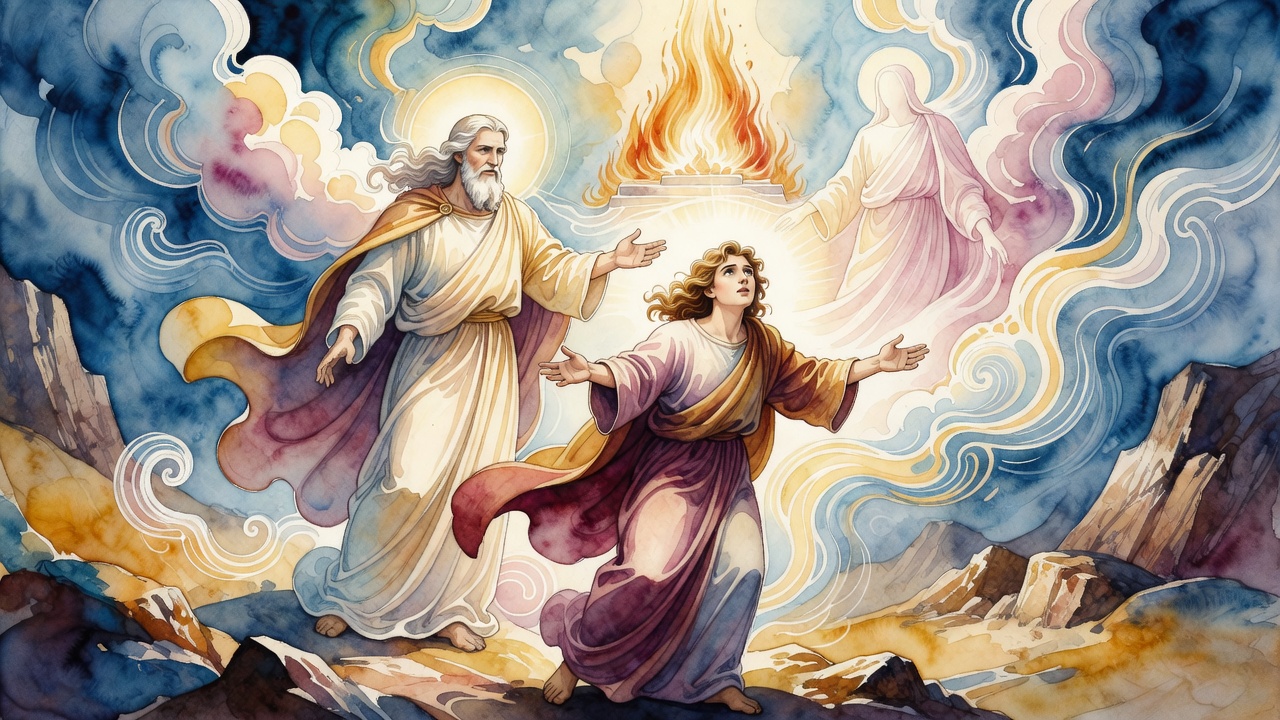
He entered the room and shut the door on both of them. He prayed. "Sovereign of all the worlds! Just as Thou didst perform miracles by the hand of Elijah, my master, and brought the dead to life, likewise let this child live."
Then he lay on the boy. Mouth on mouth. Eyes on eyes. Hands on hands. The child's flesh grew warm. Elisha got up, walked the room once, and lay down again. The boy sneezed seven times and opened his eyes (2 Kings 4:34-35).
Gehazi had sent wood and kept his body out of it. Elisha put his mouth on a dead mouth and stayed until the sneezes came. At the Jordan he had asked Elijah for a double portion. In his life he did sixteen wonders where his master had done eight. The first of them, crossing the river alone, had already cost more than Elijah's crossing with a disciple beside him. Double portion, double weight. The staff in a scoffer's hand was not part of the sixteen.
Silver, Sickness, and Bones
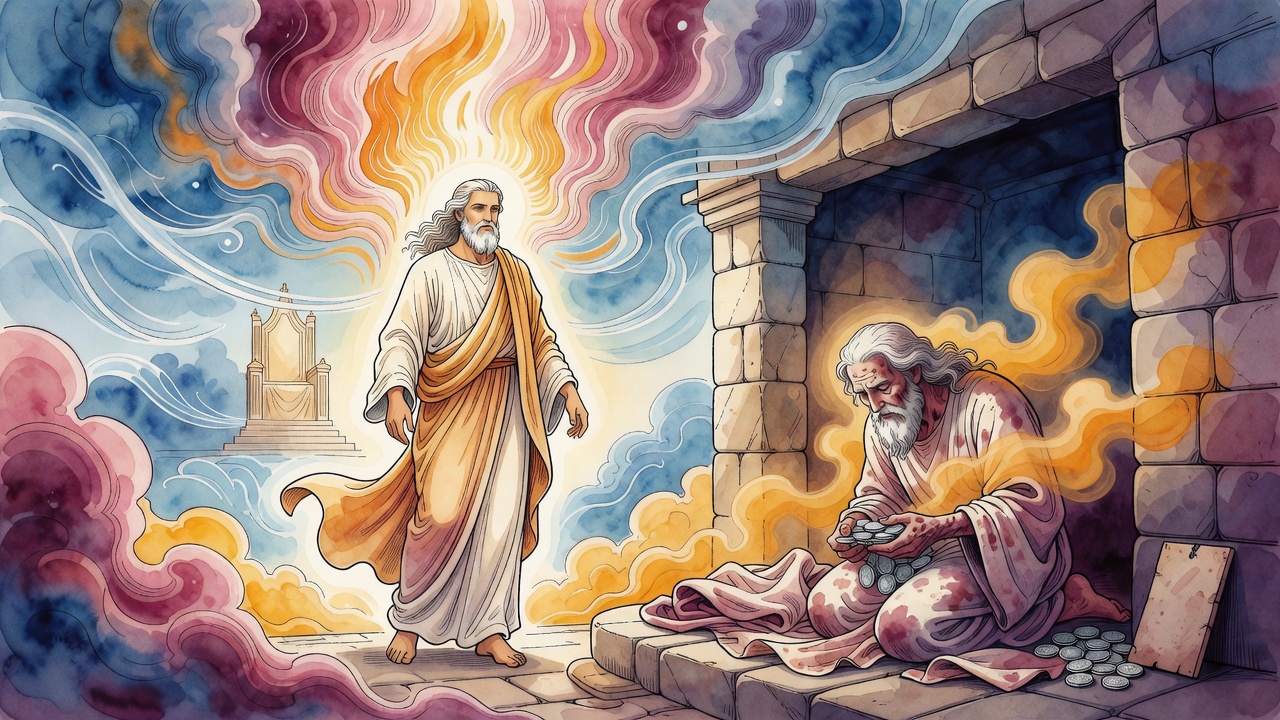
Gehazi did not learn. When Naaman the Aramean came clean of his skin and Elisha refused the gifts, Gehazi ran after the commander, claimed silver and clothes in his master's name, and hid them. Elisha asked where he had been. Gehazi lied. The skin disease of Naaman came onto Gehazi and onto his seed.
Elisha's hardness did not come free. He endured two illnesses as correction, and a third that killed him. Before him, sickness and death had arrived together. He was the first who got sick and lived, and then he got sick and did not. The boys at Jericho who had mocked his bald head, and the servant who had mocked his staff, sat inside that severity. So did the years it ate.
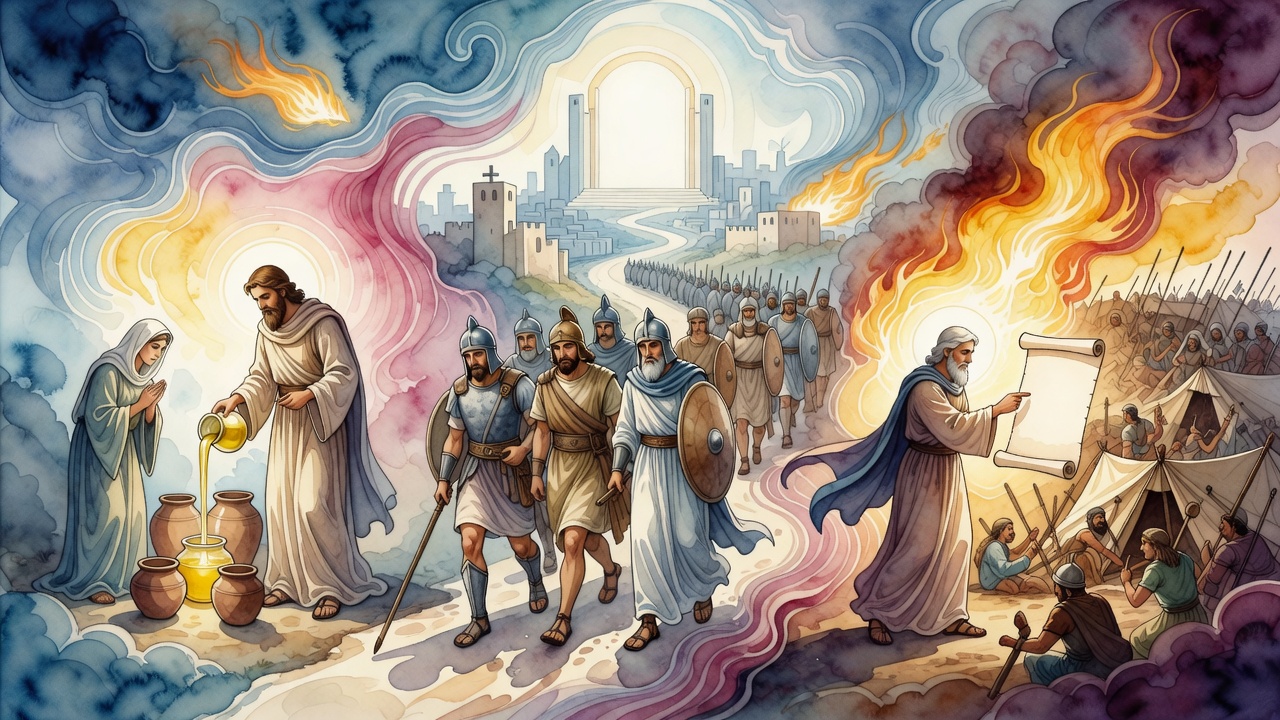
When they buried him, Arameans raided the funeral of another man, Shallum son of Tikvah, who had carried water outside the city every day for travelers. The mourners threw Shallum into Elisha's grave to run. The body touched the prophet's bones and stood up on its feet. The man who had lain on a dead child was still raising the dead from under the ground.
← All myths