Elisha Was Written Into History Before the Crisis That Needed Him
Elisha was plowing behind oxen when Elijah threw a cloak over his shoulders and said nothing. He performed sixteen miracles, twice Elijah's eight.
Table of Contents
 Click for full size
The Hour After Fire
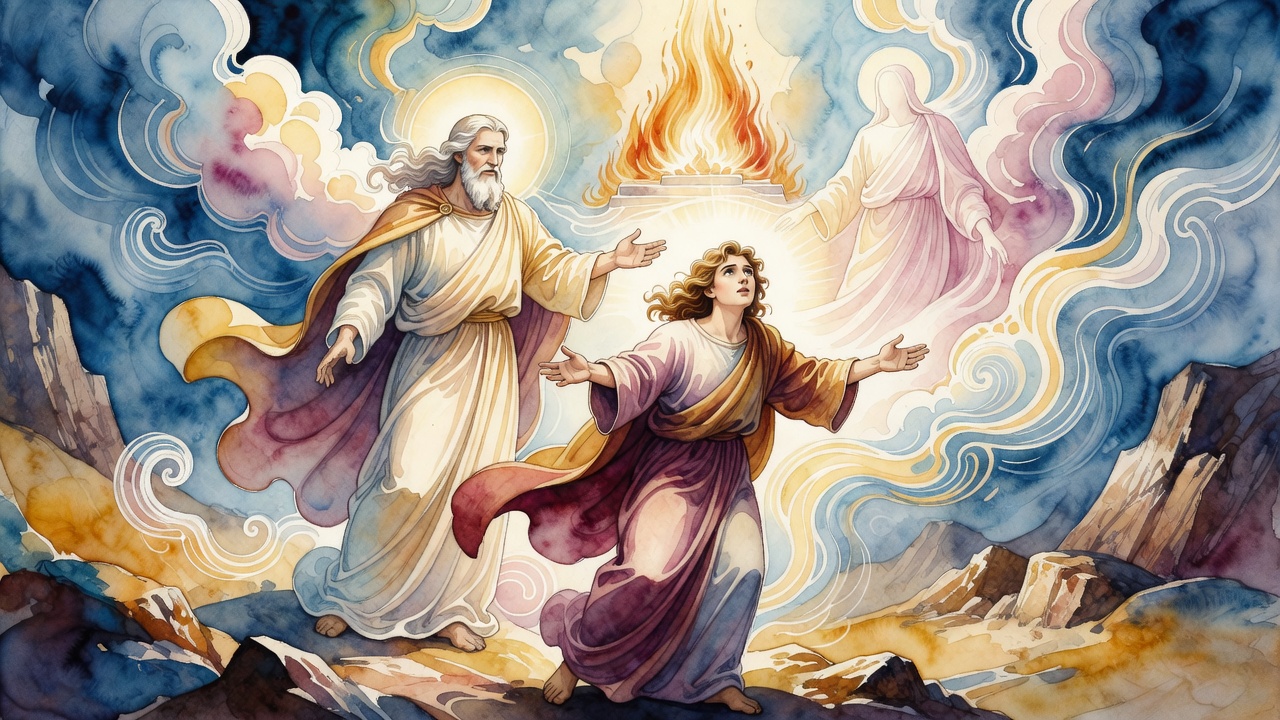
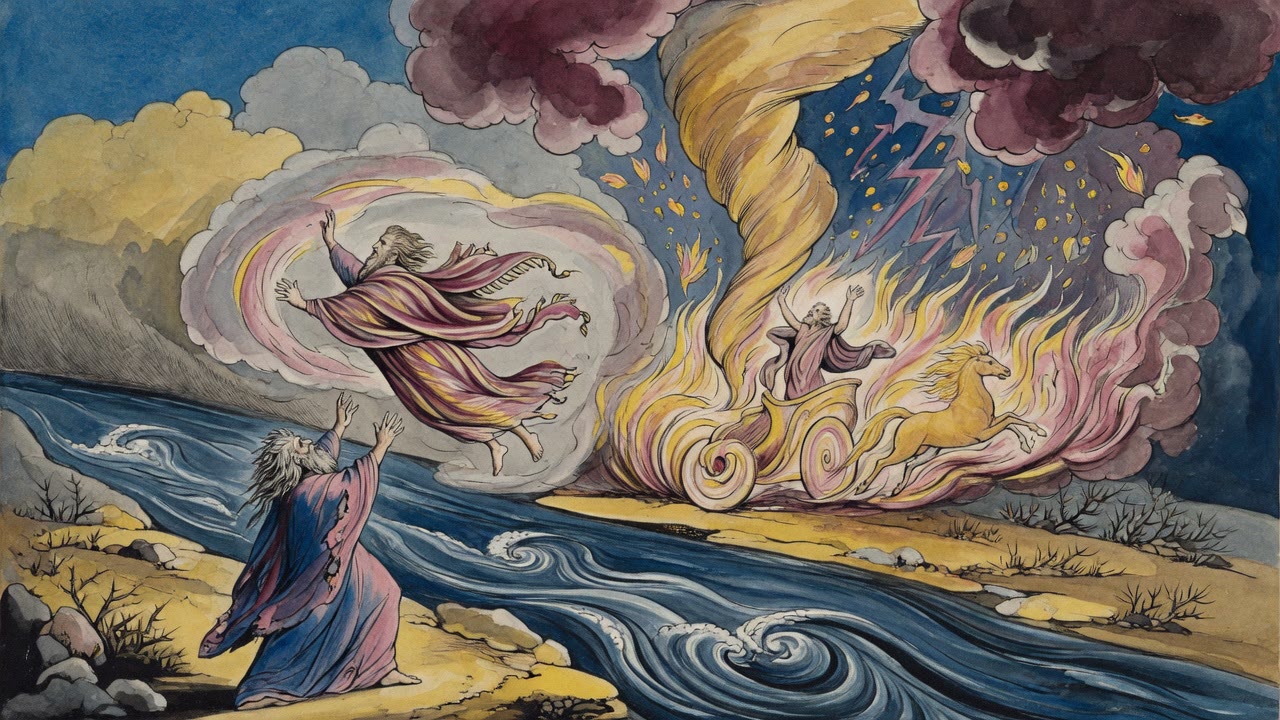
Elijah left in storm and flame. The chariot appeared, the horses of fire, and the man who had stopped rain for three years and called it down again and outrun a king's horses and stood alone on a mountain against four hundred and fifty prophets of Baal went up in the whirlwind and was gone.
Elisha watched from the ground. He had been plowing with oxen when Elijah found him and threw a cloak over his shoulders without a word. He had run after the prophet and asked for a double portion of his spirit, which was the firstborn's inheritance, the request of a son who wanted not just to continue the work but to exceed it. Elijah said: you have asked a hard thing. You will have it if you see me when I go.
Elisha saw. And then the whirlwind was empty and there was only the mantle lying on the ground and the whole weight of Israel's crisis pressing down on the man who picked it up.
Written for the Time
Ben Sira, composing his wisdom text in Jerusalem around 180 BCE, refuses to treat Elisha as merely the prophet who came after. His language in chapter 48 is precise: Elisha was written truly for the time. This is not a compliment about his suitability. It is a claim about inscription. The word written in this context carries the weight of a divine notation made before the crisis existed, the prophet prepared before the problem required him.
The tasks Ben Sira assigns to Elisha are enormous: stop divine anger before it breaks open, return fathers to their sons, establish the tribes of Israel. These are not the jobs of a miracle-worker. These are the jobs of someone assigned to hold together a covenant that is actively coming apart. The northern kingdom was already split from Judah. Idolatry had restructured the social and political landscape so thoroughly that the covenant's infrastructure had to be rebuilt from within villages that had forgotten what the infrastructure was for.
Sixteen Miracles and Their Purpose
Elisha performed sixteen miracles during his life, according to the Ginzberg synthesis of rabbinic tradition, exactly twice the eight that Elijah had performed. The double portion was literal. Each miracle was an act of repair in a specific broken place.
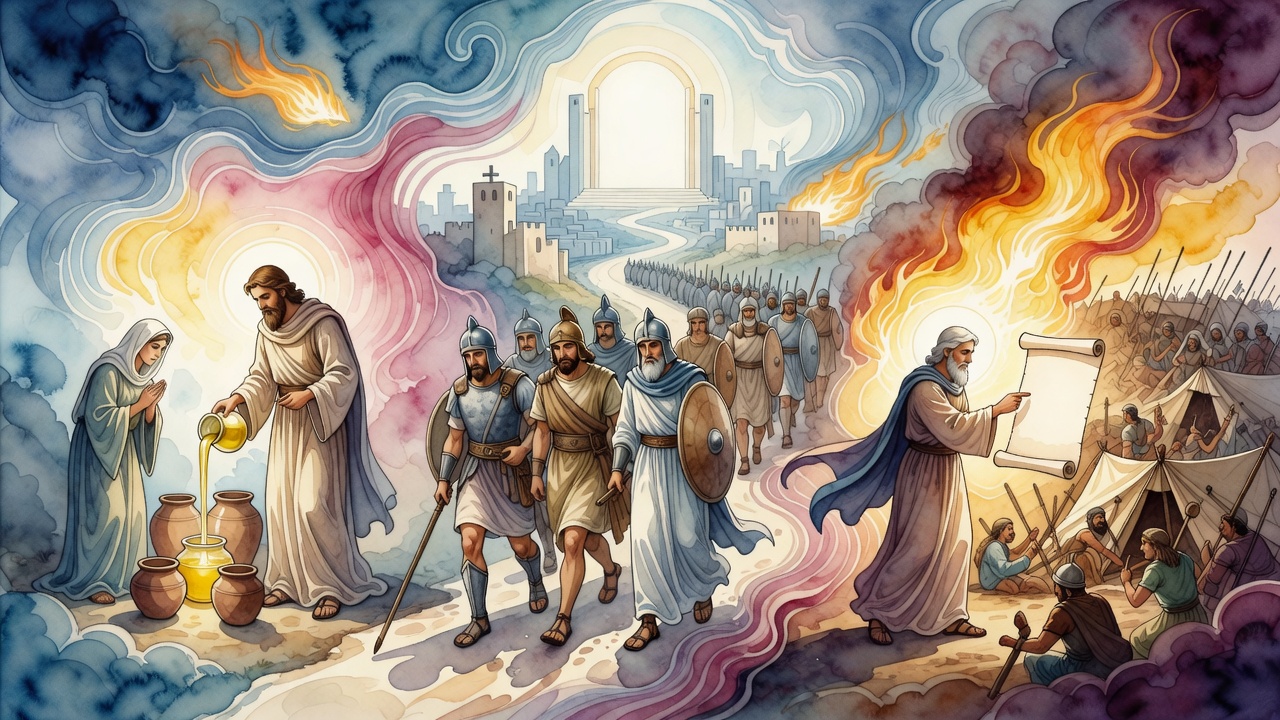
A widow came to him with debt collectors at the door, ready to take her children. She visited her husband's grave first, then came to Elisha's house. He asked what she had. A jar of oil. He told her to borrow empty vessels from all her neighbors and begin pouring. The oil did not stop until she ran out of vessels. The debt was paid and she lived on what remained. One woman, one household, one debt: the size of the miracle was calibrated to the size of the need.
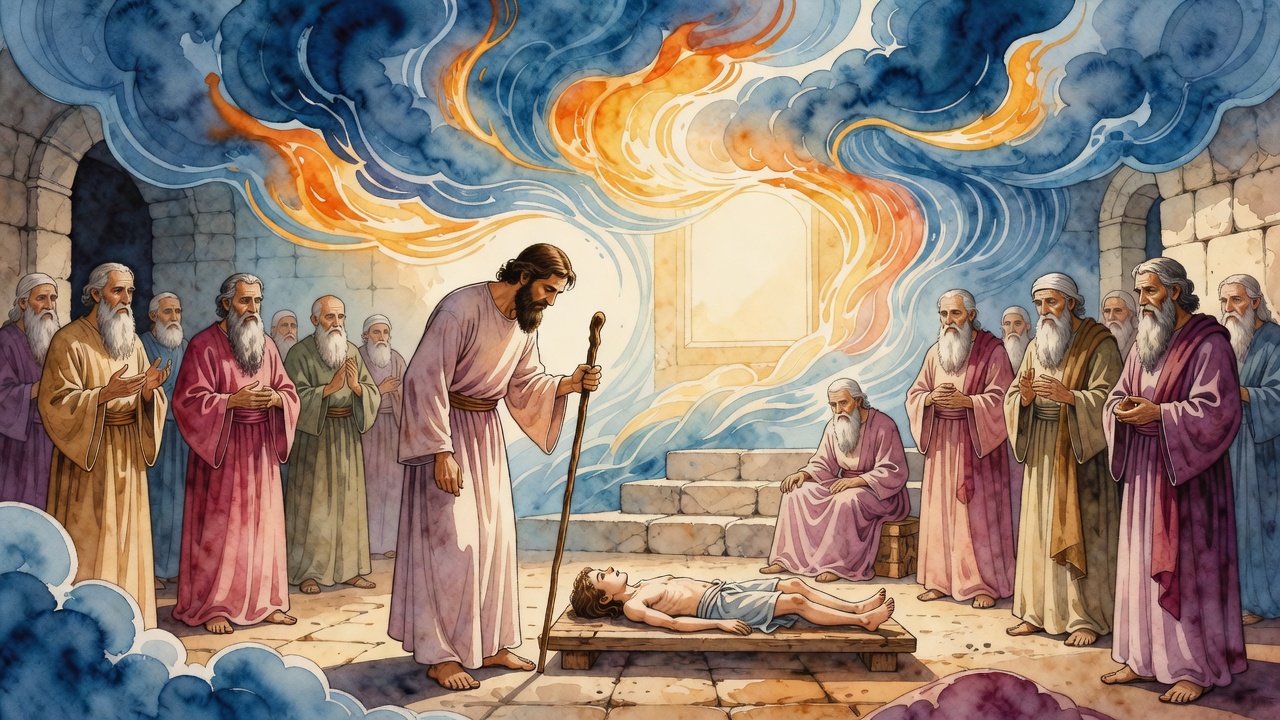
A woman in Shunem gave Elisha a room in her house and fed him whenever he passed. Her son died. She laid the child on the bed in Elisha's room, the room built for the prophet, and went to find him. She told no one what had happened. She brought Elisha back. He lay over the child and the child's body grew warm and the child sneezed seven times and opened his eyes. The resurrection was private, witnessed only by the mother and the servant. Elisha did not announce it. He said: take your son.
What Elisha Carried From the Patriarchs
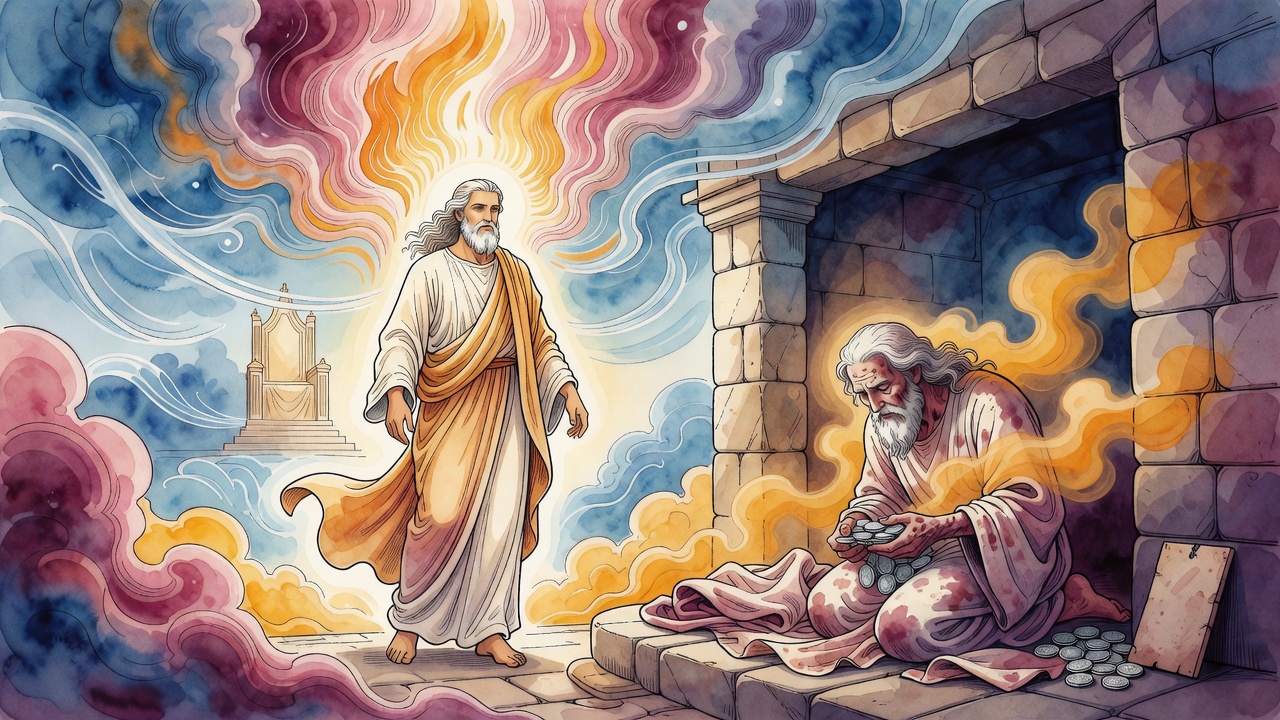
The Testament of Abraham, a text from the Second Temple period, places Abraham on a celestial tour that includes seeing Adam seated at the gate of judgment, weighing souls as they pass. The image carries into the prophetic tradition through Elisha: the prophet who heals and judges in the world below is doing what the patriarchs do at the border of the world above. Both are in the business of weighing what is salvageable from what is not.
Elisha's connection to the creation-patriarchs tradition runs through the Zohar's understanding of Elijah and Elisha as figures whose work spans two registers simultaneously: the visible world of drought and miracle and political crisis, and the invisible world of angelic assignment, covenantal architecture, and the long repair that began when the first human being was placed in the garden and has not finished yet.
The Death That Was Not an Ending
Elisha died of illness. He told the king of Israel to strike the ground with arrows, and the king struck three times and stopped. Elisha was furious: you should have struck five or six times. Now you will defeat Aram only three times instead of finally. The limitation of the miracle was the limitation of the king's faith, not the prophet's power.
After Elisha died and was buried, a dead man was thrown into his grave in haste during a Moabite raid. The body touched Elisha's bones and came back to life (2 Kings 13:21). The double portion of spirit had not depleted itself in sixteen miracles. It was still present in the bones.
← All myths