5 min read

Elisha, Gehazi, and the Double Portion Lost

Elisha received twice Elijah's spirit, but Gehazi turned the prophet's house into a hiding place for silver, garments, and leprosy.

Curated by Arthur · Told by Maggid ·
Table of Contents
  1. The Mantle Fell to One Man
  2. Sixteen Wonders Followed
  3. Jericho's Water Became Sweet
  4. Gehazi Chose Silver
  5. The Eight Reptiles Rose Against Him

Elisha asked for more than grief could justify.

\n\n

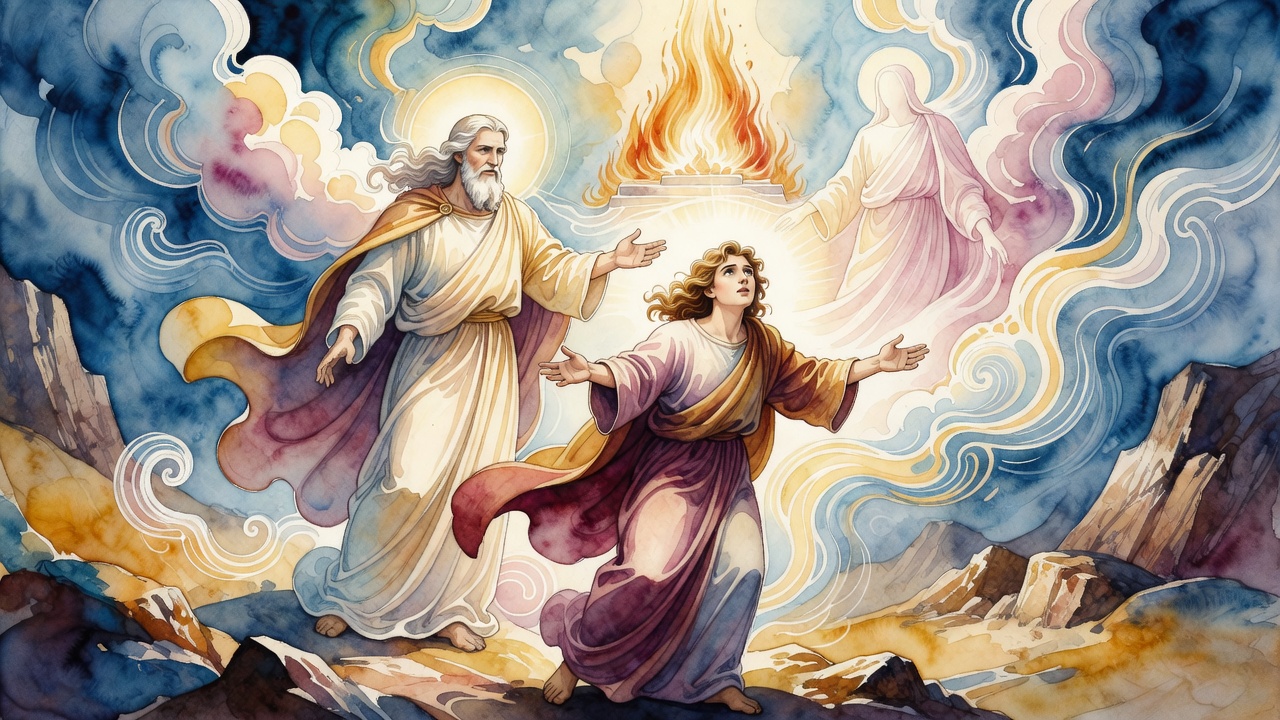
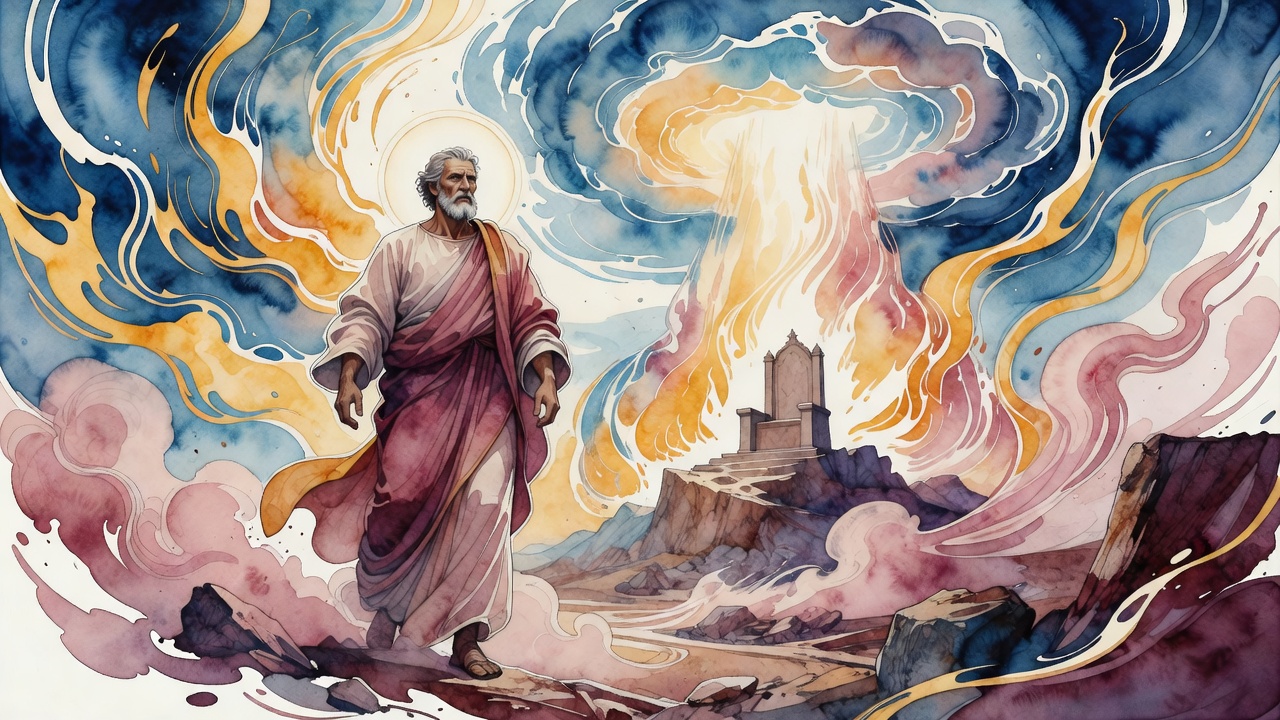
Elijah was being taken from the earth, and the disciple did not ask for comfort. He asked for a double portion of his master's spirit. Not a memory. Not a token. He wanted the force that had moved through Elijah to move through him with twice the weight.
\n\n

The Mantle Fell to One Man

\n\n

The first proof came at the Jordan.

\n\n

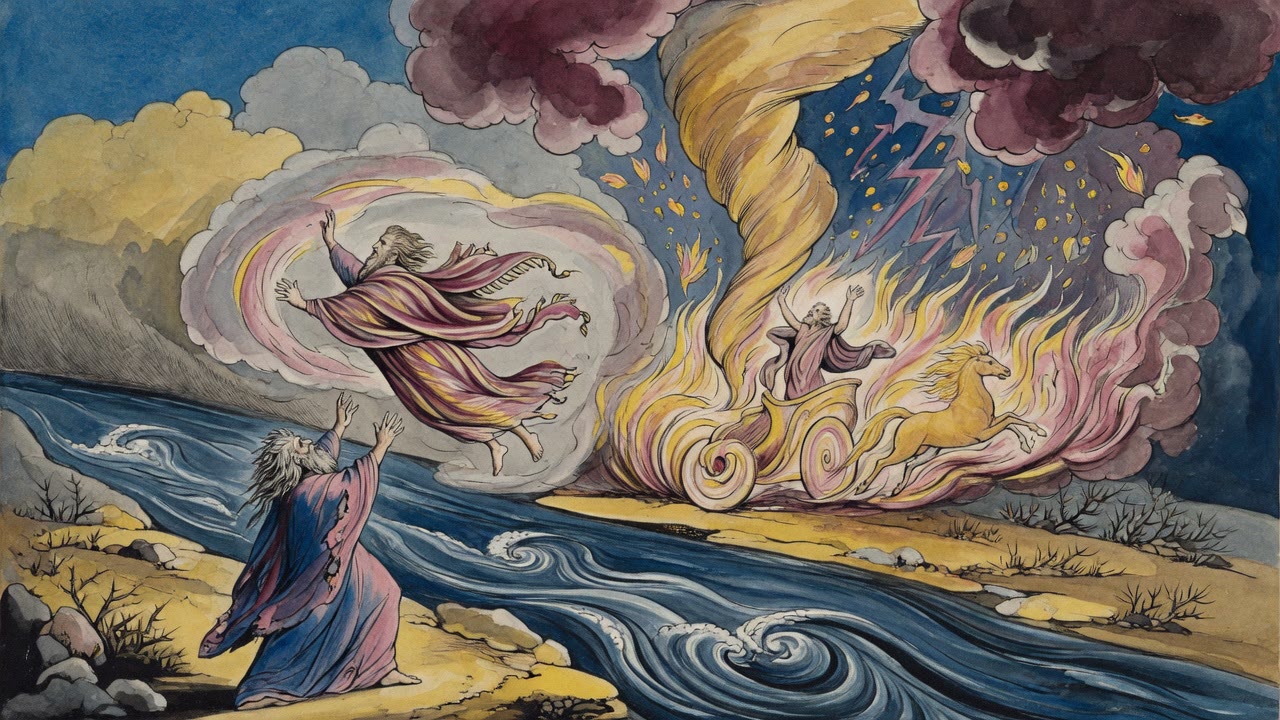
Elijah had crossed that river with Elisha beside him. Two righteous men stood together, and the water gave way. After the ascent, Elisha returned alone. The bank was emptier. The air had changed. He held the mantle that had fallen back to earth and struck the river as one man carrying an inheritance too large for one body.

\n\n

The Jordan opened again. That was the beginning. The double portion was not a phrase thrown into the wind. It became countable. Elijah had eight wonders. Elisha would have sixteen.

\n\n

Sixteen Wonders Followed

\n\n

Numbers matter in a house of prophecy. They weigh the blessing.

\n\n

Elisha's miracles did not arrive as ornaments around his name. They entered thirsty cities, grieving houses, sick bodies, and dangerous courts. The double portion meant a doubled exposure to need. More power brought more cries to the door. More signs meant more chances for anger to slip into holiness and spoil the hand that carried it.

\n\n

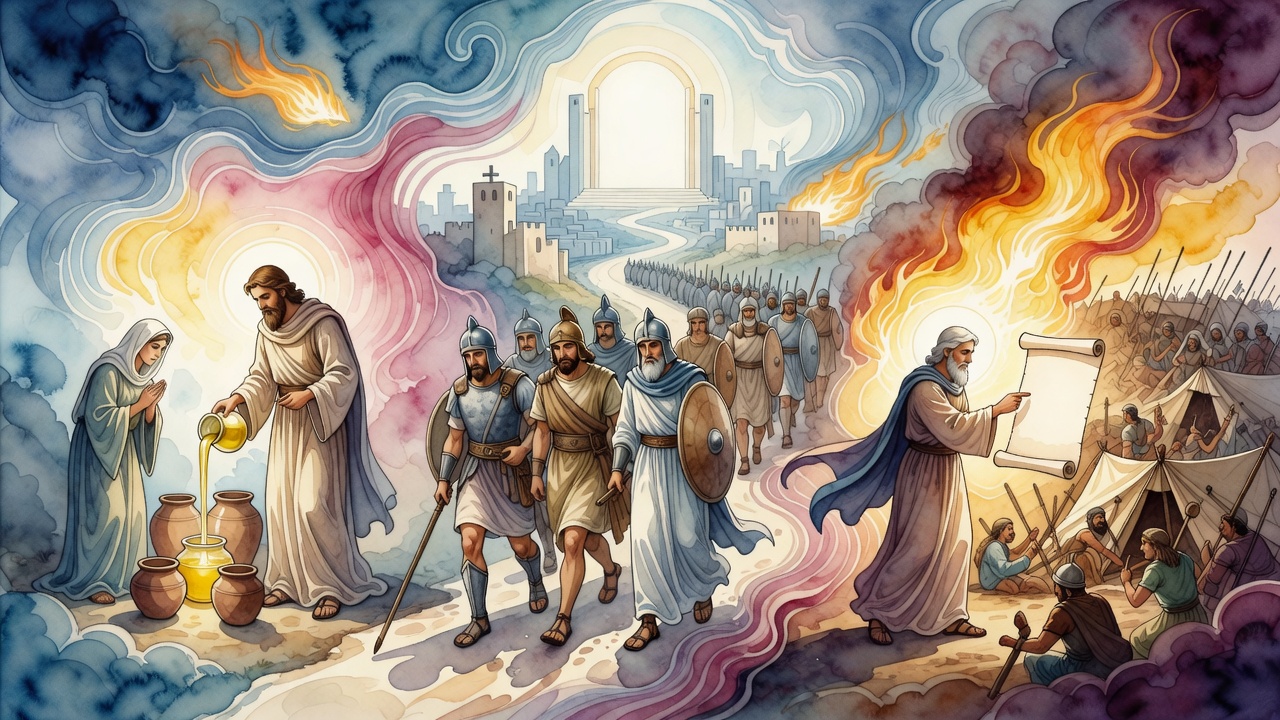
His second wonder seemed simple at first. Jericho's waters were bad. The city could not live on poisoned springs. Elisha healed them, and suddenly the water ran clean. Children could drink. Households could cook. The city breathed.

\n\n

Then the merchants came.

\n\n

Jericho's Water Became Sweet

\n\n

The men who had sold clean water watched their livelihood disappear in a miracle.

\n\n

They did not bless the prophet. They grumbled. A city had been saved, but their trade had been ruined. Elisha looked at them with the sight of a prophet, not only across their faces but backward through their fathers and forward through their descendants. He found no fragrance of goodness in the whole line.

\n\n

His curse struck fast. A forest sprang up where no forest had stood, and bears came out from its dark. The men who had turned a city's thirst into profit were devoured by the wilderness that rose at a prophet's word.

\n\n

They were not innocent. Still, Elisha paid for the fire in his own mouth. Sickness came upon him as correction. His master's zeal had burned too hot before him, and now his own anger had crossed the border between judgment and passion.

\n\n

Gehazi Chose Silver

\n\n

The servant should have learned from the master's wound.

\n\n

Gehazi lived close to Elisha's power. He knew the house, the silences, the errands, the strange discipline of refusing what other men would grab with both hands. When Naaman, the Aramean captain, came seeking healing and left cleansed, he wanted to pay. Elisha refused him.

\n\n

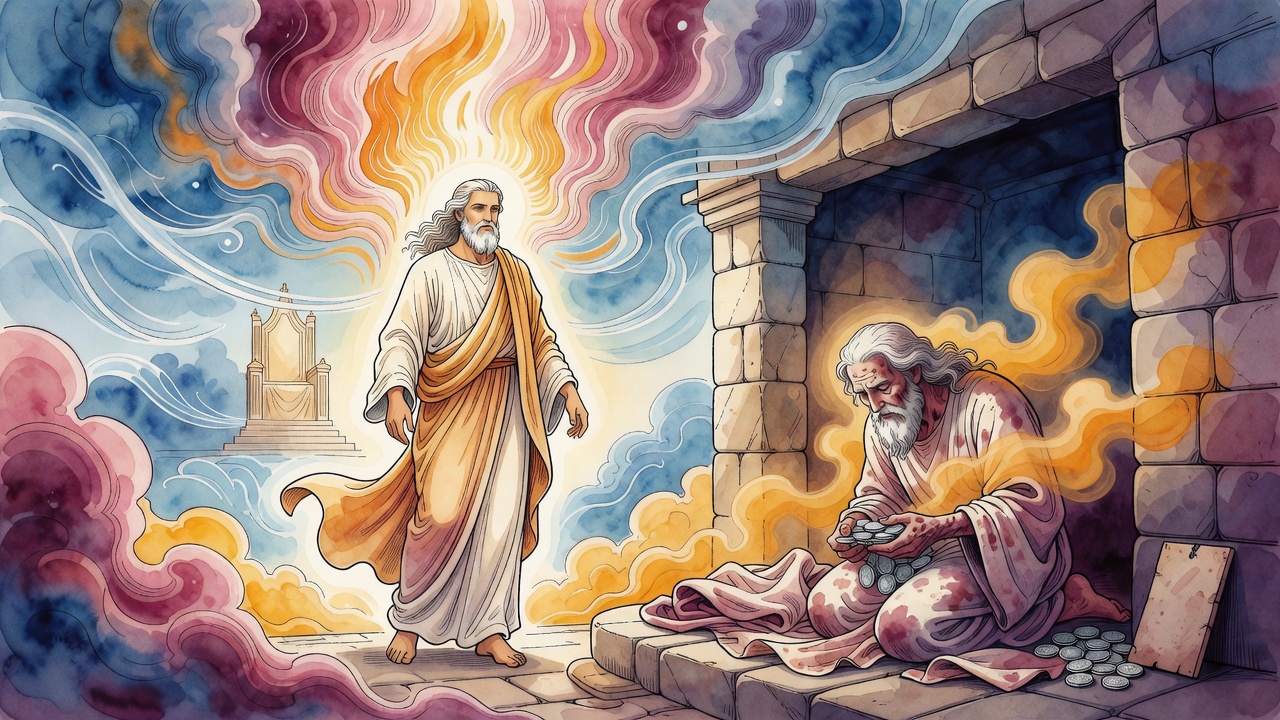
Gehazi could not bear the refusal. Silver was walking away. Garments were leaving the road untouched. He ran after Naaman with a lie in his mouth and came back carrying the reward his master had rejected. He hid the goods, as if prophecy could be fooled by a covered place.

\n\n

Elisha was studying when Gehazi returned. The chapter before him concerned eight creeping things, the small bodies that carry impurity into law. The servant entered with treasure hidden and corruption already showing through the skin of the room.

\n\n

The Eight Reptiles Rose Against Him

\n\n

Elisha asked where he had been.

\n\n

"Nowhere," he said. The word collapsed as soon as it left him. A prophet's house is a poor place for pretending. Elisha saw the road, the chariot, the silver, the garments, the hunger that had run faster than obedience.

\n\n

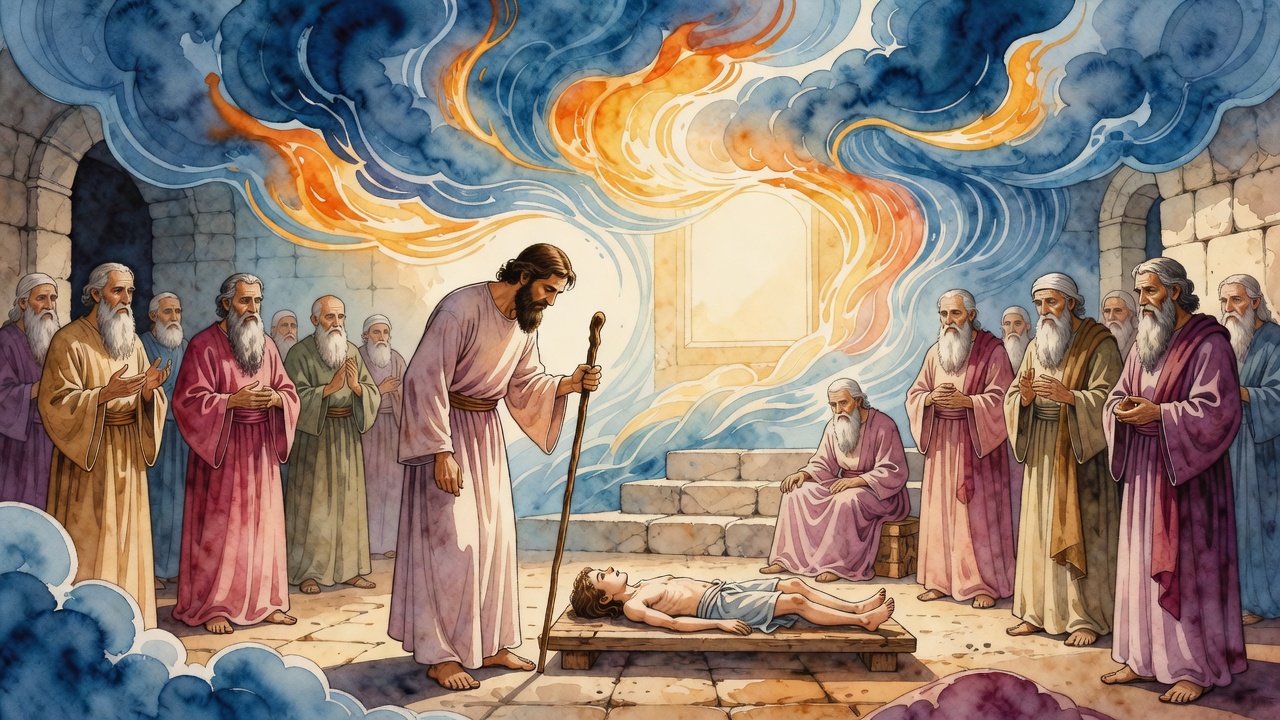
The rebuke came from the page Elisha had been learning. The study of impurity became a sentence. Naaman's disease would cling to Gehazi and to his descendants. The hidden silver did not stay hidden. The garments did not cover him. Leprosy rose on his face, white and visible, turning secret greed into public skin.

\n\n

The double portion had filled Elisha's life with wonders, but it did not protect the house from a servant who wanted reward without righteousness. Elijah's spirit opened rivers. Elisha's word healed waters. Gehazi turned away from both and walked out carrying silver into a future marked by disease.

\n\n

← All myths

From the tradition

Sources

2 sources

The texts this telling draws on, in full. Open a card to read inline, or expand it for a wider, quieter read.

Legends of the Jews 8:5Legends of the Jews

Legends of the Jews turns to Elisha Receives a Double Portion of Elijah's Spirit.

Elijah had promised Elisha a "double portion" of his spirit. And according to Legends of the Jews, that promise was fulfilled instantly. In fact, Elisha performed sixteen miracles during his lifetime, doubling the eight attributed to his master.

The first miracle, crossing the Jordan River, is particularly striking. Elijah had crossed it with Elisha at his side. But Elisha? He traversed the river alone. As the saying goes, two righteous ones always have more power than one.

With great power, as they say, comes great responsibility. And Elisha's next miracle, the "healing" of the waters of Jericho, proves that being a prophet isn't always easy. The story goes that the water was undrinkable, so Elisha purified it, making it safe. Sounds good. Well, not for everyone.

Imagine you're a water merchant, selling clean water for a living. Suddenly, the prophet makes the local water source drinkable, and your business dries up. According to Legends of the Jews, these tradesmen were, let’s just say, not the most virtuous bunch. Elisha, with his prophetic insight, knew that they, their ancestors, and their descendants had "not even the aroma of good about them."

So, he cursed them.

Suddenly, a forest sprang up, and bears emerged, devouring the complaining merchants. Yikes!

Now, we might think they deserved it, but even with their wickedness, Elisha’s actions had consequences. That Elisha was struck with a serious sickness as a "correction" for giving in to passion. It seems even prophets aren't immune to the pitfalls of wrath.

This reminds us of Elijah, who also struggled with letting anger and zeal take over. God, it seems, wanted both of these great prophets to be cleansed of this fault. We find this echoed later in the narrative, when Elisha rebukes King Jehoram of Israel. In that moment, the spirit of prophecy actually left him, and he had to find ways to reawaken it within himself. He had to actively work to regain that connection.

What does this tell us? Perhaps it's that even those chosen for greatness are still fundamentally human, wrestling with the same emotions and challenges as the rest of us. That even with divine power, self-control and compassion are virtues to be constantly cultivated. It's a reminder that being a force for good requires not only power, but also wisdom and a constant striving for inner balance. And that, perhaps, is the most miraculous lesson of all.

Full source
Legends of the Jews 8:12Legends of the Jews

He wasn't just anyone; he was the servant of the prophet Elisha. A position of immense privilege. But Gehazi, it seems, had a fatal flaw: he was, shall we say, a little too interested in worldly gain.

Remember Naaman, the Syrian captain? He came to Elisha seeking healing from leprosy, and Elisha, through divine intervention, cured him. Naaman, overjoyed, wanted to reward Elisha. But Elisha, a man of true integrity, refused. Elisha had specifically told Gehazi not to accept anything from Naaman. Did Gehazi listen? Of course not.

Driven by greed, Gehazi ran after Naaman and, with a fabricated story, managed to get his hands on silver and garments. He hid his bounty, thinking he could deceive the prophet. But you can't hide anything from a prophet, can you?

When Gehazi returned, Elisha was deep in study, poring over the Mishnah (the earliest code of rabbinic law) Shabbat (the Sabbath). The Mishnah, by the way, is a central text of the Oral Torah, a compilation of Jewish laws and teachings. And Shabbat? Well, that's the Sabbath, the day of rest. Specifically, Elisha was studying a section dealing with the "eight reptiles" – a rather unusual detail, it first appears.

Then, Elisha confronted Gehazi. According to Ginzberg’s retelling in Legends of the Jews, Elisha rebuked him, saying, "Thou villain! the time has come for me to be rewarded for the study of the Mishnah about the eight reptiles. May my reward be that the disease of Naaman afflict thee and thy descendants for evermore." Talk about a harsh reward!

And just like that, leprosy appeared on Gehazi's face. A stark, visible consequence of his deceit.

But why such a severe punishment? The tradition tells us it wasn’t just about the money. It was about Gehazi's character. He was, the texts suggest, sensual, envious, and, perhaps most damning of all, he didn't believe in the resurrection of the dead. A pretty bleak assessment, wouldn't you say?

His flaws weren't isolated incidents. They manifested in other ways too. Remember the Shunammite woman? Her son had died, and she came to Elisha seeking help. In her grief, she clung to the prophet. Gehazi, instead of showing compassion, tried to push her away, allegedly even touching her inappropriately. The text describes him taking her "passionately in his arms," supposedly to force her away. Whether his motives were pure or malicious, his actions lacked empathy and respect.

So, what do we take away from the story of Gehazi? It's a cautionary tale, of course. A reminder that actions have consequences, especially when they involve abusing trust and pursuing selfish gain. It makes you wonder: How often do we, in our own lives, face similar temptations? How do we choose integrity over immediate gratification? It’s a question worth pondering, isn’t it?

Full source