Elijah Was Hidden and Elisha Doubled Every Miracle He Left Behind
Elisha asked for a double portion of Elijah's spirit. Elijah called it a hard thing. Elisha watched and received it, and the count came out exactly right.
Table of Contents
 Click for full size
A Hard Thing
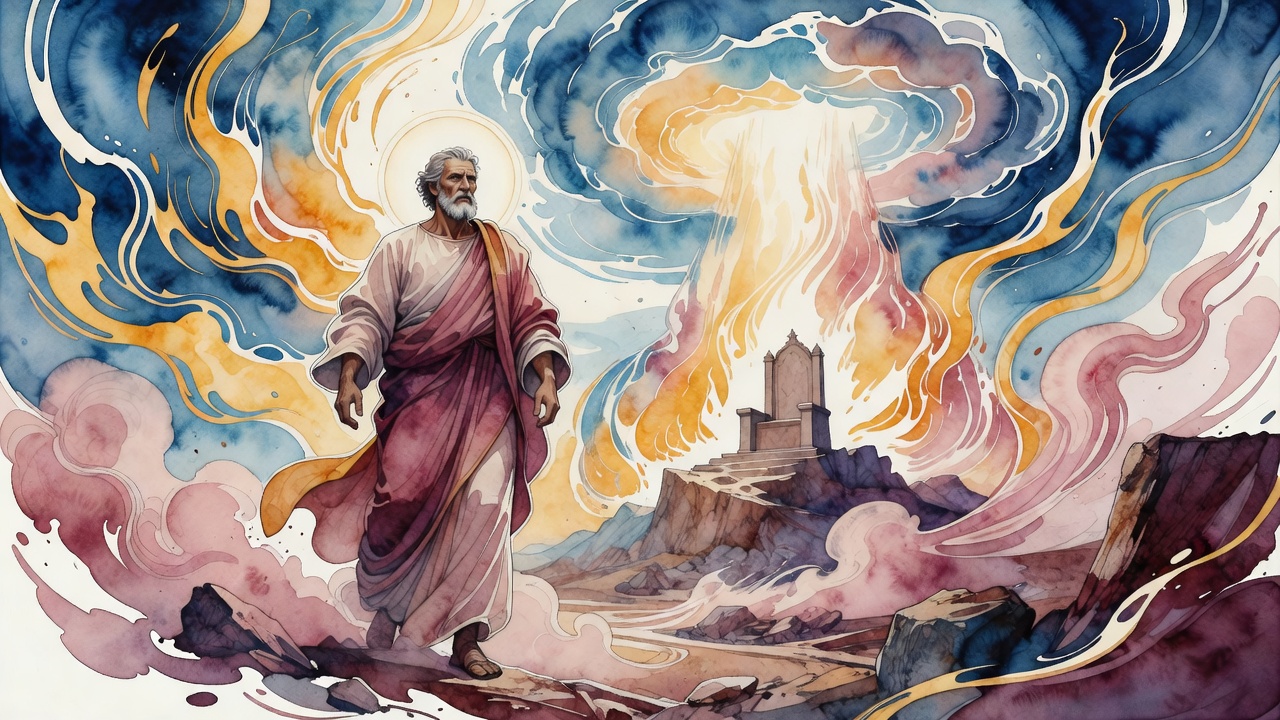
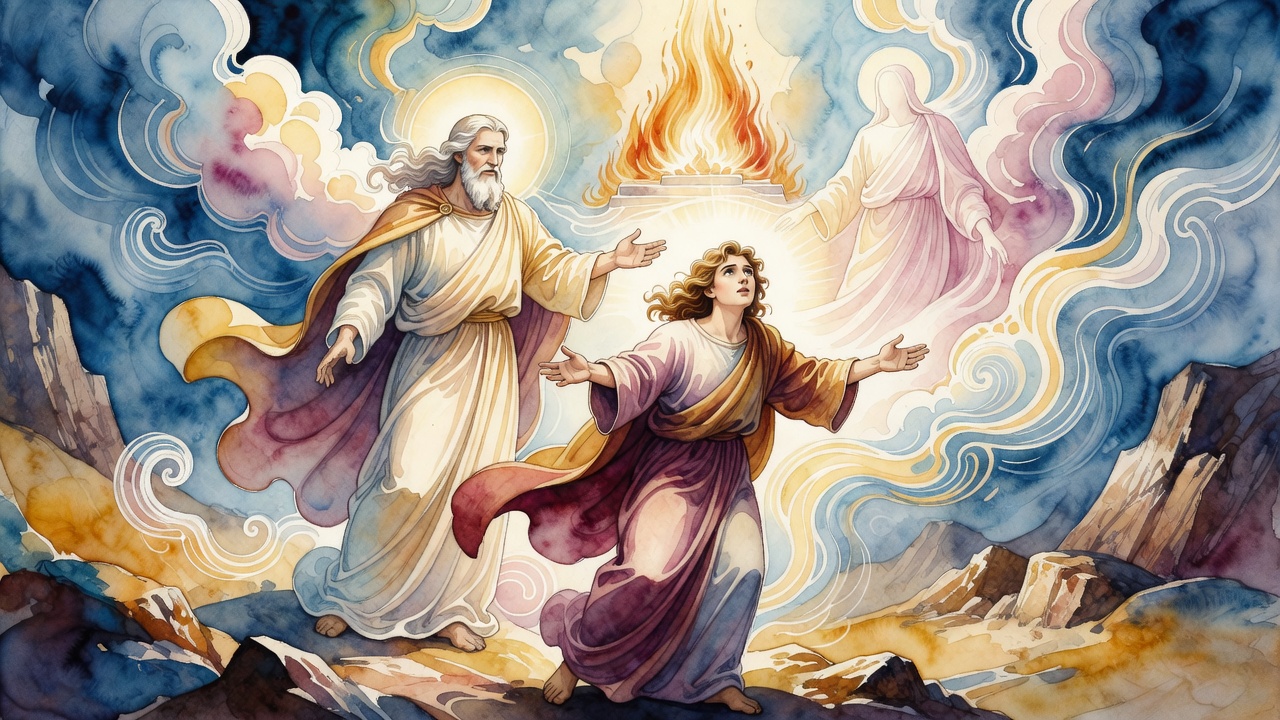
He asked for one thing. Standing at the edge of the Jordan with his master, watching Elijah prepare for something no prophet before him had done, Elisha ben Shaphat made his request: let a double portion of your spirit fall upon me.
Elijah was the man who had called down fire on the altar of Carmel and burned up the offering, the wood, the stones, and the water in the trench. He had stood alone against four hundred fifty prophets of Baal and outlasted every one. He had run faster than a royal chariot. He had also collapsed beneath a juniper tree and asked to die, which is the detail that makes every earlier one believable. He was not invincible. He was sustained by something outside himself. And Elisha was asking for double what sustained him.
Elijah said: you have asked a hard thing. But if you see me as I am taken, it will be granted.
The Arithmetic of the Double Portion
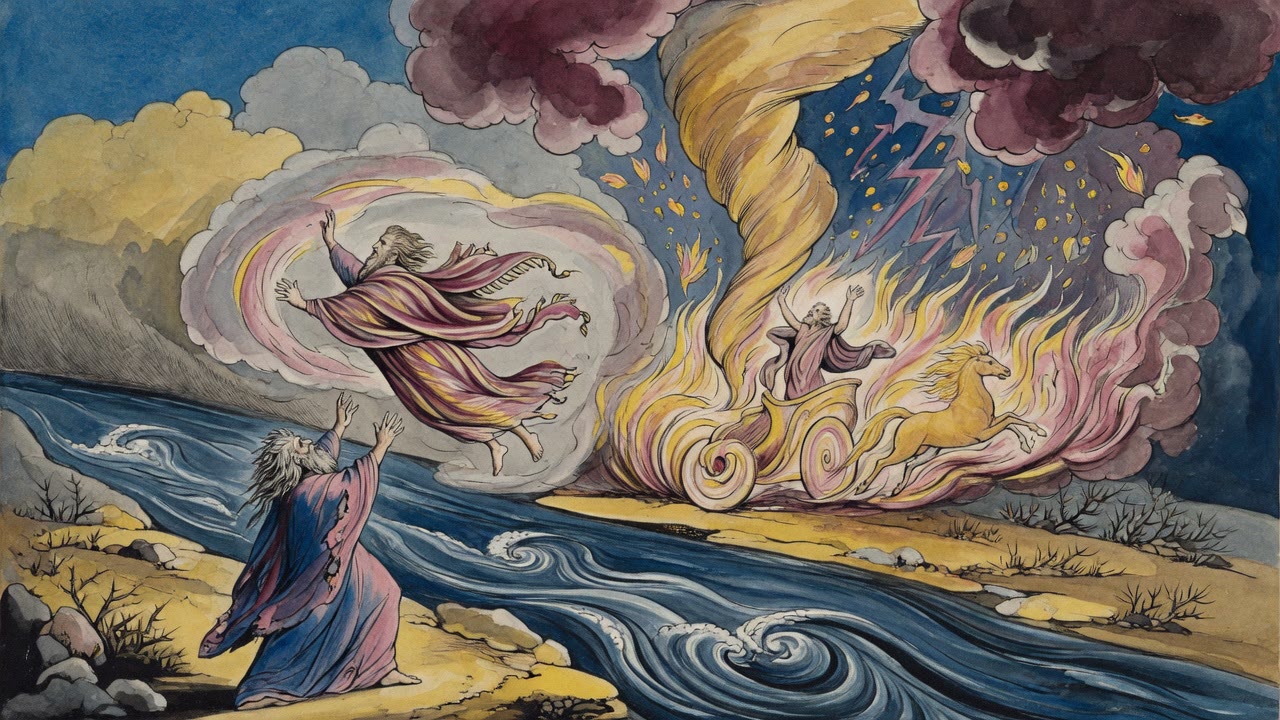
Elisha watched. The whirlwind came. The chariot of fire and the horses of fire appeared and divided them, and Elijah went up in the whirlwind into heaven. Elisha tore his clothes in two pieces, a mourning gesture and perhaps also a visual echo of the divided mantle, and he picked up Elijah's cloak from the ground where it had fallen. He went to the Jordan and struck the water with it. The water divided. He crossed.
Ben Sira, composing his catalogue of Israel's great figures around 180 BCE, states the arithmetic plainly: many twofold signs and wonders came from all that came from Elisha's mouth. The Hebrew word for twofold is mishneh, the same root as the word in Elisha's original request. The text is not using the number coincidentally. It is saying that the double portion was counted and verified. Elijah performed eight miracles. Elisha performed sixteen. Covenant kept.
Elijah in the Treasuries
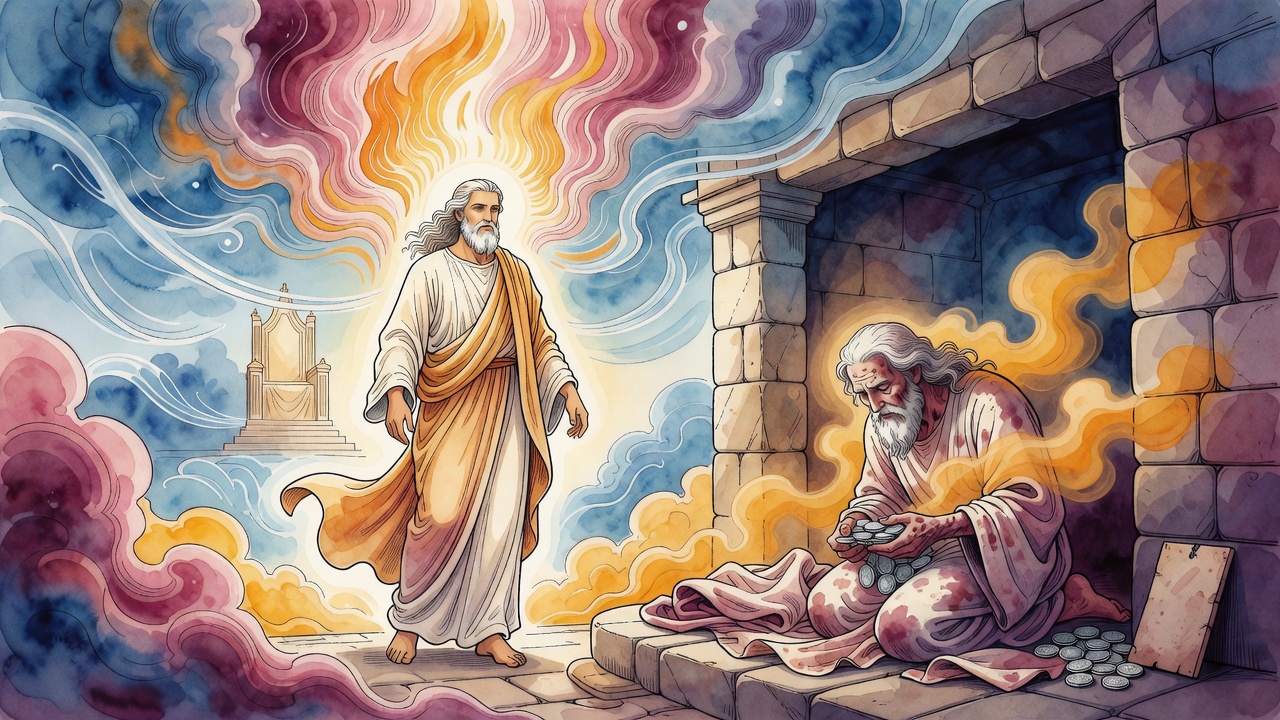
But Ben Sira adds something strange. Elijah is in the treasuries. Hidden. His spirit filled Elisha, and yet Elijah himself did not disappear from the tradition's map of the living world. He was stored. The word suggests a storeroom in heaven, a place where things are kept because they will be needed again.
The rabbinic traditions developed this image considerably. Elijah did not die. He was translated, like Enoch before him, lifted from the ordinary death that comes to everyone else. He is present at every brit milah. He comes to every seder. He appears to scholars in moments of need. He sits with the poor and the suffering. He waits for the moment when he will be sent to announce that the end of the long exile is approaching. The whirlwind took him up and set him aside, not out of the story but into a holding position, waiting.
What Phinehas Has to Do With It
Some traditions identified Phinehas with Elijah. Phinehas, the priest who never died, who earned a covenant of everlasting priesthood for his zeal at Baal Peor. The logic was that both were translated, both were zealous for God, both carried a kind of covenantal permanence that set them apart from the mortality of other figures. The identification was not universal, but it pointed toward something the tradition was reaching for: the idea of a figure who belongs to every generation because he belongs to no specific death.
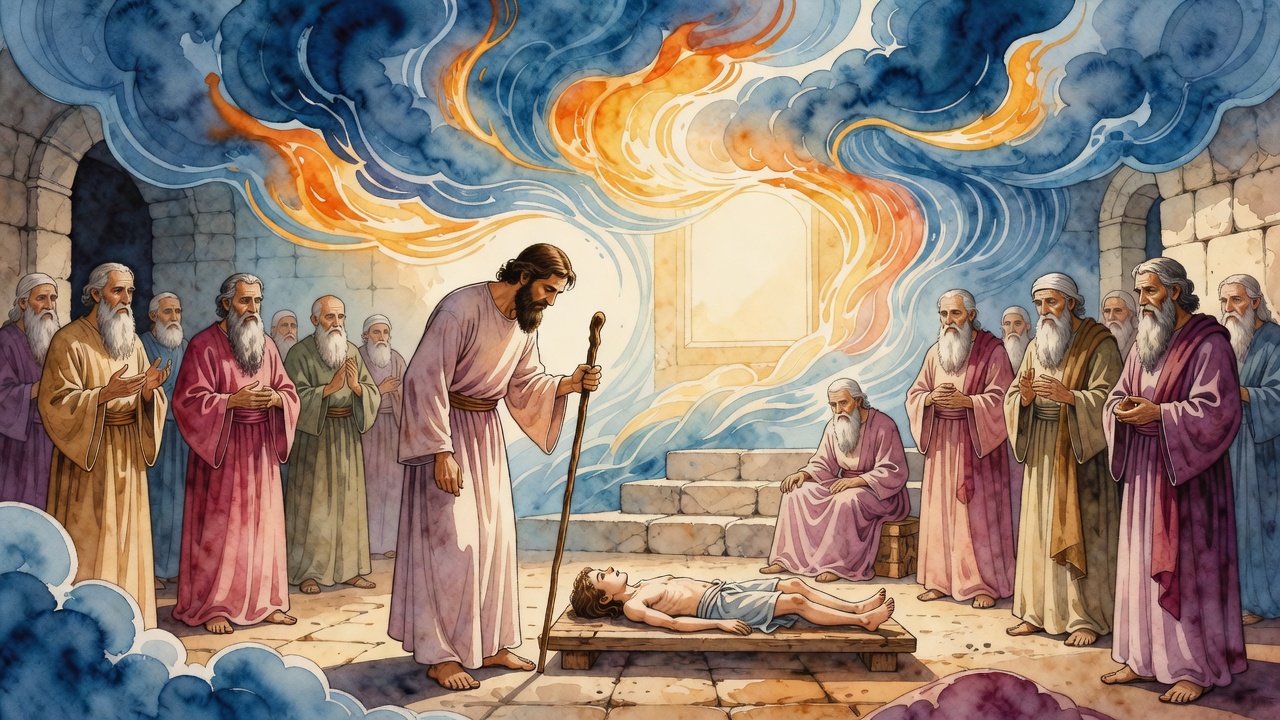
Elisha carried the spirit forward. He raised the dead, healed the waters at Jericho, purified the poisoned stew, fed a hundred men with twenty loaves, and healed Naaman the Aramean general. He did twice what Elijah had done, and he did it in the ordinary world while Elijah was stored in the treasuries. The doubled spirit walked the earth. The original source was kept safe for a use that had not yet come.
← All myths