The Clothes That Angels Made at Sinai Lasted Forty Years
A boy born in the sand still wore the same tunic at the Jordan. The cloud had rubbed it white for forty years, like a snail's shell.
Table of Contents
 Click for full size
The Tunic Grew With the Child
A boy born in the sand put his arms through sleeves that had already been worn. Years later he stood at the Jordan in the same cloth. The hem had not frayed. The shoes had not split. The fabric had not thinned against his ribs.
Rabbi Yosei bar Hanina said the miracle stuck to living skin. What they packed in trunks wore out like any other wool. What they wore on their backs did not. A child grew, and the garment grew with him, the way a snail's shell grows and does not crack.
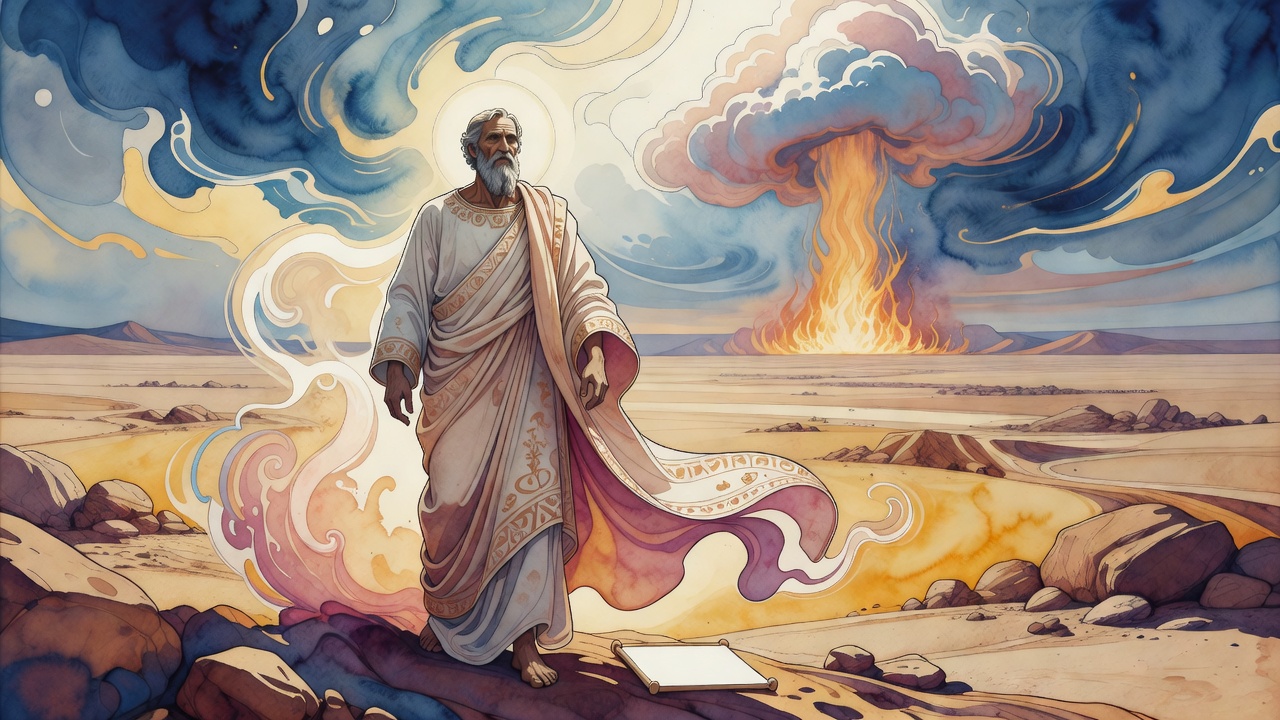
Moses had already said it as a fact. Your garments did not wear out from upon you. God knew your walking through this great wilderness these forty years (Deuteronomy 8:4). The people standing at the river were still dressed in the clothes of Sinai.
Angels Dressed Them on the Mountain
Rabbi Elazar, son of Rabbi Shimon ben Yohai, asked his father-in-law a dry question. Were there looms that left Egypt with Israel?
Rabbi Shimon ben Yosei shook his head. The garments on their bodies were the ones the ministering angels had dressed them in at Sinai. That is why they did not wear out.
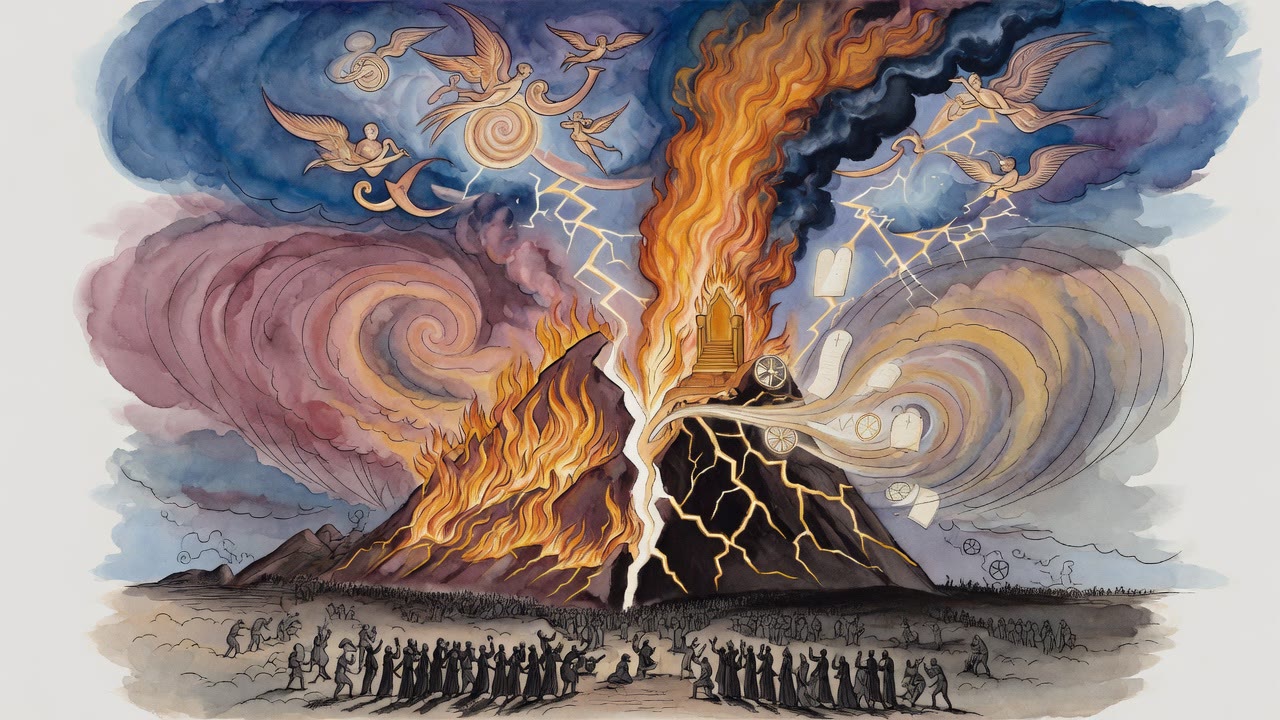
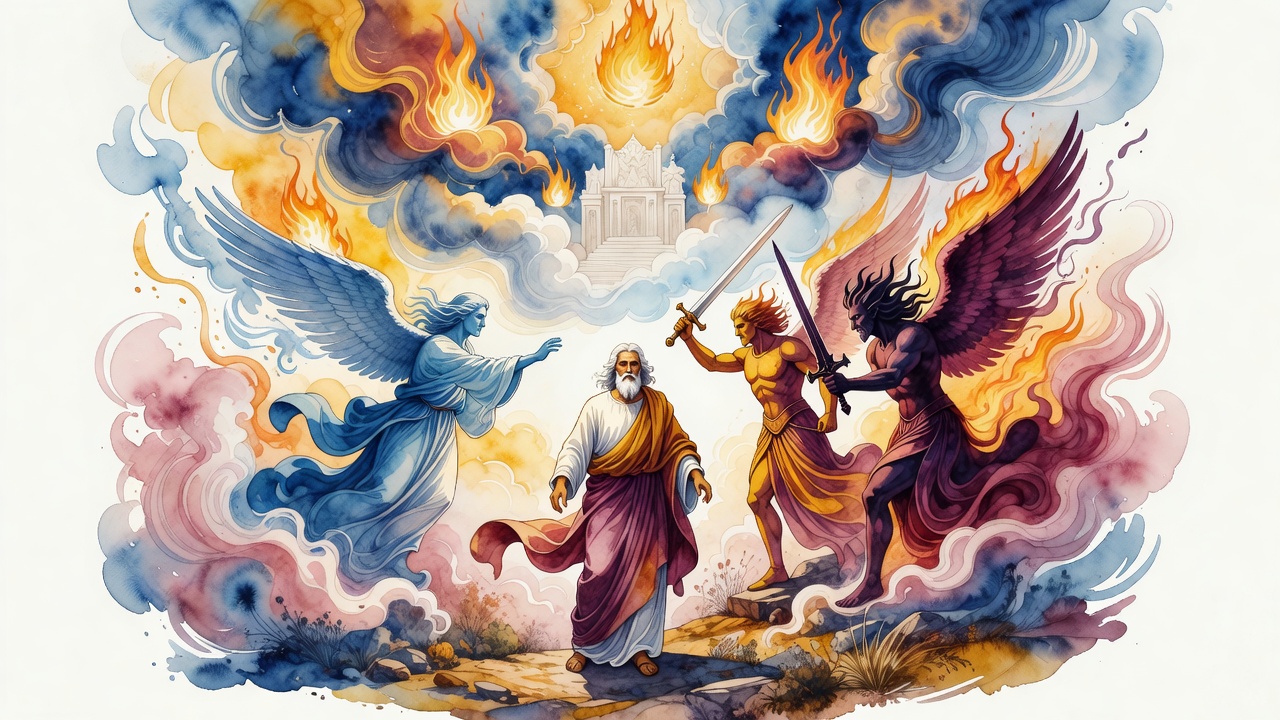
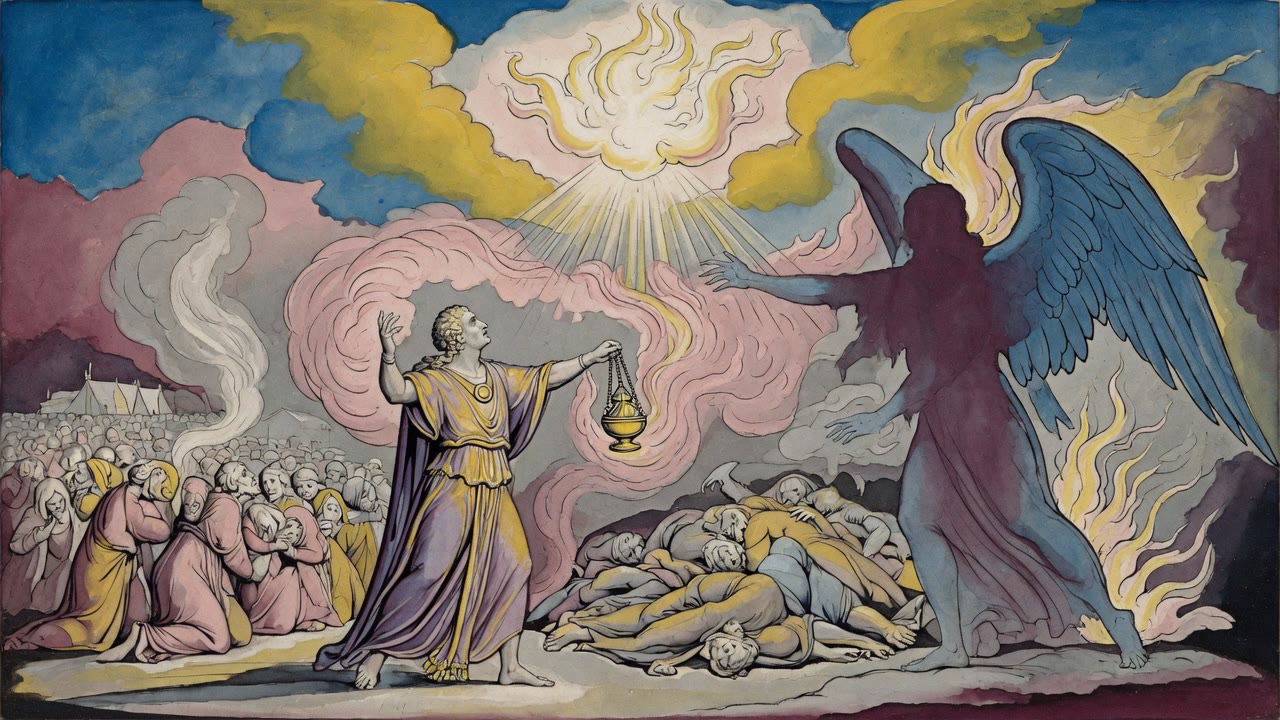
Fire covered the mountain. The people stood below it and shook. The angels came down and fastened cloth to each of them, not market wool, not anything a human hand had cut. A garment made in that hour does not fray the way a tunic from Goshen frays.
Rabbi Elazar pressed him. They grew. Did the clothes go small on them?
"Do not wonder about this," Rabbi Shimon said. "When a snail grows, its shell grows with it."
The Cloud Washed What Fire Did Not Burn
Did they not need washing?
The cloud rubbed them and whitened them. Rabbi Elazar was not finished. The cloud is fire. Were they not burned?
"Do not wonder about this. Asbestos is cleansed only with fire. These garments were heavenly work. The cloud rubbed them and did not harm them."
Moths? After death, maggots did not touch them. In life, all the more so.
Sweat? They ran in the grass meadows of the well, and the scent of their garments went out like the scent of Lebanon (Song of Songs 4:11). All that goodness came from a garden spring, a well of living water.
The same clothes carried them through hunger and the graves of a whole generation. Nothing tore. The miracle attended the body wearing the cloth, not the closet storing it.
Behold, Your Time to Die
Then God spoke the word Moses had used in praise.
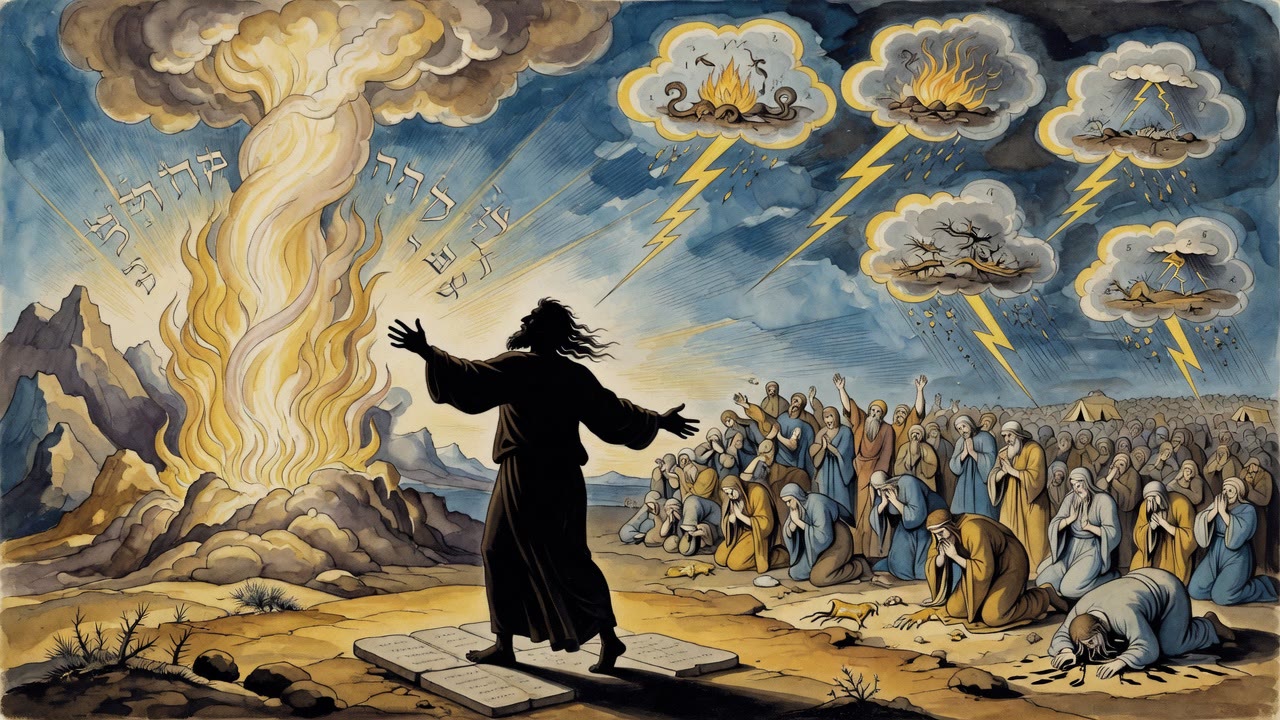
"Behold, your time to die is approaching" (Deuteronomy 31:14). The word was hen (הן), behold. Moses had opened his mouth before six hundred thousand and said, "Behold, the heavens and the heavens of the heavens belong to the Lord your God" (Deuteronomy 10:14). Now the same word came back as a notice. His days were ending.
Moses argued. Master of the universe, with the word I used to exalt You, You have decreed death on me. All Your measures are measure for measure. This is an evil measure for a good measure, a short measure for a full one.
God answered that the word was still a good measure. "Behold, I am sending an angel" (Exodus 23:20). "Behold, restitution will be made to the righteous" (Proverbs 11:31). "Behold, I am sending Elijah the prophet to you" (Malachi 3:23). You exalted Me over sixty myriads. I will exalt you among fifty-five myriads of the righteous. Hen is fifty-five.
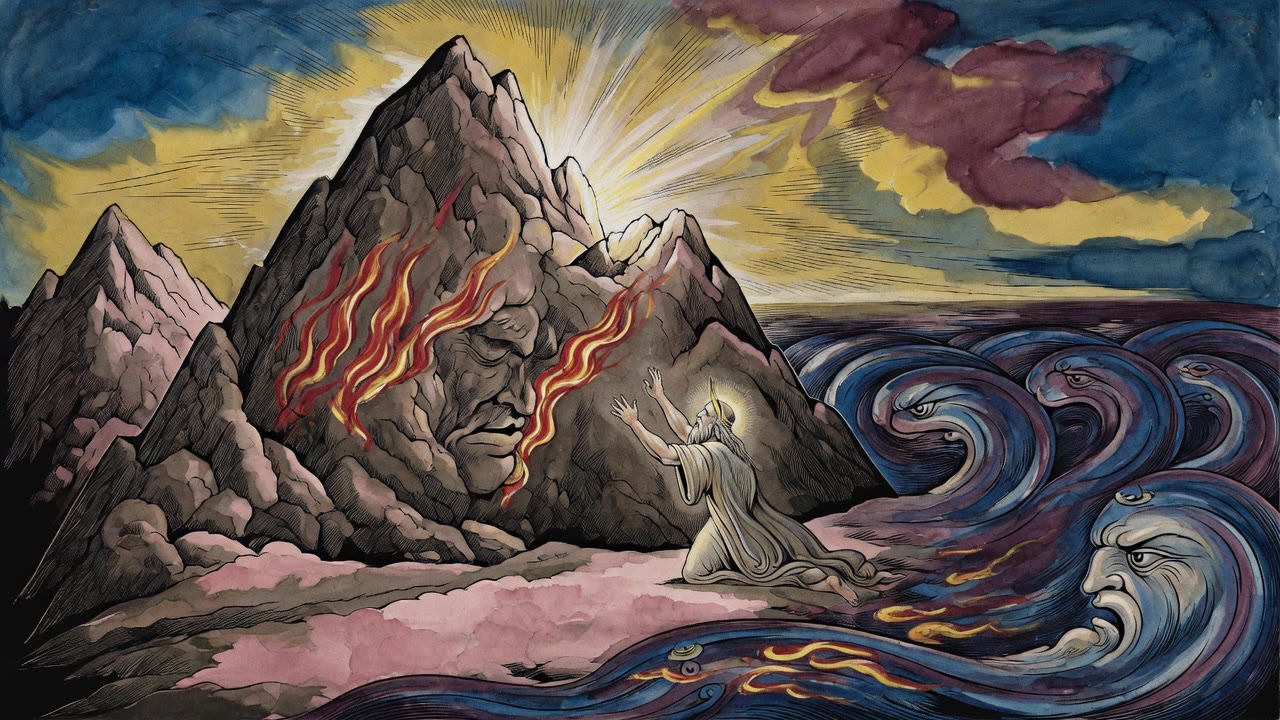
The adults who received the angel-made garments at Sinai died in the sand. Their children wore those same garments to the river. Moses stood in his and was told to die. Joshua would take them across. Moses would not. The wilderness had clothed Israel until he died, and the cloth that had grown with the children went into the land without him.
← All myths