God Built Seven Earths to Hold the Promise He Made to Adam
Adam was nine hundred and thirty years old and dying. He asked what came next. God sent Michael to say the dew that wakes the dead was already stored.
Table of Contents
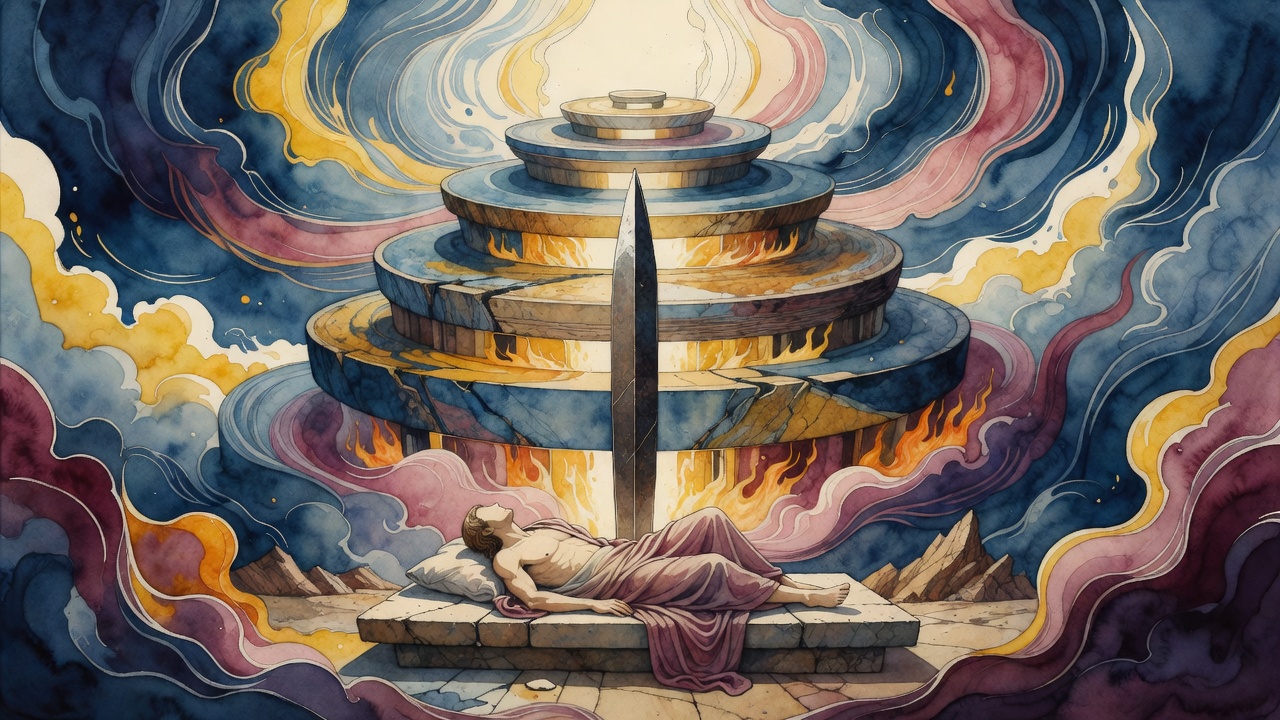 Click for full size
The cosmic layer cake
Start at the floor. The lowest earth is called Erez. Above it sits an abyss, then Tohu, then Bohu, then a sea, then more waters. A soggy basement of unfinished creation, each layer a different quality of darkness.
Climb past Adamah, past Arka, and you arrive at the level the rabbis identified as containing everything dreadful: Gehenna, the Gates of Death, the Gates of the Shadow of Death, the Pit of Destruction, the Clay of the Mire, Abaddon, and Sheol (the shadowy underworld of the dead). Angels of Destruction stand guard over the souls of the wicked. This is the middle of the structure, not the bottom. The bottom is where expelled souls land when they fall out of even this.
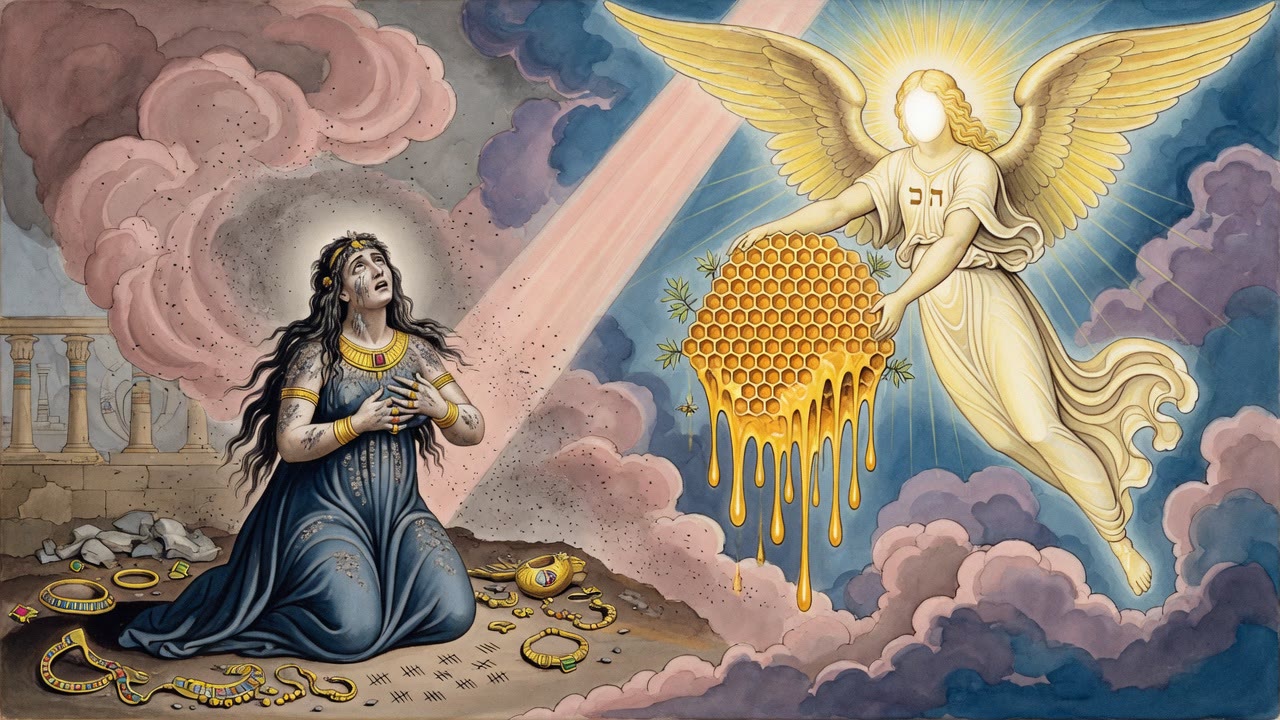
At the top, the seventh heaven holds the Divine Throne, the seraphim, the ofanim, the Hayyot, the storehouses of life, peace, and blessing. Also stored there: the souls of the righteous, the souls of generations not yet born, and the dew God will use one day to wake the dead.
That dew at the top of the structure is pointing at something at the bottom of the story.
A dying man receives a promise on his deathbed
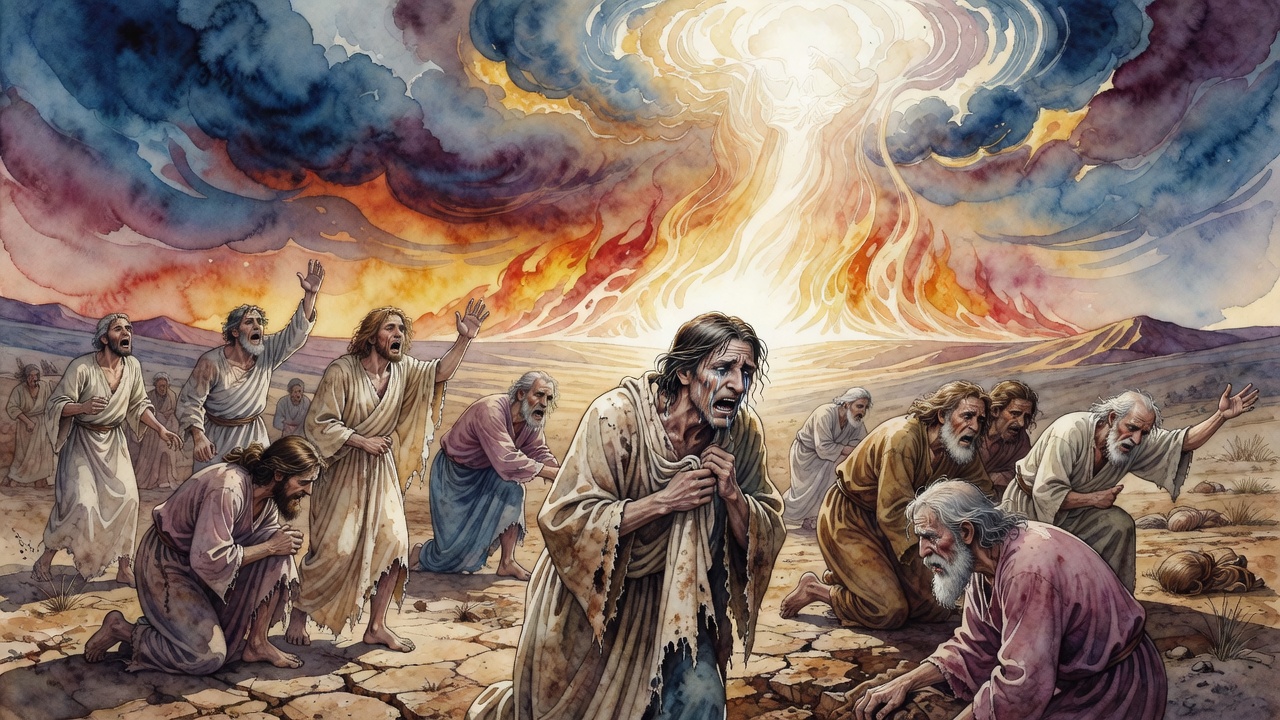
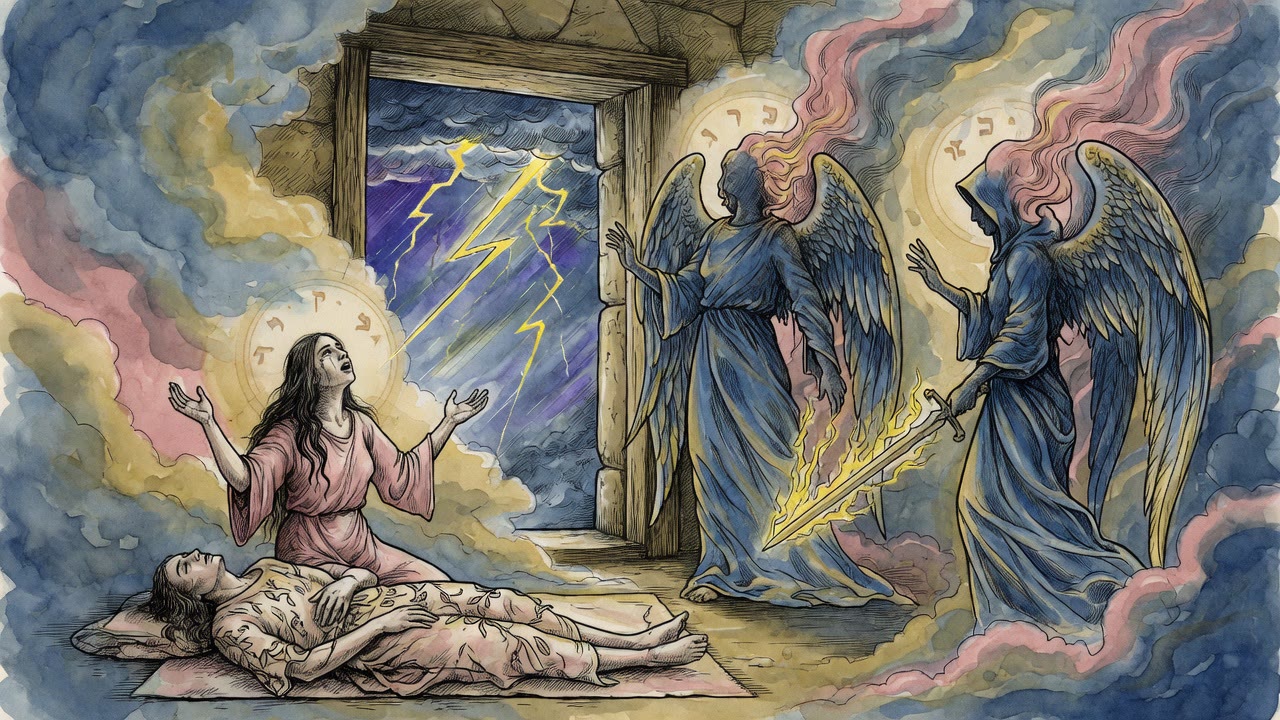
Adam was nine hundred and thirty years old when he understood he was dying. He called his children and grandchildren to him. He told them what Eden had looked like and what it had cost him to leave. He told them about the angel with the flaming sword and the moment the garden gate closed behind him.
Then he asked for something he had no right to expect. He wanted to go back. Not to Eden, because Eden was closed. But he wanted the suffering to end, and he wanted some account of what happened after the suffering. He wanted to know that the expulsion was not the last word.
God sent the archangel Michael with an answer. Adam would die. The body would go into the earth. But on the day of judgment, God would raise him. The promise was specific enough to constitute a commitment: you will be resurrected. The dew stored in the seventh heaven was already earmarked for that day. The whole seven-floor apparatus existed, in part, to hold that promise in place across the centuries between Adam's death and whatever comes after history ends.
Angels wept onto a knife and made it useless
Centuries after Adam's death, on a mountain in the land of Moriah, the promise was tested in a way Adam had not anticipated.
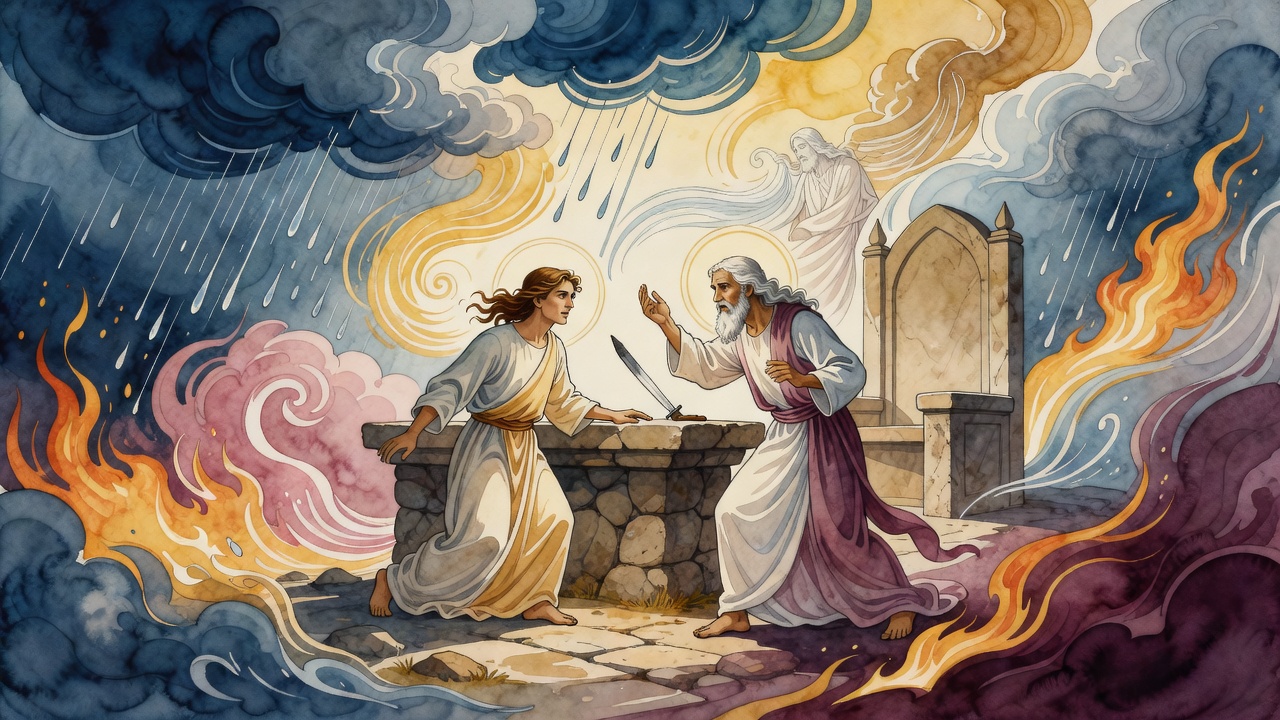
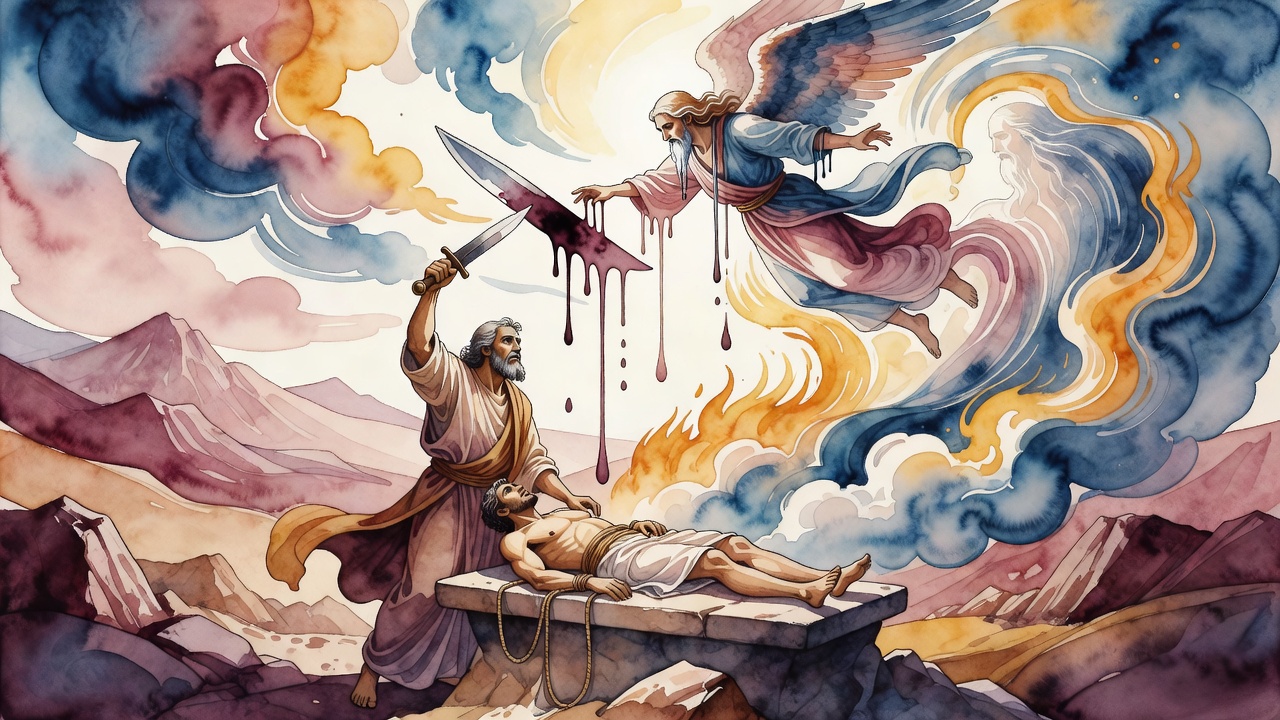
Abraham had climbed the mountain with his son Isaac and a knife. The command was unmistakable. Offer him. The whole apparatus of the covenant, the thing God had built the seven earths to hold, was apparently going to end on this mountain with a blade.
The angels who watched from the levels above Moriah understood what was at stake. If Isaac died here, there was no Jacob, no twelve tribes, no Sinai, no Temple, no line of transmission for the covenant. The promise God had made to Adam at the deathbed, preserved in the dew of the seventh heaven for eventual use, had been working toward a people who would carry it forward. That people converged on one boy tied to a stone.
The angels wept. The tears fell onto the knife. The tradition Louis Ginzberg assembled in his Legends of the Jews says the tears dissolved the blade's edge. When Abraham brought the knife down, it could not cut. The angel called from heaven to stop his hand, and the hand stopped because the knife was already useless.
The ram in the thicket appeared. Isaac survived. The promise held.
What the whole architecture is for
The seven earths and seven heavens are not decoration. They are a structural argument about time. God built the universe with enough floors and enough storage space to hold a promise across ten centuries without losing it.
Adam received the promise on a deathbed in the second earth, one floor above the bottom. The dew that will fulfill it is stored in the seventh heaven, the highest level. The distance between the promise and its fulfillment is not a problem to be solved. It is the design. The whole structure is built to maintain that gap until the appointed moment, and to protect the lineage that carries the covenant forward in the meantime.
The angel's tears on the knife were not a miracle added to the story as an afterthought. They were the architecture doing its job.
← All myths