The Garden Still Keeps the Pieces Adam Lost in the Fall
Adam was the ideal man, towering and luminous. He lost it all to one mistranslated fence, and the Garden has been collecting the pieces ever since.
Table of Contents
 Click for full size
The Man Who Was Almost the World
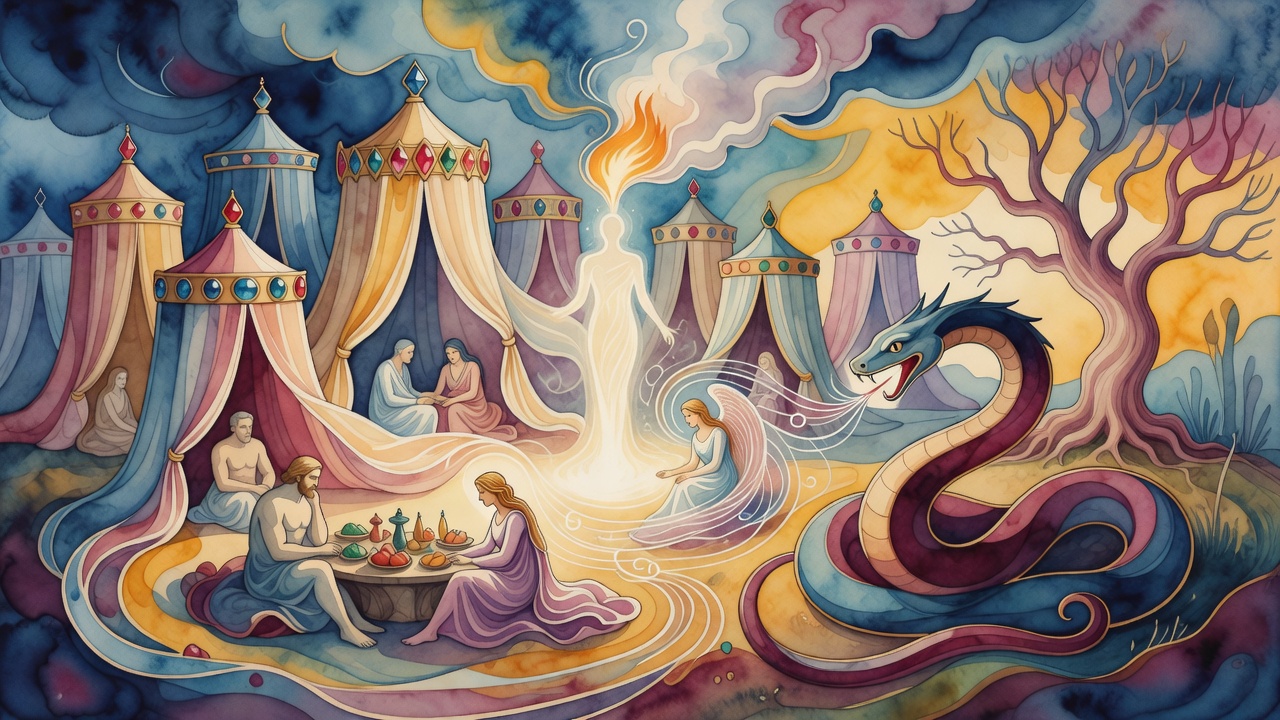
Adam arrived complete. He burst into existence at the age of twenty, the rabbis said, already formed, already standing, his body stretching from the earth below to the heavens above. Every creature God had made paled before him the way an ape pales before a person. And every beautiful woman who would ever live paled before Eve, and Eve paled before Adam himself. The fairest women paled before Sarah, the tradition recorded. Sarah paled before Eve. Eve paled before the first man. He was the first draft of everything, and nothing that came after fully matched him.
His soul entered through his nostrils. God had considered the mouth, the eyes, the ears, and then chose the breath, because the nostrils discern foul from fragrant the way a moral being must learn to discern good from evil. In the moment between the breath entering and Adam opening his eyes, the angels looked at the new creature and thought they were seeing God. They started to sing to him. God had to explain the difference.
Adam named every living thing. He did it in less than an hour. Each name was not arbitrary. It was the creature's essential nature compressed into sound. The animals came to him in pairs and he gave each pair one name that covered both. Then the pairs walked away together and he understood, in the watching of them, that he alone of all creation had no one beside him who was his kind.
The Fence Built One Step Too Far
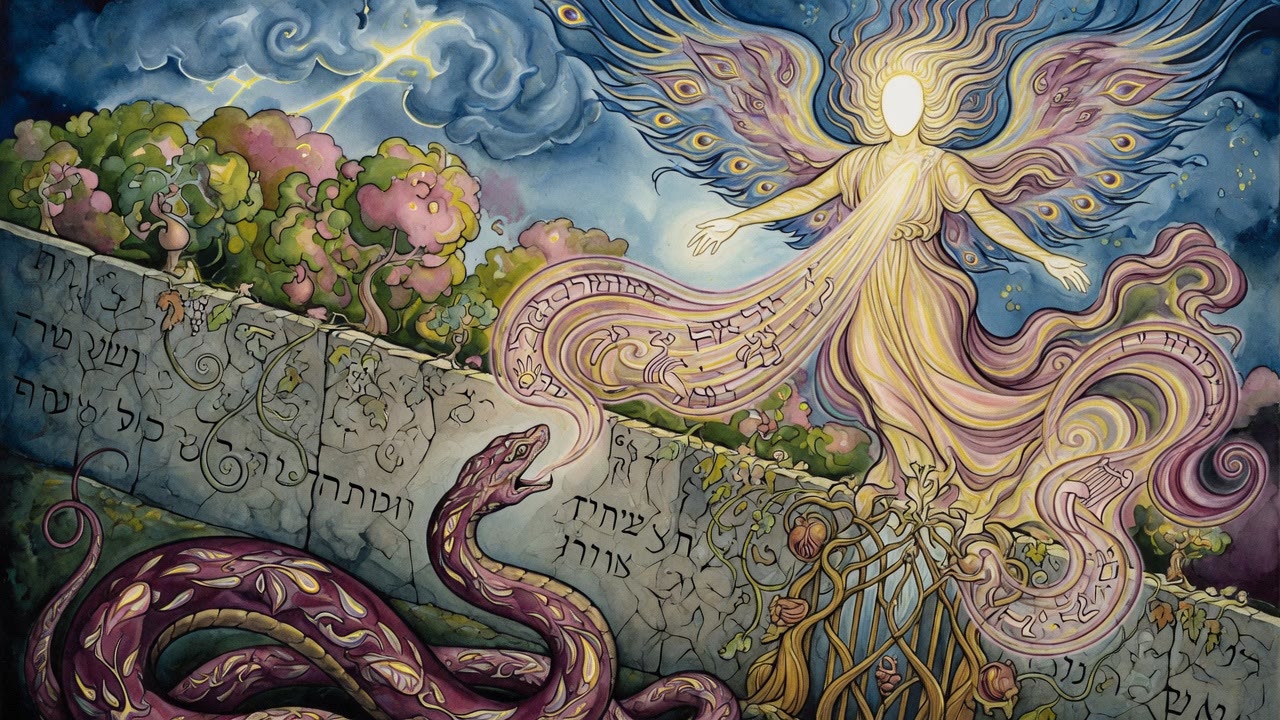
God told the couple they could eat from every tree in the garden except one. What God said was: do not eat of the tree of the knowledge of good and evil. What Adam told Eve was: do not eat it and do not touch it. He added a fence around the commandment, a precaution, the kind of precaution that seems prudent until someone pushes against it and finds it has no ground.
The serpent, who understood exactly what Adam had done, pushed Eve against the tree. Nothing happened. She touched it and did not die. The fence had held no consequence, and so she extended the same logic to the eating. Adam had said touching would kill her. Touching had not killed her. So perhaps the eating was safe too. The serpent had not lied. He had simply waited for the extra fence to fall first.
Eve stood at the trunk with her palm flat against the bark, still alive, the warning already a ruin in her mind. The extra word Adam had spoken hung there, a single syllable he never needed to add, and it had turned his caution into the very ground the serpent walked her across. Touch had been made the test, and touch had broken. The eating was only the second step over a fence that had already given way.
What the Exile Cost
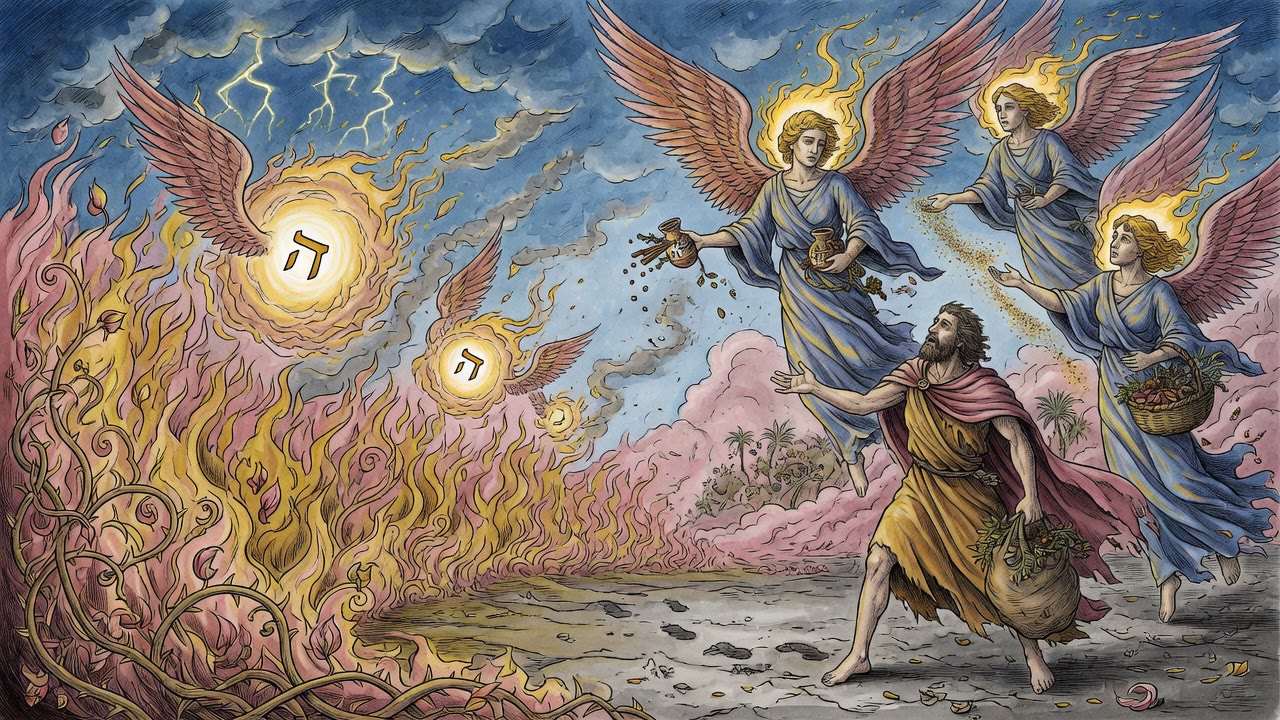
After the eating, the light that had poured from Adam's skin dimmed. The body that had reached from earth to sky contracted to the size of an ordinary man. The wisdom that had named every creature went quiet. God made garments of skin to cover the bodies that had once carried their own radiance, and the gate of the garden swung shut behind them.
But the garden did not empty entirely. The rabbis noticed what did not leave. The tree of life was still inside. The light that Adam had carried, which in the Zoharic tradition became the hidden light, the light created on the first day before the sun was made, was folded away inside the garden's locked boundary, waiting. The cherubim with the turning sword were not there to keep something out. They were there to keep something in.
What the Garden Still Holds
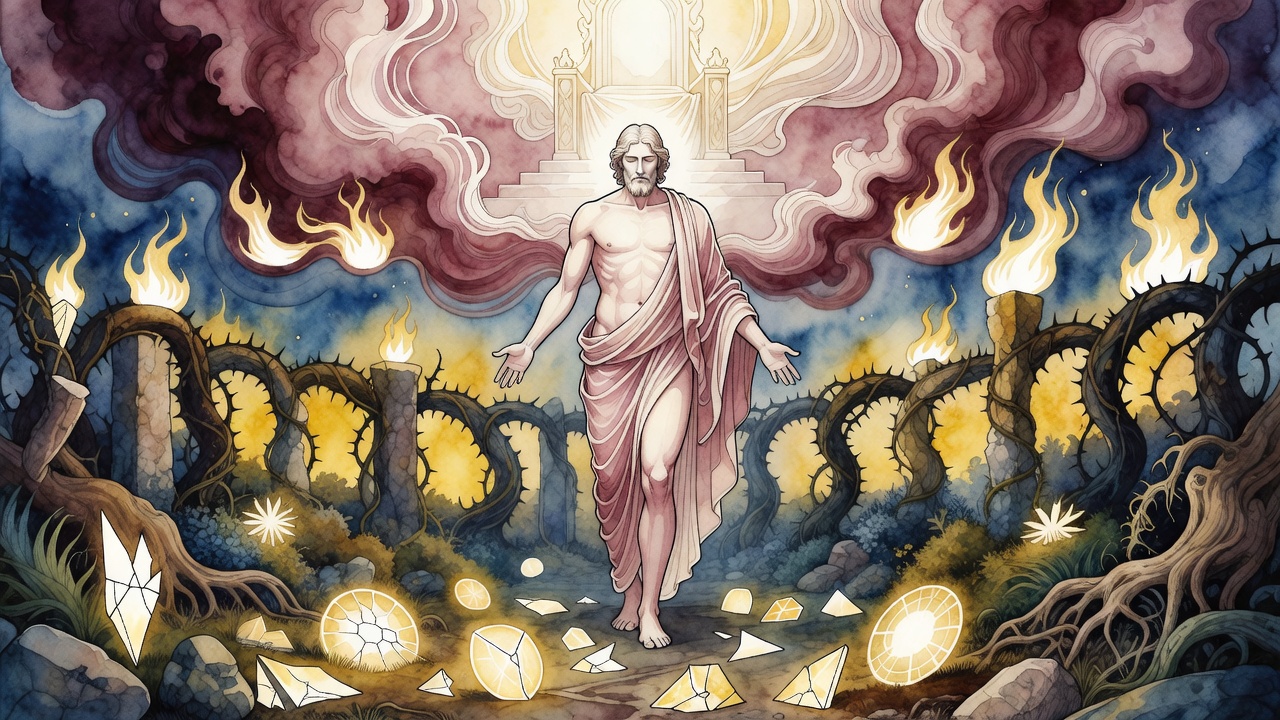
Four rivers run out of Eden and water the world. Every righteous soul who dies, the tradition held, enters a garden that is the replica or the echo of the original. There the lost light can be received again, not in the unguarded abundance of the first days, but in the measured form that a creature who has learned what good and evil cost can now actually hold.
The shoe that flew off the foot of one of Adam's descendants at a moment of crisis, and which the kabbalistic tradition tracked for generations as a token of hidden blessing passing between people who did not know they were carrying it, was one of these fragments. A piece of what had once covered the first man, traveling through history in a form no one recognized. The garden kept losing pieces. The pieces kept turning up embedded in stories that looked like other things entirely.
This is the arc the rabbis preserved. Not a fall that ended something. A fall that scattered something. The world since the gate closed is the world those pieces are moving through on their way back to the place they came from.
← All myths