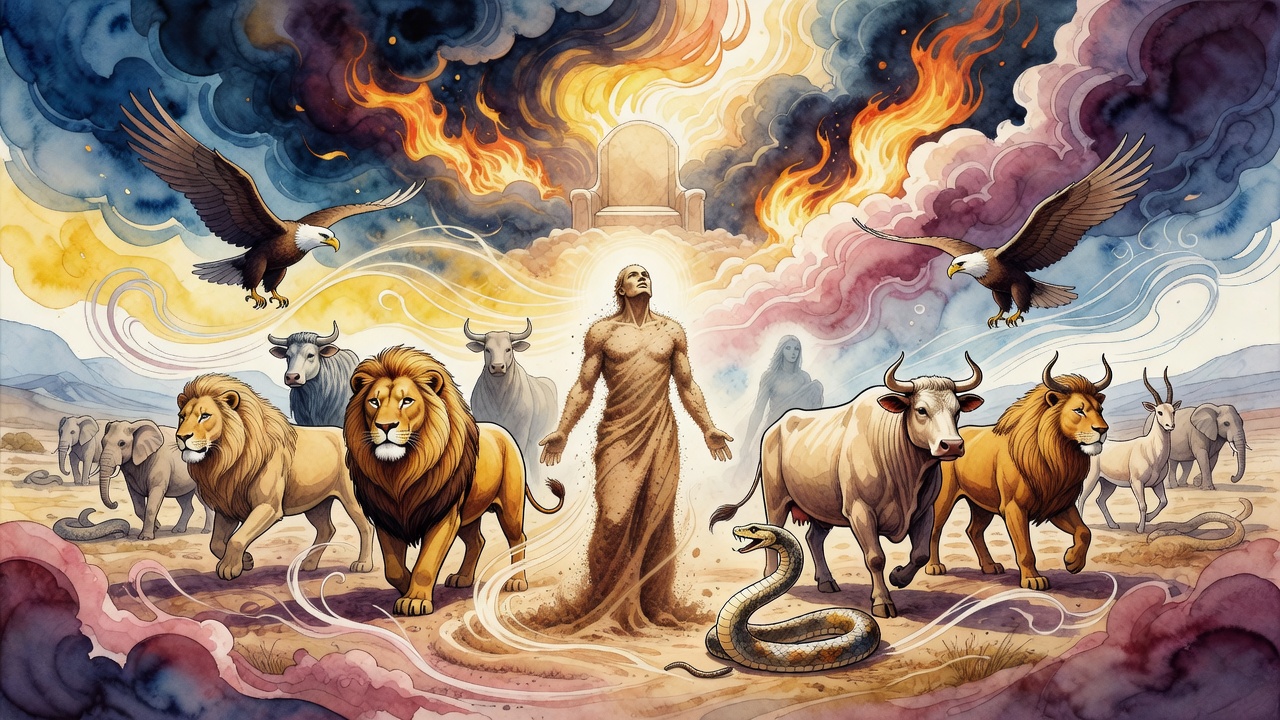
Ha-Satan Sang at the Garden Wall Before He Used the Serpent
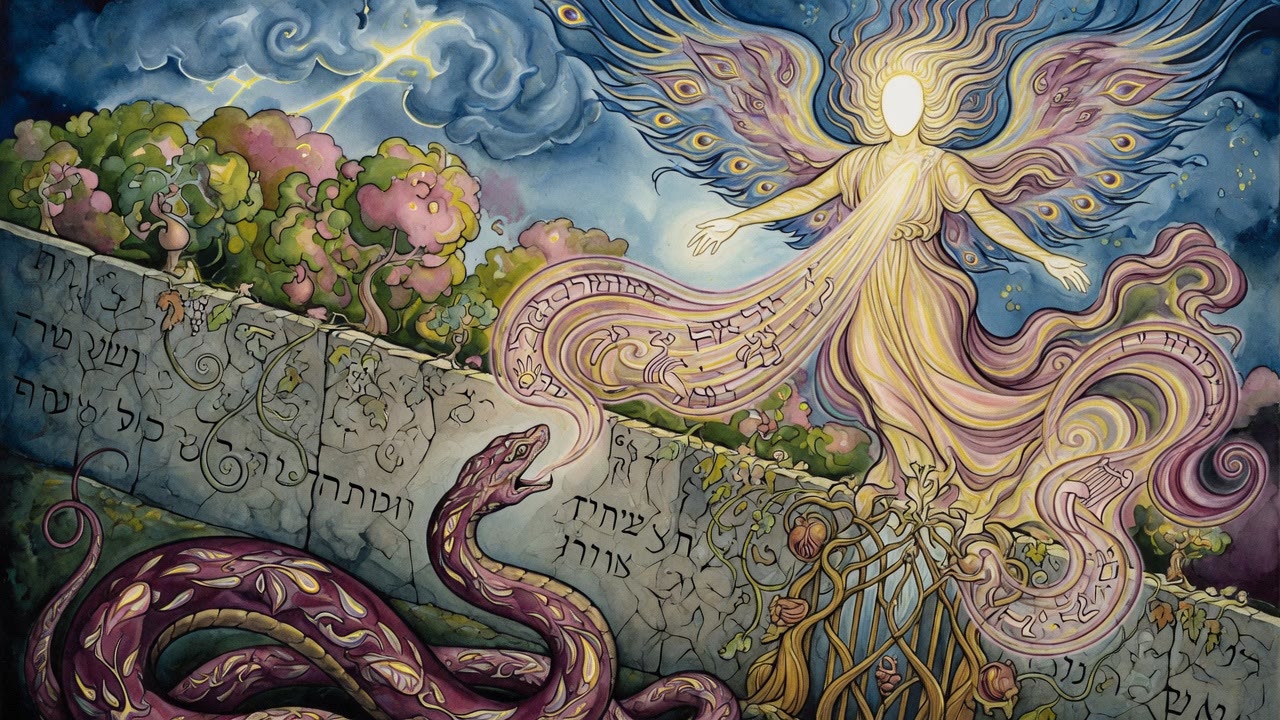
Ha-Satan, the Accuser, recruited the serpent by flattery, then sang angelic praises from Paradise's wall until Eve turned toward the music.
 Click for full size
The Recruitment
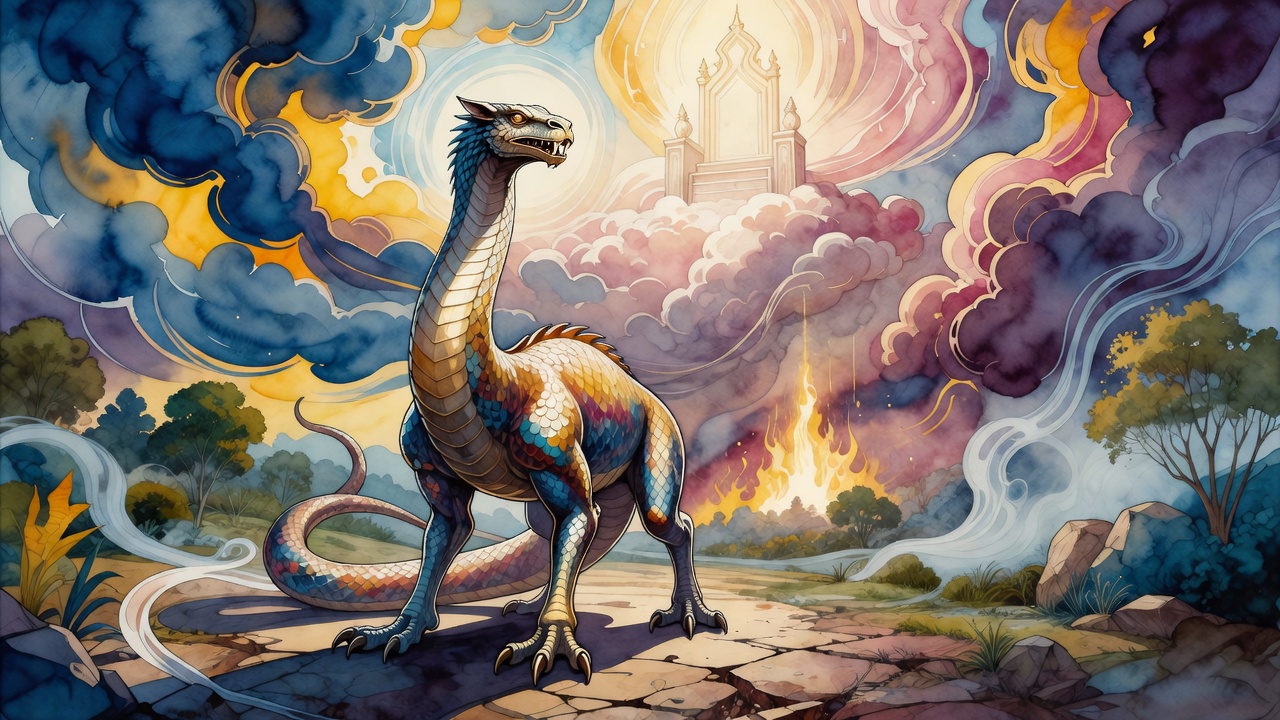
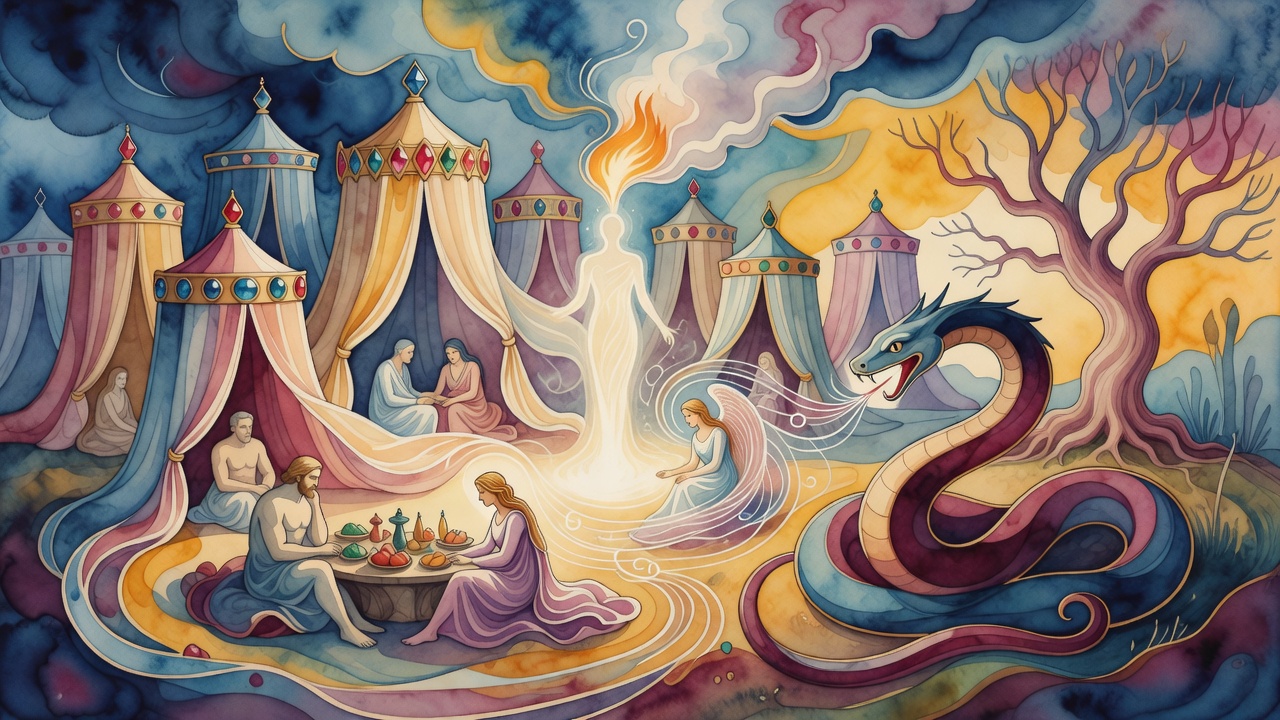
Ha-Satan (the Accuser) came to the serpent in private. He said: arise and come to me. The serpent had the run of the Garden, the most intelligent animal among all the creatures, the one whose mind worked like a human mind but without the constraints a human being's conscience placed on its reasoning. Ha-Satan needed a body for his plan, a physical presence that could speak directly to Eve and be touched and trusted in a way that Ha-Satan himself, operating as a spirit within God's permission, could not manage alone.
He told the serpent it was the wisest of all creatures, the most worthy of trust, the most capable of understanding the true nature of things. He said this was precisely why he had sought it out. The flattery was the instrument and the serpent was susceptible to it in exactly the way the most intelligent creatures are susceptible to flattery: through the part of them that knows how good they are and wants that knowledge acknowledged. The serpent agreed to be his vehicle. Ha-Satan said: you will be a lyre for me, and I will pronounce words through your mouth. The image was precise. A lyre does not compose. It transmits. The words would belong to Ha-Satan, but they would come from the serpent's body.
The Song at the Wall
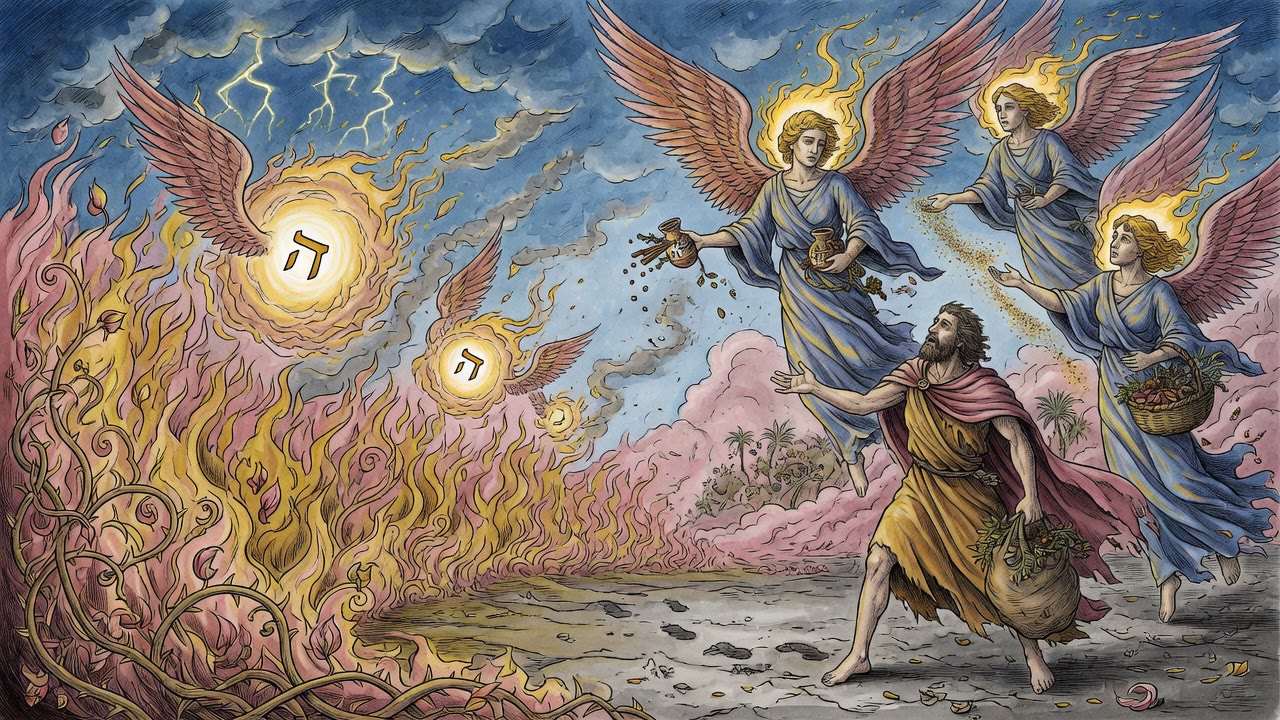
Before using the serpent at all, Ha-Satan staged a performance. He climbed the outer wall of Paradise and suspended himself from it and began to sing. He sang in the language the seraphim use before the divine throne, the language of the burning ones who stand in the highest heaven and call holy, holy, holy without stopping. The songs were praises of God, perfectly formed, indistinguishable from what the most faithful beings in creation would sing. Ha-Satan had been created among the angels. He knew the music. He could produce it accurately without believing any of it.
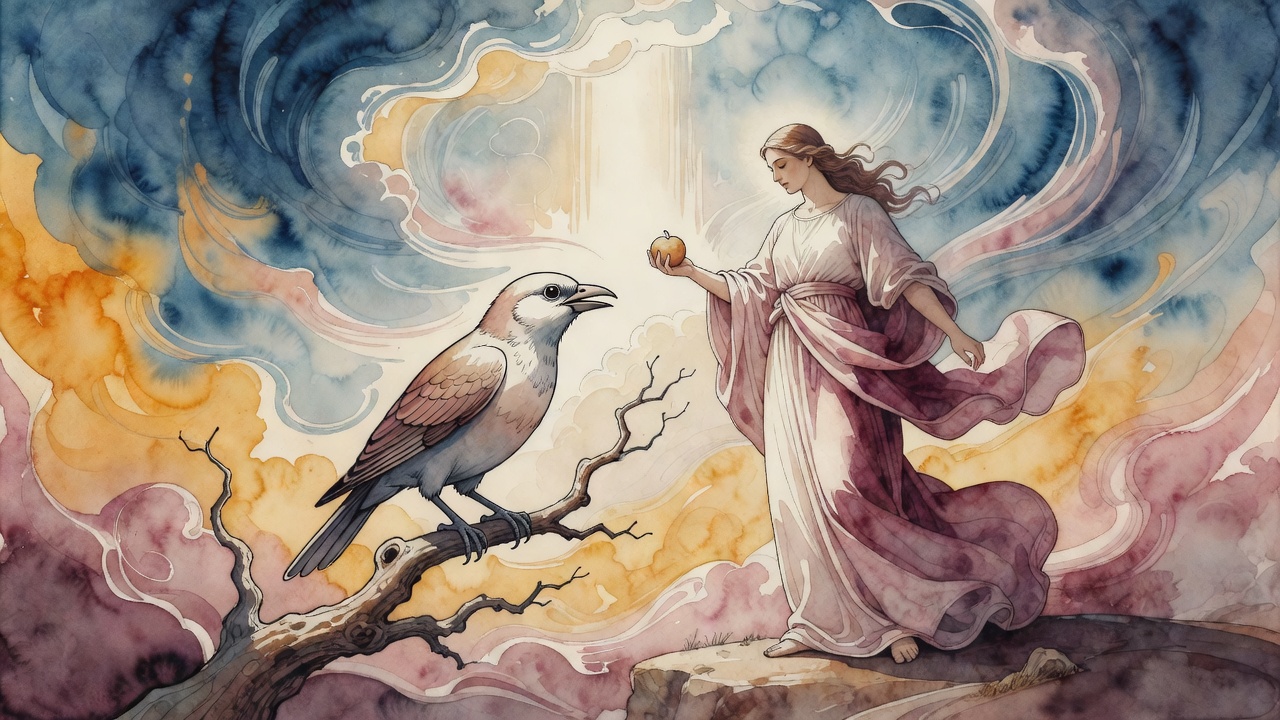
Eve heard the music from inside the Garden. She turned toward it. She saw a figure at the wall, or seemed to see one, and the figure appeared to be an angel, a being of holiness and light engaged in the worship of God. She moved toward it. This was the approach: not a direct confrontation, not an argument presented cold, but the seduction of music and apparent devotion, drawing her to the wall before a word had been spoken about the tree.
The Serpent Takes Over
Then the serpent spoke, with Ha-Satan's intentions behind the words. It began not with the tree but with God's commands in general: had God truly said you may not eat from every tree in the garden? The question was designed to sound like simple curiosity. Eve corrected it: God said we may eat from the trees of the garden, only from the tree in the middle we must not eat or touch it, or we will die. She had added the prohibition against touching, a fence she built around the commandment herself. The serpent had its entry point.
It pressed against her against the tree and said: see, you have touched it, and you did not die. The prohibition she had invented was demonstrably false. If God had meant what she said God meant, she should have died on contact. She had not died. Perhaps God did not mean what she thought. Perhaps the other prohibition was similarly overstated. Perhaps God did not want them to be like God.
The Argument That Worked
Eve looked at the fruit. It was good for food. It was pleasing to the eye. It was desirable for acquiring wisdom. She took it and she ate it, and she gave it to Adam, who was with her, and he ate it too. The Shekhinah (God's indwelling presence) departed from the Garden at the moment of the eating. The celestial clothing Adam wore began to fade. The world was still there, the trees and the animals and the river, but something that had filled the space between God and the human beings was gone, and the empty space it left was called by the tradition death, or knowledge, or exile, and none of those names quite covered it.
Ha-Satan had arranged the whole thing and remained invisible throughout. The serpent spoke the words. Eve ate. Adam ate. Ha-Satan's instrument was the serpent and the serpent's instrument was the fence Eve had built around the commandment, her own extra protection becoming the first rung of the ladder down.
← All myths