Eve Would Not Confess and the Serpent Was Cursed
He took the offer back once she opened the latch. She swore by the throne of God, and by the tree of life, before he climbed.
Table of Contents
 Click for full size
She Stood on Her Side of the Gate
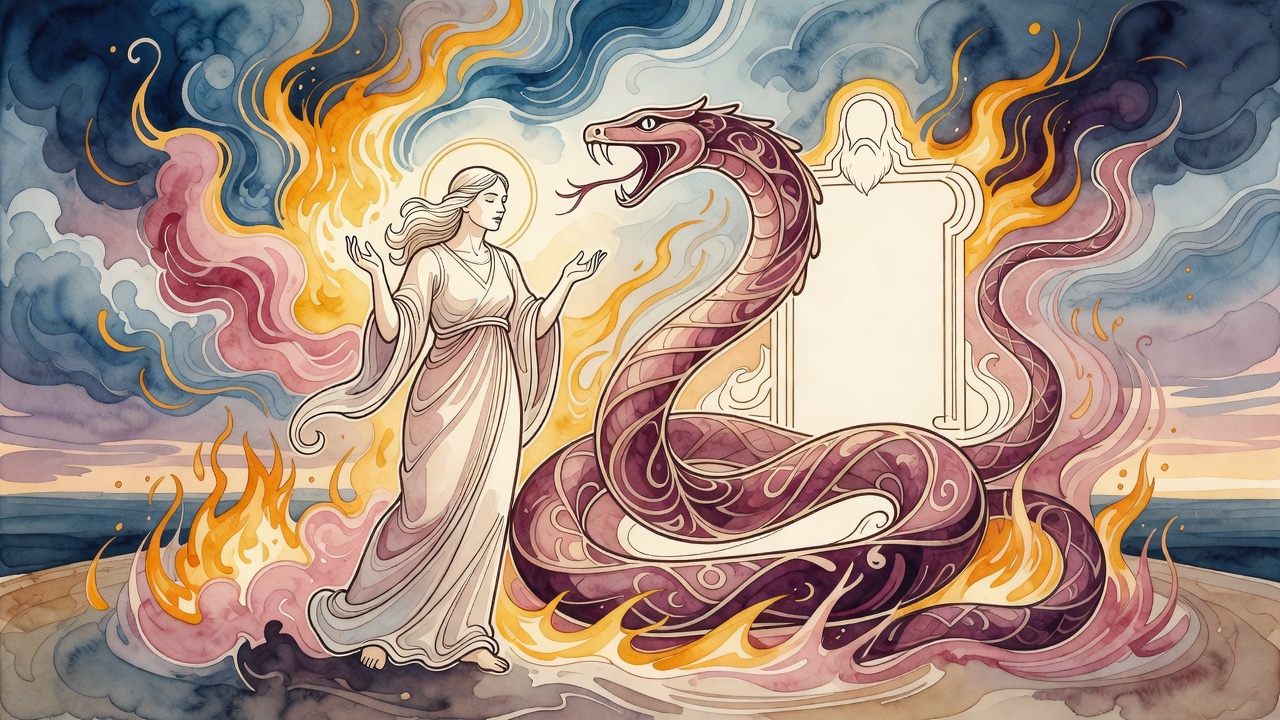
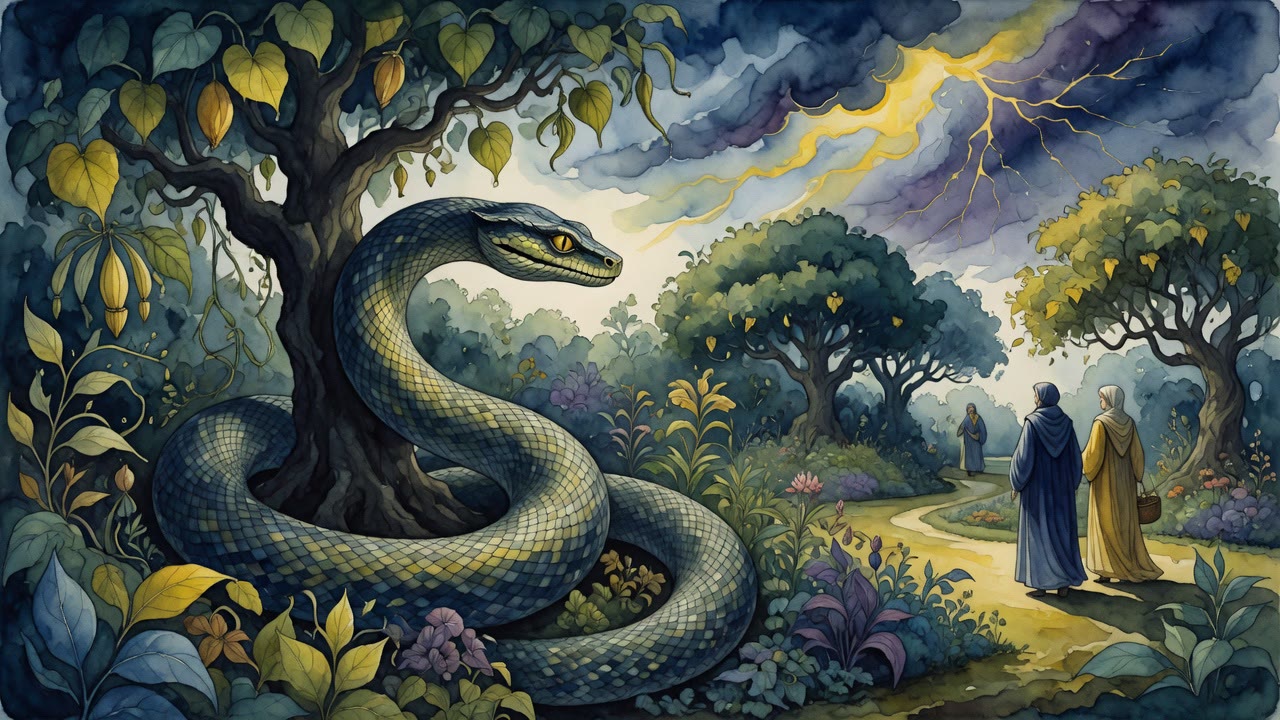
The serpent kept at her through the bars. He had a motive to sell, and he sold it the same way every time.
"God knows what happens the day the two of you eat from that tree," he told Eve. "You become what He is. The prohibition was never for your safety. He is protecting His place."
She heard it. She did not go near the trunk.
He flattered. He explained the jealousy of heaven from three angles. She kept her hands at her sides and would not put a finger on the bark.
So he changed the offer. If she would not pick it, he would pick it for her.
The Latch and the Oath
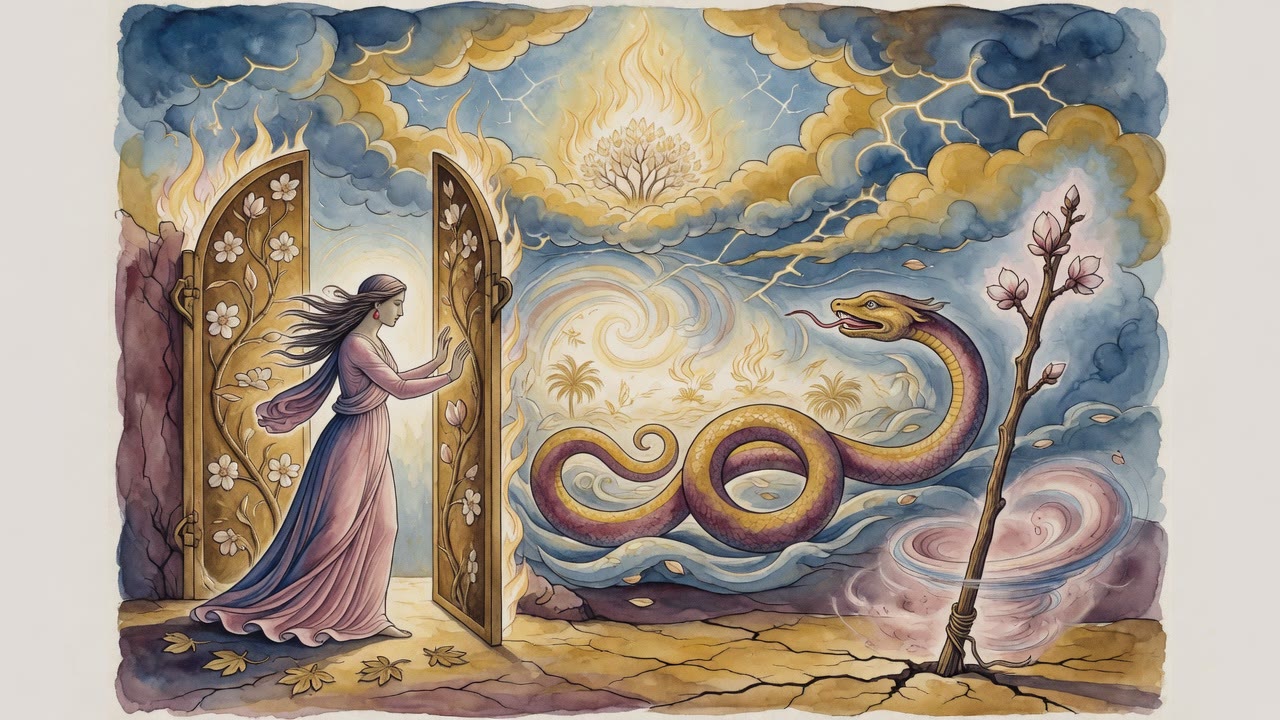
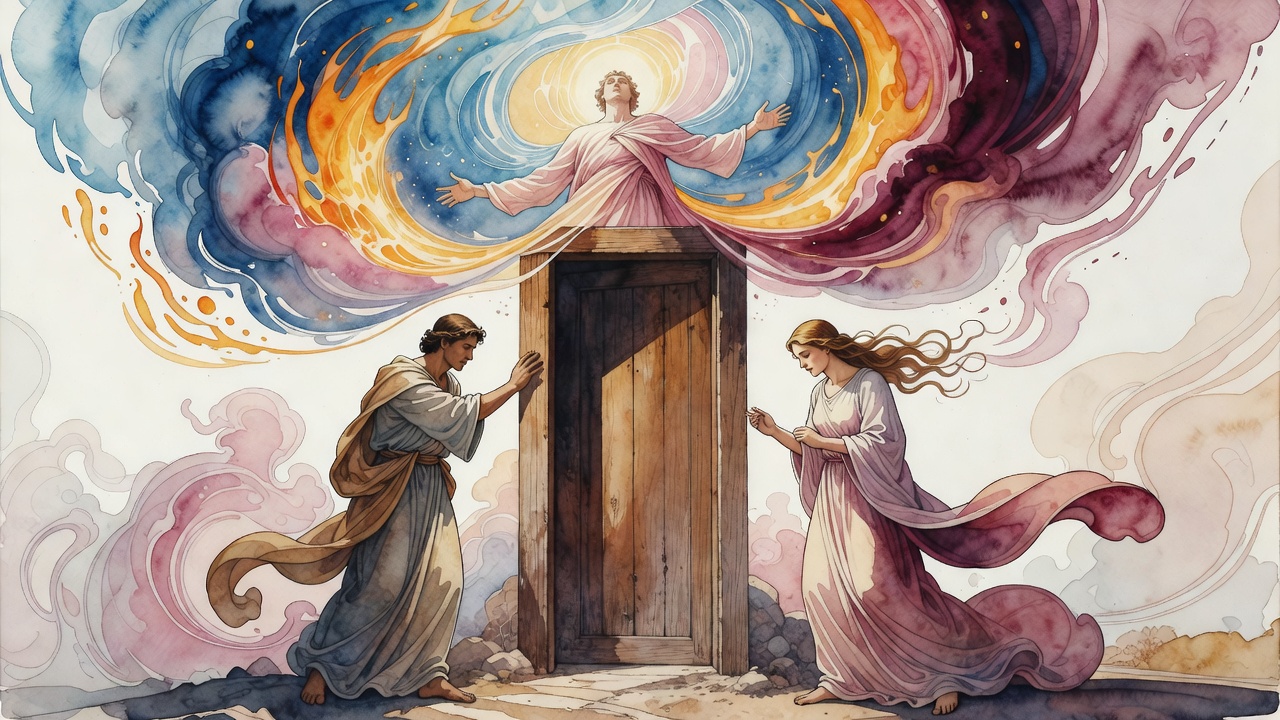
She lifted the latch and let him in.
Nobody came over the wall. Nobody dug under it. The woman inside drew the bolt, and the serpent walked through an open gate.
He was barely through when he stopped.
"Forget what I told you," he said. "I have thought better of it. I would rather not give you anything off that tree."
The hook set. Now she was the one asking. Now he could name a price, and the price was an oath. He would not touch the fruit until she swore by the throne of God, and by the cherubim, and by the tree of life standing a few steps from them, that she would put the fruit into her husband's hand and make him eat.
She swore it.
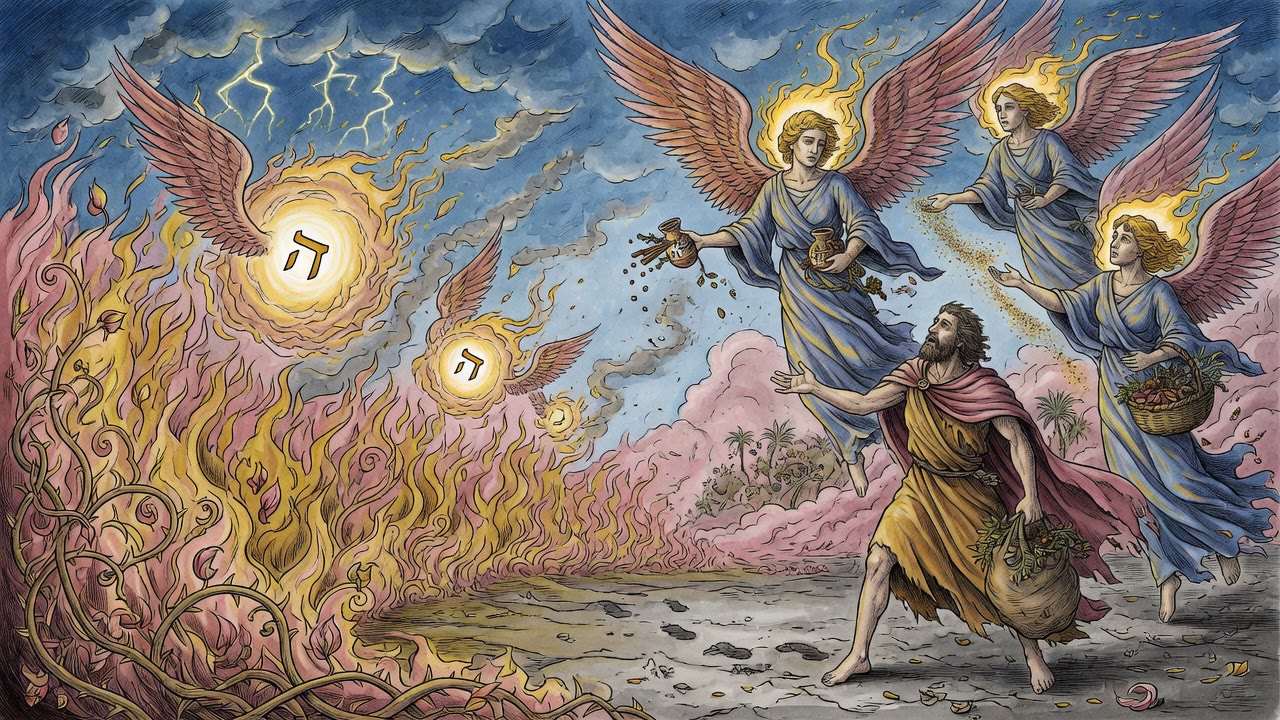
Then he went up the tree and put his poison into the fruit, the poison of the yetzer hara (יצר הרע), the evil inclination. He bent the loaded branch until it touched the ground in front of her.
She closed her hand around it. That was all it took. Before she had lifted it off the wood, the righteousness she had been wearing like a garment was gone off her body. She stood there holding the branch and crying, partly for what had been stripped, and partly because of the oath, which still had her husband's name in it.
The Question That Waited
In the cool of the day God came walking and asked Adam where he was.
Adam answered from behind the trees. Then came the question that was not a request for information.
"Have you eaten from the tree I told you not to eat from?"
"The woman You gave me," Adam said. "She gave it to me. I ate."
"And you. What have you done?"
"The serpent deceived me," Eve said. "I ate."
Both of them handed it on. Neither said the one thing that was being waited for. Had either one confessed and asked to be pardoned, the pardon was there. God did not hand down a sentence until the two of them had stood in front of Him and shown they would not bend.
Then the sentences came. Sorrow multiplied. Children would come into the world through pain. A woman would turn toward the husband who would rule her. Ground cursed for the man's sake, so that everything he ate afterward had to be dragged out of soil that fought him for it.
God Did Not Ask the Serpent
God did not ask the serpent anything.
No question. No hearing. Not even the chance to deflect that the other two had been given and wasted. The serpent had an argument ready, and it was not a thin one. You gave them an instruction. I gave them the opposite. Why did they listen to me instead of to You?
The defense he never got to speak was already in his mouth. "You gave them a command," he would have said. "I gave them the opposite. Why did they listen to me, and not to You?"
When the master says one thing and the student says another, the master is the one who gets obeyed. An inciter gets no advocate. The first defendant that rule was used on was the snake still standing, for a few more breaths, on the feet he would not keep.
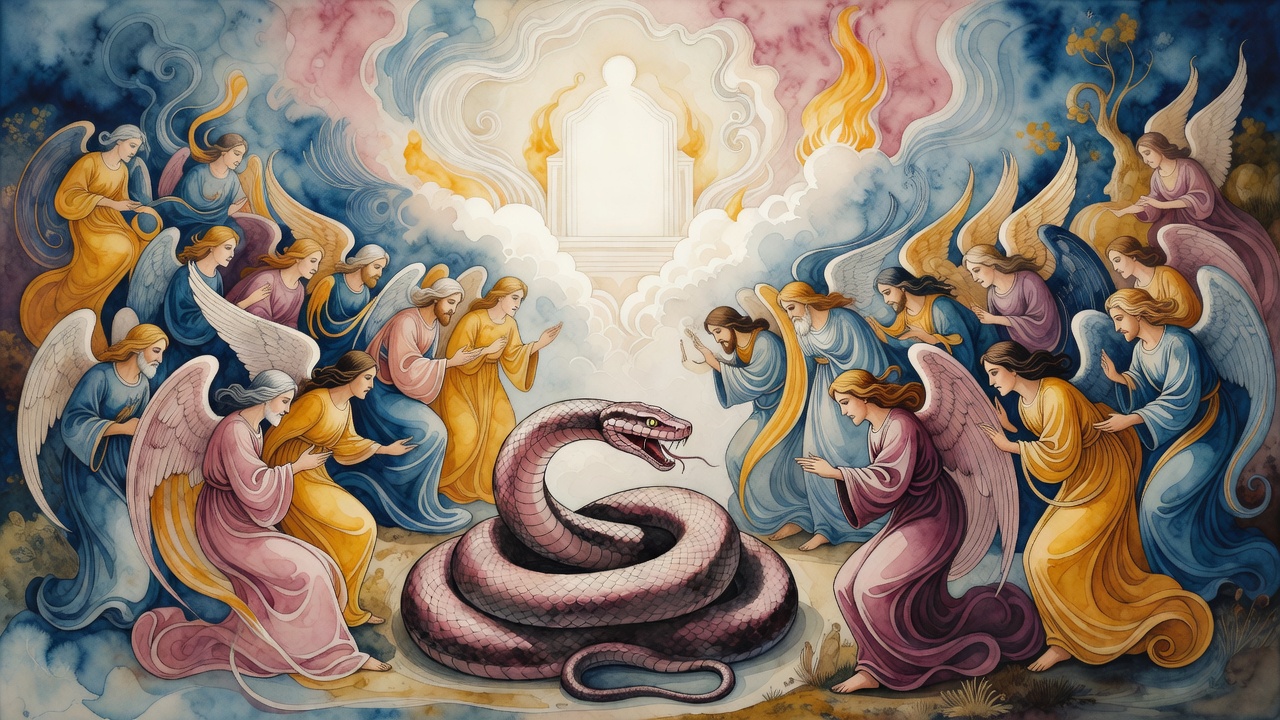
God turned His face toward him. Honor starts with the greatest. Disgrace starts with the least. So the curse landed on the snake first, then the woman, then the man. Of everything God ever addressed, only three were spoken to directly, face turned toward face. Adam. The serpent. And the fish that swallowed Jonah.
Dust Between His Teeth
His mouth shut. Speech taken out of it. The most persuasive creature in the garden lost the only thing he had been good at.
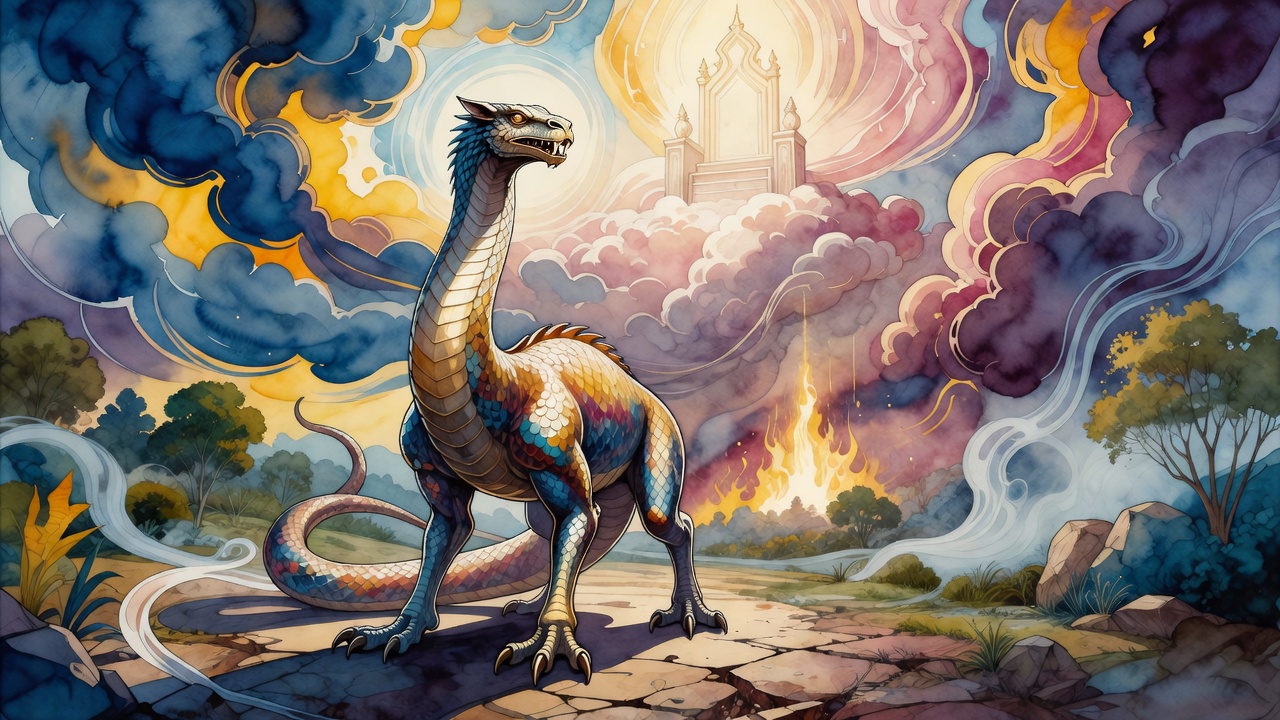
His hands and his feet were hacked off him. He dropped to his belly in the dirt he had walked through the gate on.
The earth was assigned to him as food. Enmity was set between him and every human being. Pain was put into the shedding of his skin. His females were given a pregnancy seven years long. Men were made to want to kill him the instant they catch sight of him. Even in the world to come, when the blessing goes out to everything alive, the sentence on him still stands. He will be cleared out of the Holy Land on the day Israel walks the way it was told to walk.
And one more, the cruelest of them. He can still eat whatever he likes. He can take the best fruit in the world into his mouth, or the sweetest drink anyone has ever poured. It turns to dust between his teeth.
← All myths