Eve Opened the Gate and the Staff Entered the World
Eve opened the gate of Paradise for a lying serpent; in that same final hour, the staff that would split the sea entered the world.
Table of Contents
The serpent had no power to pull fruit from a branch and place it in a human hand. What it had was patience, and an open gate.
 Click for full size
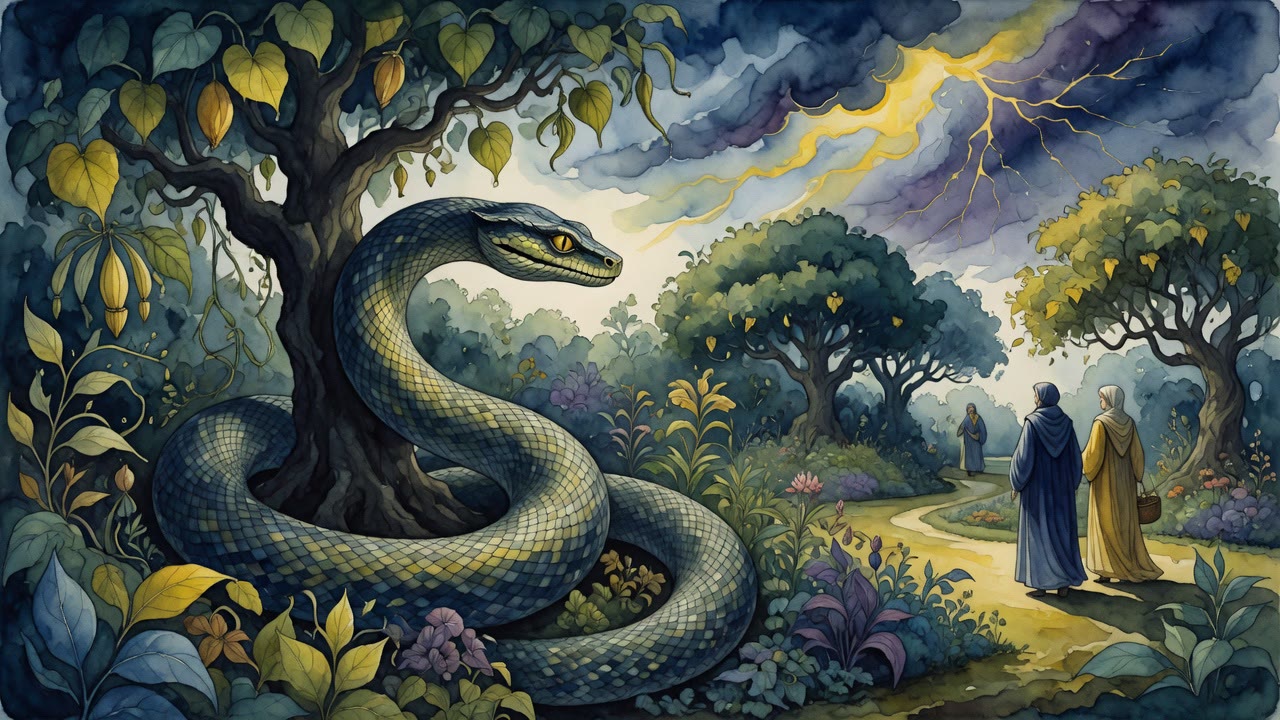
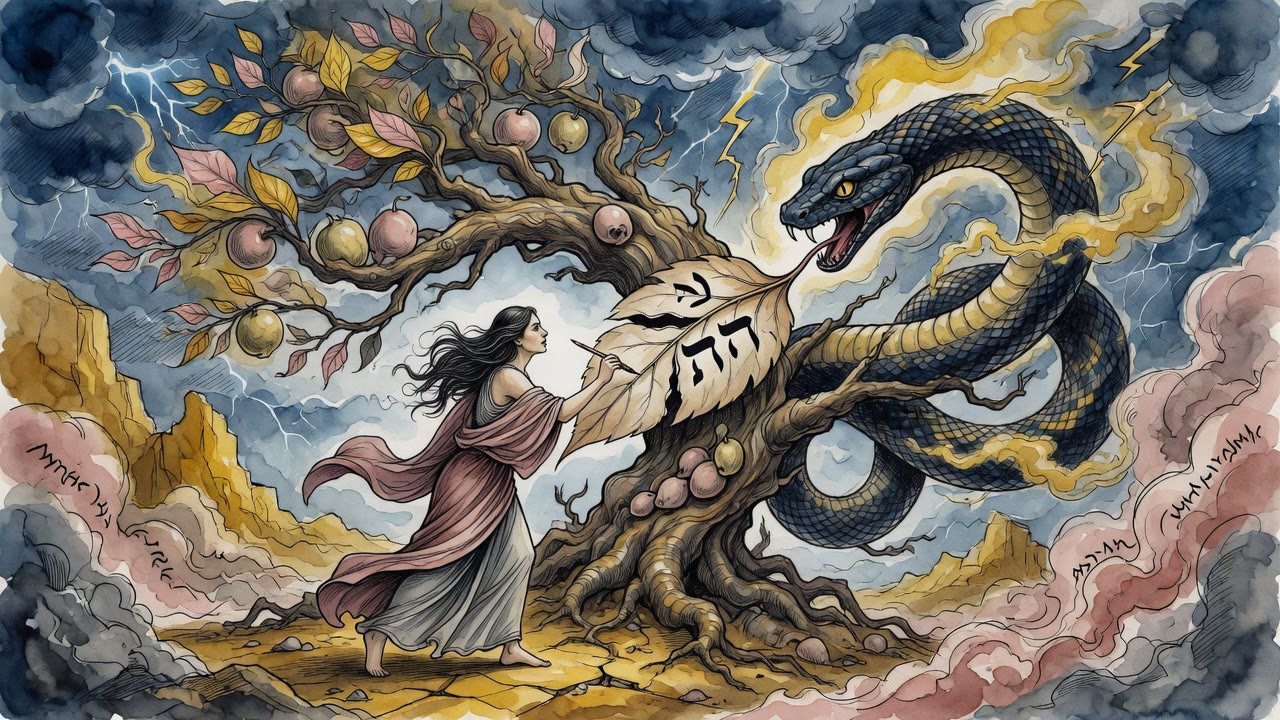
It found Eve standing at the threshold of Paradise, not wandering, not lost, simply standing where the gate was. She had been apart from Adam long enough. That was all the opening the serpent needed.
She was new. That is the essential fact about what happened next. Eve had been created fully formed, a woman of approximately twenty years in appearance, as Adam had been, both of them sprung into existence without infancy, without accumulated experience of the world's small betrayals. She had heard exactly one prohibition (Genesis 2:17). The serpent had spent longer than that simply watching.
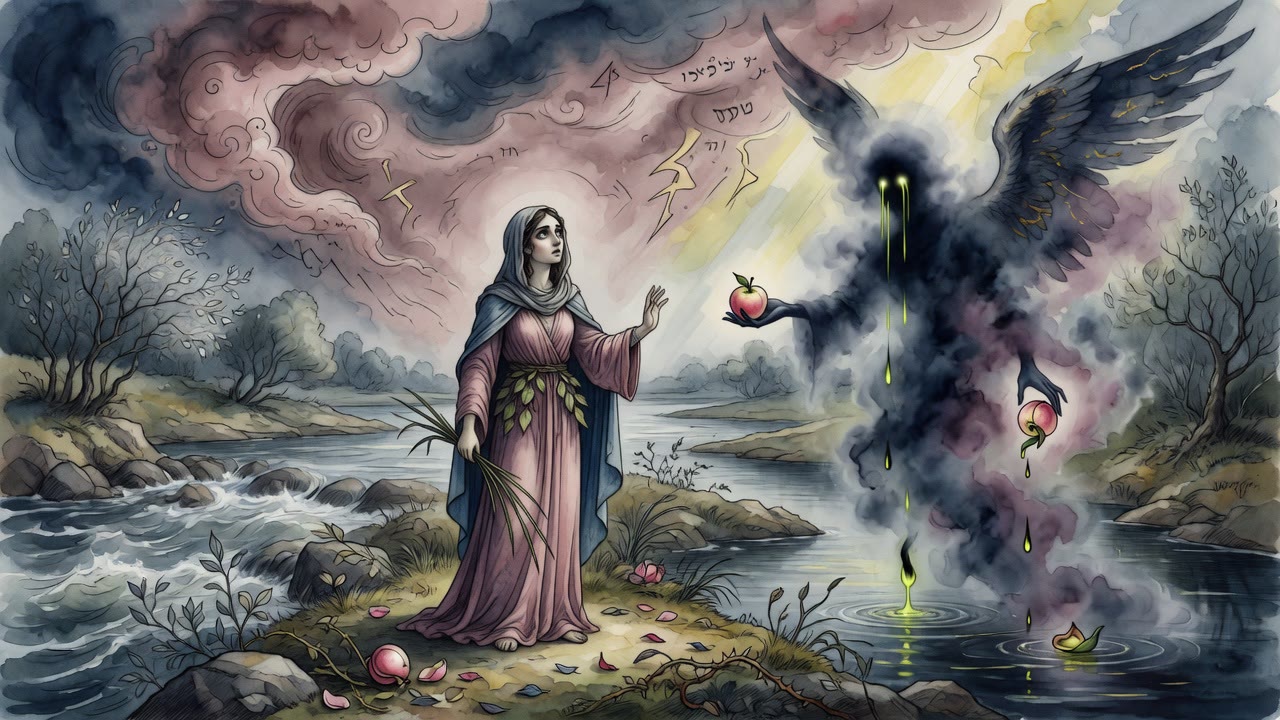
He tried flattery first, and argument. God was jealous, he said. The fruit was forbidden only because whoever ate it would become like God (Genesis 3:5). Eve resisted. She would not touch the tree. So the serpent shifted tactics: he offered to pluck the fruit himself. He would take the risk. He would do the dangerous thing so that she would not have to.
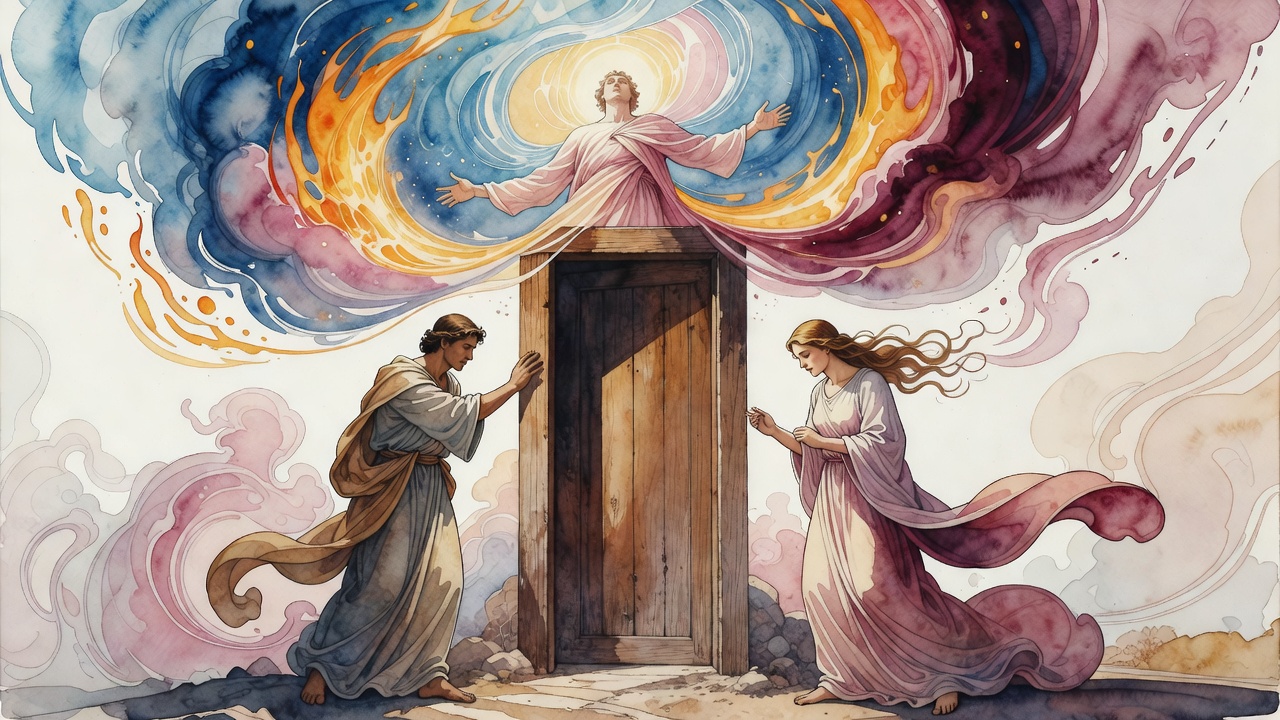
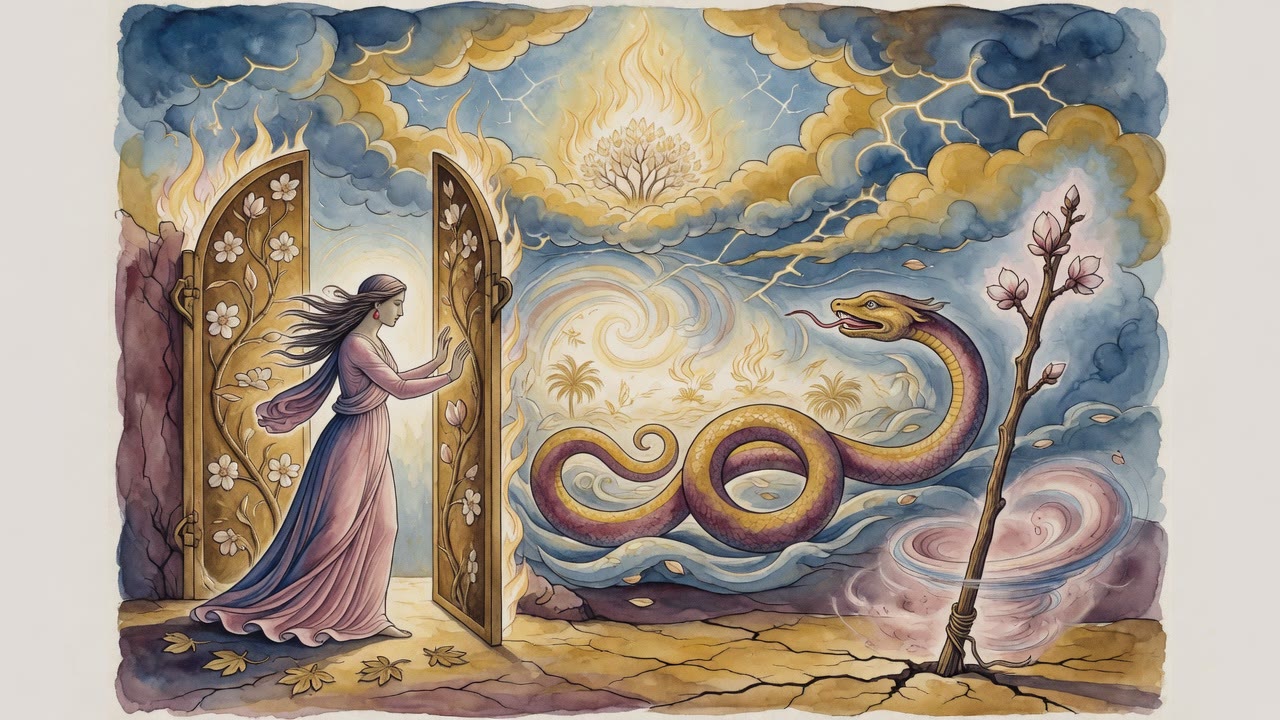
She opened the gate of Paradise.
The Trap Inside the Gate
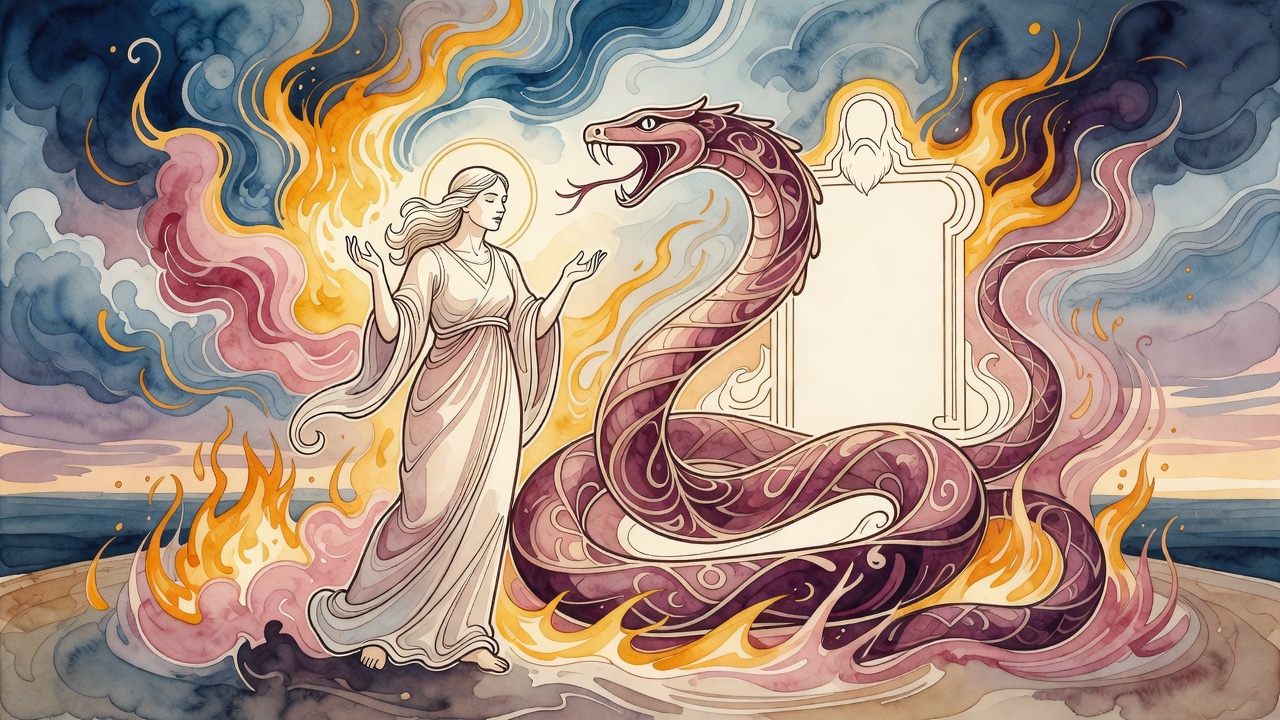
The serpent stepped inside and stopped. He said: I cannot give it to you now. If I touch the tree, I will die. God decreed death upon whoever touches it. A trap folded inside a trap. He had never intended to touch anything. He had needed her to open the gate, and she had opened it, and now she was already close enough to reach the fruit herself. The serpent had simply moved her to the right position and let her do the rest.
The Last Hour Before Shabbat
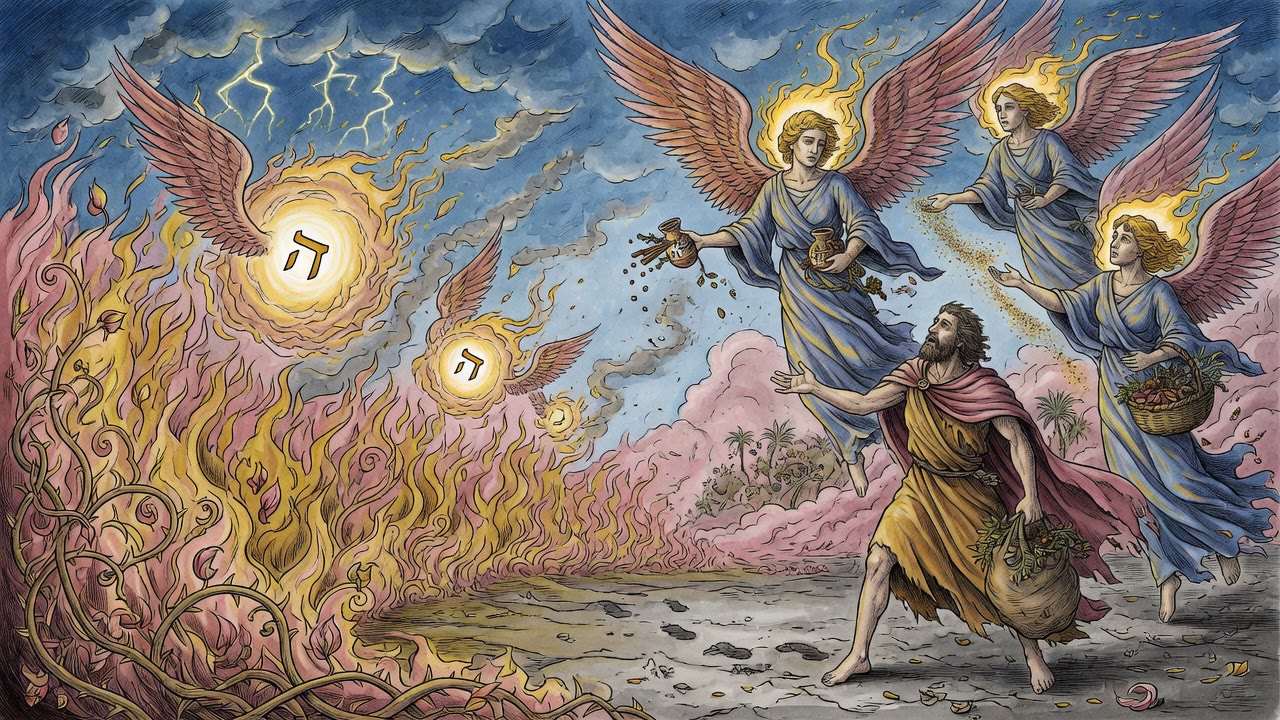
The same day Eve stood at that gate was the sixth day of creation, and the sixth day was running out. As the sun neared the horizon before the first Shabbat (שבת), the sacred rest, creation was finishing itself in a rush of loose ends. There were things that did not fit cleanly into the natural order, objects the world would someday need and could not make on ordinary days. Ten such things were sealed into existence in that final twilight, made before the boundary between sacred and ordinary time snapped shut. The staff was one of them.
It was a length of wood unlike any wood that would come after it. Made in the final minutes of the sixth day, it carried inside it something of that threshold, an impossible authority that ordinary nature could not hold. When the gate of Paradise closed on Adam and Eve, the staff went with them. It was placed in Adam's hands as he left the garden.
The Staff Passes Through Every Righteous Hand
From Adam the staff passed to Enoch, who walked with God and then was gone. From Enoch to Noah, who built the ark. From Noah to Shem, his son. From Shem to Abraham, who carried it into Canaan. To Isaac, and then to Jacob. Jacob brought it down to Egypt with everything else he had, and when Jacob died it went to Joseph, who held it in the shadow of Pharaoh's court. After Joseph died, the staff passed out of Israel's hands. It found its way to Jethro in Midian.
Jethro planted it in his garden and it stood upright in the earth, and no one who came after could draw it out.
Moses in Jethro's Garden
Moses arrived in Midian a fugitive, already running from one life and not yet arrived at the next. He came to Jethro's household a stranger. He could not have known what the staff was. He walked through the garden, saw it standing in the earth, and drew it out without effort.
That was how Jethro knew. The staff had resisted every other hand since the day Jethro planted it. Moses did not strain. He simply took it, and it came.
No one else had been able to do that since Adam. The object recognized the man who would carry it to the Nile, to Pharaoh's court, to the edge of the sea.
The Gate and the Staff
The gate Eve opened and the staff created at twilight are bound to the same moment. Both turn on what happens at the boundary between the ordered world and what lies beyond it.
The serpent got through that first boundary because Eve opened a door for someone she believed was on her side. The staff entered the world because creation had ten final minutes and used them to make what the natural order could not contain.
When the staff divided the sea (Exodus 14:21), when it struck the rock and water ran out (Numbers 20:11), it was the same object that had stood in Eden's final hour. Adam had walked out of Paradise holding something made in the moment Paradise ended. Moses held it at the shore of a sea that had not yet decided to open.
What the Staff Carried Out of Eden
The lineage is not coincidence. The staff went from hand to hand through every name the covenant runs through before Moses: Adam, Enoch, Noah, Shem, Abraham, Isaac, Jacob, Joseph, Moses. It passed through every righteous hand before his. When Moses drew it from the earth in Jethro's garden, he was receiving something that had touched every covenantal hand since the garden gate closed.
Eve opened one door in the final hour of creation. What walked out of that garden, in Adam's grip, was a piece of the same hour. The serpent lied about being willing to touch the forbidden tree. The staff never lied about what it was. Both had been waiting at a threshold since the world was six days old.
← All myths