Parshat Bereshit6 min read

Seventy-One Angels Sentenced the Serpent in the Garden

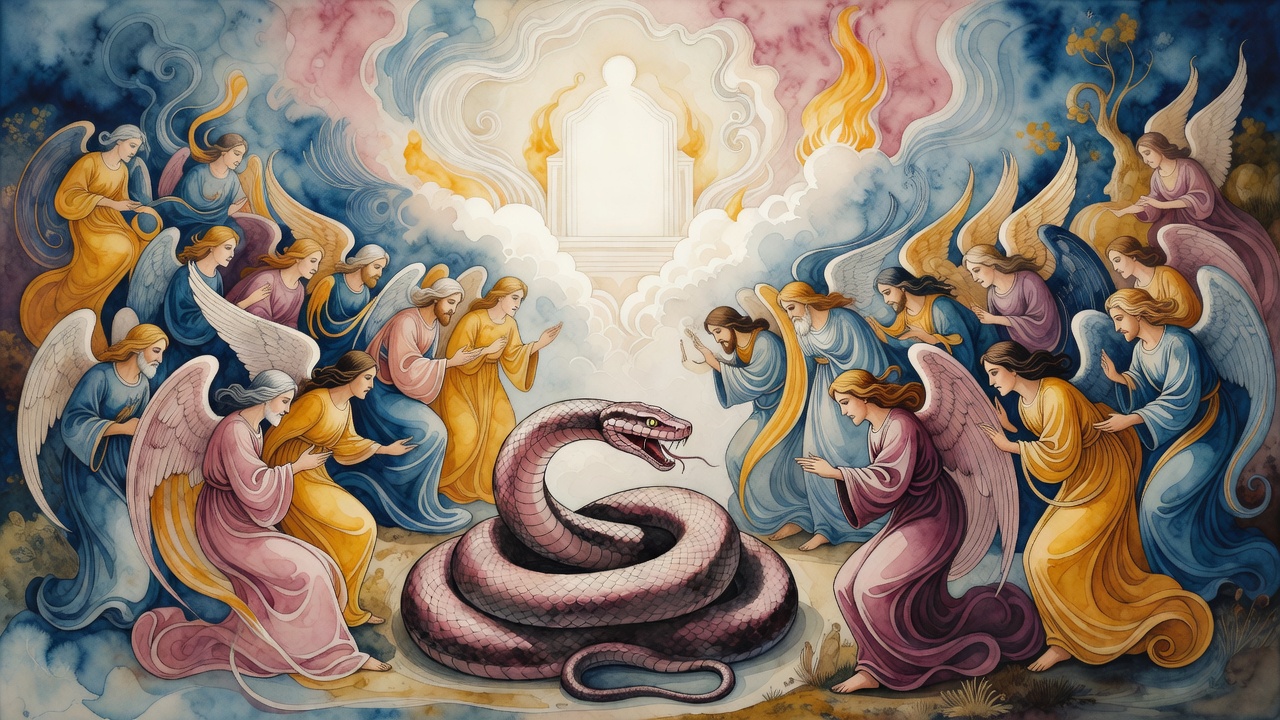
When the serpent ruined Eden, God did not curse it offhand. He convened a court of seventy-one angels to try the creature and pass sentence.

Curated by Arthur · Told by Maggid ·
Table of Contents
  1. The Court Took Its Places Around the Defendant
  2. The Serpent Heard the Charges Read Against It
  3. The Sentence Stripped Away Its Legs and Its Voice
  4. The Angels Descended to Carry Out the Verdict
  5. What the First Courtroom Left Behind

The fruit was already eaten, the man and the woman already hiding among the trees, when God did the strangest thing of all. He did not raise his voice and strike the serpent dead where it stood. He called a court.

Seventy-one of them came down. Angels who had never sat in judgment before took their places in a ring, the number of a full Sanhedrin, the court that would one day decide capital cases among men. They gathered around a single defendant. The being in the dock had legs then. It stood upright, tall and bright and articulate, the cleverest creature God had made, and it had used every gram of that cleverness to talk the woman into the one act that unmade the garden.

The Court Took Its Places Around the Defendant

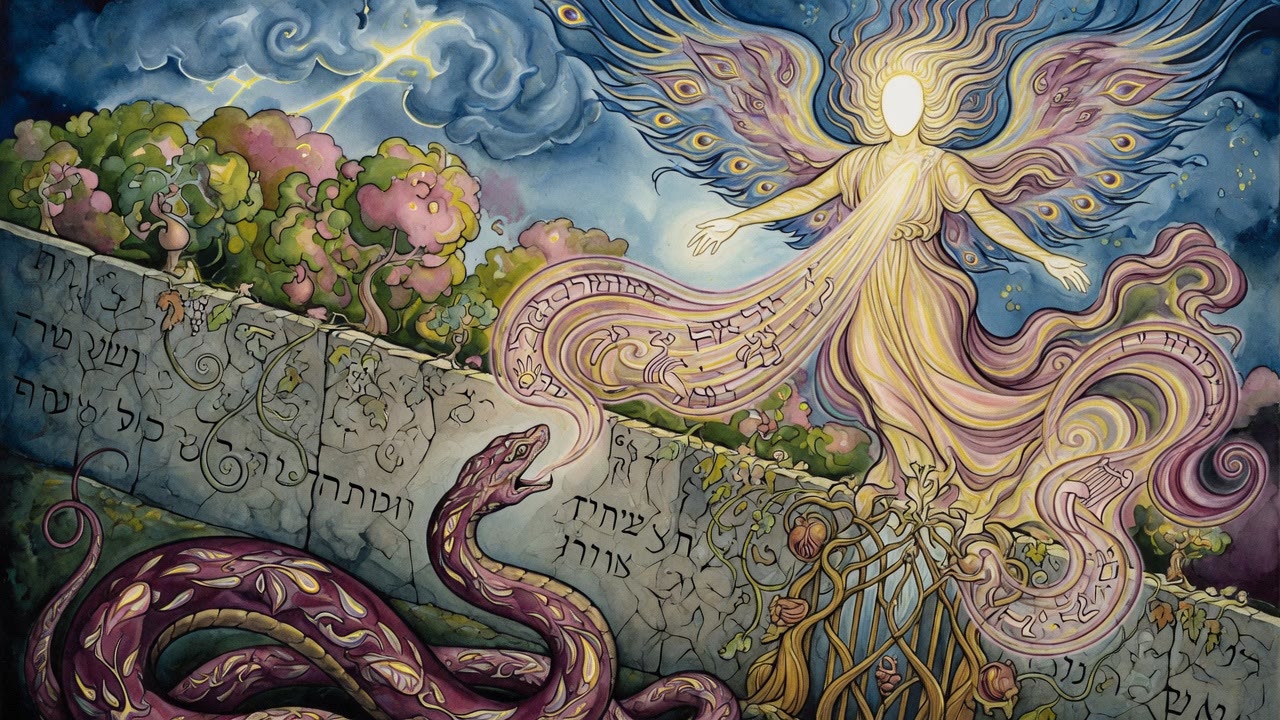
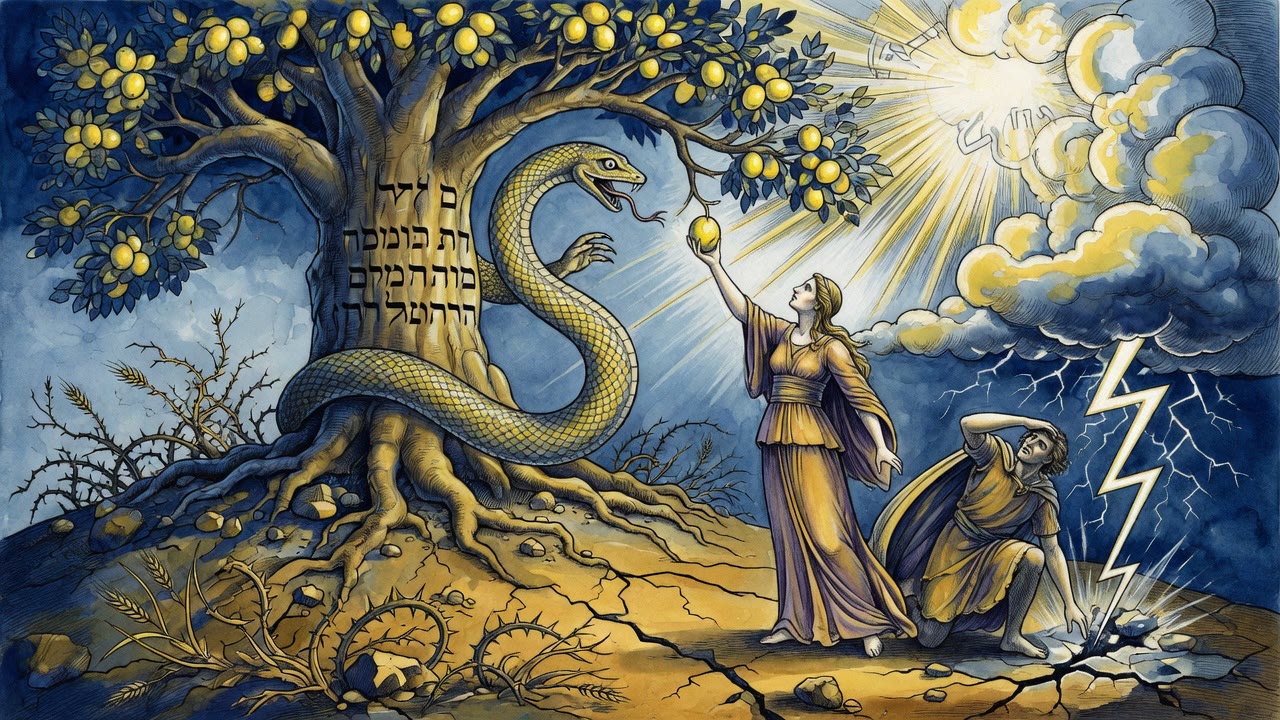
There had never been a trial before. Creation was six days old. No one had been accused of anything, no sentence had ever been passed, and now the first courtroom in the history of the world convened over the wreck of paradise. The angels knew the charge before they sat. They had watched the serpent coil close to Eve, watched it lower the branches so the fruit hung within her reach, watched it promise her that her eyes would open and she would not die.

She had died a little. So had the man. So had the ground under their feet, which would now grow thorns. The angels weighed all of it. They did not hurry. A court that hurries is a mob, and this was not a mob. It was seventy-one witnesses to the first deception, deliberating the fate of the one who had spoken it.

The Serpent Heard the Charges Read Against It

The case was not complicated. The serpent had been the shrewdest of the beasts, and it had turned that shrewdness against the two creatures placed above it. It had not eaten the fruit. It had done something the court found worse. It had arranged for someone else to eat it, and then stepped back to watch.

An older telling, the one carried in the Book of Jubilees, keeps the verdict short and final. God "cursed the serpent, and was wroth with it for ever." Not for an afternoon. Not until the creature repented. For ever. The wrath did not cool because the crime did not undo itself. Eden stayed broken. The same court that heard the serpent would soon hear the woman's sentence read in ten parts, and the man's, and the curse laid on the ground itself. But the serpent went first, because the serpent had moved first.

The Sentence Stripped Away Its Legs and Its Voice

The judgment came down in pieces, each one taking something the creature would never get back. Its legs were forfeit. The upright, articulate beast that had stood eye to eye with Eve would crawl on its belly for the rest of time and eat the dust it crawled through. Its speech was forfeit too. The mouth that had reasoned the woman into ruin would never frame a word again. And a permanent enmity was set between the serpent and the children of the woman it had deceived, heel against head, for as long as either kind drew breath.

Then the court rose. The verdict had been spoken. What remained was the carrying out of it, and that was not the angels' word but their hands.

The Angels Descended to Carry Out the Verdict

They came down from heaven to execute the sentence on the body of the condemned. This was the part the sources do not soften. The angels took hold of the serpent and cut away its hands and its feet, severing the limbs that had let it stand among the upright creatures and walk into Eden as their equal.

The serpent screamed. The pain was past bearing, and its cry did not stay in the garden. It carried out past the walls of Eden, out over the new and grieving earth, until the whole world heard it. Every creature alive heard the first sentence of the first court land on the first defendant. The sound rolled across the entire face of the ground, and then it stopped, and the serpent lay in the dust it had been condemned to swallow, voiceless now, legless now, lifting its head only to strike.

What the First Courtroom Left Behind

The garden did not come back. The man and the woman would be sent out past a turning sword, and the serpent would drag itself away on a belly it had never had before. But something had been set down in those hours that outlasted Eden. A creature had been accused, tried before a full bench, and sentenced by deliberation rather than by a single furious blow.

The number held. Seventy-one is the number that would convene in the Chamber of Hewn Stone, the number a king could not overrule, the number it took to try a man for his life. It began here, over a serpent, in a garden that no longer exists, when God chose to judge the creature that ruined the world by the slow weight of a court instead of the quick mercy of a thunderbolt.


← All myths

From the tradition

Sources

2 sources

The texts this telling draws on, in full. Open a card to read inline, or expand it for a wider, quieter read.

Legends of the Jews 2:65Legends of the Jews

Compiled by Rabbi Louis Ginzberg, the pronouncement of the serpent’s doom wasn't a solitary act. God convened a Sanhedrin – a court – of seventy-one angels to sit in judgment. Think of it: a heavenly court, deciding the fate of the creature who brought about humanity's fall.

The execution of that judgment? That, too, was entrusted to angels. Can you picture them descending from heaven, carrying out the divine decree? They chopped off the serpent's hands and feet. The suffering was immense. So great, in fact, that his cries of agony echoed across the entire world. A truly epic moment of divine justice.

What about Eve? What was her fate?

The verdict against Eve, we are told, consisted of ten curses. These weren't just words; they were pronouncements that shaped the very essence of womanhood, impacting her physical, spiritual, and social existence, even down to this very day. It's a heavy thought, isn't it?

The Legends of the Jews tells us that God didn't speak directly to Eve. The only woman God ever addressed directly was Sarah, Abraham's wife. In Eve's case, He used an interpreter. Why? We can only speculate. Perhaps it highlights the gravity of her transgression, or perhaps it reveals something deeper about the relationship between the divine and humanity. Either way, it adds another layer of complexity to this foundational story.

Full source
Book of Jubilees 3:38Book of Jubilees

The familiar story is this: in broad strokes, but some ancient texts give us a deeper look into the consequences, the divine anger, and the curses that followed.

The Book of Jubilees, a text considered canonical by some but relegated to the Apocrypha by others, fills in some of those gaps. It paints a vivid picture of God's reaction and the repercussions for the serpent, the woman, and the man.

First, the serpent. And God, according to Jubilees, "cursed the serpent, and was wroth with it for ever." This wasn't just a slap on the wrist. This was a permanent severing, a declaration of eternal antagonism.

Then comes the woman, Eve. Remember, she was the one who initially succumbed to the serpent's persuasion and then offered the fruit to Adam. As Jubilees tells it, "He was wroth with the woman, because she hearkened to the voice of the serpent, and did eat." The punishment? A starkly patriarchal one: "I shall greatly multiply thy sorrow and thy pains in sorrow thou shalt bring forth children, and thy return shall be unto thy husband, and he will rule over thee." Ouch. It's a tough passage to read in our modern context, isn't it? It reflects the social realities of the time it was written, a time when female submission to male authority was the norm.

Finally, Adam. He wasn't spared, either. "Because thou hast hearkened unto the voice of thy wife, and hast eaten of the tree of which I commanded thee that thou shouldst not eat thereof, cursed be the ground for thy sake." The earth itself, the very source of sustenance, would now become a source of hardship.

What strikes me most about this passage from Jubilees is its starkness. It’s a raw depiction of divine anger and the cascading consequences of disobedience. These aren't just punishments; they're fundamental shifts in the relationship between humanity, the divine, and the natural world. The sweetness of the Garden is gone, replaced by pain, toil, and a hierarchical structure that would define human society for millennia.

It really makes you think about the weight of choices, doesn't it? How one act, one moment of yielding to temptation, can reshape the entire course of history. And even though these curses feel harsh, perhaps they also serve as a constant reminder of the responsibility that comes with free will.

Full source