How Sammael Rode the Serpent Straight Into Eden
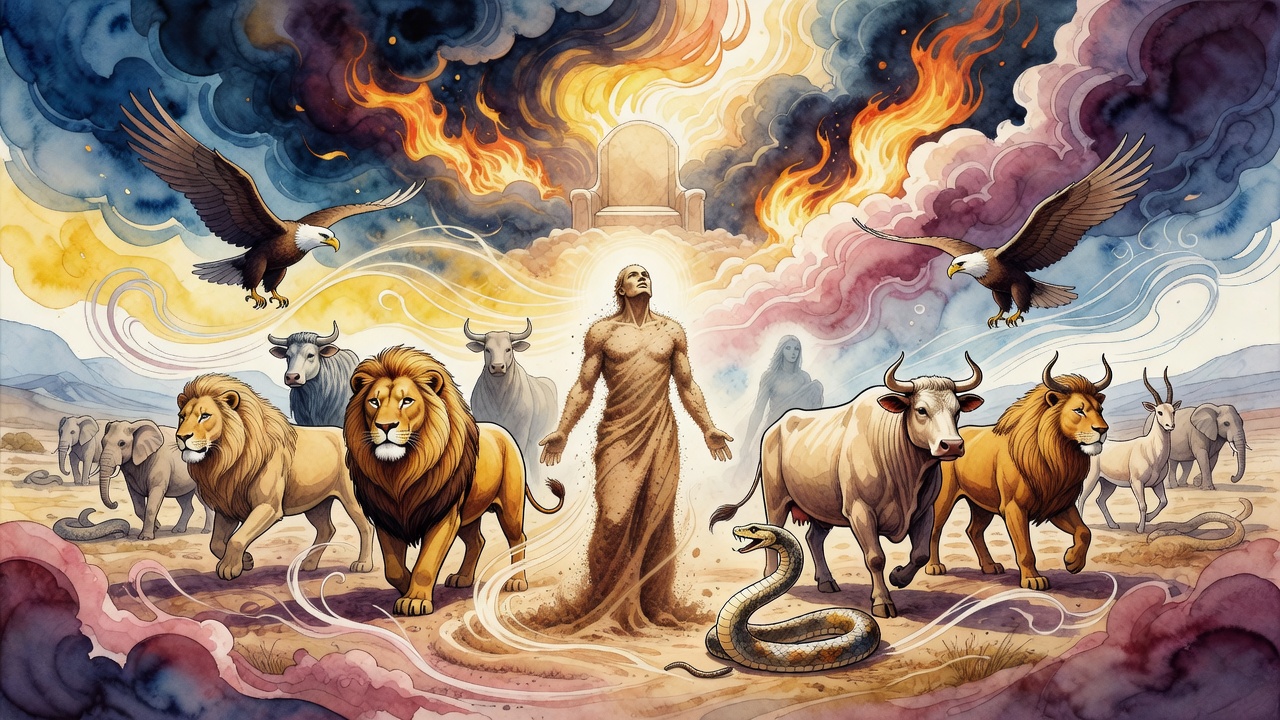
Adam named every beast. The angels could not. Sammael found a serpent that still stood upright and rode it through the gate.
Table of Contents
The ministering angels came in front of the throne to complain. "What is man, that you should take note of him?" they said. Down there was nothing worth the trouble.
 Click for full size
God gave them a test instead of an answer. All of you praise Me up here, He told them. He declares that I am one, down there. Now stand up and give Me the names of every creature I have made.
They stood up. Not one of them could do it. Then Adam stood up and named the cattle, the birds, and every beast of the field, and sat down again.
The angels backed away from the throne. Among themselves they agreed. If they did not take counsel against this man and get him to sin in front of his Maker, they would never prevail against him at all.
Twelve Wings Over the Garden
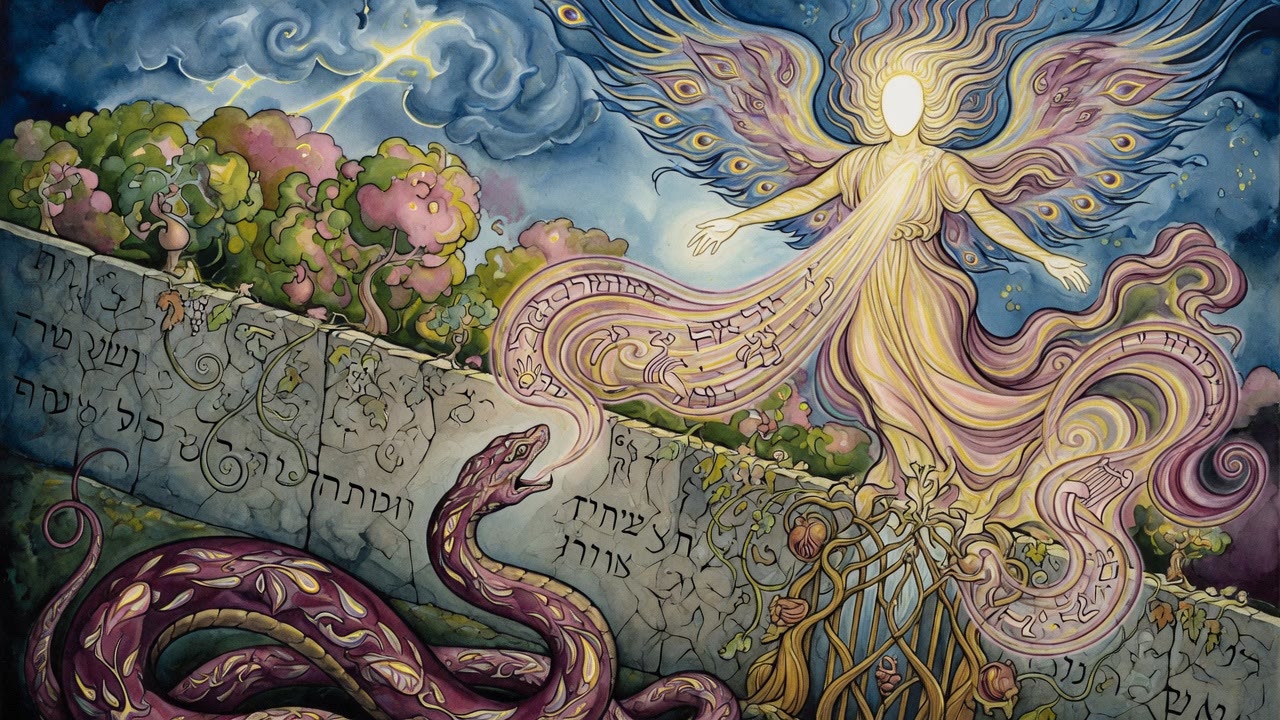
Sammael was the great prince in heaven. The creatures who carry the throne have four wings each. The seraphim have six. Sammael had twelve, and he knew the number.
He took his band and went down. He walked through everything that had just been made, looking for one quality and finding it in nothing. Not in the lion. Not in the ox. Not in the eagle. He found it in the serpent, which was subtler than any beast of the field (Genesis 3:1). In those days the serpent did not crawl. It stood. Its shape was something like a camel's. It could speak.
Sammael mounted it and rode.
The Torah cried out. "Why, Sammael? The world has only just been made. Is this the hour to rebel against the Omnipresent? Is this a time to lift yourself up on high? The Lord of the world will laugh at the horse and its rider."
He rode into the Garden anyway.
What the Serpent Wanted for Itself
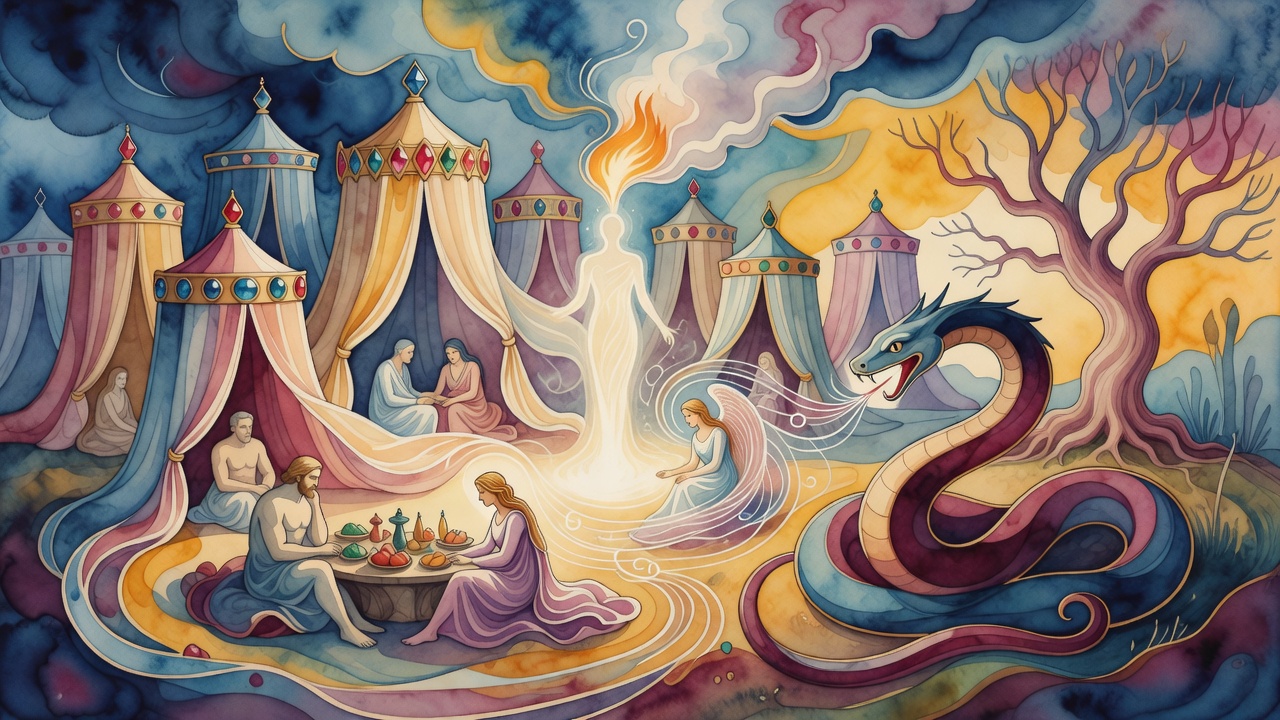
A man with an evil spirit inside him does nothing of his own. Nothing he says comes out of his own head. He is a room the spirit stands in. That was the serpent under its rider. The words that came out of its mouth in Eden were not the serpent's words.
But the serpent wanted things too, and it said them to itself, quietly, where it believed nothing could hear. It would kill Adam. It would marry Eve. It would be king over every living creature on earth. It would walk upright through the world and eat every delicacy in it.
God was in the room.
The Son Who Did Not Look Like Adam
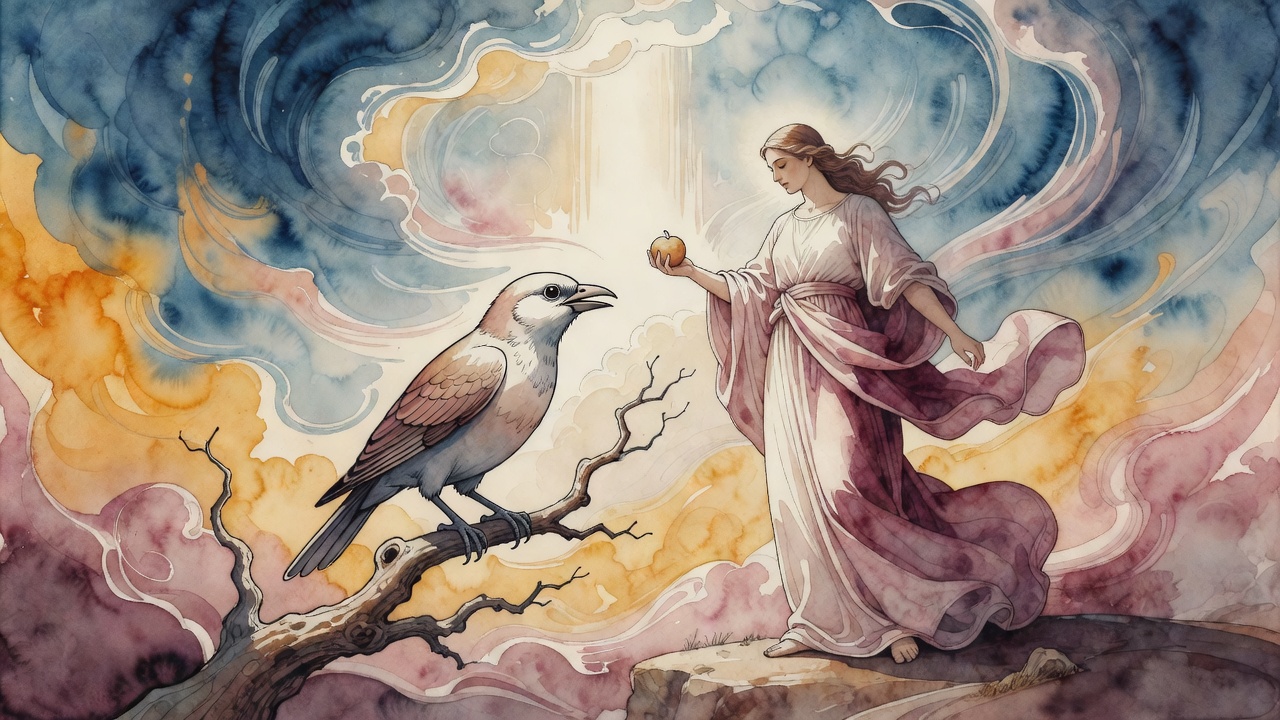
Riding the serpent, Sammael came to Eve, and she conceived.
Afterward Adam came to her, and she conceived again, and that second child was Abel. When Adam knew Eve his wife, what he knew was that she was already carrying.
She looked at the older boy's likeness and it was not the likeness of anything below. It belonged to the ones above. She said, "I have gotten a man with the Lord" (Genesis 4:1), and the words came out of her as prophecy. She called him Cain.
Four Wishes Turned Inside Out
God had heard all four wishes and answered them one at a time, in order, turned inside out.
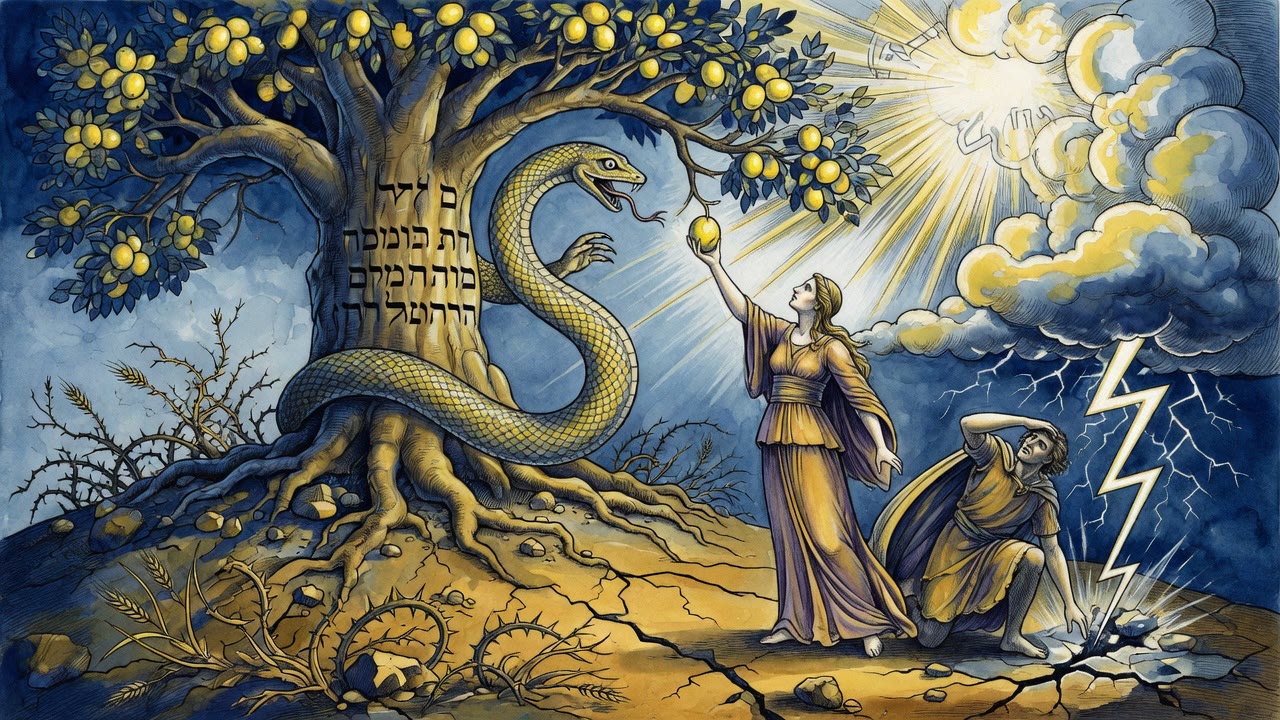
You said you would kill Adam and marry Eve. Then there will be hatred between you and the woman for as long as there are women. You said you would be king over every living creature. Then you are cursed more than any of them. You said you would walk upright. Crawl on your belly. You said you would eat the delicacies of the world. Eat dust, every day, all the days of your life.
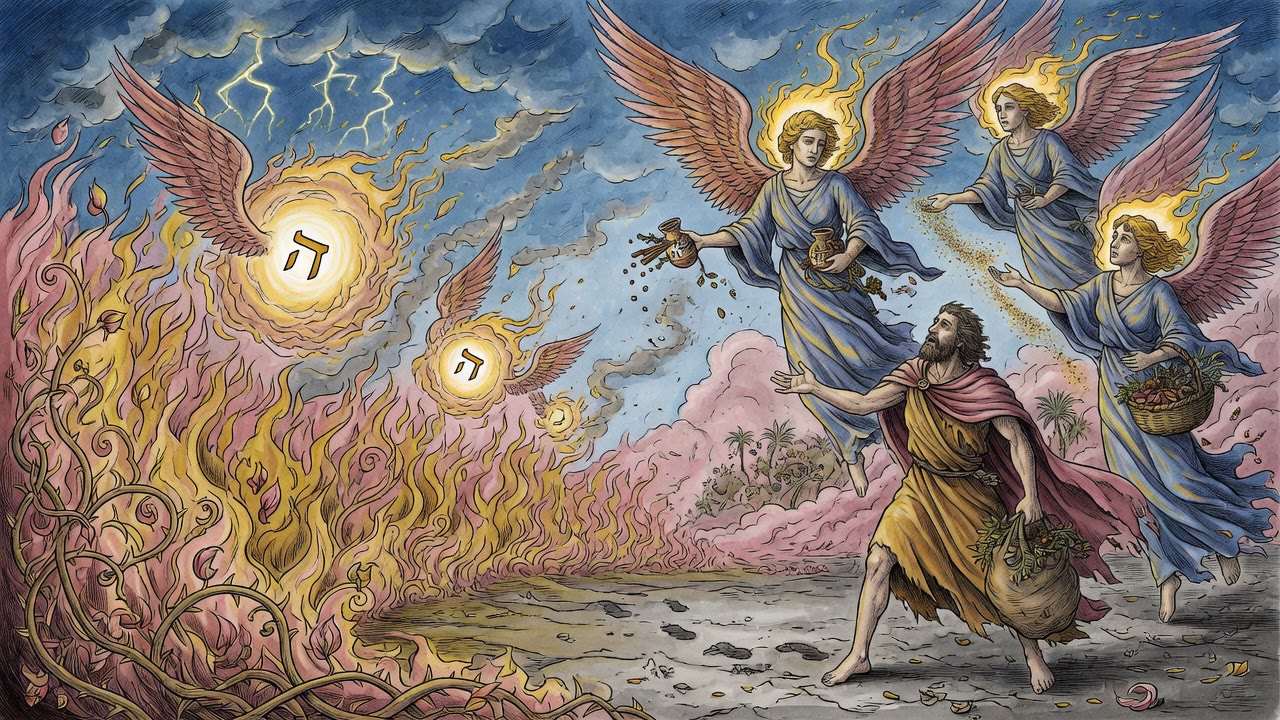
Then He cut the feet off the serpent where it stood. He set its skin to split once in seven years and hurt while it split. He turned the food in its belly to dust and the gall of asps, put death in its mouth, and set the children of the woman to bruise its head. Sammael and his band went down out of their holy place in heaven and did not go back up.
Eve was given nine curses and death after them. The blood. The tokens of virginity. The weight of carrying a child. The tearing of birth. The labor of raising children. Her head covered like a mourner's. Her ear pierced like the ear of a slave who never goes free. Her word refused as testimony. Her days spent waiting on her husband.
The One Day He Was Allowed
Long after, Sammael stood in front of the throne again, and this time he was the one complaining. "Sovereign of all the universe. You have given me power over every nation on earth. Over Israel you have given me nothing."
"You have them on one day," God answered. "On the Day of Atonement, and only if there is sin on them. If there is no sin on them, you have nothing."
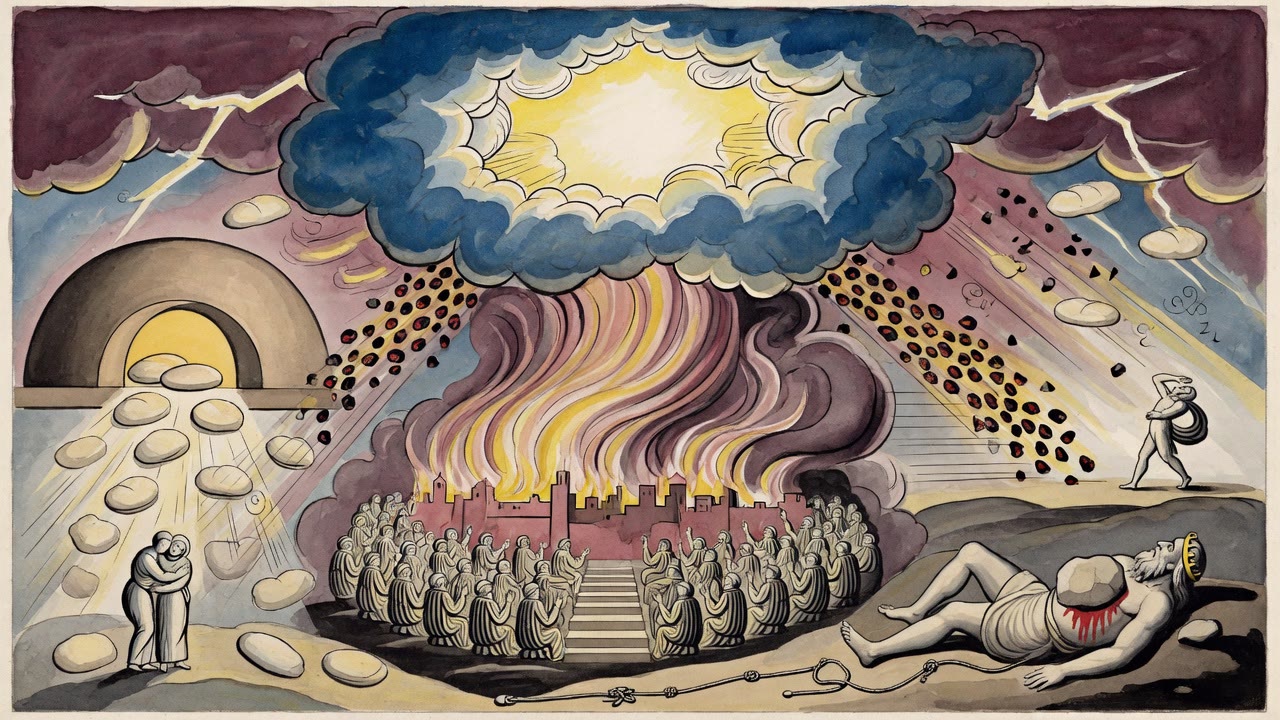
So every year two goats are stood at the door of the sanctuary and lots are drawn over them, one for the Lord and one for Azazel (Leviticus 16:8). The second goat is walked out into the wilderness carrying the sins of the year on its back. It is a present, handed over on the one morning the rider from Eden is permitted to look at Israel at all, and it is handed over so that he takes it and goes.
← All myths