Eve Named Cain After the Angel She Saw Beside the Tree
She was afraid when she saw him standing by the tree. She ate anyway. When the first boy came, she named him for the angel she had wanted.
Table of Contents
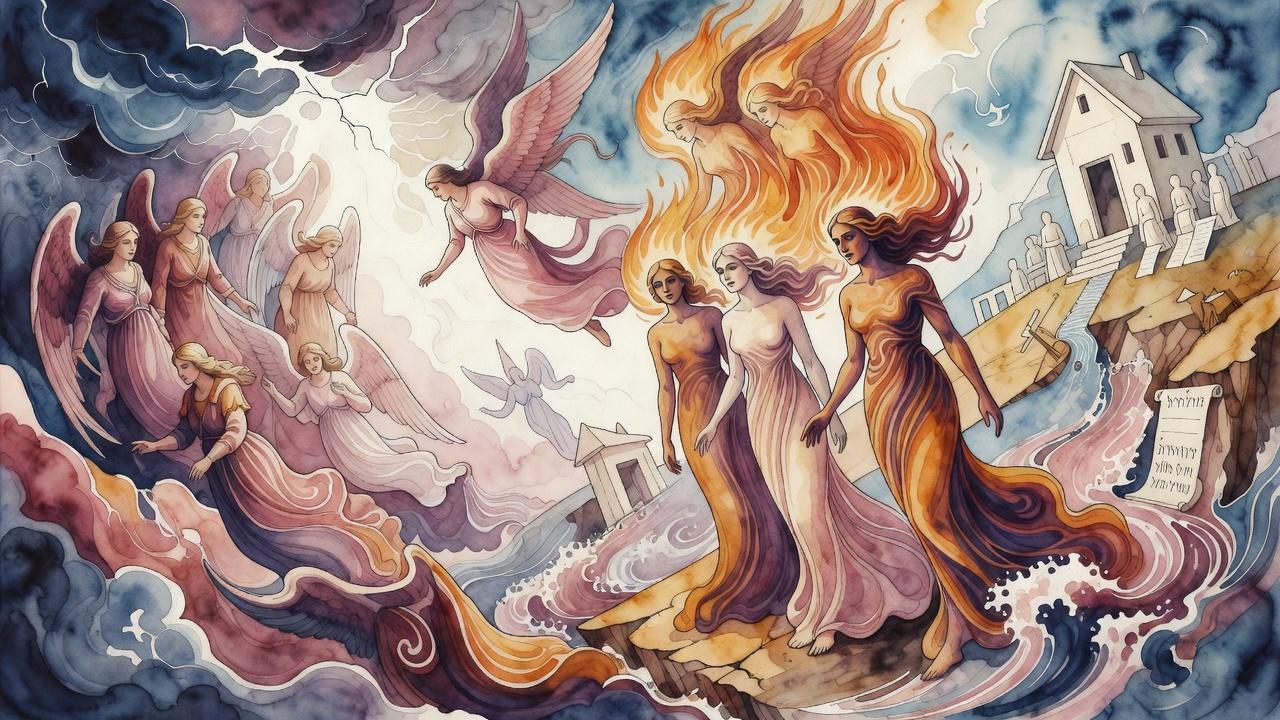
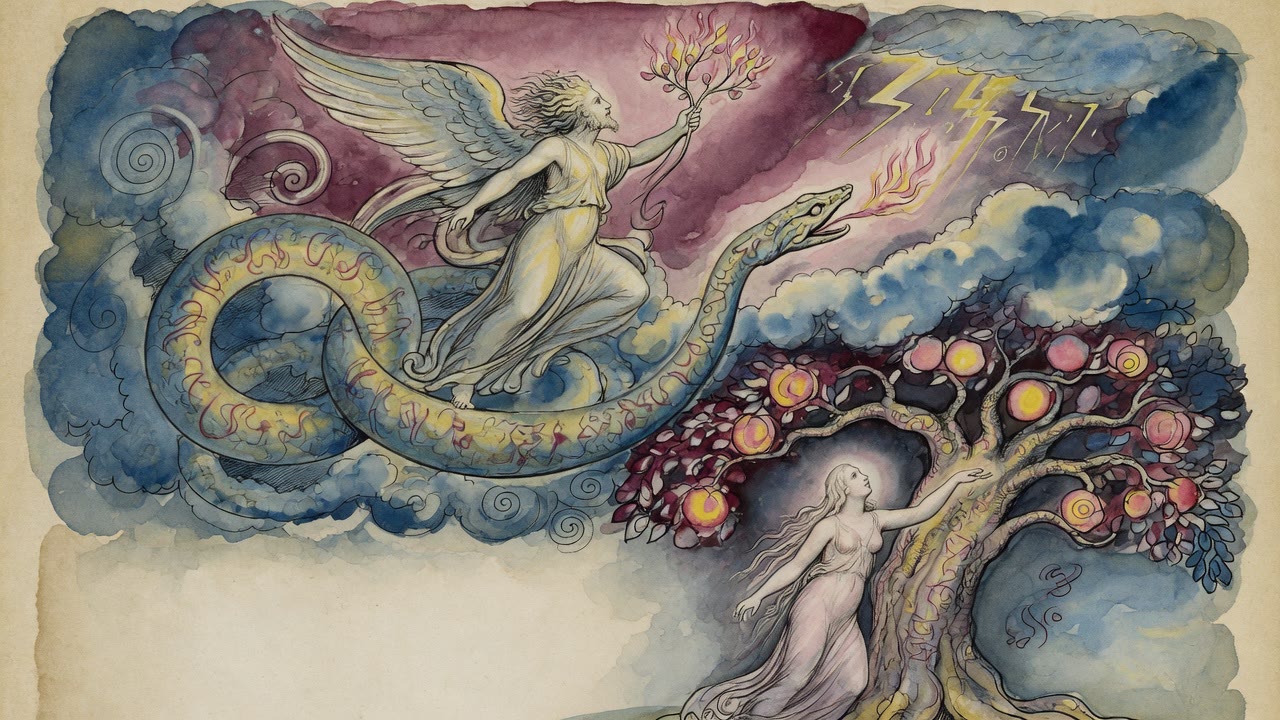
Eve reached toward the tree in the middle of the garden, and the figure at its base was not the serpent.
 Click for full size
The serpent was there. It had already spoken. It had already told her that dying she would not die, that every maker hates the child of his own making, that on the day she ate she would be as the great angels, wise enough to know good from evil. Then she looked past the creature's mouth and saw who was using it.
Samael (סמאל), the Angel of Death, stood beside the tree. She was afraid.
She Took the Fruit Anyway
Fear did not close her hand. She knew the tree was good to eat. She knew it was medicine for the eyes. She knew it was a tree by which a person comes to understand. She took the fruit and ate, and she gave it to her husband with her, and he ate (Genesis 3:6).
Their eyes opened. They knew they were naked. The purple robe they had been created in was gone. They sewed fig leaves and hid among the trees when the voice of the Word of the Lord God walked in the garden in the repose of the day.
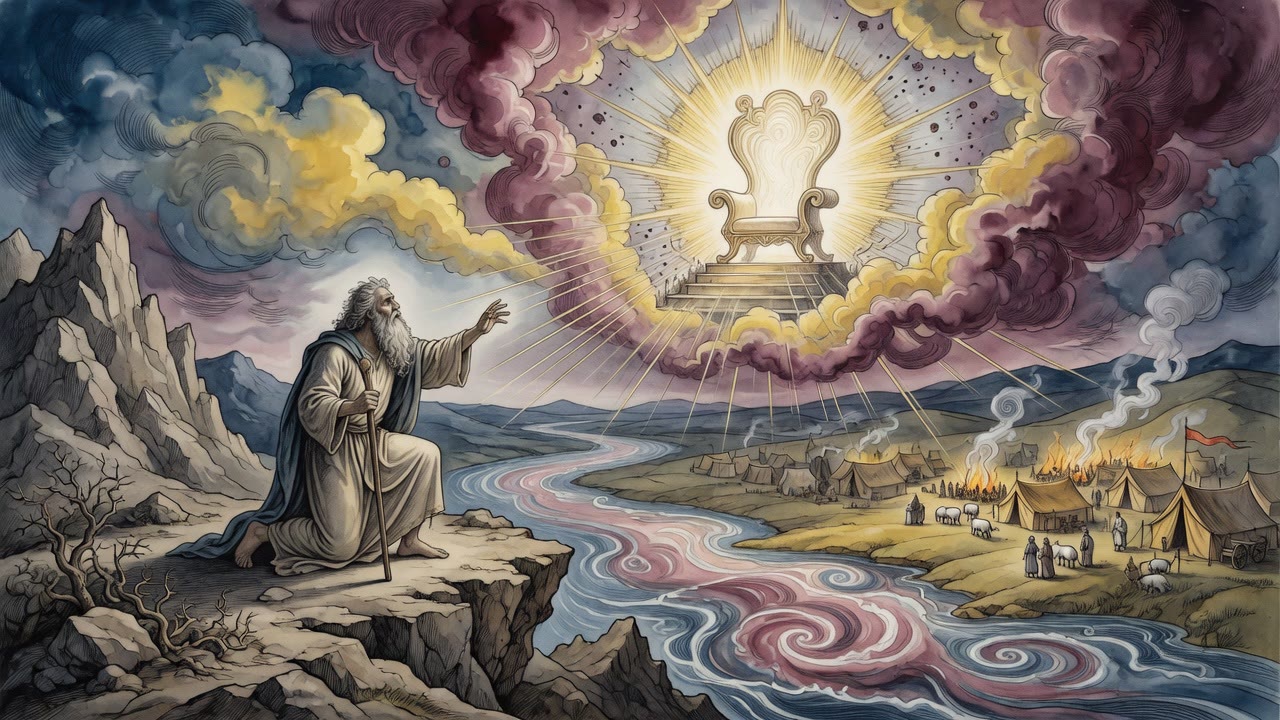
Adam tried to hide. God asked him whether the whole world He had made was not already open before Him, darkness the same as light, and how a man thought he could conceal himself in a place God could see. The question was not for information. It was for the record.
She Desired the Angel
What passed between Eve and the figure at the tree did not end when the fruit was eaten. When Adam knew her, she had already desired the Angel. She conceived. She bore a son.
She named him Cain.
The Hebrew of the verse sounds like thanks: I have acquired a man with the Lord (Genesis 4:1). In her mouth that morning it was not thanks. She said she had acquired a man, the Angel of the Lord. She was not blessing heaven for a gift. She was naming what she believed she had carried.
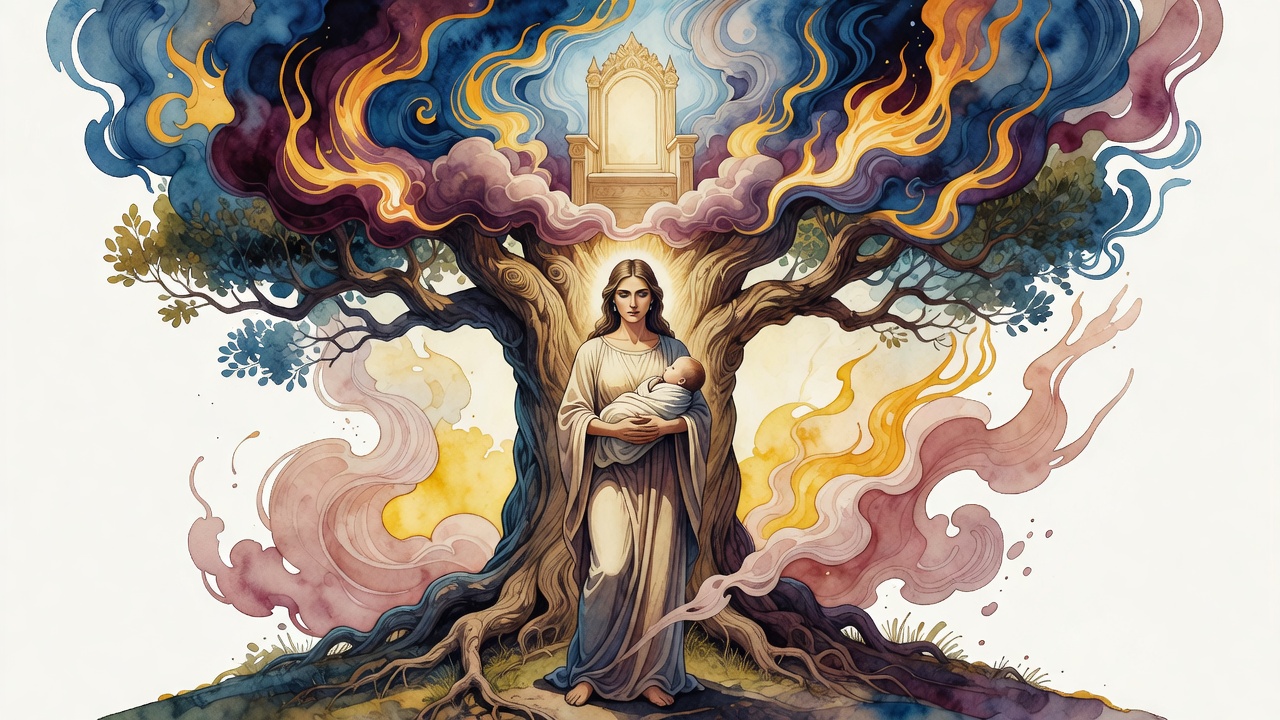
The firstborn lay in her arms, and she looked at him the way she had looked at the tree: afraid, and sure, and wrong about what kind of extraordinary thing she was holding.
The Child Was Already Marked
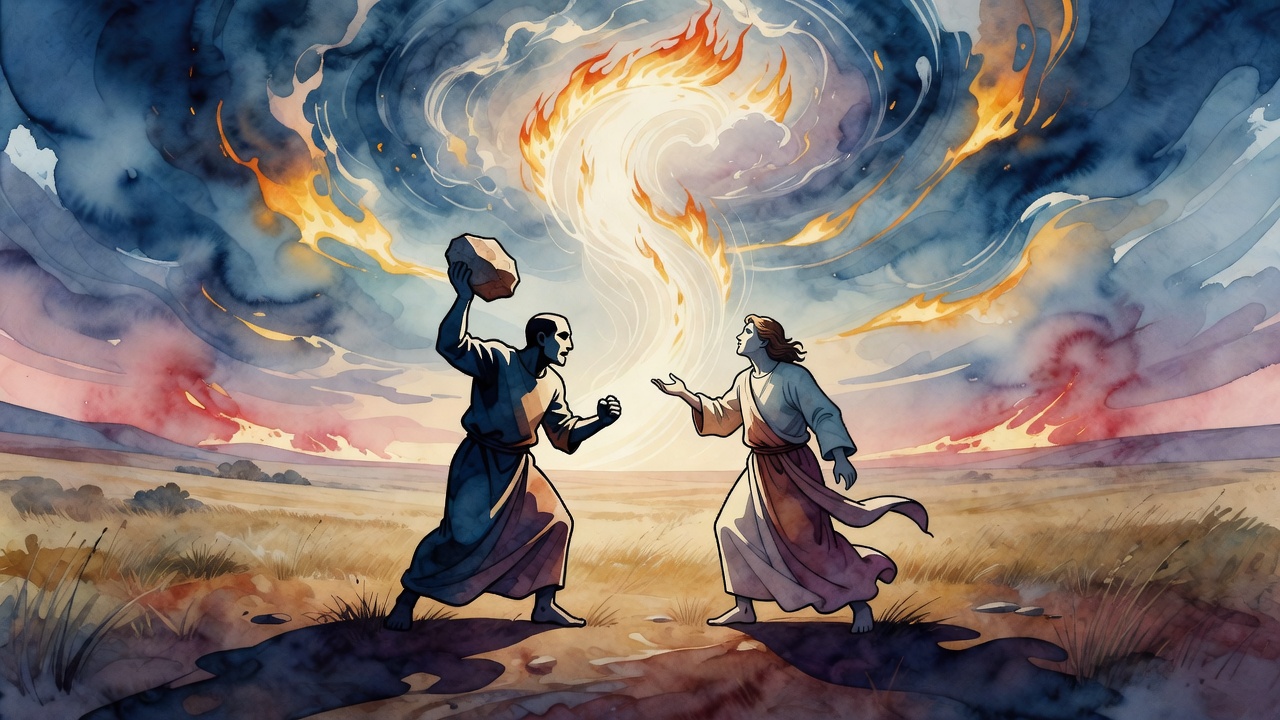
Cain grew. The sin crouched at his door the way the figure had stood at the tree, and he would not master it. He killed his brother in a field. He fled from God's presence. From his mother's first sentence over him he had been, in her mind, already other than ordinary human lineage.
She had been right that the child was not like other children. She had been wrong about the glory in it. The Angel of Death does not father a blessing. He leaves a mark a mother can mistake for one.
The garden had been the first place an angel stood too close to a woman. It was not the last.
Two Banished Angels Walked With Jacob
Years later, far from Eden, Jacob slept at Bethel with a stone under his head and dreamed a ladder fixed in the ground, its top in the height of heaven (Genesis 28:12).
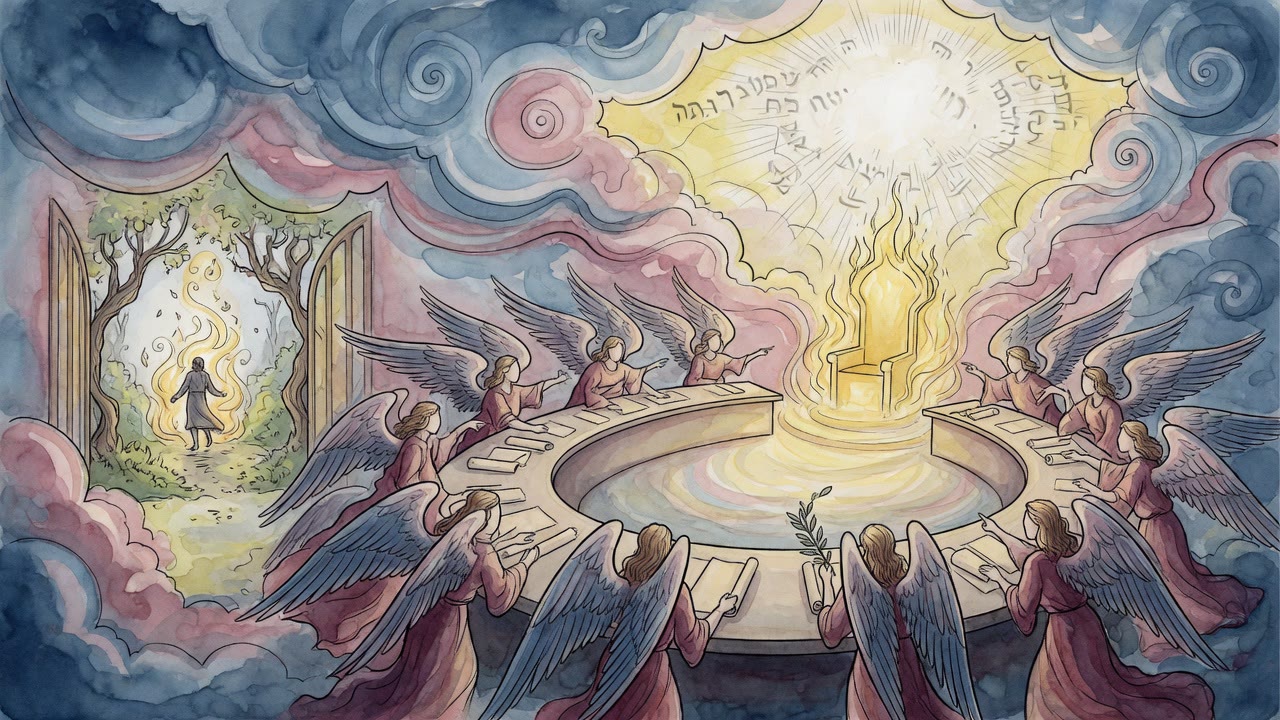
Two angels were on it. They were the two who had gone to Sodom. They had been expelled from their place because they had revealed the secrets of the Lord of the world. Thrown out, they had walked until the day Jacob left his father's house, and they had accompanied him with kindliness as far as Bethel. That day they climbed, and they called down to the others, "Come, see Jacob the pious, whose likeness is inlaid in the throne of glory, and whom you have so greatly desired to behold."
The rest of the holy angels descended to look at him.
Eve had seen an angel standing by a tree and had wanted him. Jacob, asleep on a stone, had angels thrown out of heaven walking beside him because they had talked. The boundary did not close. It only changed who was standing on which side of it, and what they were willing to say.
← All myths