The Serpent Walked Upright Until It Wanted Adam's Wife
One pair of serpents could have done all of humanity's work and dug up gold and pearls besides. Then one of them decided it wanted Adam dead.
Table of Contents
 Click for full size
The Height of a Camel
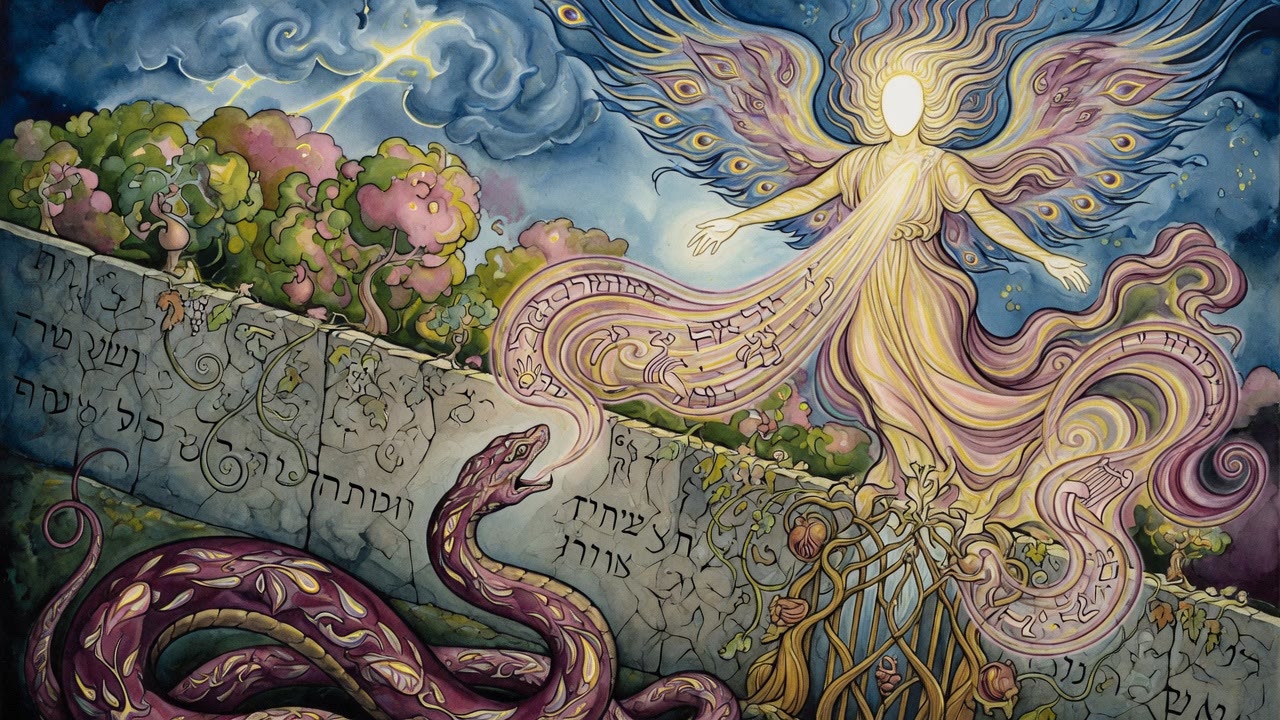
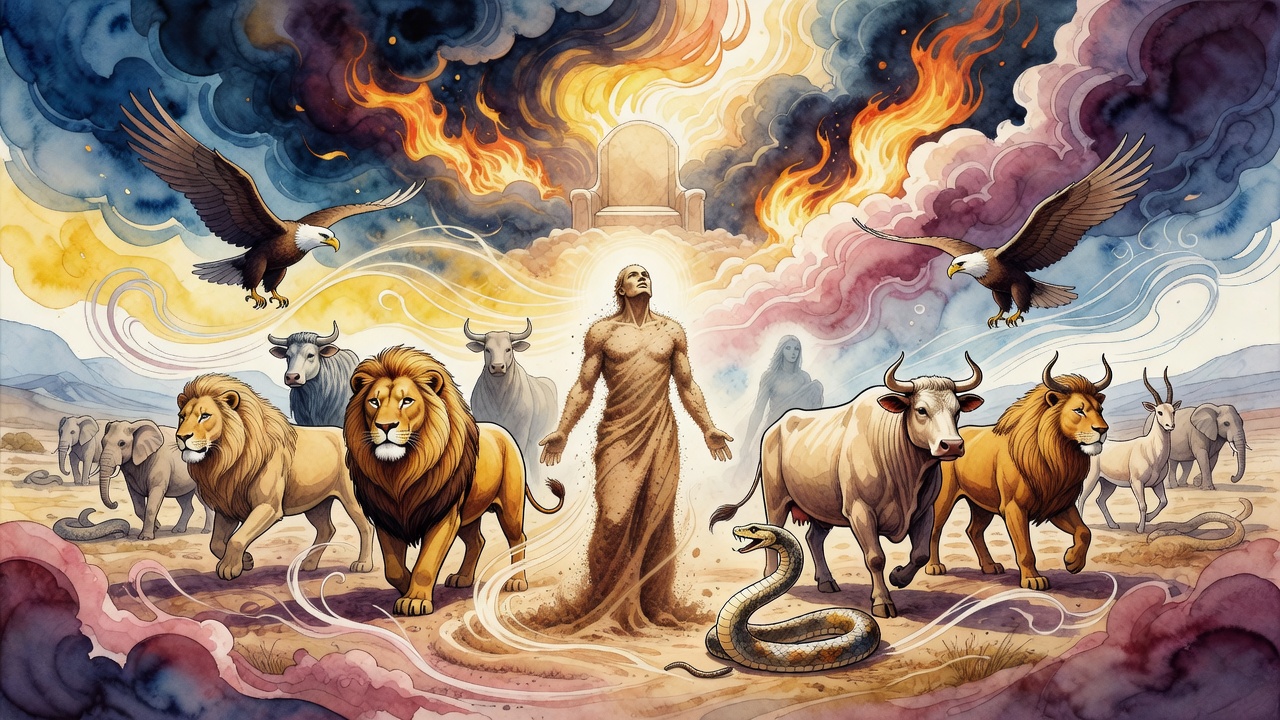
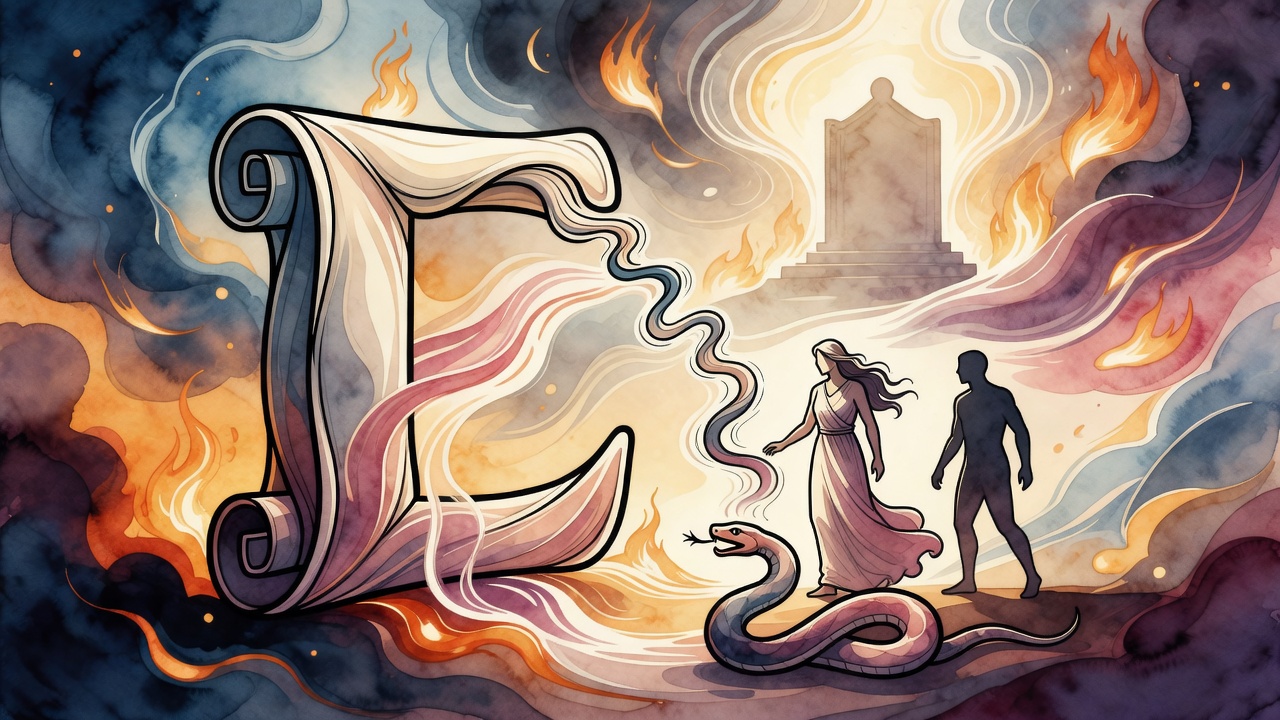
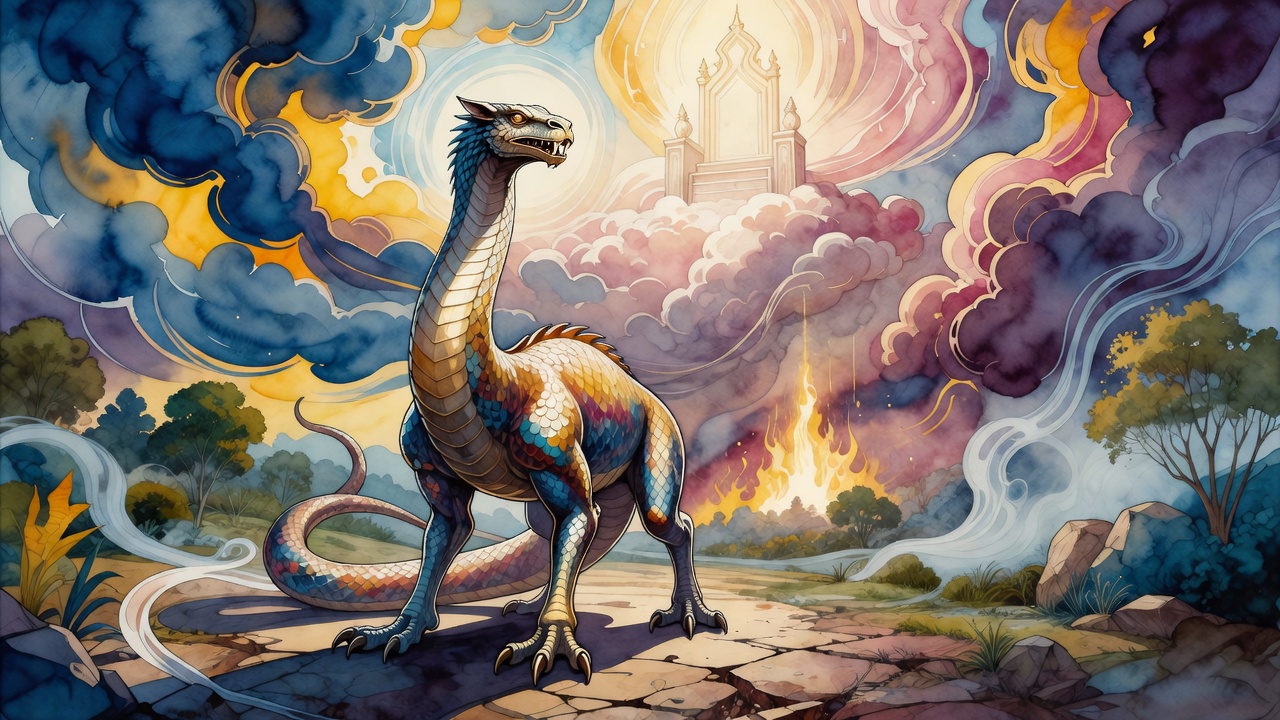
The serpent stood on two feet and reached the height of a camel. Of all the animals it had the finest gifts, and some of those gifts belonged properly to a man. Had the world held, one pair of serpents would have been enough to do every kind of work a human being has to do, and they would have brought up silver and gold and gems and pearls besides.
The gifts ruined it. A mind that sharp stopped believing in the One who made it. It watched Adam, and it watched the woman who slept beside him, and what it wanted was not the garden and not the rule over the beasts. It wanted her. So it began working out how Adam could be made to die.
It Went to the Woman Because the Man Was Harder
It knew Adam's character too well to waste persuasion on him. So it came to Eve, and it came with every line already prepared.
"Is it true that God has said, you shall not eat of every tree in the garden?"
"We may eat of the fruit of all the trees in the garden," she answered, "except the one in the middle. That one we may not even touch, or we will be struck with death."
God had said nothing about touching. Adam had added that himself, out of zeal to keep her far from the edge of the command. Better a wall ten hands high that stands than a wall a hundred ells high that cannot. Adam's extra height on the fence was the crack the serpent had been waiting for.
It Pushed Her Against the Tree
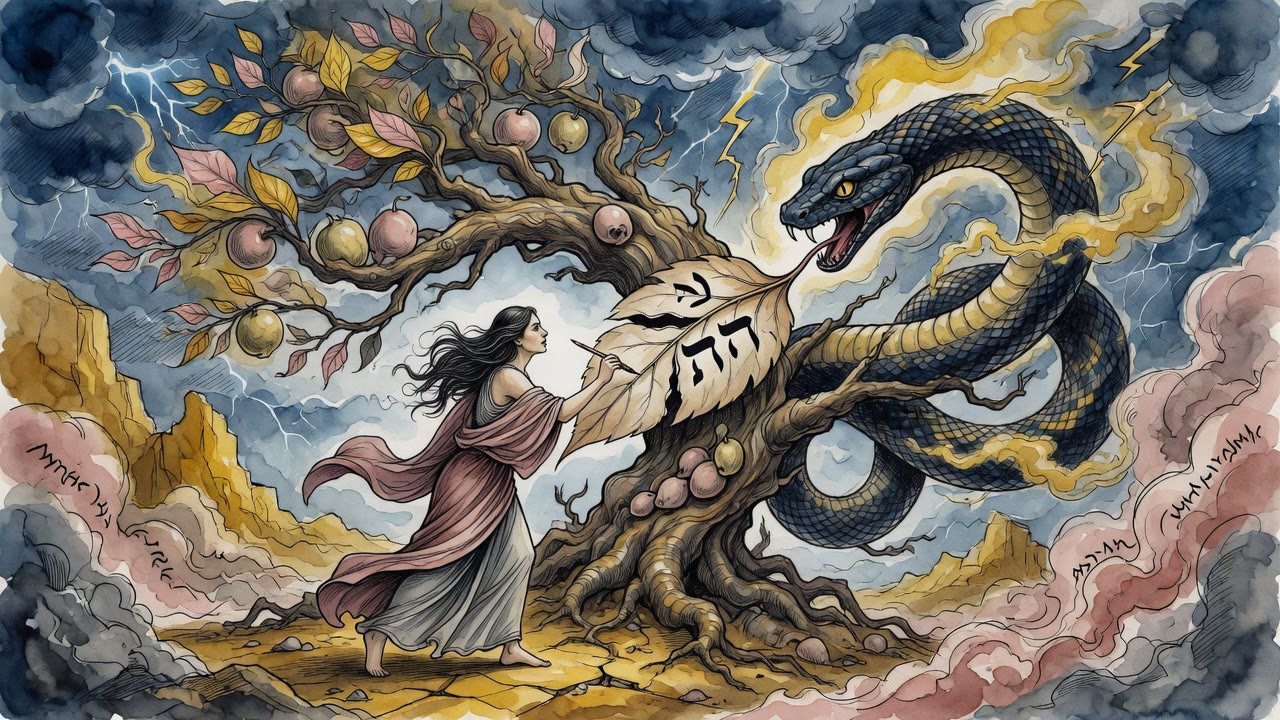
The serpent shoved her into the trunk.
Nothing happened. She stood there with the bark against her back, alive.
"You see that touching the tree has not killed you," it said. "Eating will do you no more harm than that. Nothing but spite lies behind the prohibition. Eat, and you will be as God is. He creates worlds and destroys them, and so will you. He kills and revives, and so will you. He ate of this tree first and afterward He made the world. That is why He keeps it from you, so that you will not go making worlds of your own. Everyone knows that artisans of the same guild hate one another."
Then it made the argument it was proudest of. Every creature rules the creature made before it. The heavens came on the first day, and the firmament of the second day holds them in place. The plants of the third day drink up the firmament's water. The sun and the stars of the fourth day ripen the plants and decide whether they flourish. The birds and beasts of the fifth day rule the lights above them, and the ziz can darken the sun with its wings.
"You were made last of all," the serpent said. "You are masters of the whole of creation. Hurry and eat, and be free of Him, before He brings forth something newer than you to rule over you."
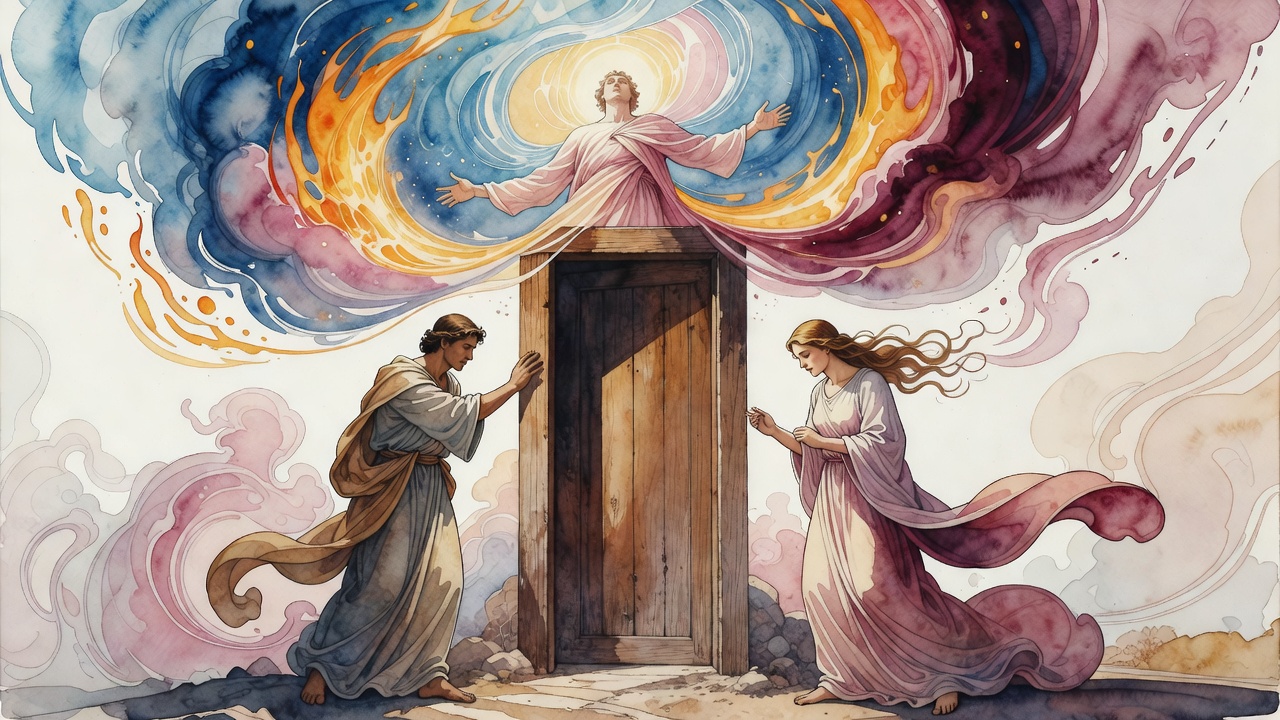
Eve ate. Adam ate. Death came into the world through a door that had been held open by a good argument.
God Read the List Back
Then God spoke to the serpent, and He did not begin with the crime. He began with the inventory.
"I created you king over all the animals, over the cattle and the beasts of the field alike, and you were not satisfied. Therefore you are cursed above all cattle and above every beast of the field. I created you of upright posture, and you were not satisfied. Therefore you shall go upon your belly. I created you to eat the same food as man, and you were not satisfied. Therefore you shall eat dust all the days of your life. You sought to cause the death of Adam so that you might take his wife. Therefore I will put enmity between you and the woman."
Four counts. Four times the same sentence, laid down like a weight: I gave you this, and it was not enough for you.
The Mole Has No Eyes and the Frog Has No Teeth
The feet went first. The creature that had walked beside human beings at the height of a camel came down into the dust and stayed there, and it could no longer run down other animals and kill them, because a body on its belly cannot chase. The mind went too. Whatever advantage it had held over the other beasts drained out of it.
God had done this work before. The mole was made without eyes, because a mole that could see would be impossible to stop. The frog was made without teeth, because nothing in the water would be safe from it otherwise. Some creatures are too dangerous to be left whole.
The serpent had wanted a man's place, a man's food, and a man's wife. It got the ground, and dust to eat, and a woman's children walking over its head forever.
← All myths