The Serpent Studied the Garden for Seven Years Before He Moved
Adam and Eve had seven full years in paradise before the serpent chose his moment. He considered Adam first, then chose Eve, and had his reasons for both.
Table of Contents
 Click for full size
Seven Years of Watching
The serpent waited for the exact wound he could use.
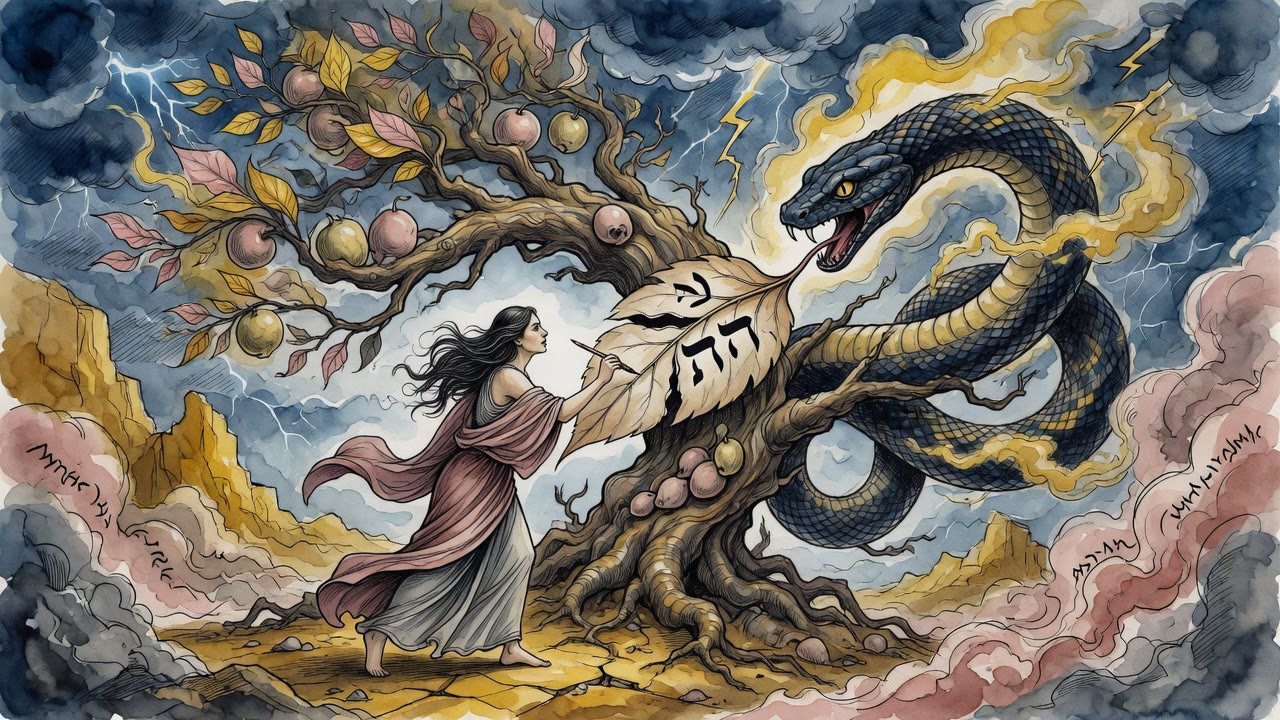
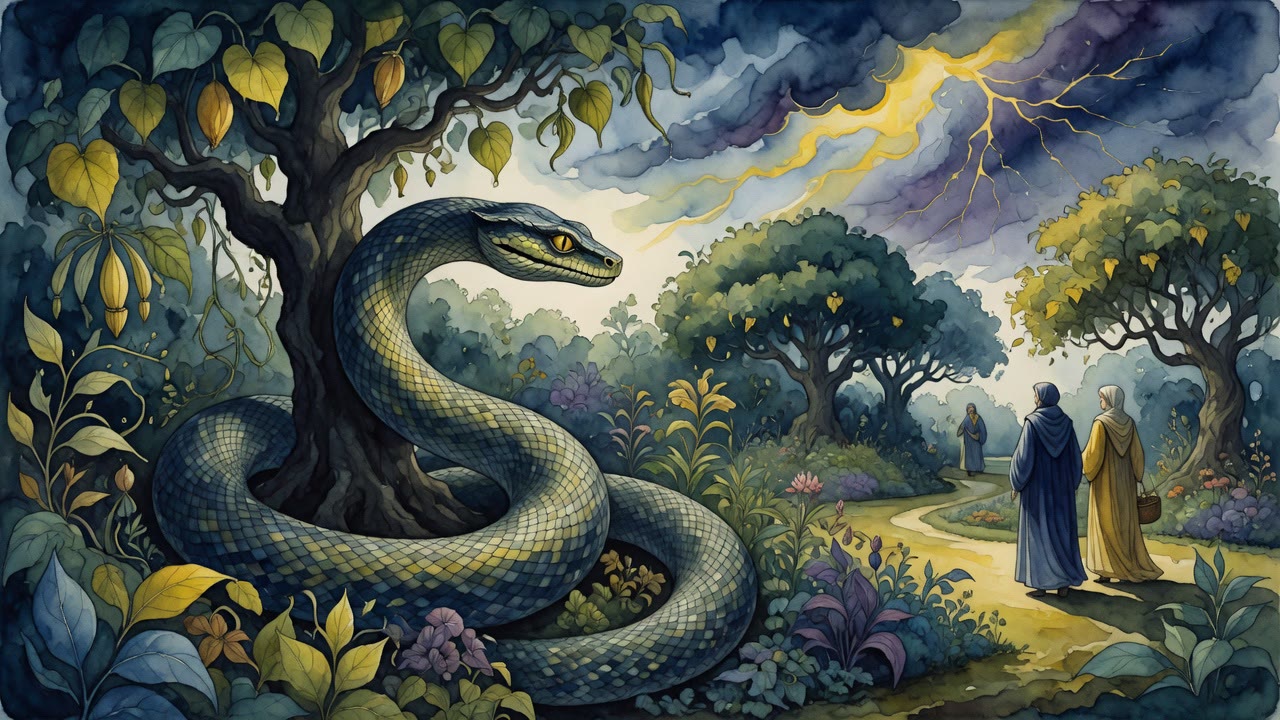
He had time. The Book of Jubilees, compiled in the second century BCE by a Jewish writer who treated the precision of sacred time as a theological argument in itself, gives Adam and Eve seven full years in the Garden before anything went wrong. Seven years of tending the Garden and naming the animals and learning the rhythms of a world that worked exactly as intended. Then, in the second month, on the seventeenth day of the seventh year, the serpent arrived. The date is not decorative. The author of Jubilees understood history as a clock that God set at creation and has been running with absolute precision ever since. The catastrophe in Eden did not happen because God was inattentive. It happened at the appointed moment, because something that had been studying the Garden for years had finally identified the point of entry.
Why He Did Not Start With Adam
Pirkei DeRabbi Eliezer, the collection of rabbinic elaborations on Torah compiled in eighth or ninth-century Palestine from much older sources, preserves the serpent's actual deliberation. He did not move impulsively. He thought. He considered approaching Adam first, and then he reconsidered. "If I go and speak to Adam, I know that he will not listen to me, for a man is always hard to be persuaded." The proof text he cited to himself was from 1 Samuel 25:3: "a man is churlish and evil in his doings." This was the serpent's own assessment of Adam's character, not a compliment but a tactical obstacle. Adam had received the prohibition directly from God. The command was fresh in him and he was the kind of person who, once told something by direct divine speech, was not easily moved away from it.
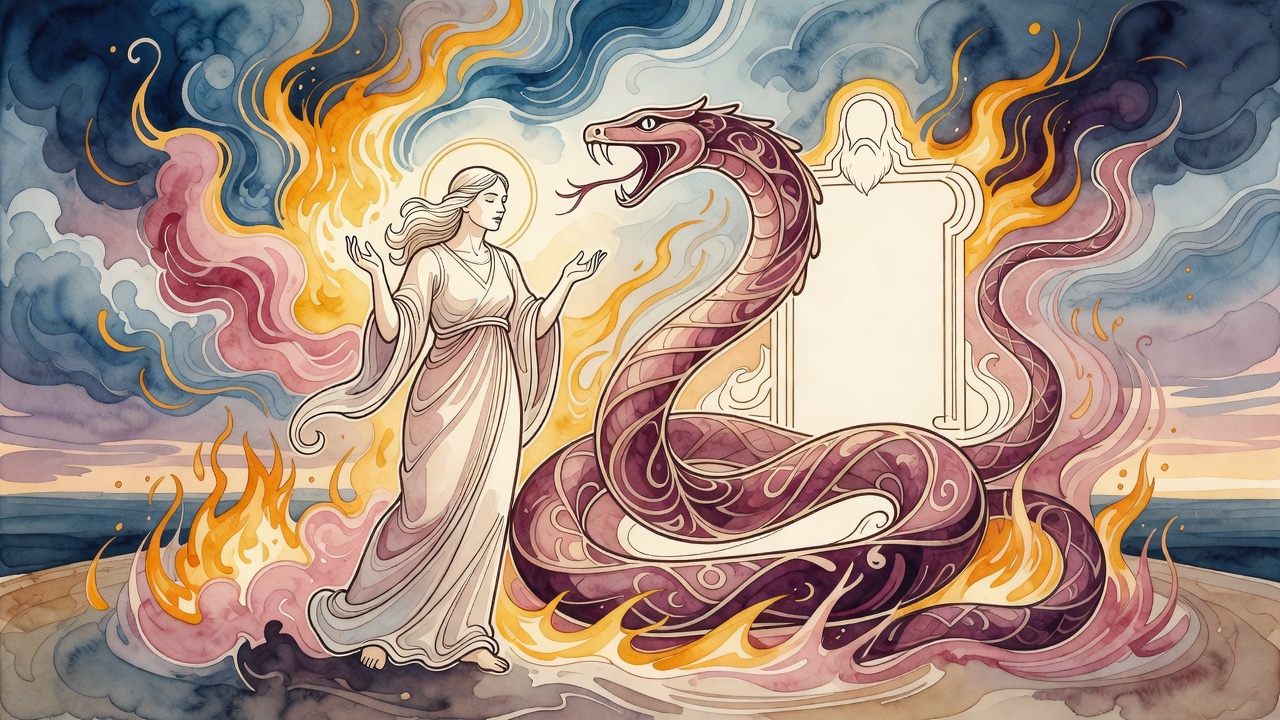
Eve was different, the serpent calculated, "for I know that she will listen to me, for women listen to everyone." This line is preserved in the tradition without apology or softening. The serpent made a gender-based strategic calculation, and Pirkei DeRabbi Eliezer preserves the calculation verbatim. He was not making a philosophical observation. He was sizing up the two available targets and choosing the one whose compliance he assessed as more achievable. He was wrong about what he would achieve, but he was right about who would listen first.
The Conversation at the Tree
The serpent's opening question was calibrated to create doubt without stating a falsehood directly. "Hath God commanded you, saying, Ye shall not eat of every tree of the garden?" Eve corrected the distortion accurately: God had said they could eat of every tree except one, and of that one they should not eat or even touch it, lest they die. The Book of Jubilees notes the addition of "touch it" as Eve's own expansion of the prohibition. God had said eat. She said eat or touch. The elaboration left her more exposed than the original command, because the serpent could now demonstrate that touching the tree did not produce death and use that demonstration to cast doubt on the rest.
Pirkei DeRabbi Eliezer records that the serpent resolved this by touching the tree himself, or pushing Eve against it, so that she did not die from contact, and then saying: "just as touching did not kill you, eating will not kill you either." The logic was flawed. The premise, that touching and eating carried equal consequences, was not what God had said. But the doubt was planted, and once it was planted the rest followed.
What the Seven Years Meant
The seven-year timeline in Jubilees is doing theological work that runs beneath the surface of the story. The number seven was sacred in this tradition: seven-year sabbatical cycles, seven-year jubilees, the seventh day of creation. The Garden itself ran on a structure of sevens. Adam and Eve's time in paradise lasted exactly seven years, long enough to establish genuine knowledge of how the Garden worked, not so long that anything could be said about an indefinitely sustained righteousness. They were not naive. They were tested after a full cycle of time, and the test came at the appointed moment in the appointed month on a specific date that the author of Jubilees felt important enough to record.
The precision is the point. The catastrophe was not a random event. It happened when it happened because the structure of sacred time made that moment the moment. The serpent's seven years of watching were not wasted. He was waiting for the door the calendar would open, and on the seventeenth day of the second month of the seventh year, it opened.
← All myths