5 min read

Asenath Prayed Seven Days Before Joseph Could Kiss Her

Zuleika tried to possess Joseph by force. Asenath fasted, cast off her idols, and waited until heaven remade her soul for covenant.

Curated by Arthur · Told by Maggid ·
Table of Contents
  1. Zuleika's House Closed In
  2. Joseph Refused the Wrong Desire
  3. Asenath Saw Him From the Tower
  4. The Honeycomb of Paradise
  5. Pharaoh Crowned Them Both

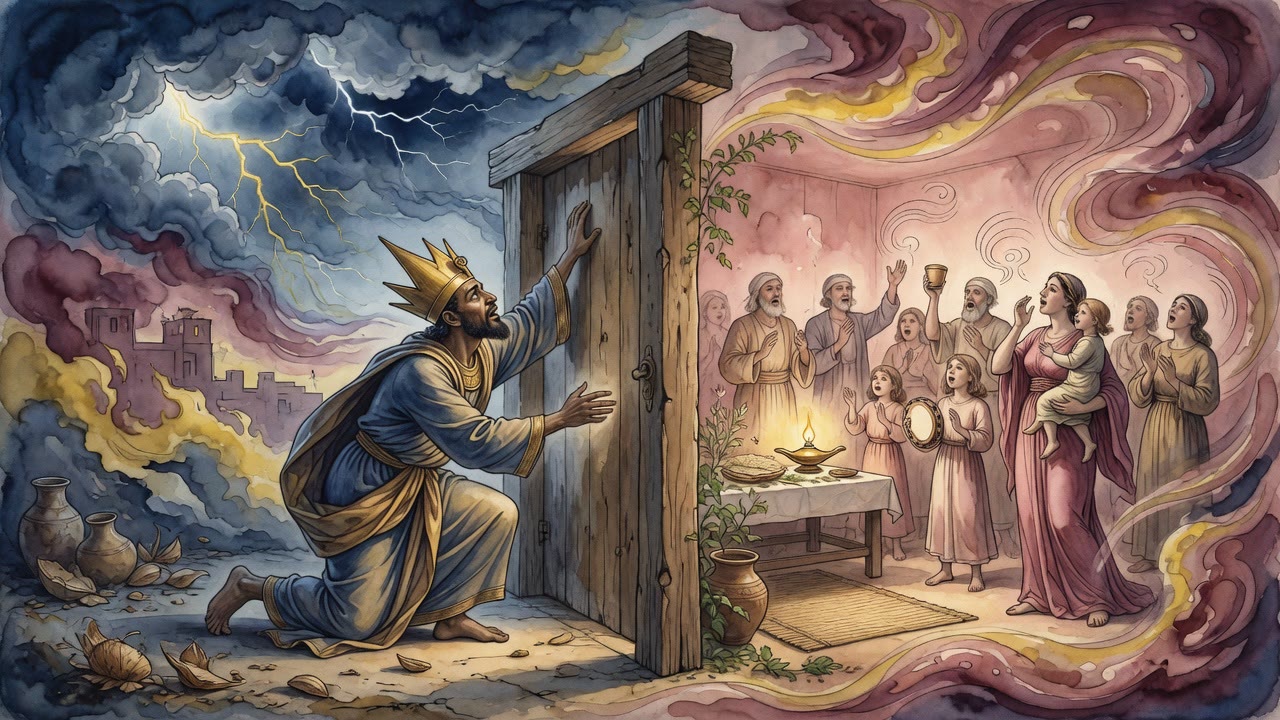
Zuleika filled the house with pressure until the walls seemed to breathe it back at Joseph.

She had rank, beauty, money, servants, and the keys to every inner room. Joseph had only his fear of God and the stubborn memory of his father's house. Every day she changed garments. Every day she tried another voice. Softness first. Then tears. Then threats. Then the kind of pleading that turns another person's refusal into a wound.

Joseph did not move toward her.

Zuleika's House Closed In

She fell sick from wanting him. The women around her noticed before she confessed it. They had seen the way her eyes followed the Hebrew youth through Potiphar's rooms, the way she held herself too still when he entered with accounts or keys. They encouraged her. Desire loves a chorus.

At last she seized the moment. Joseph came into the house to do his work, and the house emptied around him. Zuleika threw herself at him. The force of her longing had sharpened into command. She asked him why he would let her waste away when she had never seen a man like him. She promised safety. She promised honor. She promised that no harm would come.

Joseph heard the promise and trusted none of it.

Joseph Refused the Wrong Desire

He overpowered her and pushed her away. He did not pretend the test was small. A slave in a powerful household does not get clean exits. A woman with authority can turn a room into a trap and then call the trap a witness. Joseph knew that one torn garment could outweigh a lifetime of honesty.

Still he refused. Zuleika wanted Joseph as an object that could cure her hunger. She saw his beauty and tried to make it answer to her body. The more he resisted, the more she burned. When she could not possess him, she turned accusation into revenge. Prison received the man her chamber could not hold.

Years passed. Joseph rose. Egypt bowed.

Asenath Saw Him From the Tower

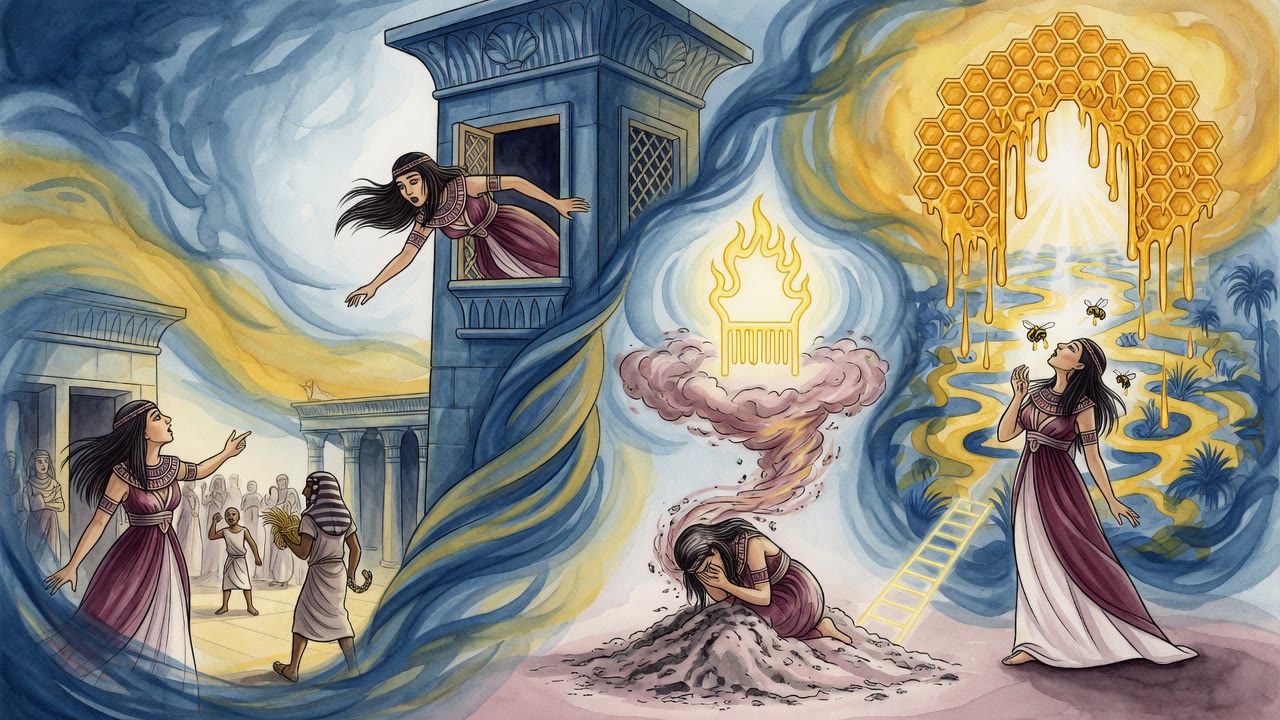
Asenath lived in another kind of enclosure. She was the daughter raised in Potiphera's house, guarded in privilege, kept apart from men, surrounded by Egyptian splendor. When Joseph passed below her window as viceroy, she saw a man crowned with divine favor and understood at once that the stories she had heard about him were lies.

Her first response was not pursuit. It was shame.

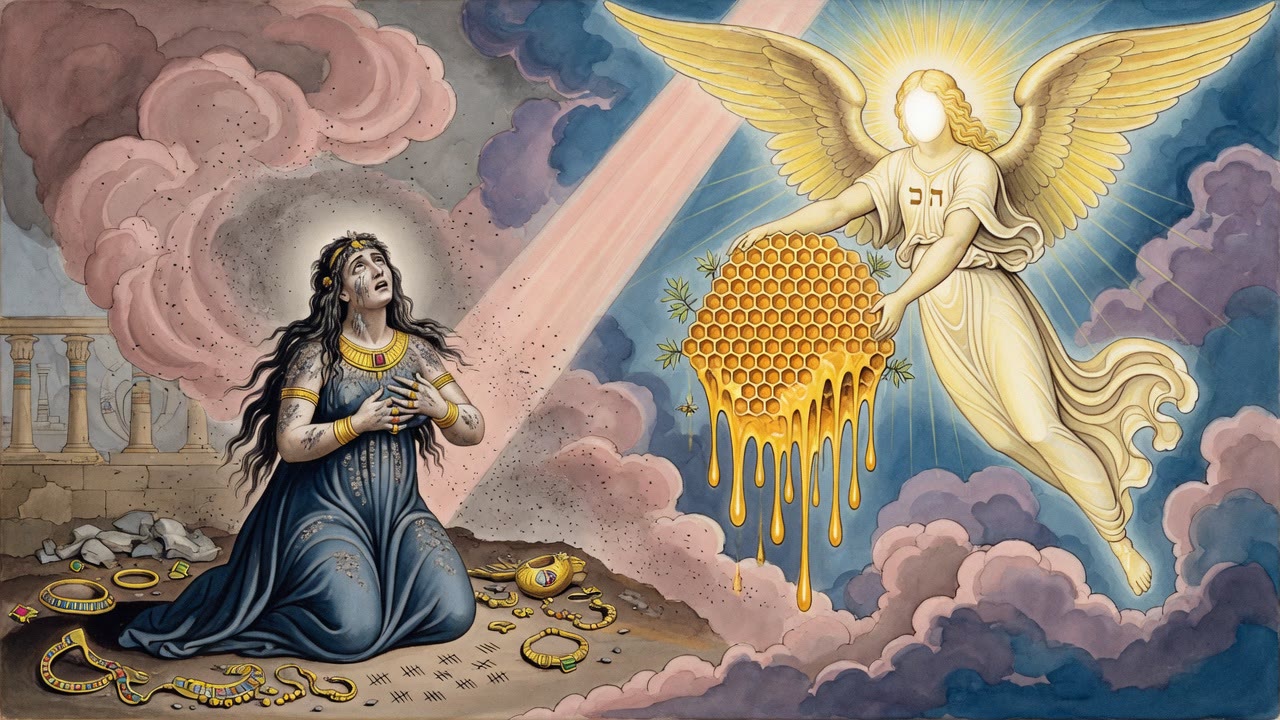
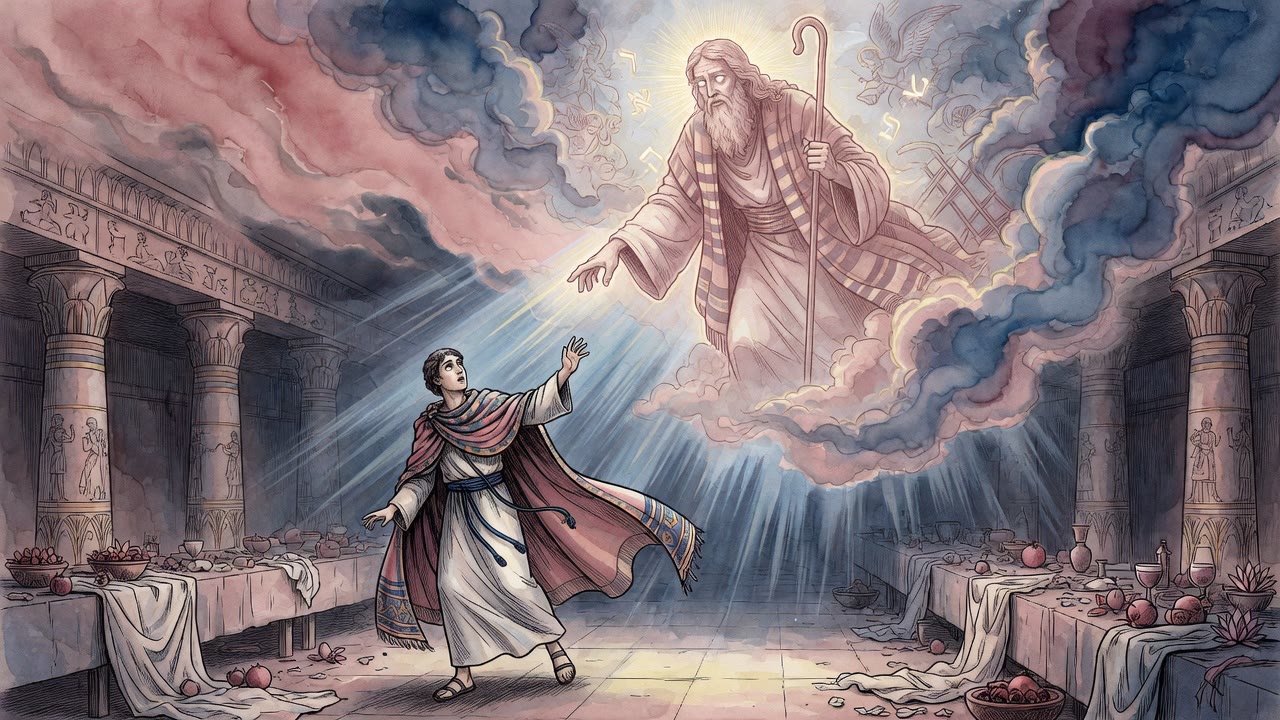
She withdrew to her chambers and stripped off the garments that had made her shine in Egypt. She put on sackcloth. Ashes covered her head. For seven days and seven nights she shut herself away and prayed. No banquet. No perfume. No argument. The woman who had looked down on Joseph now asked the God of Joseph to forgive her ignorance.

Her beauty did not disappear. It changed masters.

The Honeycomb of Paradise

On the eighth morning, a heavenly visitor entered. He ordered her to rise, wash, and put on garments of joy because she had been born again. Then came the sign that no Egyptian room could have produced. A honeycomb appeared, fragrant and bright, food from the bees of Paradise.

The angel placed it in Asenath's mouth. From that moment, her body became a place of blessing instead of display. Her bones, he said, would strengthen like cedars. Her youth would not fade in the ordinary way. Her name would become City of Refuge, a shelter where others could run.

When Joseph returned, he did not recognize her. The woman before him was not merely dressed differently. The air around her had changed.

Pharaoh Crowned Them Both

Joseph had once recoiled from kissing Asenath because idolatry still clung to her house. He would not join blessed bread to dead offerings, the cup of immortality to libations of deceit. After her prayer, the refusal ended. He heard what the angel had done. He saw the new life standing before him. He embraced her as his betrothed.

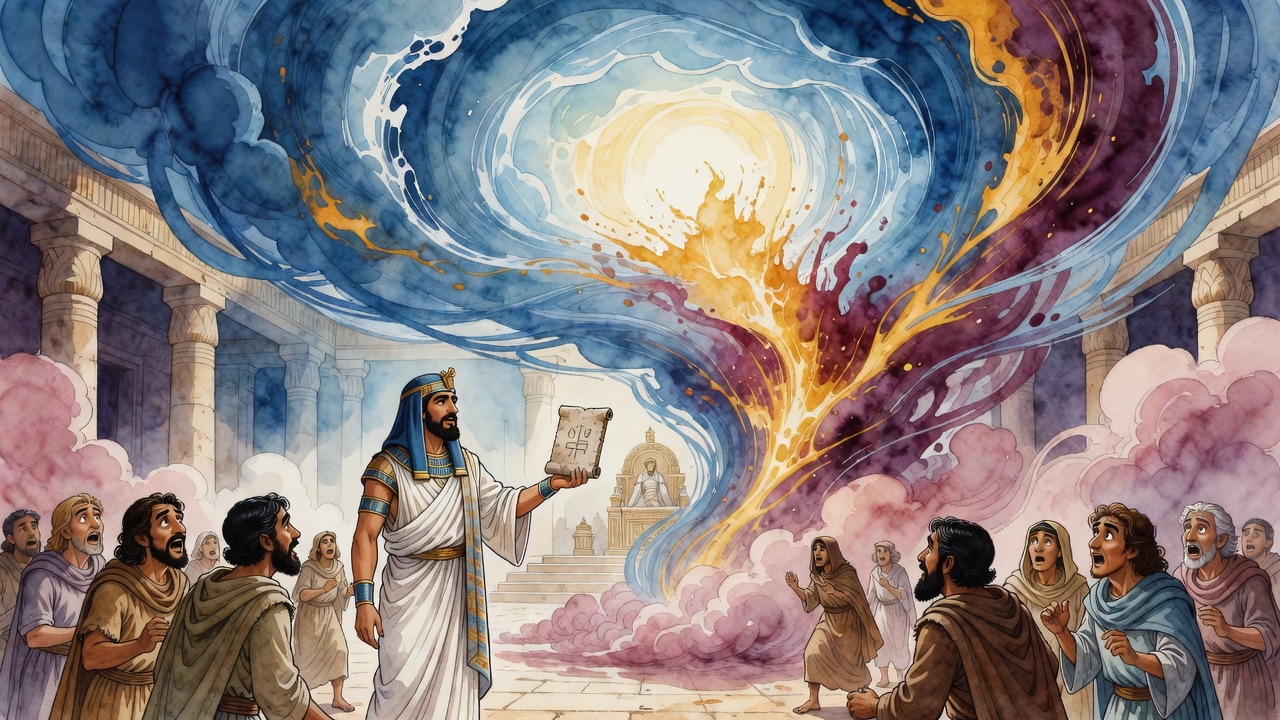
Pharaoh later placed golden crowns on both their heads and made Egypt stop for seven days of celebration. The court saw a political marriage. Heaven saw a found soul restored to its path.

Zuleika had tried to drag Joseph into a room and make him hers. Asenath stepped out of her room remade, and Joseph could finally meet her without losing himself.


← All myths

From the tradition

Sources

6 sources

The texts this telling draws on, in full. Open a card to read inline, or expand it for a wider, quieter read.

Legends of the Jews 1:119Legends of the Jews

Settle in, because

Our focus is on the tumultuous relationship between Joseph and Zuleika, the wife of his Egyptian master, Potiphar. Zuleika, consumed by her infatuation with the handsome and virtuous Joseph, found herself falling ill. But this wasn't any ordinary illness. As Ginzberg recounts, the women of her household knew the truth: her sickness stemmed from her unrequited love for Joseph. They egged her on, encouraging her to try and seduce him.

Can you imagine the pressure? The societal expectations, the whispers, the relentless pursuit?

One day, as Joseph was diligently performing his duties in the house, Zuleika seized her opportunity. She ambushed him, throwing herself upon him. But Joseph, strong in both body and spirit, managed to overpower her, pushing her to the ground.

Zuleika, heartbroken and desperate, pleaded with him. Her words, dripping with anguish, reveal the depth of her obsession. "Have you ever known," she cried, "seen, or heard of a woman my peer in beauty, let alone one more beautiful? I try daily to persuade you, I waste away with love for you, I bestow all this honor upon you, and still you refuse to listen! Is it fear of your master that holds you back? I swear, no harm will come to you. So, I beg you, listen to me! Grant my desire for the sake of the honor I have given you, and save me from this death. Why should I die because of you?"

It's a powerful scene, isn't it? Zuleika, a woman of immense power and privilege, brought to her knees by a love she cannot control. She's offering Joseph everything – security, status, an end to her suffering. Yet, Joseph remains steadfast.

Zuleika, however, was not one to give up easily. Ginzberg's retelling emphasizes her persistence, noting that she continued her advances, day after day, month after month, for an entire year! But Joseph's tzniut, his modesty and chastity, were unwavering. He wouldn’t even look at her!

Finally, in a desperate attempt to break his resolve, Zuleika resorted to force. She placed an iron shackle on his chin, forcing him to lift his head and meet her gaze. It's a shocking image, a symbol of her desperation and his unwavering commitment to his principles.

What does this story tell us about the nature of desire, the power of virtue, and the lengths to which people will go for love – or what they perceive as love? Joseph's unwavering commitment to his principles, his refusal to compromise his integrity, stands in stark contrast to Zuleika's obsessive pursuit. It's a story that challenges us to examine our own values and consider what we are willing to sacrifice for what we believe in. A story that continues to resonate, even after all these centuries.

Full source
Legends of the Jews 1:471Legends of the Jews

Ever felt like someone was just... out of your league? Like there was an unbridgeable gap between you? Well, the biblical figure of Joseph, the one with the coat of many colors, certainly felt that way when he first met Asenath.

Asenath wasn’t just anyone. She was the daughter of Potiphera, a priest of On (Heliopolis) in Egypt. And she was smitten with Joseph.

Joseph? He wasn't having it.

As we read in Legends of the Jews, a monumental compilation of Jewish folklore by Rabbi Louis Ginzberg, Asenath wanted to kiss Joseph. A simple, innocent gesture. But Joseph recoiled. His rejection wasn't exactly gentle.

He told her, and I’m paraphrasing here, that it was simply unthinkable that a man who fears God – who blesses the living God, eats blessed bread, drinks from the cup of immortality, and anoints himself with holy oil – could possibly kiss a woman from a "strange people." People who bless dead idols, eat "putrid bread," drink "libations of deceit," and, perhaps most dramatically, anoint themselves with the "oil of destruction." Ouch.

Strong words. But what's behind them?

It's not just about religious differences, though that's clearly a major part of it. It's about purity. Joseph sees a fundamental incompatibility. He views himself as someone dedicated to a higher, holier purpose, someone set apart. And Asenath, in his eyes, is associated with practices he considers defiling.

Think about the imagery he uses: "putrid bread," "libations of deceit," "oil of destruction." These aren't just descriptions; they're value judgments. They paint a vivid picture of what Joseph believes Asenath's world represents: spiritual decay and corruption.

This scene highlights the tension between assimilation and maintaining one's identity, doesn't it? Joseph is in Egypt, surrounded by a different culture, a different religion. How does he remain true to his beliefs while navigating this foreign land? His strong rejection of Asenath's kiss is a powerful statement about his commitment to his own spiritual path. It shows us the lengths to which he was willing to go to preserve his own faith and identity.

It makes you wonder, though: is such a rigid stance always necessary? Is there room for finding common ground, even between seemingly disparate worlds? Or are some divides simply too wide to bridge?

Full source
Legends of the Jews 1:474Legends of the Jews

Legends of the Jews turns to Asenath and the Heavenly Realms.

Asenath, a woman of stature and privilege, is deeply affected by the words of Joseph. So much so, that she’s moved to tears. Out of compassion, Joseph offers a blessing, imploring God to pour His spirit upon her, welcoming her into His people and granting her a share in eternal life. A powerful scene. According to Ginzberg's retelling in Legends of the Jews, Joseph's appearance and words had a profound impact. As soon as Asenath returned to her chambers, she cast aside her finery – the robes of state, the jewels – and replaced them with sackcloth. She covered her head in ashes, a symbol of mourning and repentance, and for seven days and nights, she prayed for forgiveness, completely isolating herself. level of dedication. Seven days and nights of intense introspection and seeking divine grace. It speaks volumes about the sincerity of her transformation.

Then, on the morning of the eighth day, something extraordinary happens. An angel appears to her! The angel tells her to put aside her mourning clothes and adorn herself in her finest garments because she has been born anew. He says she is now ready to partake in the blessed bread of life, drink from the cup of immortality, and anoint herself with the oil of eternal life.

Asenath, ever the gracious hostess, prepares to offer food and drink to her angelic guest. But then she sees it: a honeycomb of extraordinary beauty and fragrance. Where did it come from?

The angel reveals that this is no ordinary honeycomb. It was made by the bees of Paradise, food fit for angels and the chosen ones of God. He takes a small portion, and then, remarkably, he places the rest into Asenath's mouth. "From this day forth," he proclaims, "thy body shall bloom like the eternal flowers in Paradise, thy bones shall wax fat like the cedars thereof, strength inexhaustible shall be thine, thy youth shall never fade, and thy beauty never perish, and thou shalt be like unto a metropolis surrounded by a wall." What a powerful blessing!

And Asenath, in her newfound compassion, remembers her attendants. She asks the angel to bless them as well. He grants her request, saying, "May the Lord bless you and make you to be seven pillars in the City of Refuge."

This story, found in Legends of the Jews, is more than just a fantastical tale. It's a story of transformation, of the power of words and compassion, and of the potential for renewal that exists within each of us. It makes you wonder, doesn't it? What "honeycomb of paradise" might we encounter in our own lives, and how will we share its blessings with those around us?

Full source
Legends of the Jews 1:476Legends of the Jews

The story of Asenath, found in Legends of the Jews, gives us a glimpse into just such an experience.

An angel has just visited Asenath. Not just any visit,. As Ginzberg retells it in Legends of the Jews, the angel departs in a blaze of glory – a chariot of fire pulled by four fiery steeds, soaring back into the heavens. Can you picture the awe, the sheer wonder Asenath must have felt? She knew then, without a doubt, that she had been in the presence of something…otherworldly.

The story doesn't end there. Almost as soon as the celestial messenger vanishes, Joseph arrives. Asenath, eager to greet him, rushes to prepare herself. And As she washes her face, she sees her reflection and is astonished. The angel's visit has changed her, imbued her with a beauty she had never possessed before.

When Joseph arrives, he doesn't even recognize her! “Who are you?” he asks. Imagine the surprise, the confusion, perhaps even a little fear in his voice.

Asenath replies, "I am your maid-servant Asenath!" She explains that she has renounced her idols. She tells him of the heavenly visitor who offered her the "bread of life" and the "blessed cup." (We can’t help but think of parallels to late antique traditions here, can we?) More importantly, she reveals the angel's pronouncement: "I give thee unto Joseph as his affianced wife, that he may be thy affianced husband forever."

And then, a new name, a new destiny: "Thy name shall not any more be called Asenath, but thy name shall be City of Refuge, whither the nations shall flee for safety." Quite a change, wouldn't you say?

Finally, Asenath adds, "I go to Joseph, to tell him all these things that have reference to thee.' Now, my lord, thou knowest whether the man was with thee and spoke to thee in my behalf." She is essentially asking Joseph, did this angel visit you too? Did he confirm this divine plan?

This moment is so rich with meaning. It speaks to the transformative power of faith, the possibility of divine intervention, and the potential for even the most unexpected individuals to find a place in a sacred narrative. It’s a reminder that sometimes, the most profound changes come when we least expect them, leaving us almost unrecognizable to those who thought they knew us best. And it leaves us wondering, what "city of refuge" might we each be called to become?

Full source
Legends of the Jews 1:477Legends of the Jews

It's just the beginning of a whole new chapter!

After Joseph's incredible rise, having gone from enslaved prisoner to second-in-command, he needed a wife. And the Bible tells us (Genesis 41:45) that Pharaoh gave him Asenath, daughter of Potiphera, priest of On.

What about their betrothal? Their wedding? What did that look like? The Bible is silent.

That’s where the aggadah, the storytelling tradition, steps in to fill the gaps. The aggadah tries to answer the questions that the core text, the Tanakh (Hebrew Bible) leaves unanswered. And Ginzberg's retelling in Legends of the Jews gives us a fascinating peek into what Joseph's wedding might have been like.

According to this telling, Joseph confirmed everything he'd heard about Asenath. Can you imagine the relief, the joy? And then, "they embraced and kissed each other in token of their betrothal." It's a deeply human moment amidst the grandeur of the Egyptian court.

The betrothal itself was a celebration. Potiphar and his wife, Asenath's parents, threw a banquet. But the wedding? Ah, that was an event of a whole different magnitude. It took place later, and not just any later, but in the very presence of Pharaoh himself!

Pharaoh placed golden crowns upon the heads of both Joseph and Asenath. A golden crown. Imagine the weight, the symbolism, of that moment. And then, Pharaoh gave them his blessing. A blessing from the ruler of Egypt!

But the celebration didn't stop there. Oh no. Pharaoh threw a seven-day feast in their honor. Seven days! He invited the magnates and princes of Egypt and even those from other countries. Think of the diplomacy, the sheer scale of it all.

And here's the kicker: during those seven days, the people were prohibited, under penalty of death, from doing any work. All were to join in celebrating Joseph's marriage. It was a complete standstill, a nation brought together to celebrate the union of this Hebrew man and his Egyptian bride.

What does it all mean? Perhaps it emphasizes Joseph's complete integration into Egyptian society, the unprecedented honor bestowed upon him. Or perhaps, it’s a way of highlighting the divine favor upon Joseph, showing how far he had risen and the importance of his role in God's plan.

Whatever the reason, it's a powerful image, isn't it? A wedding celebrated not just by family and friends, but by an entire nation. A evidence of the extraordinary life of Joseph, the dreamer who became a leader. It makes you wonder about the stories behind other biblical figures..and the celebrations we don't know about.

Full source
Pirkei DeRabbi Eliezer 38:2Pirkei DeRabbi Eliezer

Her story, as told in Pirkei DeRabbi Eliezer (chapter 38), takes a turn you might not expect.

So, what happened to Asenath before she met Joseph? According to this tradition, Jacob played a pivotal role. He took a golden plate and inscribed upon it the Shem HaMeforesh ( שם המפורש ), the Holy Name of God. This wasn't just any inscription; it was a powerful act of protection, a divine amulet. He then hung this golden plate around Asenath’s neck and sent her on her way.

Why would he do that? Well that everything is revealed before the Holy One, blessed be He. God knew Asenath's destiny. And so, the angel Michael descended and took her, bringing her down to Egypt, specifically to the house of Potiphera.

Potiphera’s wife was barren, and Asenath grew up in their household as a daughter. From a protected child, guided by divine intervention, to an adopted daughter in a foreign land. It’s quite the journey.

Then Joseph arrives on the scene. The story unfolds as we know it from Genesis: Joseph rises to power, interprets Pharaoh’s dreams, and ultimately, as it is said in (Genesis 41:45), Pharaoh "gave him to wife Asenath the daughter of Potiphera priest of On." The circle closes. The golden plate, the angel's intervention, it all leads to this moment.

But what does it all mean? Pirkei DeRabbi Eliezer isn't just giving us a backstory; it's emphasizing the divine plan, the intricate web of fate and free will. Asenath wasn't simply chosen at random to be Joseph's wife. She was protected, guided, and prepared for her role. It's a reminder that even in the seemingly random events of our lives, there might be a hidden hand at play, a larger purpose unfolding.

It prompts us to consider: What "golden plates" are protecting us? What unseen forces are guiding us toward our own destinies? And how can we be open to recognizing the divine hand in our own lives, even when it's hidden in plain sight?

Full source