Zuleika Flattered Joseph and He Answered With the Grave
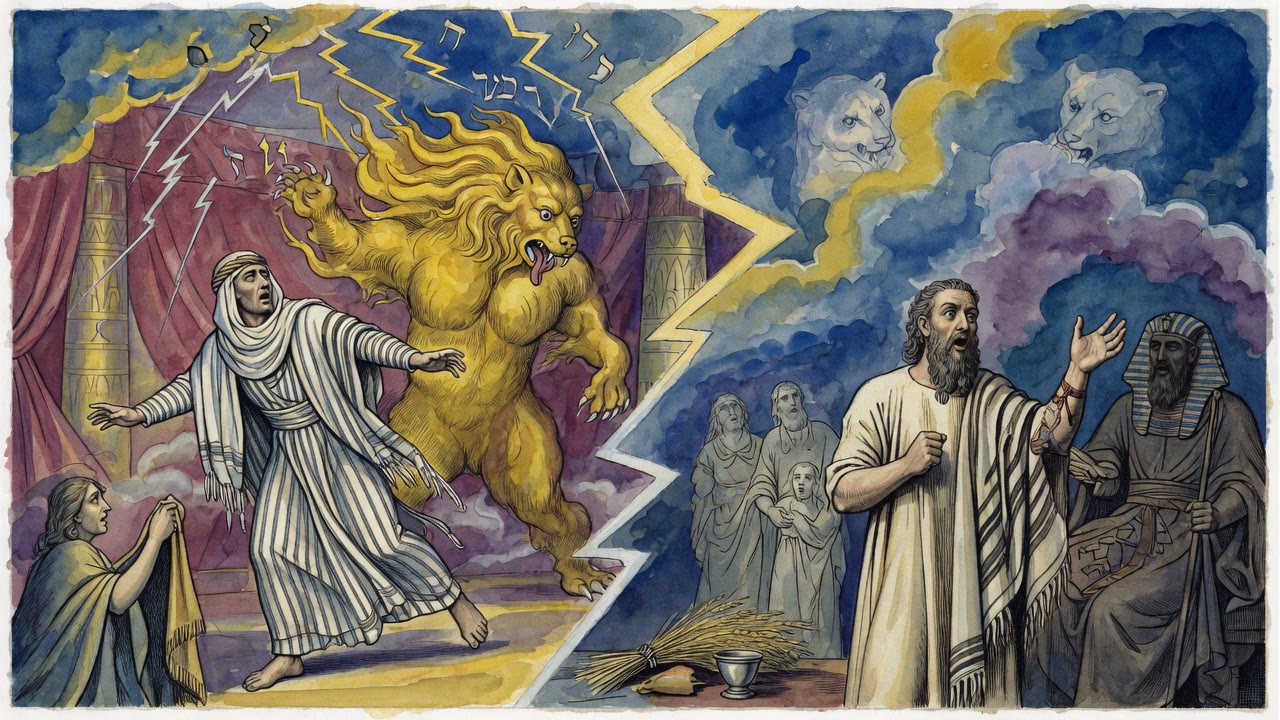
She praised his eyes in the Egyptian house. He told her they would look ghastly in the grave, and she came back the next morning anyway.
Table of Contents
Zuleika came to the Hebrew slave at night and called it a visit.
 Click for full size
He was seventeen. Potiphar, an officer of Pharaoh and chief of the cooks, had bought him and set him over the whole house, because the blessing of God sat on every room the boy entered. She had no son then. She told him she wanted to adopt him. She put her arms around him as if that were a mother's work. He prayed for her, and she did bear a son. She did not stop coming.
She Came at Night With a Lie
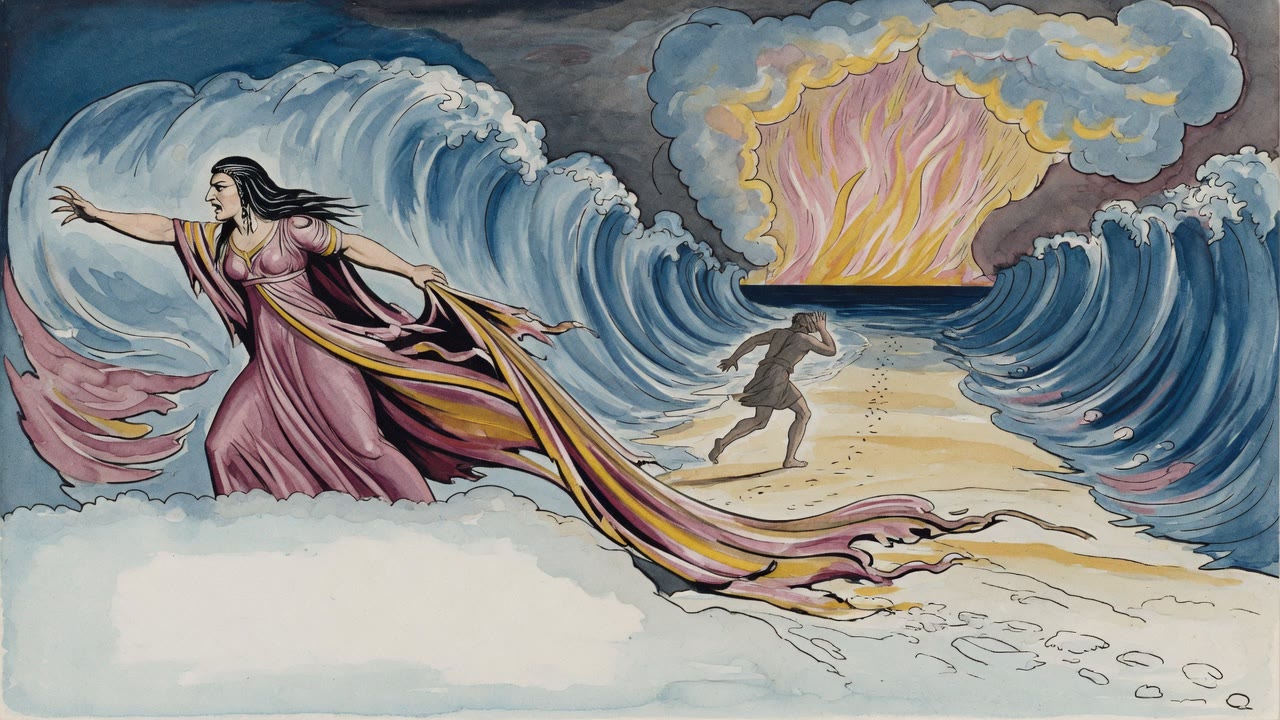
The stars had told her she would have descendants through Joseph. She read the sky as a door into his bed. She did not know the children would come later, through her daughter Asenath, and not through her.
When he understood the trick, he went to his chamber and fasted. He begged God to pull him out of her hands. Fasting made his face brighter. Potiphar took the brightness for ease and luxury. Zuleika praised his chastity to her husband in the daylight, so no rumor would stick, and at night she told Joseph not to fear the man of the house. Potiphar would never believe a word against him.
He did not want what she was offering. She heard that as modesty. She came back.
Every Compliment Met the Grave
Day after day she found him and used flattery the way other people use a key. "How fair is thy appearance, how comely thy form. Never have I seen so well-favored a slave as thou art."
He did not mock her. He did not raise his eyes. "God, who formed me in my mother's womb, hath created all men," he said.
She praised his eyes. Beautiful as they are now, he told her, so ghastly will they be in the grave. She praised his hands. These hands return to dust. She praised the way he moved through her husband's rooms. He told her the body was on loan. What she admired would not last long enough to be worth the sin.
She heard a young man being humble. She did not hear a refusal. A stick thrown in the air falls back to the place it came from. That was Joseph. Every sentence she aimed at him came down where he already stood.
The Covered Idol and the Dish of Spells
When praise failed, she changed the tool. She asked him to teach her the word of God. "If it be thy wish that I forsake idol worship, then fulfil my desire, and I will persuade that Egyptian husband of mine to abjure the idols, and we shall walk in the law of thy God."
"The Lord desireth not that those who fear Him shall walk in impurity," Joseph said.
She threatened prison. She threatened death. She said she would murder the Egyptian and marry him according to the law. He tore his garment. "O woman, fear the Lord. I will proclaim thy purposes in public."
She sent him a dish prepared with spells. An angel stood in the room with a sword across the plate. Joseph saw it and would not taste. Later, to show her that malice has no hold on a man who fears God, he ate the food in front of her anyway, trusting the angel of Abraham. She fell at his feet and swore she was done. She was not done.
She took him into her chamber and covered the idol that hung above the bed, so it would not watch. "Though thou coverest up the eyes of the idol," Joseph said, "the eyes of the Lord run to and fro through the whole earth." Adam was driven from the garden for a light command. How much more, he said, if I take a married woman. He would not be Reuben.
The Women Cut Their Hands
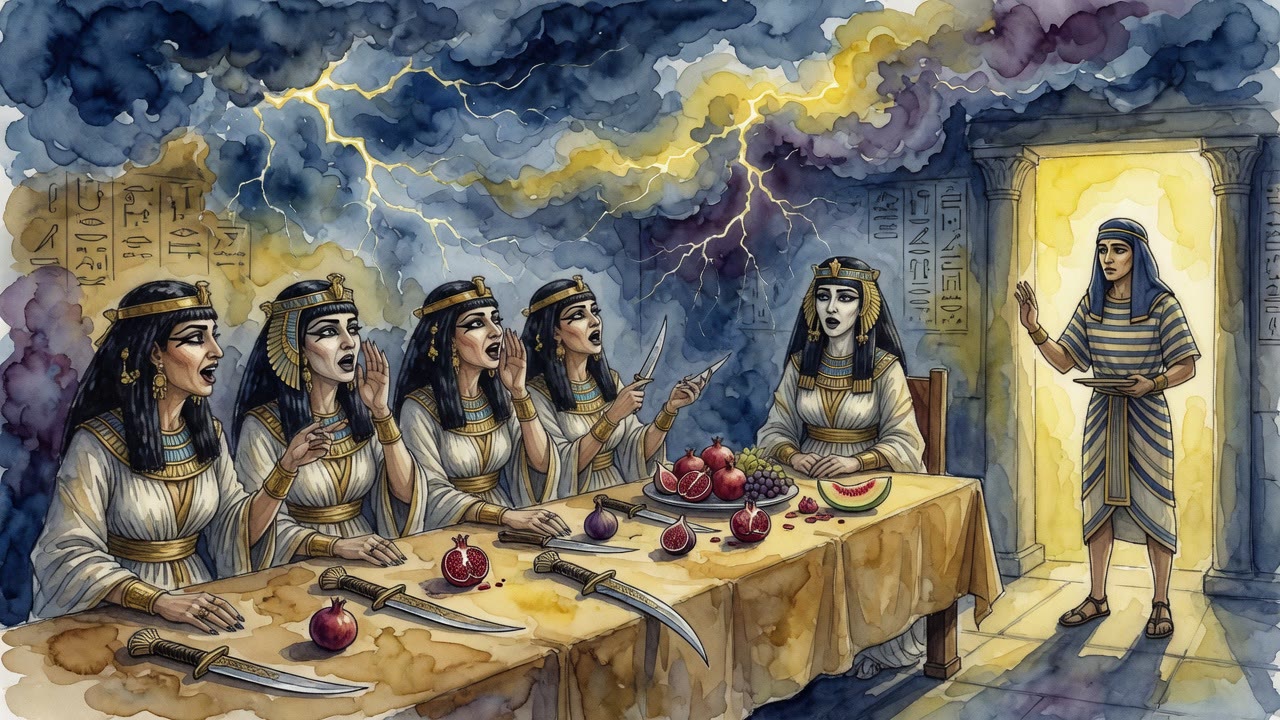
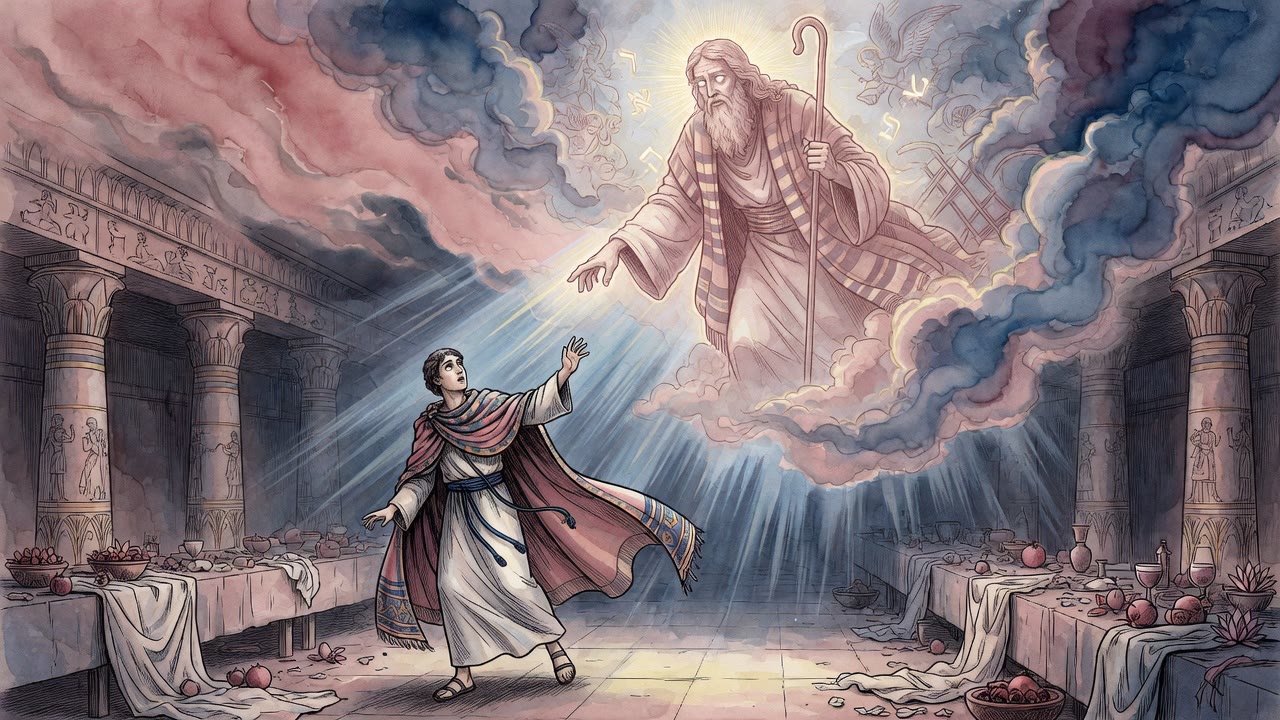
The hunger made her sick. The women of Egypt came to the house and asked why she lay so thin. She set a feast. She put a knife beside every orange. Then she ordered Joseph in, dressed in costly clothes, to serve.
He came through the door. The women looked. They kept looking. The knives kept moving. Blood ran over the fruit, and not one of them felt the cut. Zuleika pointed at their hands. You see him for an hour, she said. I see him in every room. They told her to speak. She had already spoken for a year.
She seized him. He was stronger. He put her on the floor. She wept and named the honor she had given a slave. He still would not look at her the way she wanted.
The Iron on His Chin
A year of this, and he would not lift his gaze. In a last try she set an iron shackle on his chin and forced his face up, so he would have to see her.
He saw her. He did not take her. The face she kept praising was not a door into him. It was a face, and behind it stood a God he feared more than a mistress, more than a prison, more than a knife.
She had wanted to seduce a boy who ran a house. She had found a man who would answer beauty with a grave. The stick came down in the same place it had left. Joseph was still Joseph.
← All myths