123 myths · Page 1 of 5
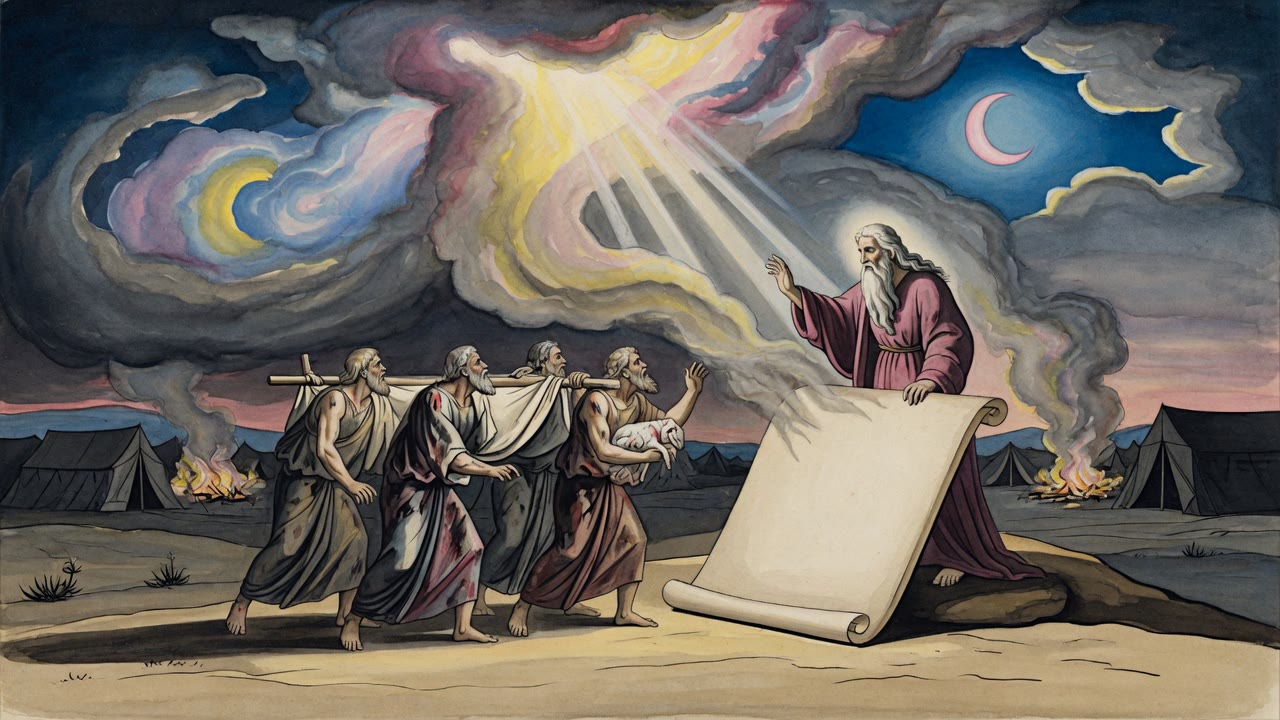
Impure men who had carried the dead refused to lose Passover. Moses waited, God answered, and a second date entered Israel's calendar.
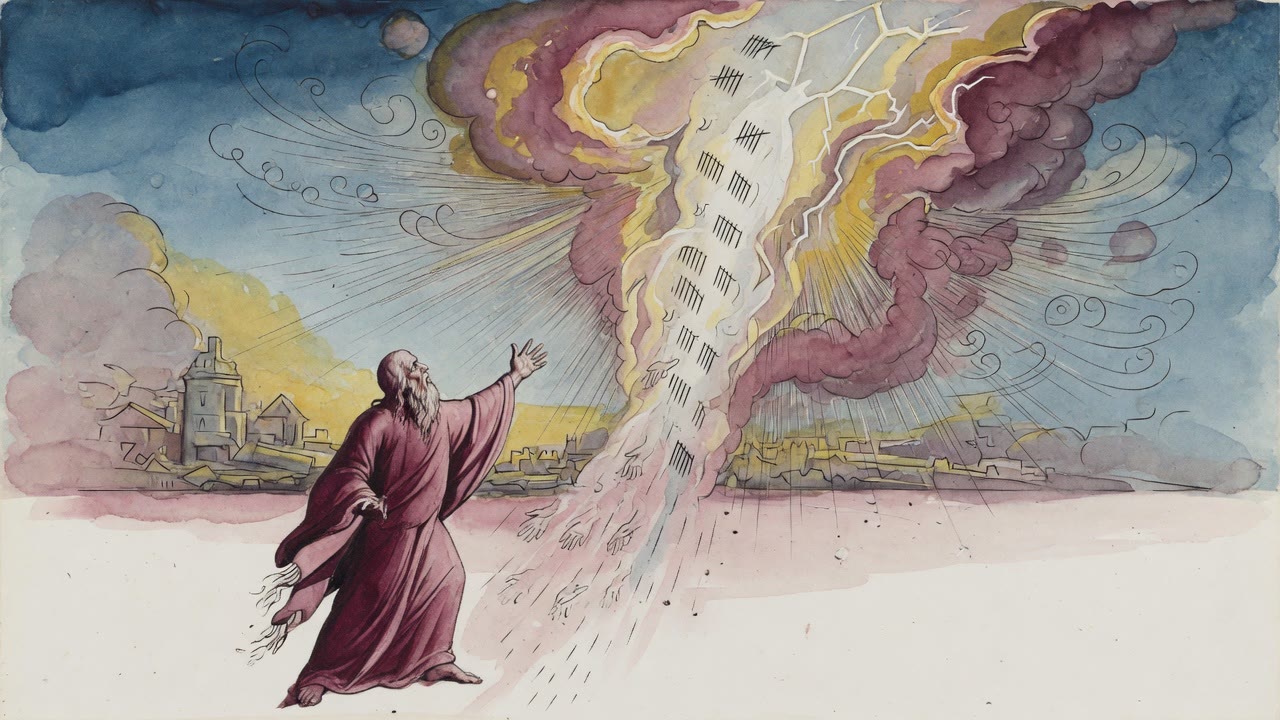
God decides to tell Abraham what he is about to do to Sodom. Abraham recognizes an opening and presses it, bargaining God down from fifty righteous to ten.
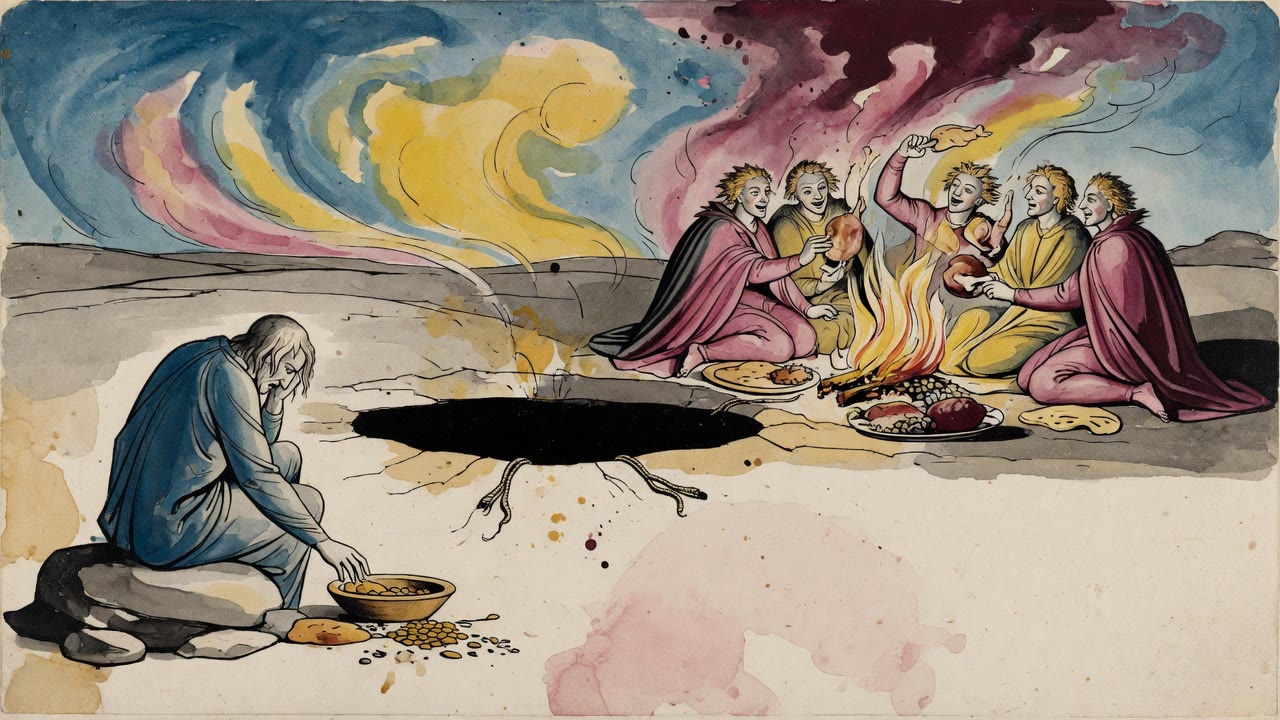
The brothers spread a meal beside the pit. One of them could not swallow anything, so they made him the guard and he watched the sale.
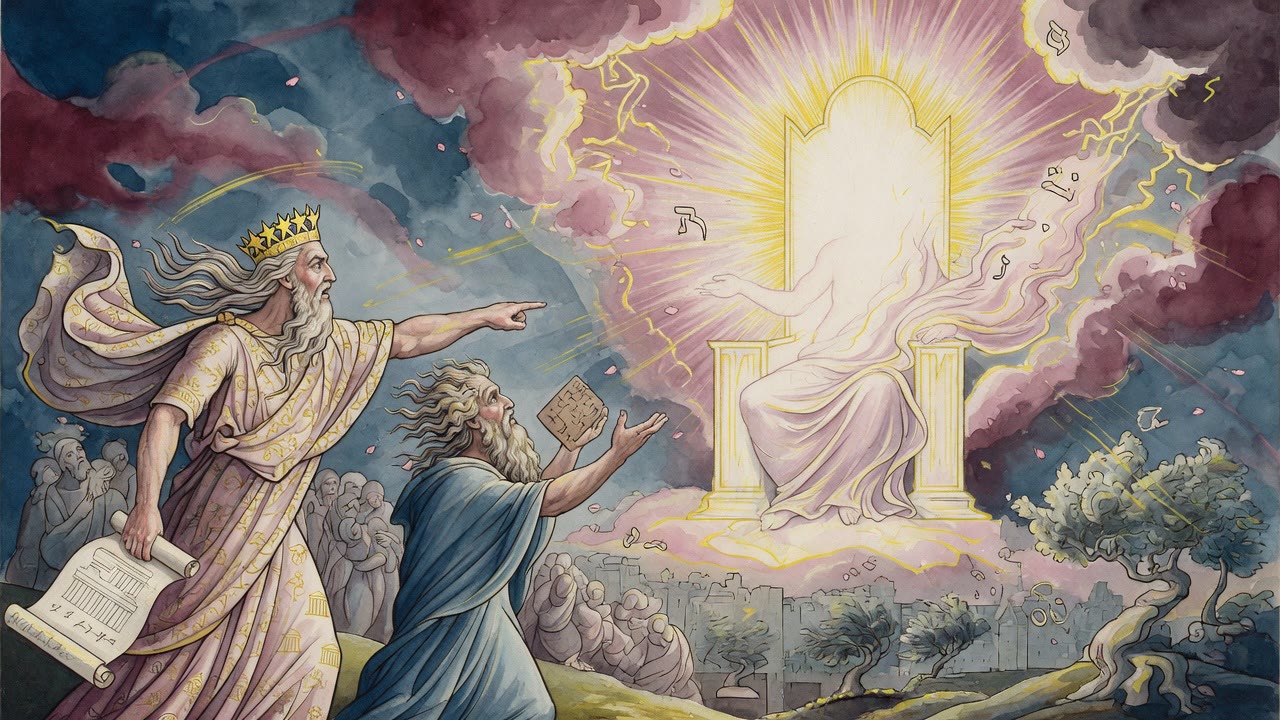
Solomon built the Temple and knew its prayer would one day be needed. Daniel stood in exile and tested whether that prayer still worked. Both were right.
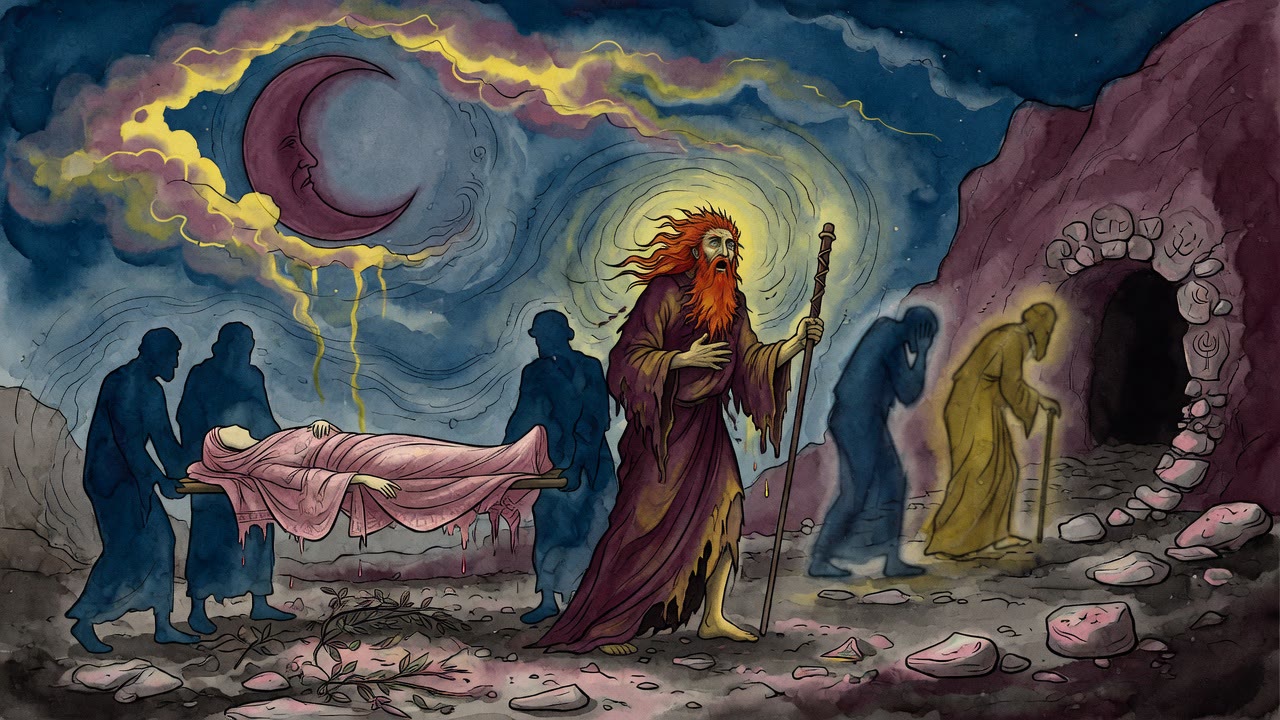
Rebekah died with only the disgraced Esau free to walk at the head of her burial, so the family carried her body out at night.
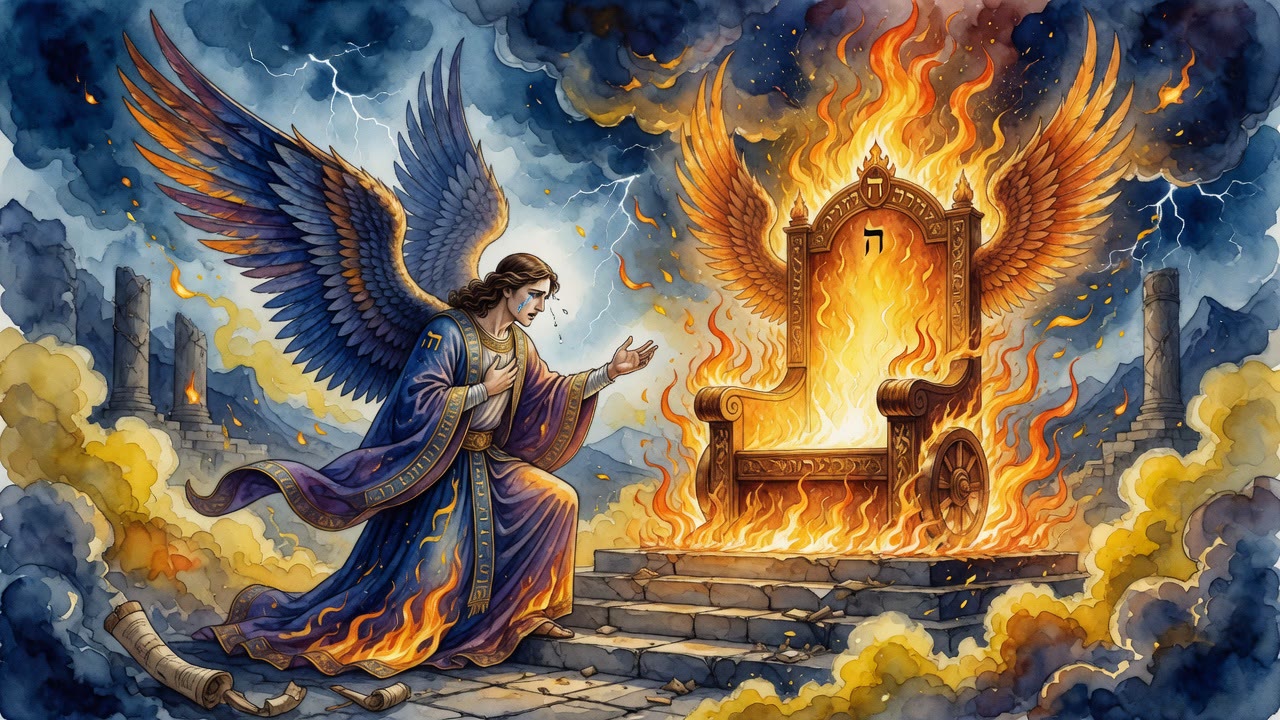
Michael rose from the meal and stepped outside. Before the next breath he stood in heaven, asking God to send someone else.
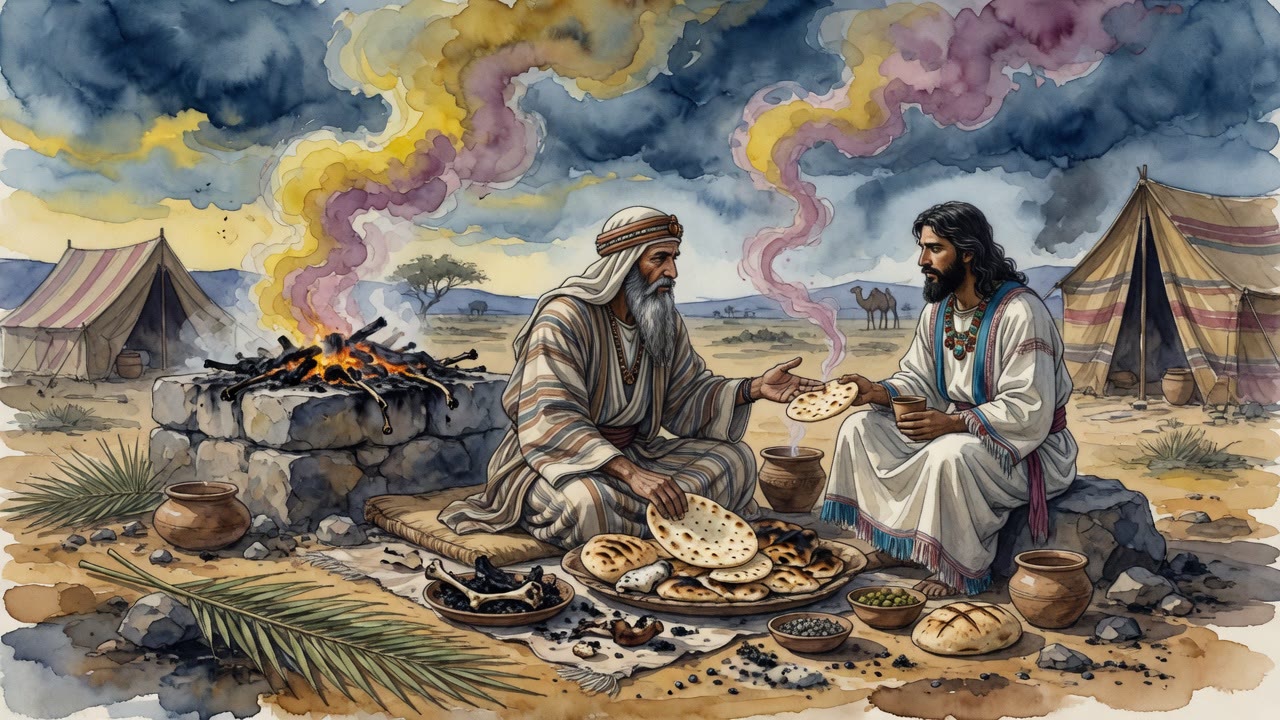
A Midianite priest laid whole beasts on the fire. Aaron sat with the elders, and Moses would not take a place at his own table.
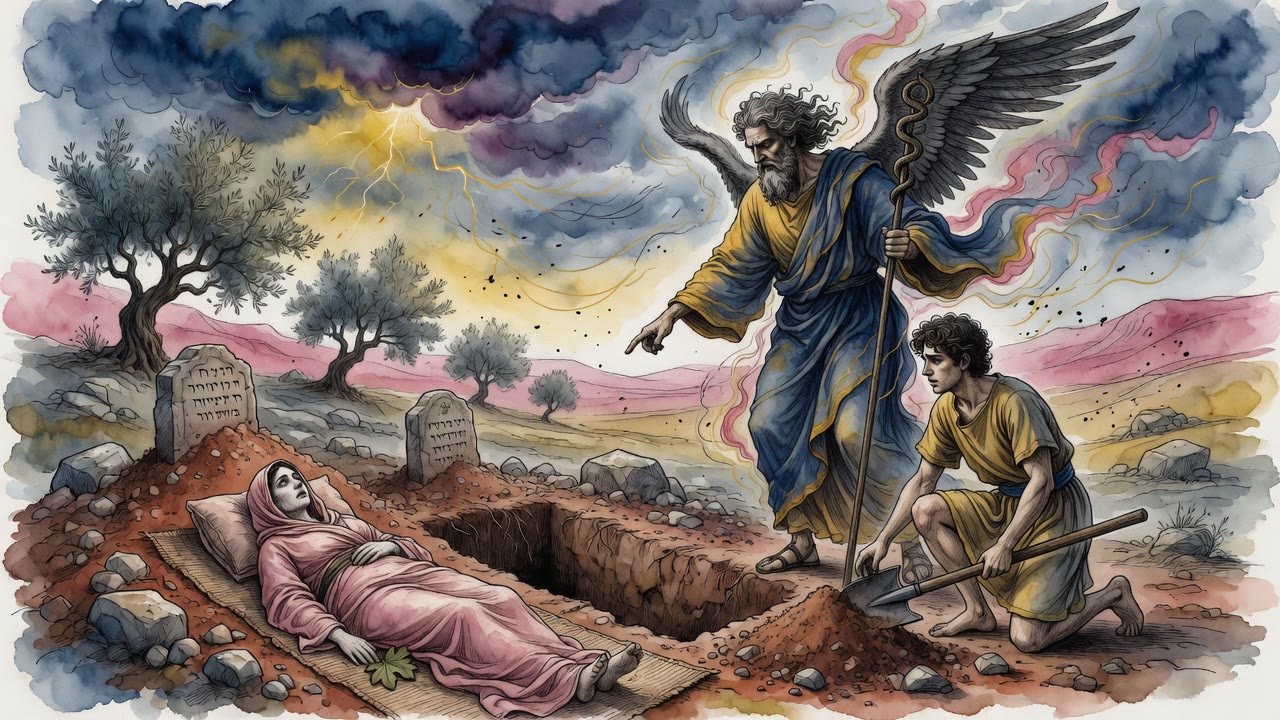
Eve begged to lie beside Adam, but only Seth had seen the grave. So an archangel came down to teach the first burial.
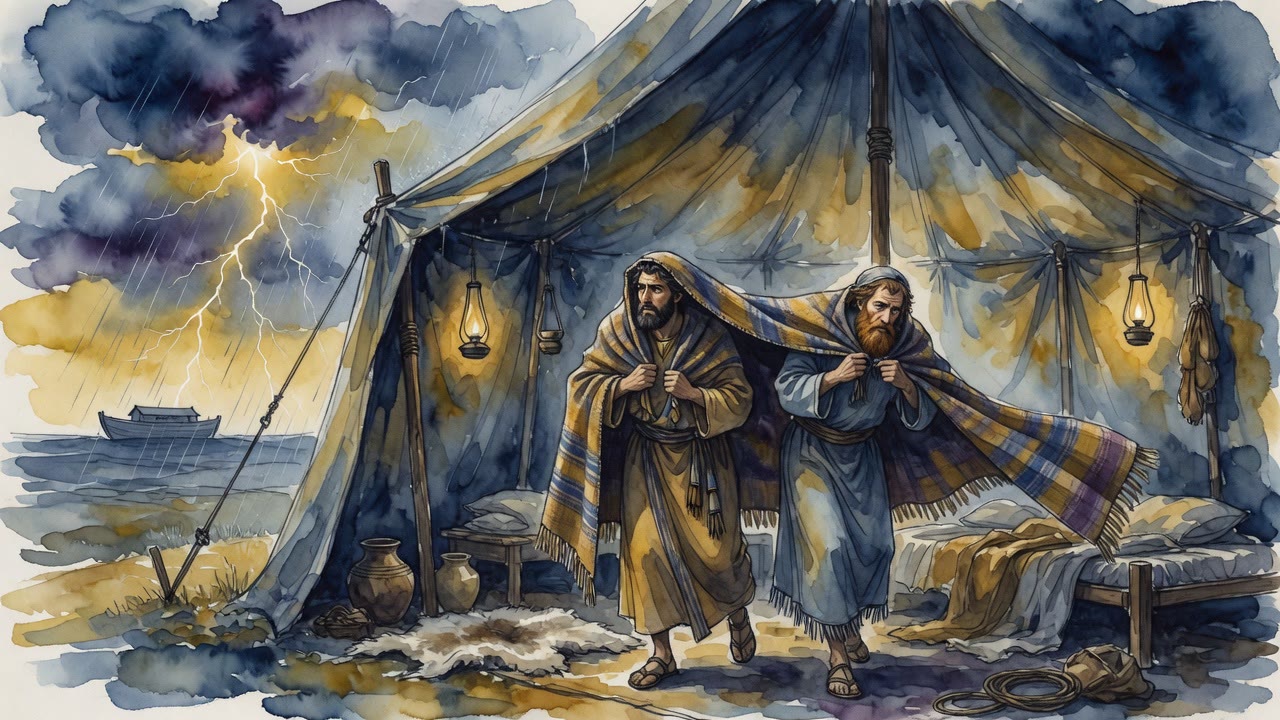
Noah lay uncovered in his tent. Ham laughed and called his brothers. Shem lifted a cloak and walked in backward, his face turned away.
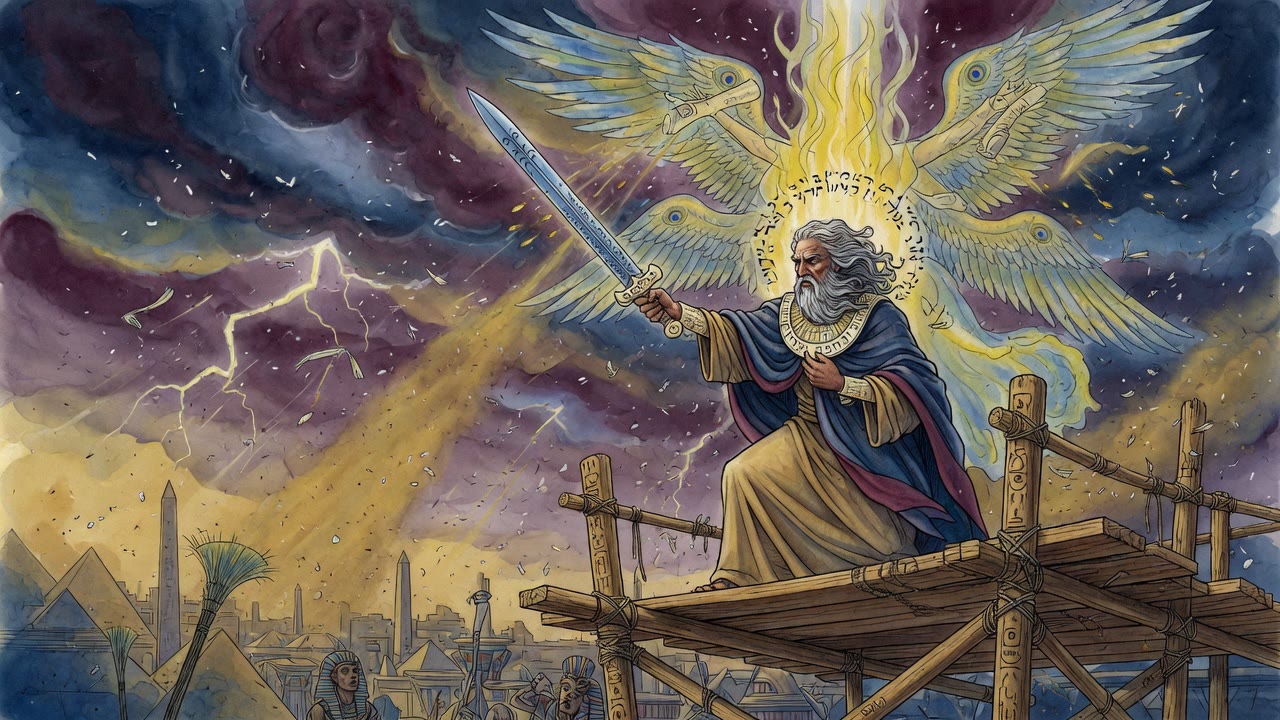
A sword sharp beyond compare came down on Moses's neck ten times and could not cut it. Then an angel climbed the scaffold dressed as the executioner.
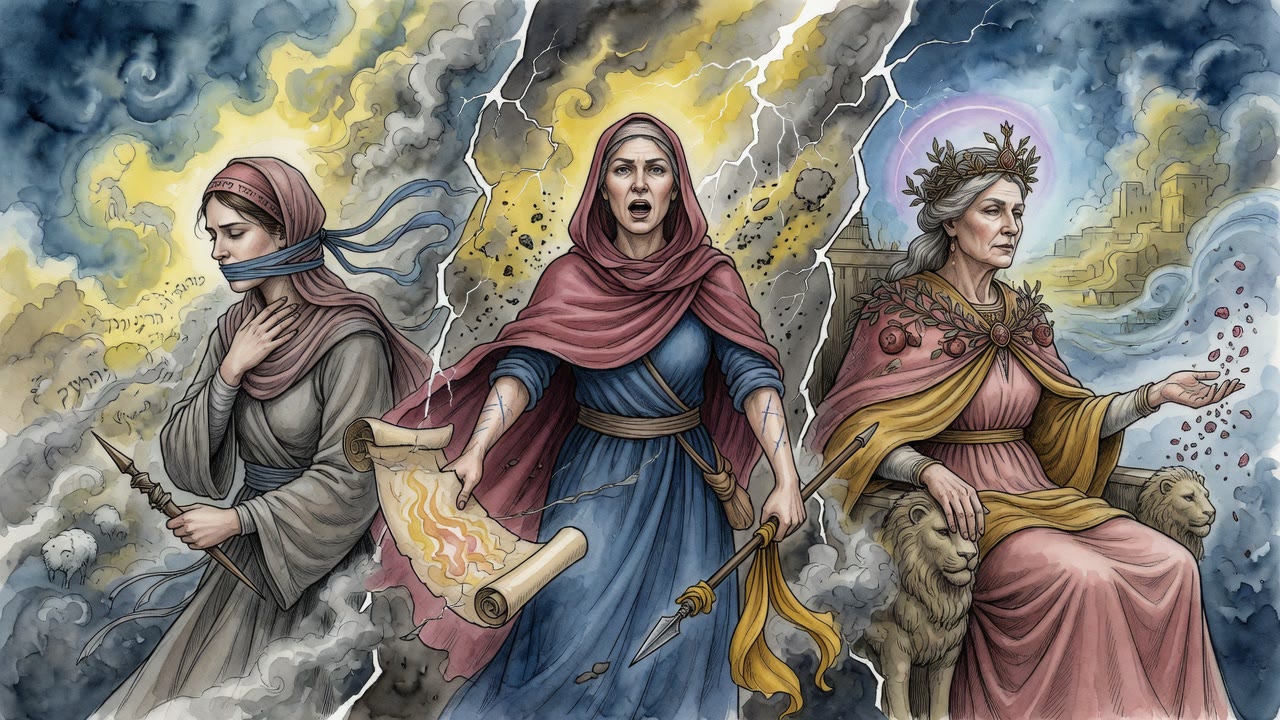
Rachel said nothing on her wedding night, Saul said nothing to his uncle, and a thousand years later Esther found the silence she needed.
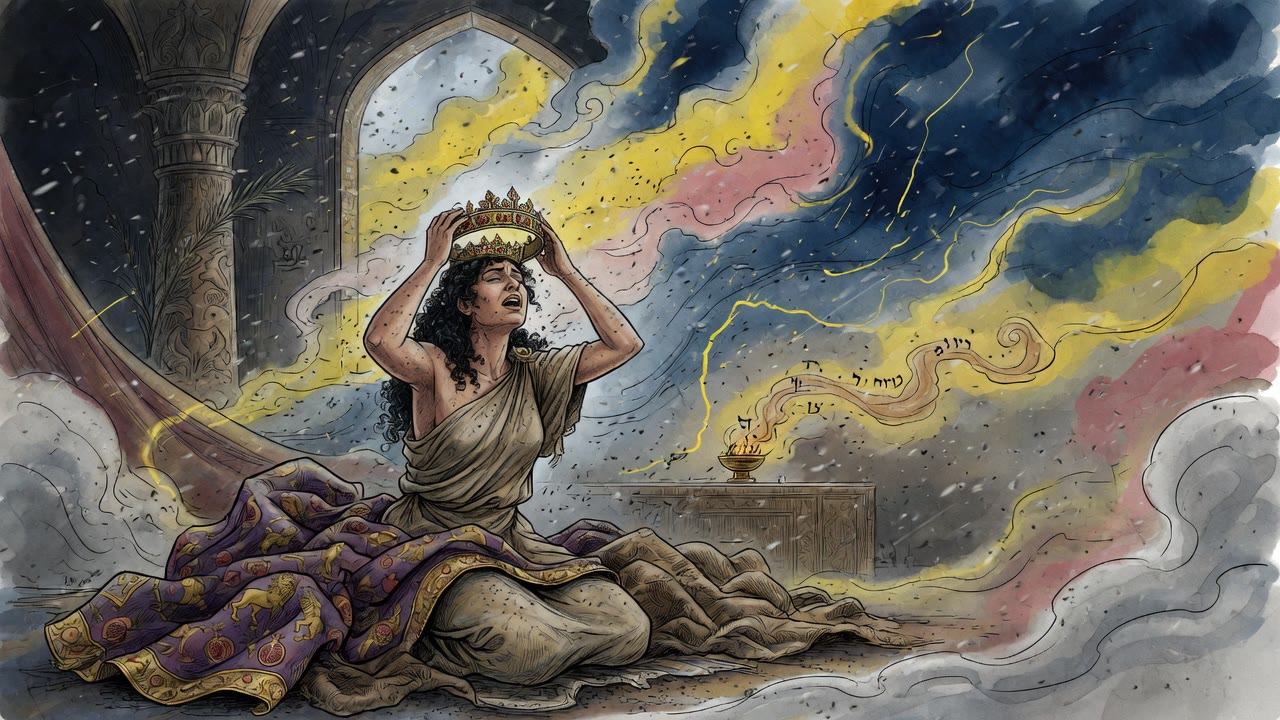
Three days without food. The decree was already on the road. On the palace floor Esther named herself an orphan and began with Abraham.
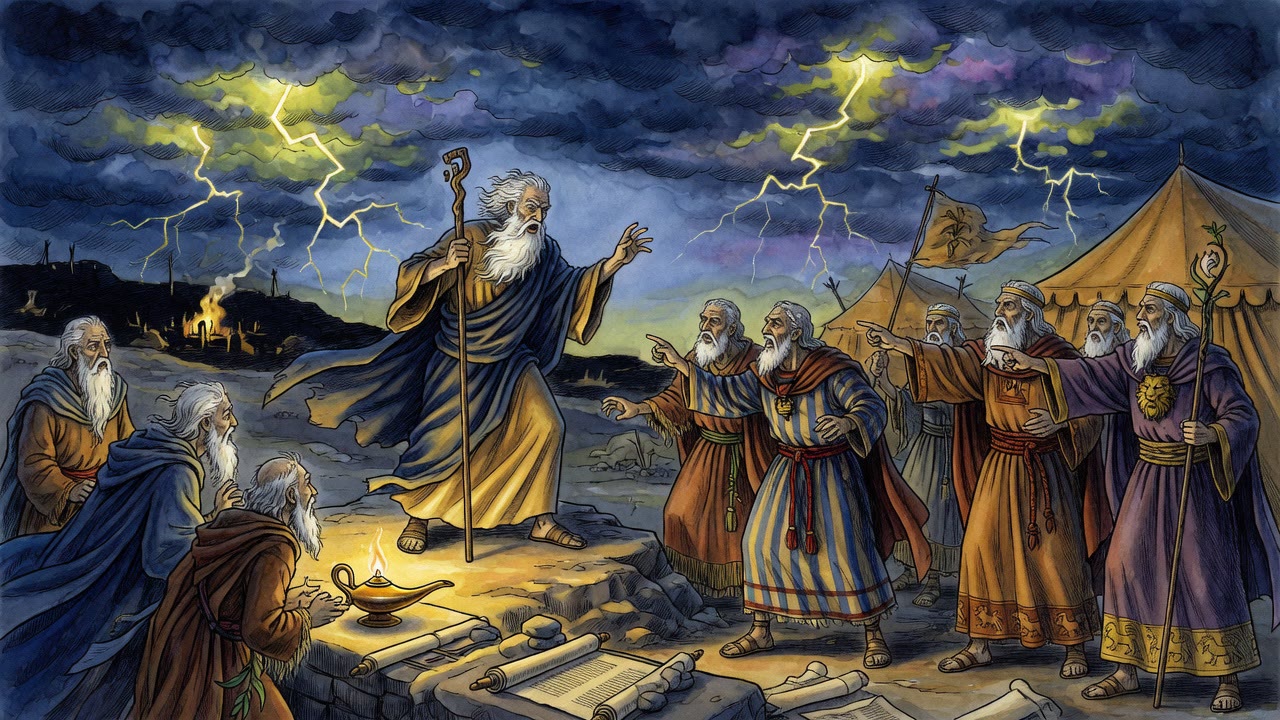
On his last night, Moses would not bless Reuben and Judah quietly. He argued for two sons who had no grounds to stand on, and refused to stop.
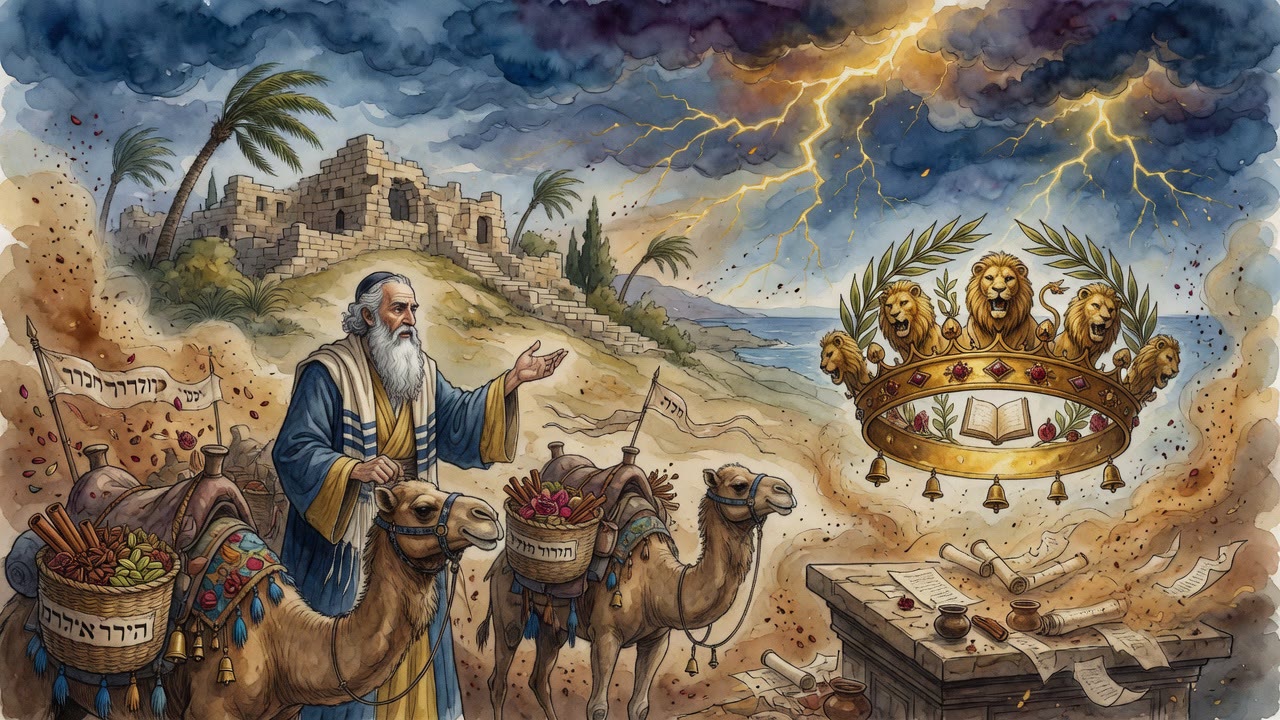
Ordinary caravans smelled of pitch and camel dung. Joseph rode toward Egypt on myrrh, and in the grove Tarfon refused to call it luck.
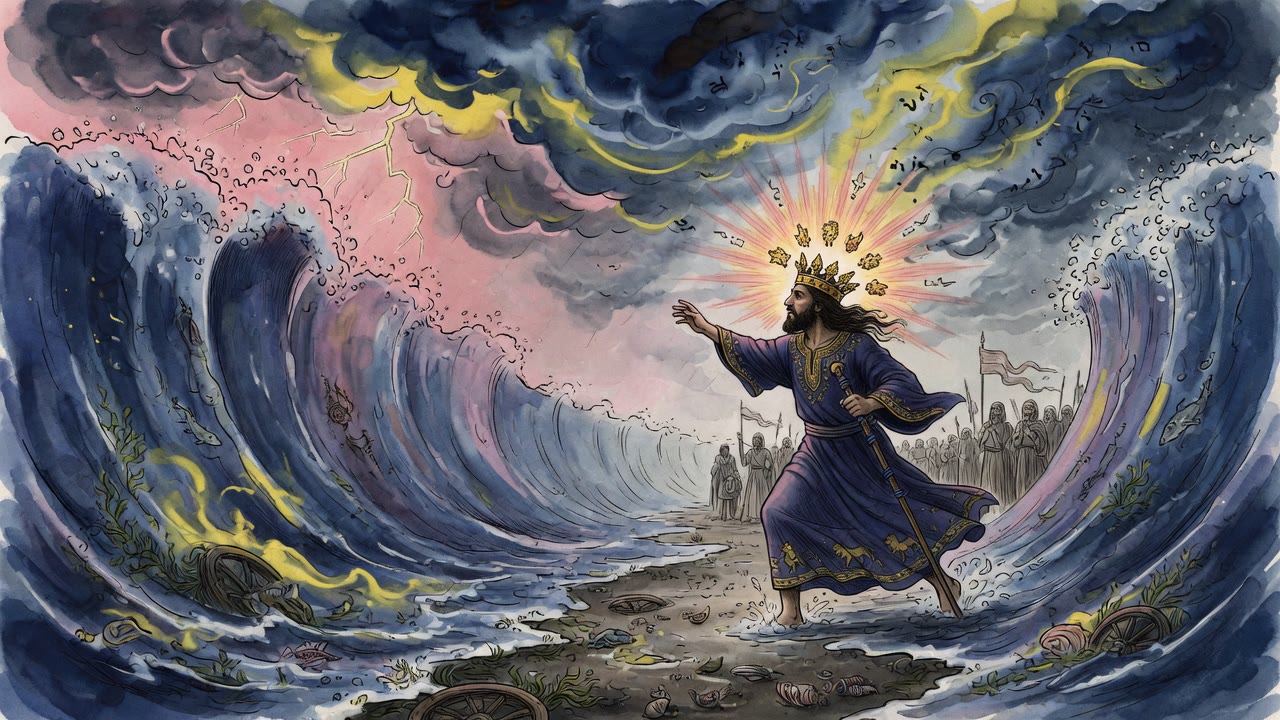
Before a single wave moved, one man waded into the crashing sea up to his throat, and that step decided who would rule Israel.
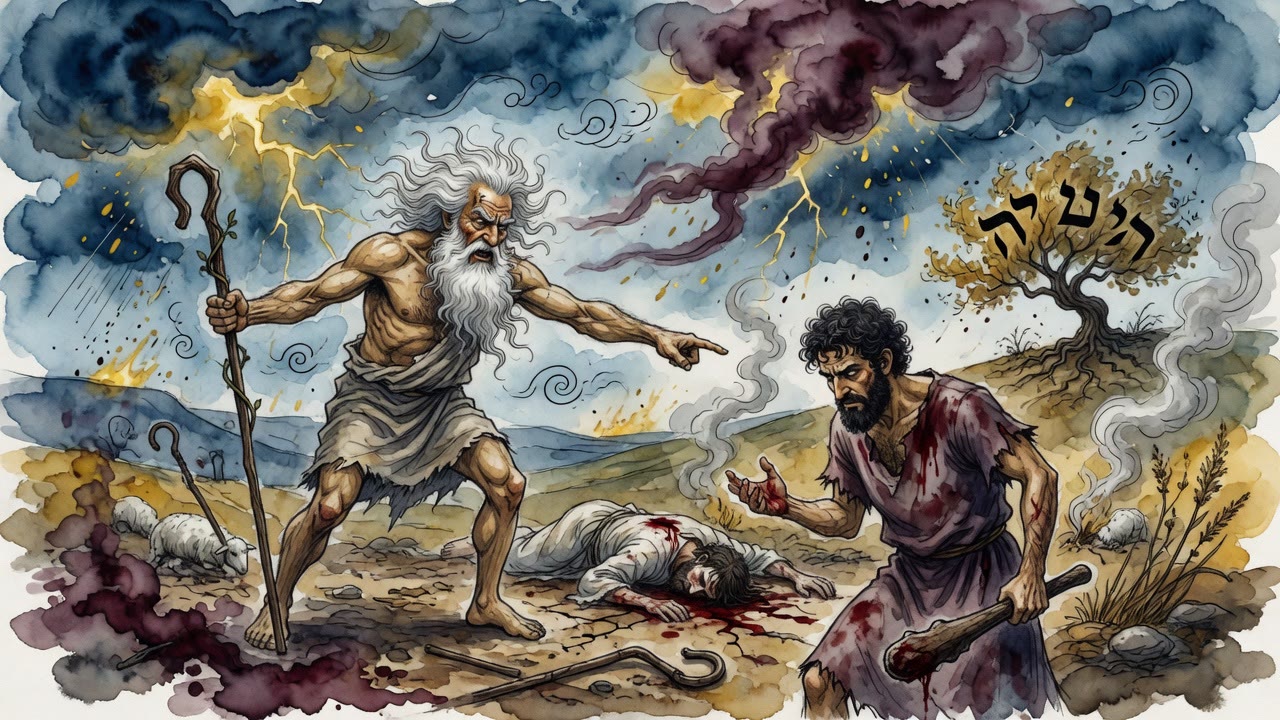
The first murderer walked out of his sentencing in a good mood. His father, who had only eaten fruit, never got out from under his own.
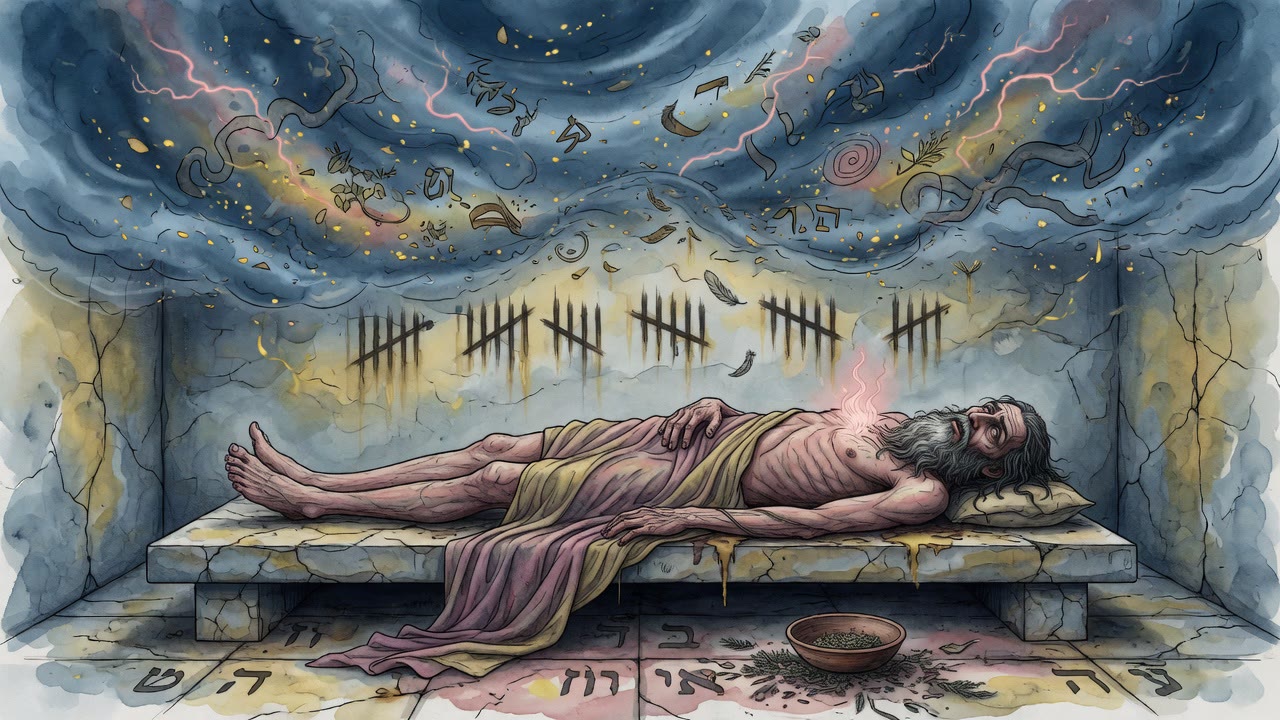
Seven sheep were laid against David each day for warmth, and none of it reached him. He had counted Israel, and seventy thousand men died in the plague.
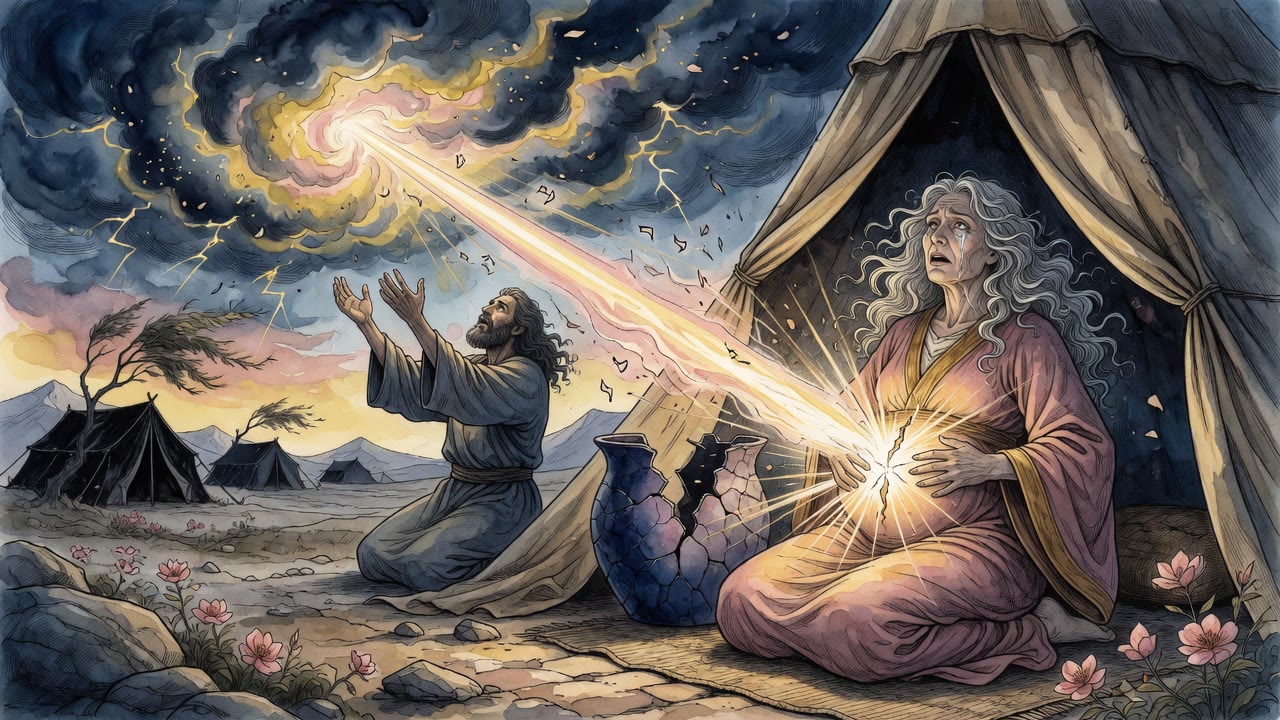
Sarah stood in a palace where every womb had shut, even the hens. Abraham prayed for that king, and the next name heaven spoke was hers.
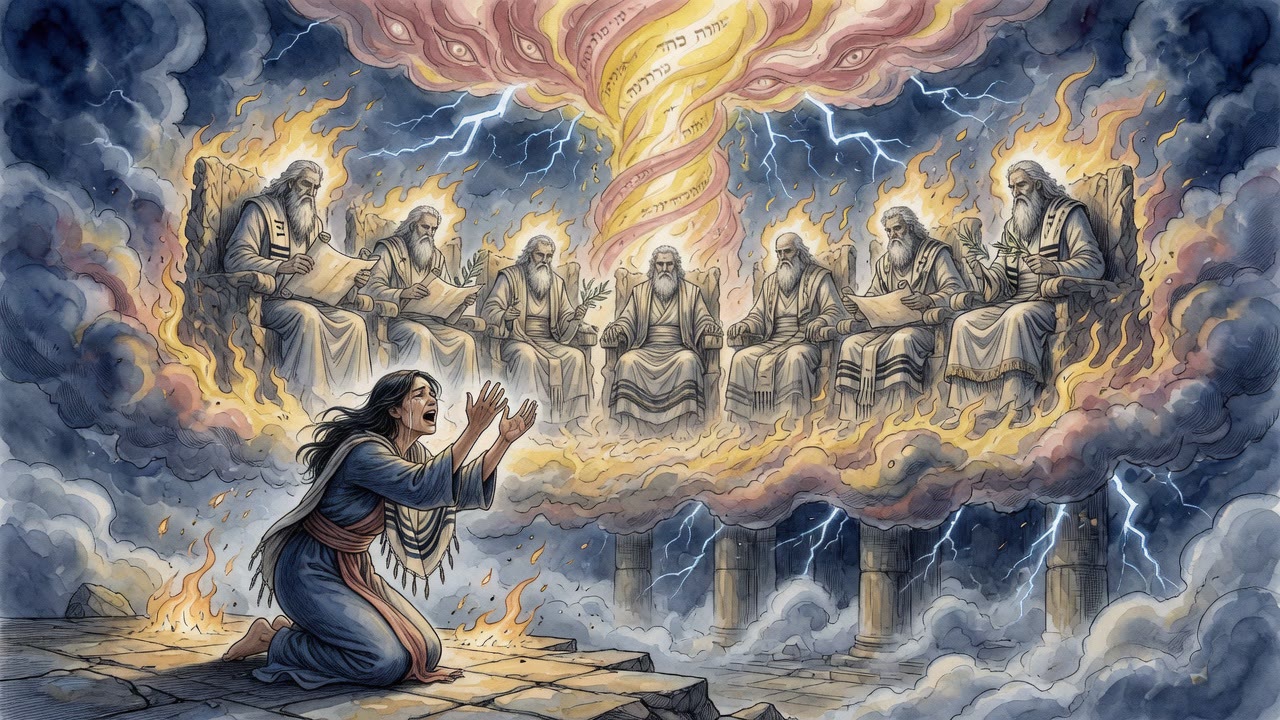
Peninnah's children filled the house, and Hannah had none. At Shiloh her lips moved without sound, and the priest watching decided she was drunk.
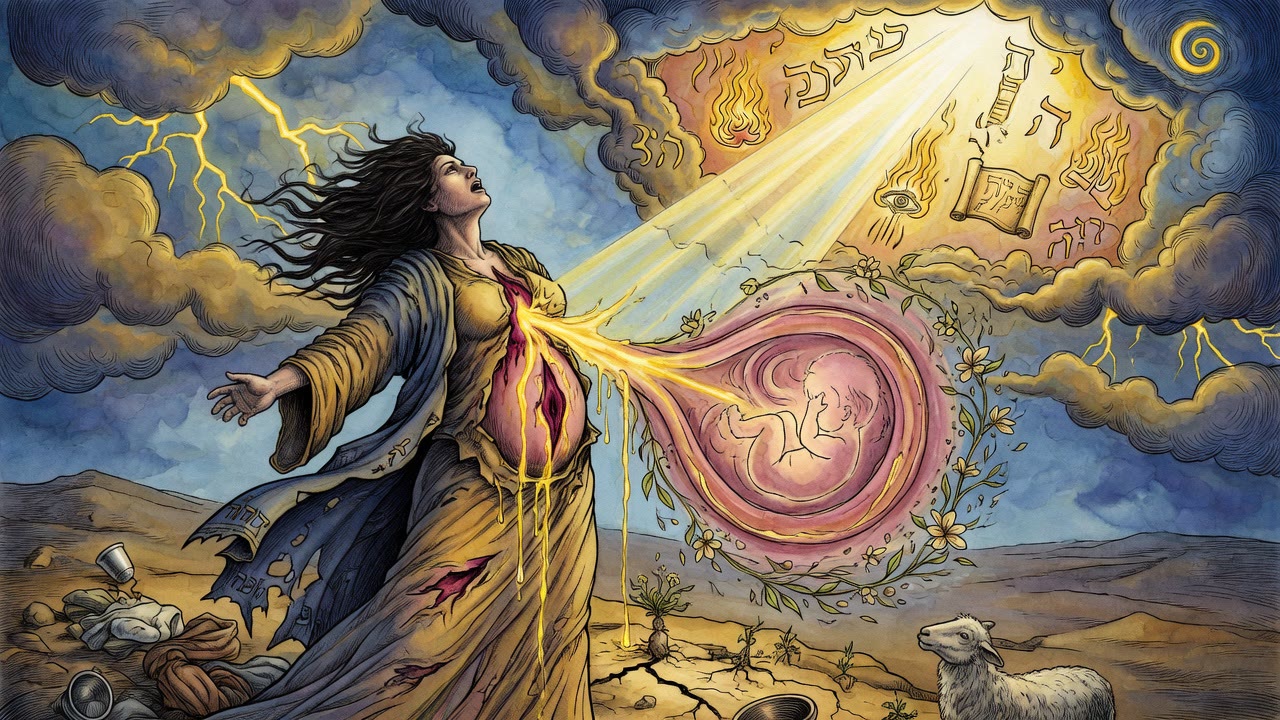
Jacob woke to Leah's face and called her a deceiver. She asked who had worn Esau's name. God looked at the wife the house would not love.
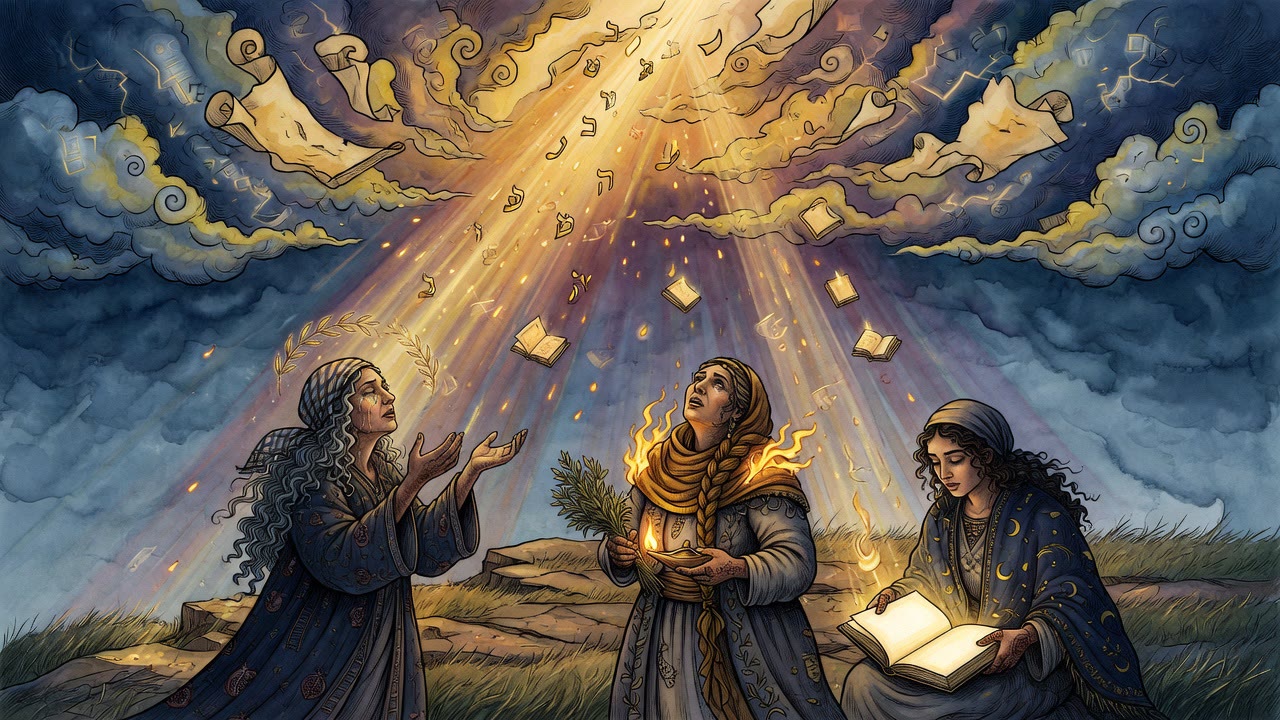
The ram's horn sounded on the Day of Remembrance. Three closed wombs were on the books. Sarah was already old enough to laugh at the promise.
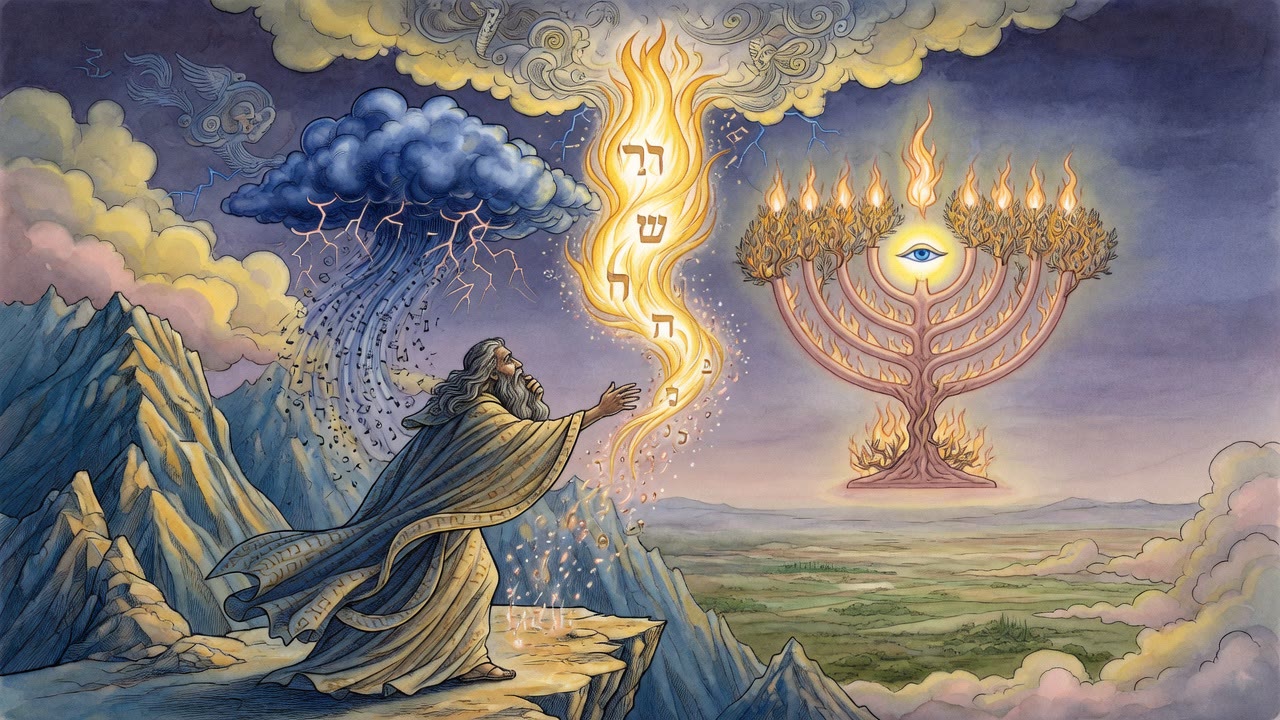
Moses prayed to cross the Jordan 515 times and was refused. But the rabbis preserved three deeper desires he had long before he asked about the land.
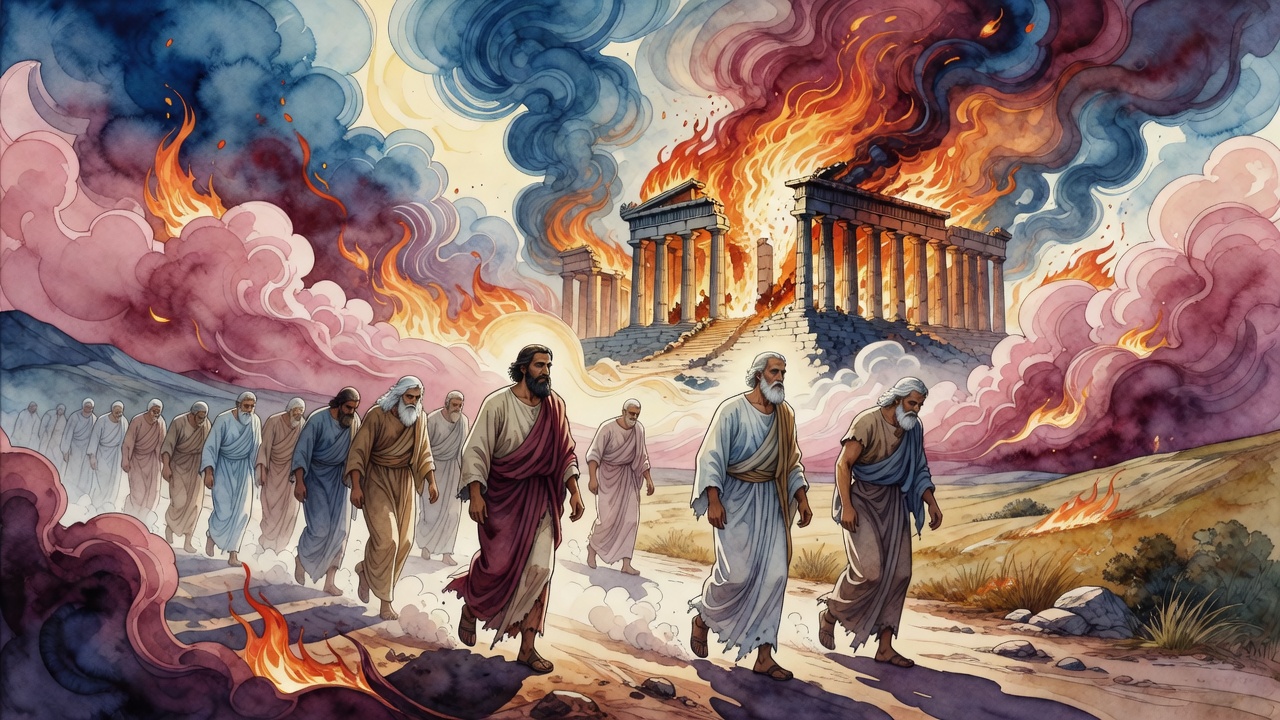
Before Moses died, he was shown the Temple burning and Israel in exile. He found Jeremiah on the roads to Babylon and walked alongside the dead.
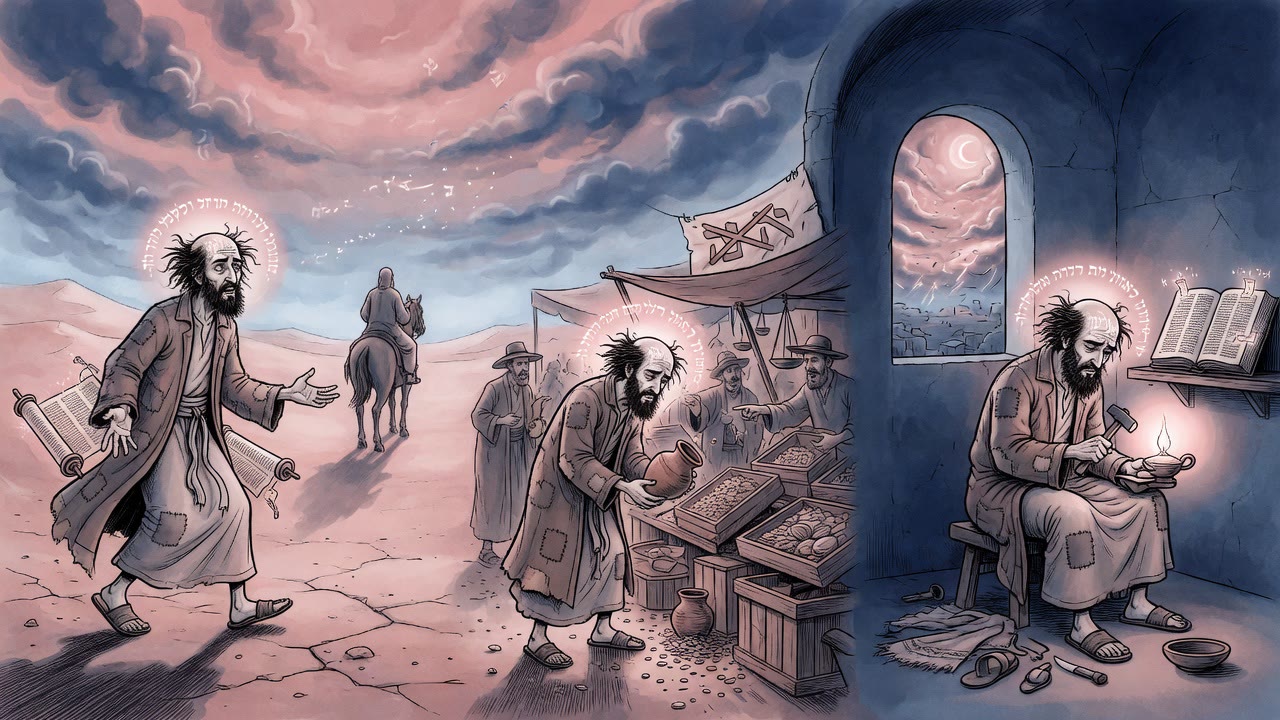
Zuleika tried to possess Joseph by force. Asenath fasted, cast off her idols, and waited until heaven remade her soul for covenant.
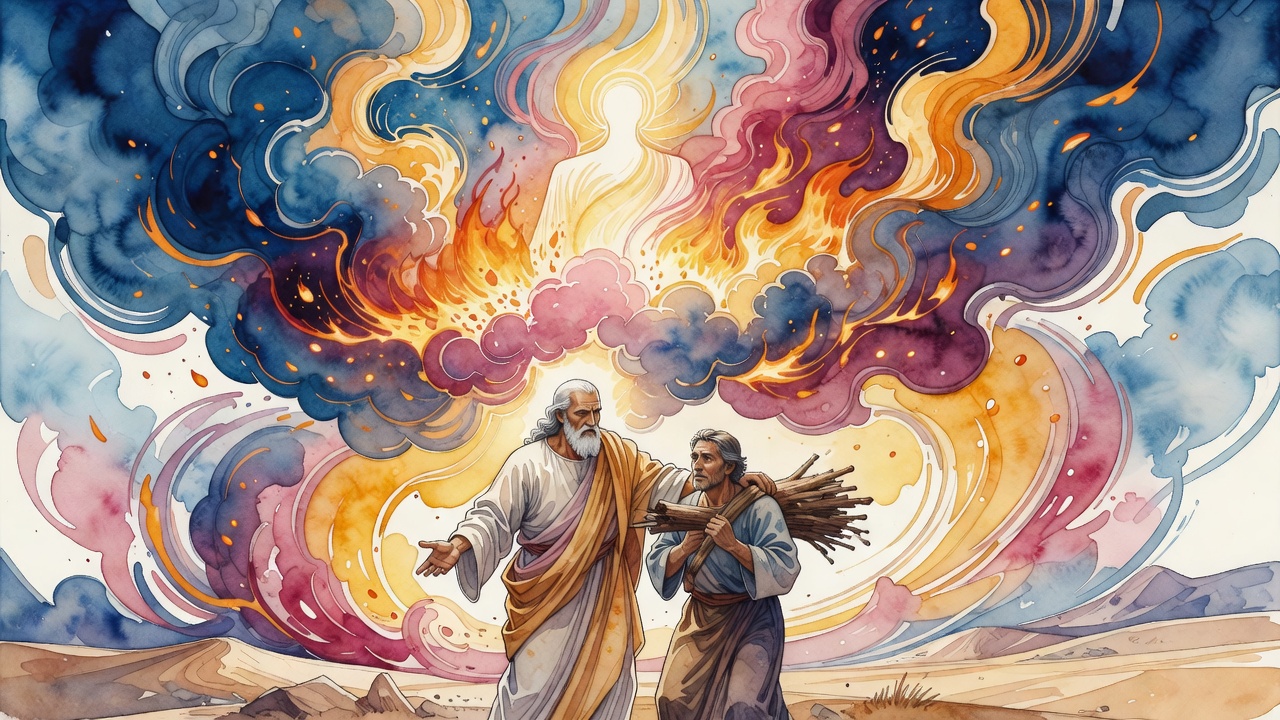
The man gathered sticks on the Sabbath and Moses held him, because even Sinai had not named the death. He said he had not heard.
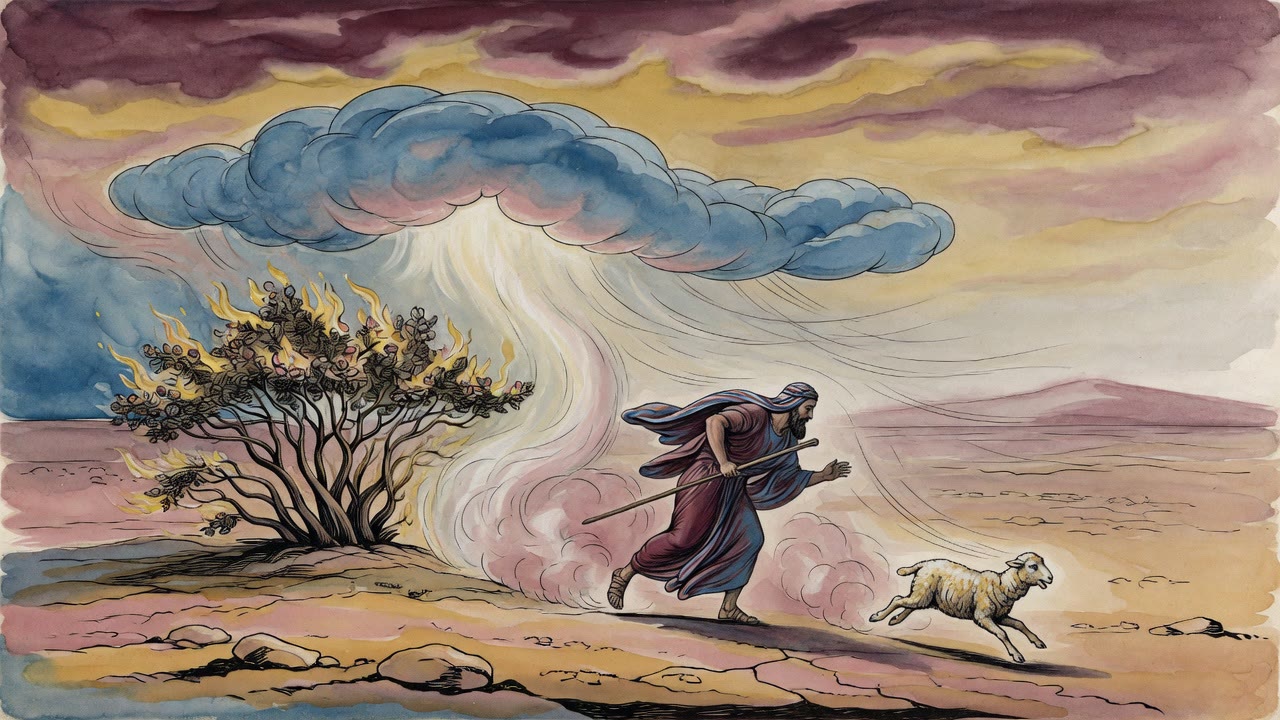
Before the burning bush, before the plagues, God watched Moses chase one exhausted lamb across the desert to find out what kind of man he was.
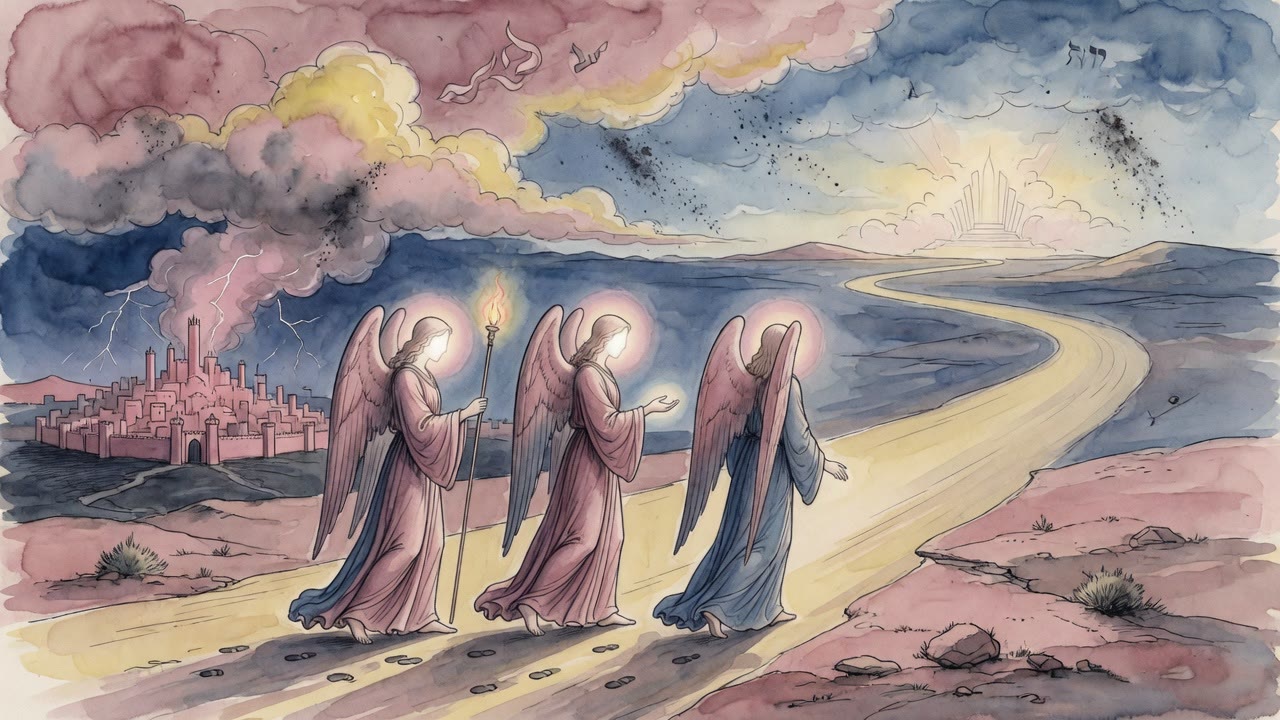
They left Abraham's tent at noon. Lightning would have been faster. They were angels of mercy, walking toward a city they still hoped to spare.
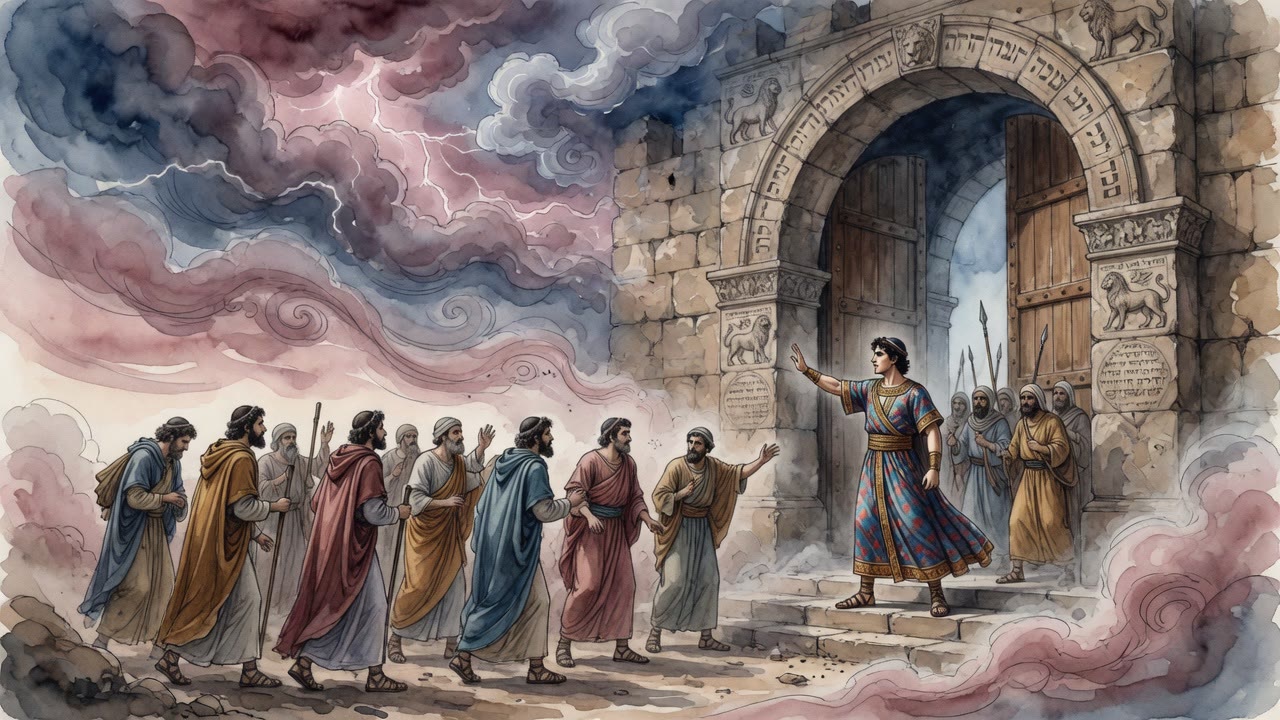
Shechem seized Dinah while his city watched. Jacob's sons invoked the covenant of Noah, and the tradition holds the whole city answered for it.
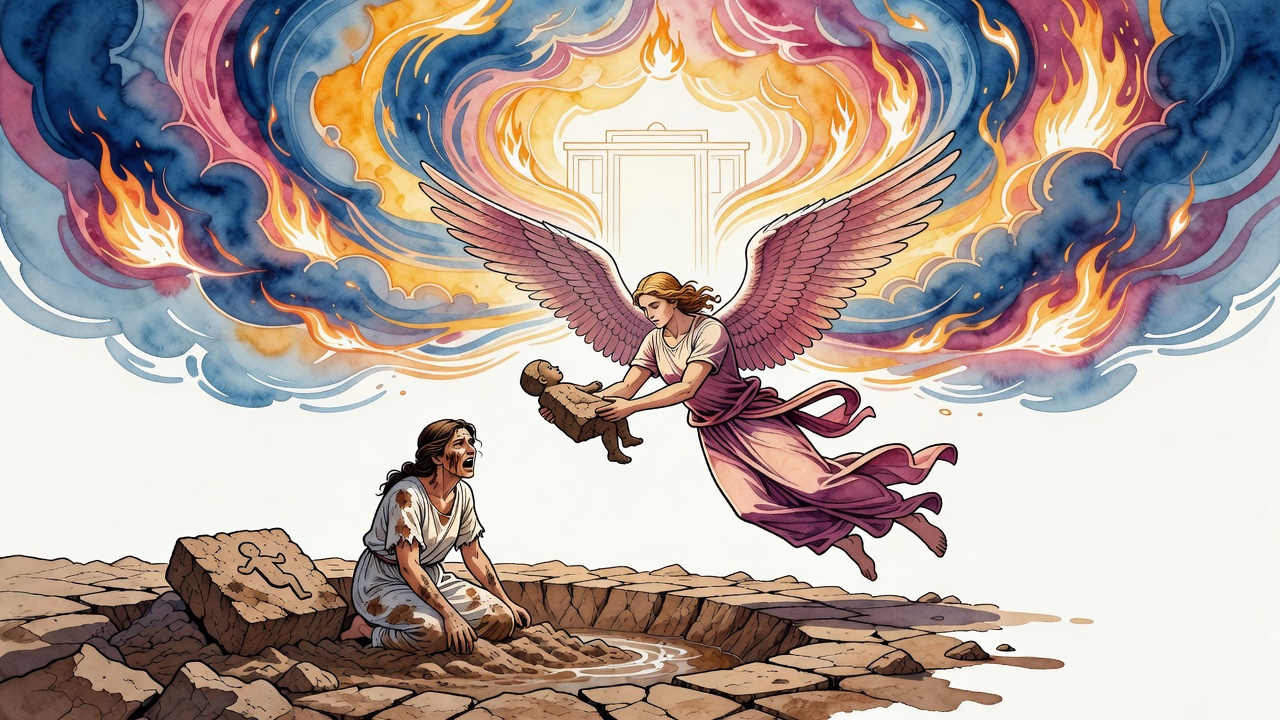
Rachel was treading clay for bricks when her labor came. The child dropped into the mud and sank. An angel went down after it.
Doeg watched the bread change hands at Nob. Saul's men would not touch the priests. Doeg took a few of his own kind and did it.
