The Angels Who Walked Slowly Toward Sodom
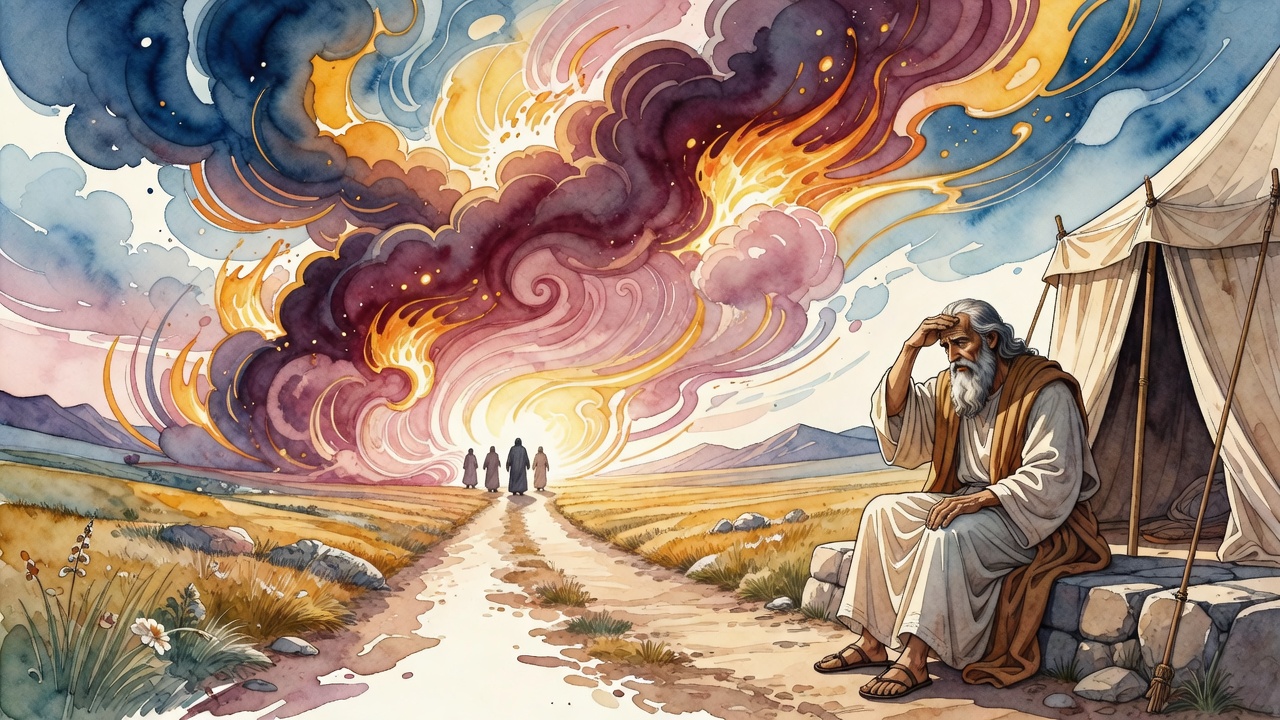
They left Abraham's tent at noon. Lightning would have been faster. They were angels of mercy, walking toward a city they still hoped to spare.
Table of Contents
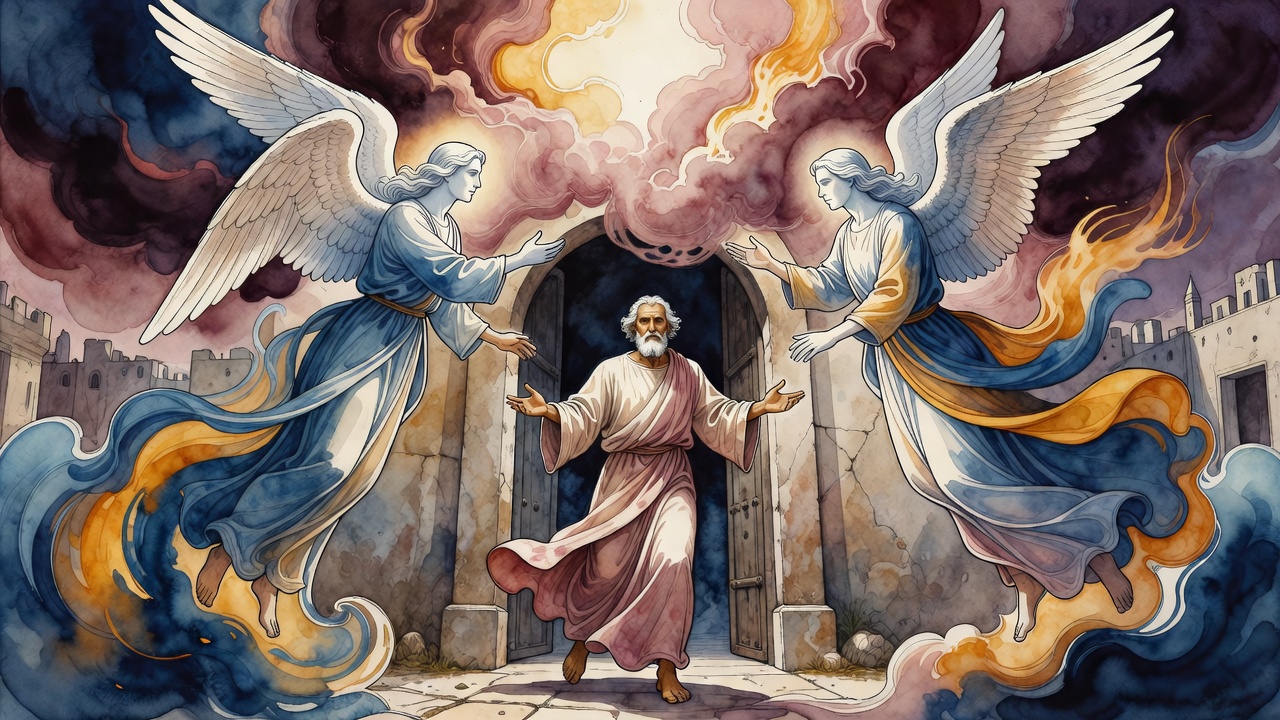
The angels left Abraham's tent at noon and did not hurry. For beings who move with the speed of lightning, who proclaim their errand before they arrive, the delay was not a mistake in the map.
 Click for full size
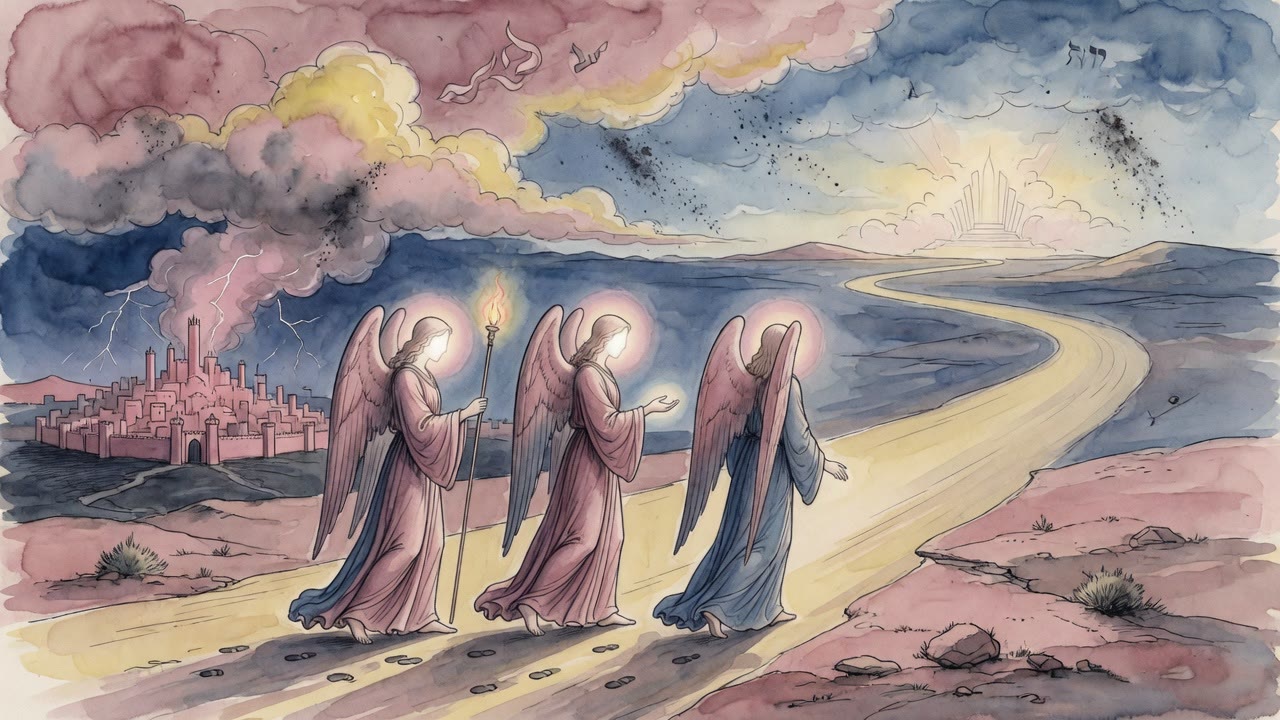
They slowed their steps because they could not make themselves hurry. They were angels of mercy, walking toward a city they still hoped might be spared.
Two Walked South With Opposite Tasks
Three had come to Abraham at the oaks of Mamre (Genesis 18:1-2). One to announce Sarah's pregnancy. One to rescue Lot. One to destroy the cities. The first delivered his news and returned to heaven. Abraham went with the other two to speed them on their way, because seeing a guest out is a greater duty than bringing him in.
Their road pointed at Sodom. One carried preservation. One carried annihilation. They walked south together all afternoon, side by side in the long light of a day that was running out.
Angels of destruction usually arrive before the sentence is finished. These lingered. They hoped Abraham's intercession would still work, or that some last change in the cities would turn the verdict aside. They walked as slowly as they could walk while still walking toward Sodom.
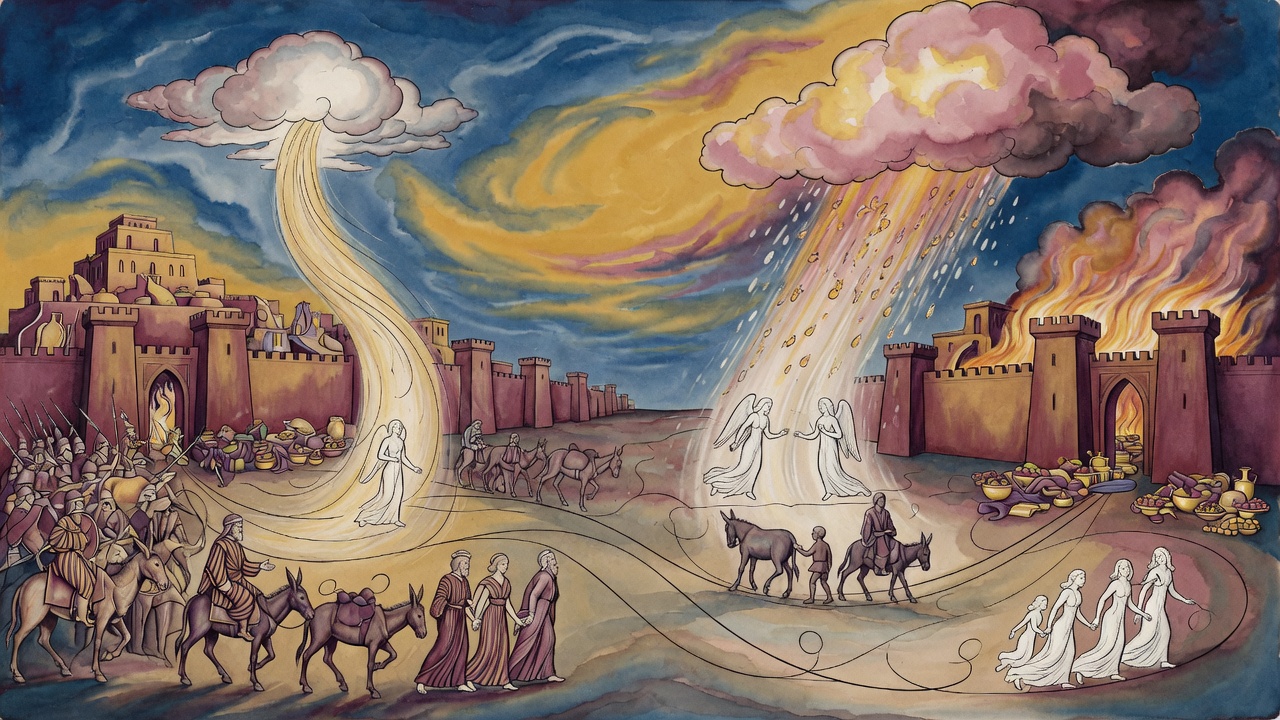
Ahead of them the plain already had its habits. Once a year the people of those cities gathered in a wide vale with their wives and children for a feast that lasted days. A stranger merchant who passed through was surrounded, big and little alike, and stripped of whatever he carried. Each taker pinched a trifle, a thing not worth naming, until the traveler stood bare. If he protested, they showed him the smallness of each theft. Then they hounded him from the city. Hospitality was forbidden there on penalty of death.
Lot Led Them Through Back Alleys
Night fell. When darkness came, the fate of Sodom sealed. Only at evening did the angels reach the gate. Whatever window had existed for a different outcome closed with the light.
At the gate sat Lot, alone among the residents, rising to greet the strangers. He bowed. He pressed them to come to his house. They said they would spend the night in the city square. He refused to let them go there. He knew what the square meant for unprotected strangers after dark. He had been living at this gate long enough to know.
He led them through back alleys, through the dark, by routes that avoided the neighbors who would have reported a householder sheltering guests. Bred in Abraham's tent, he had learned to open a door. In Sodom he had spent years practicing that opening in secret, because the practice could kill him.
He thought they were wayfarers. He bid them turn aside and tarry the night. Even then he used every precaution, and he told them to follow him by devious ways.
The Sons-in-Law Laughed at the Music
Inside, the angels told Lot who they were and what had brought them. Flee. Take your wife. Take your four daughters, the two married and the two betrothed.
He went to warn his sons-in-law. They laughed.
"O thou fool! Violins, cymbals, and flutes resound in the city, and thou sayest Sodom will be destroyed!"
The music was the whole of the world to them. The idea of that world ending was a joke. Their mockery hurried the doom. The married daughters stayed with the men who could not imagine the fire. The betrothed daughters, not yet fully absorbed, were still in reach of their father's hand.
Lot had his own failure in the house. A man is bound to venture his life for the honor of his wife and daughters. He was ready to put his daughters forward instead. That debt would come due later. Tonight the angels still had to get him out.
Michael Grabbed His Hand
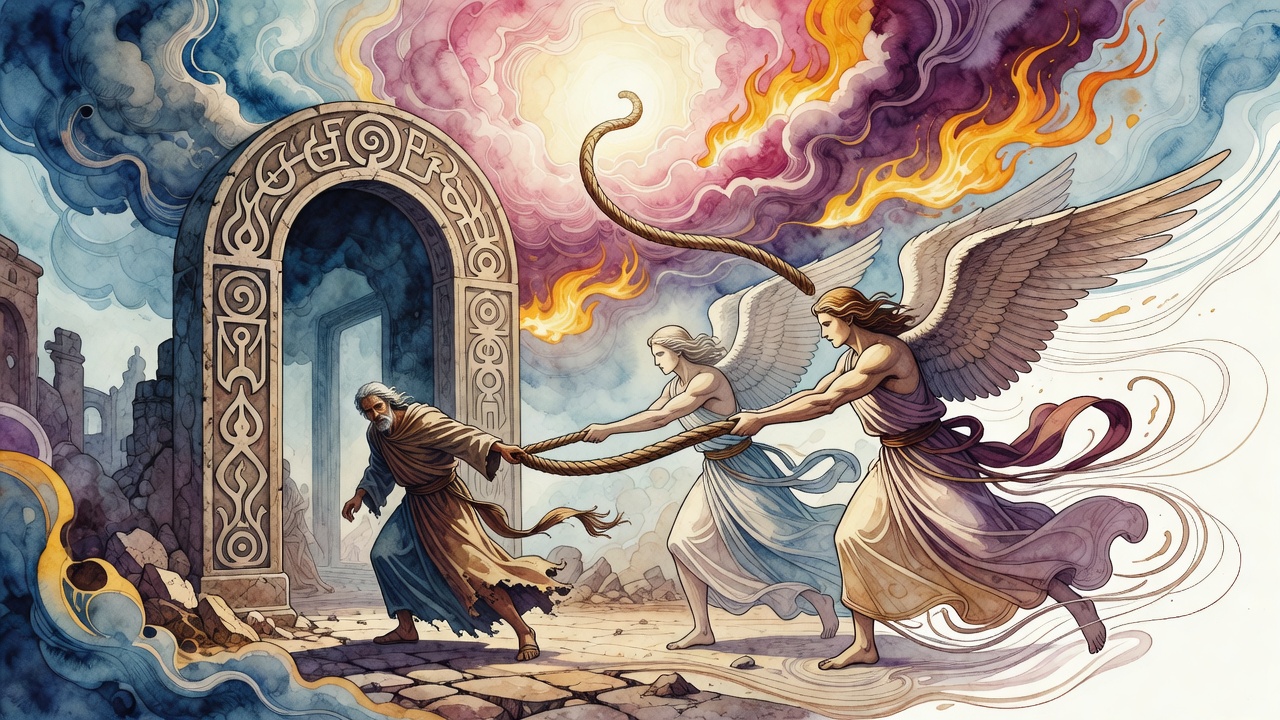
Even then Lot lingered at the gate. The angel Michael laid hold upon his hand, and upon his wife's, and upon his daughters'. He ran because a hand made him run.
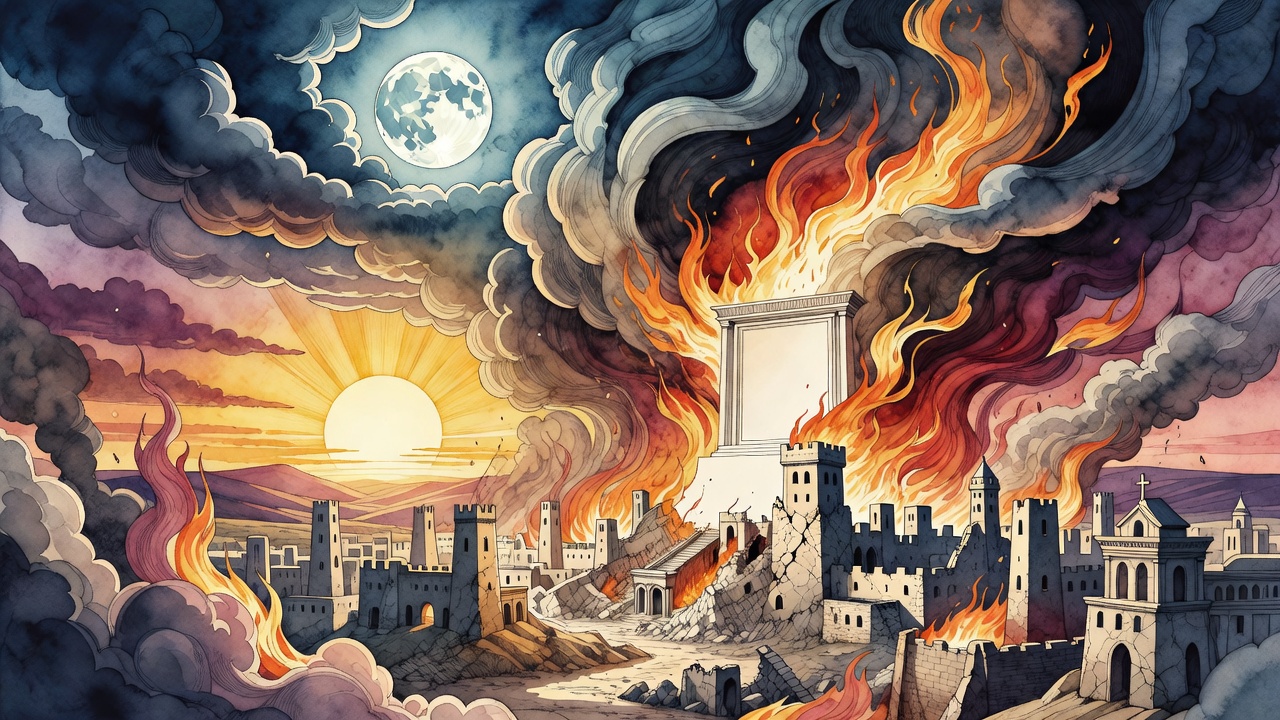
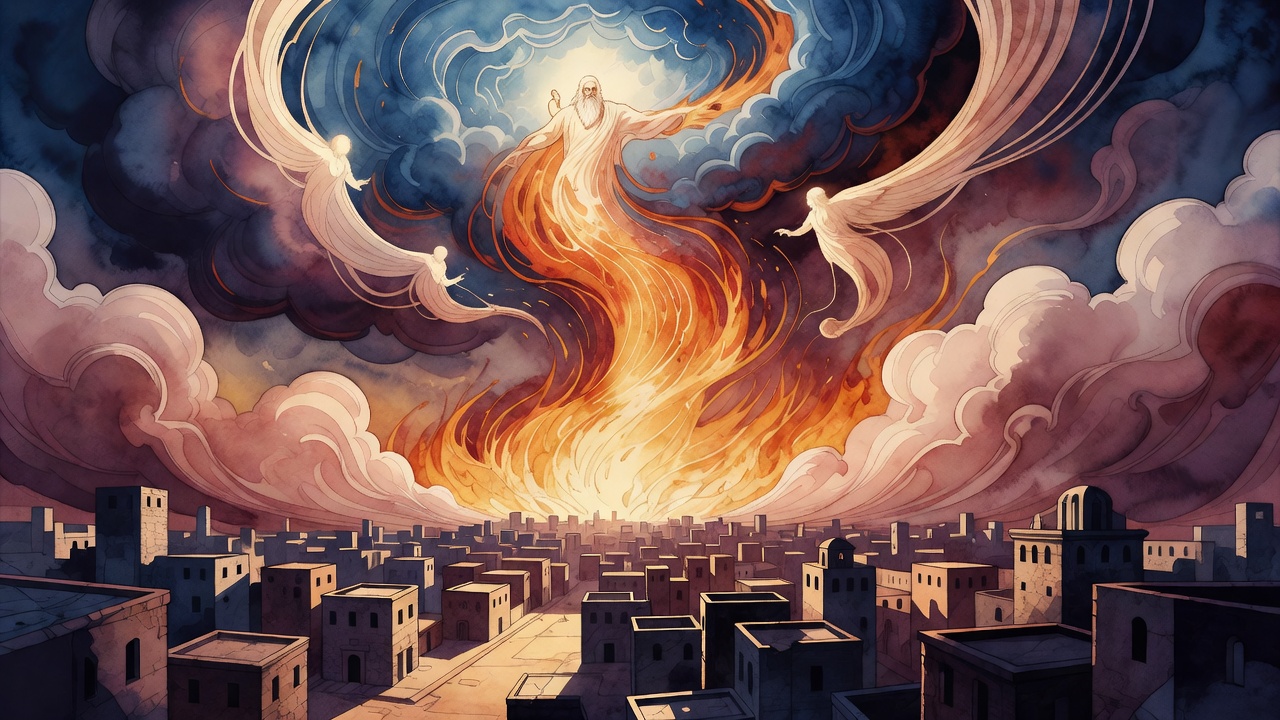
Behind them Gabriel touched, with his little finger, the rock the sinful cities were built on, and overturned it. The rain that had been streaming down changed into brimstone. The two cities went over. The fires began to fall on a place that had still been playing music an hour before.
Abraham's guests had left at noon. Mercy had used up the afternoon. Night had sealed the gate. One man at that gate still knew how to greet a stranger, and even he had to be pulled. Heaven did not hurry toward Sodom. Heaven moved slowly toward it and found, at the last possible hour, a house reached by alleys, a laugh in a room full of instruments, and a little finger on a rock.
← All myths