God Destroyed Earlier Worlds Before Choosing Mercy
Before this world existed, God made worlds and destroyed them. Only when mercy entered the making did one world finally hold.
Table of Contents
 Click for full size
This Was Not the First Attempt
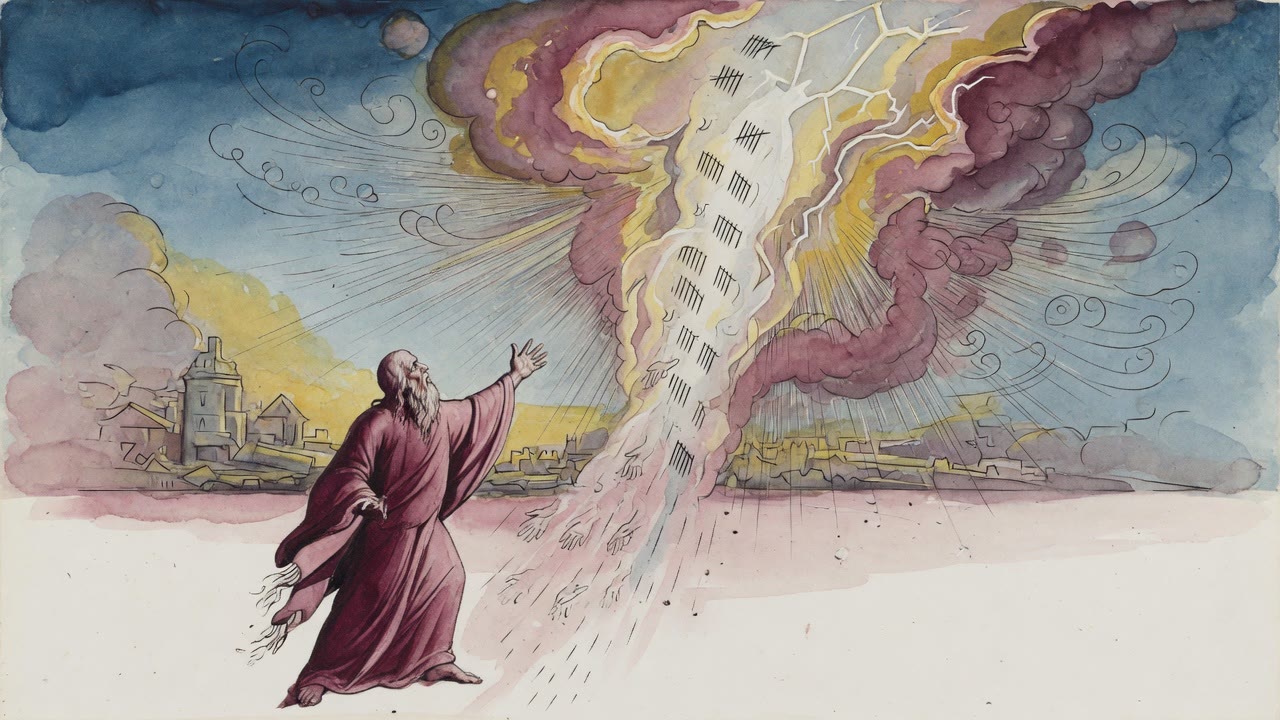
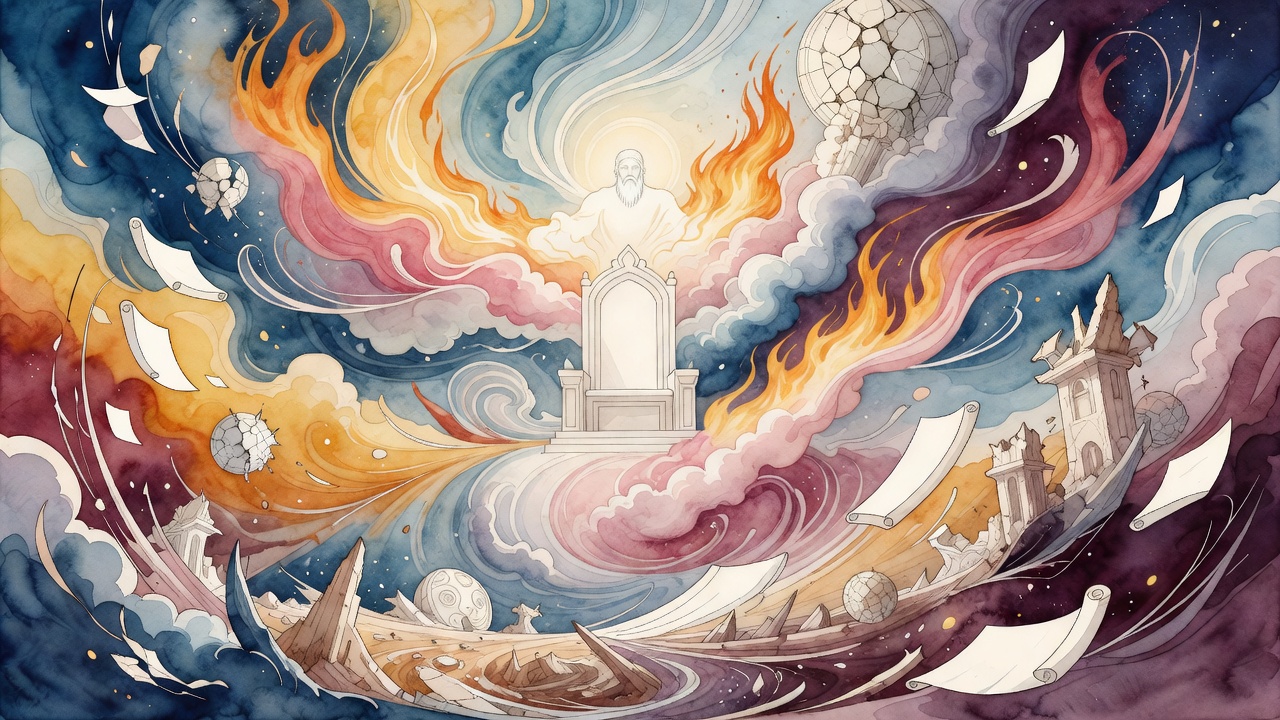
Before the first evening of Genesis, before the darkness that God divided from light, there were other worlds. They were made and they were destroyed. Not by accident, not through some external limitation, but by divine judgment: this one does not please Me. And another would begin, and another would be found insufficient, until this world, the one that stands, came into being under conditions that the previous worlds had not met.
This is the reading preserved in Bereshit Rabbah. God is not described as proceeding in a single smooth sequence from nothing to everything. God is described as proceeding through selection, refusal, and beginning again.
Evening Before the First Day
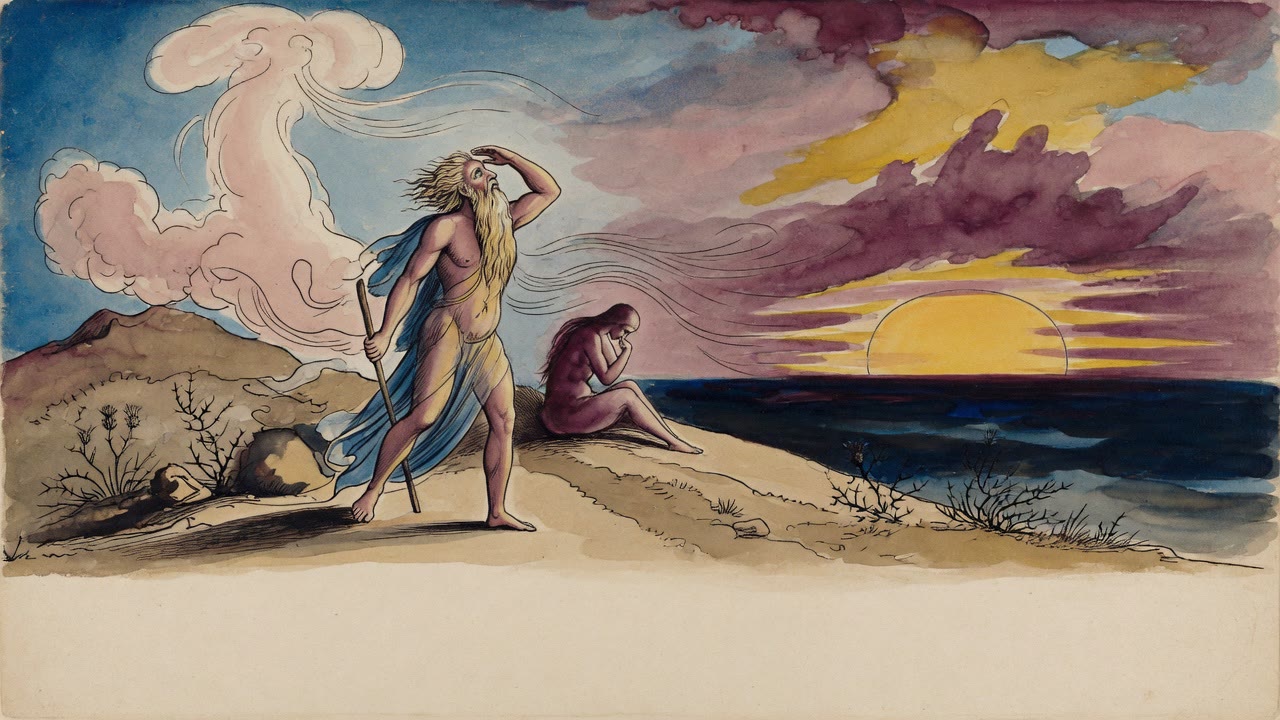
The textual clue that opens this reading is small and grammatical. Genesis says evening before morning. If the evening of the first day marks a transition, what came before it? The midrash answers: the trace of what did not last. The darkness at the beginning of Genesis is not simply the absence of light before God spoke. It is the residue of worlds already judged inadequate and destroyed. The text of creation opens in the middle of a history the text does not tell.
That reading transforms the opening of Genesis into something vertiginous. The familiar words do not describe a beginning so much as a surviving. This world, the one being described, is the world that made it past the selection. The evening before morning is not just the end of a day. It is the boundary between what failed and what was allowed to continue.
The Worlds That Did Not Please God
Rabbi Abbahu's teaching in Bereshit Rabbah does not name the earlier worlds or describe their failure in detail. The reticence is telling. What displeased God about the previous worlds is not the point. What remains is the terrifying precision of divine care: God will not preserve a world that cannot bear its purpose. Every act of creation is also an act of judgment, and judgment can result in destruction. The world that succeeded is the one that was allowed to be because it met a standard the previous worlds did not.
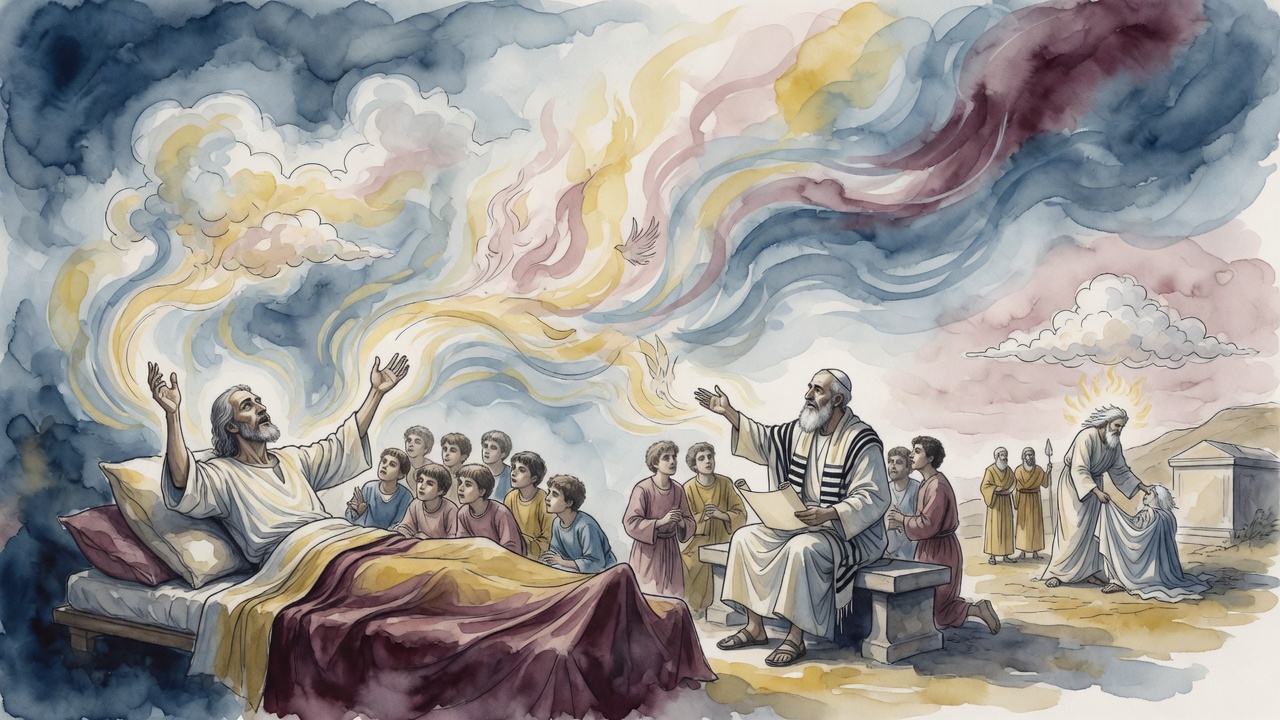
Later sources, including the traditions recorded in Sefer HaKanah and in the legends assembled by Louis Ginzberg, elaborate this into a debate between divine attributes. Judgment wanted to make the world according to strict justice. Mercy argued that strict justice would destroy what was made before it had a chance to demonstrate itself. The world that we inhabit is the world that mercy made possible, built with the concession that human beings would need more than perfect justice to survive their own existence.
Judgment and Mercy Debate What Is Made
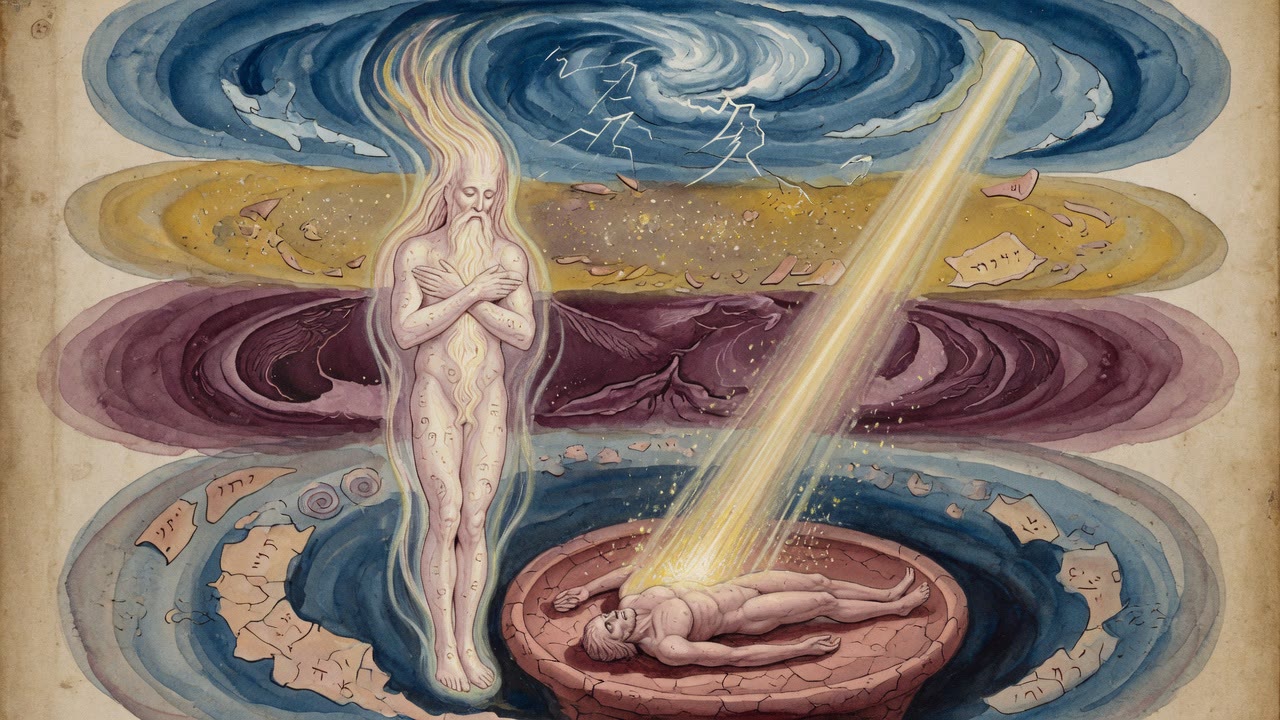
The debate between Judgment and Mercy is not resolved by one winning and the other losing. It is resolved by partnership. This world was made with both, which is why it can hold things that pure justice would have destroyed and things that pure mercy would have left unaddressed. The two divine qualities were woven together in the making, and what they wove together was a world with enough strictness to be serious and enough mercy to be livable.
That partnership is what the earlier worlds lacked, according to one reading of the tradition. Worlds made with judgment alone shattered under their own standards. Worlds made with mercy alone could not hold their shape. This world holds because it carries both the evening and the morning, the trace of what failed and the opening of what might yet succeed.
← All myths