Saul Closed the Ring Around David and Heaven Sent a Runner
David hid at Adullam and decided the anointing had been a cheat. Samuel had poured oil on his head for nothing, and Saul was still coming.
Table of Contents
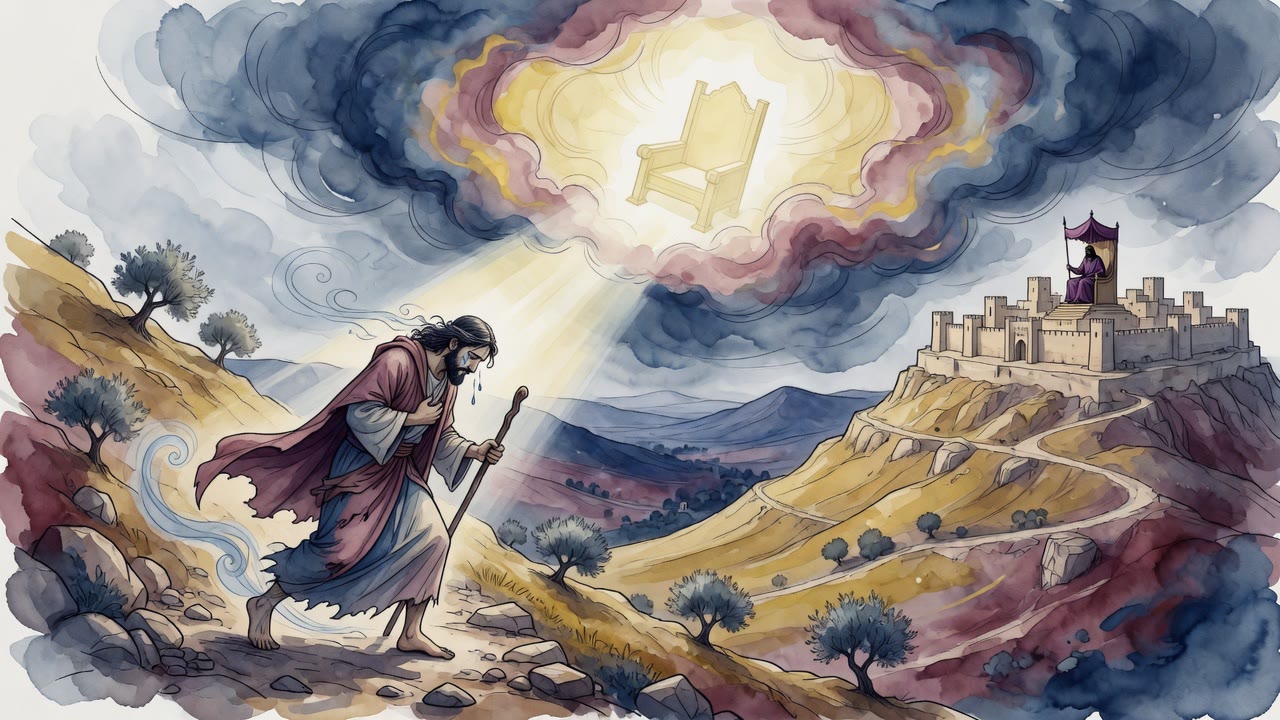
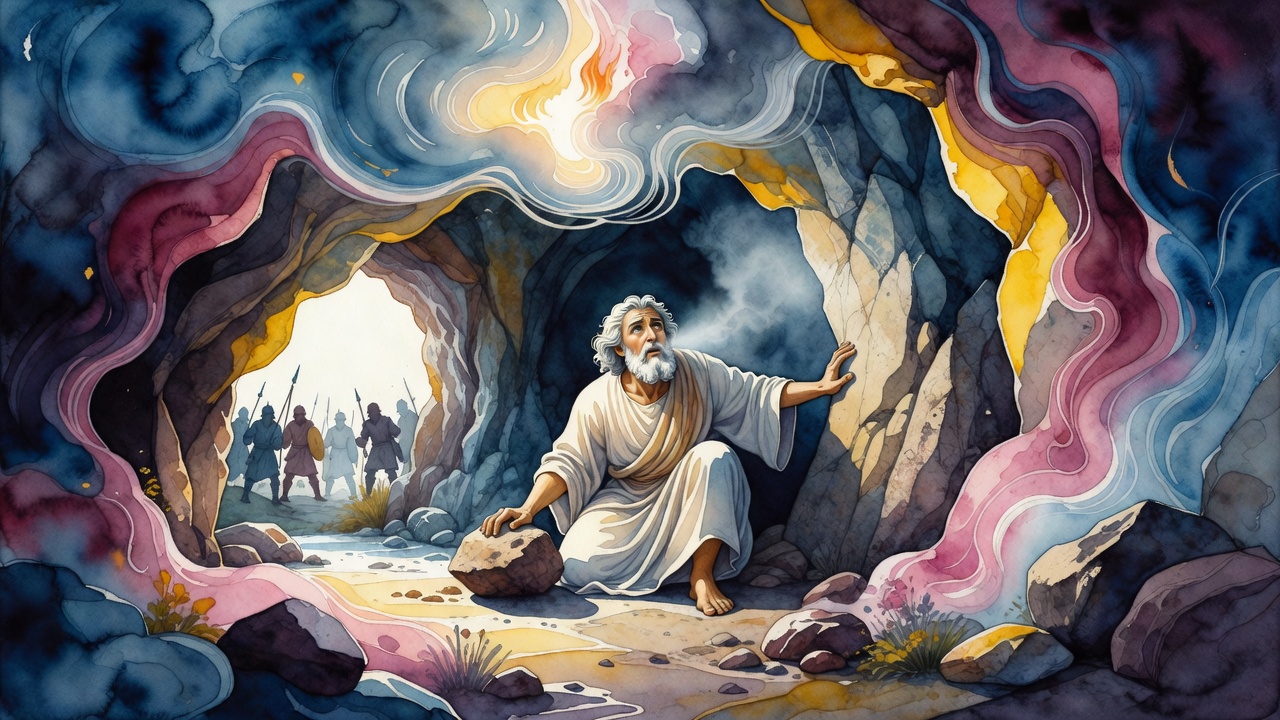
David got out of Saul's presence fast and went down into the cave at Adullam. In the dark he did the arithmetic on his own life.
 Click for full size
He had been a shepherd. A prophet had come to his father's house, singled him out in front of his brothers, and poured oil over his head. The words that went with the oil were that the Lord was making him king. Since then a king had thrown spears at him. Now he was living in a hole in a hillside, eating whatever his men could carry in.
He said it out loud. "Did Samuel anoint me for nothing? Where is that promise?"
Then he said the thing he would spend the rest of his life being embarrassed about. "I said in my haste, all men are liars."
Samuel Picked the Wrong Son
David had reason to wonder about the oil. The day it was poured had not gone the way a prophet's day is supposed to go.
Samuel had been sent to Jesse's house to anoint one of the sons and had not been told which. He walked in, looked at Eliab, the tall one, the eldest, and decided on the spot. He was wrong, and he was allowed to be wrong. Samuel had been calling himself the seer. God let him stand in a room full of Jesse's boys and pick the wrong one, so that a man who used that word about himself would find out in public that he could not see everything.
The mistake was closer to right than it looked. Eliab had in fact been the first choice. What lost him the crown was his temper, the speed with which he turned on his youngest brother. The appointment slid down the line of sons until it reached a boy nobody had bothered to call in from the flock. Eliab was not left with nothing. His daughter married Rehoboam in the end, so his blood runs in the kings of Judah too. The old prophet's eye had not been altogether blind.
Heaven Answered From the Cave
The answer came back into the cave immediately.
"Samuel is not a liar. I testify that he is faithful."
That was all. No army. No sign in the sky. No lifting of the pursuit. A hunted man had accused a dead prophet of cheating him, and heaven filed a defense on the prophet's behalf and left the man exactly where he was, in a cave, with Saul coming.
God had promised David mercy. Mercy, in that hour, was not a crown delivered to the mouth of the cave. Mercy was a sentence spoken over a dead prophet, and a hunted man told to keep the oil he could no longer feel.
Hurry, Go Up Quickly
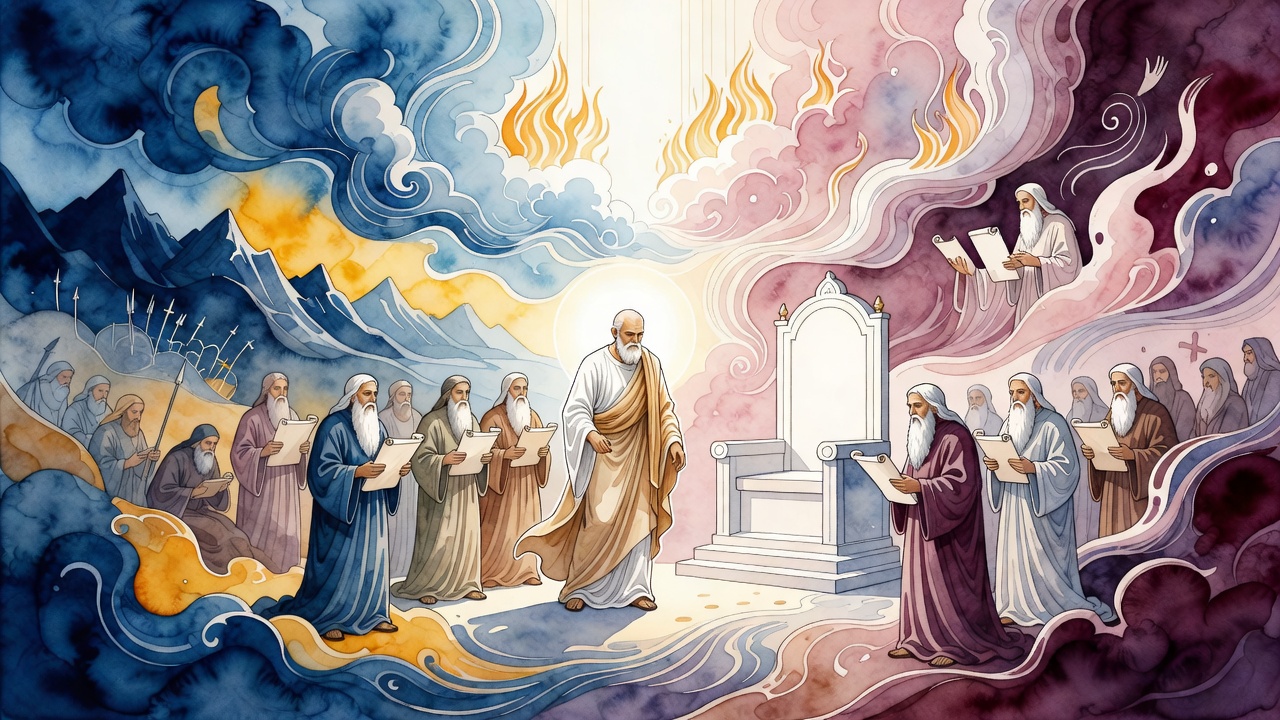
Saul came. He brought his men around the hill in the wilderness and closed the ring. David and his men were on the far face of a rock with nowhere left to go.
Then a man reached Saul at a run. The Philistines had raided the land.
"Hurry," he said. "Go up quickly."
Court men do not give a king orders in two clipped commands. A counselor waits. A messenger softens. This voice did not wait. Saul turned his army around and took it off the mountain. The ring opened. David walked out of it alive.
Later they argued about the runner. Some said a messenger. Some said an angel out of heaven, sent from on high. The argument was about the words themselves. Hurry. Go up quickly. No human court talks to a king that way.
The Rock Split Between Them
They named the place afterward for what had split there.
The rock itself had cracked from one side and from the other. Saul and his mighty men stood on one face of it. David and his mighty men stood on the other, close enough to hear each other breathe, with a seam of stone between them that neither could cross in time.
Something else divided on that rock. Saul's own warriors, the men who had marched out to bring David in, came apart over him. "We will never turn him over to you," some of them said. Others said the war with Israel came first, but David was with them always, and there was no hurry.
So the king went down the mountain with an army that had just refused him. The man in the cave who had said all men are liars kept the crown he had stopped believing in. Heaven had sent a runner. The mercy arrived as two words and a cracked rock, and David walked out still anointed.
← All myths